Viral Infections for Humans
 Call Kai
 Learn
Learn Practice Test
 Spaced Repetition
 Match
Match Flashcards
 Knowt Play
1/72

There's no tags or description
Looks like no tags are added yet.
Name | Mastery | Learn | Test | Matching | Spaced | Call with Kai |
|---|
No analytics yet
Send a link to your students to track their progress
73 Terms
Viral Infection
are diseases from tiny organisms that use your cells to make more copies of themselves. Viruses don't have cells, if they want to replicate, they have to break into cells and use it to multiply. The viral infections commonly cause respiratory and digestive illnesses, but viruses can also infect most other parts of your body (ex. skin, eyes, ears)
HOW DO VIRUSES CAUSE DISEASE?
Viruses infect only the cells bearing appropriate surface receptors. Viruses have specific type of cells that they can infect, certain viruses can only cause respiratory infection while other can cause gastrointestinal infections. During the escape of the virus in cells, it's either cell lysis or budding that host cells are destroyed. This cell destruction leads to most of the symptoms of the viral infection, which vary depending on the location of the infection.
Example: AIDS and HIV
VIRAL INFECTIONS OF THE SKIN
From
Virus Symptoms
Transmission Mode
No Antibiotics
Good Hygiene
Chickenpox
Chickenpox is an infection that causes an itchy, blister-like skin rash. A virus called varicella-zoster causes it. It is highly contagious.
Vesicles also form in mucous membranes. It Is usually a mild, self-limiting disease, but it can be severely damaging to a fetus. Serious complications include pneumonia, secondary bacterial infections, haemorrhagic complications, and encephalitis.
Chickenpox
Reye (pronounced "rize") syndrome (a severe encephalomyelitis with liver damage) may follow clinical chickenpox if aspirin is given to children younger than 16 years.
Chickenpox is the leading cause of vaccine-preventable death In the United States.
Shingles (also known as herpes zoster)
Shingles involves inflammation of the sensory ganglia of cutaneous sensory nerves, producing fluid-filled blisters, pain, and paraesthesia (numbness and tingling).
Shingles may occur at any age, but is most common after age 50.
Shingles is nerve pain and a rash caused by the varicella-zoster virus, the same virus that causes chickenpox. It’s also called herpes zoster. It stays inactive in your body and can reactivate in your nerves later in life. So, if you’ve had chickenpox before, you could get shingles
Chickenpox and shingles.
Patient care. Use Airborne and Contact Precautions for hospitalized patients until thefr lesions become dry and crusted.
Pathogen. Chickenpox and shingles are caused by the varicella-zoster virus (VZV) (family Herpesviridae), also known as human herpesvirus 3, a DNA virus.
Reservoir and mode of transmission. Infected humans serve as reservoirs. Transmission is from person to person by direct contact, droplet, or airborne spread of vesicle fluid or secretions of the respiratory system of persons with chickenpox.
Laboratory diagnosis. Diagnosis is usually made on clinical and epidemiologic grounds. immunodiagnostic and molecular diagnostic procedures are available, as well as cell culture.
German measles (rubella).
Is a mild, febrile viral disease. A fine, pinkish, flat rash begins 1 or 2 days after the onset of symptoms (Fig. 18-2). The rash starts on the face and neck and spreads to the trunk, arms, and legs. Rubella is a milder disease than hard measles with fewer complications. If acquired during the first trimester of pregnancy, rubella may cause congenital rubella syndrome in the fetus. This can lead to intrauterine death, spontaneous abortion, or congenital malformations of major organ systems.
Rubella is an illness you get from an infection with the RuV virus.
It can be harder to see on Black or brown skin.
German measles or Rubella
Patient care. Use Droplet Precautions for hospitalized patients until 7 days after the onset of rash.
Pathogen•. Rubella is caused by the rubella virus, an RNA virus in the family Togaviridae.
Reservoir and mode of transmission. Infected humans serve as reservoirs. Transmission occurs by droplet spread or direct contact with the nasopharyngeal secretion of infected people.
Laboratory diagnosis. Immunodiagnostic and molecular diagnostic procedures are available for the diagnosis of rubella. The virus can be propagated in cell culture.
VIRAL INFECTIONS OF THE SKIN
Viruses are responsible for causing a wide range of infections with skin manifestations. Many, like hand-foot-mouth disease (Fig. 18-3), are caused by enteroviruses. Measles and chickenpox (varicella) are typically childhood diseases that are now less common because of vaccination.
VIRAL INFECTIONS OF THE EARS
Viruses can cause otitis media (middle ear infection) either by themselves or most commonly in association with bacterial pathogens. A viral respiratory infection often precedes the development of otitis media.
Hand, foot, and mouth disease (HFMD).
Is a common viral Illness that usually affects Infants and children younger than 5 years, although it can be found occasionally in older children and adults. It starts with a fever, sore throat, and malaise.
One or two days after the fever starts, painful sores can develop in the mouth. The mouth sores begin in the back of the mouth as small red spots that blister and can become ulcers.
A skin rash with red spots may also develop over the next few days on the palms of the hands and soles of the feet {Fig. 18-3). It can appear in other areas of the body. In rare Instances, an aseptic meningitis can occur.
Hand, foot, and mouth disease (HFMD).
Pathogen. HFMD is usually caused by Coxsackie A16 and Enterovirus 71. These are RNA viruses in the Enteroviridae family.
Reservoir and mode of transmission. Infected humans serve as the reservoir. Transmission occurs through close personal contact, respiratory secretions, contact with feces, or contaminated objects.
Laboratory diagnosis. Diagnosis is most often made based on clinical appearance. In cases of complications such as aseptic meningitis, specimens can be tested by molecular diagnostic procedures or cell culture
Why is it common in young children <5 year’s old?
Because their immune system is still developing, they don’t yet have enough immunization or antibodies to fight the viruses that cause HFMD. Although older individuals can also get infected, it is much more common among infants and young children, especially those under 5 years old.
How it is related to having Aseptic meningitis?
Aseptic Meningitis means inflammation of the brain or spinal cord linings typically characterized by negative bacterial cultures.
So paano nga? it is because the enteroviruses that cause HFMD can occasionally escape the initial site of infection and invade the central nervous system (CNS), causing inflammation of the meninges.
Measles (hard measles, rubeola).
is an acute, highly communicable viral disease with fever, conjunctivitis, cough, photosensitivity (light sensitivity), Koplik spots in the mouth, and red blotchy skin rash (Fig. 1 8-4).
Koplik spots are small red spots, in the center of which can be seen a minute bluish white speck when observed under a strong light (Fig. 18-5).
The rash begins on the face between days 3 and 7 and then becomes generalized. Complications include bronchitis, pneumonia, otitis media, and encephalitis. Rarely, autoimmune, subacute, sclerosing panencephalitis (SSPE) may follow a latent period of several years.
SSPE is characterized by gradual progressive psychoneurological deterioration, including personality changes, seizures, photosensitivity, ocular abnormalities, and coma.
is a highly contagious airborne viral disease that spreads when an infected person coughs or sneezes. The virus can remain in the air or on surfaces for up to several hours, making it easy to infect others. About 90% of non-immune individuals are likely to get infected after exposure.
Measles (hard measles, rubeola).
Symptoms: fever, cough, red eyes, Koplik spots, skin rash, Rash starts on face then spreads
Cause: Measles virus also known as rubeola virus. It Is an RNA virus In the family Paramyxoviridae.
Transmission: airborne droplets (cough/sneeze)
Complications: pneumonia, encephalitis Diagnosis: clinical + lab tests
Patient care: Use Airborne Precautions for hospitalized patients until 4 days after the onset of rash.
Smallpox
Smallpox is a systemic viral infection characterized by fever, malaise, headache, prostration, severe backache, and a distinctive skin rash. Some patients also experience abdominal pain and vomiting. The rash can resemble that of chickenpox, so proper distinction is important. In severe cases, smallpox may cause bleeding in the skin and mucous membranes, which can lead to death.
Smallpox
Patient care. Use Airborne and Contact Precautions for hospitalized patients until all scabs have crusted and separated (3-4 weeks). Use N95 or higher respiratory protection.
Pathogen. Smallpox is caused by two strains of variola virus: variola minor (with a fatality rate <1 %) and variola major (with a fatality rate 20%-40% or higher). Variola virus is a double-stranded DNA virus in the genus Orthopoxvirus, family Poxviridae. Smallpox virus is a potential biological warfare and bioterrorism agent.
Reservoirs and mode of transmission. Before smallpox was eradicated, infected humans were the only source of the virus. There are no known animal or environmental reservoirs. Person-to-person transmission is via the respiratory tract (droplet spread) or skin Inoculation. Patients are most contagious before the eruption of the rash, by aerosol droplets from oropharyngeal lesions.
Laboratory diagnosis: is by cell culture, virus neutralization tests, molecular diagnostic procedures, or electron microscopy. These procedures are performed only In biosafety level 4 facilities.
Warts
Warts are a group of skin and mucous membrane lesions caused by the human papillomavirus (HPV). They appear in different forms, including common warts (verrucae vulgaris), plantar warts found on the soles of the feet, and genital or venereal warts. Most warts are harmless and may resolve on their own, but some types can develop into cancer over time. There are also Venereal or genital warts.
Warts
Pathogen. Warts are caused by at least 70 types of human papillomaviruses. They are classified in the genus Papillomavirus within the family Papovaviridae. They are DNA viruses.
Reservoirs and mode of transmission. Infected humans serve as reservoirs. Transmission usually occurs by direct contact. Genital warts are sexually transmitted. They are easily spread from one area of the body to another, but most are not very contagious from person to person (genital warts are an exception).
Laboratory diagnosis. Diagnosis is made on clinical grounds.
VIRAL INFECTIONS OF THE EYES
for a review of the anatomy of the eye. Keratitis or infection of the cornea is commonly caused by herpes simplex virus (HSV), although other viruses can also cause the condition. Conjunctivitis can have viral and bacterial etiologies or can be non-infectious in nature. Adenoviruses are the most common viral cause of conjunctivitis. In some instances, both the cornea and conjunctiva are infected simultaneously. This is referred to as keratoconjunctivitis. Treatment of ocular viral infections often includes topical eye drops with various antiviral agents. Table 18-3 lists information about viral infections of the eyes.
Conjunctivitia, keratitia, and keratoconjunctivitia.
These are acute viral diseases of one or both eyes, associated with inflammation of the conjunctiva, edema of the eyelids, and periorbital tissue. pain, photophobia, and blurred vision. Keratitis involves the cornea and can result in permanent scarring of the cornea in severe cases.
Patient care. Use Contact Precautions for hospitalized patients for the duration of the illness.
Conjunctivitia, keratitia, and keratoconjunctivitia
Pathogen. Adenoviral conjunctivitis and keratoconjunctivitis are caused by various types of adenoviruses. Herpes simplex viruses most often cause keratitis but can also cause keratoconjunctivitis.
Reservoir and mode of transmission. Infected humans serve as reservoirs. Transmission occurs via direct contact with eye secretions or contact with contaminated surfaces, Instruments, or solutions. People with viral infections (e.g., colds sores) should wash their hands thoroughly before inserting or removing contact lenses or otherwise touching their eyes.
Laboratory diqnosis. Diagnosis is made by cell culture, immunodiagnostic, or molecular diagnostic procedures. Keratitis is often diagnostically clinically by ophthalmology examination.
Hemorrhagic conjunctivitis.
This viral disease has a sudden onset, with redness, swelling, and pain In one or both eyes. Small, discrete subconjunctival hemormages may enlarge to form confluent subconjunctival hemorrhages. One adenoviral syndrome, called pharyngoconjunctival fever, is characterized by upper respiratory disease, fever, and minor degrees of comeal epithelial inflammation.
Patient care. Use Contact Precautions for hospitalized patients for the duration of the Illness.
Hemorrhagic conjunctivitis.
Pathogens. Haemorrhagic conjunctivitis is caused by adenoviruses and enteroviruses.
Reservoir and mode of transmission. Infected humans serve as a reservoir. Transmission occurs by direct or indirect contact with discharge from infected eyes. Adenovirus transmission may be associated with poorly chlorinated swimming pools; this "swimming pool conjunctivitis" can reach epidemic proportions.
Laboratory diagnosis. Diagnosis is made by cell culture, immunodiagnostic, or molecular diagnostic procedures.
Uveitis and retinitis
Inflammation of the eye (refer to Fig. 17 -4) has many manifestations depending on the site of the Infection (anterior or posterior structures of the eye). Infections may result in loss of vision acuity or even blindness. Diagnosis is by ophthalmologic examination
Uveitis and retinitis
Pathogens. Retinitis caused by cytomegalovirus is one of the most common AIDS defining Infections In HIV-positive Individuals. Other causes of uveitis and retinitis include herpes simplex and herpes zoster viruses, West Nile virus, Ebola virus, and Zika virus. Bacterial infections such as syphilis and tuberculosis can affect the eye, as can various fungal infections. The parasite Toxoplasma gondii is a relatively common cause of uveitis.
Laboratory diagnosis. Specimens submitted by the ophthalmologist can be examined by bacterial and fungal culture and molecular diagnostic procedures.
VIRAL INFECTIONS OF THE RESPIRATORY SYSTEM
Viral infections of the Upper Respiratory tract
The Common Cold (Acute Viral Rhinitis and Acute Coryza)
Disuse. The common cold is a viral infection of the lining of the nose, sinuses, throat, and large airways. Symptoms include coryza (profuse discharge from the nostrils), sneezing, runny eyes, sore throat, chills, and malaise. Additionally, laryngitis, tracheitis, or bronchitis may accompany a cold. Secondary bacterial infections, including sinusitis and otitis media, may follow. The common cold occurs most frequently in fall, winter, and spring. On average, most people have one to six colds annually. It is not a nationally notifiable disease in the United States.
Patient care
Use Droplet Precautions for hospitalized patients.
Pathogens
Many different viruses cause colds. Rhinoviruses, of which there are more than 100 serotypes, are the major cause in adults. Other cold-causing viruses include coronaviruses, parainfluenza viruses, RSV, influenza viruses, adenoviruses, and enteroviruses.
Reserviors and Mode of Transmission
Infected humans serve as rese.rvo.irs of infection. Transmission is via respiratory secretions by way of hands and fomites or direct contact with or inhalation of airborne droplets.
Laboratory Diagnosis.
Laboratory diagnosis of the common cold is usually not required, but cell culture techniques can often demonstrate the specific viral pathogen, and many of the viruses responsible for causing the common cold can be identified with molecular-based panels for diagnosing respiratory infections.
The Common Cold
The common cold is a viral infection of the upper respiratory tract that affects the nose, sinuses, throat, and airways. It causes symptoms such as sneezing, runny nose, sore throat, chills and mailase. It may sometimes lead to complications like bronchitis or sinus infections. It commonly occurs during the fall, winter, and spring, and most people experience it several times each year
The Common Cold
Pathogen: Rhinoviruses, coronaviruses and some viruses
Reservoir: Infected humans (source of infection)
Mode of transmission: Respiratory droplets, Direct contact, Fomites, and/or Airbone droplets
Patient care: Use for Droplet Precautions
Diagnosis: Usually not required, cell culture techniques, and Molecular-based panels detect respiratory viruses
Acute, febrile, viral respiratory disease.
This disease is characterized by fever and one or more of the following systemic reactions: chills, headache, general aching, malaise, anorexia, and sometimes Gl disturbances in infants. The disease may include rhinitis, pharyngitis, tonsillitis, laryngitis, bronchitis, pneumonia, conjunctivitis, otitis media, and/ or sinusitis. Acute, febrile, viral respiratory diseases are not nationally notifiable diseases in the United States.
Patient care. Use Standard Precautions for adult patients; add Contact Precautions for infants and young children for the duration of the illness.
Acute, febrile, viral respiratory dlaeaae.
Pathogen. Acute, febrile, viral respiratory disease can be caused by one of many viruses, including parainfluenza viruses, RSV, human metapneumovirus, adenovirus, rhino viruses, certain coronaviruses, coxsackieviruses, and echo viruses. RSV is the major viral respiratory tract pathogen of early infancy. RSV may cause pneumonia, croup, bronchitis, otitis media, and death.
Reservoir and mode of transmission. Infected humans serve as reservoirs. Transmission occurs via direct oral contact or by droplets; indirectly via handkerchiefs, eating utensils, or other fomites; or for some viruses, via the fecal oral route.
Laboratory diagnosis. Diagnosis is made by isolation of the etiologic agent from respiratory secretions, using cell cultures. immunodiagnostic and molecular diagnostic procedures are available.
Hantavirus pulmonary syndrome (HPS)
is an acute viral disease characterized by fever, myalgias (muscular pain), GI complaints, cough, difficulty breathing, and hypotension (decreased blood pressure). The Sin Nombre virus - literally, the "virus with no name" - was the cause of the epidemic that occurred in the Four Corners area of the United States in the spring and summer of 1993. Since then, sporadic cases have been reported in many states as well as in South America
Hantavirus pulmonary syndrome (HPS)
Pathogens. At least five hantaviruses (Sin Nombre, Bayou, Black Creek Canal, New York-1, and Monongahela) have caused HPS in the United States. Other strains have caused HPS in South America.
Reservoirs. Rodents, including deer mice, pack rats, and chipmunks, serve as reservoirs.
Patient care. Use Standard Precautions for hospitalized patients
Mode of Transmission occurs via inhalation of aerosolized rodent feces, urine, and saliva. Person-to-person transmission does not occur.
Laboratory diagnosis. HPS can be diagnosed by immunodiagnostic and molecular procedures and by cell culture.
Influenza (flu)
Influenza (flu) is an acute viral respiratory infection causing fever, chills, headache, body aches, sore throat, cough, and nasal drainage. Severe cases may lead to bronchitis, pneumonia, or death. Nausea, vomiting, and diarrhea can occur in children, but influenza rarely causes gastrointestinal symptoms; “stomach flu” is caused by other viruses.
Influenza (flu)
Pathogens. Influenza is caused by influenza viruses types A, B, and C. They are single-stranded RNA viruses in the family Orthomyxovirus. Influenza A virus cause severe symptoms and is associated with pandemics and severe disease and more localized outbreaks. Influenza C virus usually does not cause epidemics or significant disease
Reservoirs. Infected humans are the primary reservoir; pigs and birds also serve as reservoirs. Pigs act as “mixing bowls” for avian and human strains, possibly leading to new variants.
Mode of Transmission occurs via airborne spread and direct contact.
Laboratory diagnosis. Influenza is diagnosed by isolation of influenza virus from pharyngeal or nasal secretions or washings using cell culture, antigen detection, and demonstration of a rise in antibody titer (concentration) between acute and convalescent sera (see Chapter 16), or by molecular diagnostic procedures.
Avian Influenza (bird flu)
Avian influenza (bird flu). Avian influenza, commonly referred to as bird flu, is primarily a disease of birds, but can cause human disease. In humans, the virus causes a respiratory infection with manifestations ranging from influenza-like symptoms (fever, cough, sore throat, and muscle aches) to eye infections, pneumonia, acute and severe respiratory dis-tress, and other severe and life threatening complications
Avian Influenza (bird flu)
Pathogens.. Bird flu is caused by avian influenza virus type A. The three prominent subtypes of the virus are designated H5, H7, and H9. The strain known as H5N1 is the most virulent strain. New strains of bird flu virus continue to emerge.
Reservoirs and mode of transmission. Infected wild and domesticated birds serve as reservoirs. Bird-to-human transmission occurs via contact with infected poultry or surfaces that have been contaminated with excretions from infected birds. Person-to-person transmissions are relatively rare. However, influenza viruses commonly mutate, and increased instances of person-to person transmission are likely to occur in the future.
Laboratory diagnosis. Molecular diagnostic procedures or cell culture are the means of diagnosis.
Middle East respiratory syndrome (MERS)
is a viral respiratory illness with high fever, chills, headache, a general feeling of discomfort, body aches, and sometimes diarrhea. MERS was first reported in Saudi Arabia in 2012. Over the next few months, the illness spread to a number of countries through air travel, including two cases in the United States. Most infections of MERS continue to be seen in countries in and adjacent to the Arabian Peninsula.
Middle East respiratory syndrome (MERS)
Pathogen. MERS is caused by MERS-associated coronavirus(MERS-CoV) (Fig. 18-6).
Reservoirs and mode of transmission. Camels are the suspected reservoirs for the infection. Infected persons can also serve as reservoirs. Transmission occurs by respiratory droplets or by touching the mouth, nose, or eye after touching a contaminated surface or object. Many MERS infections have occurred in health care workers taking care of MERS infected patients.
Laboratory diagnosis. Immunodiagnostic or molecular diagnostic procedures can be used to diagnose MERS.
Oral Ecosystem: The mouth is a complex environment containing approximately 300 identified species of bacteria (both aerobic and anaerobic).
Indigenous Microbiota: Most oral infections are caused by members of the resident flora acting independently or as a coordinated group.
Defense Mechanisms:
Saliva: Contains lysozyme (enzymatic defense), immunoglobulins, and buffers to maintain a near-neutral pH.
Microbial Antagonism: Certain bacteria produce secretions that inhibit the growth of opportunistic pathogens
Dental Caries: Tooth decay or "cavities" caused by the dissolution of enamel by organic acids
Primary Pathogen: Streptococcus mutans, which produces lactic acid via the fermentation of glucose.
Dental Plaque: A biofilm of microorganisms attached to the tooth surface; the precursor to caries and gum disease.
Gingivitis: Inflammation limited to the gingiva (gums)
Periodontitis: A more severe infection affecting the periodontium—the tissues supporting the teeth, including ligaments and bone.
Thrush: An opportunistic oral infection caused by the yeast Candida albicans, commonly seen in immunocompromised individuals.
The GI Defense System:
Stomach: High acidity (pH of approximately 1.5) destroys most ingested microorganisms.
Resident Microbiota: The colon contains vast numbers of microbes that provide microbial antagonism, preventing pathogens from establishing a foothold.
Transmission: Most GI pathogens are ingested via contaminated food or water (Fecal-Oral route).
Clinical Terms
Colitis: Inflammation of the colon (large intestine).
Enteritis: Inflammation of the small intestine.
Gastritis: Inflammation of the mucosal lining of the stomach.
Gastroenteritis: Inflammation involving both the stomach and the intestines.
Diarrhea: Abnormally frequent discharge of fluid or semisolid fecal matter.
Dysentery: Frequent watery stools accompanied by abdominal pain, fever, and the presence of blood or mucus.
Hepatitis: Inflammation of the liver, often viral in origin but can be caused by toxins or drugs.-
Type A hepatitis (also known as HAV infection, infectious hepatitis, and epidemic hepatitis)
HAV, a non-enveloped, linear ssRNA virus in the genus Hepatovirus, family Picornaviridae
Fecal-oral transmission; person-to-person; infected food handlers; fecally contaminated foods and water
Abrupt onset; varies in clinical severity from a mild illness lasting 1-2 weeks to a severe, disabling disease lasting several months; no chronic Infection
Type B hepatitis (also known as HBV Infection and serum hepatitis)
HBV. an enveloped, circular dsDNA virus in the genus Orthohepadnavirus, family Hepadnaviridae; the only DNA virus that causes hepatitis
Sexual or household contact with an infected person, mother to Infant before or during birth; injected drug use; tattooing; needle-sticks and other types of health care-associated transmission
Usually has an insidious (gradual) onset: severity ranges from inapparent cases to fulminating, fatal cases; chronic infections occur, may lead to cirrhosis or hepatocellular carcinoma
HBV vaccine is a subunit vaccine, produced by genetically engineered Saccharomyces cerevisiae (common baker’s yeast). At first, HBV vaccine was only recommended for persons at high risk of acquiring HBV infection (such as infants born to HBV antigen-positive mothers, household contacts of HBV carriers, homosexual and bisexual men, and users of illicit drugs), but now it is routinely administered to U.S. children.
Type C hepatitis (also known as HCV Infection and non-A, non-B hepatitis)
HCV, an envelopect, linear ssRNA virus In the genus Hepacivirus, family flaviviridae
Primarily parentally transmitted (e.g. via blood transfusion) ; IV drug use and rarely sexually transmitted
Usually an insidious onset; 50%-60% of patients develop a chronic Infection; may lead to cirrhosis or hepatocellular carcinoma
Type D hepatitis (also known as delta hepatitis)
HDV or delta virus, an enveloped, circular ssRNA viral satellite (a defective RNA virus) in the genus Deltavirus
Exposure to Infected blood and body fluids; contaminated needles; sexual transmission, and coinfection with HBV is necessary
Usually has an abrupt onset; may progress to a chronic and severe disease
Type E hepatitis
HEV, a spherical, nonenveloped, ssRNA virus in the genus Herpesvirus, family Hepelviridae
Fecal-oral transmission; primarily via fecally contaminated drinking water; also, from person to person
Similar to type A hepatitis; no evidence of a chronic form
VIRAL INFECTIONS OF THE GENITOURINARY SYSTEM
HERPES (HSV-1 and HSV-2) Both types of the Herpes Simplex Virus can cause infections through sexual contact. While HSV-1 is traditionally associated with cold sores, it can also cause genital herpes
VIRAL SEXUALLY TRANSMITTED DISEASES
Anogenital herpes viral infections (genital herpes)
In general, herpes simplex infections are characterized by a localized primary lesion, latency, and a tendency to localized recurrence. In women, the principal sites of primary anogenital herpes virus infection are the cervix and vulva, with recurrent disease affecting the vulva, perineal skin, legs, and buttocks. In men, lesions appear on the penis, and in the anus and rectum of those engaging in anal sex.
Anogenital herpes viral infections (genital herpes)
Symptoms:
• Itching, tingling, and soreness, followed by a small patch of redness and then a group of small, painful blisters.
• Blisters break and fuse to form painful, circular sores, which become crusted after a few days. Heals after 10 days, and might leaves scars.
• Initial outbreak is more painful, prolonged, and widespread than subsequent outbreaks and may be associated with fever
Anogenital herpes viral infections (genital herpes)
Patient care: Use Standard Precautions for hospitalized patients; add Contact Precautions for severe disseminated or primary mucocutaneous herpes
Pathogens: Genital herpes is usually caused by HSV-2, but is occasionally caused by HSV-1
Reservoirs and Transmission: Infected humans serve as reservoirs, spreading the virus through direct sexual, oral-genital, oral-anal, or anal-genital contact while lesions are present. Additionally, the virus can be passed from mother to fetus or neonate during pregnancy and birth
Laboratory Diagnosis: Diagnosis involves observing cytologic changes in tissue scrapings or biopsies, specifically identifying multinucleated giant cells with intranuclear inclusions. This is confirmed using immunodiagnostic and molecular procedures or cell culture.
Genital warts (genital papillomatosis, condyloma acuminatum)
start as tiny, soft, moist, pink or red swellings, which grow rapidly and may develop stalks. Their rough surfaces give them the appearance of small cauliflowers.
Multiple warts often grow in the same area, most often on the penis in men and the vulva, vaginal wall, cervix, and skin surrounding the vaginal area in women. Also around the anus and in the rectum who engage in anal sex.
These warts can become malignant
Genital warts (genital papillomatosis, condyloma acuminatum)
Pathogens: They are caused by 30–40 types of HPV in the Papovaviridae family. HPV genotypes 16 and 18 are strongly associated with cervical cancer. The Gardasil-9 vaccine is available to protect against cancer-causing strains and two types of HPV that cause genital warts.
Reservoirs and Transmission: Infected humans serve as reservoirs. Transmission occurs via direct contact, usually sexual, through breaks in the skin or mucous membranes, or from mother to neonate during birth.
Laboratory Diagnosis: These are usually diagnosed clinically. Molecular diagnostic procedures are used to screen for cancer causing genotypes of HPV.
VIRAL INFECTIONS OF THE CIRCULATORY SYSTEM
Viremia
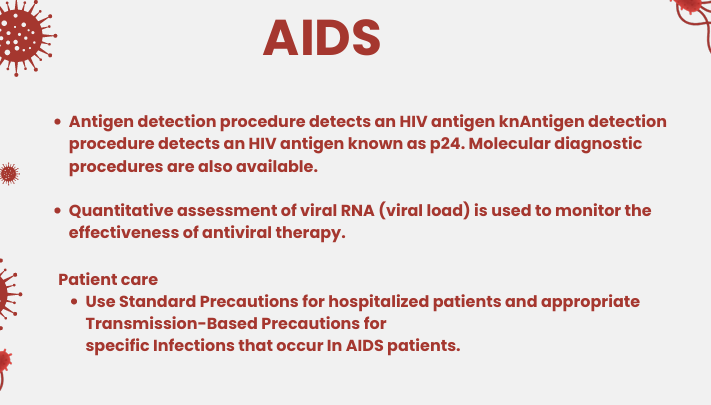
The presence of viruses in the bloodstream is known as viremia. The viruses may be either free in the plasma, or attached to or within red blood cells or white blood cells, such as lymphocytes and monocytes. The number of viruses in the bloodstream is referred to as the viral load, which is reported as the number of viral nucleic acid copies per milliliter of serum or plasma.
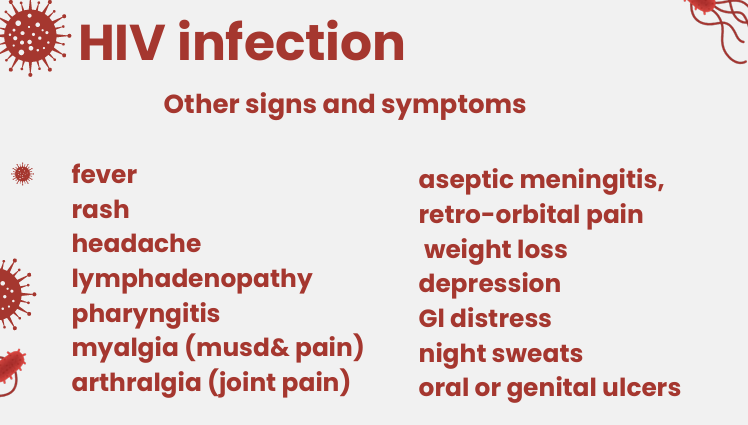
HIV infection
Acute HIV Infection (i.e infection with "the AIDS virus") Signs and symptoms usually occurs within several weeks to several months after infection.
Initial symptoms - acute, self-limited mononucleosis-like Illness lasting 1 or 2 weeks.
Acute HIV Infection is often undiagnosed or misdiagnosed
Without appropriate anti-HIV treatment, approximately 90% of HIV-Infected individuals ultimately develop AIDS
AIDS
Is a severe, life-threatening syndrome that represents the late clinical stage of infection with HlV.
Invasion and destruction of helper T cells leads to suppression of the patient's immune system (Immunosuppression).
Kaposi sarcoma
a previously rare type of cancer, is a frequent complication of AIDS, thought to be caused by a type of herpes virus called human herpesvirus 8. Previously considered to be a universally fatal disease, certain combinations of drugs, referred to as cocktails, are extending the life of some
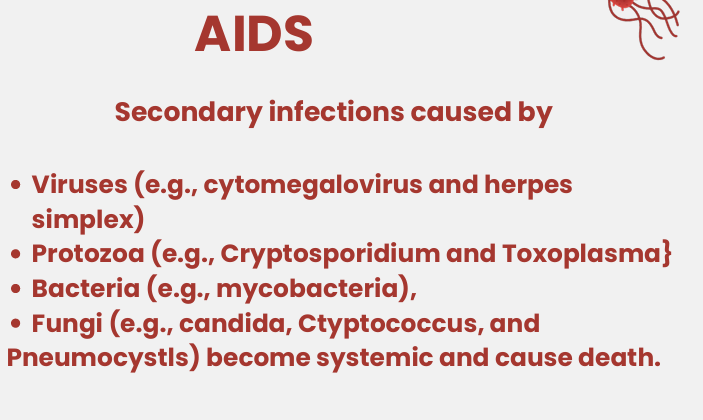
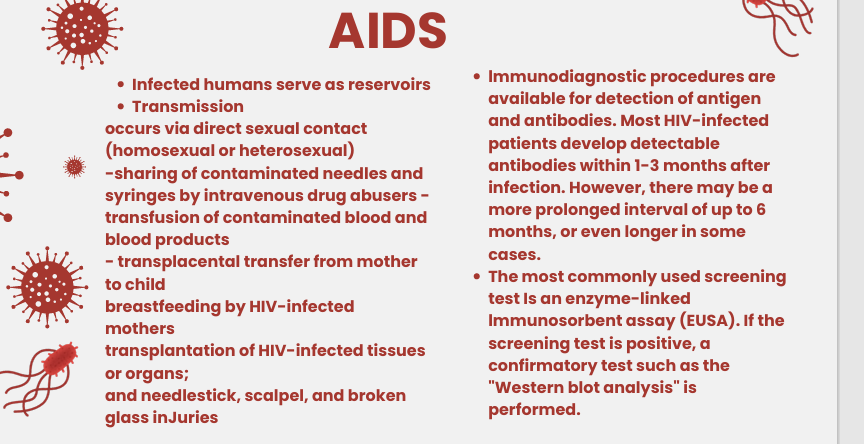
AIDS
AIDS is caused by HIV. Two types have been identified: type 1 (HIV-1), which is the most common type, and type 2 (HIV-2).
HIV-1 first Invades dendritic cells in the genital and oral mucosa. These cells then fuse with CD4+ lymphocytes (helper T cells) and spread to deeper tissues.
HIV viruses are single-stranded RNA viruses in the family Reoviridae (retroviruses).
Infectious mononucleosis
Is an acute viral disease that may be asymptomatic or may be characterized by fever, sore throat, lymphadenopathy (especially posterior cervical lymph nodes) splenomegaly (enlarged spleen) and fatigue.
Infectious mononucleosis is usually a self-limited disease of 1 to several weeks duration. It is rarely fatal.
The etiologic agent of Infectious mononucleosis is Epstein-Barr virus (EBV), which is also known as human herpesvirus 4.
Infectious mononucleosis
EBV infects and transforms B cells, although it also infects other types of cells. EBV is known to be oncogenic (cancer causing), causing or being associated with lymphomas (e.g., Hodgkin disease and Burkitt lymphoma), carcinomas(e.g., nasopharyngeal carcinoma and gastric carcinoma), sarcomas, among other cancers.
Infected humans serve as reservoir.
Transmission occurs from person to person by direct contact with saliva.
Kissing facilitates spread among oleacents.
EBV can be transmitted via blood transfusion.
Mumps (Infectious Parotitis)
A contagious viral infection that causes swelling of the salivary glands.
may cause fever, headache, and swollen cheeks
Complications can include orchitis (inflammation of the testes), oophoritis (inflammation of the ovaries), meningitis, encephalitis, deafness, pancreatitis, al1ttrltls, mastitis, nephritis, thyroiditis, and pericarditis
Mumps (Infectious Parotitis)
Use Droplet Precautions tor hospitalized patients until 9 days after the onset of swelling
Mumps is caused by mumps virus, an RNA virus in the genus Rubula virus, family Paramyxoviridae.
Transmission occurs via droplet spread and direct contact with the saliva of an infected person.
Diagnosis of mumps Is made using lmmunodlagnostlc procedures, molecular diagnostic procedures, or cell culture.
Viral Hemorrhagic Diseases
A group of serious viral infection that can cause bleeding and organ damage
Initial symptoms include sudden onset of fever, malaise, myalgia, and headache, followed by pharyngitis, vomiting, diarrhea, rash, and internal hemorrhaging.
Case-fatality rates for Marburg virus infection and Ebola virus infection have bean 25% and 50%-90%, respectively.
Viral Hemorrhagic Diseases
PATIENT CARE
Exercise Standard, Droplet, and Contact Precautions for hospitalized patients for the duration of the illness.
Emphasize use of sharps safety devices and safe work practices, hand hygiene, barrier protection against blood and body fluids, and appropriate waste handling. Use N95 or higher respirators when performing aerosol-generating procedures
Viral Hemorrhagic Diseases
Viral haemorrhagic fevers are caused by many different viruses, including dengue virus, yellow fever virus, Crimean-Congo hemorrhagic fever virus, Lassa virus, Ebola virus, and Marburg virus.
Ebola virus and Marburg virus are filamentous viruses in the family Filoviridae. Both are extnlmely large viruses.
Infected humans serve as reservoirs; Infected African green monkeys also serve as reservoirs of Marburg virus.
Transmission is from person to person via direct contact with infected blood, secretions, internal organs, or semen, or by needlestick.
The risk is highest when the patient is vomiting, having diarrhea, or hemorrhaging.
VIral haemorrhagic diseases are diagnosed using immunodiagnostic and molecular procedures, cell culture, or electron microscopy