(Final Exam) Pt. 2 Physiological Responses to Aerobic and Anaerobic Training
 Call Kai
 Learn
Learn Practice Test
 Spaced Repetition
 Match
Match Flashcards
 Knowt Play
1/24

There's no tags or description
Looks like no tags are added yet.
Name | Mastery | Learn | Test | Matching | Spaced | Call with Kai |
|---|
No analytics yet
Send a link to your students to track their progress
25 Terms
Principle of training
[…]
Training effect occurs when a physiological system is exercised at a level beyond which it is normally accustomed
Variables that constitute the overload: i) Frequency, ii) intensity, and iii) duration of exercise
[…]
Adaptation we experience is specific to what type of exercise we do.
Training effect is specific to:
Muscle fibers recruited during exercise
Energy system involved (aerobic vs. anaerobic)
Velocity of contraction
Type of contraction (eccentric, concentric, isometric)
[…]
Gains are lost when training ceases
If we stop exercising after 4 weeks our Vo2 max will not be the same
Overload
Specificity
Reversibility
Endurance training and VO2 max
Training to increase VO2 max
Large muscle groups, [..] activity
20–60 min, ≥3 times/week for ~8-12 weeks, ≥50% VO2max
Moderate-intensity continuous training (MICT)
30 -40 min per session
High-intensity interval training (HIIT)
Increases in VO2 max with […] training
Average = 15 to 20% increase
Varies from one person to another
This is largely because of […].
Nonresponders are people who exhibit 2%-3% improvement.
Smaller increases in individuals with high initial VO2 max
Individuals with high may require higher exercise training intensities (>70% VO2max) to obtain improvements
dynamic
endurance
genetics
Absolute versus Relative VO2max

[…]: volume of oxygen consumed (L/min)
[…]: volume of oxygen consumed relative to body weight (mL/kg/min)
Take account their body weight
The female relative Vo2 max is 57.7 mL/kg/min
The male was 56.6 mL/kg/ min
[…] VO2 value by body weight.
Absolute
Relative
Divide
VO2 max values measured in healthy and clinical populations
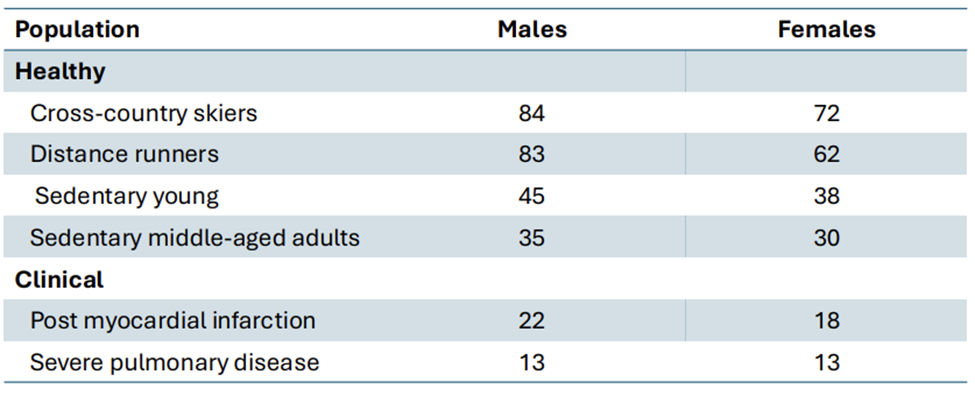
Impact of genetics on VO2max and exercise training response
[…] (genetics)
Determines approximately 50% of VO2 max in sedentary adults
Genetics also plays key role in determining the […] response
Average improvement in VO2 max is 15 to 20%
[…] responders improve VO2 max by 2 to 3%
High responders can improve VO2 max by approximately 50% with rigorous training
Heritability
training
Low
Why does endurance training improve VO2max?
VO2 max is defined by the Fick equation
VO2 max = maximal cardiac output x (a-vO2 diff)
Differences in VO2 max between individuals
Primarily due to differences in […] max
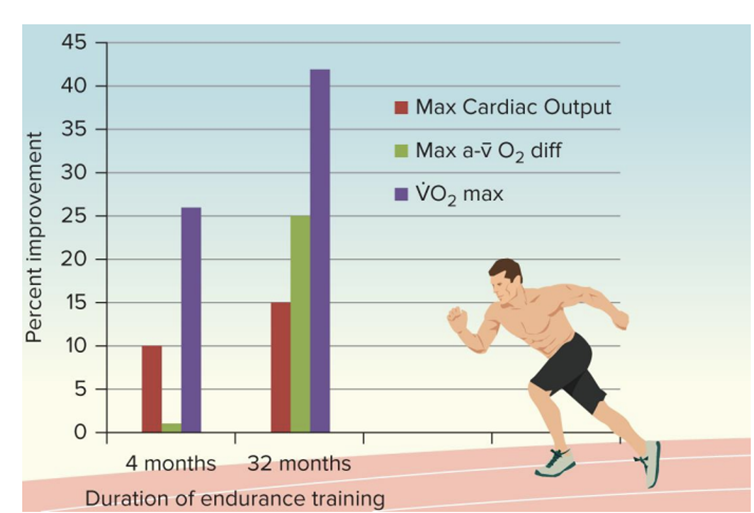
[…] improvements in VO2 max
[…]duration training (approximately 4 months); Increase in stroke volume is dominant factor in increasing VO2 max
[…] duration training (approximately 32 months); Both stroke volume and a-vO2 increase to improve VO2 max
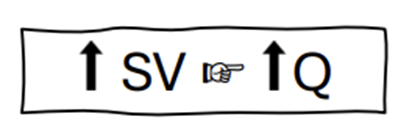
SV
Exercise-induced
Short
Longer
What causes SV to increase as a result of endurance training?
↑ […]
↑ Plasma volume
↑ Venous return
↑ Ventricular volume
↑ […]
Greater the stretch greater the contractability.
↓ […]
EDV
Cardiac contractility
Afterload
Training-induced increases in arteriovenous O2 difference
Improved ability of muscle fibers to extract and utilize O2 from the blood
↑ […] density
Slower blood flow velocity through muscle
Allows more oxygen to diffuse
↑ […] number
There is a plasma volume increase and that increase is due to hormonal changes
Also an increase in […] volume so an increase in size of the left ventricle; then more blood enters the chamber; more blood in chamber is stronger the contraction
Capillary
Mitochondrial
ventricular
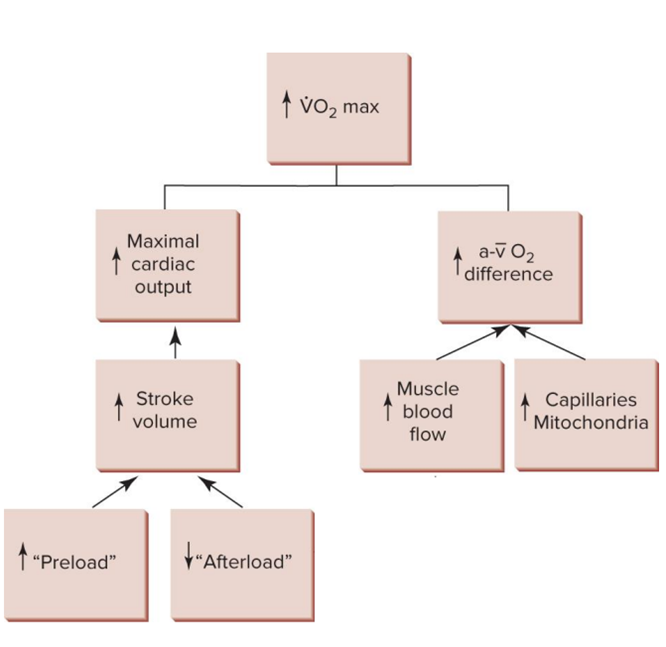
Summary of factors that contribute to endurance training induced increases in VO2max
- An enlarge capillary […] the rate of blood flow and that allows more muscle to diffuse to the muscle fibers
- Muscle able to extract […] oxygen because of an increasing capillary density, which slow rate blood flow down.
slows
more
Effects of endurance training on performance and homeostasis
Endurance exercise training results in numerous adaptations in muscle fibers that assist in maintaining homeostasis
[…] in muscle fiber type (fast-to-slow) and increased number of capillaries
[…] mitochondrial volume
Training-induced changes in […] utilization
Increased […] capacity
Improved […] regulation
Shift
Increased
fuel
antioxidant
acid-base
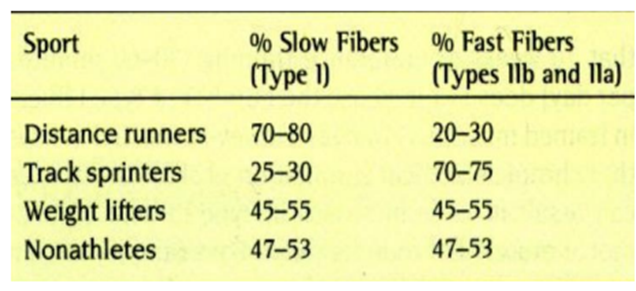
Endurance training promotes a fast-to-slow shift in muscle fiber type and increases capillarization
Fast-to-slow shift in muscle fiber type
Reduction in fast fibers and increase in number of slow fibers
Magnitude of fiber type change determined by […] of training, type of training, and genetics
There is a reduction in […] chain but increase in myosin form
Shift in muscle fiber type during [..] training.
In long term the proportion of type 2 fiber shifts and exceeds the characteristics of type of fiber.
Because we have a reduction in the amount of fast myosin heavy chain and increase in slow myosin isophor
Increased number of […] surround muscle fibers
Enhanced diffusion of oxygen
Improved removal of waste
Muscle able to extract more oxygen.
duration
myosin
endurance
capillaries
Endurance training increases mitochondrial volume and turnover in skeletal muscle
Prioritizes fat as a substrate to ATP
Mitochondrial get damaged
Endurance training increases the volume of both subsarcolemmal and intermyofibrillar mitochondria in muscle fibers
Results in improved oxidative capacity and ability to utilize fat as fuel
Training also increases mitochondrial turnover (i.e., breakdown of damaged mitochondria and replacement with healthy mitochondria)
Breakdown of damaged mitochondria is termed “mitophagy”
Some electrons will escape in the matrix and then they react with oxygen and form free radicals and causes problems.
All damaged organelles need to be recycled
Called mitophagy
If damaged skeletal muscle will be inflamed because of mitophagy
Cause more of an acidic environment
Endurance training-induced changes in fuel utilization
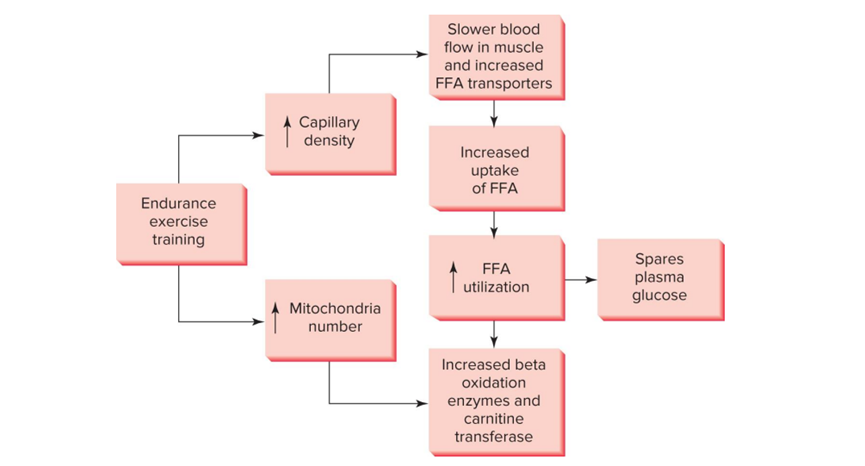
Increased utilization of fat and sparing of plasma glucose and muscle glycogen
Increased transport of FFA into the muscle
Increased fatty acid binding protein and fatty acid translocase (FAT)
Transport of FFA from the cytoplasm into the mitochondria
Higher levels of carnitine palmitoyl transferase and FAT
Can take fatty acids from the side of salt and bring it into mitochondria and that fatty acid can be converted to acetyl-CoA
That how it enters the Krebs cycle.
Mitochondrial oxidation of FFA
Increased enzymes of β-oxidation
Increased rate of acetyl-CoA formation§ High citrate (first molecule in the Krebs cycle) level inhibits PFK and glycolysis
High citrate (first molecule in the Krebs cycle) level inhibits PFK and glycolysis
Endurance training promotes an increase in certain proteins that are able o transport fatty acids into muscle
These proteins can bring fatty acids into muscle and once fatty acids enter the muscles it is in the cytosol.
Endurance training improves the antioxidant capacity of muscle
Contracting skeletal muscles produce free radicals o
Radicals promote oxidative damage and muscle fatigue •
Training increases endogenous antioxidant enzymes
Improves the ability of muscle fibers to remove radicals
Protects against exercise-induced oxidative damage and muscle fatigue
Endurance exercise training improves acid-base balance during exercise
Lactate dehydrogenase converts pyruvate to lactic
Isoform is a slightly different version of an original protein.
Lactate production during exercise
Endurance exercise promotes the expression of

H4 is actually inhibited when pyruvic levels are high
It means some lactate will be produced but not as much.
Isoform promotes the conversion of lactates to pyruvate.
Training adaptations
Reduced production of H+
Increased mitochondrial number
Increased NADH shuttles
Training adaptation-big picture
Endurance and resistance training promote protein synthesis in muscle fibers
Exercise “stress” activates gene transcription
Activated certain chemical pathways
Pathways promote gene transcription
Genes transcription is process by which genes are activated and expressed.
Process of training-induced muscle adaptation
Muscle contraction activates primary and secondary messengers
Results in expression of genes and synthesis of new proteins
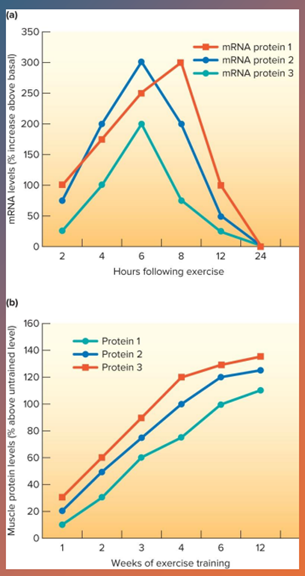
mRNA levels typically peak in 4–8 hours, back to baseline within 24 hours
Daily exercise required for training-induced adaptation
Illustration of the rise and fall of mRNA in muscle following exercise
Prolonged exercise training increases levels of specific muscle protein.
Primary and secondary signaling pathways interact to promote exercise-induced adaptations
Primary and secondary signals lead to muscle adaptations
Increased protein synthesis
Specific muscle adaptive responses depends on exercise stimulus
Resistance vs. endurance training
Intensity and duration of training
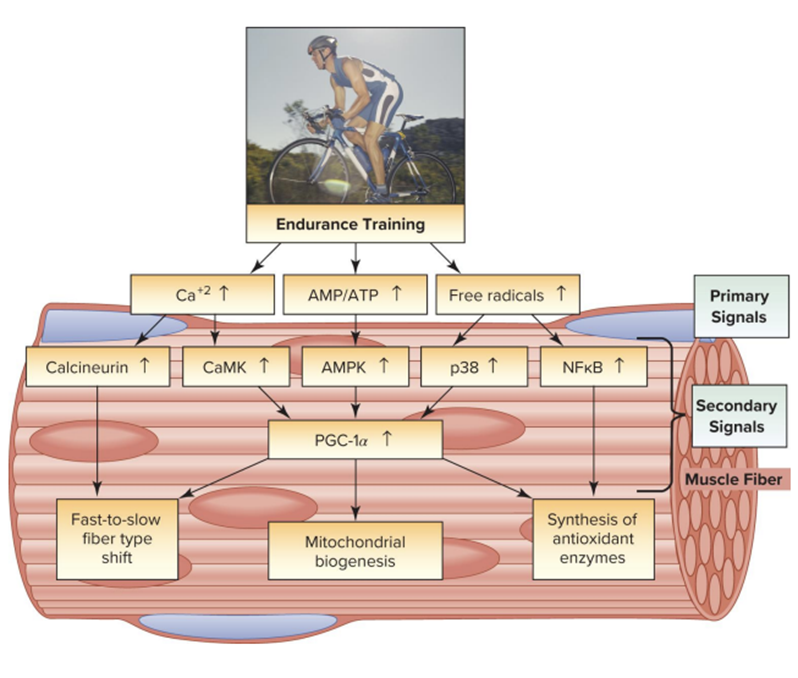
Primary signals leading to exercise-induced skeletal muscle adaptation
Primary signals responsible for exercise-induced adaptation
Mechanical stretch (resistance training)
Calcium (endurance training)
Increase in ctyosolid calcium within a few seconds
Calcium can trigger and activate other signaling pathways.
AMP/ATP (endurance training)
Low at rest because of the abundance of ATP
During exercise the number increases
Free radicals (endurance training)
Highly reactive molecules that cause DNA and protein damage.
Secondary messengers in skeletal muscle
AMP kinase (AMPK)
Important signaling molecules activated during endurance exercise; promotes glucose uptake and fatty acid oxidation.
AMPK inhibits components of the mTOR signaling pathway
mTOR is main signaling pathway responsible for protein synthesis during resistance exercise.
Induces PGC -1a;
Promotes glucose and fatty acid oxidation.
Mitogen-activated kinase (p38)
Important signaling for mitochondrial biogenesis.
PGC-1α
Master regulator of mitochondrial biogenesis; promotes angiogenesis (that is increased capillarization) and synthesis of antioxidant enzymes
Activated by p38 and calmodulin-dependent kinases
Secondary messengers in skeletal muscle
Calmodulin-dependent kinases (CaMK)
Activated by increases in cytosolic calcium-promotes activation of PGC-1α •
Calcineurin (phosphatase: removes a phosphate group from molecules) •
Participates in numerous adaptive responses of muscle including fiber regeneration and a fast-to-slow shift in fiber type
Involved in shift of type 2 fibers to type 1 during endurance training
Nuclear factor kappa B (NFκB)
Activated by radicals-promotes synthesis of antioxidant enzymes
Promotes inflammation
mTOR
Protein kinase-major regulator of protein synthesis and muscle size
Intracellular signaling in response to endurance exercise training
Why does NFkB lead to sytehesis of antioxidant enzymes?
Once you express NFkB you will start synthesizing anti-oxidants.
Coping mechanism
Retraining and VO2max
- Muscle mitochondria adapt […] to training
o […] within 5 weeks of training
- Mitochondrial adaptations lost quickly with detraining
o Loss of 50% of training gain within 1 week of detraining
o Majority of adaptation lost in […] weeks
- Requires 3–4 weeks of retraining to regain mitochondrial adaptations
quickly
Double
two
Muscle adaptations to anaerobic training
[…] exercise
Refers to short-duration, very heavy or severe intensity exercise bouts
Although standard definitions do not exist, two general types of high intensity exercise training are common
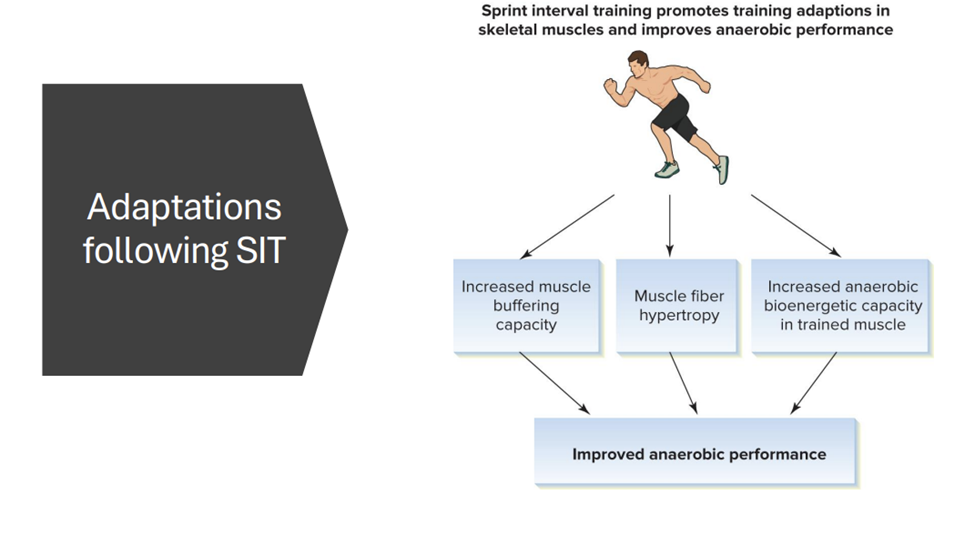
Sprint interval training (SIT)-severe exercise lasting 10-30s (>100% VO2 max)
High-intensity interval training (HIIT)-very heavy exercise lasting 60- 240s (80 to 100% VO2 max)
[…] training
Mostly rely on ATP-PC system
Energy to perform SIT primarily supplied by ATP-PC system and glycolysis
All out effort
[…] training
Indicating for clinical population
Energy required to perform 60s of HIIT would be largely (approximately 70%) anaerobic sources (ATP-PC system/glycolysis) whereas remainder of energy would come from aerobic sources
80-95% of HR max.
[…] training increases performance
Sprint training improves muscle buffering capacity by increasing both intracellular buffers and hydrogen ion transporters
Sprint training also results in hypertrophy of type II muscle fibers and elevates enzymes involved in both the ATP-PC system and glycolysis
High intensity interval training >60 seconds (at near or above VO2max) promotes mitochondrial biogenesis
Mainly see hypertrophy in type 2 fibers.
Anaerobic
SIT
HIIT
Anaerobic