Exam 3 A&P
 Call Kai
 Learn
Learn Practice Test
 Spaced Repetition
 Match
Match Flashcards
 Knowt Play
1/323

There's no tags or description
Looks like no tags are added yet.
Name | Mastery | Learn | Test | Matching | Spaced | Call with Kai |
|---|
No analytics yet
Send a link to your students to track their progress
324 Terms
The skeletal framework comprises of
Upper cervical vertebral column
Bones of Facial Skeleton
Cranial (skull) Bones
The upper portion of the vertebral column supports the
Skull and provides a scaffold for the neck
The Cervical vertebrae lies behind the
pharynx-laryngopharynx, oropharynx, and nasopharynx- and forms part of the posterior pharyngeal wall
The mandible
Single bone forming the lower jaw
Forms the only movable joint in the skull
Has two projections
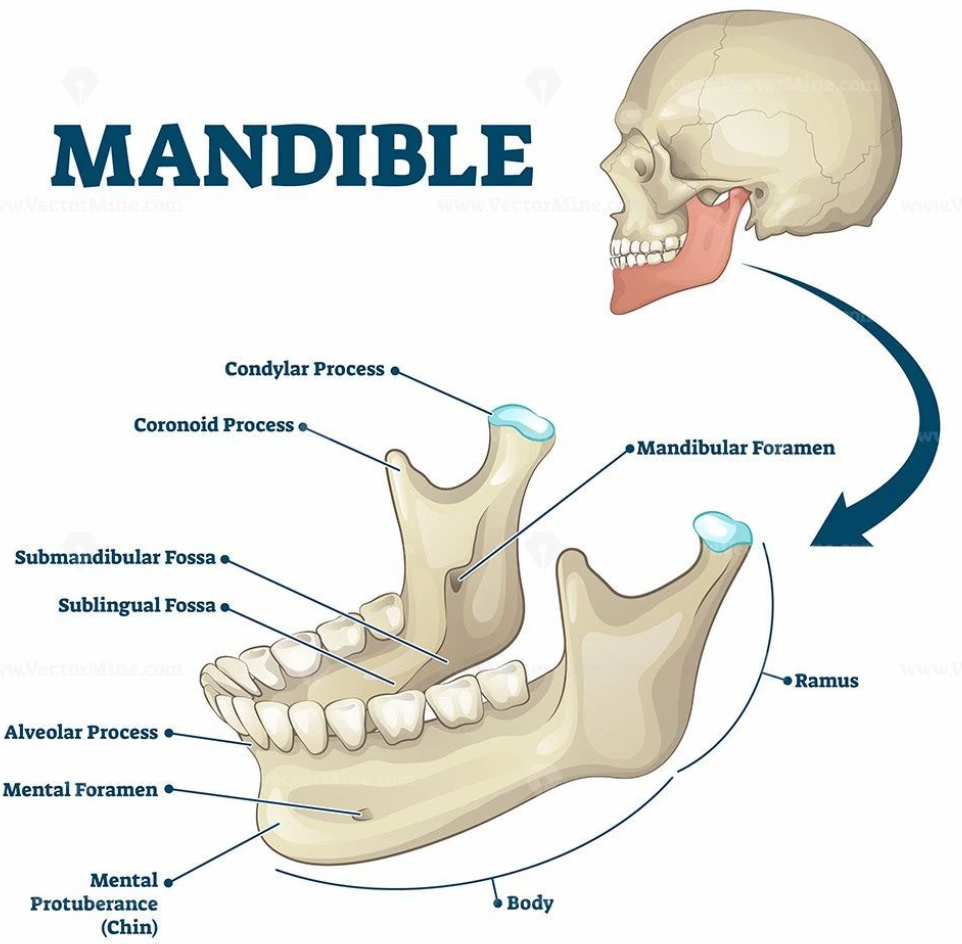
The mandible has two projections, what are those two projections called?
Condyloid Process
Coronoid Process
The Condyloid process
articulates with temporal bone by the TMJ
The Coronoid Process
for muscle attachment
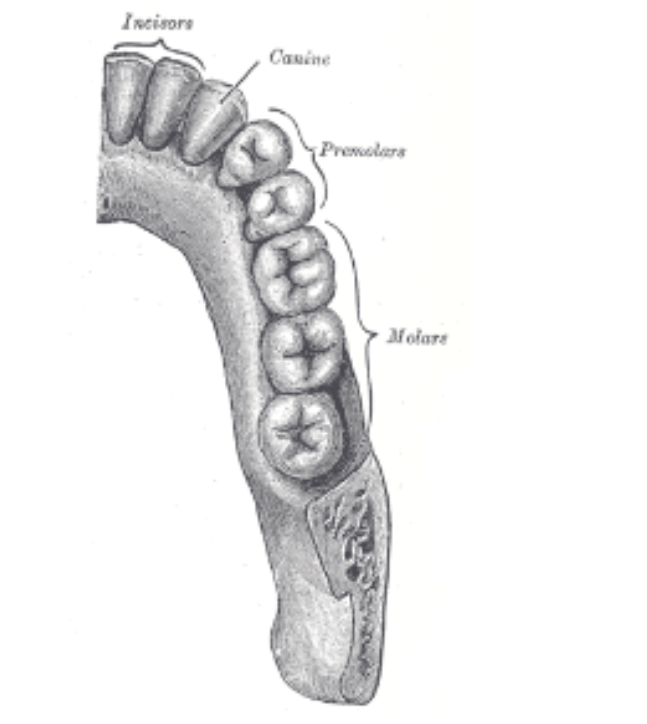
What is the arrangement of teeth in the dental arch
Incisors, Canine, Premolars, Molars
The mandible is an important structure because it contains
the lower teeth and the attachment for the tongue
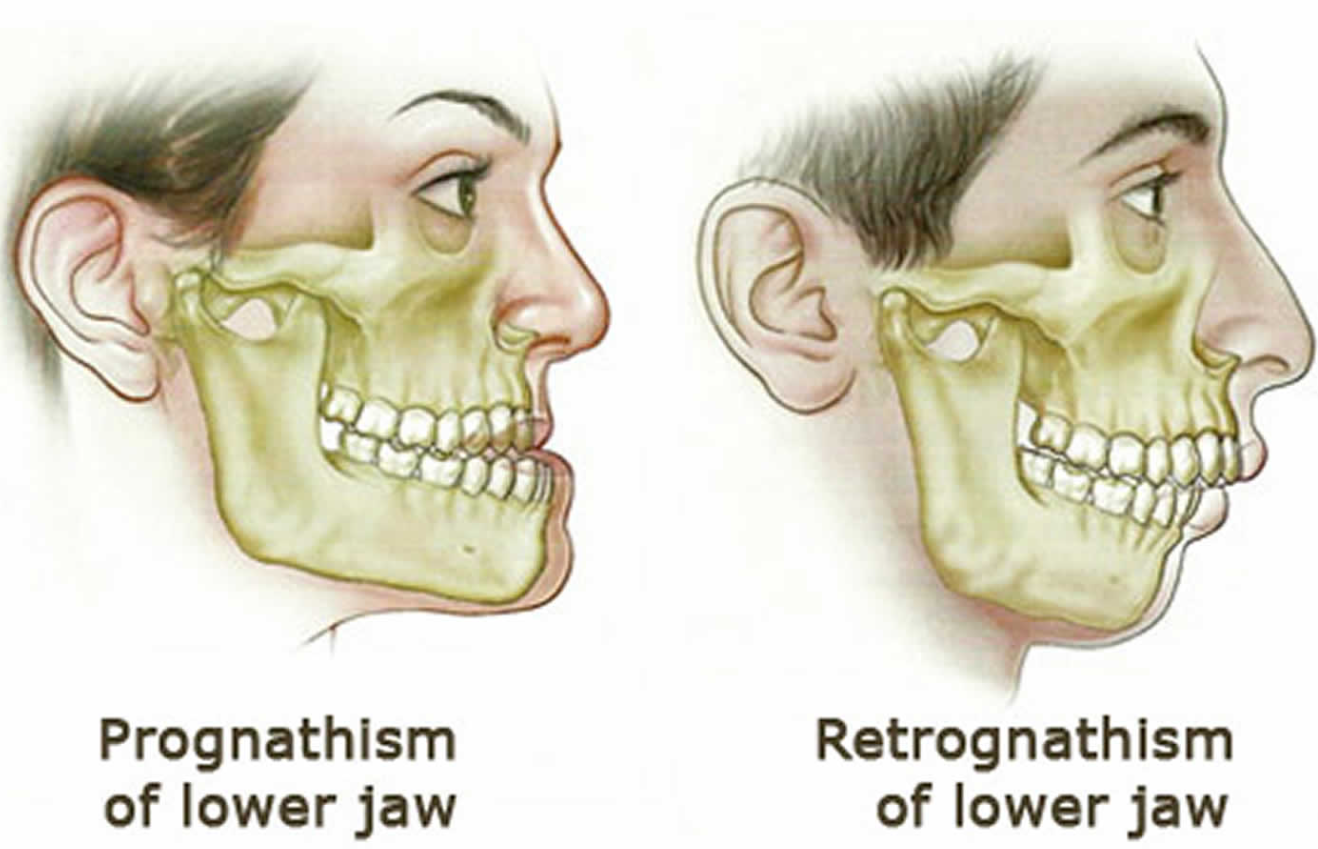
The mandible may be two things
Prognathic (class III)
Retrognathic (class II)
Prognathic mandible
protrudes forward
Retrognathic mandible
pulls back
Pierre Robin sequence
unusually small jaw, which alters tongue position and can induce problems with swallowing
Treacher Collins
Variety of facial deformities, including lowered eyes, absent cheekbones, cleft palate
Maxilla is a paired bone forming the
nose, upper dental ridge, and most of the hard palate
Houses upper teeth
Forms part of orbit of eye (floor)
Joints w/ all other facial bones except mandible
The maxilla has four processes, what are they?
Frontal
Zygomatic
Alveolar
Palatine
What does the frontal process provide?
framework for the nose, articulates with frontal one
What does the Zygomatic process provide?
articulates with zygomatic bone
The Alveolar process provides
holding the teeth
The Palatine process provides
floor of the nasal cavity, roof of the mouth
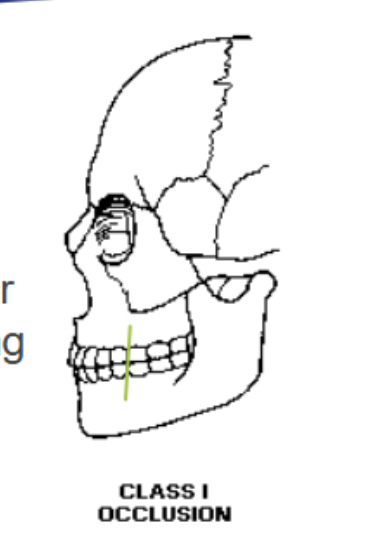
Class I (normal) occlusion
Normal facial profile
Adequate relationship between the mandible and maxilla bones
The cusps of the first mandibular molar interdigitate ahead and inside of the corresponding cups of the first maxillary molar
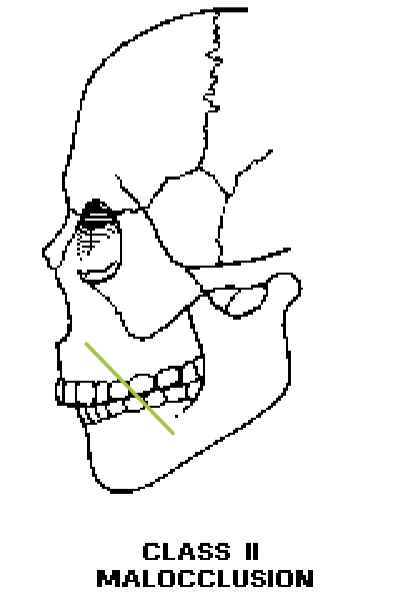
Class II Malocclusion
Retracted mandible
Deviant relationship between the mandible and maxilla bones (retrognathic)
The cusps of the first mandibular molar are behind and inside the corresponding cusps of the first maxillary (45% of the population)
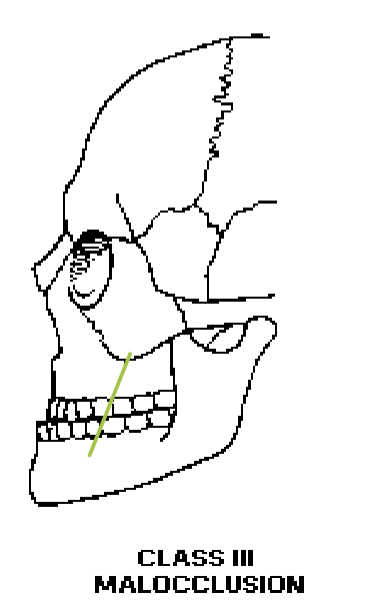
Class III Malocclusion
Prognathic mandible
Deviant relationship between the mandible and maxilla bones (prognathic)
The cusps of the first mandibular molar interdigitate a tooth or more ahead of the corresponding cusps of the first maxillary molar.
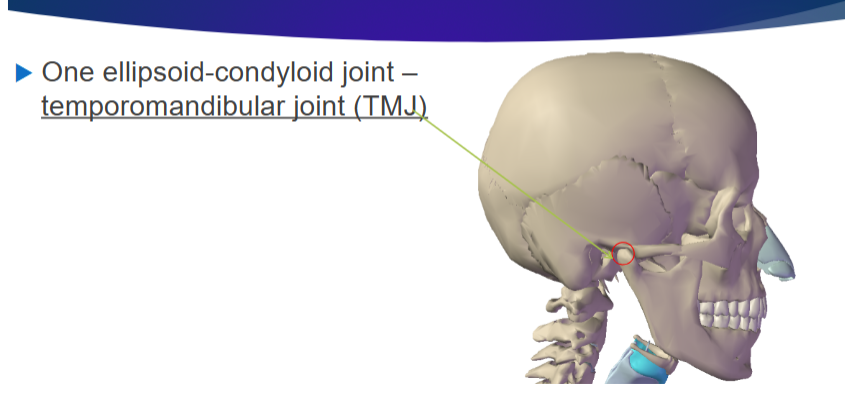
Temporomandibular Joint (TMJ)
The mandible articulates with the left and right temporal bones along the sides of the skull to form the TMJ
The TMJ is an ellipsoid-condyloid joint (ball and socket). This joint allows you to hinge and glide (front/back, side/side).
Three ligaments influence the TMJ movement including
Temporomandibular (lateral)
Sphenomandibular
Sylomandibular
The mandible can move in three different ways relative to the skull. What are those three movements?
Upward and downward
Forward and backward
Side to side
What is articulation?
Adjustment of the shape of the vocal tract by movement of articulators
Framework for articulation
Facial and cranial bones of the skull
What are the cavities of the articulatory system?
Oral
Buccal
Nasal
Pharyngeal
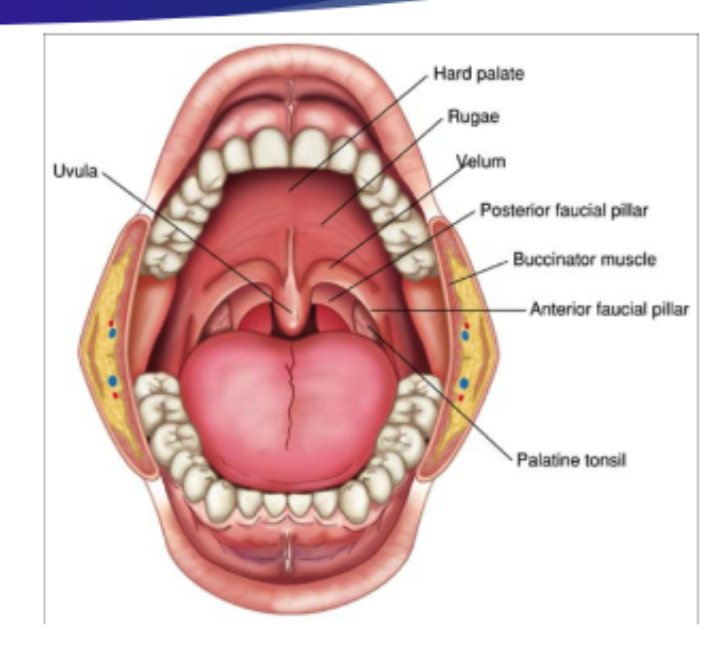
Cavities of the vocal tract: Oral
Extends from mouth to the faucial pillars
Size and shape of the oral cavity can be altered by movement of lips, tongue and mandible to make different speech sounds
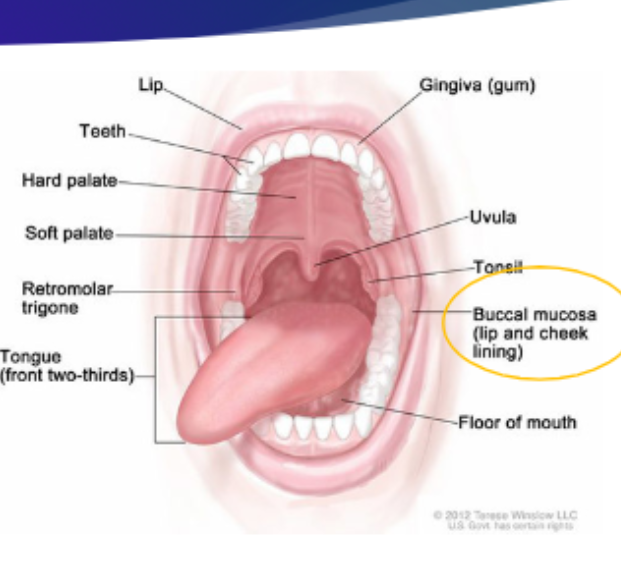
Cavities of the vocal tract: Buccal
Found between lips and cheeks and between the gums and teeth
Source of resonance
Plays a role in misarticulation /s/ (lateral /s/)
Within the cavities of the articulatory system are five structures that play a role in speech production, swallow, or to our immune system
Lips
Teeth
Tongue
Palate
Tonsils
What is the function of the lips? Consonants & Vowels
Consonants: /p, b, m, f, v, m/ need lip (labial movement
Vowels: most back vowels in English require labial movement for resonance but more important is lingual (tongue) movement
The most mobile articulator is the
tongue, followed by the lips
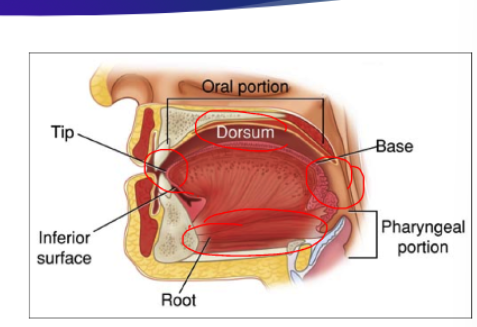
The structure occupying the floor of the mouth, consisting of
The tongue
Dorsum: superior surface
Tip (apex): anterior most portion
Base: resides in the oropharynx
Root: inferior
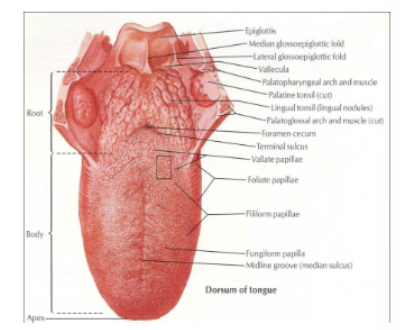
What are the tongue portions?
Oral/Palatine surface: 2/3 within the oral cavity
Pharyngeal surface: 1/3 within the pharyngeal cavity
Median fibrous septum divides the tongue into right and left halves (central sulcus)
The Palate consists of
the alveolar arch, hard palate, and soft palate (or velum)
To produce individual vowels and consonants, a speaker must be able to move
Lips
Tongue tip
Tongue body
Tongue root
Raise/Lower the jaw
Velum
Oral/nasal consonants
To swallow, we use the lips, tongue, cheeks, epiglottis, and the pharyngeal muscles
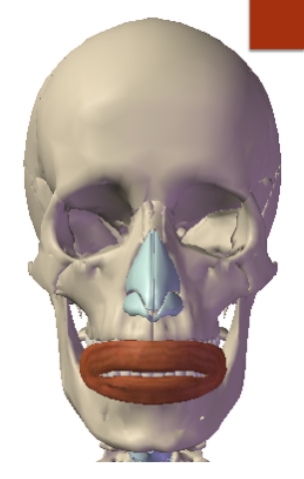
Orbicularis Oris muscle: Origin
Corner of lips
Orbicularis Oris muscle: Course
Laterally within lips
Orbicularis Oris muscle: Insertion
Opposite corner of lips
Orbicularis Oris muscle: Function
Constrict oral opening
Orbicularis Oris muscle: Innervation
Facial nerve
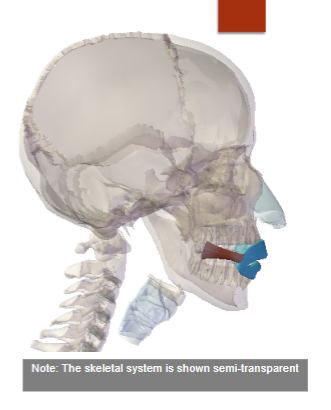
Risorius: Origin
Posterior portion of face
Risorius: Course
Forward
Risorius: Insertion
Orbicularis Oris at the corners of mouth
Risorius: Function
To spread the lips (smiling); pulls the angle of the mouth back
Risorius: Innervation
Facial nerve
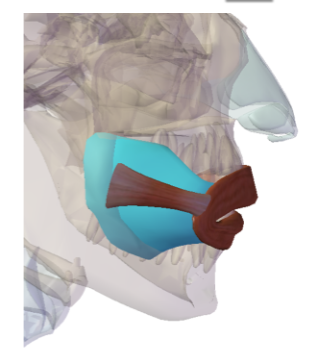
Buccinator: Origin
Alveolar process of maxilla, mandible
Buccinator: Course
Forward
Buccinator: Insertion
Upper and lower border of the orbicularis Oris
Buccinator: Function
Compresses the cheeks for sucking and chewing (hold food between the molars); can draw the corners laterally
Buccinator: Innervation
Facial nerve
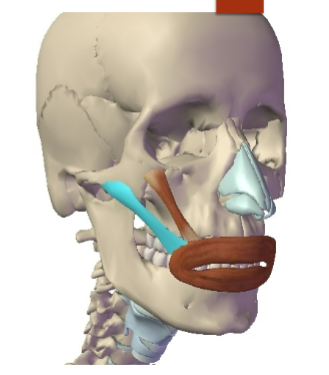
Zygomatic Major: Origin
Lateral to the zygomatic minor on the zygomatic bone
Zygomatic Major: Course
Obliquely down
Zygomatic Major: Insertion
Corner of the orbicularis Oris
Zygomatic Major: Function
Elevates and retracts the angle of mouth (smile)
Zygomatic Major: Innervation
Facial nerve
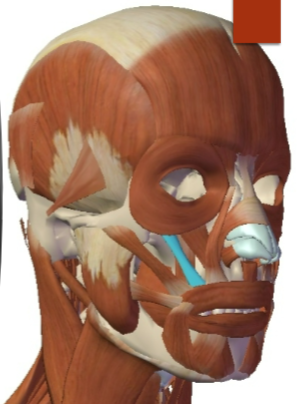
Zygomatic Minor: Origin
Facial surface of zygomatic bone
Zygomatic Minor: Course
Downward
Zygomatic Minor: Insertion
Mid-lateral region of upper lip
Zygomatic Minor: Function
TO draw the upper lip forward
Zygomatic Minor: Innervation
Facial nerve
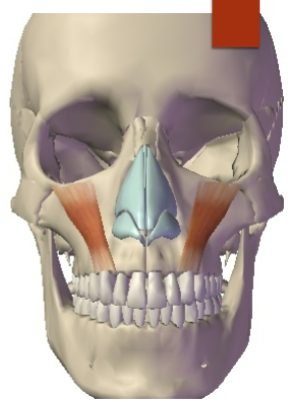
Levator Labii Superioris: Origin
Inferior surface of the orbital cavity of the eye
Levator Labii Superioris: Insertion
Orbicularis Oris/cartilage of nose
Levator Labii Superioris: Function
To elevate the upper lip for a broad smile
Levator Labii Superioris: Innervation
Facial nerve
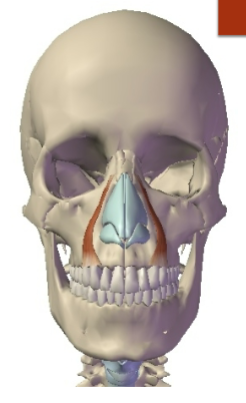
Levator Labii Superioris Alaeque Nasi: Origin
Frontal process of maxilla
Levator Labii Superioris Alaeque Nasi: Course
Down, lateral to naris
Levator Labii Superioris Alaeque Nasi: Insertion
Mid-lateral area of upper lip
Levator Labii Superioris Alaeque Nasi: Function
To elevate the upper lip for a broad smile
Levator Labii Superioris Alaeque Nasi: Innervation
Facial nerve
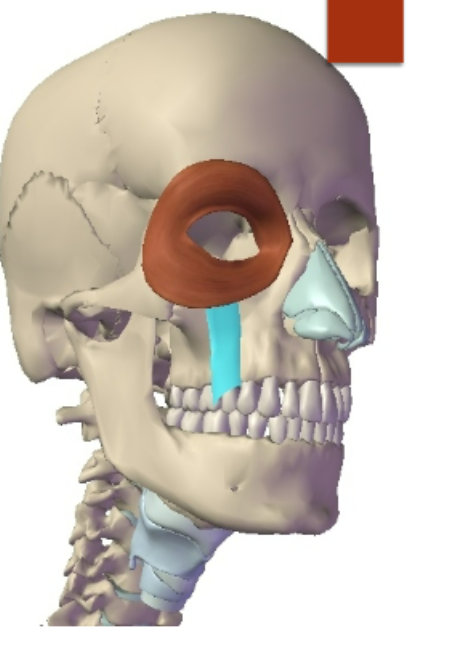
Levator Anguli Oris: Origin
Canine fossa of maxilla
Levator Anguli Oris: Course
Down
Levator Anguli Oris: Insertion
Orbicularis Oris
Levator Anguli Oris: Function
Draws corner of mouth up and medially
Levator Anguli Oris: Innervation
Facial nerve
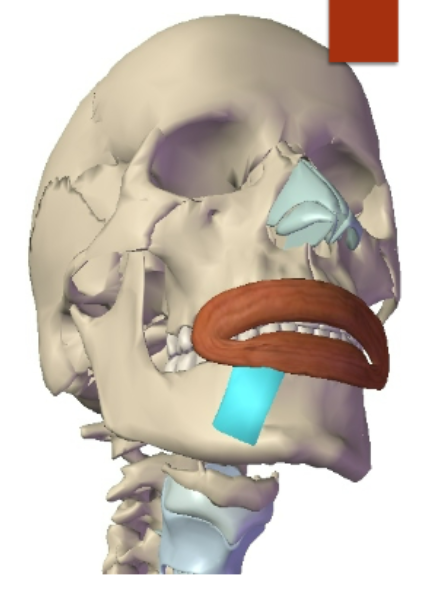
Depressor Labii Inferior: Origin
Oblique line of the mandible
Depressor Labii Inferior: Course
Up and into the lower lip
Depressor Labii Inferior: Insertion
Lower lip
Depressor Labii Inferior: Function
To depress the lower lip
Depressor Labii Inferior: Innervation
Facial nerve
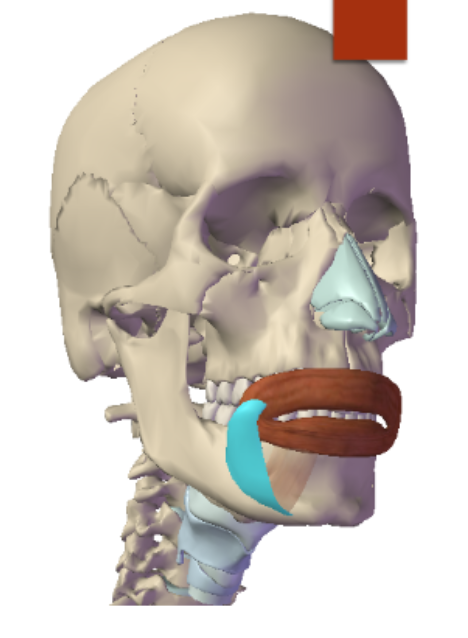
Depressor Anguli Oris: Origin
Lateral margins of the mandible on the oblique line
Depressor Anguli Oris: Course
Fanlike upward
Depressor Anguli Oris: Insertion
Orbicularis Oris and upper lip corner
Depressor Anguli Oris: Function
To pull the corners of the mouth down and compress upper lip to lower lip
Depressor Anguli Oris: Innervation
Facial nerve
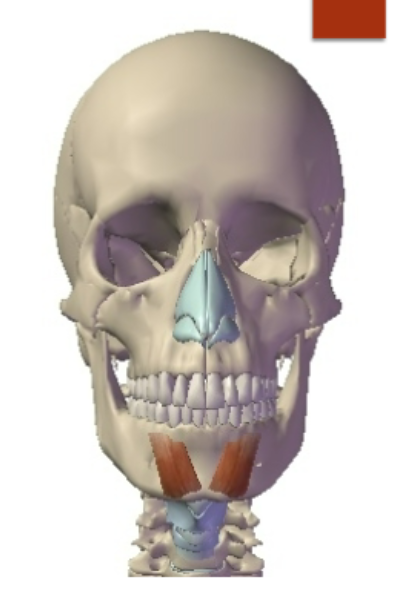
Mentalis: Origin
Incisive fossa of the mandible
Mentalis: Course
Down
Mentalis: Insertion
Midline of the mandible (chin)
Mentalis: Function
To raise and protrude the lower lip (sometimes called the pouting muscle)
Mentalis: Innervation
Facial nerve
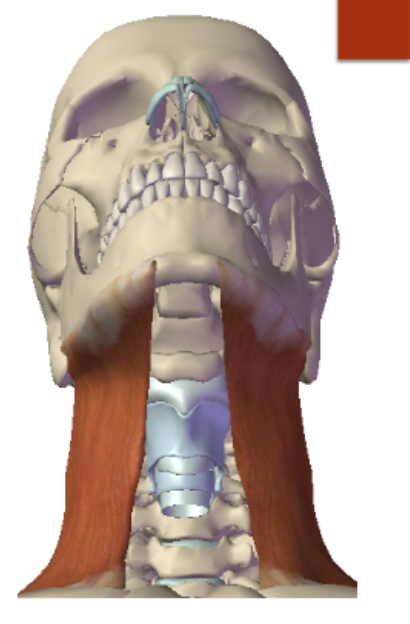
Platysma: Origin
The fascia overlaying the pectoralis major and deltoid
Platysma: Course
Up
Platysma: Insertion
Corner of mouth, lower margin of mandible
Platysma: Function
Primarily mandibular depressor, secondarily lower lip depressor
Platysma: Innervation
Facial nerve
Which of the muscles is a lip contractor
Orbicularis Oris Muscle
Which of the muscles is a cheek compressor
Buccinator
Which of the muscle’s functions is lip spreading (2)
1.Risorius 2. Zygomatic major