Chemistry Unit 9 Thermochemistry IHS Henry
 Call Kai
 Learn
Learn Practice Test
 Spaced Repetition
 Match
Match Flashcards
 Knowt Play
1/8

There's no tags or description
Looks like no tags are added yet.
Name | Mastery | Learn | Test | Matching | Spaced | Call with Kai | Chat |
|---|
No analytics yet
Send a link to your students to track their progress
9 Terms
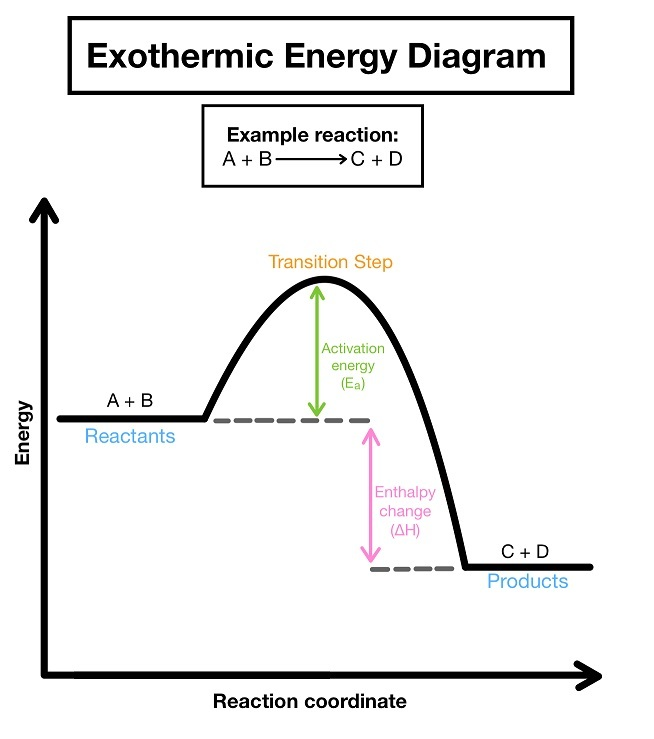
Exothermic Reactions
“Feels” hot
Heat energy is being released/produced
ΔH Notation
Reaction → Products ΔH = (-) kJ/mol
Energy Term Notation
Reaction → Products + E*
* Will always be a positive value in ET notation
(System) [-Q] → Surroundings [+Q]
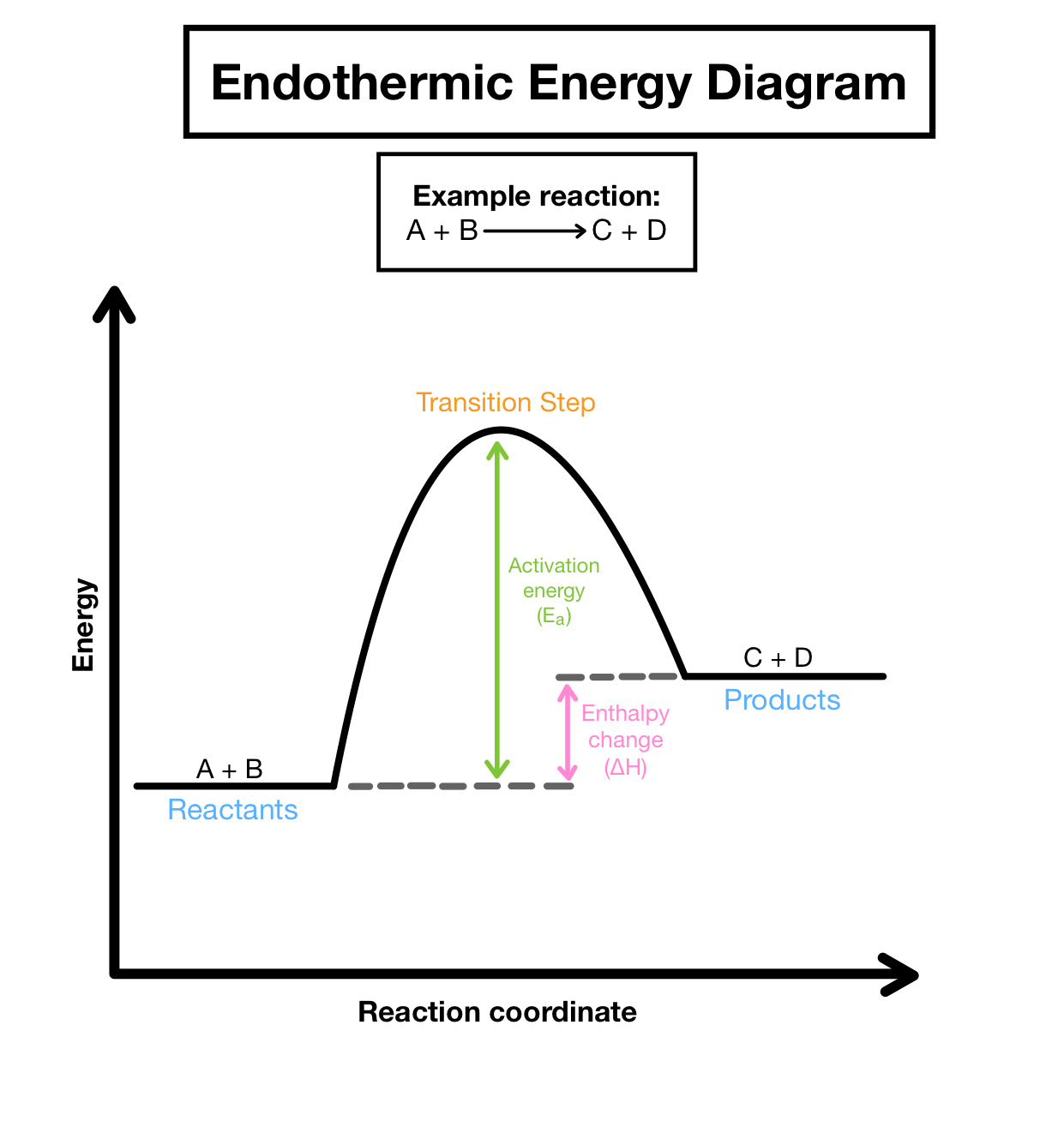
Endothermic Reactions
“Feels” cold
Heat energy is being absorbed/required
ΔH Notation
Reaction → Products ΔH = (+) kJ/mol
Energy Term Notation
Reaction + E*→ Products*
* Will always be a positive value in ET notation
(System) [+Q] ← Surroundings [-Q]
Changes in Enthalpy
Enthalpy (ΔH)
The amount of hear energy transferred during a reaction (kJ/mol)
ΔH ≈ q* (products - reactants)
* ONLY TRUE UNDER CONSTANT PRESSURE
Activation Energy
Minimum amount of energy required to create products
Peak - Products
Always a positive value
Ea
Bond Enthalpy Equation
ΔHBond E = ΣHReactants + ΣHProducts
E.g.
ΣHR = [1 mol x 120 kJ/mol] + [4 mol x 414 kJ/mol] = 1776 kJ
ΣHP = [2 mol x -427 kJ/mol] + [3 mol x -283 kJ/mol] = -1703 kJ
1776 + (-1703) = 73 kJ
When chemical bonds of reactants are broken in a reaction
Enthalpy of reactants = (+)
ΔHReactants = (+)
Endothermic process
When chemical bonds of products are formed in a reaction
Enthalpy of products = (-)
ΔHReactants = (-)
Exothermic process
Thermochemistry Definition
Study of heat energy associated with physical transformations and/or chemical reactions
Heat Energy Properities
Energy cannot be created or destroyed; only transferred/transformed
Energy always flows from hot to cold