D.1 Gravitational Fields
 Call Kai
 Learn
Learn Practice Test
 Spaced Repetition
 Match
Match Flashcards
 Knowt Play
1/13

There's no tags or description
Looks like no tags are added yet.
Name | Mastery | Learn | Test | Matching | Spaced | Call with Kai |
|---|
No analytics yet
Send a link to your students to track their progress
14 Terms
What are Kepler’s three laws of orbital motion?
First: Orbits are ellipses with the sun at one focus. Second: A line joining a planet and the sun sweeps out equal areas in equal times. Third: The square of the orbital period is proportional to the cube of the orbital radius.
What is Newton’s universal law of gravitation in words?
The gravitational force between two point masses is directly proportional to the product of their masses and inversely proportional to the square of their separation.
How is gravitational field strength defined at a point?
Gravitational field strength is the gravitational force experienced per unit mass by a small point mass placed at that point.
What is the formula for gravitational field strength at a distance from a mass?
Gravitational field strength equals the gravitational constant times the mass of the object divided by the separation squared.
How is gravitational potential energy defined for a system?
It is the work done to assemble the system by bringing the components from an infinite separation to their current positions.
Why is gravitational potential always a negative value?
Potential is defined as zero at infinity; since the gravitational force is attractive, work is done by the field to move a mass closer, resulting in a negative value.
What is the relationship between gravitational field strength and gravitational potential?
Gravitational field strength equals the negative gradient of the gravitational potential.
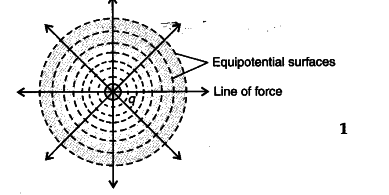
What are equipotential surfaces and how do they relate to field lines?
Equipotential surfaces are surfaces of constant potential; they are always perpendicular to gravitational field lines at every point.
How is the escape speed of an object calculated?
Escape speed equals the square root of the quantity two times the gravitational constant times the mass of the planet divided by the radius.
What is the formula for the orbital speed of a satellite in a circular orbit?
Orbital speed equals the square root of the quantity the gravitational constant times the mass of the planet divided by the orbital radius.
What happens to the height and speed of a satellite if it experiences atmospheric drag?
The drag force causes the satellite to lose energy and spiral inward to a lower height; as it moves to a lower orbit, its orbital speed actually increases.
How do you calculate the work done to move a mass between two points in a field?
Work done equals the mass being moved times the change in gravitational potential between the two points.
When can an extended body (like a planet) be treated as a point mass?
An extended body can be treated as a point mass if it is spherically symmetric, allowing us to assume all its mass is concentrated at its geometric center.
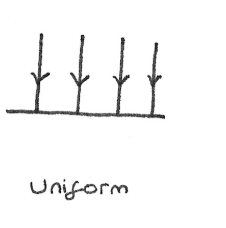
What is the visual representation of a uniform gravitational field?
A uniform field is represented by parallel, equally spaced field lines.