AEBI 211 Lecture 9: Intro to Development
 Call Kai
 Learn
Learn Practice Test
 Spaced Repetition
 Match
Match Flashcards
 Knowt Play
1/24

There's no tags or description
Looks like no tags are added yet.
Name | Mastery | Learn | Test | Matching | Spaced | Call with Kai |
|---|
No analytics yet
Send a link to your students to track their progress
25 Terms
oocyte
immature female germ cell
ovum (pl. ova)
mature female germ cell (HUGE compared to somatic cells)
egg
general term—> organic vessel where an embryo develops
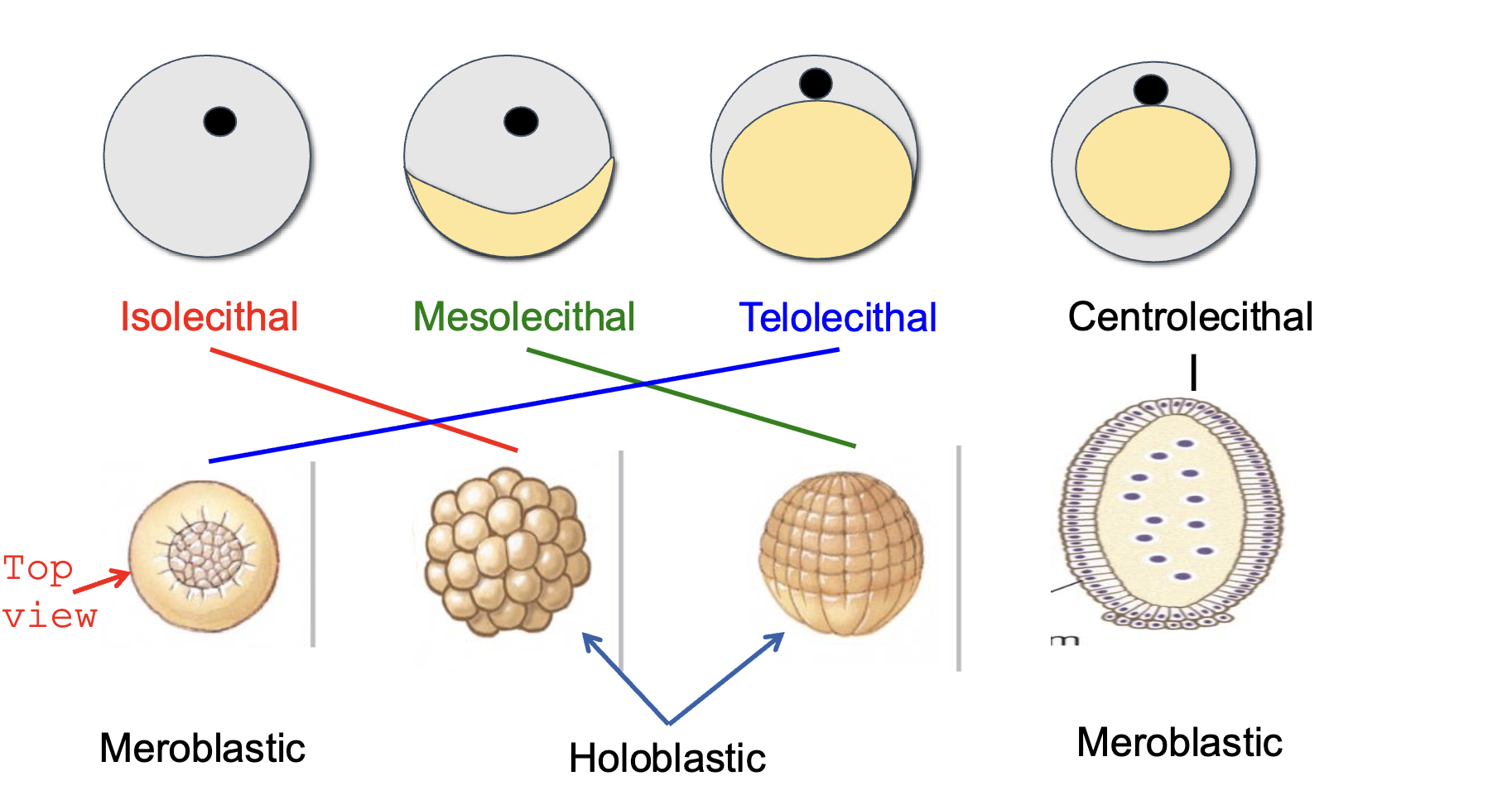
Isolecithal
very little yolk, evenly distributed through egg
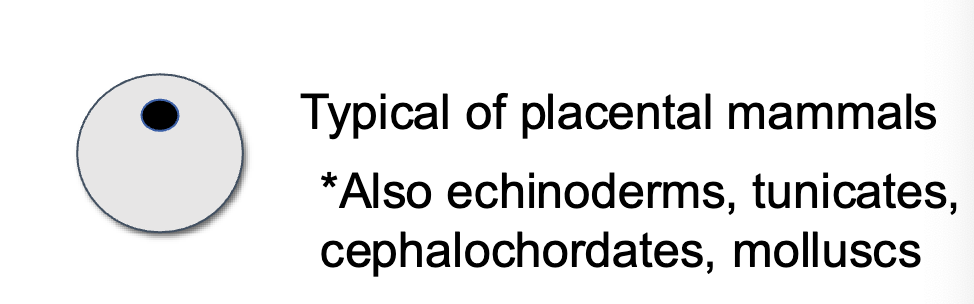
Mesolecithal
moderate amount of yolk, concentrated at vegetal pole

Telolecithal
Abundance of yolk densely concentrated at vegetal pole

Centrolecithal
Large, centrally located mass of yolk
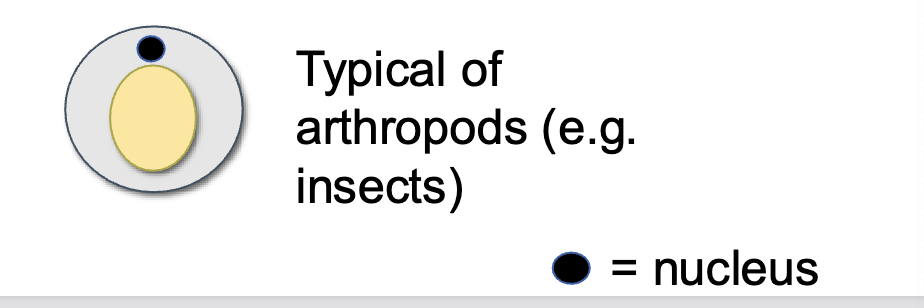
What developmental patterns are associated with lots of yolk? (eg. telolecithal eggs)
Young ones exhibit DIRECT development!
Develops directly from embryo to mini adult
What developmental patterns are associated with little yolk? (eg. isolecithal, mesolecithal eggs)
Young exhibit INDIRECT development
Goes through larval stage capable of feeding itself
Goes through metamorphosis to reach adult stage
(eg. amphibians, echinoderms, tunicates, cephalochordates, mollucs)
Exception: mammals→ direct development
Gametes
mature haploid germ cell (male or female)
Zygote
fertilized egg: diploid cell from fusion of male and female gametes
Cleavage
1) repeated division of embryo without growth (skips G-phase of mitosis)
2) single large egg cell—> many smaller cells (blastomeres)
3) By the end, zygote=blastula
Cleavage types: Hobloblastic
Complete and equalish divisions of cells
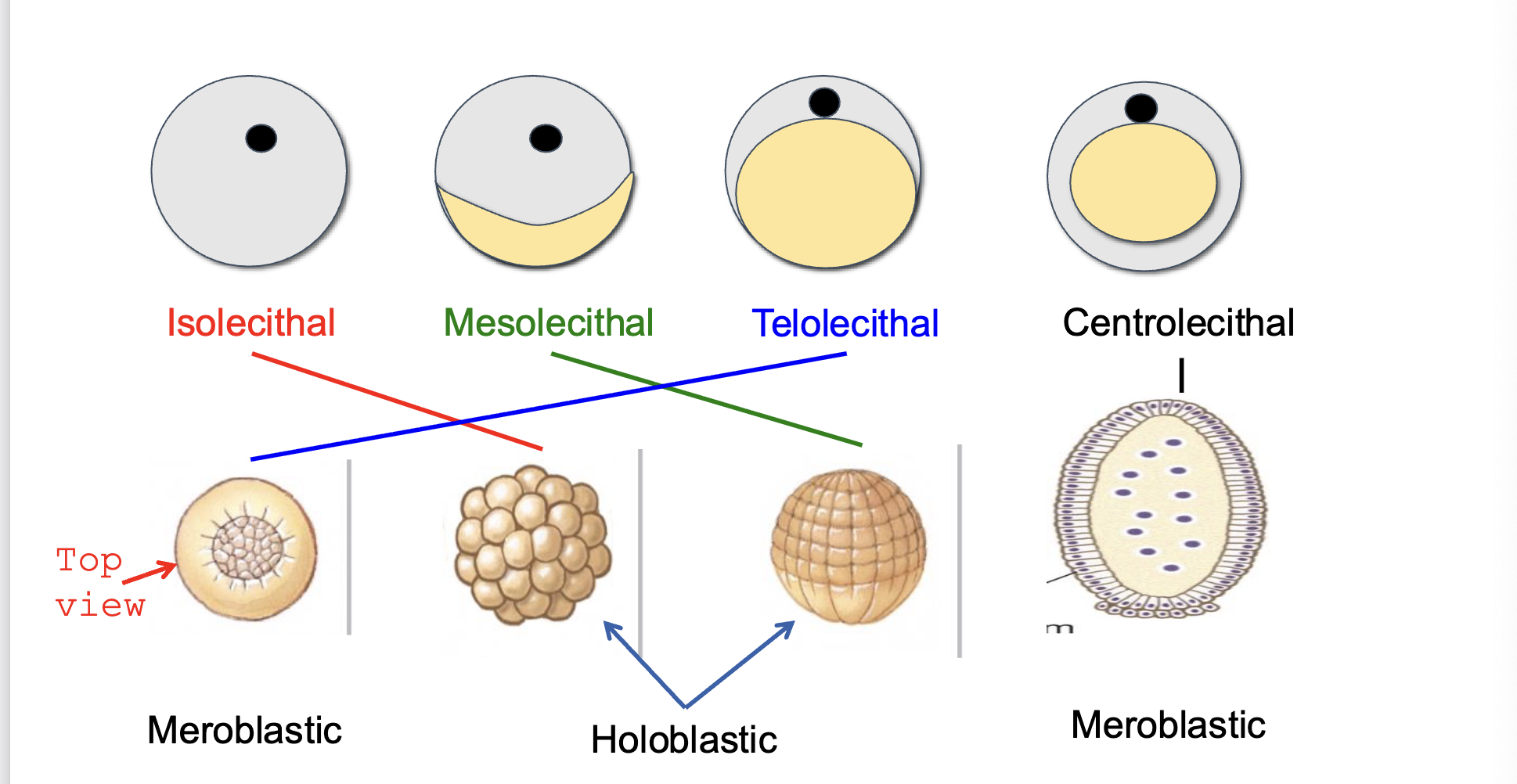
Cleavage types: Meroblastic
restricted to a small area of egg
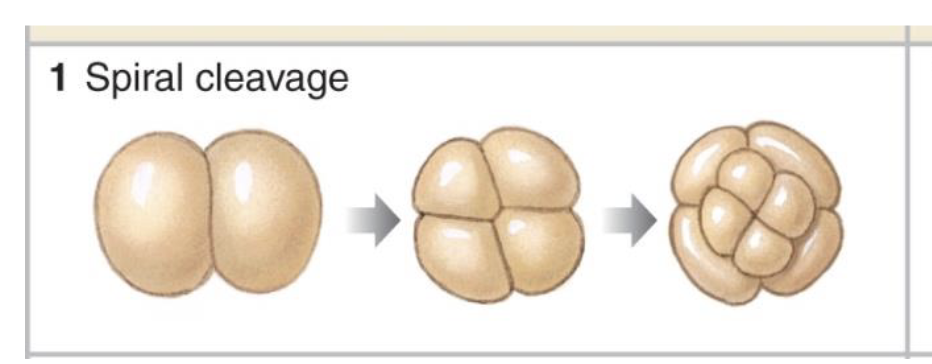
Cleavage direction types: Spiral cleavage
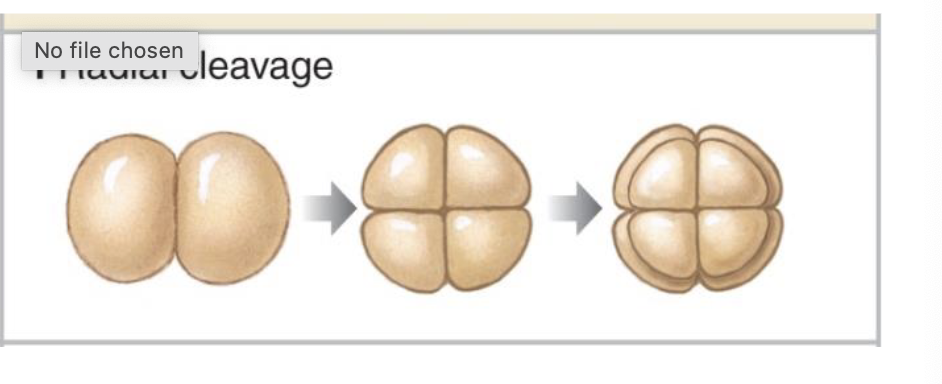
Cleavage direction types: Radial cleavage
What does Gastrulation do?
converts spherical blastula → 2-3 layered embryo
what are the layers of the layered embryo called?
germ layers:
Blastula: 1 germ layer
Gastrula: 2-3 germ layers
Describe the gastulation process
In a process called invagination, one side of the blastula bends inward. This forms and internal pouch called the gut cavity (aka: archenteron or gastrocoel)
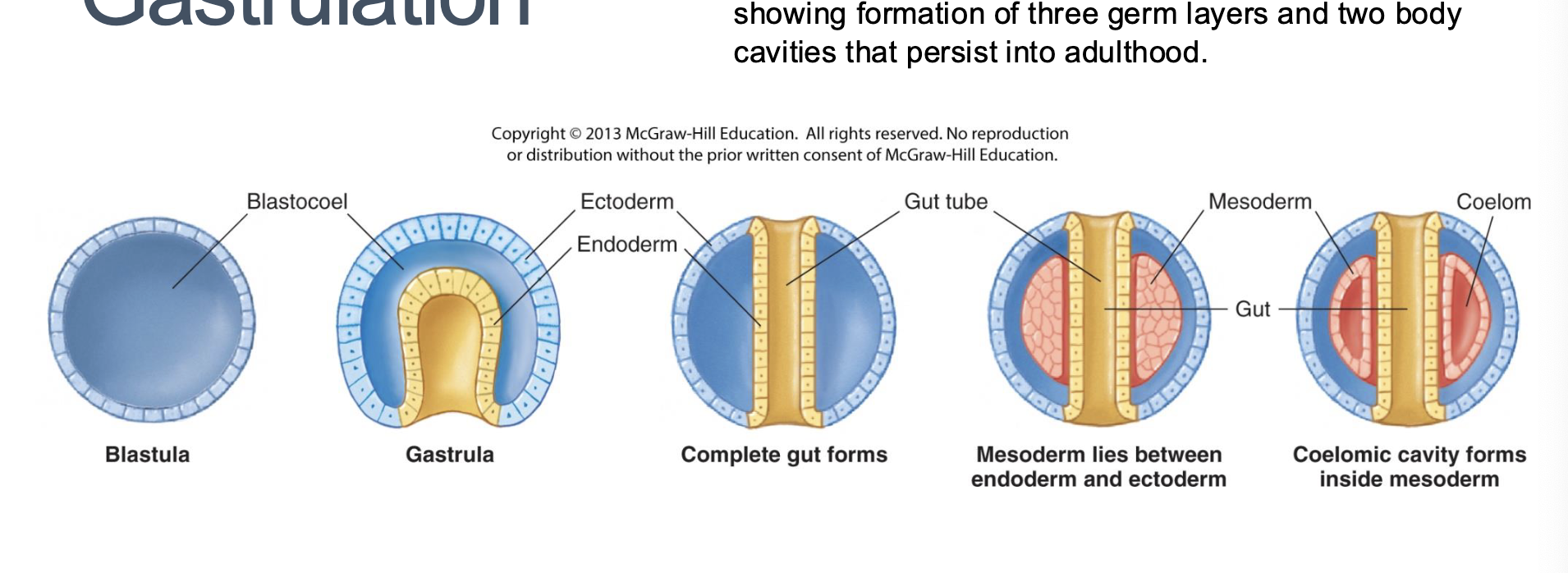
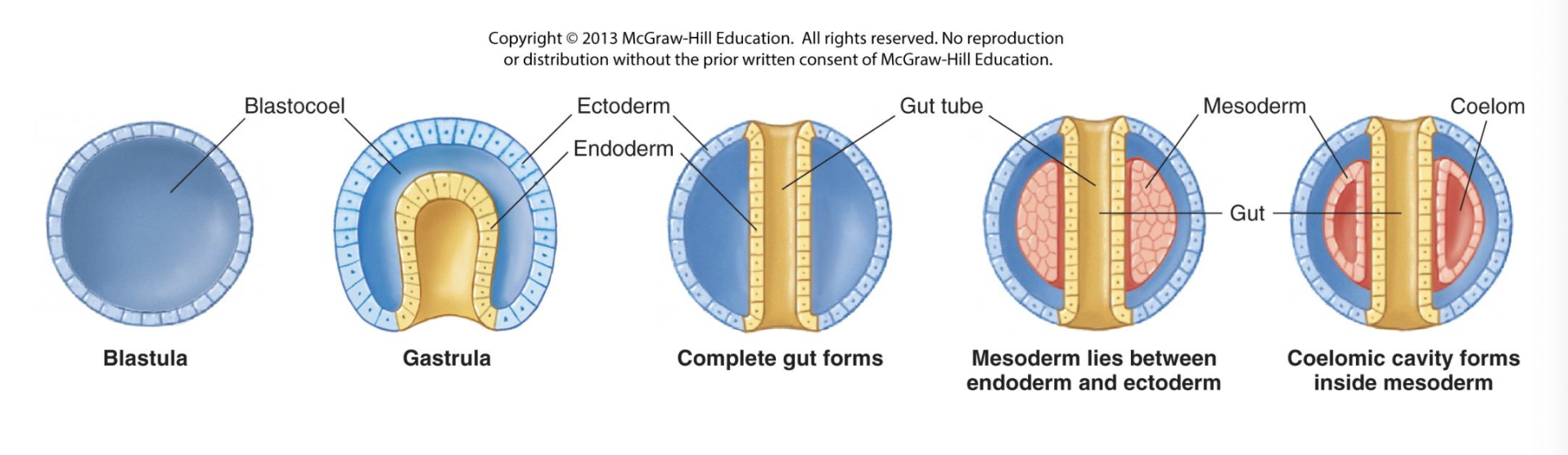
What are some gastrulation terminology? (ectoderm, endoderm, blind gut, mesoderm, coelom)
Ectoderm: Outer layer of cells (lining the blastocoel)
Endoderm: Inner layer of cells (lining the gut)
Blind gut: when the gut opens ONLY at the blastopore
Mesoderm: third layer formed from the endoderm (not all animals)
Coelom=cavity completely surrounded by mesoderm (bonus: is there one coelom or two??)
How do we differentiate Protosomes and deuterosomes?
Context: most animals have a complete gut w second opening (the anus)
Difference: Whether the blastopore becomes the mouth or the anus.
How many layers? (diploblastic, tripoblastic, etc)
One germ layer: animals stopping at blastula stage (eg. some sponges)
Diploblastic: 2 germ layers (eg. some sponges, sea anemones, jellies)
Triploblastic: 3 germ cells: most animals (eg. everyone else!)
Organogenesis: how do organs develop?
Organs develop from specific germ layers:
1) formation of nervous system (formed from ectoderm)
2) First functional organ: the heart (formed from mesoderm)
How do tissues develop?
From specific germ layers!
Growth phase
Longest phase in animal development! (should I know examples such as human fetus and chicks’ embryonic development?