Weather processes and phenomena
 Call Kai
 Learn
Learn Practice Test
 Spaced Repetition
 Match
Match Flashcards
 Knowt Play
1/50

There's no tags or description
Looks like no tags are added yet.
Name | Mastery | Learn | Test | Matching | Spaced | Call with Kai |
|---|
No analytics yet
Send a link to your students to track their progress
51 Terms
What is gas
water vapour, an invisable gas when tempretures are above 100oc but can exist below that
what is a liquid
water is stable between 0oc and 100oc but can exist as a super heater or super cooled [40oc <]
what is a solid
water vapor is in a stable phase of mositure below 0oc
what is the change between gas to solid and solid to gas
Deposition
sublimation
what is humidity
how moist the air is due to the water vapour it contains
what is absoloute humidity
the actual ammount if water vapor in a given volume of air g/m3
what is relitive humidity
how close to saturation air is. how much water vapor air is holding compared to the potential it could at that tempreture and pressure.
what is the equation for relitive humidity
actuale water vapour content/ saturation water capacity x100
what is 100% relitive humidity
Dew point/saturation
what is condensation leval
the specific altitude in the atmosphere at which rising parcel of air cools to its dew point and becomes saturated to form clouds
what is condensaition nucli
An impurity made up of e.g Dust, polutants, salt, ash
Found in ALL types of precipitation
what is evaporation
the process at which liquid water vapor is transformed into gas [lots of energy needed]
what is sublimation
the process of direct change of state from a solid to a gas without passing through the liquid state
what is condesation
the change of water vapour in gas state into a liquid when air is cooled to dew point
what are the three types of condensation
Conduction
Radiation
Expansion
what is conduction cooling
Contact
Cooling of air when a direct contact with a cooler surface creates heat transfer from air to that surface
what is radiation cooling
NIGHT
Cooling caused by loss of heat from earths surface to air via longwave radiation
what is expansion cooling
cooling of air as it rises and expands due to lower pressure
what are the three causes of precipitation
Frontal
Convectional
Orographic uplift
what is albedo
The refelectiveness of a surface
More = reflected
Less = absorbed
what is fog and how is it formed
Tiny water droplets suspended in the air near the ground reduce visability to less than 1km
moist air is cooled to bellow dew point due to contact with cool air/sea or radiation cooling
what is dew and how is it formed
small droplets of water on leaves, grass, spider webbs ect.
water vapor condenses onto cold objects. still conditions allow prolonged contact with the object
what are clouds and how are they formed
At low altitudes clouds are suspensions of tiny water droplets with an average diamiter of 0.01mm. These are super cooled where they exist at temps bellow 0oc but are too light to fall
Formed where moist air rises, expands and cools aidabetically to bellow dew point and condenses around condensation nucli
what are raindrops and how do they form
Normally 2mm in diamiter
formed when falling raindrops collide and coalase
what are snowflakes and how is it formed
agrregates of ice crystals arraged in hexigonial patterns
water vapour in a cloud changes to ice and when crystals fall they collide and change [agrrigation]
what are hailstones and how is it formed
roughly circular, made of alternating layers of opaque rime and clear ice glaze
formed when ice particles fall and rise in cumulonibous clouds and supper cooled water droplets collide and freeze around them [alcreation]
what is raddiation fog
forms when ground looses heat through long wave raddiation at night
needs cool/calm/clear skys
what is advection fog
warm moist air moves over a cold surface cooling air to dew point
happens over sea often
what are the three shapes of cloud
Stratus
Cumulos
Cirrus
what is a stratus coud
Larger
Form with strong vertical uplift
over a wide space
what is a cululous cloud
More verticle uplift
in a localised area
heaped shaped clouds
flat bases / globular upper surfaces
what are cirrus clouds
Form where condensation occours
high hights
wispy clouds made of ice
what are the sub cattogrys for clouds altitude
high Cirro
middle = alto
low = stratus/cummulous
what are the two types of cloud that produce rain
Nimbostratus
Cumulonibus
what are charecteristics of rain clouds
Large verticle extent
prevents sunlight = dark/grey
what are nibostratus clouds
thick and dark layer of cloud type
can be 5000m thick
steady rain
what are cumulonibus clouds
Thickest cloud type
dense, black and grey
large verticle extent [sea leval - tropoporse]
Spreads out at the top making an anvil head
what are the two theories of how precipitation grows
collision theory
bergen friendsine theory
what is collision theory
Diffrent sized water droplets fall at diffrent speed, they collide
what is coalesense
when 2x H20 molocules collide
what is aggregation
2x ice crystals collide
what is accreation
when ice molocules collect water to form hail
what is the bergeron-findersen theory
in mixed clouds (ice crystals + supercooled water droplets),
ice crystals grow rapidly by vapour deposition as water droplets evaporate.
Ice crystals grow until heavy enough to fall;
may melt into raindrops.
Dominant in mid-latitude clouds.
How is hail formed
At the top of the cumulonimbus cloud temps = bellow 0oc
Freezing occours in upper cloud
updrafts decreace and ice crystal falls
it eats liquid water before bieng lifter back into the top of cloud
this repreats untill it is heavy enough to fall
how is dew formed
On calm cloudless nights radiation cooling occurs
water vapor condenses on a cloud surface
*If this happens with a slight breeze then it becomes fog
how is fog formed
Close to the earths surface
cloudless night when ground has become cold
how is advection fog formed
moisture ladened air moves over the sea and creates fog as it comes into contact with cooling land
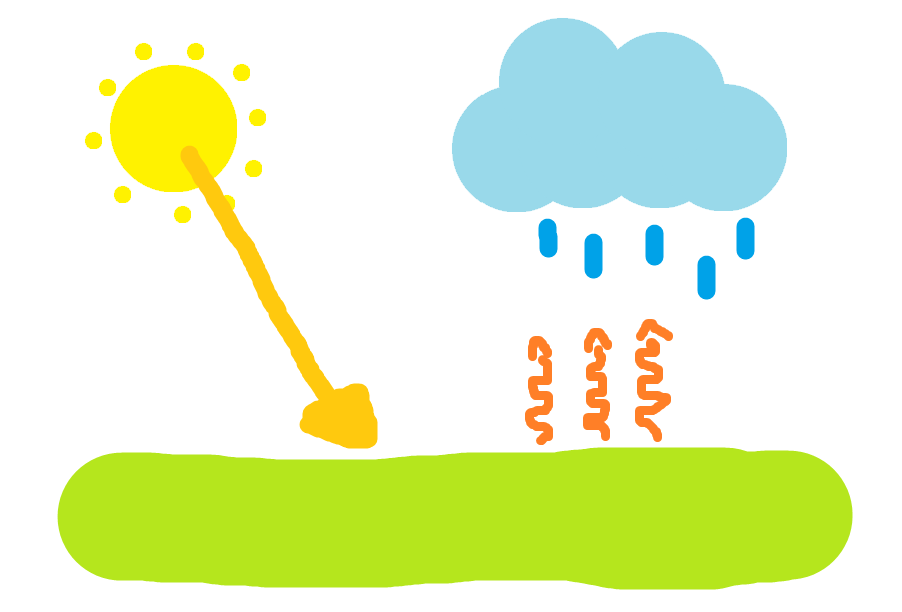
what are the steps to convection rainfall
Hot ground heats air above it. Heated air rises as it is less dense
1) Short wave raddiation heats ground
2) ground heats air above it due to convection
3) air expands and cools adiabatically
4) rising air cools the higher it gets
5) at dew point it condenses forming cumbonimbous clouds
common around ITCZ and heavy, intense, short-duration rainfall
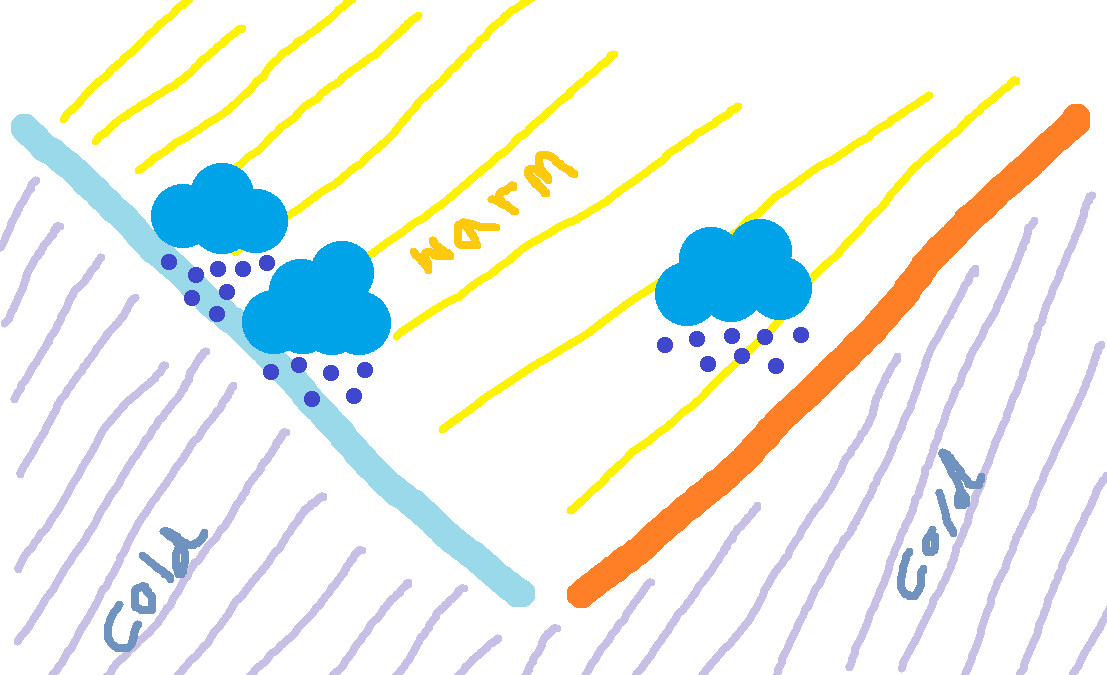
what are the steps to frontal uplift
warm air meets cold air and the lighter warm air is forced up on the cold air .
1) Warm air + cold masses meet
2) cold air stays near ground
3) lighter warm air is forced to rise over the denser cold air along a front
4) rising air cools and c nimbostratus louds form
steady prolonged rain
common in low pressure systems and mid lattitudes
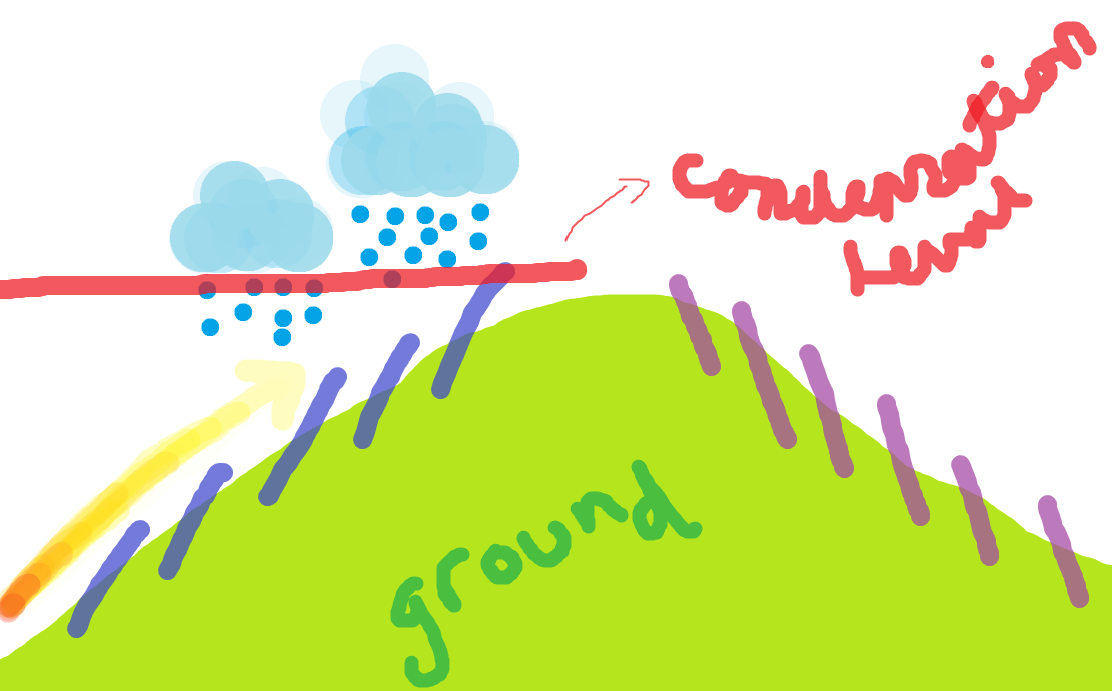
what is orographic uplift
1) Moist air approaches high land
2) air forced upwards
3) air cools
4) condensation
5)rainfalls on the windward side
occours at mountins and leaves rain shadow
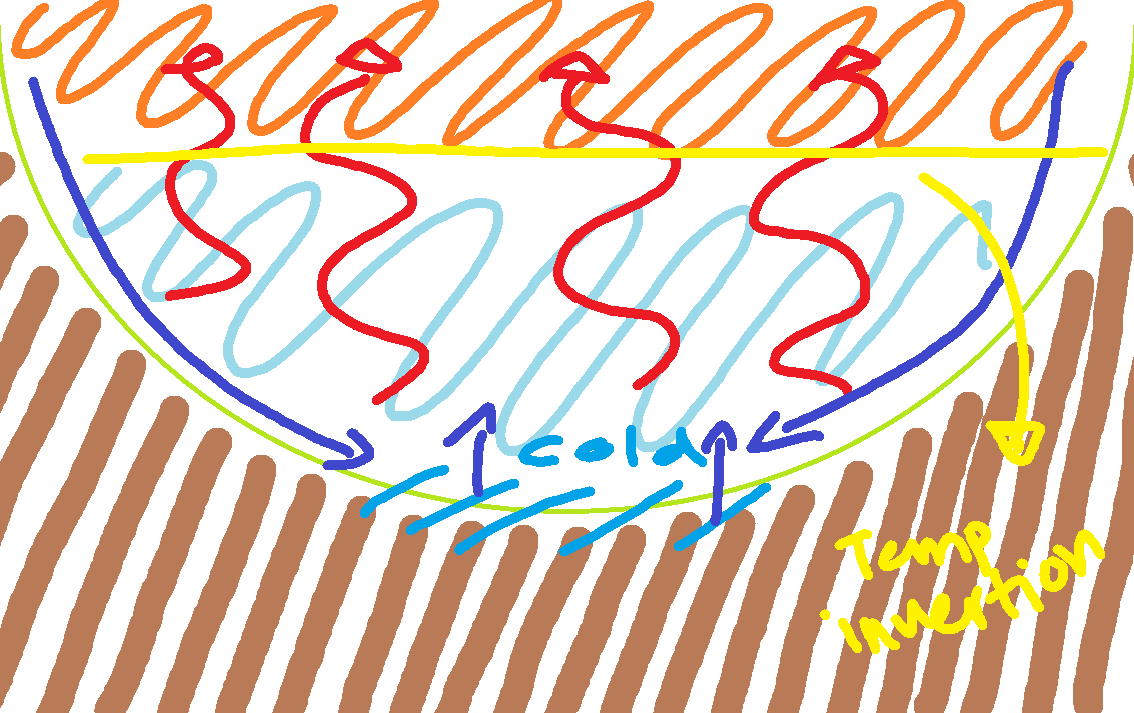
what is raddiation cooling as precipitation process
1) longwave radiation lets heat release into atmosphere
2) via conduction ground cools
3) cold ground
4) cool air falls to bottom of the valley
5) conduction takes place to form fog/mist