1. Problem Solving and Decision Making
 Call Kai
 Learn
Learn Practice Test
 Spaced Repetition
 Match
Match Flashcards
 Knowt Play
1/31

There's no tags or description
Looks like no tags are added yet.
Name | Mastery | Learn | Test | Matching | Spaced | Call with Kai |
|---|
No analytics yet
Send a link to your students to track their progress
32 Terms
What is problem solving?
two states: current position and goals
route between two are not clear
route takes multiple steps
What are three characteristics of problem solving?
is purposeful - goal-directed
controlled processes - not fully automatic
lack appropriate knowledge to generate immediate solution
Example of problem solving: making a cup of tea
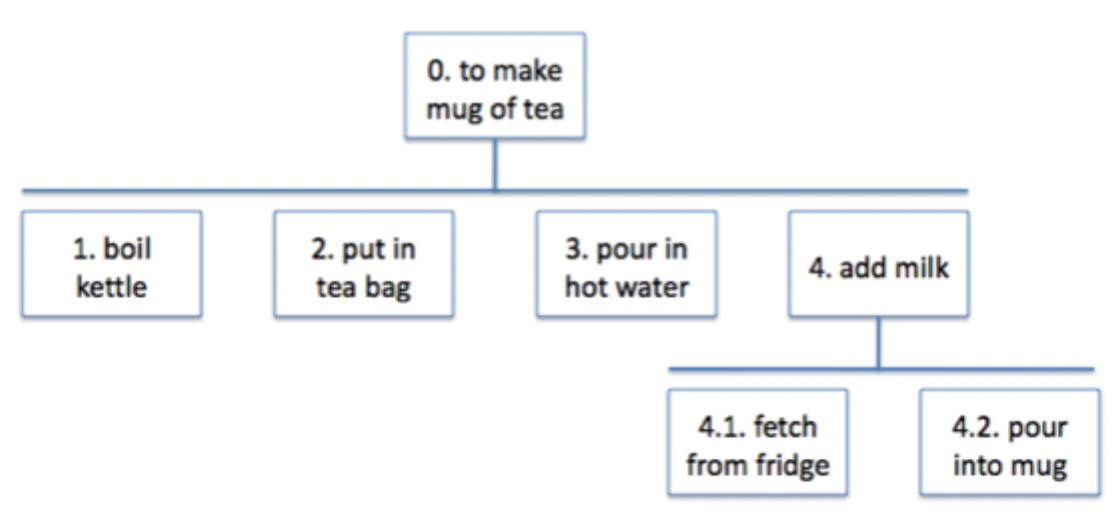
doesn’t need to be a controlled process if you know where things are and what to do
What did Goel & Grafman find studying an architect with a frontal lesion?
asked them to design a lab/office space
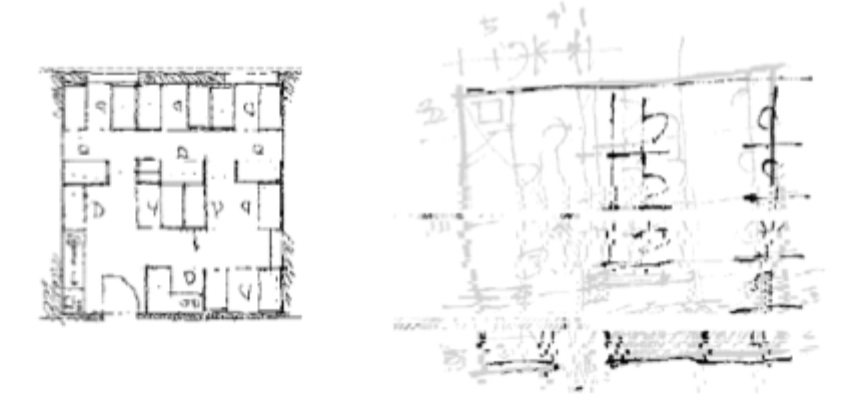
struggled to progress from problem structuring to problem solving
poor final design due to problem solving difficulties
What is involved in a well-defined problem?
current position, possible moves and goal well specified e.g., Chess
What is involved in an ill-defined problem?
current position, possible moves and goal not well specified e.g. most problems in life
What is involved in a knowledge-rich problem?
only solvable via relevant knowledge e.g. chess
What is involved in a knowledge-lean problem?
can be solved without needing prior knowledge
all information contained in presentation of problem
e.g. most lab-based examples
What is involved in the Monty Hall Problem?
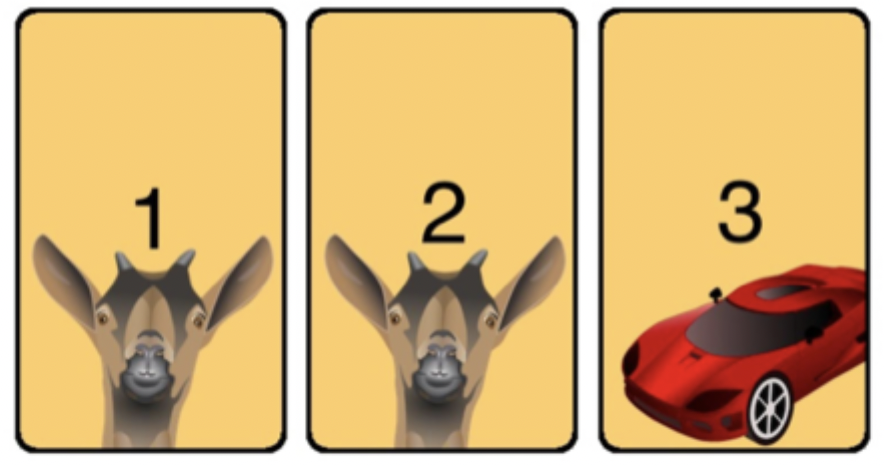
Pick a door
One of the other 2 doors opened, revealing a goat
Two doors left, do you keep with the door you selected in (1) or switch to the remaining door?
What is the point of insight in problem solving?
point at which the solution to problem is suddenly seen
What is the two string problem? SS
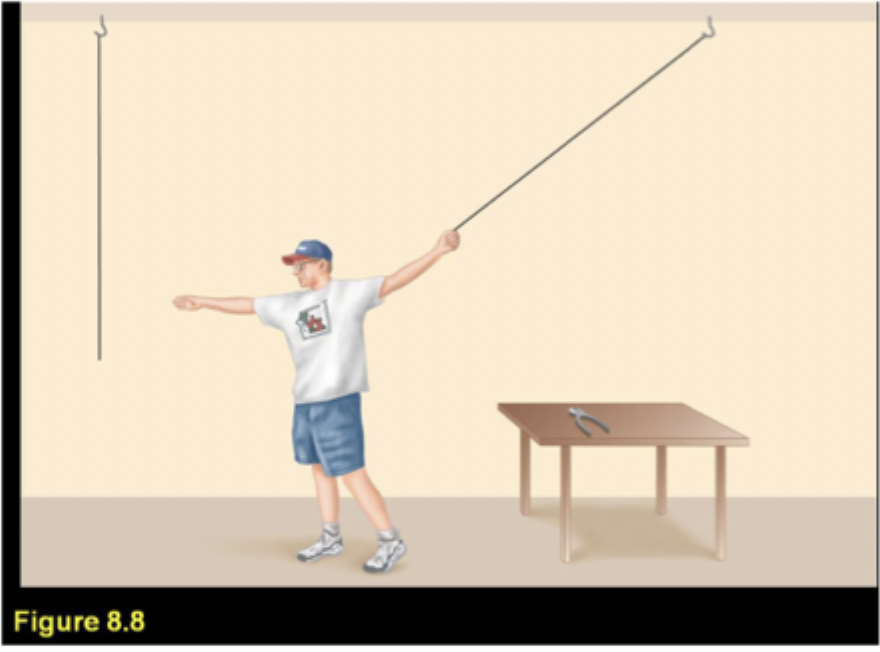
What did Metcalfe and Wieve (1987) find regarding insight?
participants rated “warmth” during problem solving task - proximity to goal/solution
for problems that often included “insight”, sudden increase in “warmth” i.e. rapid, sudden progress
for problem that often solved without insight, gradual increase in “warmth” - i.e., slow accumulation to goal
What did Jung-Beeman et al (2004) find regarding insight?
remote associates test
fence, card, master - post
indicate “insight” for particular trials
increased activity in superior temporal gyrus
What did Ellis et al (2011) find regarding the conscious and unconscious aspects of the experience of insight?
Anagram task: KAFMS
record eye-movement during task
participants report sudden solution
however, gradual decrease in fixations on non-relevant letter
gradual accumulation of knowledge despite subjective experience of ‘ah ha’
might it be unconscious
How can the debate regarding insight be summarised?
insight is ‘real’ in the sense that people experience it
however, it may not be a separate cognitive process - higher order processes may gradually arrive at solution but we only become aware once threshold reached
However, does ‘gradual accumulation’ concept make sense for all complex problem solving tasks
How can insight be facilitated? simple first one
hints - e.g. two string problem
How can insight be facilitated?
incubation
stop directly thinking about the problem for a period of time
most have experienced the feeling of solving a problem during this
Sio & Ormerod (2009) - meta-analysis
incubation led to small but consistent improvements in problem solving, particularly for problems that required more ‘creative’ solutions
How can insight be facilitated?
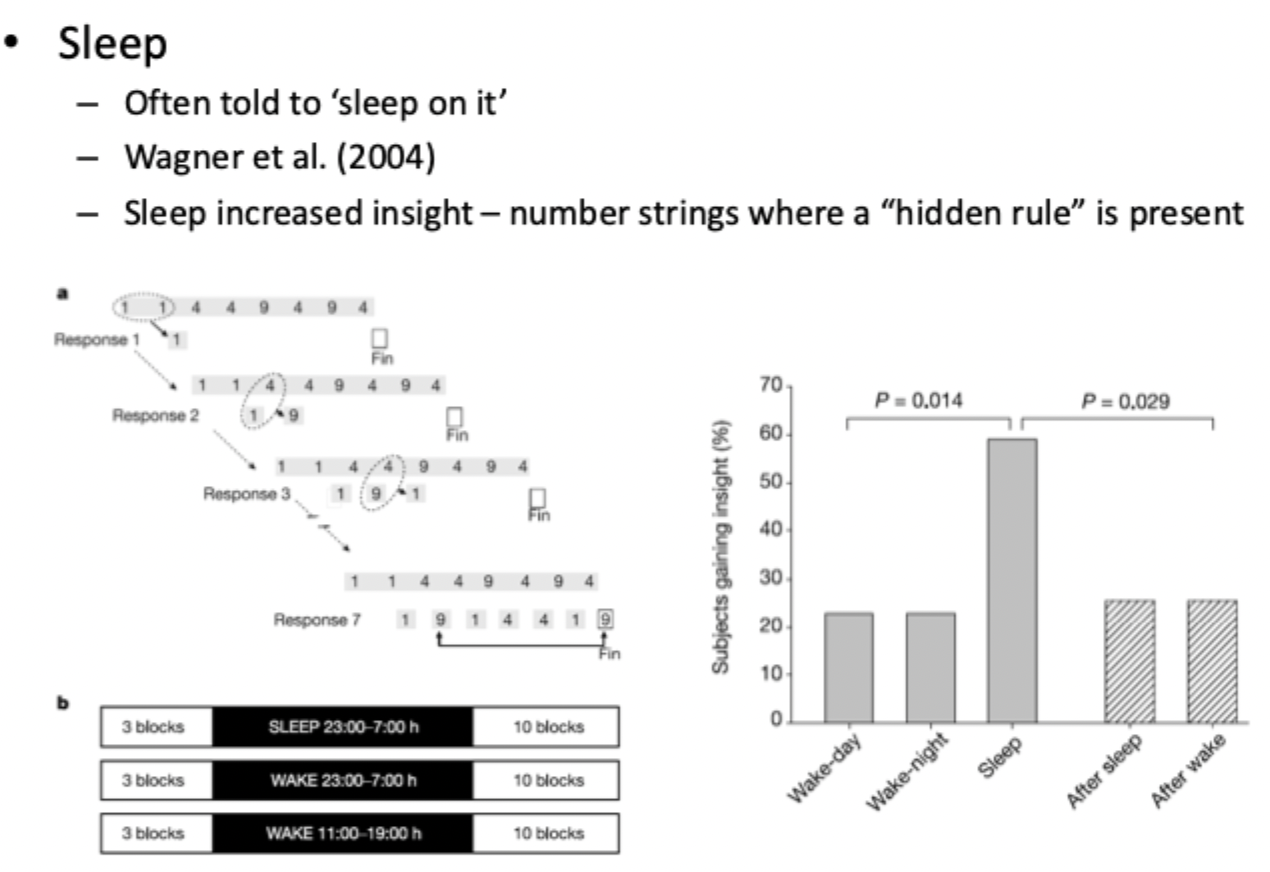
sleep
wagner et al (2004)
often told to ‘sleep on it’
wagner found that sleep increased insight - number strings where a “hidden rule” is present
What did Newell and Simon suggest regarding problem solving strategies?
problem solving from an information processing perspective (e.g., like a computer)
limited short-term memory capacity
complex information processing serial
can’t hold all steps in mind at once
trade-off: accuracy vs computational complexity (and vs time)
rely heavily on ‘heuristics’ - computationally cheap rules of thumb that can produce reasonably accurate answers
What is involved in means-end analysis with heuristics?
form sub-goal to minimise distance between current location and goal, move towards sub-goal
however, (1) requires info about location of final goal and (2) what is better strategy to move away from final goal (e.g., in maze)
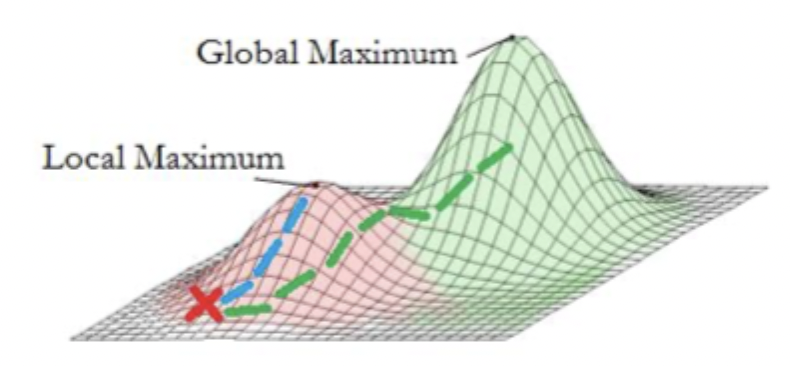
What is involved in hill climbing in heuristics?
change present state to one closer to end goal
simpler than means-end, as no explicit ‘sub-goal’
analogous to climbing hill by always moving to next highest point - can get caught in local maxima
What is involved in planning as another strategy for problem solving?
planning before trying to reach goal
useful when reaching goal involves sequence of behaviour - e.g. making a cup of tea
What did Koppenol-Gonzalez et al (2010) find regarding planning as another strategy for problem solving?
tower of london task
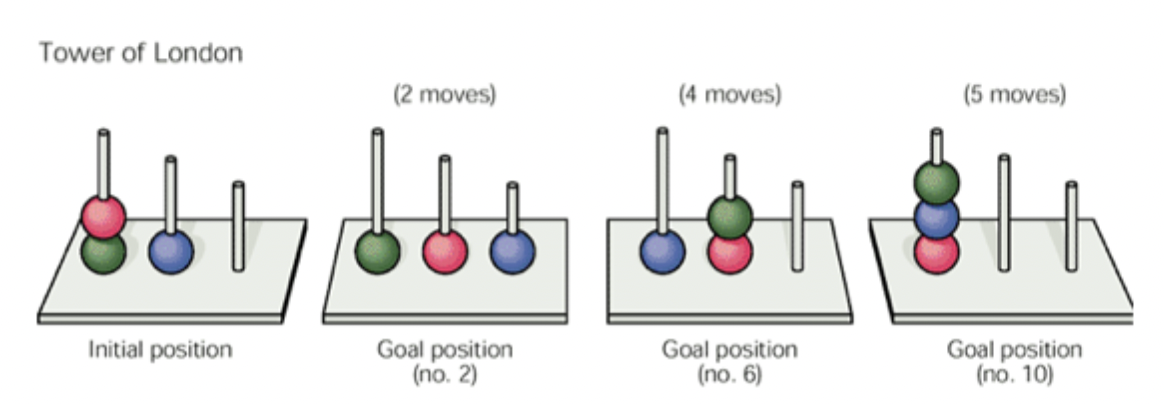
participants who spent longer deliberately planning moves before acting performed better, with fewer errors than those who didn’t plan
What is involved in progress monitoring as another strategy in problem solving?
track progress towards goal and switch strategy if progress is slow
MacGregor et al (2001): performance worse when ppts thought progress being made
when ppts realised progress was slow, they were more likely to switch strategies
However, how is ‘progress’ measured or defined
what defines whether ‘progress’ is fast/slow?
How is expertise defined?
high level of knowledge and performance in a given domain acquired through a long period of systematic study/practice
How is expertise related to problem solving?
lab tasks are often knowledge-lean. Abstracted away from real world knowledge e.g. tower of london
expertise important for solving many real-world problems - problems in real world often knowledge-rich
What did DeGroot find regarding expertise in problem solving?
chess
experts remember positions on chess board, but not better memory in general
What are the different kinds of processes relevant to expertise in problem solving?
chess
fast processes
charness et al (2001): eye movements in first few seconds to more ‘relevant’ pieces in experts
burns: high correlation between normal and ‘blitz’ chess
slow processes
as time to make move decreases, skill differences less predictive of outcome
longer time to make moves leads to better performance
How does medical expertise relate to problem solving?
medical decisions really matter - sometimes life or death - unlike chess
serious problem - false negative <=30% in diagnosis of certain diseases via X-ray
Krupinksi et al: breast biopsies by pathologists in training, reduction in number of fixations/image, fewer fixations on non-diagnostic regions
Kundel et al: mammograms of possible breast cancer, mean search time around 27 secs, but time to fixate on cancer - around 1.13 (less than 1 for experts). correlation between speed of fixation on cancer and overall detection performance
What is functional fixedness in experience gone bad?
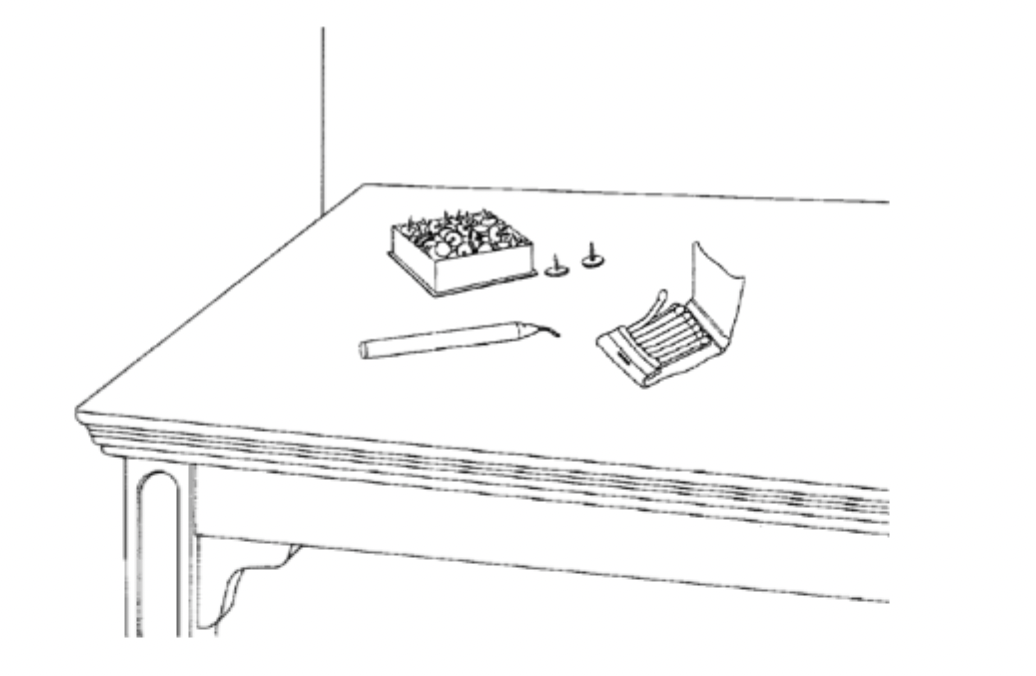
the inflexible focus on the usual function of an object
can’t see novel use of object to solve problem
What is “mental set” regarding experience gone bad in problem solving?
we tend to use a familiar strategy that was successful in the past, even when it is not appropriate
Bilalic et al (2008): chess experts don’t always find the quickest route to victory. Often find longer solution based on familiar strategy
What is involved in the representational change theory?
Ohlsson argued that we often encounter a block or impasse when solving a problem because we have represented it wrongly - we typically need to change the problem representation for insight to occur
constraint relaxation: inhibitions on what is regarded as permissible are removed
re-encoding: some aspect of the problem representation is reinterpreted
elaboration: new problem information is added to the representation