OMM Cards for Cumulative Precomp Block 3
 Call Kai
 Learn
Learn Practice Test
 Spaced Repetition
 Match
Match Flashcards
 Knowt Play
1/28

There's no tags or description
Looks like no tags are added yet.
Name | Mastery | Learn | Test | Matching | Spaced | Call with Kai |
|---|
No analytics yet
Send a link to your students to track their progress
29 Terms
Summary of how to diagnose cervical
OA: rotation and Sidebending are always opposite with a flexion and extension component (type 1 like)
AA: only rational component
2-7: extension or flexion, but rotation and Sidebending are on the same side (type 2 like)
If L 5 is in flexion, what does that correspond to
Forward sacral torsion
Translation refers to
Sidebending
How do you treat T4 NRrSl
1Go to the spinous process of T4 and go ½ a level up to find the transverse process
2stand on the opposite side so you don’t cross the spine
3 sidebend them right
4 opposite over adjacent relative to the doctor
5 move elbow down for a type 1 dysfunction (and up for a type 2)
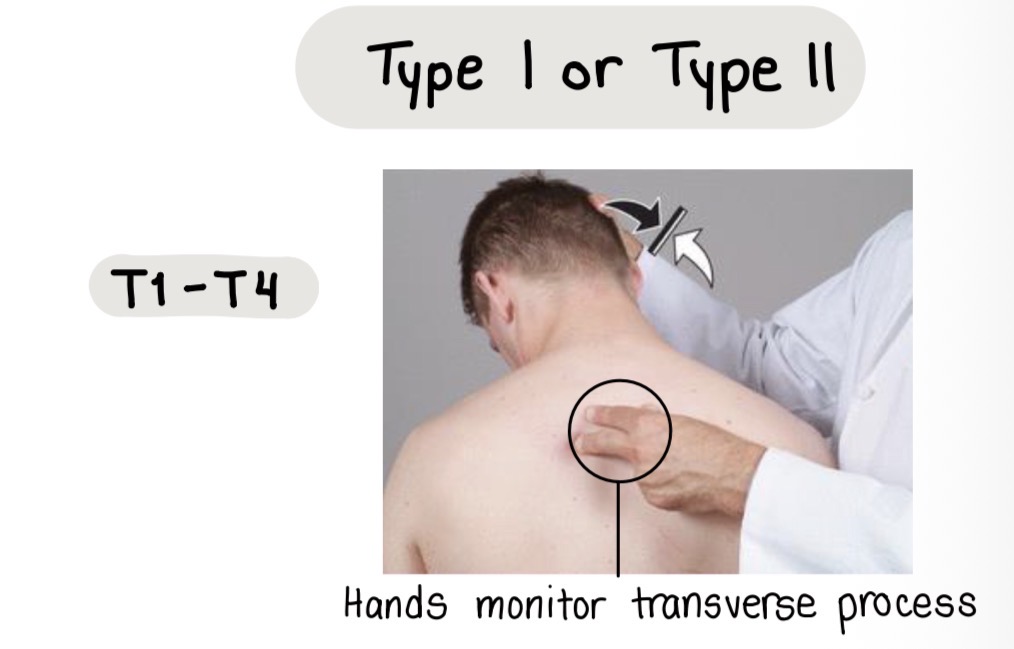
For thoracic 1-3 (sometimes 4) how do you do met ?
Use the head
Diagnosis based on L5
The direction of Sidebending stays the same (it becomes the axis for the sacrum) and the rotational component is opposite
Mnemonic for key rib
BITE
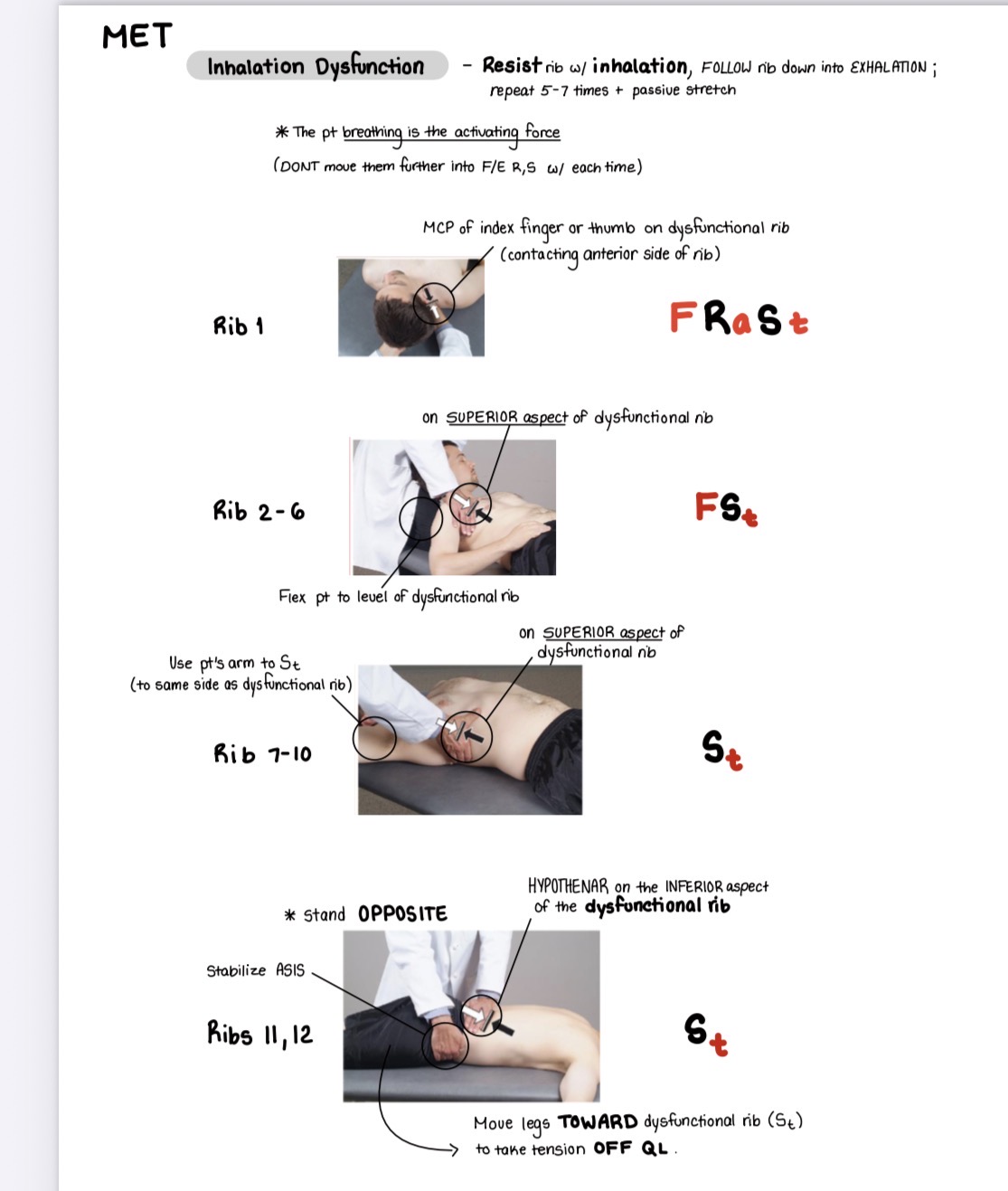
MET for rib 1 for an inhalation dysfunction set up
FStRa
Don’t move further into the barrier
Resist inhalation
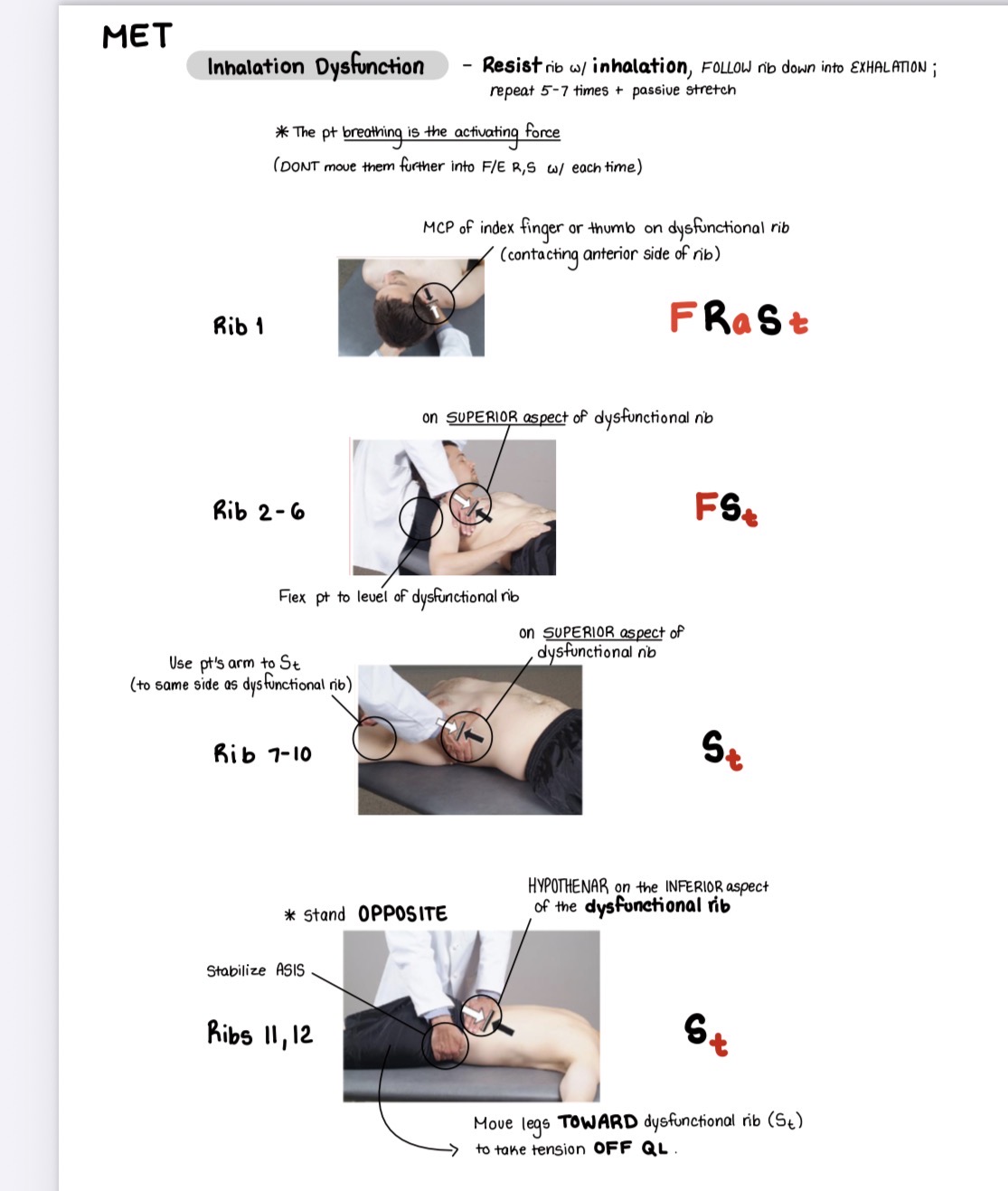
MET for rib 2-6 for an inhalation dysfunction set up
FSt
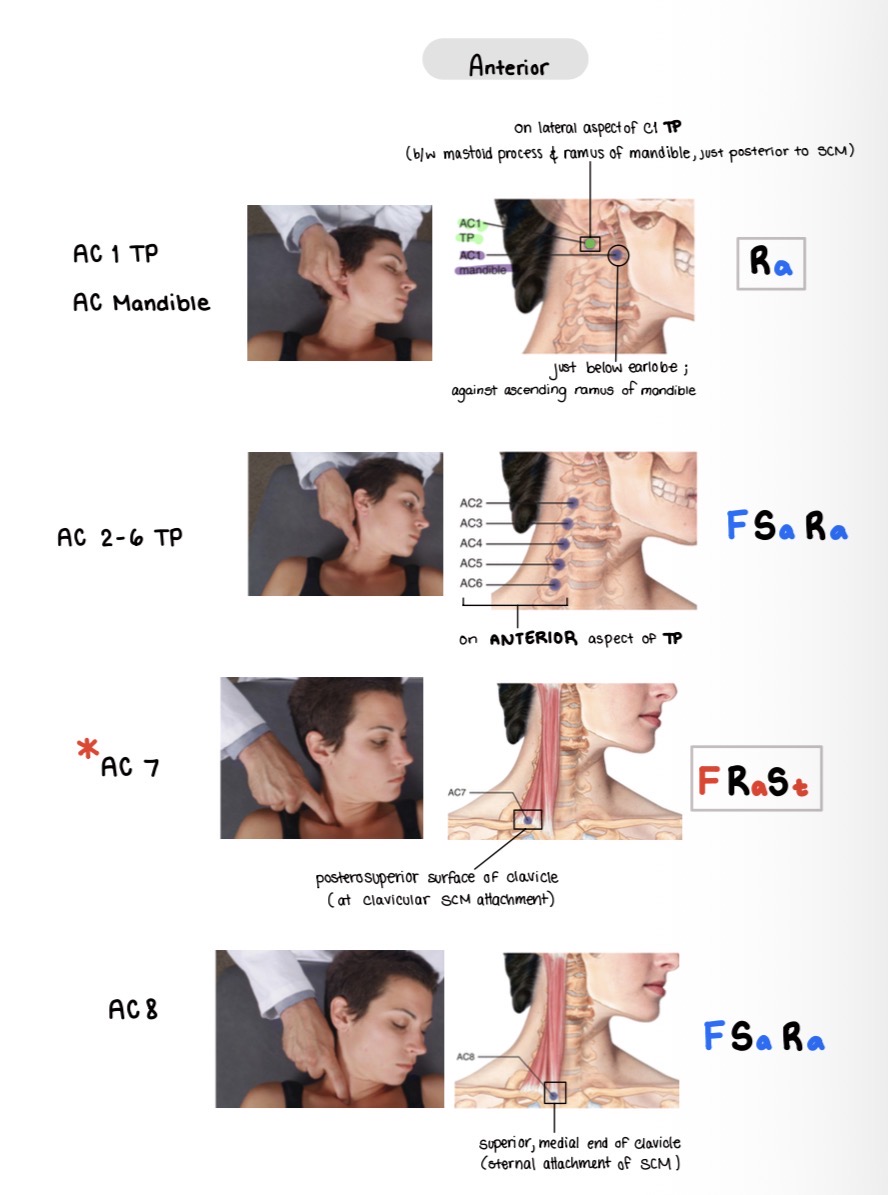
Counterstrain for anterior cervical 1 (behind the mandible)
Rotate away
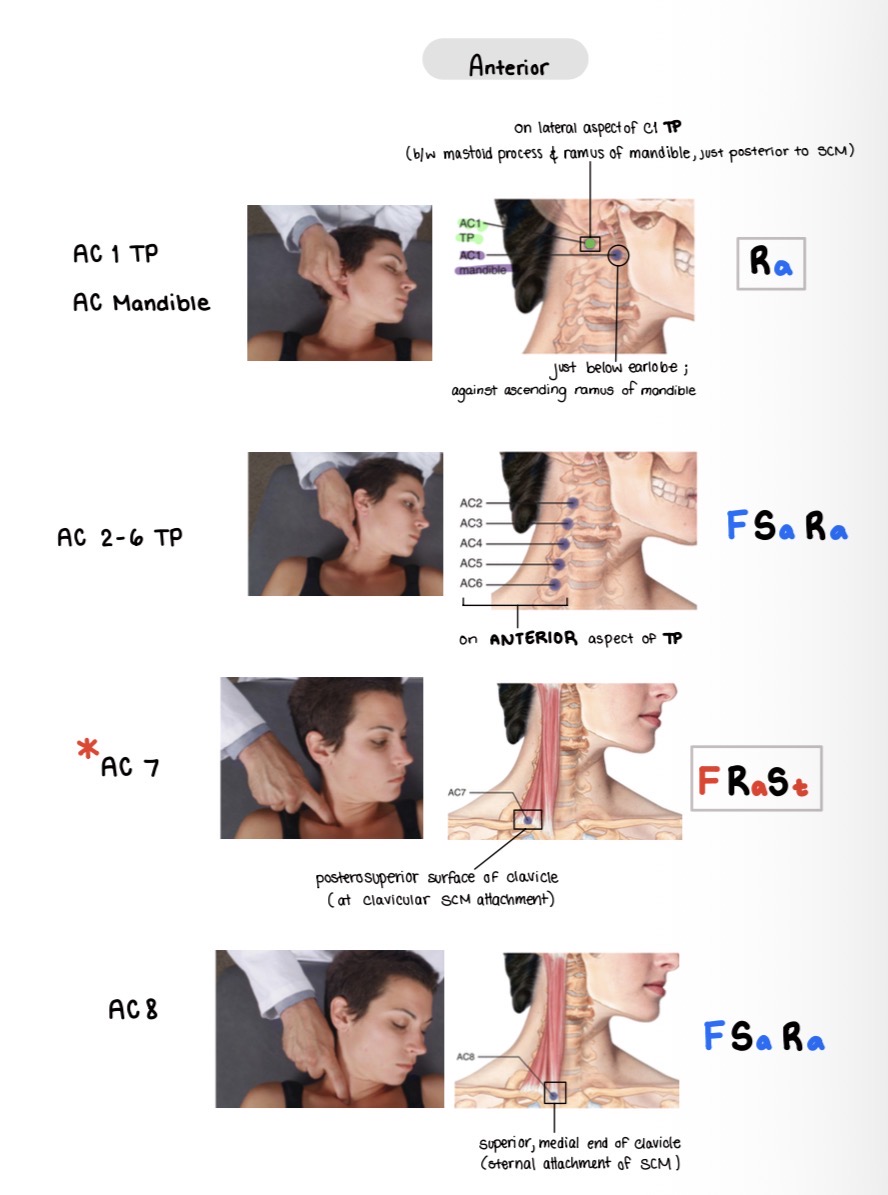
Counterstrain for anterior cervical 2-6
F SaRa
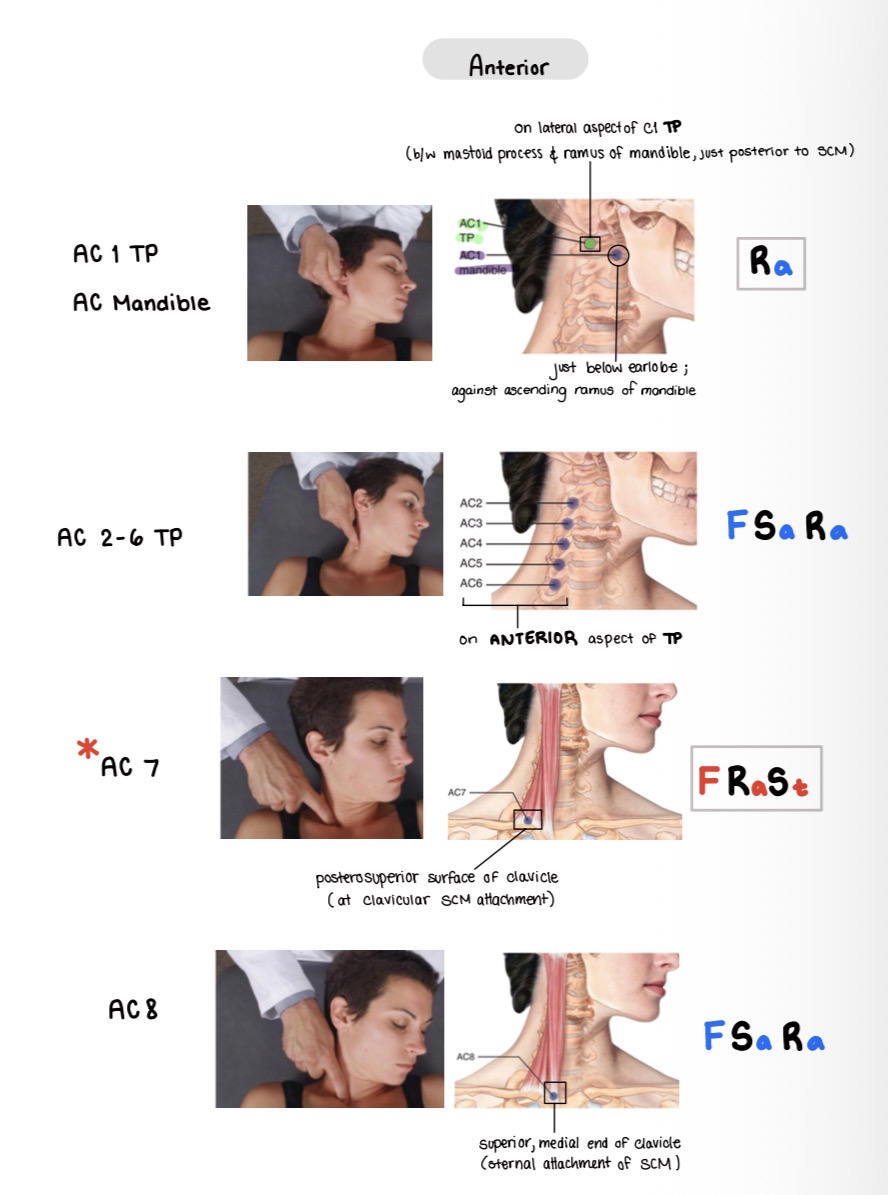
Counterstrain for anterior cervical 7
F StRa
Inflation set up for ribs 7-10 inhalation dysfunction
Sidebend towards
Have the patients arm out
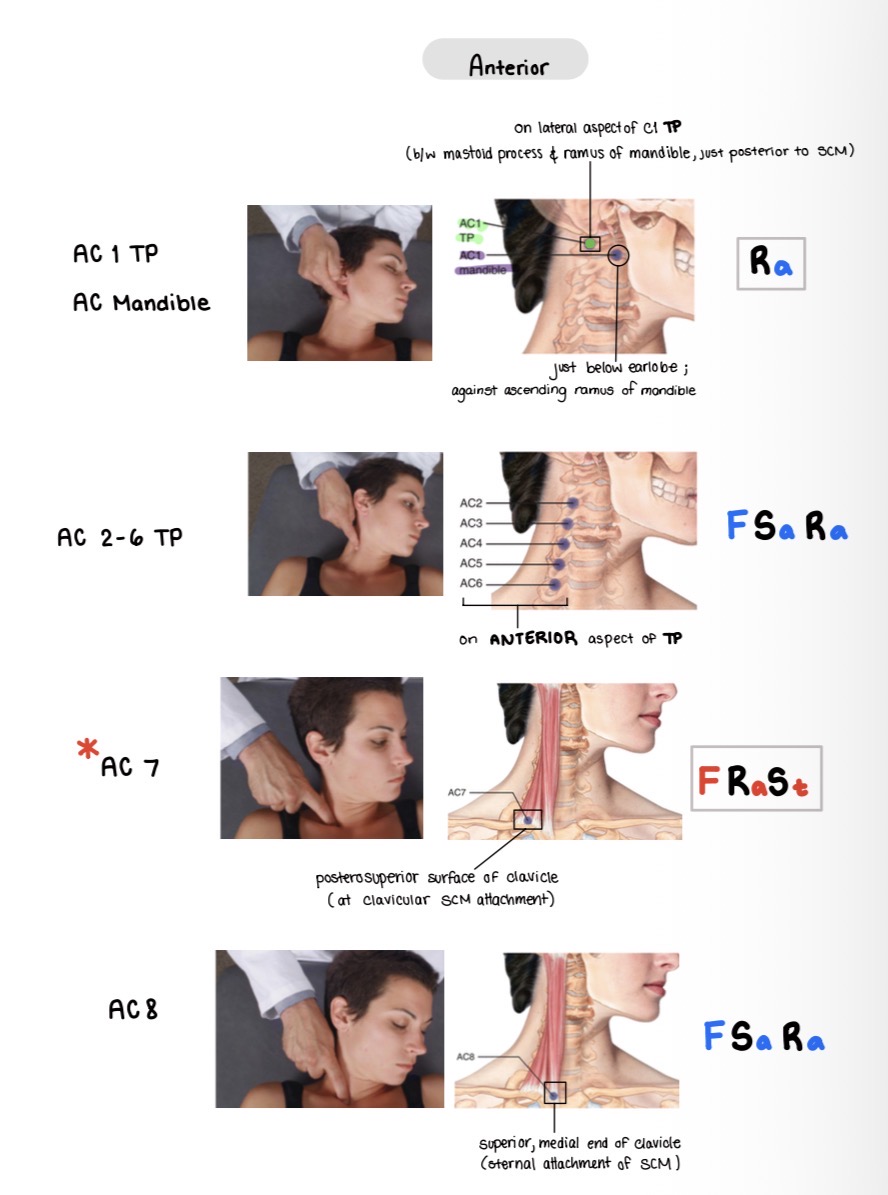
Counterstrain for anterior cervical 8
FSaRa
MET for rib 11-12 for an inhalation dysfunction set up
St (legs to the side of disfunction)
“Karate chop up” gently
MET for ribs 1-2 for an exhalation dysfunction works on which muscle
Scalenes
MET for ribs 3-5 for an exhalation dysfunction works on which muscle
Pec minor
MET for ribs 6-8 for an exhalation dysfunction works on which muscle
Serratus anterior
MET for ribs 9-10 for an exhalation dysfunction works on which muscle
Latissiumus dorsi
MET for ribs 6-8 for an exhalation dysfunction set up
“Shut the gate”
Doctor stands on same side
Pulls inferior lateral
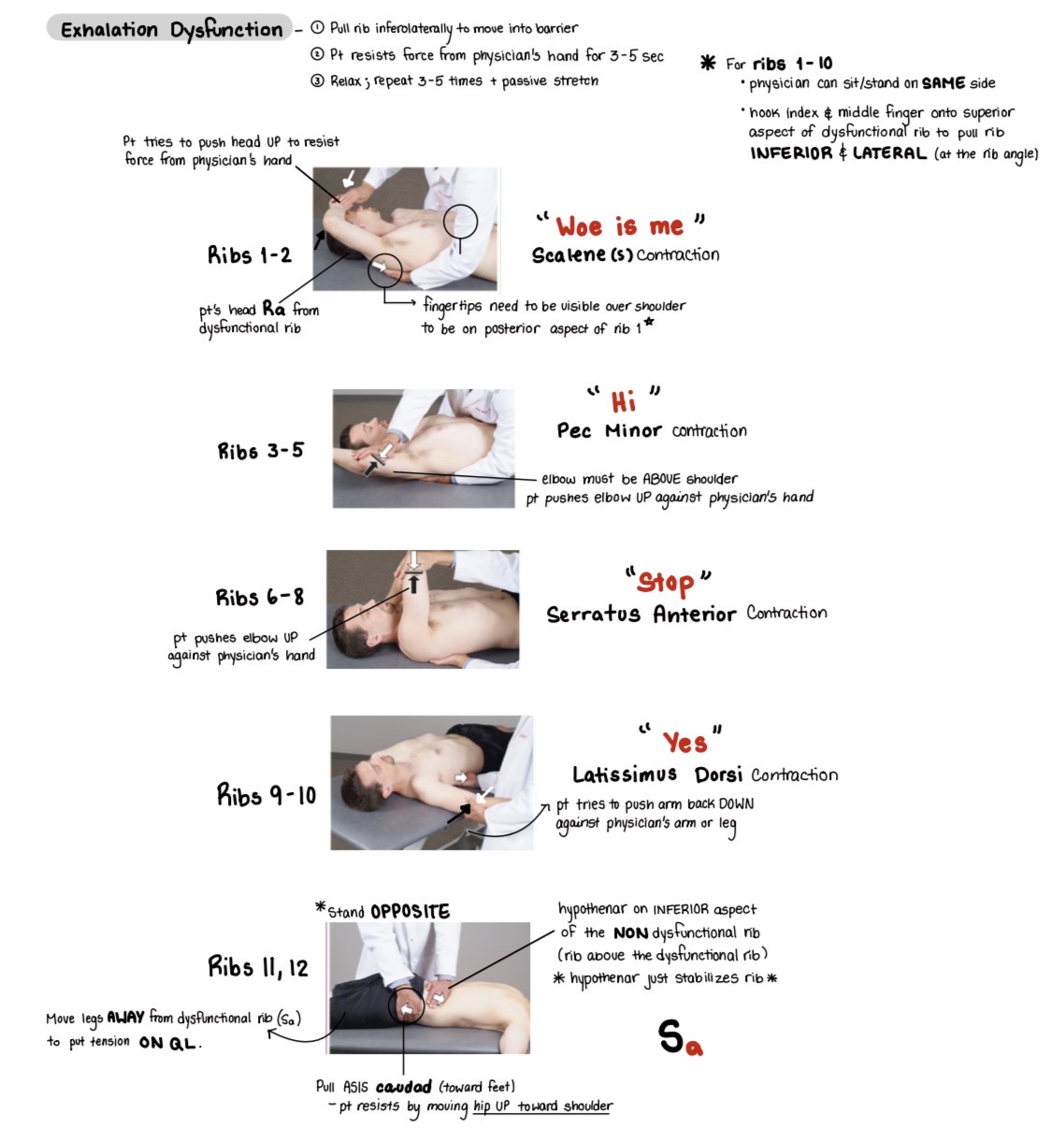
MET for ribs 11-12 for an exhalation dysfunction set up
Put tension on QL by moving legs away
Pull towards feet while patient tries to hike leg up—Hypothenar only stabilizes
MET for ribs 1-2 for an exhalation dysfunction set up
Pt. Head rotates away and presses up into Dr.’s hand
“Woe”
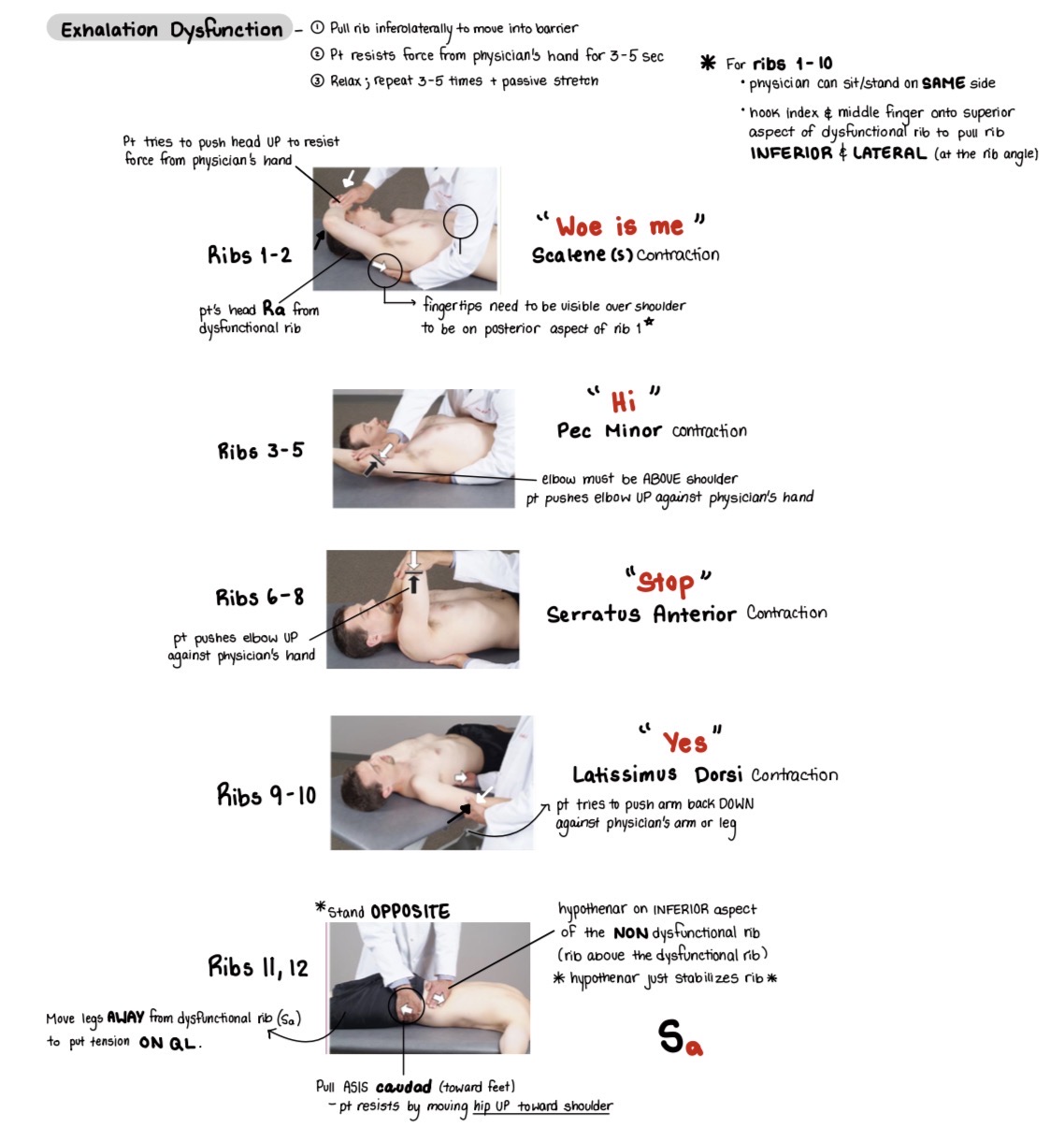
Viscerosomatic reflex level for the heart
T1-5
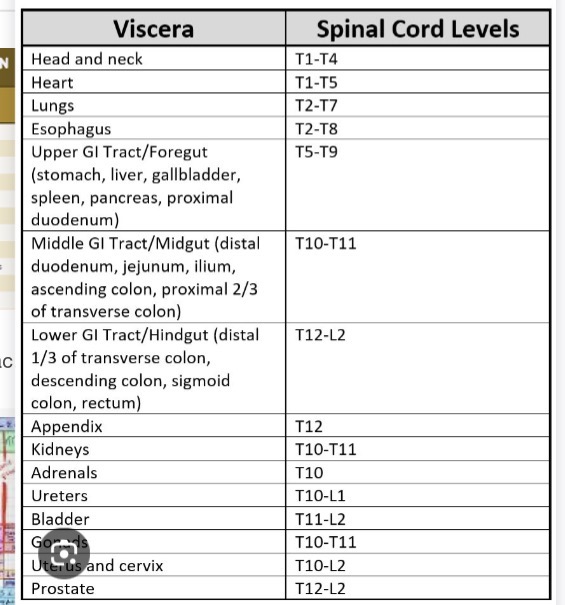
Viscerosomatic reflex level for the lungs
T2-7
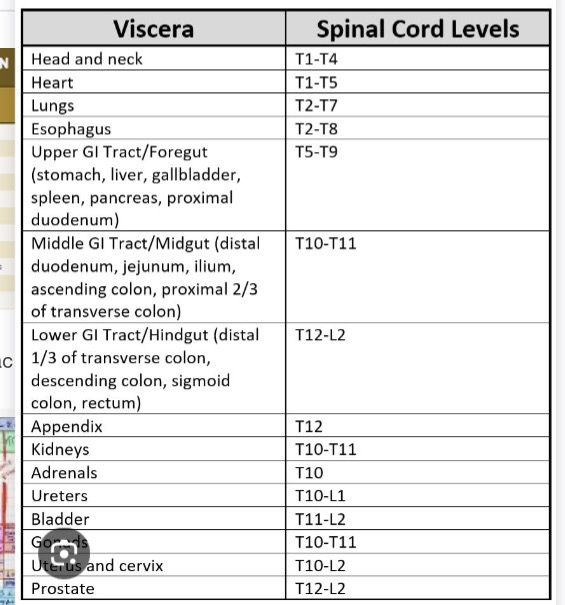
Viscerosomatic reflex level for upper GI
T12-L2
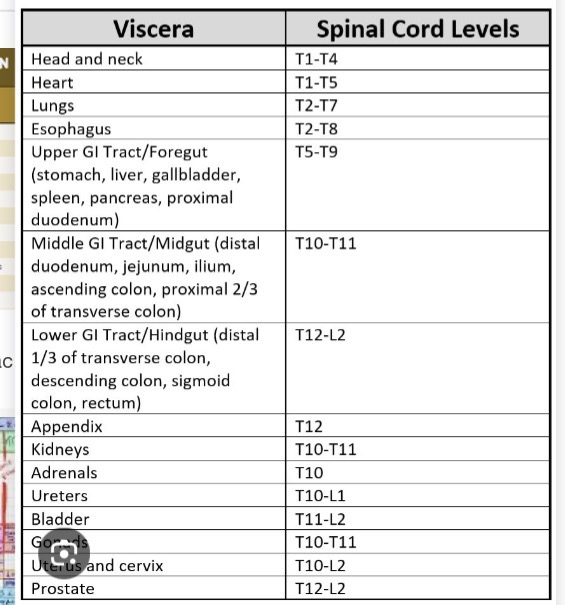
Viscerosomatic reflex level for appendix
T12
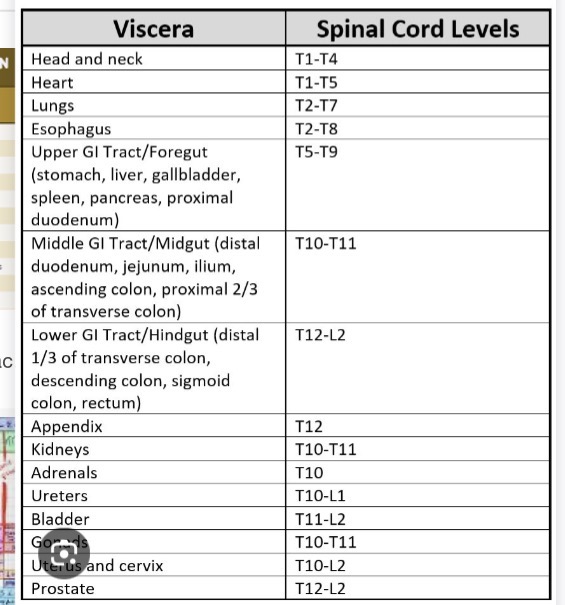
Viscerosomatic reflex level for uterus and cervix
T10-L2
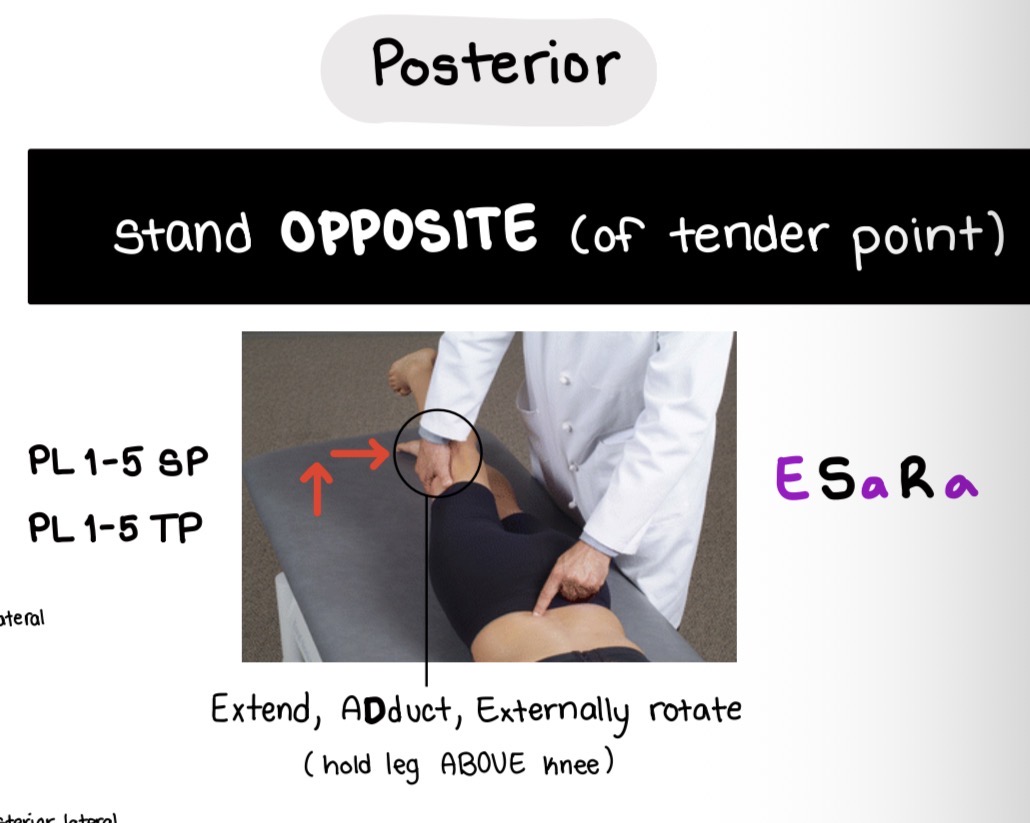
Posterior lumbar set up
ESARA
Stand on opposite side and pull leg to midline
With the positive standing flexion test, the side that moves ___ is the reference side
First and farthest anterior