Edexcel IAL Economics - Unit 4
 Call Kai
 Learn
Learn Practice Test
 Spaced Repetition
 Match
Match Flashcards
 Knowt Play
1/69

There's no tags or description
Looks like no tags are added yet.
Name | Mastery | Learn | Test | Matching | Spaced | Call with Kai |
|---|
No analytics yet
Send a link to your students to track their progress
70 Terms
Economic growth (actual growth)
the rate of change of real Gross Domestic Product (GDP) as a measure of economic growth and living standards
Economic growth (potential growth)
an increase in an economy's productive potential
Economic development
the process of improving people's wellbeing and quality of life, and is commonly measured by HDI
Sustainable development
development that meets the needs of the present without compromising the ability of future generations to meet their own needs
Gross Domestic Product (GDP)
the value of all final goods and services produced in a country in one year
Human Development Index (HDI)
a measure of a country's economic development that combines measures of health (life expectancy), education (average and expected years in school), and the standard of living (real GNI per capita)
GNI (Gross National Income)
the value of all final goods and services produced by a country's nationals in one year
Absolute poverty
the state of not being able to afford a basic bundle of goods and services necessary for survival
OR
earning less than $1.90 per day (PPP)
Relative poverty
the condition in which people lack the minimum amount of income needed in order to maintain the average standard of living in the society in which they live
OR
earning less than 60% of the median income in one's own country
Income inequality
the unequal distribution of income across a population
Lorenz Curve
a graphical representation of the cumulative distribution of income in an economy
Gini Coefficient
measures the extent to which the distribution of income within an economy deviates from a perfectly equal distribution
Absolute advantage
a country is said to have an absolute advantage in the production of a good if it can produce it using fewer resources than another country
Comparative advantage
a country is said to have a comparative advantage in the production of a good if it can produce it at a lower opportunity cost than another country
Trading bloc
an agreement between 2 or more nations through which trade barriers are reduced or eliminated
Trade liberalisation
reducing trade barriers to make international trade easier between countries
Protectionism
a set of policies by which a government seeks to shelter its industries from foreign competition and/or help them increase exports to international markets
Tariff
a tax placed on an imported good to make it more expensive and encourage consumers to switch to domestic goods
Quota
a physical limit on the number or value of foreign goods that can be imported into a country
Terms of trade
an index that shows the ratio of a country's weighted average of export prices to its weighted average of import prices
MNC/TNC
a corporation that has its facilities and other assets in at least one country other than its home country
Foreign Direct Investment (FDI)
when a firm based in one country makes an investment in a different country
International Monetary Fund (IMF)
an international institution that aims to help stabilise exchange rates and provide loans to countries in need
World Bank
an international financial institution that provides loans to developing countries
Lewis dual-sector model
a theory that states how as countries develop they transform structures, away from the agricultural sector - which has low productivity of labour - and towards the industrial sector - which has high productivity of labour as they develop
Prebisch-Singer Hypothesis
theory that suggests that the trend of primary commodity prices will deteriorate in the long run compared to those of manufactured goods, therefore reducing the terms of trade for countries that specialise in commodities (;As global incomes rise, people spend a larger proportion of their money on manufactured goods and advanced services rather than basic food or raw materials.)
Harrod-Domar growth model
the rate of growth of GDP is determined by the ratio between the national savings ratio and the capital-output ratio in the economy (;It argues that more investment requires higher savings, and improving capital efficiency drives long-term prosperity. — The basic idea of the Harrod-Domar model is that economic growth depends on the amount of capital that is available for investment, and that the rate of capital accumulation is proportional to the rate of savings. The model assumes that the economy is closed, meaning that there is no international trade or foreign investment.)
World Trade Organisation (WTO)
an international body which hosts negotiations concerning the reduction of trade barriers between its member nations
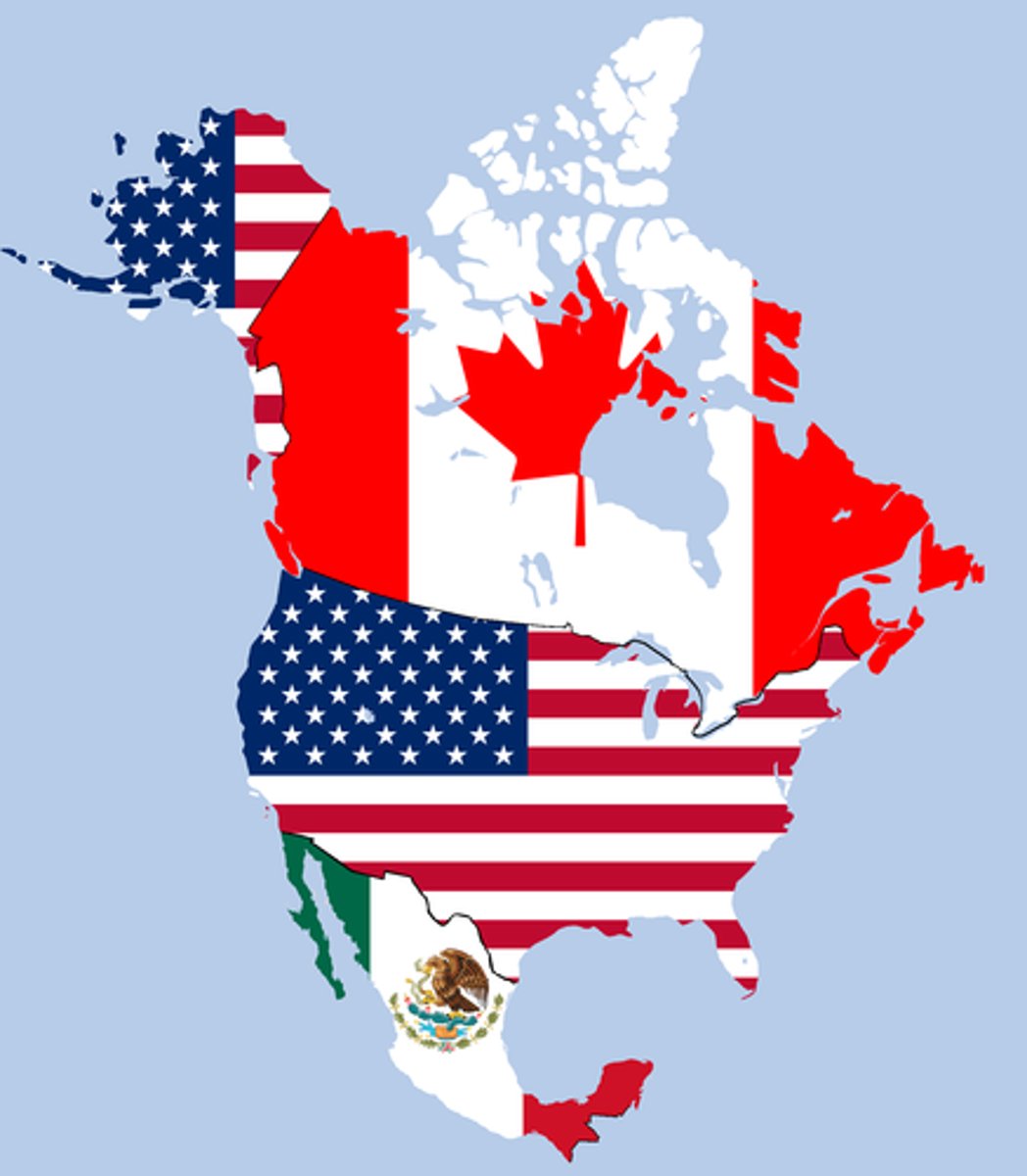
Free trade area
member countries remove tariffs and quotas between themselves but each member determines its own tariff on trade with non-member countries, e.g. NAFTA
Customs union
member countries trade freely among themselves and adopt common external tariffs on all trade with non-members, e.g. Mercosur
Common market
an extension of the customs union concept, with the additional feature that it provides for the free movement of labour and capital among the members.
Monetary union
a common market with a common currency managed by a single central bank
Subsidy
an amount of money paid by the government to the domestic producers of a certain product
Current account
a record of all money flows to and from a country arising from exports and imports of goods and services as well as transfers of income and other net transfers
Fixed exchange rate
a type of exchange rate regime under which the government or central bank ties the official exchange rate to another country's currency (or the price of gold)
Floating exchange rate
a type of exchange rate regime in which a currency's value is allowed to fluctuate in response to changes in market conditions
Managed exchange rate
an exchange rate that is basically floating in the foreign exchange markets but is subject to intervention from time to time by the monetary authorities, in order to resist fluctuations that they consider to be undesirable
Purchasing Power Parity
refers to the quantity of the currency needed to purchase a given unit of a good, or common basket of goods and services
Currency revaluation
the value of a currency is revised upward in a fixed exchange rate system
Currency appreciation
the value of a currency rises in a floating exchange rate system
Currency devaluation
the value of a currency is revised downward in a fixed exchange rate system
Currency depreciation
the value of a currency falls in a floating exchange rate system
Interest rate
the price of borrowed money
Exchange rate
the value of one currency expressed in terms of another currency
Globalisation
a process by which the world's economies are becoming more closely integrated and interdependent
Progressive taxation
the average rate of tax rises as incomes increase
Proportional taxation
the average rate of tax remains unchanged as incomes increase
Regressive taxation
the average rate of tax falls as incomes increase
Laffer curve
describes the relationship between the direct tax rate and the amount of tax revenue that a government may collect
Fiscal deficit
when government spending exceeds government tax receipts over a fiscal year
Fiscal surplus
when government spending is less than government tax receipts over a fiscal year
Crowding out
the idea that a fiscal deficit and subsequent government borrowing leads to increased interest rates and lower levels of private sector investment
Microfinance
a type of banking service that is provided to unemployed or low-income individuals or groups who would otherwise have no other means of gaining financial services
Fair trade
trade between firms in developed countries and producers in developing countries in which fair prices are paid to the producers
Privatisation
the sale of national assets to the private sector
Capital flight
when money and other assets flow out of a country to seek a "safe haven" in another country
Marshall-Lerner condition
states that reducing the value of the exchange rate will only be successful in reducing a current account deficit if the total value of the price elasticity of demand for exports (PEDX) and the price elasticity of demand for imports (PEDM) is larger than one
J-curve effect
a current account deficit may be reduced by a depreciation/devaluation, but due to the inelastic demand for exports and imports in the short run, the current account balance is likely to worsen before it gets better
Dumping
selling a product in large quantities at a price below cost in a foreign market
Trade creation
occurs when a country joins a trading bloc and production shifts from a high-cost producer to a low-cost producer
Trade diversion
occurs when a country joins a customs union and production shifts from a low-cost producer outside the trading bloc to a high-cost producer within the trading bloc
Discretionary fiscal policy
implies government actions above and beyond existing fiscal policies, and often occurs in periods of recession or economic turbulence
Automatic stabilisers
those government spending and taxation rules which cause fiscal policy to be automatically expansionary when the economy contracts and automatically contractionary when the economy expands, without requiring any deliberate action by policy makers
PSNCR (Public Sector Net Cash Requirement)
the amount of money the government has to borrow to meet its expenditure
Debt relief
the partial or total remission of debts, especially those owed by developing countries to external creditors
Foreign aid
money, food, or other resources given or lent by one country to another
Savings gap
occurs when high levels of poverty make it almost impossible to generate sufficient savings to provide the funds needed to fund investment projects
Foreign exchange gap
occurs when a country's current account deficit is greater than the value of capital inflows
Non-convertible currency
one that is used only for domestic transactions and is not openly traded on a forex market
Multiplier effects
an exogenous increase in an injection will lead to an even larger increase in national income