Lewis MS Ch 64: Arthritis and Connective Tissue Diseases
 Call Kai
 Learn
Learn Practice Test
 Spaced Repetition
 Match
Match Flashcards
 Knowt Play
1/43

There's no tags or description
Looks like no tags are added yet.
Name | Mastery | Learn | Test | Matching | Spaced | Call with Kai |
|---|
No analytics yet
Send a link to your students to track their progress
44 Terms
Which finding will the nurse expect when assessing a patient who has osteoarthritis (OA) of the knee?
a. Presence of Heberden's nodules
b. Discomfort with joint movement
c. Redness and swelling of the knee joint
d. Stiffness that increases with movement
ANS: B
Initial symptoms of OA include pain with joint movement. Heberden's nodules occur on the fingers. Redness of the joint is associated with inflammatory arthritis such as rheumatoid arthritis. Stiffness in OA is worse right after the patient rests and decreases with joint movement.
DIF: Cognitive Level: Understand (comprehension) REF: 1518
TOP: Nursing Process: Assessment MSC: NCLEX: Physiological Integrity
Which assessment finding for a patient using naproxen (Naprosyn) to treat osteoarthritis is likely to require a change in medication?
a. The patient has gained 3 lb.
b. The patient has dark-colored stools.
c. The patient's pain affects multiple joints.
d. The patient uses capsaicin cream (Zostrix).
ANS: B
Dark-colored stools may indicate the patient is experiencing gastrointestinal bleeding caused by naproxen. The patient's ongoing pain and weight gain will also be reported and may indicate a need for a different treatment and/or counseling about avoiding weight gain, but these are not as large a concern as the possibility of gastrointestinal bleeding. Use of capsaicin cream with oral medications is appropriate.
DIF: Cognitive Level: Apply (application) REF: 1521
TOP: Nursing Process: Assessment MSC: NCLEX: Physiological Integrity
After the nurse has finished teaching a patient with osteoarthritis (OA) of the right hip about
how to manage the OA, which patient statement indicates a need for more teaching?
a. "I can exercise every day to help maintain joint motion."
b. "I will take 1 g of acetaminophen (Tylenol) every 4 hours."
c. "I will take a shower in the morning to help relieve stiffness."
d. "I can use a cane to decrease the pressure and pain in my hip."
ANS: B
No more than 4 g of acetaminophen (1 g every 6 hours) should be taken daily to decrease the
risk for liver damage. Regular exercise, moist heat, and supportive equipment are
recommended for OA management.
DIF: Cognitive Level: Apply (application) REF: 1523
TOP: Nursing Process: Evaluation MSC: NCLEX: Physiological Integrity
The nurse will anticipate the need to teach a patient who has osteoarthritis (OA) about which medication?
a. Prednisone
b. Adalimumab (Humira)
c. Capsaicin cream (Zostrix)
d. Sulfasalazine (Azulfidine)
ANS: C
Capsaicin cream blocks the transmission of pain impulses and is helpful for some patients in treating OA. The other medications would be used for patients with rheumatoid arthritis.
DIF: Cognitive Level: Apply (application) REF: 1520
TOP: Nursing Process: Planning MSC: NCLEX: Physiological Integrity
A patient being seen in the clinic has rheumatoid nodules on the elbows. Which action will the
nurse take?
a. Draw blood for rheumatoid factor analysis.
b. Teach the patient about injections for the nodules.
c. Assess the nodules for skin breakdown or infection.
d. Discuss the need for surgical removal of the nodules.
ANS: C
Rheumatoid nodules can break down or become infected. They are not associated with
changes in rheumatoid factor, and injection is not needed. Rheumatoid nodules are usually not
removed surgically because of a high probability of recurrence.
DIF: Cognitive Level: Apply (application) REF: 1527
TOP: Nursing Process: Implementation MSC: NCLEX: Physiological Integrity
Which action will the nurse include in the plan of care for a patient with a new diagnosis of
rheumatoid arthritis (RA)?
a. Instruct the patient to purchase a soft mattress.
b. Encourage the patient to take a nap in the afternoon.
c. Teach the patient to use lukewarm water when bathing.
d. Suggest exercise with light weights several times daily.
ANS: B
Adequate rest helps decrease the fatigue and pain associated with RA. Patients are taught to
avoid stressing joints, use warm baths to relieve stiffness, and use a firm mattress. When the
disease is stabilized, a therapeutic exercise program is usually developed by a physical
therapist to include exercises that improve flexibility and strength of affected joints, as well as
the patient's general endurance.
DIF: Cognitive Level: Apply (application) REF: 1531
TOP: Nursing Process: Planning MSC: NCLEX: Physiological Integrity
A patient with rheumatoid arthritis (RA) complains to the clinic nurse about having chronically dry eyes. Which action by the nurse is appropriate?
a. Ask the HCP about discontinuing methotrexate
b. Remind the patient that RA is a chronic health condition.
c. Suggest the patient use over-the-counter (OTC) artificial tears.
d. Teach the patient about adverse effects of the RA medications.
ANS: C
The patient's dry eyes are consistent with Sjögren's syndrome, a common extraarticular manifestation of RA. Symptomatic therapy such as OTC eye drops is recommended. Dry eyes are not a side effect of methotrexate. A focus on the prognosis for RA is not helpful. The dry eyes are not caused by RA treatment but by the disease itself.
DIF: Cognitive Level: Apply (application) REF: 1546
TOP: Nursing Process: Implementation MSC: NCLEX: Physiological Integrity
Which information will the nurse include when preparing teaching materials for a patient with an exacerbation of rheumatoid arthritis?
a. Affected joints should not be exercised when pain is present.
b. Applying cold packs before exercise may decrease joint pain.
c. Exercises should be performed passively by someone other than the patient.
d. Walking may substitute for range-of-motion (ROM) exercises on some days.
ANS: B
Cold application is helpful in reducing pain during periods of exacerbation of RA. Because
the joint pain is chronic, patients are instructed to exercise even when joints are painful. ROM
exercises are intended to strengthen joints and improve flexibility, so passive ROM alone is
not sufficient. Recreational exercise is encouraged but is not a replacement for ROM
exercises.
DIF: Cognitive Level: Apply (application) REF: 1531
TOP: Nursing Process: Implementation MSC: NCLEX: Physiological Integrity
Which laboratory result will the nurse monitor to determine if prednisone has been effective for a patient with an acute exacerbation of rheumatoid arthritis?
a. Blood glucose
b. C-reactive protein
c. Serum electrolytes
d. Liver function tests
ANS: B
C-reactive protein is a serum marker for inflammation, and a decrease would indicate that corticosteroid therapy was effective. Blood glucose and serum electrolytes will also be monitored to assess for side effects of prednisone. Liver function is not routinely monitored in patients receiving corticosteroids.
DIF: Cognitive Level: Apply (application) REF: 1527
TOP: Nursing Process: Evaluation MSC: NCLEX: Physiological Integrity
The nurse teaching a support group of women with rheumatoid arthritis (RA) about how to manage activities of daily living suggests they should
a. avoid activities requiring repetitive use of the same muscles and joints.
b. protect the knee joints by sleeping with a small pillow under the knees.
c. stand rather than sit when performing daily household and yard chores.
d. strengthen small hand muscles by wringing out sponges or washcloths.
ANS: A
Patients are advised to avoid repetitious movements. Sitting during household chores is recommended to decrease stress on joints. Wringing water out of sponges would increase joint stress. Patients are encouraged to position joints in the extended (neutral) position. Sleeping with a pillow behind the knees would decrease the ability of the knee to extend and also decrease knee range of motion.
DIF: Cognitive Level: Apply (application) REF: 1524
TOP: Nursing Process: Implementation MSC: NCLEX: Physiological Integrity
The nurse suggests that a patient recently diagnosed with rheumatoid arthritis (RA) plan to start each day with
a. a brief routine of isometric exercises.
b. a warm bath followed by a short rest.
c. active range-of-motion (ROM) exercises.
d. stretching exercises to relieve joint stiffness.
ANS: B
Taking a warm shower or bath is recommended to relieve joint stiffness, which is worse in the
morning. Isometric exercises would place stress on joints and would not be recommended.
Stretching and ROM should be done later in the day, when joint stiffness is decreased.
DIF: Cognitive Level: Apply (application) REF: 1531
TOP: Nursing Process: Implementation MSC: NCLEX: Physiological Integrity
A patient with two school-age children has recently been diagnosed with rheumatoid arthritis and tells the nurse that home life is very stressful. Which initial response by the nurse is most appropriate?
a. "You need to see a family therapist for some help with stress."
b. "Tell me more about the situations that are causing you stress."
c. "Your family should understand the impact of your rheumatoid arthritis."
d. "Perhaps it would be helpful for your family to be involved in a support group."
ANS: B
The initial action by the nurse should be further assessment. The other three responses might be appropriate based on the information the nurse obtains with further assessment.
DIF: Cognitive Level: Analyze (analysis) REF: 1532
TOP: Nursing Process: Implementation MSC: NCLEX: Psychosocial Integrity
Which information will the nurse include when teaching a patient with newly diagnosed ankylosing spondylitis (AS) about the management of the condition?
a. Exercise by taking long walks.
b. Do daily deep-breathing exercises.
c. Sleep on the side with hips flexed.
d. Take frequent naps during the day.
ANS: B
Deep-breathing exercises are used to decrease the risk for pulmonary complications that may
result from reduced chest expansion that can occur with AS. Patients should sleep on the back
and avoid flexed positions. Prolonged standing and walking should be avoided. There is no
need for frequent naps.
DIF: Cognitive Level: Apply (application) REF: 1537
TOP: Nursing Process: Implementation MSC: NCLEX: Physiological Integrity
A patient hospitalized with a fever and red, hot, painful knees is suspected of having septic arthritis. Information obtained during the nursing history that indicates a risk factor for septic arthritis is that the patient
a. had several knee injuries as a teenager.
b. recently returned from South America.
c. is sexually active with multiple partners.
d. has a parent who has rheumatoid arthritis.
ANS: C
Neisseria gonorrhoeae is the most common cause of septic arthritis in sexually active young adults. The other information does not point to any risk for septic arthritis.
DIF: Cognitive Level: Understand (comprehension) REF: 1535
TOP: Nursing Process: Assessment MSC: NCLEX: Physiological Integrity
The nurse notices a circular lesion with a red border and clear center on the arm of a summer camp counselor who is in the clinic complaining of chills and muscle aches. Which action should the nurse take to follow up on that finding?
a. Palpate the abdomen.
b. Auscultate the heart sounds.
c. Ask the patient about recent outdoor activities.
d. Question the patient about immunization history.
ANS: C
The patient's clinical manifestations suggest possible Lyme disease. A history of recent
outdoor activities such as hikes will help confirm the diagnosis. The patient's symptoms do
not suggest cardiac or abdominal problems or lack of immunization.
DIF: Cognitive Level: Apply (application) REF: 1534
TOP: Nursing Process: Assessment MSC: NCLEX: Physiological Integrity
The nurse determines that colchicine has been effective for a patient with an acute attack of gout upon finding
a. reduced joint pain
b. increased urine output.
c. elevated serum uric acid
d. increased white blood cells
ANS: A
Colchicine reduces joint pain in 24 to 48 hours by decreasing inflammation. The
recommended increase in fluid intake of 2 to 3 L/day during acute gout would increase urine
output but would not indicate the effectiveness of colchicine. Elevated serum uric acid would
result in increased symptoms. The WBC count might decrease with decreased inflammation
but would not increase.
DIF: Cognitive Level: Understand (comprehension) REF: 1533
TOP: Nursing Process: Evaluation MSC: NCLEX: Physiological Integrity
A patient with gout has a new prescription for losartan (Cozaar) to control the condition. The nurse will plan to monitor
a. blood glucose.
b. blood pressure
c. erythrocyte count
d. lymphocyte count
ANS: B
Losartan, an angiotensin II receptor antagonist, will lower blood pressure. It does not affect
blood glucose, red blood cells, or lymphocytes.
DIF: Cognitive Level: Apply (application) REF: 1534
TOP: Nursing Process: Planning MSC: NCLEX: Physiological Integrity
Which statement by a patient with systemic lupus erythematosus (SLE) indicates the patient has understood the nurse's teaching about the condition?
a. "I will exercise even if I am tired."
b. "I will use sunscreen when I am outside."
c. "I should avoid nonsteroidal antiinflammatory drugs."
d. "I should take birth control pills to avoid getting pregnant."
ANS: B
Severe skin reactions can occur in patients with SLE who are exposed to the sun. Patients should avoid fatigue by balancing exercise with rest periods as needed. Oral contraceptives can exacerbate lupus. Aspirin and nonsteroidal antiinflammatory drugs are used to treat the musculoskeletal manifestations of SLE.
DIF: Cognitive Level: Apply (application) REF: 1542
TOP: Nursing Process: Evaluation MSC: NCLEX: Physiological Integrity
A 25-yr-old female patient with systemic lupus erythematosus (SLE) who has a facial rash and alopecia tells the nurse, "I never leave my house because I hate the way I look." The nurse will plan interventions with the patient to address the nursing diagnosis of
a. social isolation
b. activity intolerance
c. impaired skin integrity
d. impaired social interaction
ANS: A
The patient's statement about not going anywhere because of hating the way he or she looks expresses social isolation because of embarrassment about the effects of the SLE. Activity intolerance is a possible problem for patients with SLE, but the information about this patient does not support this. The rash with SLE is nonpruritic. There is no evidence of a lack of social skills for this patient.
DIF: Cognitive Level: Apply (application) REF: 1542
TOP: Nursing Process: Planning MSC: NCLEX: Psychosocial Integrity
A new clinic patient with joint swelling and pain is being tested for systemic lupus erythematosus. Which test will provide the most specific findings for the nurse to review?
a. Rheumatoid factor (RF)
b. Antinuclear antibody (ANA)
c. Anti-Smith antibody (Anti-Sm)
d. Lupus erythematosus (LE) cell prep
ANS: C
The anti-Sm is antibody found almost exclusively in SLE. The other blood tests are also used
in screening but are not as specific to SLE.
DIF: Cognitive Level: Apply (application) REF: 1540
TOP: Nursing Process: Assessment MSC: NCLEX: Physiological Integrity
The nurse is planning care for a patient with hypertension and gout who has a red, painful right great toe. Which nursing action will be included in the plan of care?
a. Gently palpate the toe to assess swelling.
b. Use pillows to keep the right foot elevated.
c. Use a footboard to hold bedding away from the toe.
d. Teach the patient to avoid the use of acetaminophen (Tylenol).
ANS: C
Because any touch on the area of inflammation may increase pain, bedding should be held away from the toe, and touching the toe should be avoided. Elevation of the foot will not reduce the pain, which is caused by urate crystals. Acetaminophen can be used for pain management.
DIF: Cognitive Level: Understand (comprehension) REF: 1534
TOP: Nursing Process: Planning MSC: NCLEX: Physiological Integrity
The health care provider has prescribed the following interventions for a patient who is taking azathioprine (Imuran) for systemic lupus erythematosus. Which order will the nurse question?
a. Draw anti-DNA blood titer
b. Administer varicella vaccine
c. Naproxen (Aleve) 200 mg BID
d. Famotidine (Pepcid) 20 mg daily
ANS: B
Live virus vaccines, such as varicella, are contraindicated in a patient taking immunosuppressive drugs. The other orders are appropriate for the patient.
DIF: Cognitive Level: Apply (application) REF: 1540
TOP: Nursing Process: Implementation MSC: NCLEX: Physiological Integrity
A patient has scleroderma manifested by CREST (calcinosis, Raynaud's phenomenon, esophageal dysfunction, sclerodactyly, and telangiectasia) syndrome. Which action will the nurse include in the plan of care?
a. Avoid the use of capsaicin cream on hands.
b. Keep the environment warm and draft-free.
c. Obtain capillary blood glucose before meals.
d. Assist to the bathroom every 2 hours while awake.
ANS: B
Keeping the room warm will decrease the incidence of Raynaud's phenomenon, one aspect of the CREST syndrome. Capsaicin cream may be used to improve circulation and decrease pain. There is no need to obtain blood glucose or to assist the patient to the bathroom every 2 hours.
DIF: Cognitive Level: Apply (application) REF: 1544
TOP: Nursing Process: Assessment MSC: NCLEX: Physiological Integrity
The nurse determines additional instruction is needed when a patient diagnosed with scleroderma makes which statement?
a. "Paraffin baths can be used to help my hands."
b. "I should lie down for an hour after each meal."
c. "Lotions will help if I rub them in for a long time."
d. "I should perform range-of-motion exercises daily."
ANS: B
Because of the esophageal scarring, patients should sit up for 2 hours after eating. The other
patient statements are correct and indicate teaching has been effective.
DIF: Cognitive Level: Apply (application) REF: 1544
TOP: Nursing Process: Evaluation MSC: NCLEX: Physiological Integrity
When the nurse brings medications to a patient with rheumatoid arthritis, the patient refuses the prescribed methotrexate. The patient tells the nurse, "My arthritis isn't that bad yet. The side effects of methotrexate are worse than the arthritis." The most appropriate response by the nurse is
a. "You have the right to refuse to take the methotrexate."
b. "Methotrexate is less expensive than some of the newer drugs."
c. "It is important to start methotrexate early to decrease the extent of joint damage."
d. "Methotrexate is effective and has fewer side effects than some of the other drugs."
ANS: C
Disease-modifying antirheumatic drugs (DMARDs) are prescribed early to prevent the joint
degeneration that occurs as soon as the first year with RA. The other statements are accurate,
but the most important point for the patient to understand is that it is important to start
DMARDs as quickly as possible.
DIF: Cognitive Level: Analyze (analysis) REF: 1528
TOP: Nursing Process: Implementation MSC: NCLEX: Physiological Integrity
Which assessment information obtained by the nurse indicates a patient with an exacerbation of rheumatoid arthritis (RA) is experiencing a side effect of prednisone?
a. The patient has joint pain and stiffness.
b. The patient's blood glucose is 165 mg/dL.
c. The patient has experienced a recent 5-pound weight loss.
d. The patient's erythrocyte sedimentation rate (ESR) has increased.
ANS: B
Corticosteroids have the potential to cause diabetes mellitus. The finding of elevated blood glucose reflects this side effect of prednisone. Corticosteroids increase appetite and lead to weight gain. An elevated ESR with no improvement in symptoms would indicate the prednisone was not effective but would not be side effect of the medication.
DIF: Cognitive Level: Apply (application) REF: 1530
TOP: Nursing Process: Evaluation MSC: NCLEX: Physiological Integrity
The home health nurse is making a follow-up visit to a patient with recently diagnosed rheumatoid arthritis. Which assessment made by the nurse indicates more patient teaching is needed?
a. The patient takes a 2-hour nap each day
b. The patient has been taking 16 aspirins each day
c. The patient sits on a stool while preparing meals
d. The patient sleeps with two pillows under the head
ANS: D
The joints should be maintained in an extended position to avoid contractures, so patients
should use a small, flat pillow for sleeping. Rest, aspirin, and energy management are
appropriate for a patient with RA and indicate teaching has been effective.
DIF: Cognitive Level: Apply (application) REF: 1531
TOP: Nursing Process: Evaluation MSC: NCLEX: Physiological Integrity
A patient with an acute attack of gout in the right great toe has a new prescription for probenecid. Which information about the patient's home routine indicates a need for teaching regarding gout management?
a. The patient sleeps 8-10 hours each night
b. The patient usually eats beef once a week
c. The patient takes one aspirin a day to prevent angina
d. The patient usually drinks about 3 quarts of water each day
ANS: C
Aspirin interferes with the effectiveness of probenecid and should not be taken when the
patient is taking probenecid. The patient's sleep pattern will not affect gout management.
Drinking 3 quarts of water and eating beef only once or twice a week are appropriate for the
patient with gout.
DIF: Cognitive Level: Apply (application) REF: 1534
TOP: Nursing Process: Assessment MSC: NCLEX: Physiological Integrity
Which result for a patient with systemic lupus erythematosus (SLE) is most important for the nurse to communicate to the health care provider?
a. Decreased C-reactive protein (CRP)
b. Elevated blood urea nitrogen (BUN)
c. Positive antinuclear antibodies (ANA)
d. Positive lupus erythematosus cell prep
ANS: B
Elevated BUN and serum creatinine indicate possible lupus nephritis and a need for a change in therapy to avoid further renal damage. Positive lupus erythematosus cell prep and ANA would be expected in a patient with SLE. A drop in CRP shows decreased inflammation.
DIF: Cognitive Level: Analysis (analyze) REF: 1541
OBJ: Special Questions: Prioritization TOP: Nursing Process: Assessment
MSC: NCLEX: Physiological Integrity
Which finding for a patient who is taking hydroxychloroquine (Plaquenil) to treat rheumatoid arthritis is likely to be an adverse effect of the medication?
a. Blurred vision
b. Joint tenderness
c. Abdominal cramping
d. Elevated blood pressure
ANS: A
Plaquenil can cause retinopathy. The medication should be stopped. Other findings are not
related to the medication although they will also be reported.
DIF: Cognitive Level: Apply (application) REF: 1528
TOP: Nursing Process: Evaluation MSC: NCLEX: Physiological Integrity
A 29-year-old woman is taking methotrexate to treat rheumatoid arthritis. Which information from the patient's health history is important for the nurse to report to the health care provider related to the methotrexate?
a. The patient had a history of infectious mononucleosis as a teenager.
b. The patient is trying to get pregnant before her disease becomes more severe.
c. The patient has a family history of age-related macular degeneration of the retina.
d. The patient has been using large doses of vitamins and health foods to treat the RA.
ANS: B
Methotrexate is teratogenic, and the patient should be taking contraceptives during methotrexate therapy. The other information will not impact the choice of methotrexate as therapy.
DIF: Cognitive Level: Apply (application) REF: 1528
TOP: Nursing Process: Assessment MSC: NCLEX: Physiological Integrity
Which laboratory result is important to communicate to the health care provider for a patient who is taking methotrexate to treat rheumatoid arthritis (RA)?
a. Rheumatoid factor is positive.
b. Fasting blood glucose is 90 mg/dL.
c. The white blood cell (WBC) count is 1500/μL.
d. The erythrocyte sedimentation rate is elevated.
ANS: C
Bone marrow suppression is a possible side effect of methotrexate, and the patient's low
WBC count places the patient at high risk for infection. The elevated erythrocyte
sedimentation rate and positive rheumatoid factor are expected in RA. The blood glucose is
normal.
DIF: Cognitive Level: Apply (application) REF: 1528
TOP: Nursing Process: Evaluation MSC: NCLEX: Physiological Integrity
A patient who had arthroscopic surgery of the right knee 7 days ago is admitted with a red,
swollen, hot knee. Which assessment finding by the nurse should be reported to the health
care provider immediately?
a. The blood pressure is 86/50 mm Hg.
b. The patient says the knee pain is severe.
c. The white blood cell count is 11,500/μL.
d. The patient is taking ibuprofen (Motrin).
ANS: A
The low blood pressure suggests the patient may be developing septicemia as a complication
of septic arthritis. Immediate blood cultures and initiation of antibiotic therapy are indicated.
The other information is typical of septic arthritis and should also be reported to the health
care provider, but it does not indicate any immediately life-threatening problems.
DIF: Cognitive Level: Analyze (analysis) REF: 1535
OBJ: Special Questions: Prioritization TOP: Nursing Process: Assessment
MSC: NCLEX: Physiological Integrity
A patient hospitalized with polymyositis has joint pain; erythematous facial rash; eyelid edema, and a weak, hoarse voice. The safety priority for the patient is addressing the
a. acute pain
b. risk for aspiration
c. disturbed visual perception
d. risk for impaired skin integrity
ANS: B
The patient's vocal weakness and hoarseness indicate weakness of the pharyngeal muscles and a high risk for aspiration. The other concerns are also appropriate but are not as high a priority as the maintenance of the patient's airway.
DIF: Cognitive Level: Analyze (analysis) REF: 1545
OBJ: Special Questions: Prioritization TOP: Nursing Process: Planning
MSC: NCLEX: Physiological Integrity
A patient with dermatomyositis is receiving long-term prednisone therapy. Which assessment finding by the nurse is important to report to the health care provider?
a. The patient has painful hematuria.
b. Acne is noted on the patient's face.
c. Fasting blood glucose is 112 mg/dL.
d. The patient has an increased appetite.
ANS: A
Corticosteroid use is associated with an increased risk for infection, so the nurse should report
the urinary tract symptoms immediately to the health care provider. The increase in blood
glucose, increased appetite, and acne are also adverse effects of corticosteroid use but do not
need diagnosis and treatment as rapidly as the probable urinary tract infection.
DIF: Cognitive Level: Apply (application) REF: 1545
TOP: Nursing Process: Planning MSC: NCLEX: Physiological Integrity
Which patient seen by the nurse in the outpatient clinic is most likely to require teaching
about ways to reduce the risk for osteoarthritis (OA)?
a. A 56-yr-old man who has a sedentary office job
b. A 38-yr-old man who plays on a summer softball team
c. A 56-yr-old woman who works on an automotive assembly line
d. A 38-yr-old woman who is newly diagnosed with diabetes mellitus
ANS: C
OA is more likely to occur in women as a result of estrogen reduction at menopause and in individuals whose work involves repetitive movements and lifting. Moderate exercise, such as softball, reduces the risk for OA. Diabetes is not a risk factor for OA. Sedentary work is not a risk factor for OA.
DIF: Cognitive Level: Apply (application) REF: 1518
OBJ: Special Questions: Prioritization TOP: Nursing Process: Planning
MSC: NCLEX: Physiological Integrity
Which action will the nurse include in the plan of care for a patient with newly diagnosed ankylosing spondylitis?
a. Advise the patient to sleep on the back with a flat pillow.
b. Emphasize that application of heat may worsen symptoms.
c. Schedule annual laboratory assessment for the HLA-B27 antigen.
d. Assist patient to choose physical activities that involve spinal flexion.
ANS: A
Because ankylosing spondylitis results in flexion deformity of the spine, postures that extend the spine (e.g., sleeping on the back and with a flat pillow) are recommended. HLA-B27 antigen is assessed for initial diagnosis but is not needed annually. To counteract the development of flexion deformities, the patient should choose activities that extend the spine, such as swimming. Heat application is used to decrease localized pain.
DIF: Cognitive Level: Apply (application) REF: 1537
TOP: Nursing Process: Planning MSC: NCLEX: Physiological Integrity
After the nurse has taught a 28-yr-old with fibromyalgia, which statement by the patient
indicates a good understanding of effective self-management?
a. "I will need to stop drinking so much coffee and soda."
b. "I am going to join a soccer team to get more exercise."
c. "I will call the doctor every time my symptoms get worse."
d. "I should avoid using over-the-counter medications for pain."
ANS: A
Dietitians frequently suggest patients with fibromyalgia limit their intake of caffeine and sugar because these substances are muscle irritants. Mild exercise such as walking is recommended for patients with fibromyalgia, but vigorous exercise is likely to make symptoms worse. Because symptoms may fluctuate from day to day, the patient should be able to adapt the regimen independently rather than calling the provider whenever symptoms get worse. Over-the-counter medications such as ibuprofen and acetaminophen are frequently
used for symptom management.
DIF: Cognitive Level: Apply (application) REF: 1548
TOP: Nursing Process: Evaluation MSC: NCLEX: Physiological Integrity
Which information will the nurse include when teaching a patient with newly diagnosed
systemic exertion intolerance disease (SEID) about self-management?
a. Symptoms usually progress as patients become older.
b. A gradual increase in daily exercise may help decrease fatigue.
c. Avoid use of over-the-counter antihistamines or decongestants.
d. A low-residue, low-fiber diet will reduce any abdominal distention.
ANS: B
A graduated exercise program is recommended to avoid fatigue while encouraging ongoing
activity. Because many patients with SEID syndrome have allergies, antihistamines and
decongestants are used to treat allergy symptoms. A high-fiber diet is recommended. SEID
usually does not progress.
DIF: Cognitive Level: Apply (application) REF: 1548
TOP: Nursing Process: Planning MSC: NCLEX: Physiological Integrity
The nurse assesses a 78-year-old who uses naproxen (Aleve) daily for hand and knee osteoarthritis management. Which information requires a discussion with the health care provider about an urgent change in the treatment plan?
a. Knee crepitation is noted with normal knee range of motion.
b. Patient reports embarrassment about having Heberden's nodes.
c. Patient's knee pain while golfing has increased over the last year.
d. Laboratory results indicate blood urea nitrogen (BUN) is elevated.
ANS: D
Older patients are at increased risk for renal toxicity caused by nonsteroidal antiinflammatory
drugs (NSAIDs) such as naproxen. The other information will also be reported to the health
care provider but is consistent with the patient's diagnosis of osteoarthritis and will not
require an immediate change in the patient's treatment plan.
DIF: Cognitive Level: Apply (application) REF: 1523
TOP: Nursing Process: Assessment MSC: NCLEX: Physiological Integrity
A patient with psoriatic arthritis and back pain is receiving etanercept (Enbrel). Which finding is most important for the nurse to report to the health care provider?
a. Red, scaly patches are noted on the arms.
b. Crackles are auscultated in the lung bases.
c. Hemoglobin is 11.1g/dL, and hematocrit is 35%.
d. Patient has continued pain after first week of etanercept therapy.
ANS: B
Because heart failure is a possible adverse effect of etanercept, the medication may need to be discontinued. The other information will also be reported to the health care provider but does not indicate a need for a change in treatment. Red, scaly patches of skin and mild anemia are commonly seen with psoriatic arthritis. Treatment with biologic therapies requires time to improve symptoms.
DIF: Cognitive Level: Analyze (analysis) REF: 1537
OBJ: Special Questions: Prioritization TOP: Nursing Process: Assessment
MSC: NCLEX: Physiological Integrity
Which nursing action can the registered nurse delegate to unlicensed assistive personnel (UAP) who are assisting with the care of a patient with scleroderma?
a. Monitor for difficulty in breathing.
b. Document the patient's oral intake.
c. Check finger strength and movement.
d. Apply capsaicin (Zostrix) cream to hands.
ANS: B
Monitoring and documenting patients' oral intake is included in UAP education and scope of practice. Assessments for changes in physical status and administration of medications require more education and scope of practice and should be done by RNs.
DIF: Cognitive Level: Apply (application) REF: 1529
OBJ: Special Questions: Delegation TOP: Nursing Process: Planning
MSC: NCLEX: Physiological Integrity
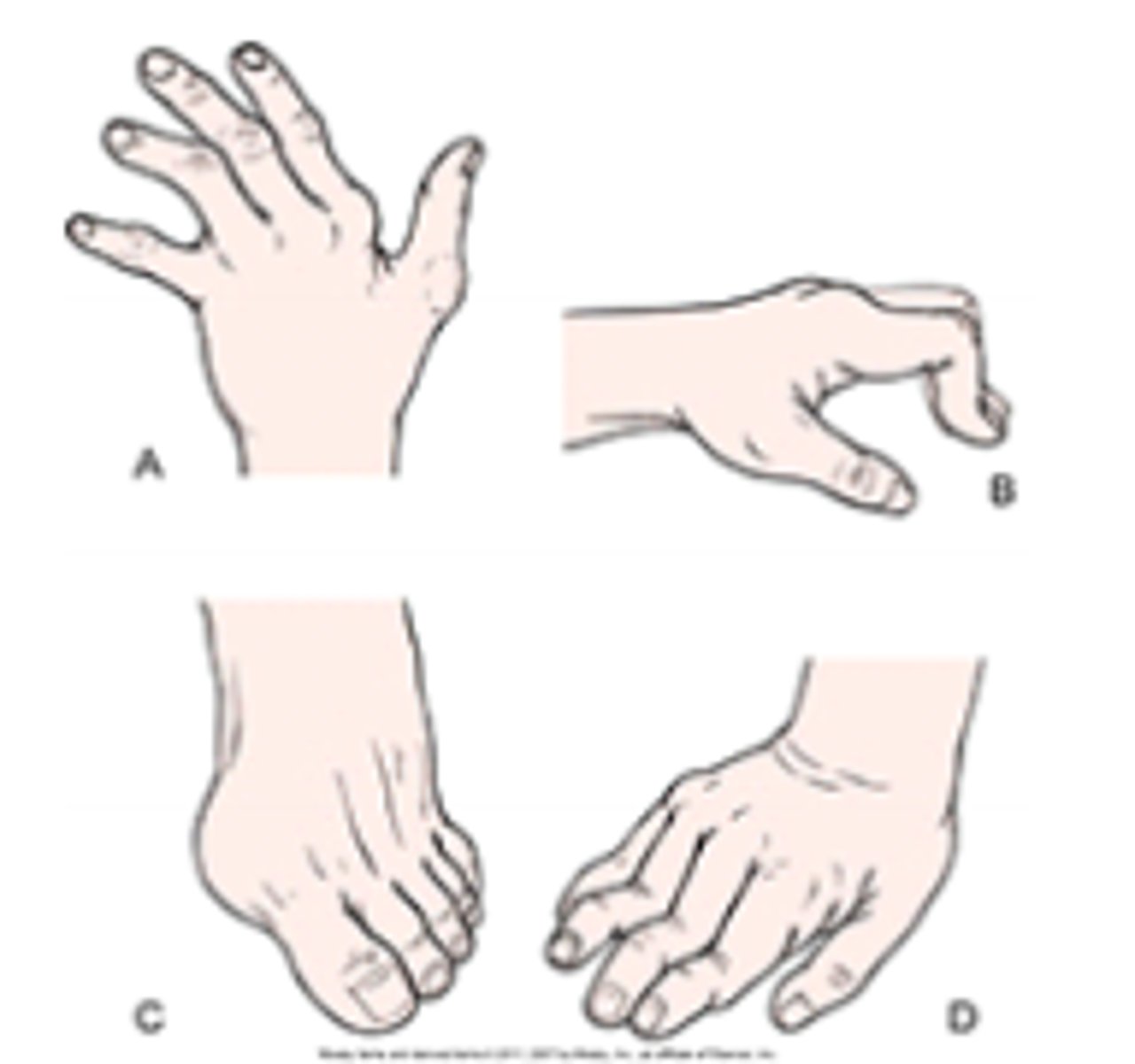
ANS: D
Swan neck deformity involves distal interphalangeal joint hyperflexion and proximal
interphalangeal joint hyperextension of the hands. The other deformities are also associated
with rheumatoid arthritis: ulnar drift, boutonniere deformity, and hallux vagus.
DIF: Cognitive Level: Understand (comprehension) REF: 1527
TOP: Nursing Process: Assessment MSC: NCLEX: Physiological Integrity
When reviewing the health record for a new patient with rheumatoid arthritis, the nurse reads
that the patient has swan neck deformities. Which deformity will the nurse expect to observe
when assessing the patient?
a. A
b. B
c. C
d. D
During assessment of the patient with fibromyalgia, the nurse would expect the patient to
report which of the following (select all that apply)?
a. Sleep disturbances
b. Multiple tender points
c. Cardiac palpitations and dizziness
d. Multijoint inflammation and swelling
e. Widespread bilateral, burning musculoskeletal pain
ANS: A, B, E
These symptoms are commonly described by patients with fibromyalgia. Cardiac involvement
and joint inflammation are not typical of fibromyalgia.
DIF: Cognitive Level: Understand (comprehension) REF: 1546
TOP: Nursing Process: Assessment MSC: NCLEX: Physiological Integrity