Econ First Assessment Notecards
 Call Kai
 Learn
Learn Practice Test
 Spaced Repetition
 Match
Match Flashcards
 Knowt Play
1/132

There's no tags or description
Looks like no tags are added yet.
Name | Mastery | Learn | Test | Matching | Spaced | Call with Kai |
|---|
No analytics yet
Send a link to your students to track their progress
133 Terms
Economics
the study of the allocation of scarce resources among alternative and competing.
Goal: use resources where highest valued.
Rational-Actor Paradigm
People tend to act rationally, optimally, and self-interestedly.
at the time decision is made, not in retrospect
explains behavior when incentives change
suggests methods to change behavior
Policy Efficiency
not wasteful socially
does not mean desirable to each individual
want policies to improve efficiency
does not touch on distribution of wealth
Business Efficiency
not wasteful of resources
maximizing output for a given number of inputs
maximizing inputs for a given number of outputs
inefficiency is to be exploited
Economic Theory
a general principle that enables us to understand and predict the economic choices that people make
Economic Model
abstract world focused on a narrow set of relationships
leaves out irrelevant factors to question at hand
purpose is to understand relationships of interest
Utility
satisfaction from consuming a good or service
Fundamental Assumption of Economics
People are utility maximizers
Scarcity
Condition where our wants exceed what we can produce
Economic Cost
Accounting Cost + Opportunity Cost
Accounting Cost
(Explicit)
Dollar cost on your books
Opportunity Cost
(Implicit)
What you would have made in the best thing you didn’t do
Economic Profit
Total Revenue - Accounting Cost - Opportunity Cost
Total Revenue - Economic Cost
What is capitalism’s coordinating mechanism?
Price system
Thomas Mun background
1571-1641
Wealthy merchant
Director of East India company
Thomas Mun view
Mercantilism
What is mercantilism?
gold is wealth, gold is limited
so wealth is limited
become wealthy by acquiring gold
export more than you import
government encourages exports and not imports
“zero sum game”
trade isn’t even, one always gains more
England’s Treasure by Foreign Trade (1664)
wrote for mercantilist view on trade
written by Thomas Mun
Adam Smith background
1723 - 1790
born in Kirkcaldy, Scotland
known as fumbling, bumbling bachelor father of economics
became famous for “The Theory of Moral Sentiments”
“An Inquiry into the Nature and Causes of the Wealth of Nations”
Adam Smith view
Wealth (National Standard of Living) = Goods + Services
Division of Labor / Specialization (limited by market)
Gains from Trade
trade because both better off
gain something from trade that’s valued more than the money
Invisible Hand Doctrine
Role of Government / Tax Policies / Externalities
Subsistence Theory of Wages X
Banking Regulation
Utility (Self-Interest)
Diamond-Water Paradox X
Monopoly
Rent Seeking
Price Fixing
Free Trade
Absolute Advantage
Antitrust
What is Invisible Hand Doctrine?
in a decentralized, free market economy, individuals pursuing their own self-interest will tend to benefit the economy as a whole
Thomas Robert Malthus background
1766 - 1834
godson of David Hume
best friends with David Ricardo - Intellectual adversaries
Thomas Malthus view
Law of Diminishing Returns (1815)
Population growth grows 2.5% / yr, doubles in 28 years
food production growing at decreasing rate
doomed unless economic choices at work, those who adapt best will survive
Malthusian “struggle for existence” inspires Darwin
"An Essay on the Principles of Population”
Cost-benefit analysis
Comparative Advantage
What is Labor Theory of Value?
value of an output is equal to the sum of its labor inputs
Karl Heinrich Marx background
rejected Jewish ancestry, debate over whether anti semitic
Religion “… opium of the people”
drank himself out of university
unwashed slob - “the Moor”
developed severe boils - Carbuncles
strong believer in Hegelian method - dialectic
life always in flux, things are always changing
any idea has opposite, they will do battle, change will come from it “synthesis”
"The Communist Manifesto” (1848)
“Das Kapital” (1867)
“From each according to his ability, to each according to his needs!”
Critique of the Gothra Programme, 1875
Karl Marx view
Dialectical Materialism
fusing of dialectic method with materialism
Business cycles (20 years of trough-to-trough)
Capitalism “Laws of Motion”: Unguided production — rises and slumps of higher intensity
socialism: rationally planned production
Collapse of capitalism inevitable “Iron necessity”
dependent on “Labor Theory of Value”
exploited workers
attacked perfect capitalism — perfect competition
but, capitalism was a necessary precondition for socialism
said virtually nothing about what to do after revolution
Alfred Marshall background
1842 - 1924
Teacher of John Maynard Keynes
Interested in philosophy
devoted life to economics after walking through “poorest of quarters” of cities, “looking at the faces of poor people”
focus on education to fix
Alfred Marshall view
Diagrammatic Economics
Scissors analogy for S & D
Partial Equilibrium
I only care about my market for my firm
Elasticity Theory
Theory of the Firm
Consumer Surplus
“Principles of Economics (1890)
Horizontal (Supply)
Quantity supplied at a particular price
Vertical (Supply)
Willingness to sell a little more at a particular quantity
i.e., economic cost of a marginal increase in output
Supply shifters
input prices
price/profitability of other goods
expectations of future prices
number of suppliers
technology
regulation
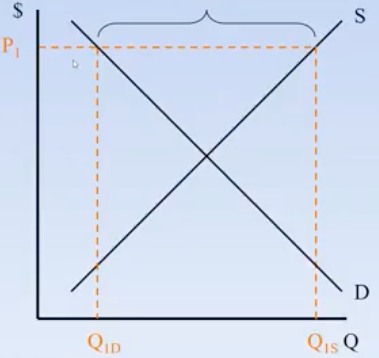
Surplus
Excess of supply over demand at a given price
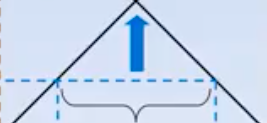
Shortage
excess of demand over supply at a given price
Competitive prices signal
value and scarcity on the margin
“demand, willingness to pay” “supply” “of one more, of one extra unit”
Marginal Analysis
examines the change in one variable with respect to a small change in another
Why do economists care about marginal analysis?
prices determined on the margin
most economic decisions are marginal
Consumer surplus
excess of what consumers are willing to pay over what they have to pay for a good
net value to consumers (i.e., utility received but not paid for)
Producer surplus
excess of what sellers receive over the minimum they require (i.e., economic cost) to produce a particular quantity
net value to the company
Social Welfare
excess of consumer willingness to pay over the minimum producers require for a particular quantity
sum of consumer and producer surplus
Deadweight Loss (Welfare Loss, Inefficiency)
loss in social welfare due to market inefficiency
DWLs are wasteful of resources
Who became famous for “The Theory of Moral Sentiments” and “An Inquiry Into the Nature and Causes of the Wealth of Nations”
Adam Smith
Who said Wealth = Goods + Services
Adam Smith
Who said both parties gain from trade?
Adam Smith
Who was famous for “The Communist Manifesto” and “Das Kapital”
Karl Marx
Who wrote “The Essay on the Principles of Population”
Thomas Malthus
Elasticity
Measures the sensitivity of one variable to small changes in another
invariant to units of measure
affected by slope, but not slope
Formula for price elasticity of demand
% change in quantity / % change in price OR
(change in quantity / quantity) / (change in price / price)
Formula for Arc Price Elasticity of Demand (two prices and two quantities)
| ((Q2 - Q1) / AVG (Q1 and Q2)) / ((P2 - P1) / AVG (P1 and P2))
Pricing tradeoff assumes you are maximizing what?
Total Revenue
Pricing is
tradeoff between revenue and variable costs
With respect to elasticity, the goal of business is to
make its demand as inelastic (vertical) as possible
Determinants of Elasticity
number of close substitutes
proportion of budget (related to price)
time period to adjust
individual brand or industry aggregate
Formula for Cross Price Elasticity of Demand
% change in quantity of X / % change in price of Y OR
(change in quantity of X / quantity of X) / (change in price of Y / price of Y)
Economic definition of a firm
institution specializing in the production of goods and services for others
Why do firms exist?
specialization is productive
firms and markets are complements
variable input
varies with output over given time period
fixed input
constant with respect to output over given time period
Short run (SR)
time period in which at least one input is fixed
when you can’t reasonably expand all of your inputs
Long Run (LR)
time period in which all inputs are variable (i.e., can be reasonably adjusted
In class, what is assumed for labor and capital in short run?
labor is variable and capital is fixed
In class, what is assumed for labor and capital in long run?
labor and capital are variable
Total fixed cost (TFC) formula
R x K
r = rental rate (price) of capital
k = quantity of capital (fixed input)
Average fixed cost (AFC) formula
TFC / Q
Total variable cost (TVC) formula
w = wage rate (price of labor)
L = quantity of labor (variable input)
Average variable cost (AVC) formula
TVC / Q
Total cost (TC) formula
TFC + TVC
Average Total Cost (ATC) formula
AFC + AVC
(TFC / Q) + (TVC / Q)
Marginal Cost (MC) formula
change in total cost / change in quantity
change in TVC / change in quantity
Sunk costs
portion of fixed costs that cannot be recovered
Decision making mistakes
considering irrelevant costs (fixed/sunk)
ignoring relevant costs (opportunity)
Marginal Product of Labor (MPL)
extra output from employing an additional laborer
Marginal Product of Labor (MPL) formula
change in quantity / change in labor
Average Product of Labor (APL)
average output per laborer
Average Product of Labor (APL) formula
quantity / labor
Law of Diminishing Returns
when equal increments of a variable input are successively added to a fixed input, the extra output will eventually diminish due to unbalanced growth
Point of Diminishing Returns
the output level where marginal cost is minimized
the worker where marginal product is maximized
the point beyond which every business must go to maximize profits
Increasing Returns to Scale (IRS, Economies of Scale)
if you increase all inputs by X%, output increases by more than X%
Constant Returns to Scale (CRS)
if you increase all inputs by X%, output increases by exactly X%
Decreasing Returns to Scale (DCS), Diseconomies of Scale)
if you increase all inputs by X%, output increases by less than X%
Returns to scale is a what type of concept?
Long-run
Minimum Efficient Scale (MES)
the smallest production level or scale at which average costs are minimized
the smallest output level of CRS
“Top Two Principles” (Elasticity, Production, Costs)
with respect to elasticity, the goal of business is to make its demand as inelastic (vertical) as possible
when making a decision, consider only the costs and benefits that vary with the consequence of the decision
ignore irrelevant costs (fixed and sunk costs)
consider relevant hidden costs (opportunity costs)
Who was famous for Das Kapital (1867)?
Karl Marx
What year was Das Kapital made?
1867
Who was famous for The Principles of Economics (1890)?
Alfred Marshall
What year was The Principles of Economics made?
1890
Who was famous for An Inquiry into the Nature and Causes of the Wealth of Nations (1776)?
Adam Smith
When was An Inquiry into the Nature and Causes of the Wealth of Nations made?
1776
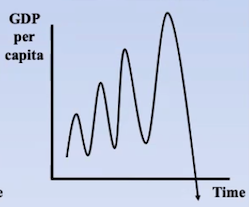
Whose view does the graph represent?
Karl Marx
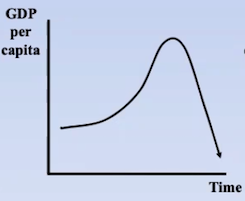
Whose view does the graph represent?
Thomas Malthus
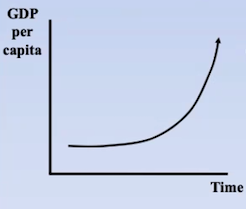
Whose view does the graph represent?
Adam Smith
normal good
a product where an increase in income raises its sales
inferior good
an increase in income causes a reduction in spending
Oligopoly Assumptions
Large number of buyers and a few sellers
firms are price makers
some barriers to entry
some close substitutes
company interaction is strategic
strategic interdependence in decision-making
all others same as perfect competition
Why do oligopolies exist?
economies of scale
large capital requirements
steel, airplanes, aluminum, pharmaceuticals
large advertising requirements
soft drinks, beer, pharmaceuticals
network effects
credit cards, social media, video games, phones
patents, reputation, etc
magnitude of these barriers affects real-world market structure
Collusion
when a group of firms behaves as if they were a single firm
Cooperation on competitive investments like joint venture is
Per Se Illegal
Inherently illegal “without elaborate inquiry as to the precise harm they have caused or the business excuse for their use”
Price Fixing Methods
High output prices
bid-ask spreads
vitamins
CDs
High margins
Low discounts
university financial aid
Low input prices
NCAA
tech company hiring
Allocation of customers / sales volume
carbon fiber / prepreg
Price fixing
typically provides NO social benefits
unlike some monopoly situation
simply adjusts industry P and Q to monopoly level
increases DWL without any offsetting benefits
purely welfare
per se illegal under antitrust laws
can be prosecuted as a criminal offense with prison sentences for managers involved