Chronic Kidney Disease
 Call Kai
 Learn
Learn Practice Test
 Spaced Repetition
 Match
Match Flashcards
 Knowt Play
1/8

There's no tags or description
Looks like no tags are added yet.
Name | Mastery | Learn | Test | Matching | Spaced | Call with Kai |
|---|
No analytics yet
Send a link to your students to track their progress
9 Terms
Definition

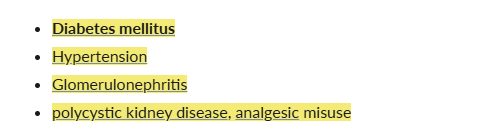
Etiology
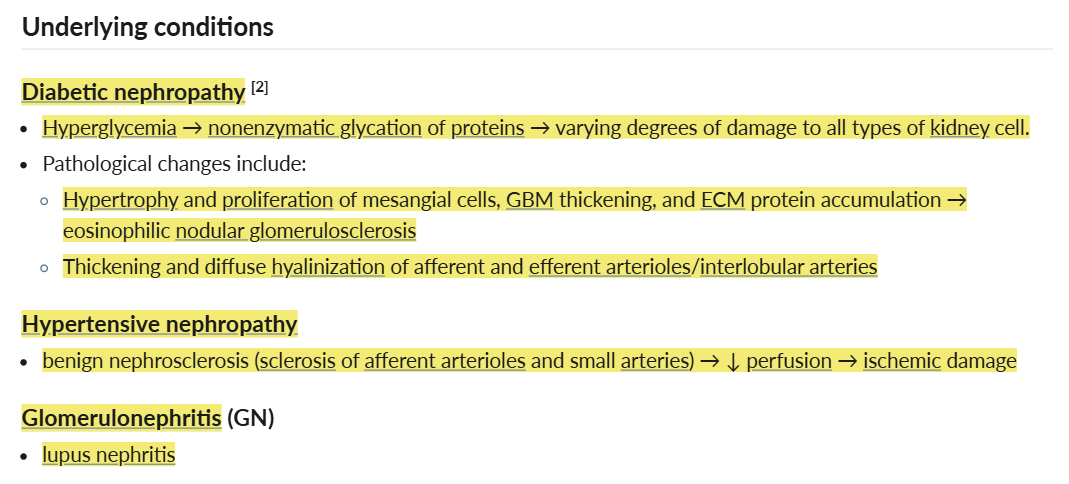
Pathophysiology - underlying conditions
Pathophysiology - Consequences
Reduced GFR
↓ Production of urine → ↑ extracellular fluid volume → total-body volume overload
↓ Excretion of waste products (e.g., urea, drugs)
↓ Excretion of phosphate → hyperphosphatemia
During the early stages of CKD, plasma phosphate levels will typically be normal due to the increased secretion of fibroblast growth factor 23 (FGF23). [4]
FGF23 is produced by osteoblasts in response to initial hyperphosphatemia and increased calcitriol.
↓ Maintenance of acid-base balance; → metabolic acidosis
↓ Maintenance of electrolyte concentrations → electrolyte imbalances (e.g., Na+ retention)
Reduced endocrine activity
↓ production of calcitriol → (in combination with ↓ excretion of phosphate) → ↓ serum Ca2+ → ↑ PTH
↓ Erythropoietin → ↓ stimulation of erythropoiesis
![<p><span style="color: red;"><strong>Reduced GFR</strong></span></p><ul><li><p><span><mark data-color="yellow" style="background-color: yellow; color: inherit;">↓ Production of urine</mark> → ↑ extracellular fluid volume →<mark data-color="yellow" style="background-color: yellow; color: inherit;"> total-body volume overload</mark></span></p></li><li><p><span><mark data-color="yellow" style="background-color: yellow; color: inherit;">↓ Excretion of waste products</mark> (e.g., urea, drugs)</span></p></li><li><p><span><mark data-color="yellow" style="background-color: yellow; color: inherit;">↓ Excretion of phosphate</mark> → hyperphosphatemia</span></p><ul><li><p><span>During the early stages of CKD, plasma phosphate levels will typically be normal due to the increased secretion of fibroblast growth factor 23 (FGF23).</span> <sup>[4]</sup></p><ul><li><p><span>FGF23 is produced by osteoblasts in response to initial hyperphosphatemia and increased calcitriol.</span></p></li></ul></li></ul></li><li><p><span><mark data-color="yellow" style="background-color: yellow; color: inherit;">↓ Maintenance of acid-base balance; </mark>→ metabolic acidosis</span></p></li><li><p><span><mark data-color="yellow" style="background-color: yellow; color: inherit;">↓ Maintenance of electrolyte concentrations</mark> → electrolyte imbalances (e.g., Na<sup>+</sup> retention)</span></p></li></ul><p><span style="color: red;"><strong>Reduced endocrine activity</strong></span></p><ul><li><p><span><mark data-color="yellow" style="background-color: yellow; color: inherit;">↓ production of calcitriol</mark> → (in combination with ↓ excretion of phosphate) → ↓ serum Ca<sup>2+</sup> → ↑ PTH</span></p></li><li><p><span><mark data-color="yellow" style="background-color: yellow; color: inherit;">↓ Erythropoietin </mark>→ ↓ stimulation of erythropoiesis</span></p></li></ul><p></p>](https://assets.knowt.com/user-attachments/3be15744-8bbc-41d0-94bc-59d603280551.png)
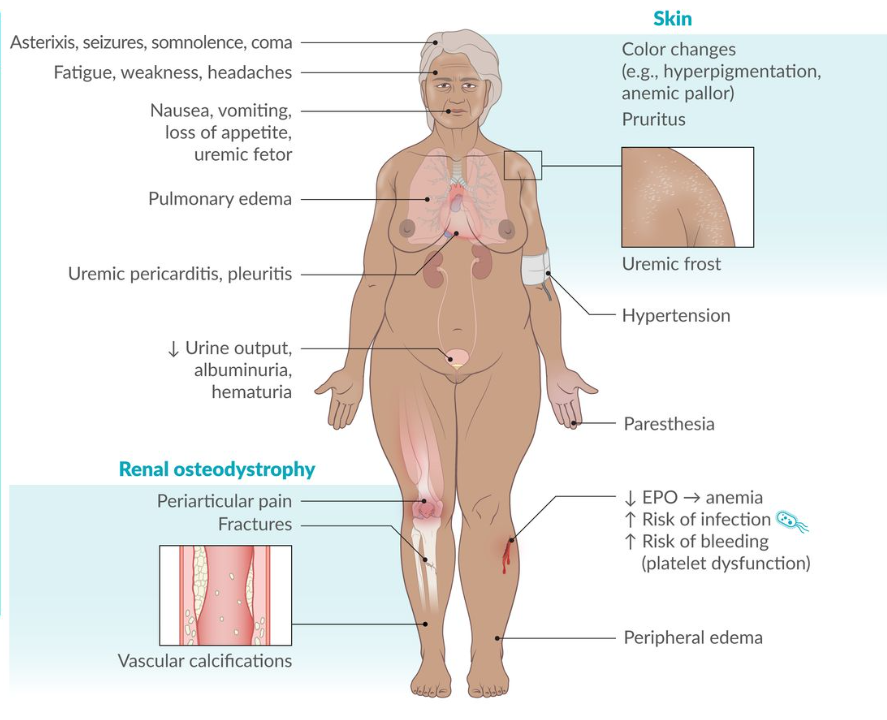
Clinical features
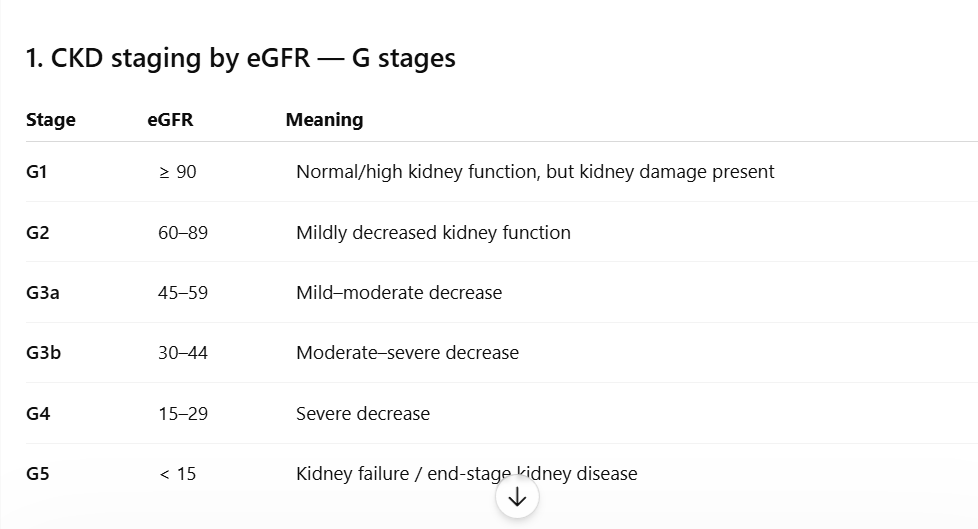
Classification of CKD
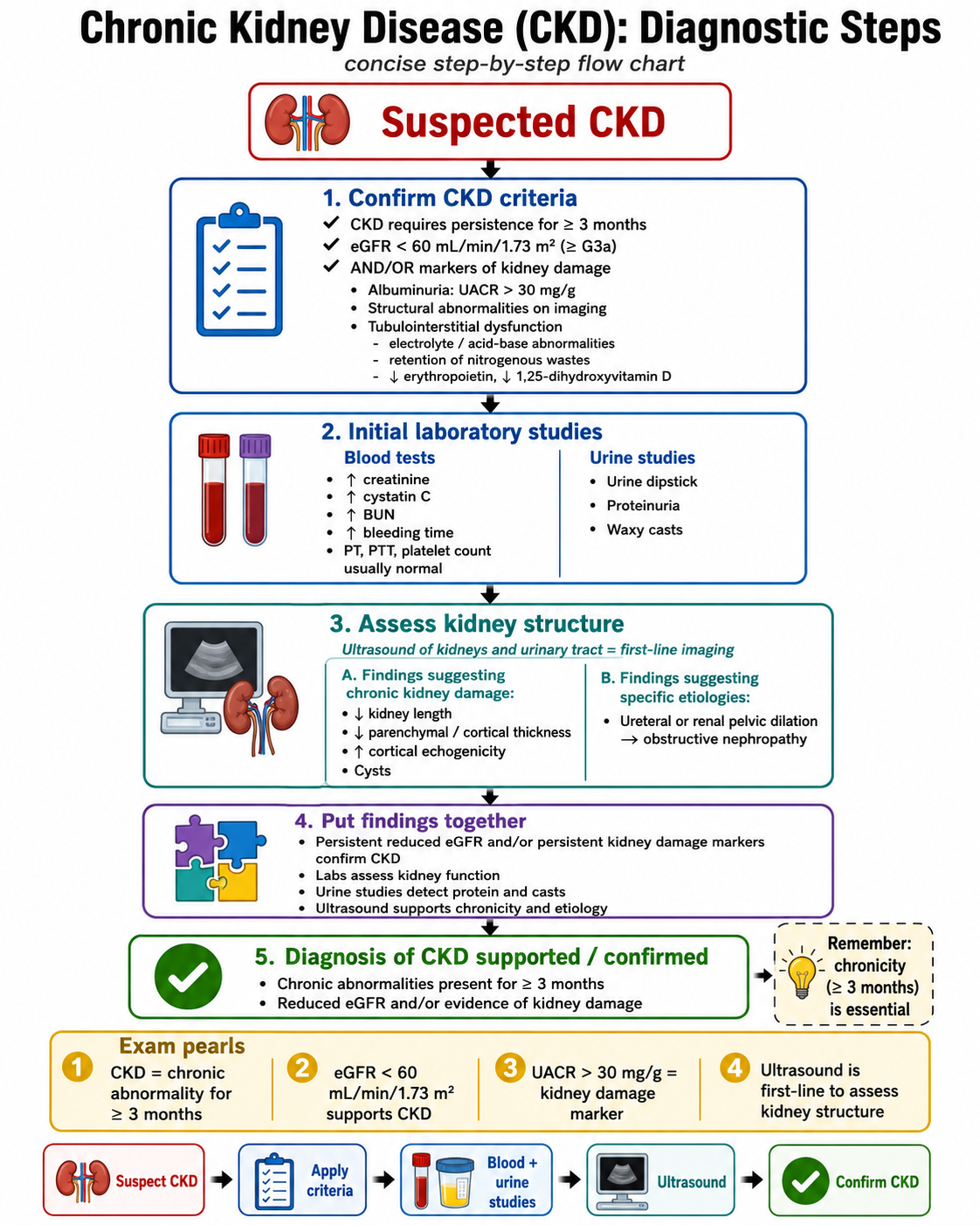
Diagnosis
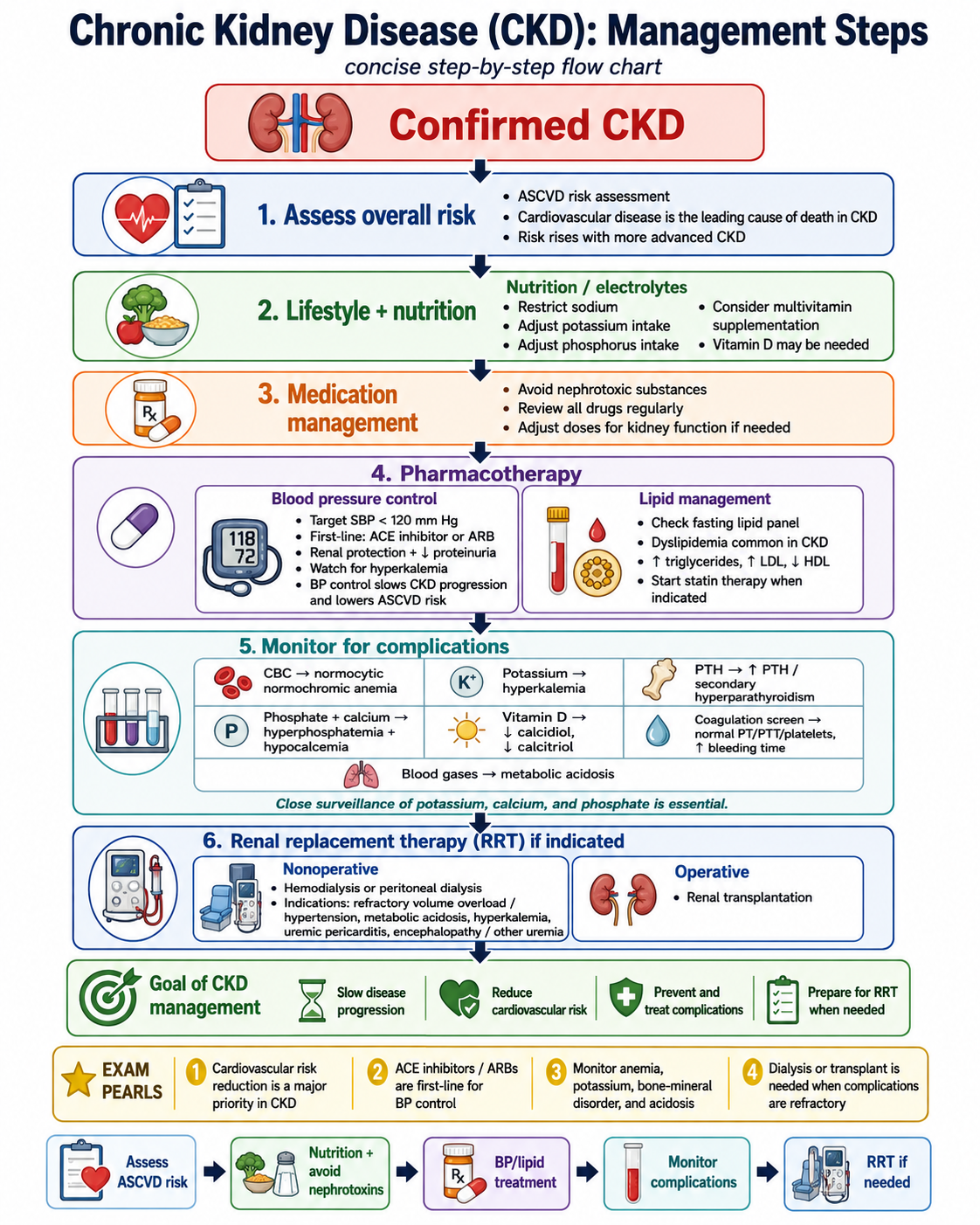
Management of CKD
Complications
CKD-mineral and bone disease
anemia (↓ synthesis of erythropoietin → ↓ stimulation of RBC production → normocytic, normochromic anemia)