FINALS SCHM
0.0(0)
Studied by 7 people Call Kai
 Learn
Learn Practice Test
 Spaced Repetition
 Match
Match Flashcards
 Knowt Play
Card Sorting
1/116

Earn XP
Description and Tags
Last updated 4:06 AM on 12/5/22
Name | Mastery | Learn | Test | Matching | Spaced | Call with Kai | Chat |
|---|
No analytics yet
Send a link to your students to track their progress
117 Terms
1
New cards
what are the two dimensions of quality?
product quality and service quality
2
New cards
product quality
performance
aesthetics
special features
conformance (how closely it fits specifications)
reliability
durability
serviceability
perceived quality (subjective customer evaluation)
aesthetics
special features
conformance (how closely it fits specifications)
reliability
durability
serviceability
perceived quality (subjective customer evaluation)
3
New cards
service quality
convenience
reliability
responsiveness
time
assurance
courtesy
tangible
consistency
reliability
responsiveness
time
assurance
courtesy
tangible
consistency
4
New cards
what are the 3 types of quality?
quality of:
design, conformance, performance
(DCP)
design, conformance, performance
(DCP)
5
New cards
craft performance
when 1 worker made product start to finish
quality is under 1 person's control
quality is under 1 person's control
6
New cards
mass production
when worker made small part of the product
quality affected by large # of ppl
nobody had control of quality so nobody could be singled out for being responsible for quality
quality affected by large # of ppl
nobody had control of quality so nobody could be singled out for being responsible for quality
7
New cards
quality control school of thought
attempted to regain “control of quality” that was lost w mass production
scientific management approach was taken
statistical process control was invented
scientific management approach was taken
statistical process control was invented
8
New cards
philosophy of quality control school of though
every process is subject to variation
process variation produces quality variation in output
quality variation should be detected and filtered out
process variation produces quality variation in output
quality variation should be detected and filtered out
9
New cards
quality assurance school of thought
alternative to quality control school
design/build quality into a product or service
“Do it right the first time, every time”
“Low quality is costly”
“Quality is everybody’s responsibility”
design/build quality into a product or service
“Do it right the first time, every time”
“Low quality is costly”
“Quality is everybody’s responsibility”
10
New cards
philosophy of quality assurance school of thought
find and eliminate sources of process variation
11
New cards
the irony was that the staggering success of the Japanese were built on...
principles of an American, a management intellectual, largely ignored in his own country
12
New cards
Deming is
statistician by training
13
New cards
when America joined the WWII,
Deming's skills were used to train managers who had to run the production lines for war effort
14
New cards
Deming's work methods are baesd on
rigorous application of statistics
15
New cards
what was his key message?
eliminate waste
16
New cards
Americans sent consultants to advise on
better management methods
17
New cards
Japanese were afraid of
they had established a reputation for shoddy quality and cheap price and that it was irreverseable
18
New cards
"when I talked w management in Japan
I was talking to 80% of the capital"
19
New cards
despite the dry stats, Deming's stats are very sensitive to
ppl
20
New cards
after WWII, even if the quality of American goods were only adequate or even questionable
there was nowhere else to go and dictums of Deming were forgotten
21
New cards
total quality management (TQM)
philosophy that involves everyone in org in a continual effort to improve quality and achieve customer satisfaction
FOCUS on EVERYONE, CONTINUAL IMPROVEMENT, CUSTOMER SATISFACTION
FOCUS on EVERYONE, CONTINUAL IMPROVEMENT, CUSTOMER SATISFACTION
22
New cards
what is the input, process, and output in statistical methods?
input + output = acceptance sampling
process = statistical process control
process = statistical process control
23
New cards
what does statistical process control (SPC) measure?
quality of conformance
24
New cards
what is the problem with SPC?
production output is variable
25
New cards
questions for SPC
how much variability is acceptable?
how much variability is normal?
how much variability is inevitable?
where does variability come from in the first place???
how much variability is normal?
how much variability is inevitable?
where does variability come from in the first place???
26
New cards
sources of variability
common variability (random) or assignable variablitiy
27
New cards
common variability
natural variation in the output of a process caused by countless minor factors
28
New cards
assignable variability
non-random variation whose causes can be identified and eliminated
29
New cards
what 3 things do you do for SPC?
monitor a process (collect data)
identify an acceptable/normal range
alert when process goes out of this range
identify an acceptable/normal range
alert when process goes out of this range
30
New cards
what is a control chart
time-ordered plot of sample stats used to distinguish between random and nonrandom variability
31
New cards
control charts rely on
random sampling
32
New cards
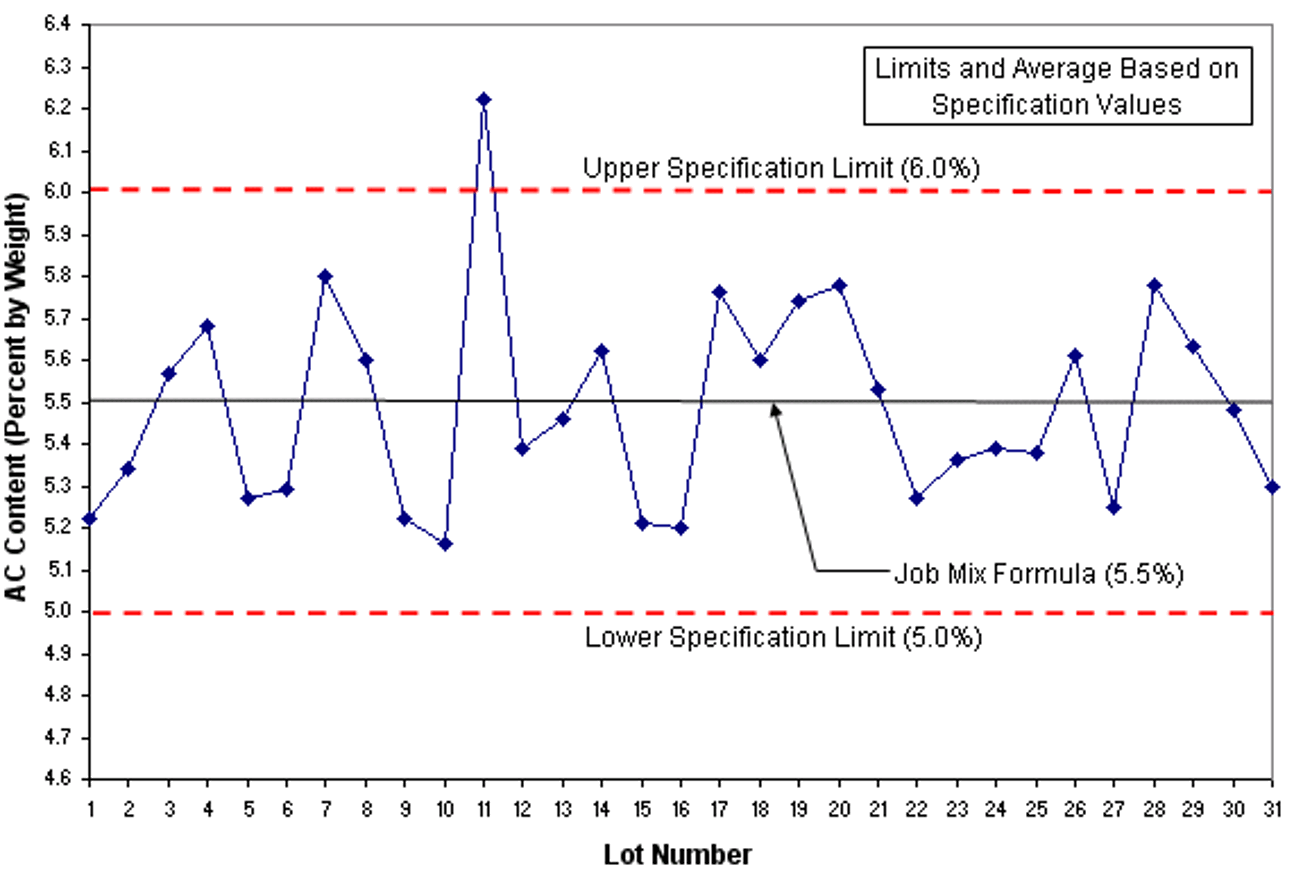
control charts establishes
upper and lower control limits just like hypothesis testing
33
New cards
2 types of errors in control charts
type 1 and type 2
when you conclude "out of control" when the process is in control = type 1 error (producer's risk)
when you conclude "in control" when the process is out of control = type 2 error (customer's risk)
when you conclude "out of control" when the process is in control = type 1 error (producer's risk)
when you conclude "in control" when the process is out of control = type 2 error (customer's risk)
34
New cards
2 control charts for variables
mean control chart
range control chart
range control chart
35
New cards
2 control charts for attributes
p-chart and c-chart
36
New cards
mean control chart is used to
monitor central tendency of process
37
New cards
mean control chart can be calculated by using
standard deviation and range (R)
38
New cards
p-chart
control chart for attributes used to monitor the proportion of defective items in a process
39
New cards
p =
# of defective items/ # of total items
40
New cards
c-chart
control chart for attributes used to monitor the number of defects per unit
41
New cards
c =
# of total defects/ # of total items
42
New cards
run
sequence of observations w a certain characteristic
43
New cards
run test
test for patterns in a sequence
44
New cards
if process is stable
there should be no patterns in control chart
45
New cards
if process is not stable
there should be trends/patterns/shifts in mean
46
New cards
acceptance sampling was developed by who
US military in WWII for testing bullets
47
New cards
main idea of acceptance sampling is
take a random sample from the lot
test/appraise sample
accept or reject whole lot based on sample result
test/appraise sample
accept or reject whole lot based on sample result
48
New cards
acceptance sample can be use with
attributes or variables
49
New cards
acceptance sampling is employed when
testing is destructive
cost of 100% inspection is very high
100% inspection takes too long
cost of 100% inspection is very high
100% inspection takes too long
50
New cards
acceptance sampling does not
assess the exact quality of the lot
assess the performance of production process
assess the performance of production process
51
New cards
single sampling plans are denoted as
(n,c) plans
n = sample size n
c = lot is rejected if there are more than c defectives
n = sample size n
c = lot is rejected if there are more than c defectives
52
New cards
single sampling plans are the most
common and easiest plans to use although not the most efficient in terms of average number of samples needed
53
New cards
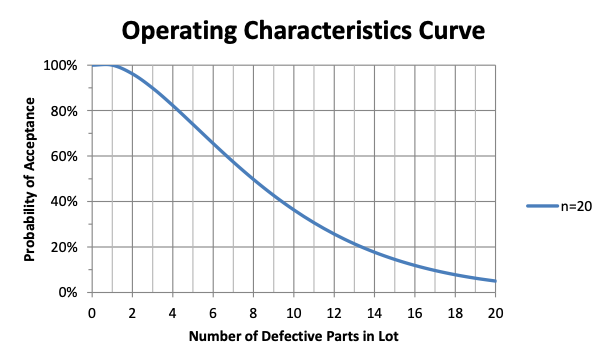
example of acceptance sampling
lot size = 100 pieces
sample size = 20 pieces
producer's goal (acceptance quality level) = 5% (5/100)
customer's goal (lot tolerance percentage defective) = 10% (10/100)
rule: accept if sample has 0 or 1 defective part, reject if sample has more than 1 defective part
sample size = 20 pieces
producer's goal (acceptance quality level) = 5% (5/100)
customer's goal (lot tolerance percentage defective) = 10% (10/100)
rule: accept if sample has 0 or 1 defective part, reject if sample has more than 1 defective part
54
New cards
transportation infrastructure
supports flow of our nations economy
55
New cards
transport functionality primarily consists of
product movement services
56
New cards
2 elements in movement of inventory to specified destinations
restrictive element and flexible element
57
New cards
restrictive element
in-transit inventory is "captive", usually inaccessible during transportation
58
New cards
flexible element
inventory can be diverted during shipment to a new destination
59
New cards
transportation consumes 3 different things
time, financial, and environmental resources
60
New cards
transportation is more than what percent of cost of logistics
60
61
New cards
transportation is one of the largest consumers of what
oil and gas in US
62
New cards
transportation impacts 2 things
traffic congestion
noise and air pollution
noise and air pollution
63
New cards
transport functions as what for products while in a vehicle
storage services
64
New cards
in-transit inventory is captive in
transport system
65
New cards
managers strive to do what with in-transit inventory
minimize
66
New cards
products can also be stored in
vehicles at origin or destination (trailers, trucks, railcars)
67
New cards
storing products in vehicles at origin or destination is usually
more expensive than traditional warehousing bc mut pay for rental or demurrage charges on vehicles usef for storage
68
New cards
what are the transportation stakeholders involved in transportation
consignor (shipper)
consignee (receiver)
carrier and agents
government
internet (marketplace)
public
consignee (receiver)
carrier and agents
government
internet (marketplace)
public
69
New cards
what are the interests of consignor (shipper) and consignee (receiver)
have a common interest in moving goods from origin to destination within a given time at the lowest cost
70
New cards
what is the interest of carriers
desire to maximize their revenue for movement while minimizing associated costsa
71
New cards
what are the interests of agents (brokers and freight forwarders)
to facilitate carrier and customer matching
72
New cards
what are the interest of government
desire a stable and efficient transportation environment to support econ growth
73
New cards
what are the interest of the public
concerned w transportation accessibility, expense, standards for security, safety, and environment
74
New cards
what are the interests of internet
new marketplace for transportation
replaces phone, fax, other tech
replaces phone, fax, other tech
75
New cards
transportation structure consists of
rights-of-way
vehicles
carriers operating within 5 basic modes
vehicles
carriers operating within 5 basic modes
76
New cards
5 basic transportation methods
rail
highway
water
pipeline
air
highway
water
pipeline
air
77
New cards
mode is
basic transportation method
78
New cards
motor carriers
trucks
exceeds all other modes combined in domestic freight market
expanded rapidly since end of WWII
benefits include: speed of transit, ability to operate door-to-door
more efficient than rail for small shipments over short distances
dominate freight moves under 500 miles and from manufacturing to wholesalers to retailers
many companies run their own truck fleets (like WalMart)
exceeds all other modes combined in domestic freight market
expanded rapidly since end of WWII
benefits include: speed of transit, ability to operate door-to-door
more efficient than rail for small shipments over short distances
dominate freight moves under 500 miles and from manufacturing to wholesalers to retailers
many companies run their own truck fleets (like WalMart)
79
New cards
railroads
historically handled the largest number of ton-miles within continental US
track mileage declined by over half since 1970
traffic shifted from broad range of commodities to hauling specific freight in traffic segments: from carload, intermodal, container
new tech include articulated cars, unit trains, double-stack cars
track mileage declined by over half since 1970
traffic shifted from broad range of commodities to hauling specific freight in traffic segments: from carload, intermodal, container
new tech include articulated cars, unit trains, double-stack cars
80
New cards
water carriers
oldest form of US transport dating back to birth of nation
percentage of ton-miles stayed between 19-30% since 1960
ranks between rail and truck in fixed cost
rights of way (canals and rivers) maintained by federal gov
percentage of ton-miles stayed between 19-30% since 1960
ranks between rail and truck in fixed cost
rights of way (canals and rivers) maintained by federal gov
81
New cards
pipeline
accounts for 68% of all crude and petroleum ton-mile movements in US
highest fixed costs and lowest variable costs of all modes
unique transportation mode:
can operate 24/7
no emissions
no empty container/vehicle to return
not flexible and limited to liquids and gases
highest fixed costs and lowest variable costs of all modes
unique transportation mode:
can operate 24/7
no emissions
no empty container/vehicle to return
not flexible and limited to liquids and gases
82
New cards
air carriers
newest and least utilized transport mode for freight
accounts for only 1% of intercity ton-miles
fastest
fixed cost is 2nd lowest but variable costs are extremely high
air-shipped products have high value, high priority, or extreme perishability
accounts for only 1% of intercity ton-miles
fastest
fixed cost is 2nd lowest but variable costs are extremely high
air-shipped products have high value, high priority, or extreme perishability
83
New cards
piggyback
most widely used form of intermodal coordination
trailer of container is hauled by truck at origin and destination (railcar hauls for portion of intercity travel)
trailer of container is hauled by truck at origin and destination (railcar hauls for portion of intercity travel)
84
New cards
2 types of piggyback
trailer on a flatcar (TOFC)
container on a flatcar (COFC)
container on a flatcar (COFC)
85
New cards
containerships
oldest form of intermodal transport
loads a truck trailer, railcar/container onto barge or ship for the line-haul movement on inland waterways
land bridge concept moves containers in a combo of sea and rail transport (common for containers moving from Europe to Pacific Rim)
transfer of freight between modes often requires handling containers and imposition of duties (function of ports: make this seamless and fast)
port throughput is big concern for supply chain managers
loads a truck trailer, railcar/container onto barge or ship for the line-haul movement on inland waterways
land bridge concept moves containers in a combo of sea and rail transport (common for containers moving from Europe to Pacific Rim)
transfer of freight between modes often requires handling containers and imposition of duties (function of ports: make this seamless and fast)
port throughput is big concern for supply chain managers
86
New cards
air-express
coordinated air-truck is commonly used for premium package services
many smaller cities lack airfreight services
costs can be leveraged w delivery time by linking the modes
many smaller cities lack airfreight services
costs can be leveraged w delivery time by linking the modes
87
New cards
non-operating intermediaries
companies that do not operate their own transportation assets but provide services to match shippers that need transportation service with companies that have transportation capacity
DONT OWN EQUIPMENT
DONT OWN EQUIPMENT
88
New cards
3 types of non-operating intermediary
freight forwarders
shipper associations and agents
brokers
shipper associations and agents
brokers
89
New cards
freight forwarders
consolidate small shipments from various customers into bulk shipment for a common carrier for transport
90
New cards
shipper associations and agents
groups of shippers who employ an agent to consolidate purchases and shipments for them
91
New cards
brokers
intermediaries that coordinate transportation arrangements for shipper, consignees and carriers, operating on a commission basis
92
New cards
mode and carrier selection
lowest rate does not necessarily translate into the most economical transportation service
93
New cards
selection process
1. problem recognition
2. search process
3. choice process
4. post-choice evaluation
2. search process
3. choice process
4. post-choice evaluation
94
New cards
problem recognition
identify transportation service requirements:
when, where, how much to ship
support services (tracking, documentation, etc)
interactions, transactions, relationships
assign priorities, weights, importance
assess current and future needs
translate service requirements into selection criteria
when, where, how much to ship
support services (tracking, documentation, etc)
interactions, transactions, relationships
assign priorities, weights, importance
assess current and future needs
translate service requirements into selection criteria
95
New cards
sample selection criteria
cost
transit time and reliability
capability
accessibility
security
speed
availability
dependability
capability
frequency
transit time and reliability
capability
accessibility
security
speed
availability
dependability
capability
frequency
96
New cards
search process
gather market intelligence about all possible carriers
identify main groups of providers (service, reputation, capabilities, past performance, references)
narrow down all potential candidates to a short-list
identify main groups of providers (service, reputation, capabilities, past performance, references)
narrow down all potential candidates to a short-list
97
New cards
important considerations for search process
transit time reliability
negotiated rates
consolidating shipments among a few carriers
financial stability
sales rep
special equipment
negotiated rates
consolidating shipments among a few carriers
financial stability
sales rep
special equipment
98
New cards
choice process
finalize RFQ/RFP
obtain responses from the providers in the short list
evaluate responses, follow up if necessary
make final choice for transportation service provider
negotiate and sign agreement
obtain responses from the providers in the short list
evaluate responses, follow up if necessary
make final choice for transportation service provider
negotiate and sign agreement
99
New cards
post-choice evaluation
establish performance criteria for transportation services
establish monitoring processes
tie payment to performance
periodic review of relationship between shipper and carrier
continuous improvement
establish monitoring processes
tie payment to performance
periodic review of relationship between shipper and carrier
continuous improvement
100
New cards
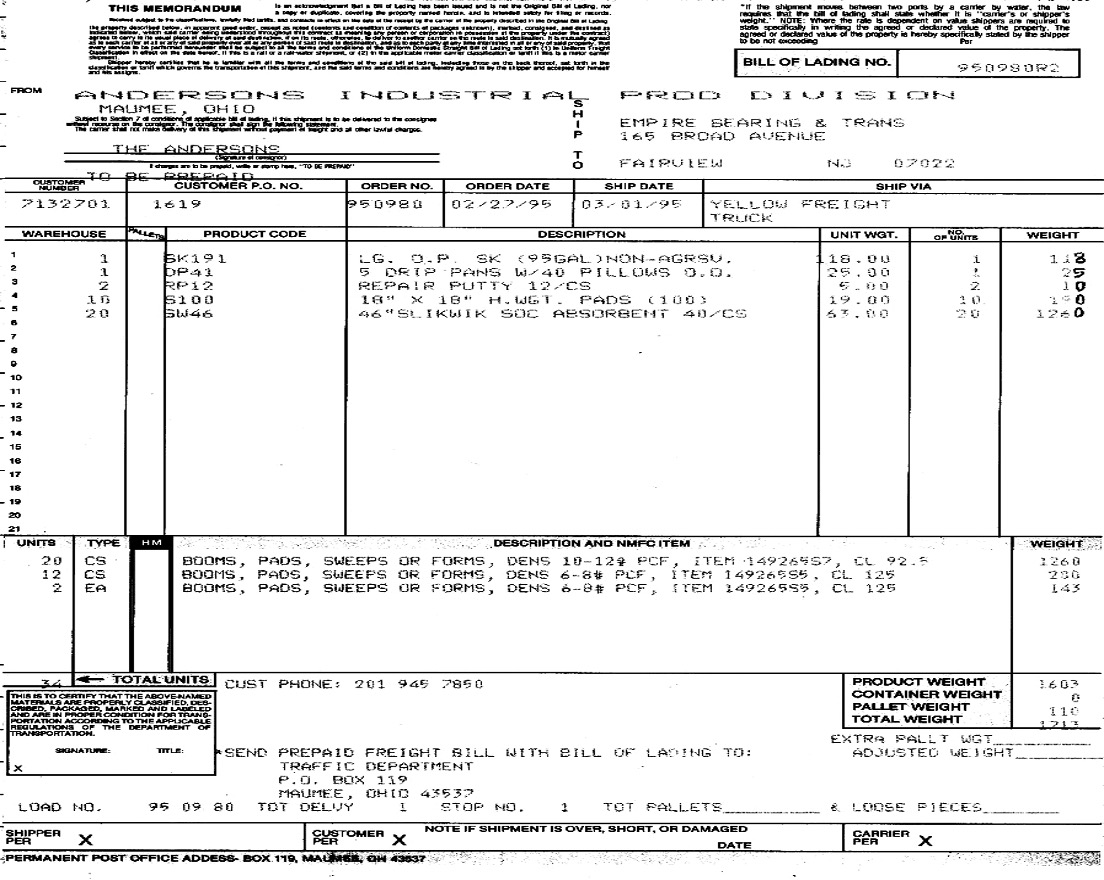
bill of lading
shows title to goods, name and address of consignor and consignee
summarizes goods in transit and their class rates
electronic bills now appearing where carrier and shipper have an established strategic alliance
note:
articles of extraordinary value must be in tariff or carrier can refuse carriage
explosives require written notice
no recourse on freight bills to shipper
substitute bill of lading same terms as original
water carriers liable for loading and seaworthiness of vessel
alterations to bills must be initialed by carrier
summarizes goods in transit and their class rates
electronic bills now appearing where carrier and shipper have an established strategic alliance
note:
articles of extraordinary value must be in tariff or carrier can refuse carriage
explosives require written notice
no recourse on freight bills to shipper
substitute bill of lading same terms as original
water carriers liable for loading and seaworthiness of vessel
alterations to bills must be initialed by carrier