Health Assessment Comprehensive Final Exam
 Call Kai
 Learn
Learn Practice Test
 Spaced Repetition
 Match
Match Flashcards
1/206

There's no tags or description
Looks like no tags are added yet.
Name | Mastery | Learn | Test | Matching | Spaced | Call with Kai |
|---|
No analytics yet
Send a link to your students to track their progress
207 Terms
Weight is a good measurement of
fluid/nutrition status
Newborn's head measures about _____ to _____ and about _____ _____ than chest circumference
Newborn's head measures about 32 to 38 cm and about 2cm larger than chest circumference
Rectal temperature measure ___ to ___ higher
.7°F to 1°F
What is a normal oral temperature in a resting individual?
37°C (98.6°F)
Pulse rate =
number of pulsations felt (palpated) in 1 minute
Rhythm =
regularity of the pulsations (time between each beat)
Heart rate at where is the most accurate?
apical pulse (5th intercostal space at left midclavicular line)
Respiratory rate =
number of times the patient completes a ventilatory cycle (inhalation and exhalation) each minute
Respiration variations
can vary with age, fever, anxiety, exercise, and increased altitude
tachypnea: too fast (32 for an adult)
bradypnea: too slow (RR 6)
apnea: long pauses or not breathing at all
Systolic pressure:
maximum pressure felt on artery during left ventricular contraction, or systole
Diastolic pressure:
elastic recoil, or resting, pressure between each contraction
Mean Arterial Pressure (MAP):
pressure forcing blood into tissues, averaged over cardiac cycle
Systolic BP is normally __ to __ mm Hg higher in the leg than in the arm
10 to 40 mm Hg higher
Normal BP
120/80 mm Hg
Level of BP is determined by five factors
1.) cardiac output (pump)
2.) peripheral vascular resistance
3.) volume of circulating blood
4.) viscosity
5.) elasticity of vessel walls
Errors in BP that can make it falsely high
-anxiety, anger, pain
-arm below level of heart
-too small cuff
-crossing legs
-failing to wait 1-2 mins before repeating
Errors in BP that can make it falsely low
-arm above level of heart
-operator error (pushing stethoscope too hard)
-deflating cuff too quickly
-too large of cuff
Position changed from supine to standing normally you will see a
slight decrease (less than 10 mm Hg) in systolic pressure may occur
Oxygen saturation measures
estimates the % of oxygen saturation in hemoglobin in the blood (normal is >93%)
When checking RR for pediatrics
it is most accurate when sleeping and watch the abdomen
Nociceptive pain is described as
dull, achy, throbbing, or sharp pain
Neuropathic pain is
due to a lesion or disease in the somatosensory system
Short-term and self-liming pain
warns individual of potential tissue damage and usually dissipates after an injury
Malignant pain
induced by tissue necrosis or stretching of an organ by growing tumor
Non-malignant pain
musculoskeletal conditions, such as arthritis, lower back pain, or fibromyalgia
Complete Assessment of pain should include:
-time
-description
-level
-alleviate and aggravate
-ADL dysfunciton
-reaction to pain
-what does pain mean to you?
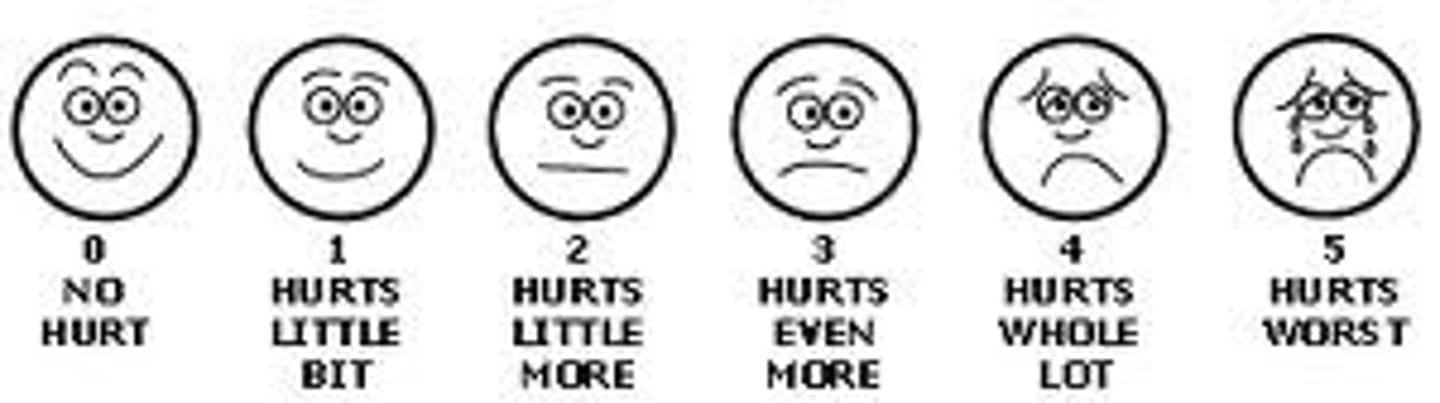
FACES pain scale
great for pediatric and cognitively declined patients
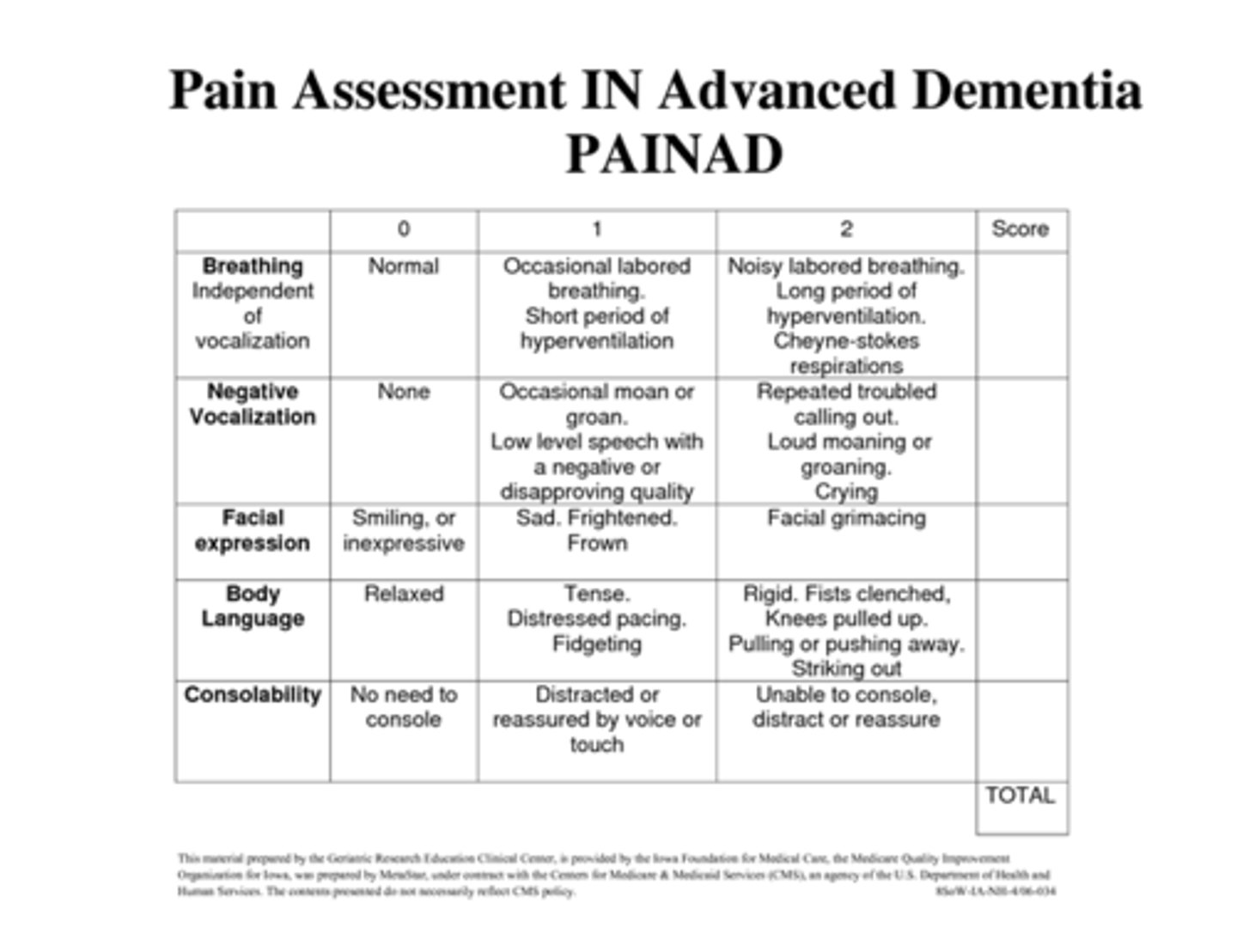
PAINAD scale
pain assessment for advanced dementia patients who are unable to verbalize what is going on with them
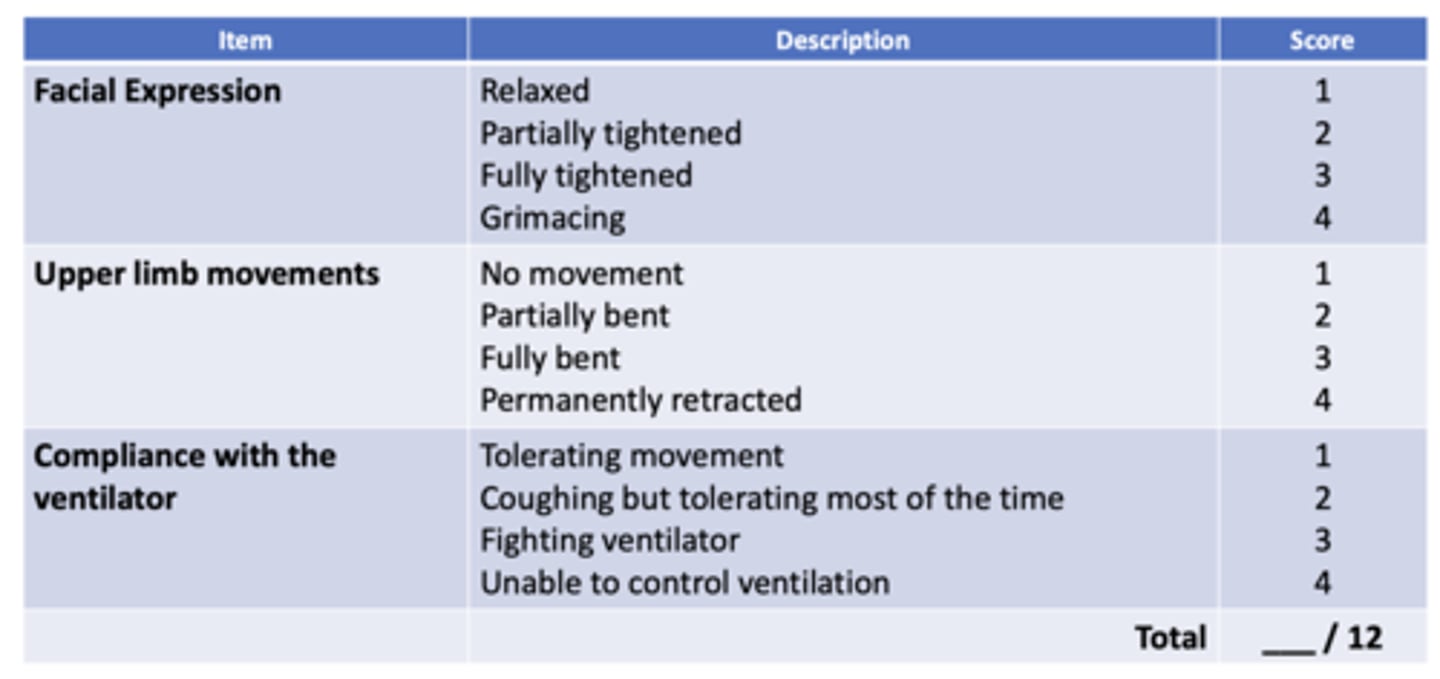
Behavior Pain Scale
assess pain in critically ill, sedated, and intubated patients in the ICU who cannot verbally communicate
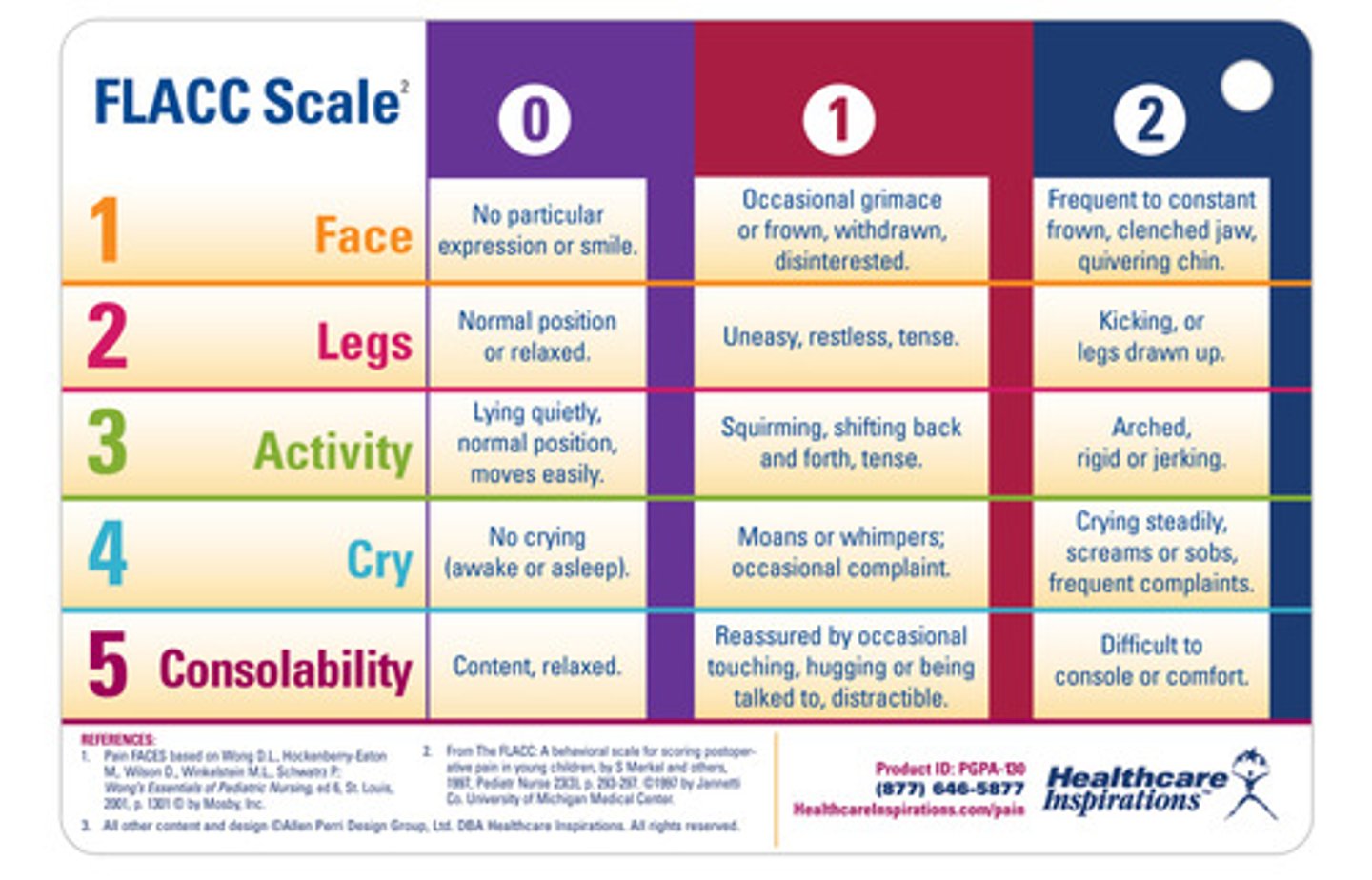
FLACC Pain Scale
for the pediatric clients and is observer based assessment
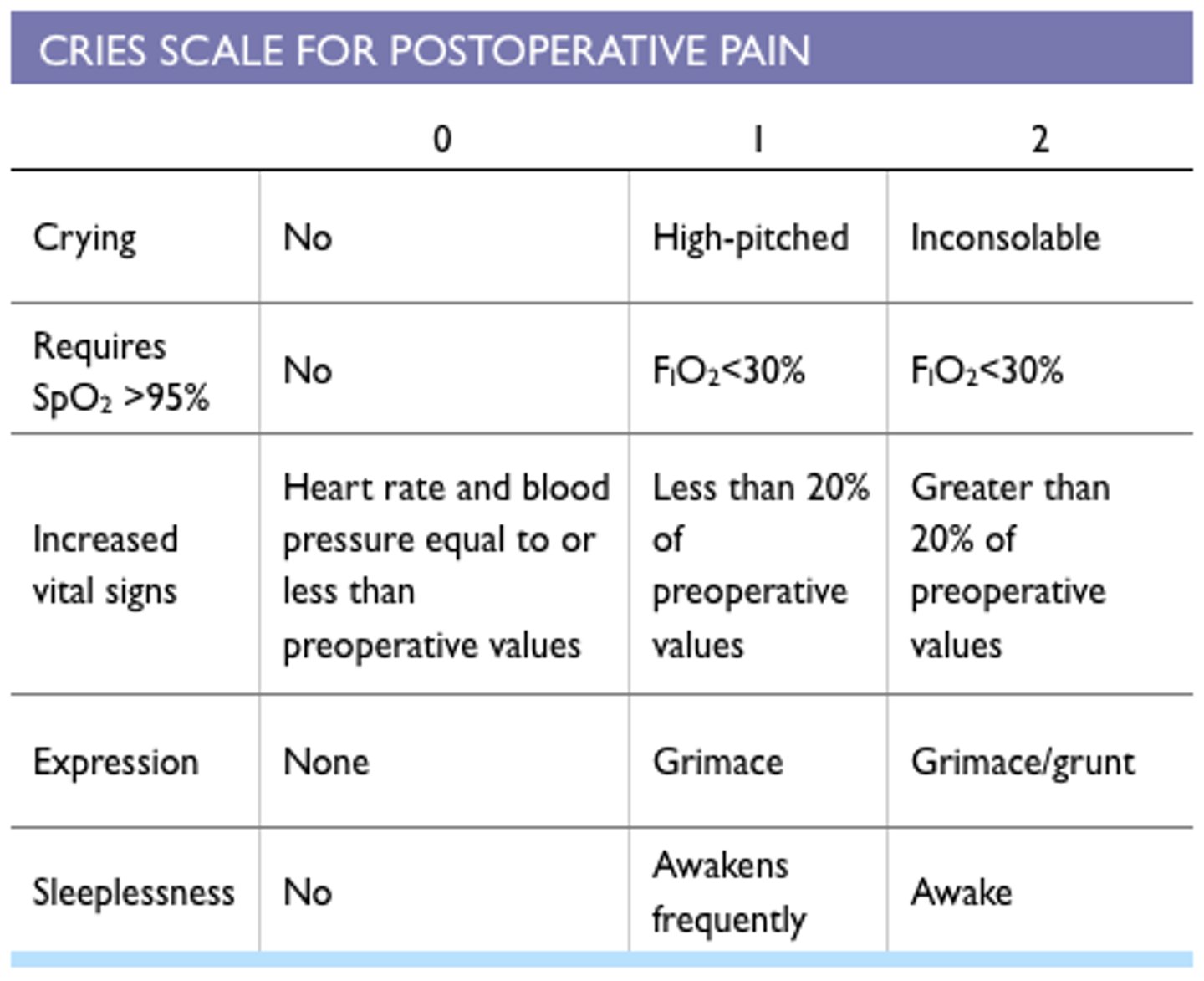
CRIES Pain Scale
used in assessing infants
Pharmacological Interventions
-analgesics
-anti-inflammatory
-opioids
-antidepressants
-anticonvulsants
-muscle relaxants
-creams and patches
Non-Pharmacological Interventions
-heat/cold
-guided imagery
-massage
-low stimuli
Managing Awkward Emotions: Anger
deal with it directly
-identify source of anger
-discuss approaches and acknowledge feelings
-if the patient is unable to continue, honor request to work with another nurse
Comprehensive Health History
establishes complete database
Problem-based or focused health assessment
includes data limited to the scope of problem
Episodic follow up assessment
focus on specific problems for which patient is already receiving treatment
Localized infection
the patient has symptoms, such as pain and tenderness and redness at the site (example: wound infection)
Systemic infection
affects the entire body instead of just a single organ or part and can become fatal if undetected and untreated (symptoms can include fever, fatigue, n/V, and malaise)
The most important basic technique in preventing and controlling transmission of infection is
hand hygiene
Principles of Surgical Asepsis
1.) a sterile object remain sterile only when touched by another sterile object
2.) only sterile objects may be placed on a sterile field
3.) a sterile object or field out of range of vision or an object held below a person's waist is contaminated
4.) a sterile object or field becomes contaminated by prolonged exposure to air
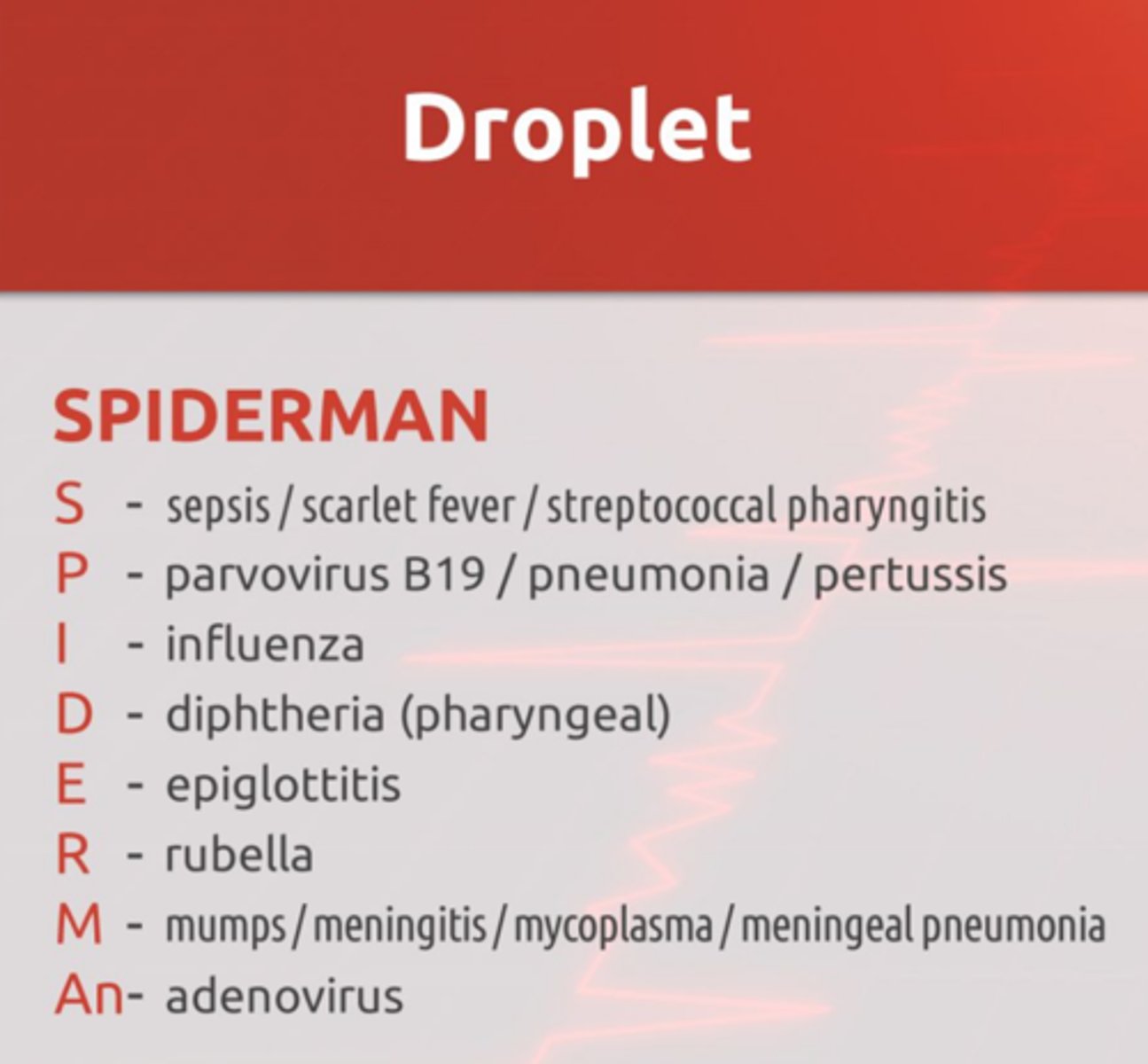
Droplet Precautions
surgical mask in addition to universal precautions
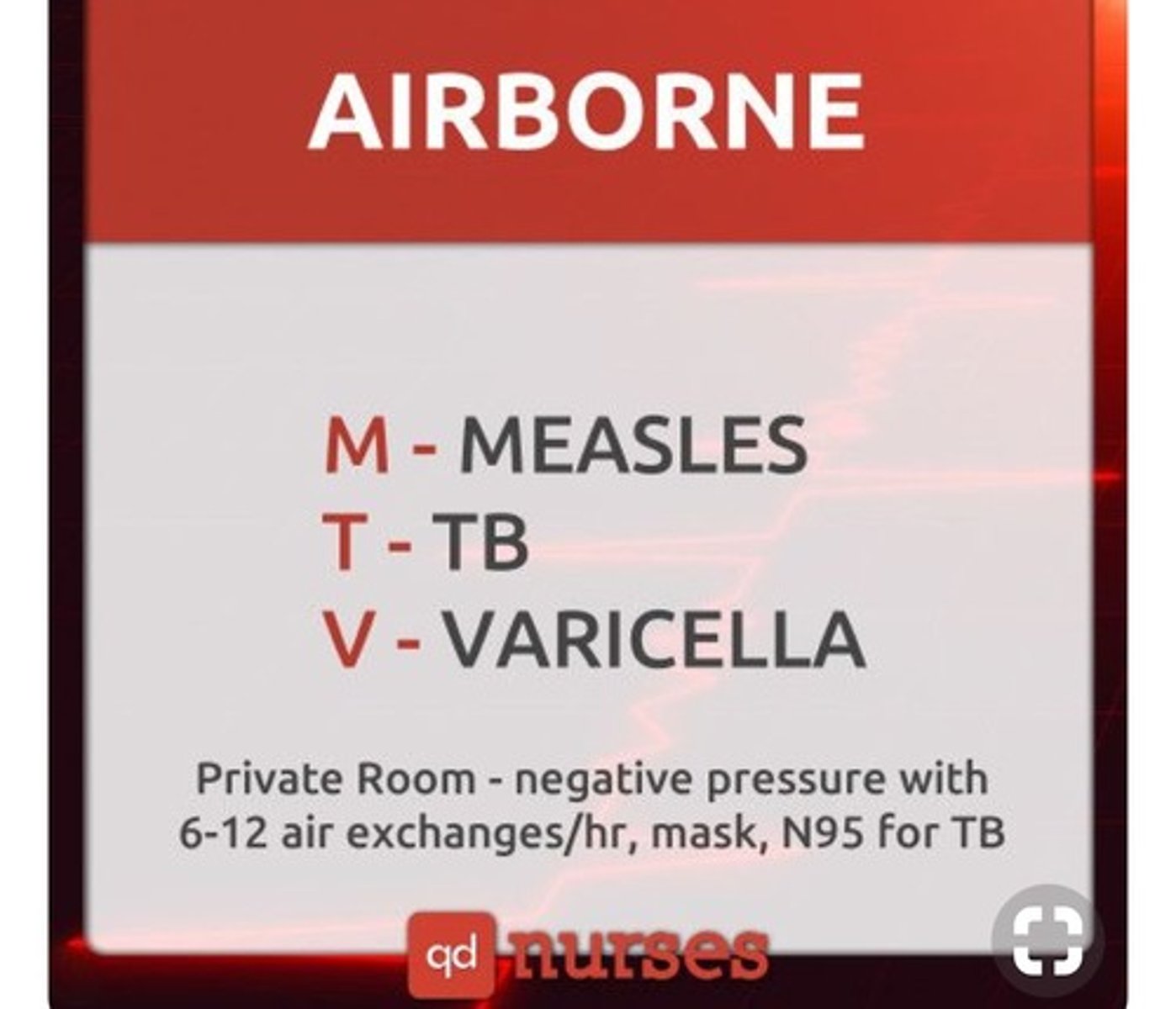
Airborne Precautions
N95 respirator in addition to universal precautions
Active ROM
patient returns your demonstration
Passive ROM
if you see a limitation
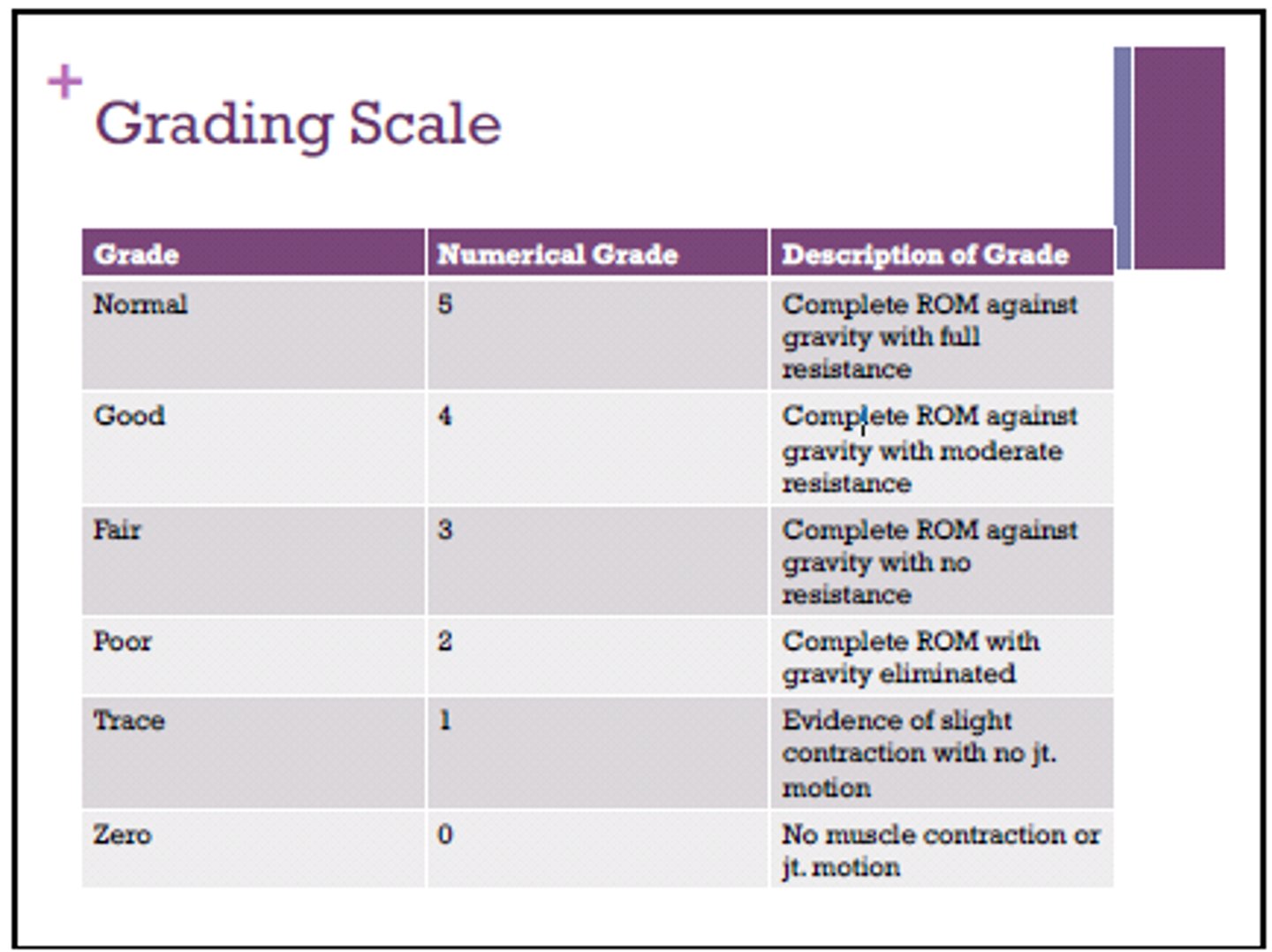
Muscle Testing
Cyanosis
Increased amounts of deoxygenated blood
Light Skin: dusky blue, especially in conjunctiva, nail beds, earlobes, lips, oral membranes, soles, and palms
Dark Skin: ashen gray lips and tongue, nail beds, oral mucosa, and conjunctiva
Pallor
Decrease in hemoglobin content
Light Skin: loss of rosy glow in skin, especially face
Dark Skin: ashen gray appearance in black skin and a more yellowish-born color in brown skin
Erythema
Increased amounts of blood flow of RBCs
Light Skin: redness easily seen anywhere on body, bright cherry red
Dark Skin: much more difficult to assess, rely on palpitation for warmth or edema, purplish tinge
Jaundice
Increased bilirubin in skin or sclera
Light Skin: yellow staining seen in sclera of of eyes, skin, fingernails, soles, palms, and oral mucosa
Dark Skin: most reliably assessed in sclera, hard palate, palms, and soles
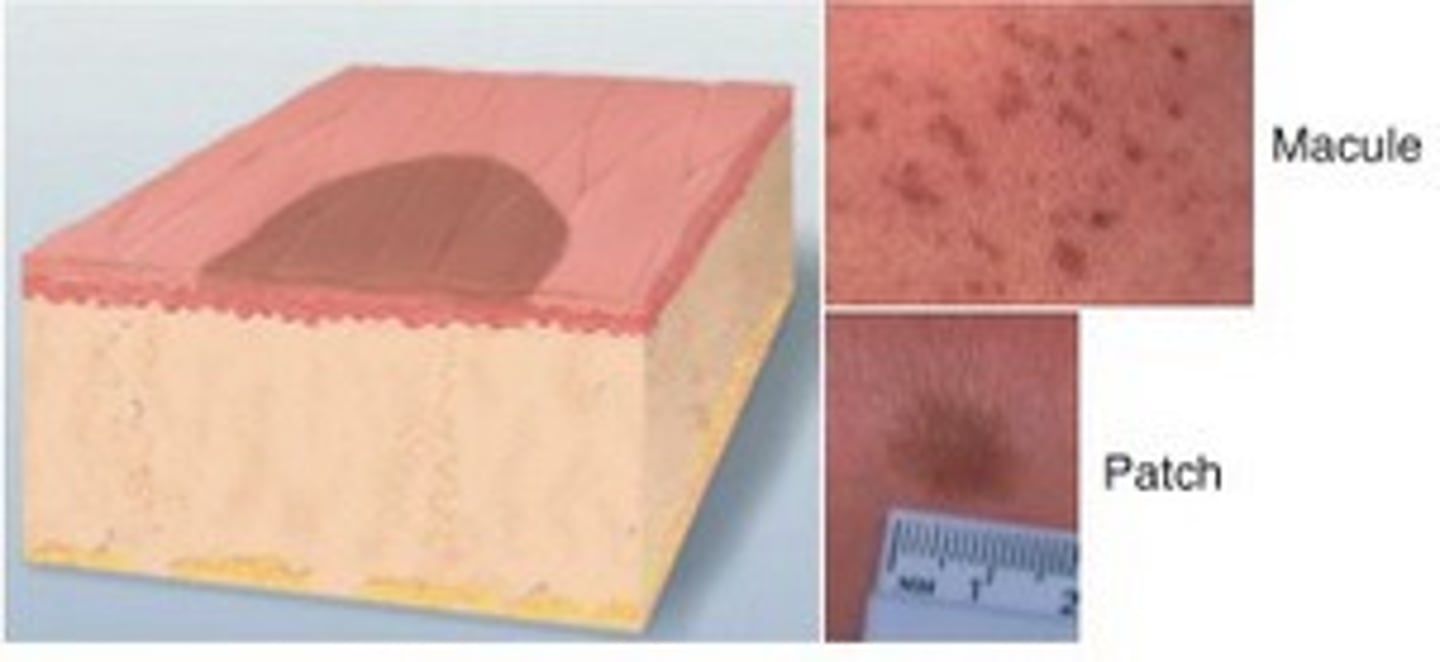
Macule and Patch
Macule: <1 cm, flat, circumscribed
Patch: > 1 cm
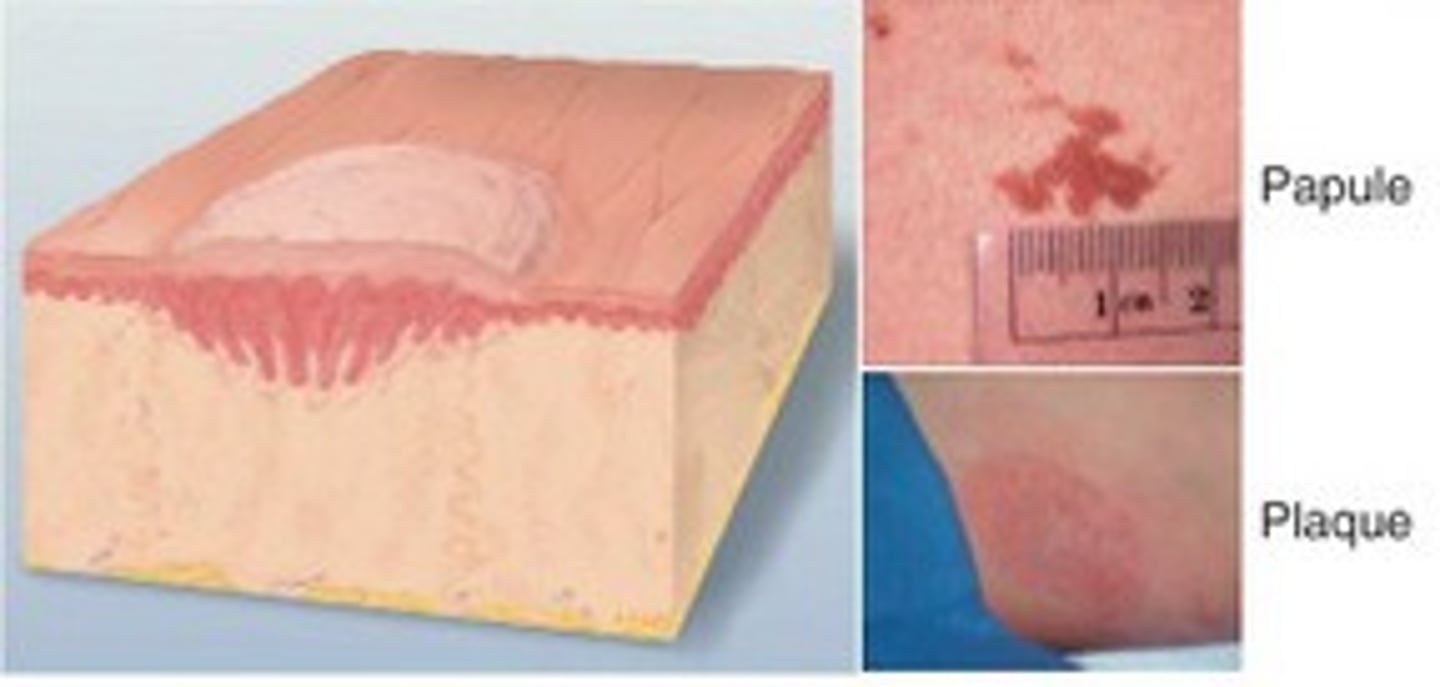
Papule and Plaque
Papule: < 1 cm, solid, elevated, something you CAN FEEL
Plaque: > 1 cm
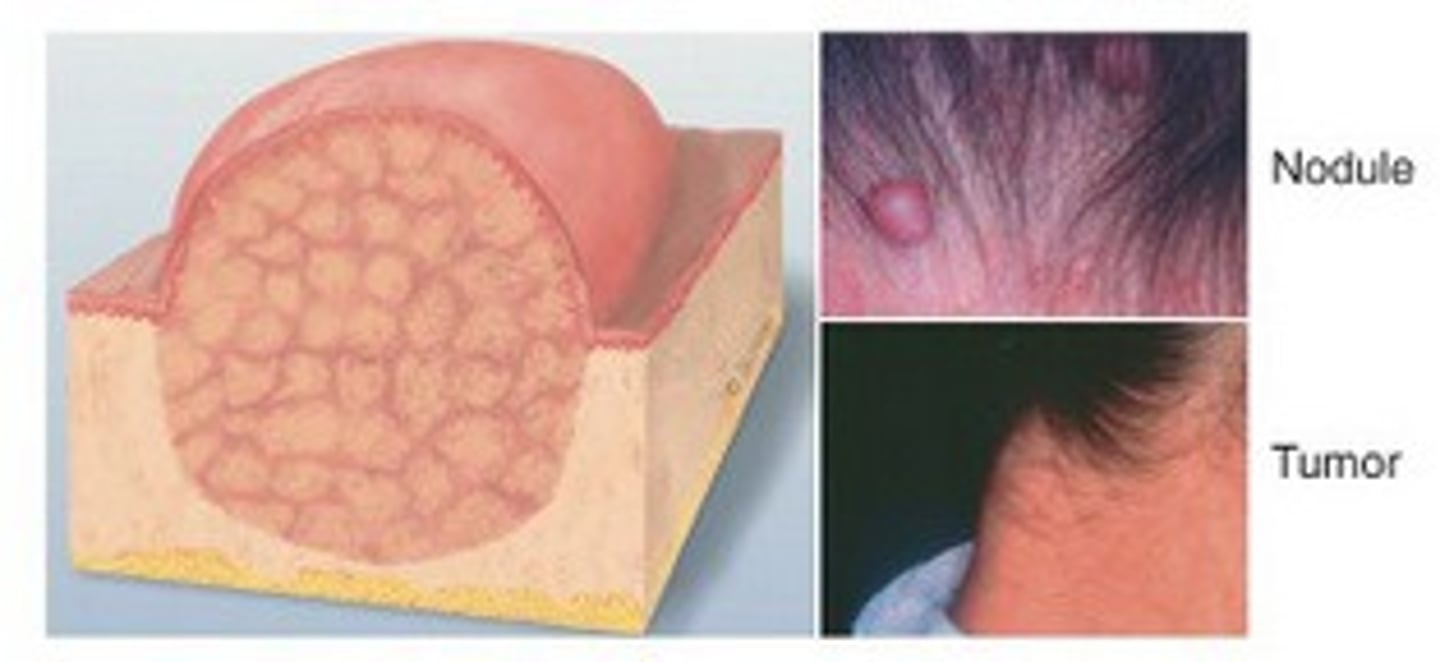
Nodule and Tumor
Nodule: > 1 cm, solid, hard, or soft, elevated
Tumor: > a few centimeters, malignant or benign
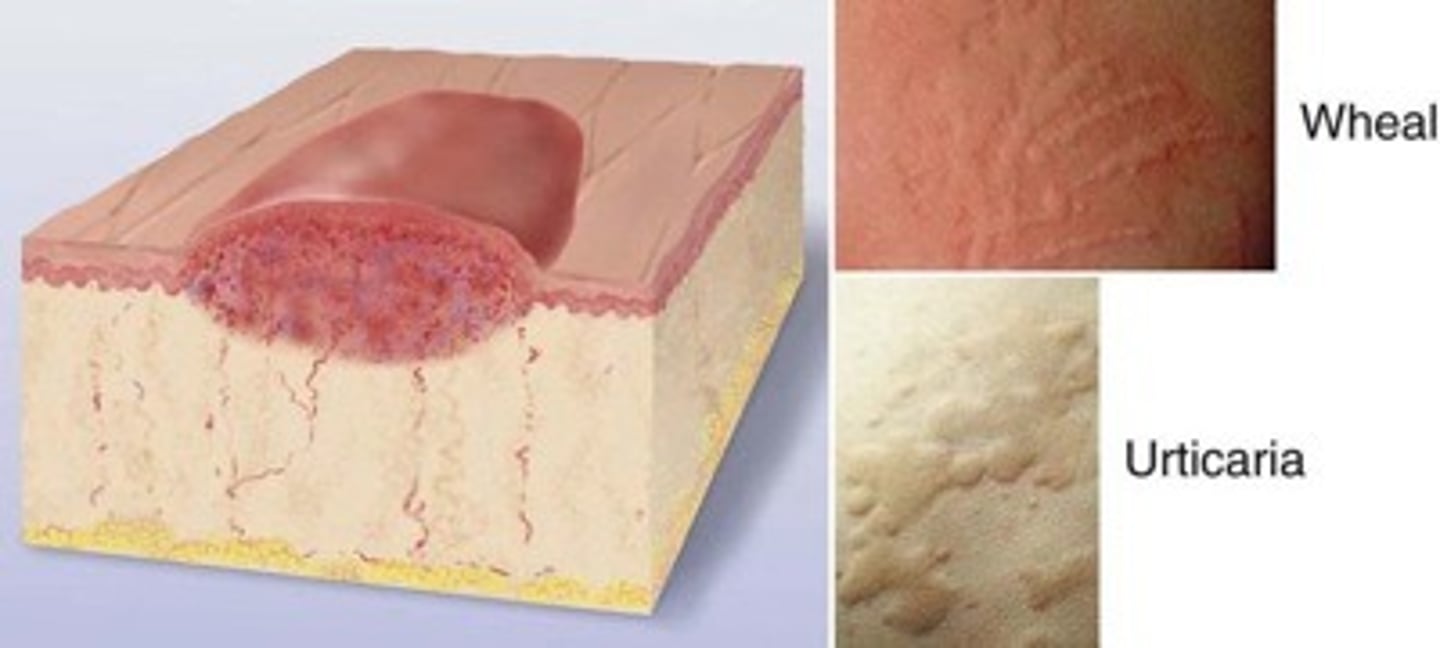
Wheal and Hives
Wheal: superficial, raised, erythematous with irregular shape due to edema (mosquito bite, allergy reaction)
Hives: a collection of wheals due to extensive reaction
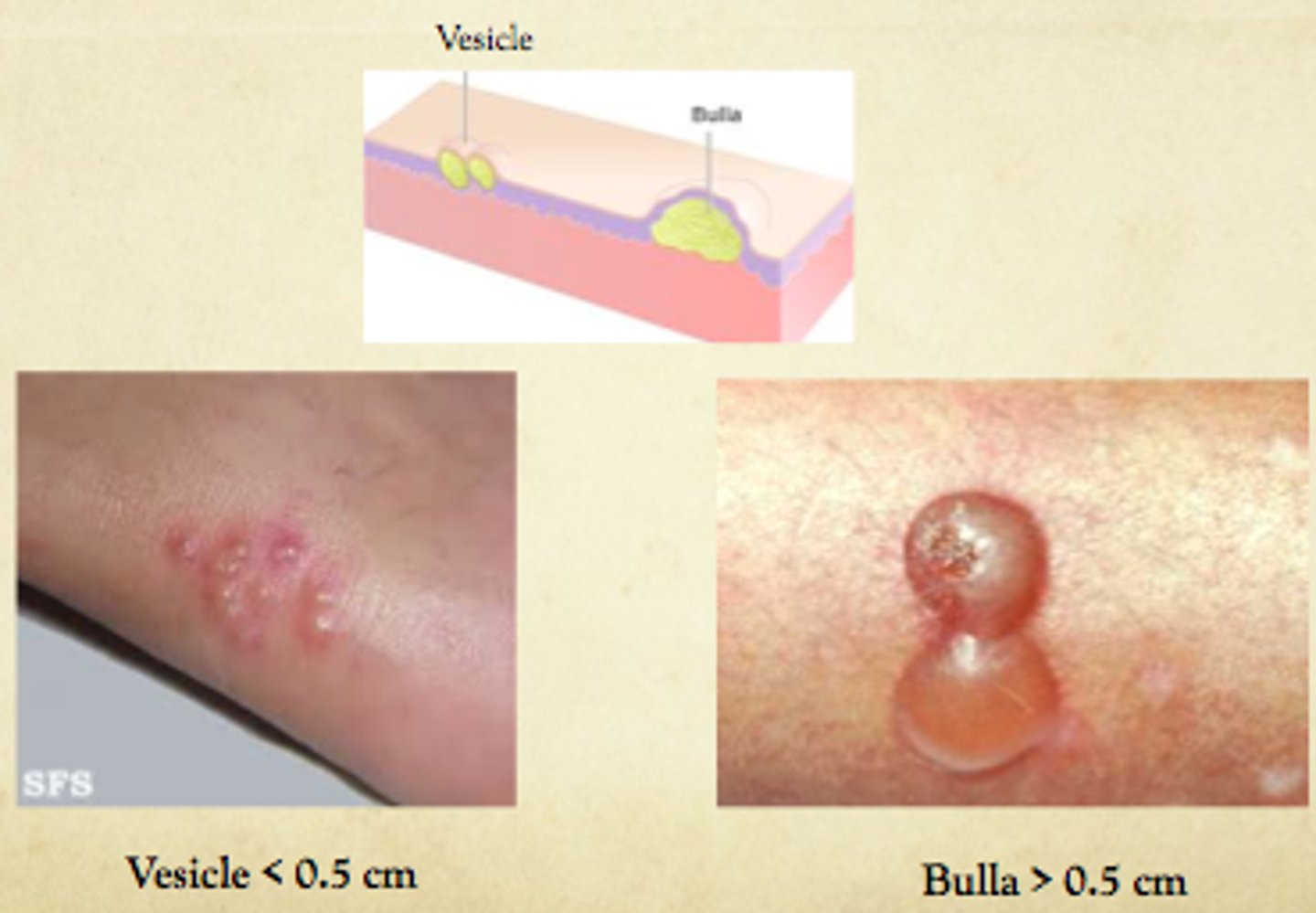
Vesicle and Bulla
Vesicle: up to 1 cm, elevated, fluid filled (blister, herpes, zoster)
Bulla: > 1 cm, fluid filled, easily ruptures
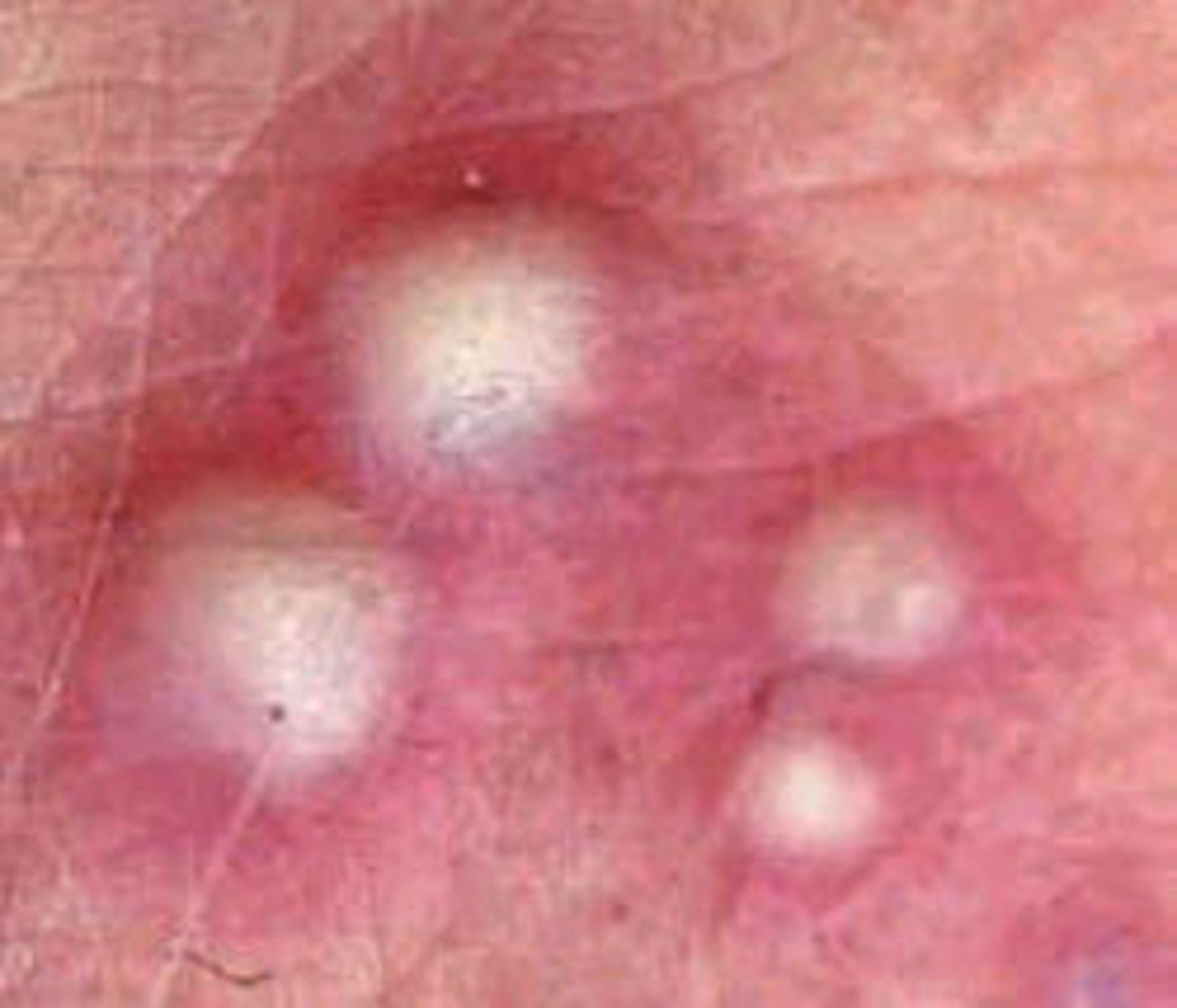
Pustules
circumscribed, elevated, turbid fluid filled (pus)
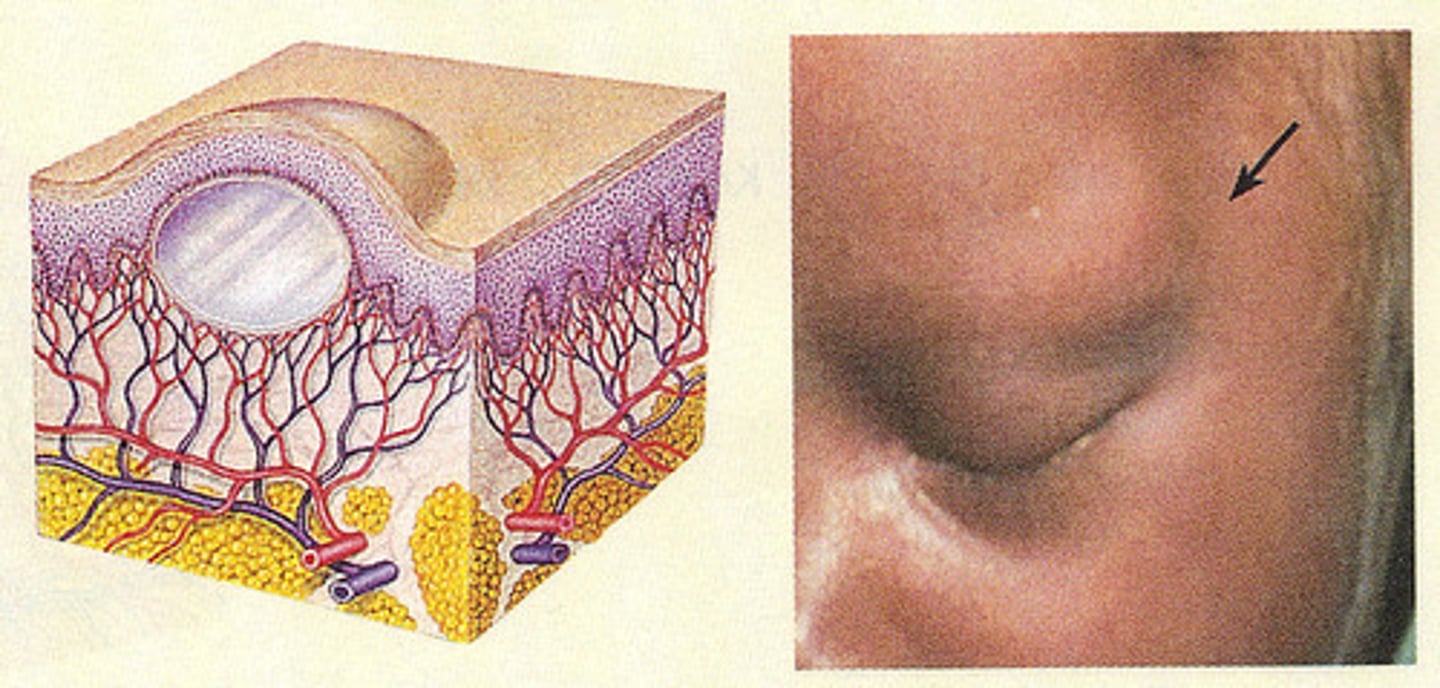
Cyst
encapsulated fluid filled cavity, dermis or subcutaneous layer, tensely elevated skin
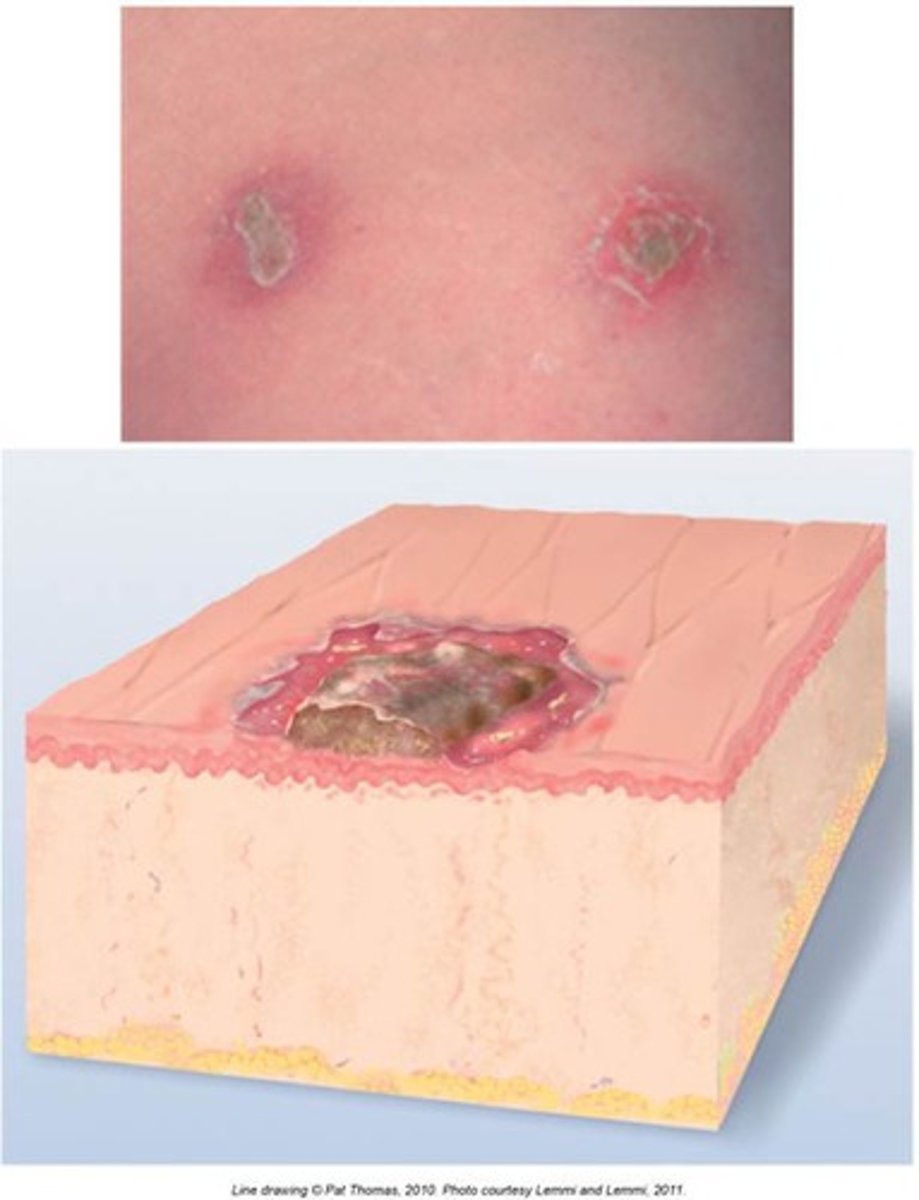
Crust
thickened, dried exudate when a vesicle or pustule burst
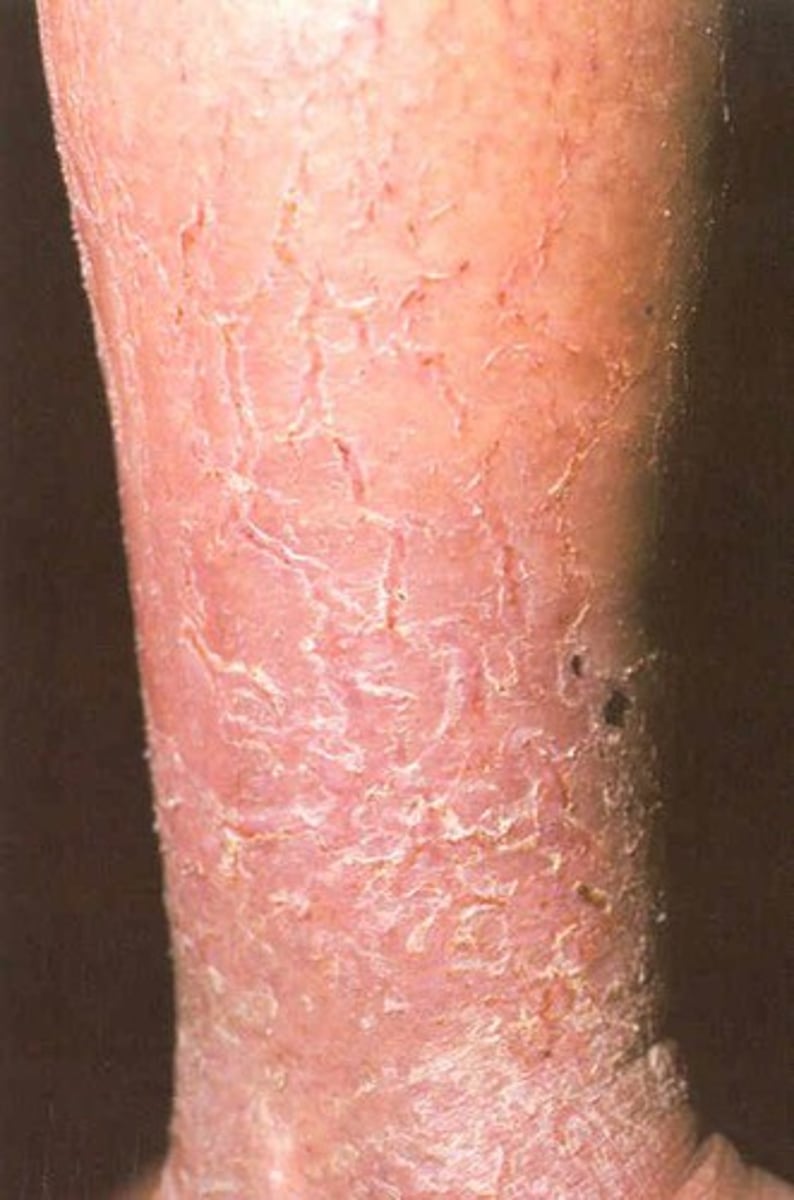
Scale
compact, flakes of skin, dry or greasy, silvery or white, caused by shedding or dead skin cells
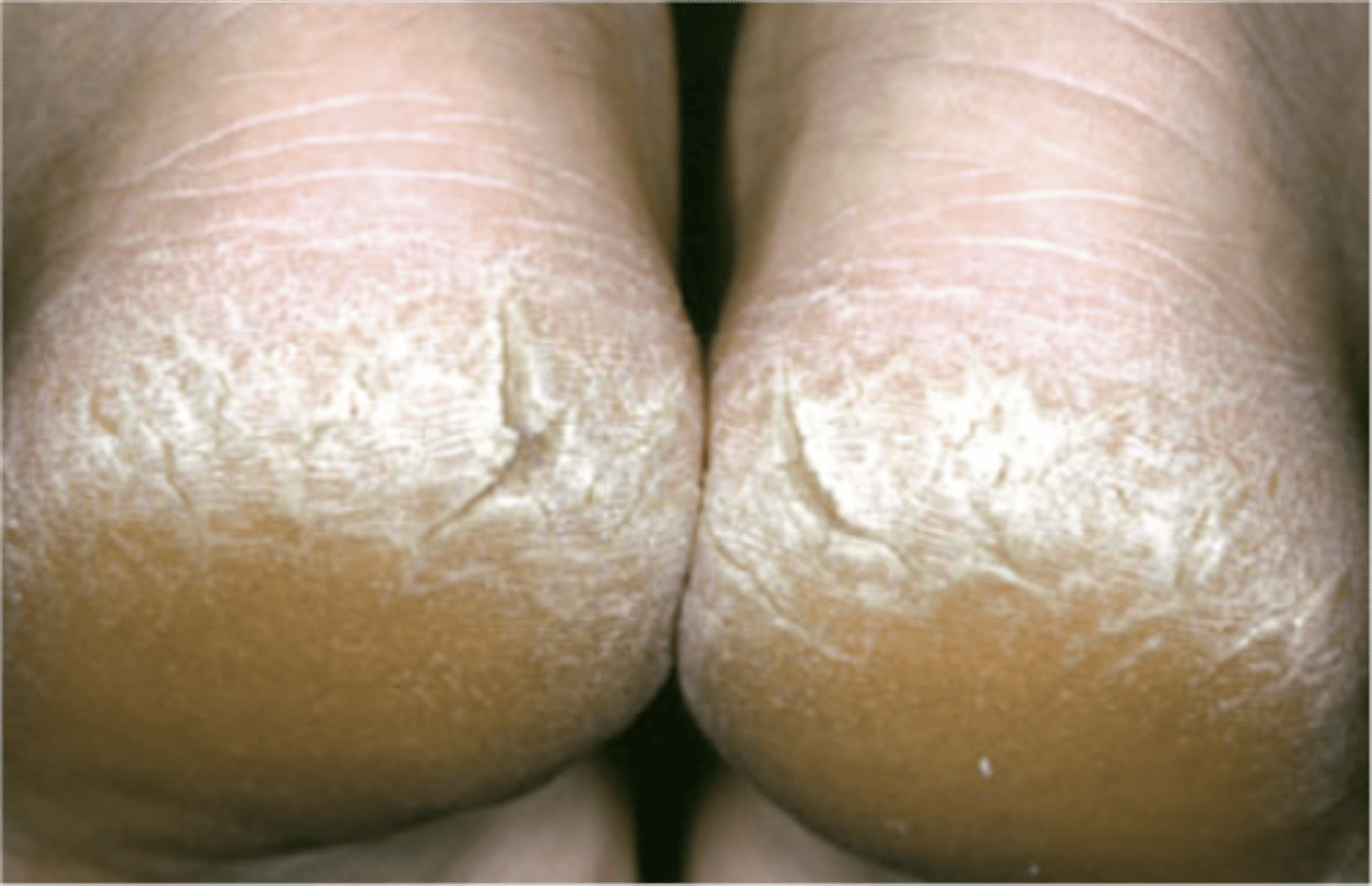
Fissure
linear crack into dermis caused by moisture breakdown and abrupt edges
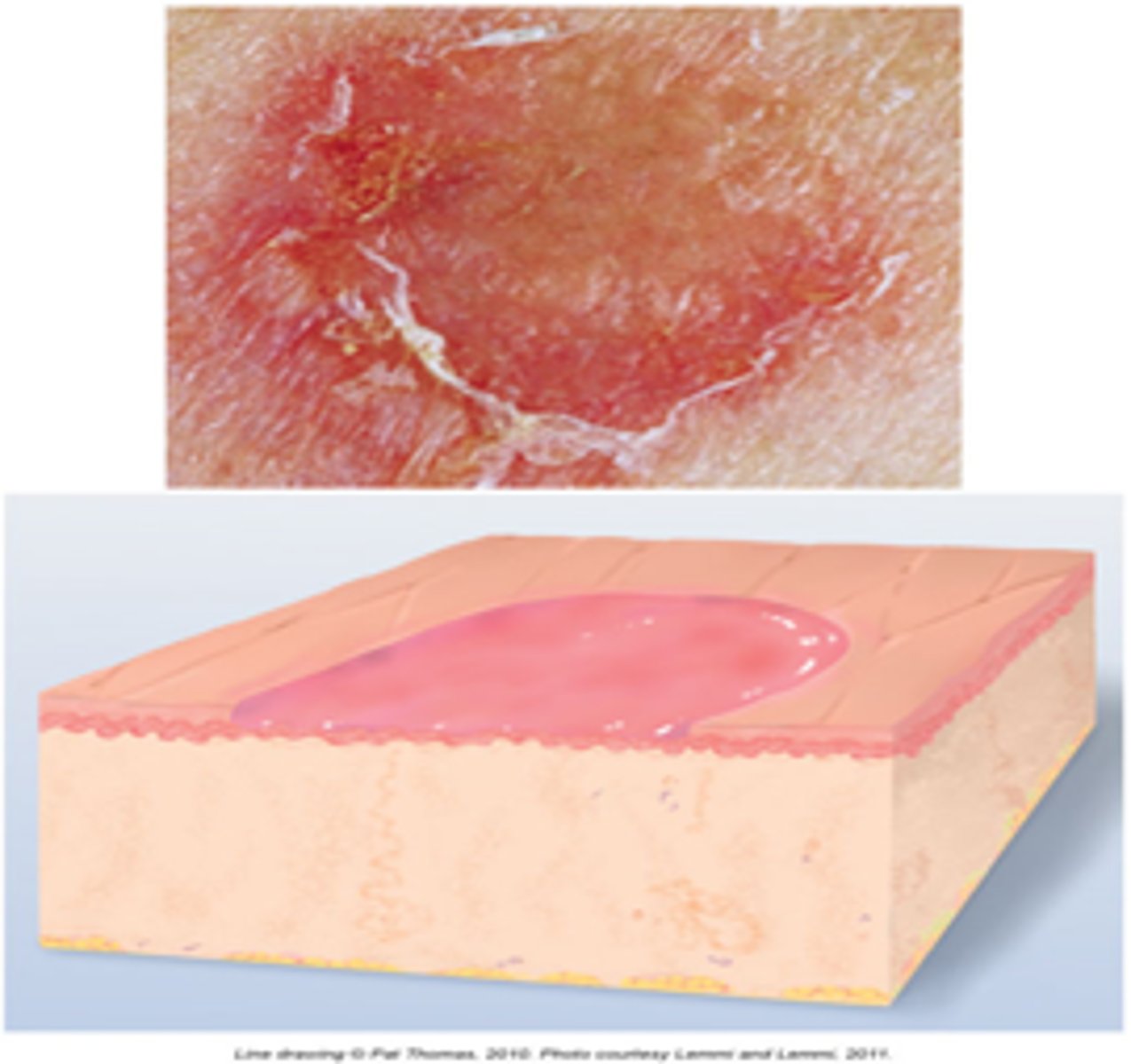
Erosion
scooped-out shallow depression, superficial
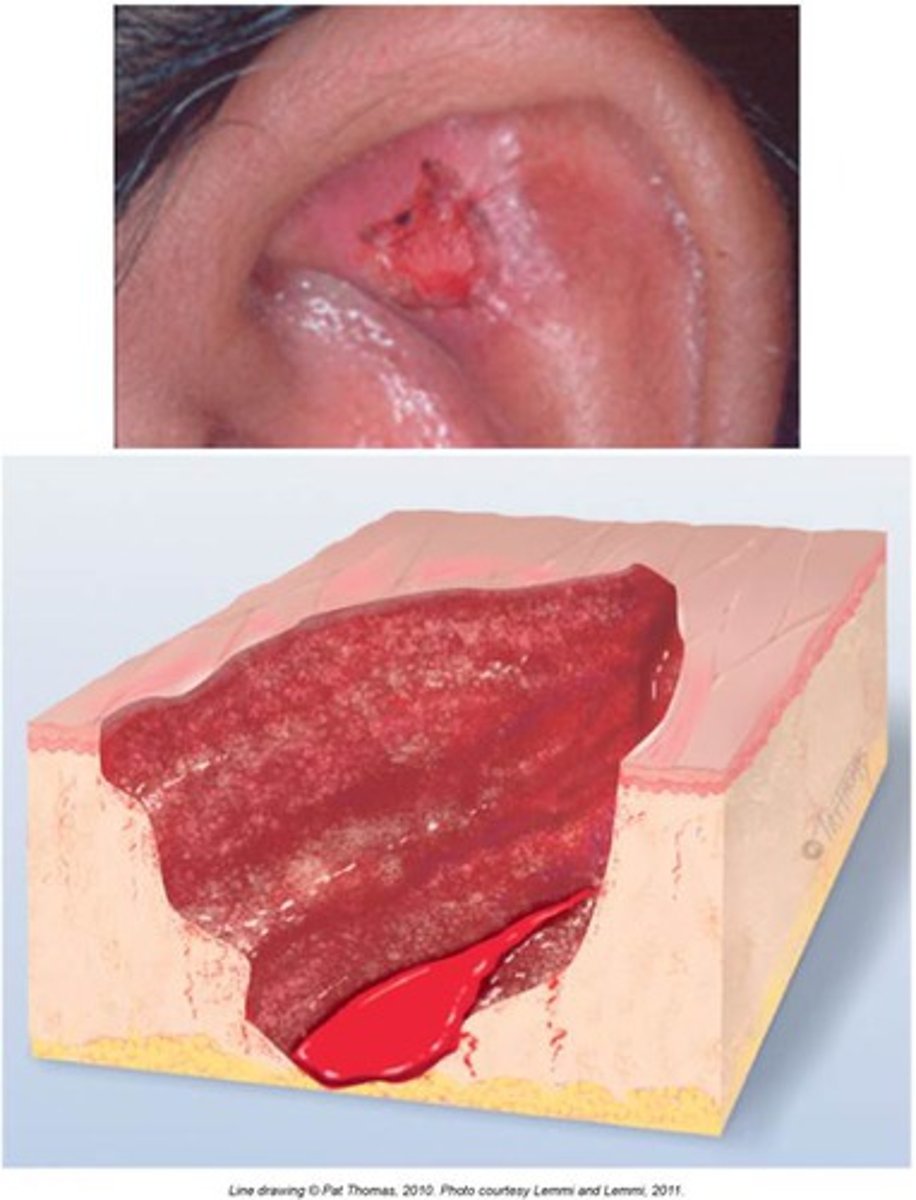
Ulcer
depression extending into dermis, irregular borders, and may bleed
Excoriation
self-inflected abrasion, superficial. scratches from purritis
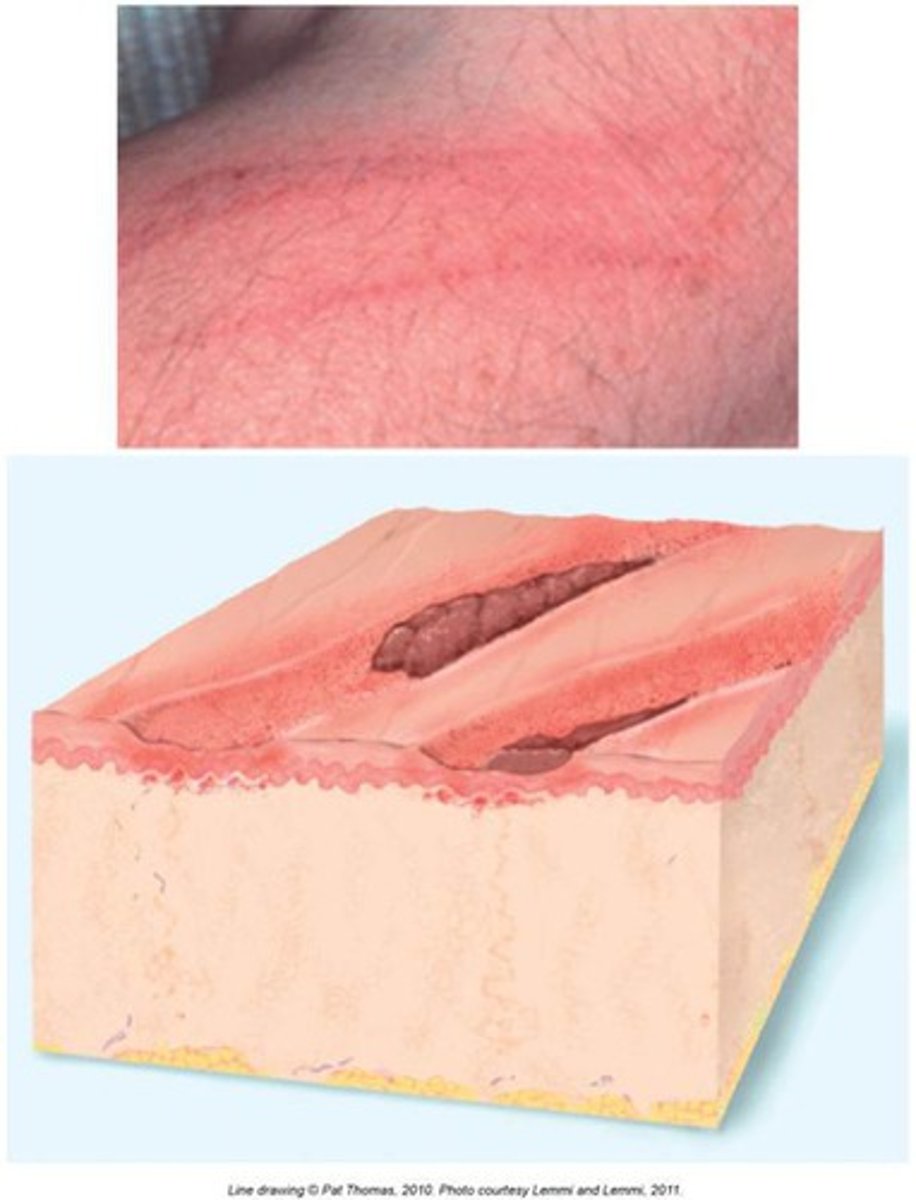
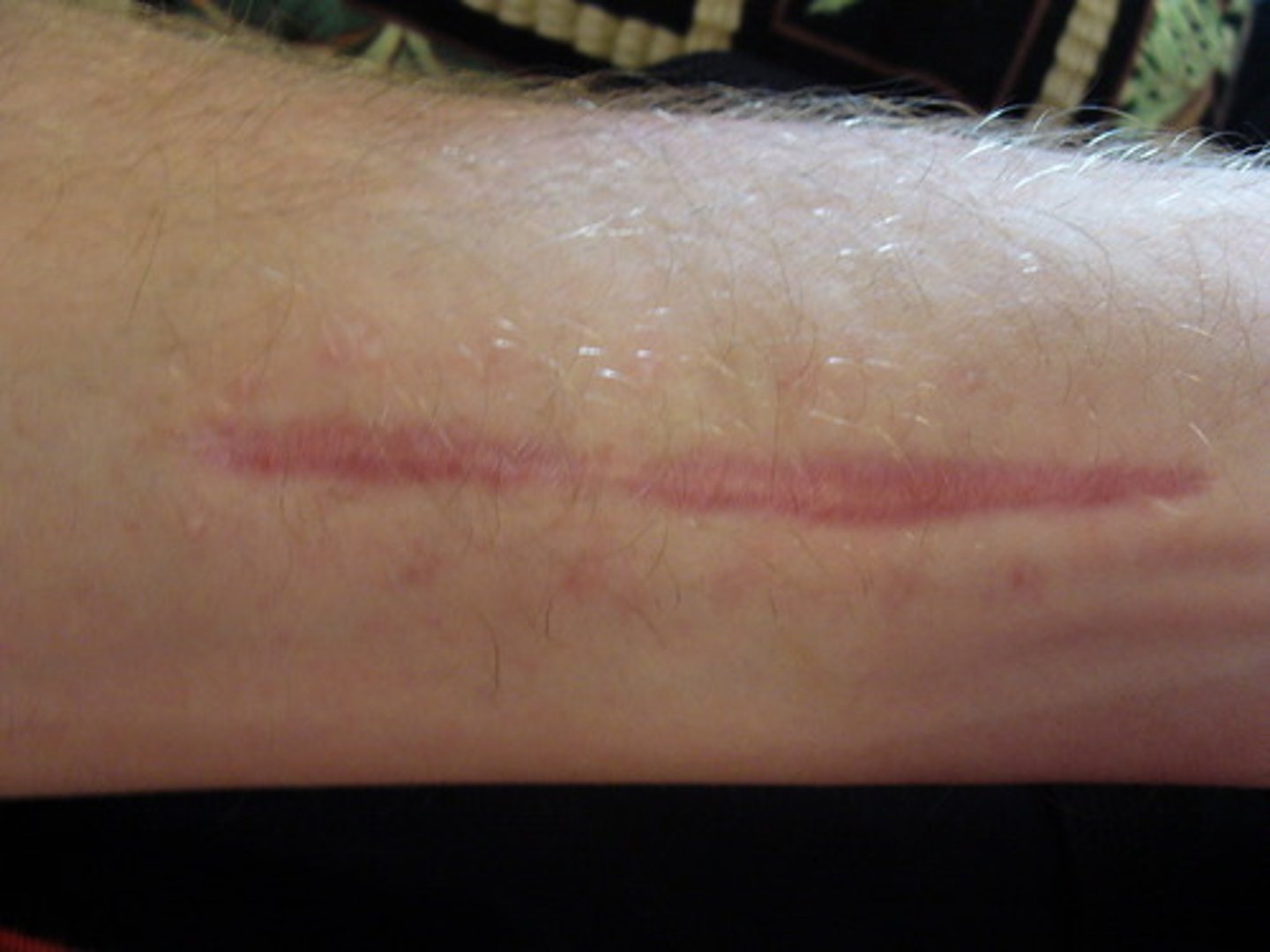
Scar
permanent fibrotic change after injury
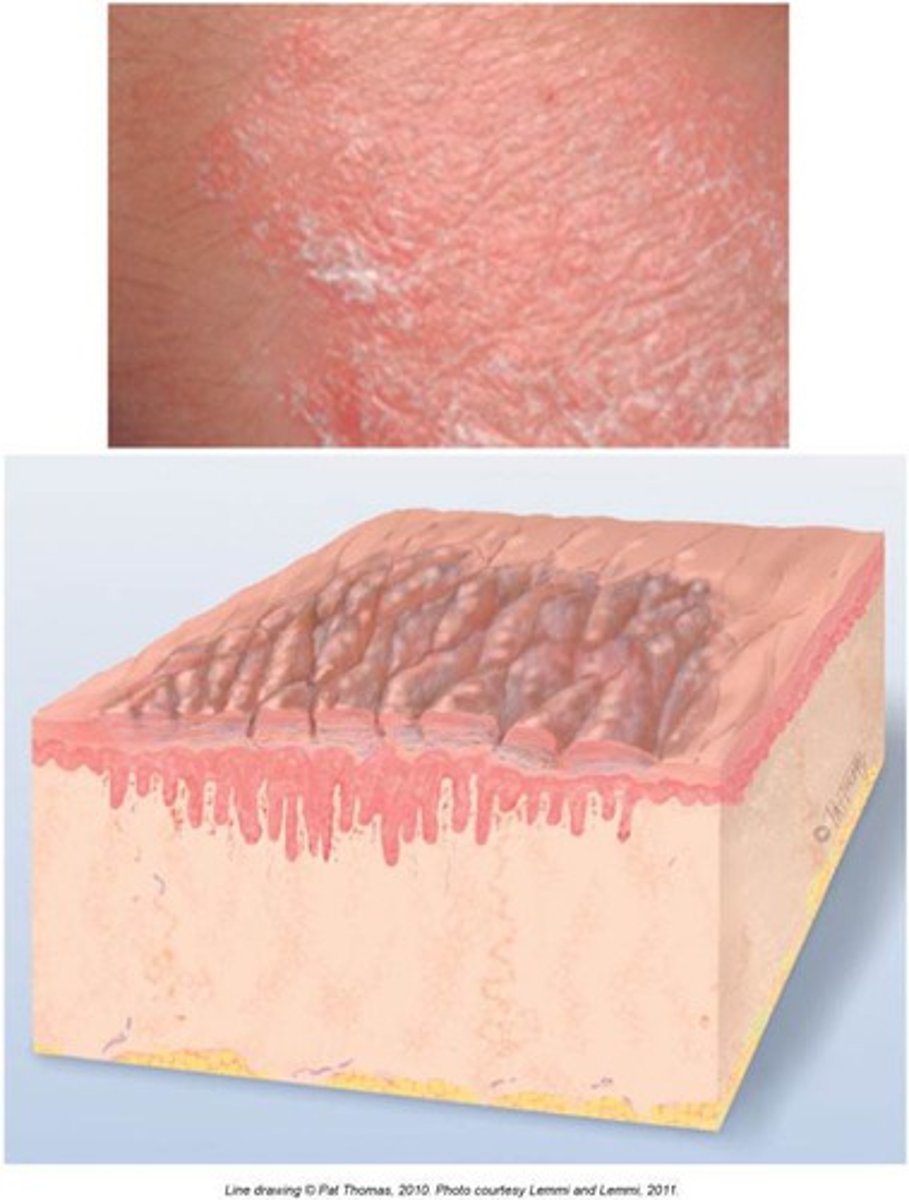
Lichenification
formed from prolonged intense scratching, skin thickens and produces thickly packed pustules
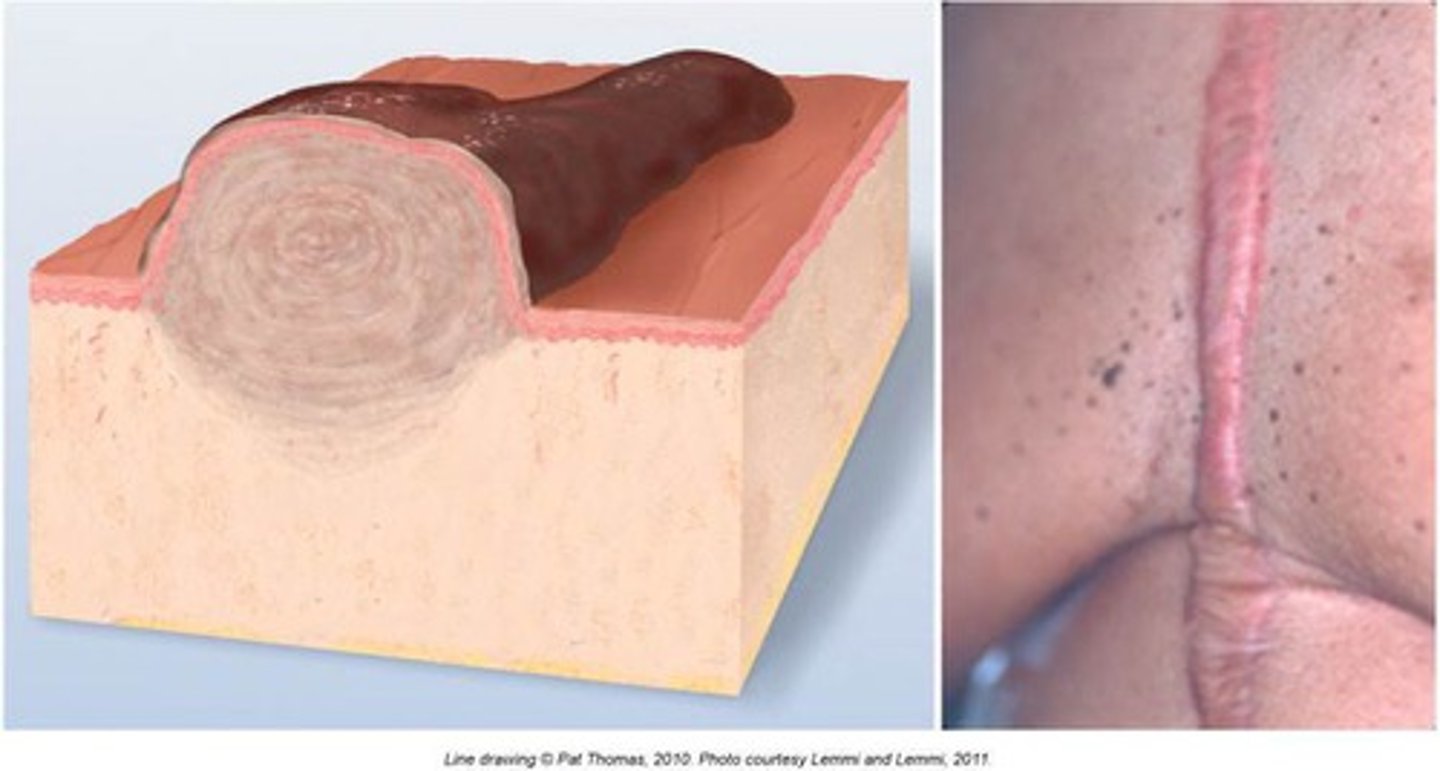
Keloid
benign excess of scar tissue beyond sites of original injury, more common in Black, Latino, and Asian
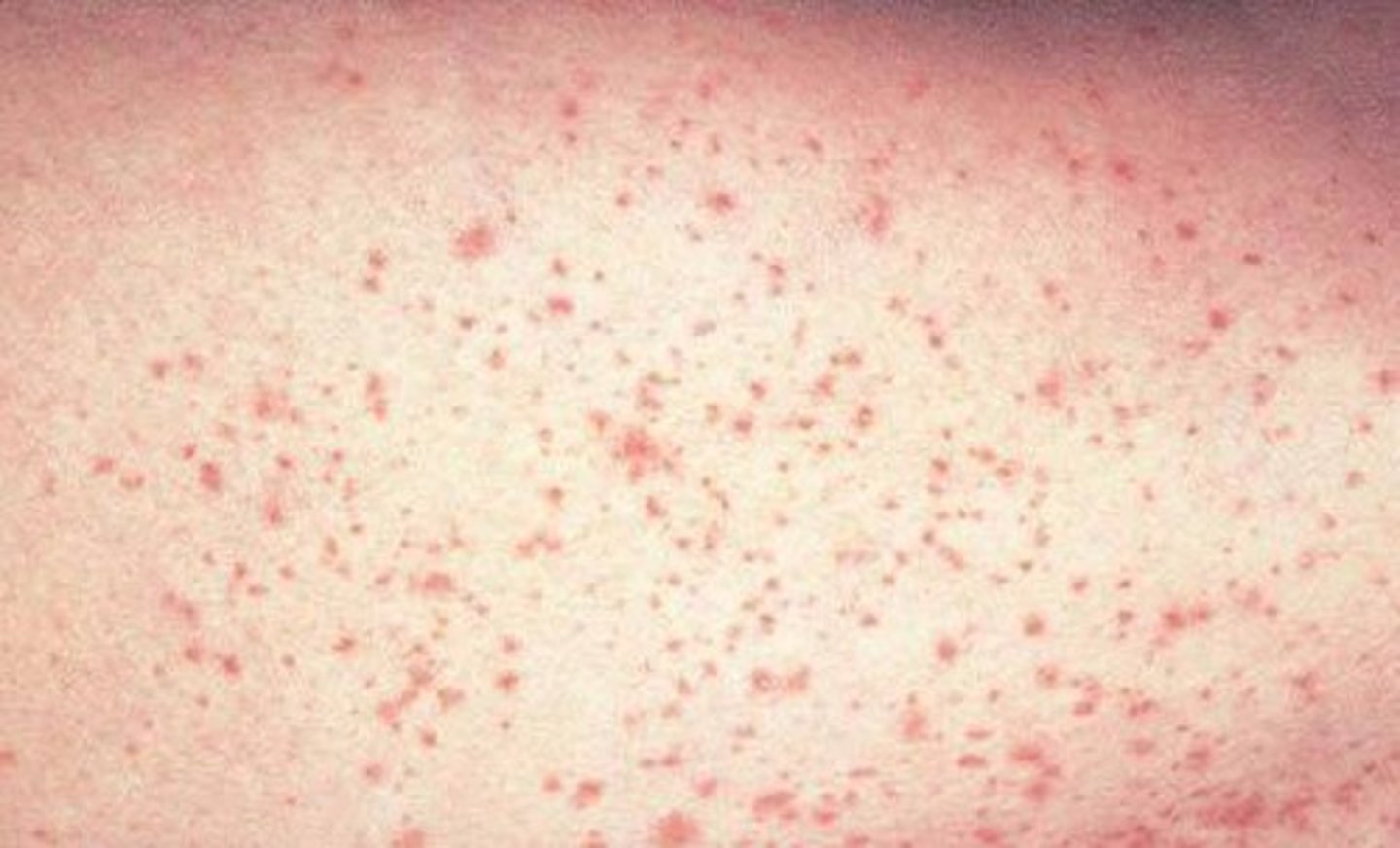
Petechia
small (pinpoint), purplish, hemorrhagic spots on the skin, associated with bleeding tendencies or emboli to skin
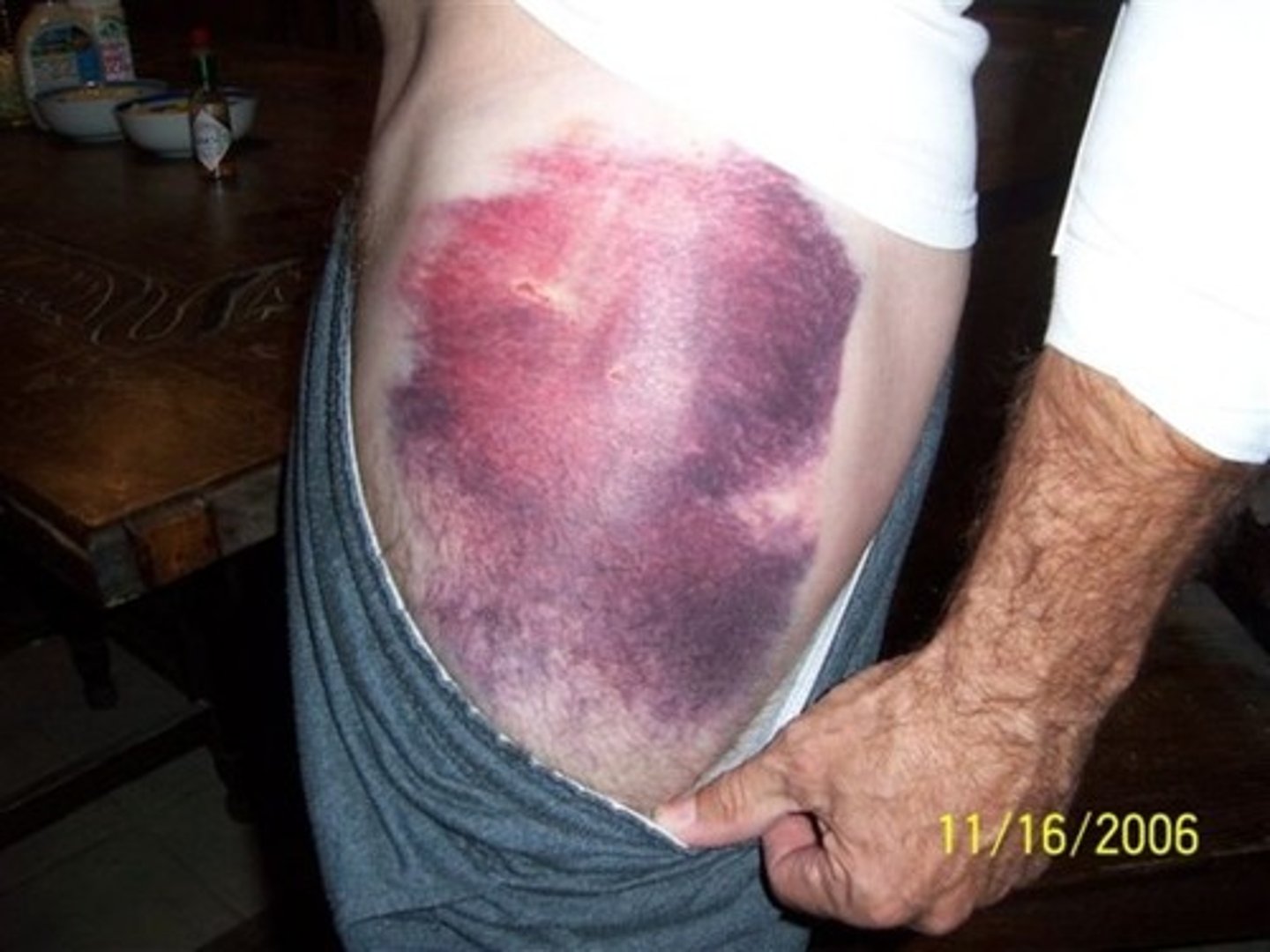
Ecchymosis
a bruise that is superficial, bleeding under the skin or a mucous membrane, associated with trauma or bleeding tendencies
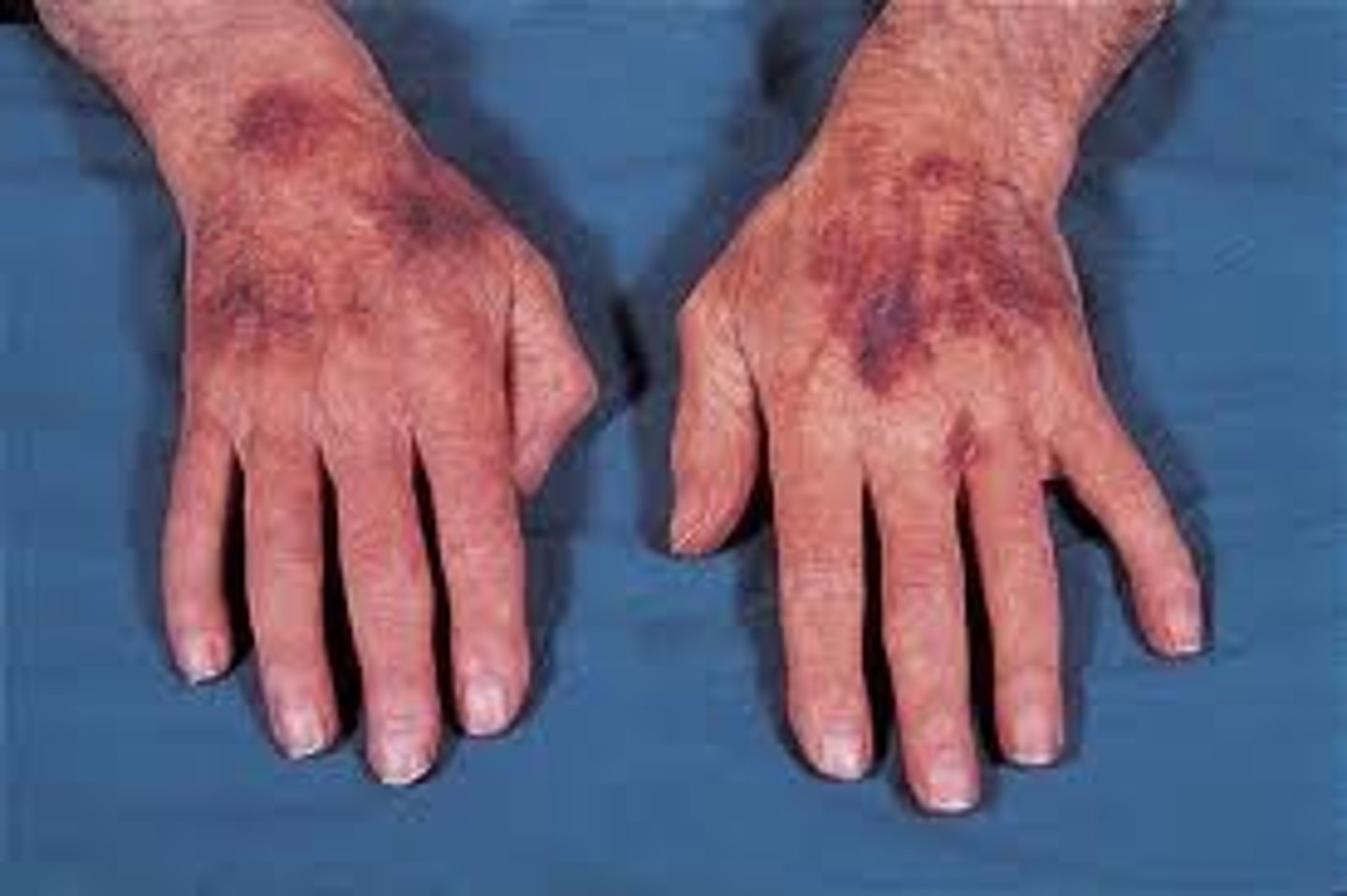
Purpura
hemorrhagic disease that produces ecchymosis and petechia, usually at multiple sites
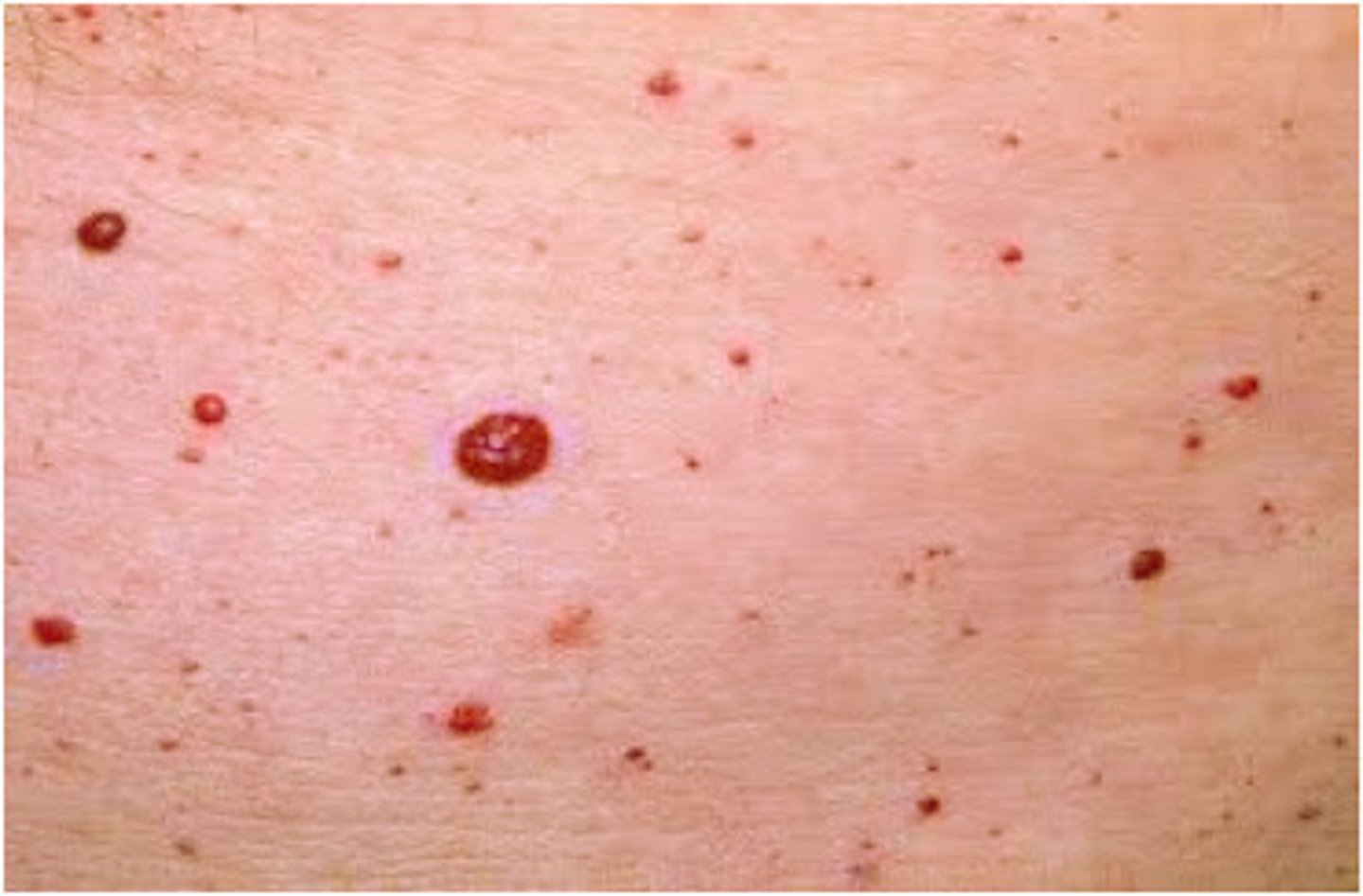
Cherry Angioma
bening, compressible mass of blood vessels
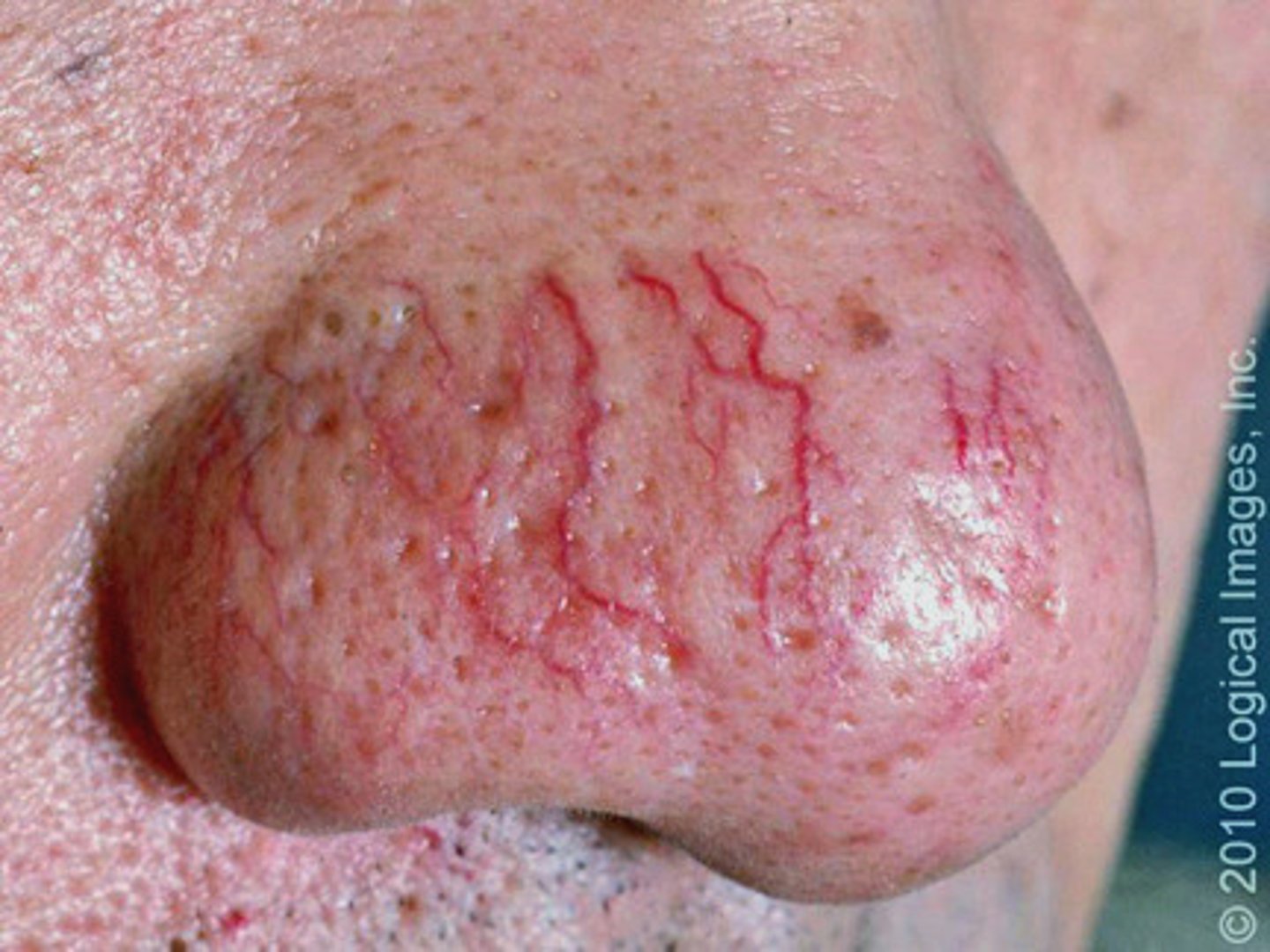
Telangiectasia
a vascular lesion formed by dilation of a group of small blood vessels
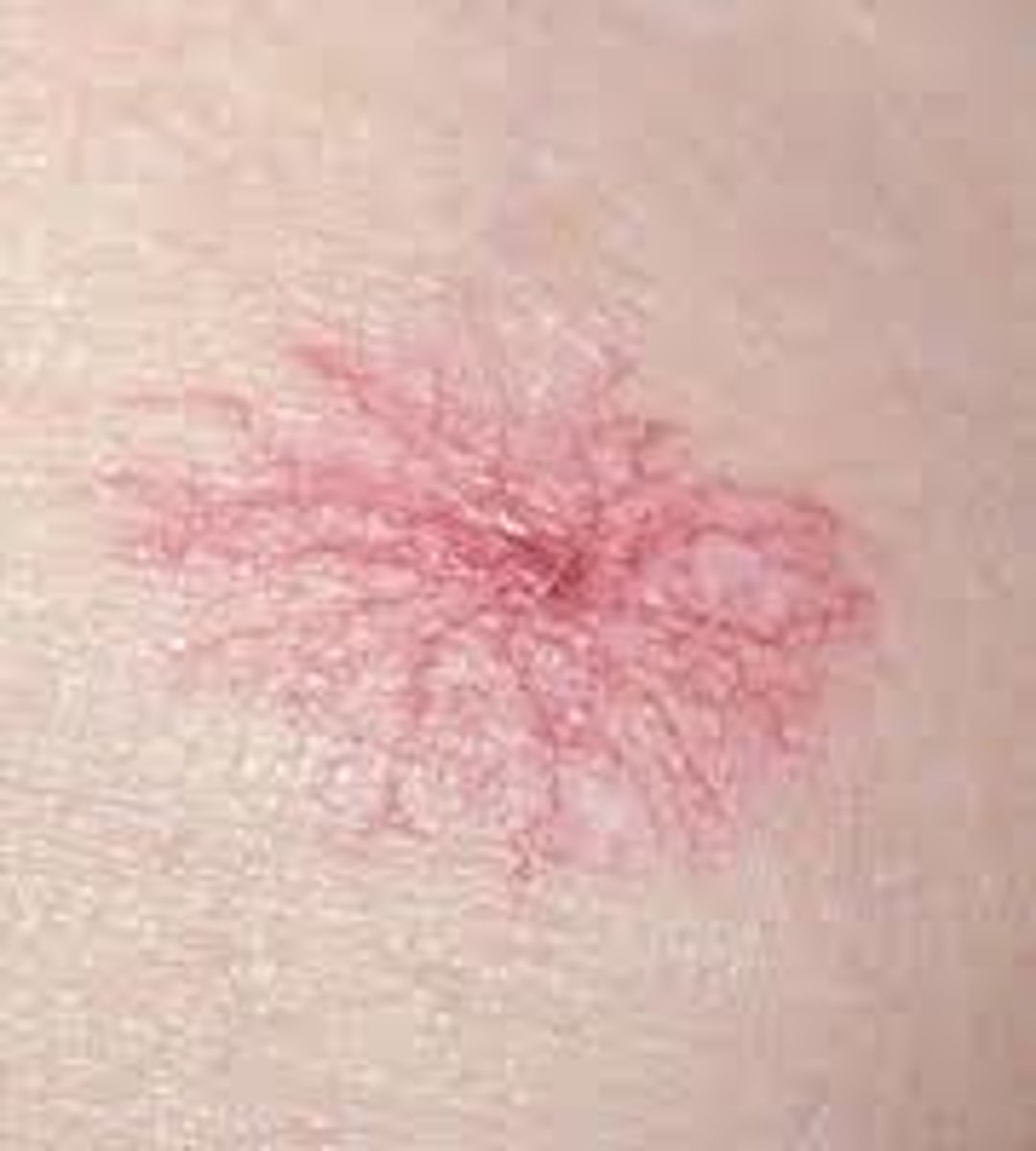
Spider Angioma
a branched growth of dilated capillaries on the skin, resembling a spider
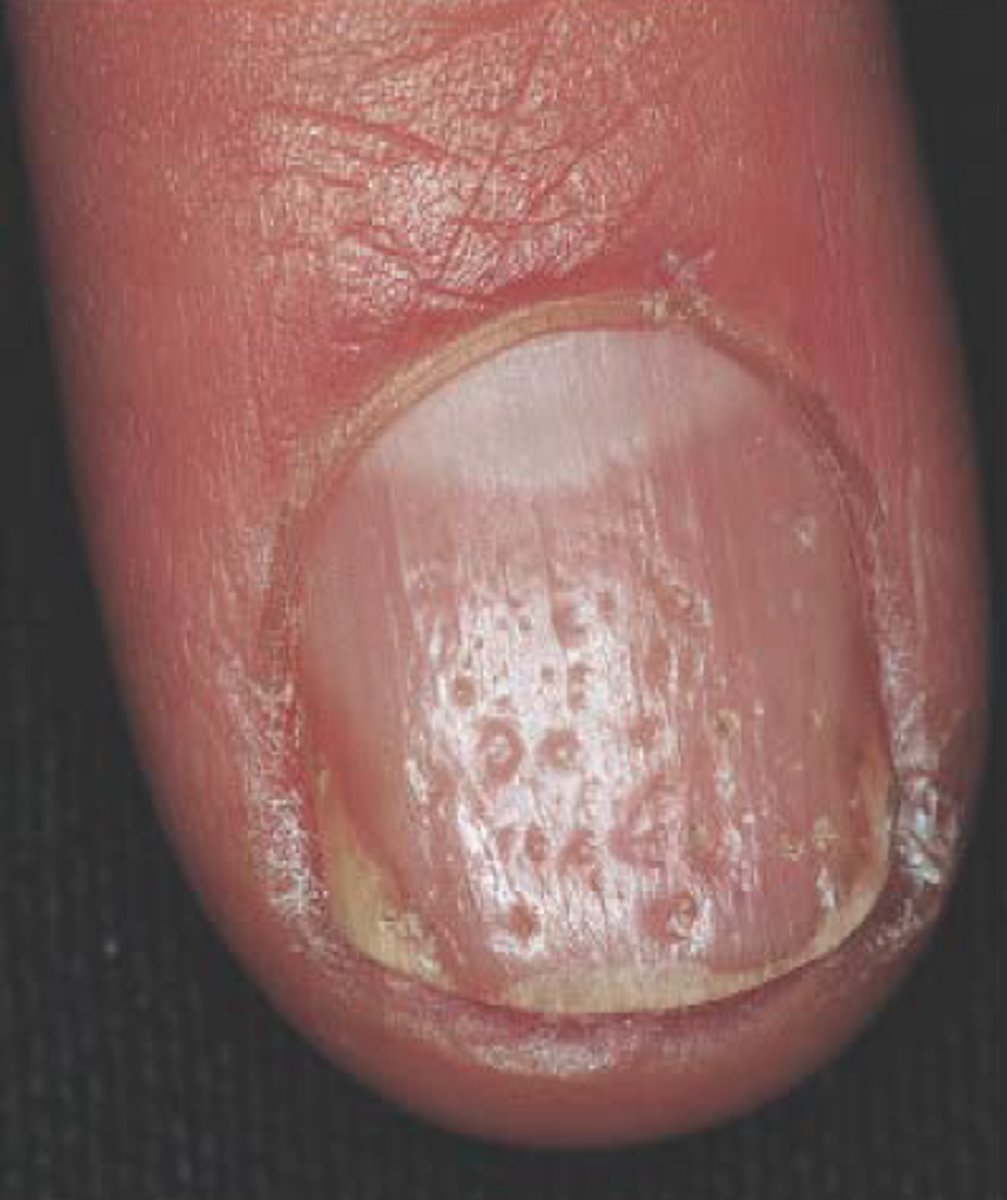
Pitting nails
small depressions in the nails are common in people with psoriasis, may cause the nails to crumble
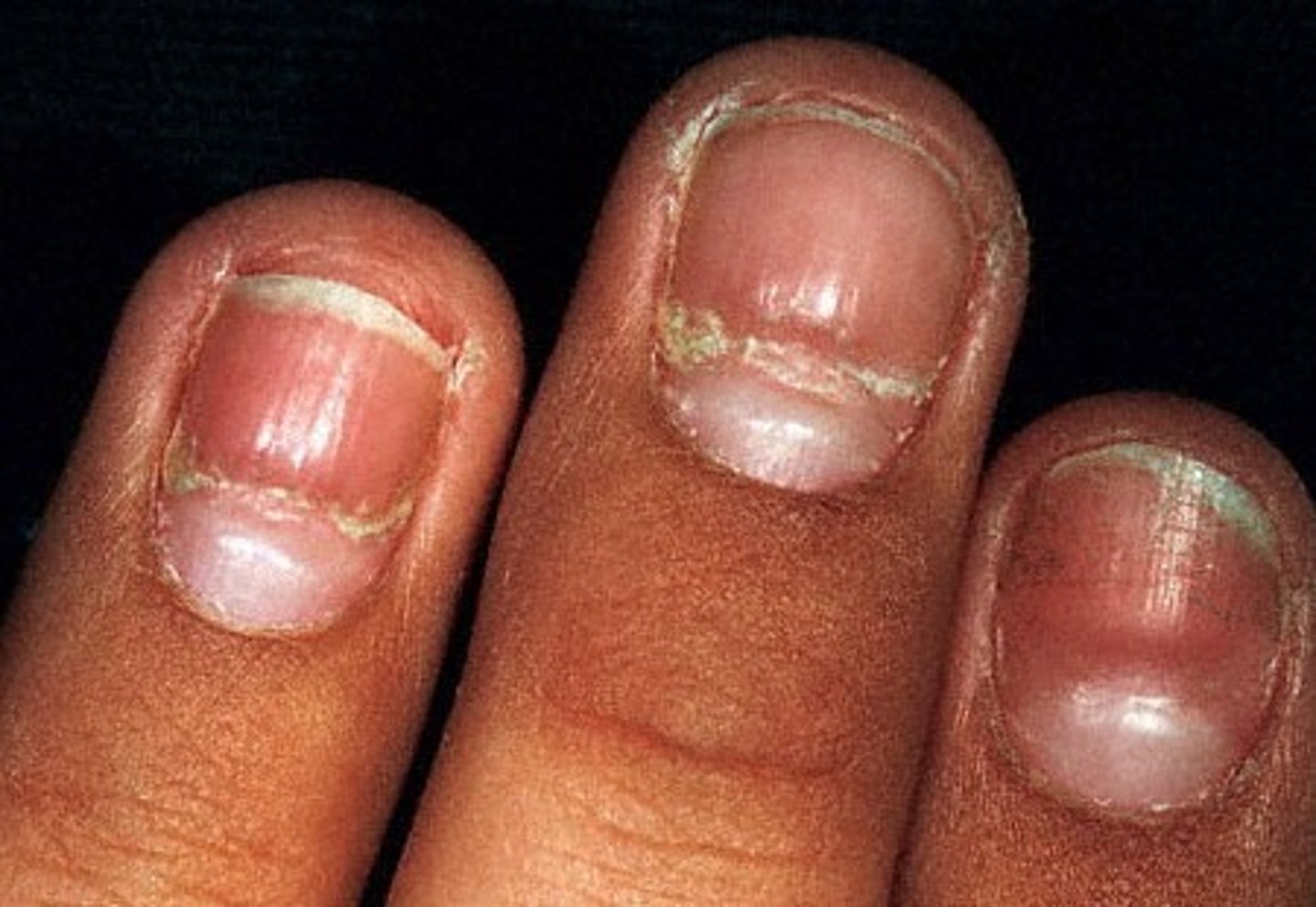
Beau's lines
indentations that run across the nail, growth air the area under the cuticle is interrupted by injury or severe illness, such as a heart attack or also a sign of malnutrition
Onycholysis
nail separated from the nail bed (thyroid disease, fungal disease, drug reactions, reactions to acrylic nails, or psoriasis)
Pregnant Clients Hair/Skin/Nails variations
increase in sweating and sebaceous activity
increased blood flow to the hands and feet
skin thins and separated with stretching (striae)
hyperpigmentation forms down pregnant belly (linea nigra)
Abdominal Assessment Order
inspection, auscultation, percussion, and palpation
Borborygmi
normal hyperactive bowel sounds
Caution: If bruits are heard...
do NOT palpate abdomen
In a healthy adult the chest to side ratio is
2:1 (the chest is wider than it is deep)
Crepitus
ABNORMAL, free air in subcutaneous tissue, crackling sensation, seen in patients with chest trauma
Bronchial Breath Sounds
location: heard over trachea and larynx
pitch: high
amplitude: loud
duration: heard during expiration
quality: harsh, hollow, or tubular
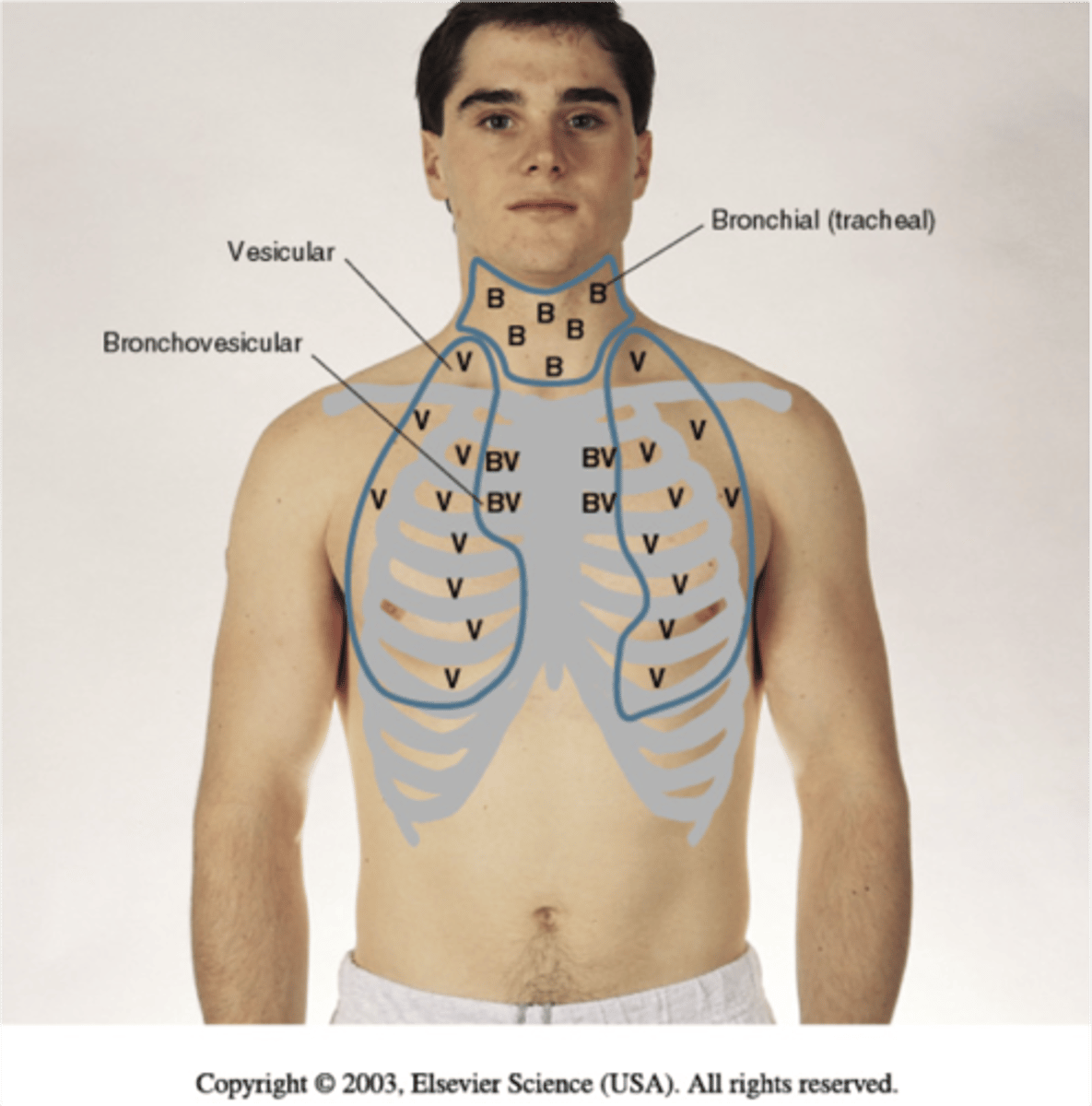
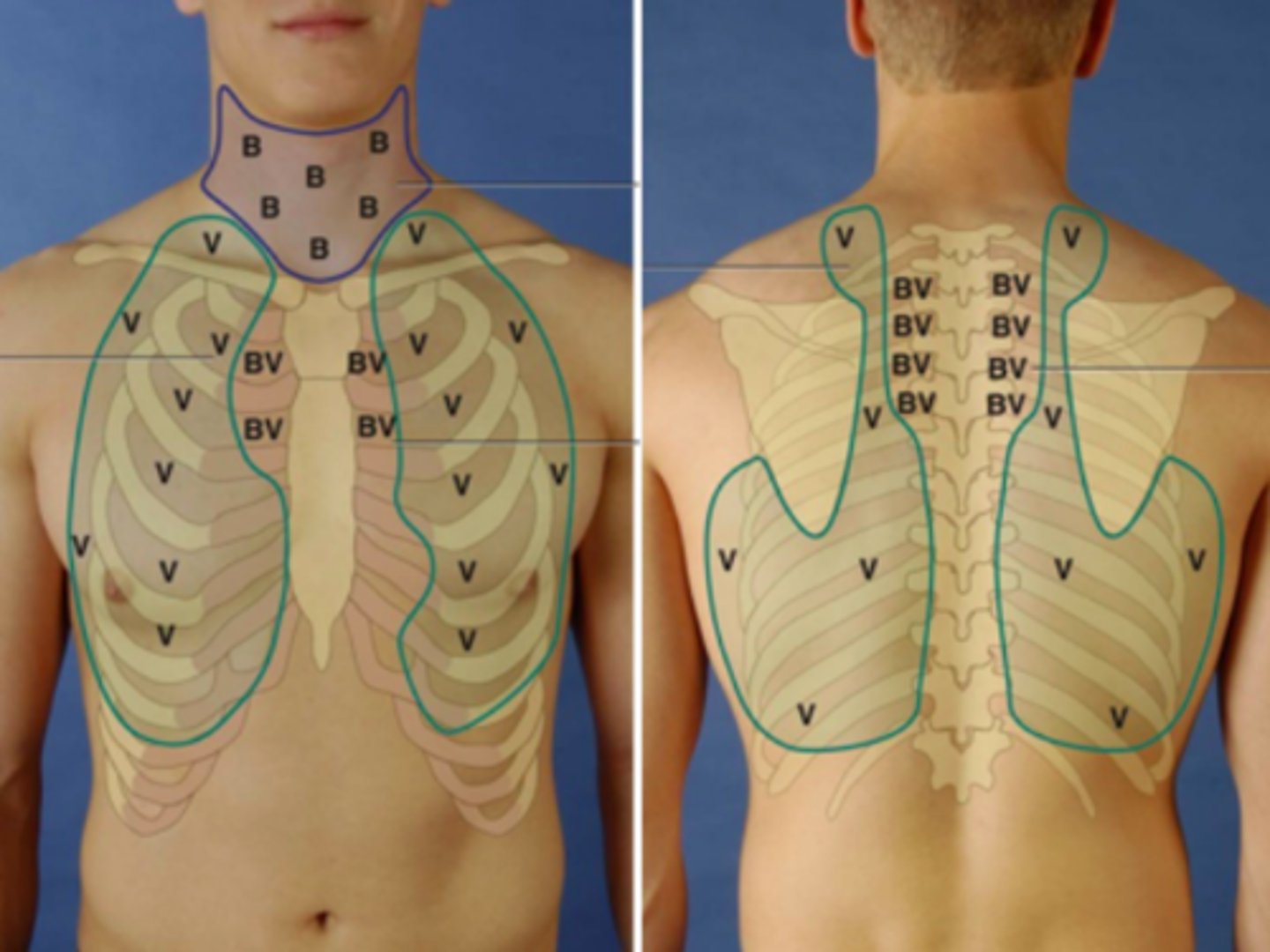
Bronchiovesicular Breath Sounds
location: over the major bronchi
pitch: moderate
amplitude: moderate
duration: inspiration and expiration are equal
quality: soft, breezy sound with a slightly tubular tone but mostly mixed sounds
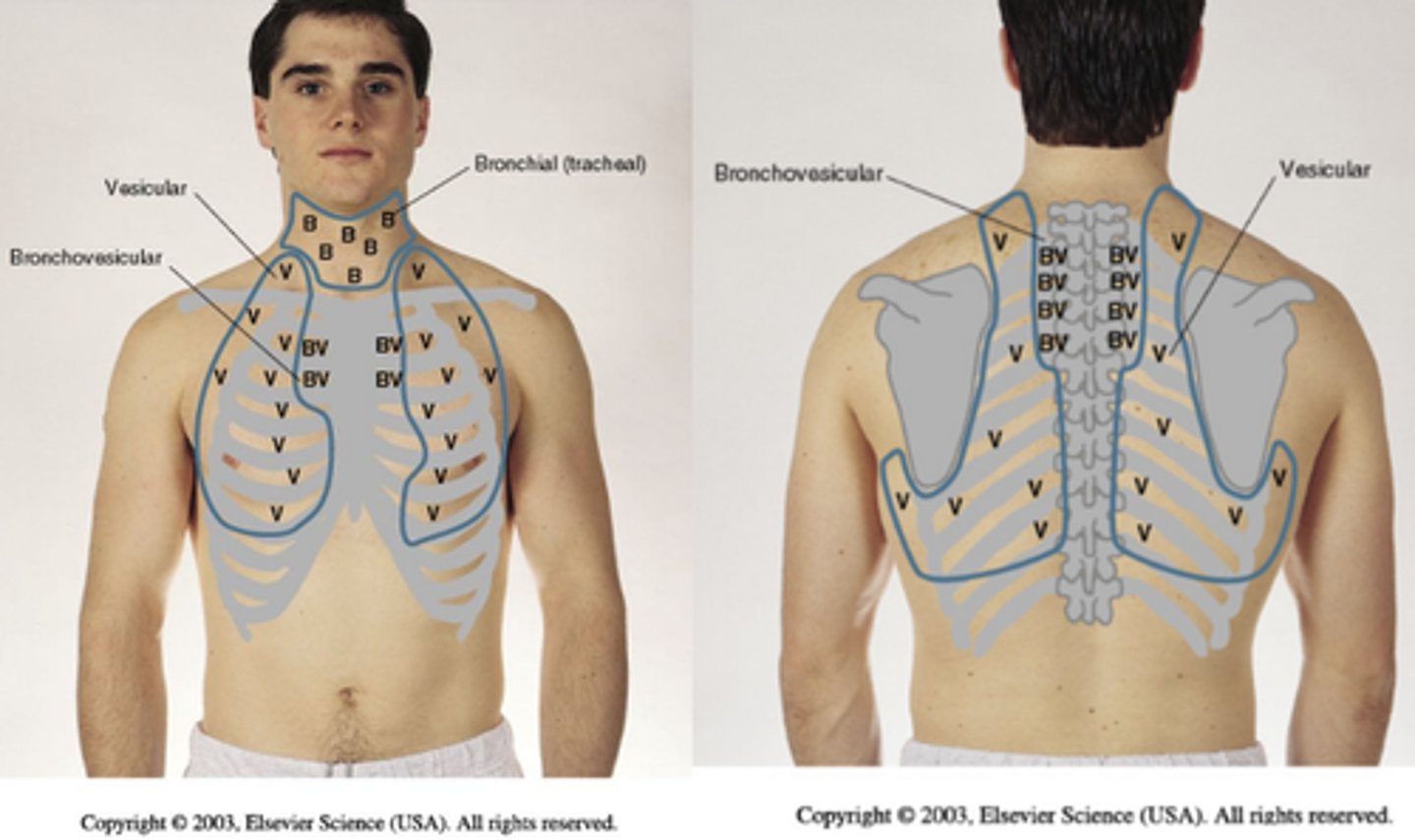
Vesicular Breath Sounds
location: outer edges of the lungs where air flows through smaller bronchioles and alveoli
pitch: low
amplitude: soft
duration: inspiration is longer than expiration
quality: rustling like wind blowing through trees
Emphysema
alveolar walls are weakened and enlarge and collapse; crackles noted
Chronic Bronchitis
airway becomes swollen and produces excessive mucus and hx of productive cough for 3 months of the year for 2 years in a row
When counting RR for infants you must
count for one full minute
Orthopnea
is dyspnea that occurs when a person is lying down (can be assessed by asking pt how many pillows they use when sleeping or lying down)
Claudication
pain, aching, or fatigue, usually in the calves, thighs, or buttocks, caused by insufficient blood flow (ischemia) to muscles during exercise, which resolves with rest
Paroxysmal Nocturnal Dyspnea
is a sudden acute type of dyspnea common in patients with left-sided congestive heart failure. During sleep the body fluid is redistributed, leading to pulmonary edema, and the individual wakes up gasping for air and coughing.
Syncope
fainting
Deep Vein Thrombosis Assessment
measure calf around the largest part of calf
> or equal to 2 cm difference indicates possible DVT
assess for warmth and erythema of calf
Arterial Ulcers
round smooth sores
black eschar
generally toes and feet
(dry and black)
Venous Ulcers
sores with irregular borders
yellow slough or ruddy skin
ankles
(red and icky)
Normal capillary refill
<3 seconds = normal
Carotid pulses should be assessed
one at a time
Jugular Vein Distension
seen with right-sided HF
Assessing UE temperature
dorsal aspect of hands and compare side-to-side simultaneously
Pulses expected/normal rating is
2+
Types of Edema
pitting or non-pitting: accumulates in extremities
pulmonary edema: accumulates in the lungs
ascites: accumulates in the abdominal cavity