Lecture 24 - UTIs Part 2
 Call Kai
 Learn
Learn Practice Test
 Spaced Repetition
 Match
Match Flashcards
 Knowt Play
1/41

There's no tags or description
Looks like no tags are added yet.
Name | Mastery | Learn | Test | Matching | Spaced | Call with Kai |
|---|
No analytics yet
Send a link to your students to track their progress
42 Terms
what are the usual pathogens of uncomplicated UTI
Escherichia coli
Staphylococcus saprophyticus
Other Enterobacterales
what is the first go to treatment for uncomplicated UTI
nitrofurantoin
what are alternative options for uncomplicated UTI
fosfomycin
cephalexin
TMP/SMX (can use only TMP if sulfa allergy)
pivmecillinam
cefixime (broader spectrum, less ideal to use)
fluoroquinolone**
(should choose an agent not used in the last 6 months)
why is nitrofurantoin the ideal choice for uncomplicated UTI
excreted in urine - good local effect
very little effect on gut bacteria
little resistance - many different mechanisms against bacteria
why are fluoroquinolones not ideal to use for uncomplicated UTI
higher side effect risk compared to other antimicrobials
more broad spectrum which is unnecessary
what are the usual pathogens of complicated UTI (no risk factors)
Escherichia coli
Staphylococcus saprophyticus
Other Enterobacterales
what is outpatient treatment for pyelonephritis - outpatient
ceftriaxone IV x 1 dose followed by oral therapy or
gentamicin IV x 1 dose followed by oral therapy
what are oral therapy options for pyelonephritis - outpatient
cefixime
amoxi-clav
fluoroquinolone
TMP-SMX
why are nitrofurantoin or fosfomycin not used for pyelonephritis
do not achieve very high levels in the kidneys or bloodstream
what are treatment options for pyelonephritis - hospitalized/septic
ceftriaxone IV
gentamicin IV
what are the usual pathogens for complicated UTI with risk factors (e.g. recent ABX, immunocompromised, obstructive uropathy, previous resistant organism)
Escherichia coli
Other Enterobacterales
Enterococcus spp
Pseudomonas aeruginosa
Others
what are treatment options for complicated UTI - Septic and obstructive uropathy, recent instrumentation, immunocompromised, or cephalosporins in last 3 months
piperacillin-tazobactam IV ± gentamicin IV
what are treatment options for complicated UTI - Septic and previous ceftriaxone/piperacillin-tazobactam resistant Gram-negative organism
meropenem IV ± gentamicin IV
what are usual pathogens for catheter associated UTI
Escherichia coli
Other Enterobacterales
Enterococcus spp
CoNS
Others
what is treatment for catheter associated UTI - Afebrile and systemically well
cefixime
amoxi-clav
fluoroquinolone
TMP-SMX
what is treatment for catheter associated UTI - Febrile and/or systemically unwell
ampicillin IV PLUS [ceftriaxone IV or gentamicin IV]
(ampicillin provides coverage against enterococcus)
what is the treatment for catheter associated UTI - Septic and obstructive uropathy, recent instrumentation, immunocompromised, cephalosporins in last 3 months, or previous ceftriaxone/piperacillin-tazobactam resistant Gram-negative organism
treat as complicated UTI
how soon do symptoms improve after starting ABX
48-72 hours
what symptoms should you always ask about for UTI follow up
systemic symptoms (or factors concerning for pyelonephritis, including nausea and vomiting)
is a repeat urine C&S recommended after completion of therapy
generally not recommended unless treatment failure
(or pregnant patients, for whom ongoing screening and treatment of ASB is indicated)
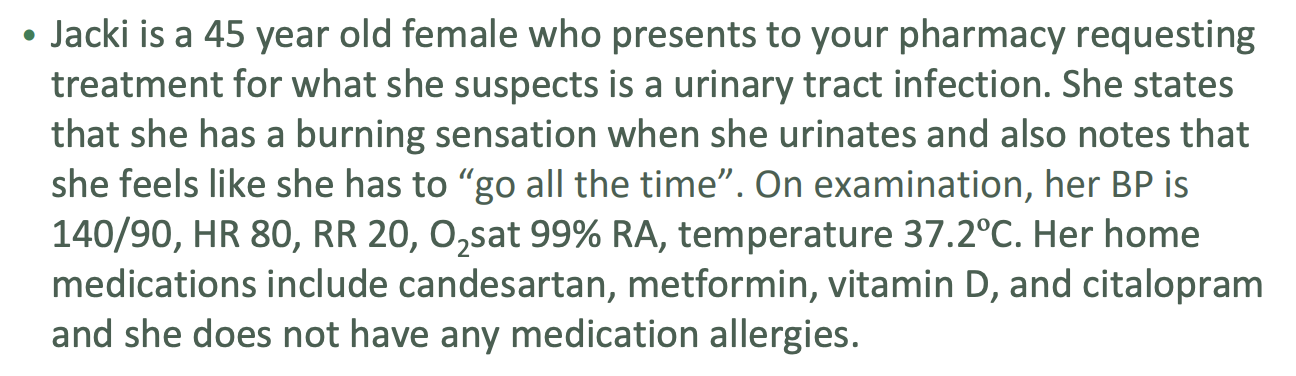
What is your approach to this patient?
Urine C&S is not necessary
Treat with: Nitrofurantoin BID x 5 days
Follow up in a couple of days
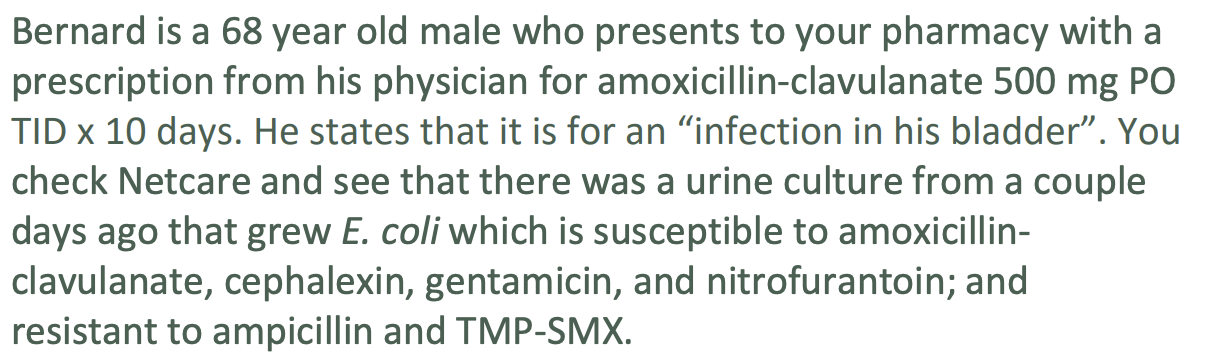
What is your approach to this patient?
Is he having any symptoms - no
Why was urine culture sent - part of routine physical
No treatment necessary - asymptomatic bacturia (unless patient is going to be having an invasive procedure)
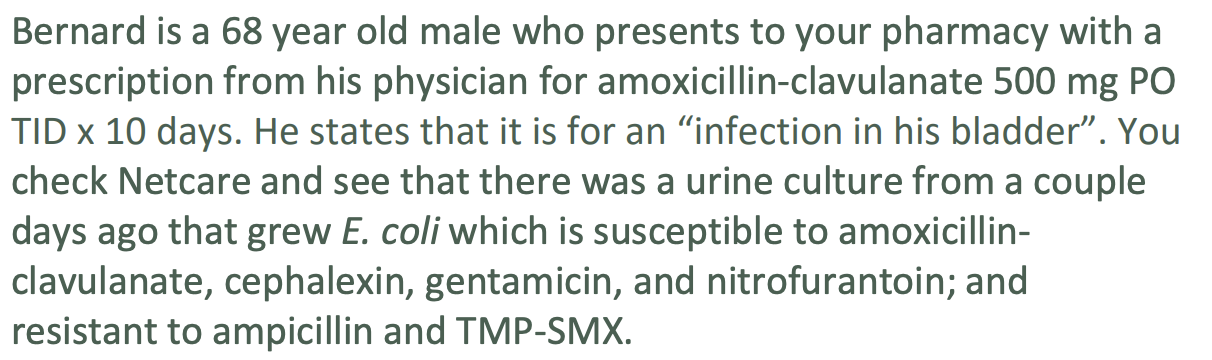
What is your approach to this patient if he was having symptoms?
Nitrofurantoin or cephalexin (narrower spectrum)
what are the usual pathogens for UTI in pregnant patients
Escherichia coli
Streptococcus agalactiae
Staphylococcus saprophyticus
Other Enterobacterales
what are treatment options for cystitis in pregnancy
nitrofurantoin (not to be used in 3rd trimester)
cephalexin
cefixime
fosfomycin
TMP/SMX (not to be used in 1st or 3rd trimester)
pivmecillinam
what are treatment options for pyelonephritis in pregnancy
ceftriaxone IV
ampicillin IV
is a urine C&S recommended post-treatment for pregnant patients
yes after 1 week follow by monthly follow-up cultures during remainder of pregnancy
what is the definition of relapse
Same organism
typically within 2-4 weeks after completion of therapy
Consider investigation for pyelonephritis or renal abscess
what is the definition of re-infection
Same or different organism
Over 90% of recurrences are due to this
how can UTIs be prevented
Avoid the use of spermicides or spermicide-coated condoms
Adequate hydration (e.g., additional 1.5 L of water daily)
Post-coital voiding
Cranberry products (cranberry juice → cranberry + hydration)
Topical vaginal estrogen (postmenopausal women)***
E.g., vaginal cream, vaginal rings, etc
E. coli vaccine in development
what is considered frequent recurrences
≥ 3 episodes/year or ≥ 2 episodes/6 months
when should prophylactic treatment be considered in females with recurrent UTIs
should confirm eradication of UTI with negative urine culture 1-2 weeks post-treatment before initiating prophylaxis
pericoital prophylaxis or continuous prophylaxis, patient initiated treatment
what are options for pericoital prophylaxis
TMP-SMX
nitrofurantoin
cephalexin
what are treatment options for continuous prophylaxis
TMP-SMX (low dose)
what is prostatitis
infection, inflammation, or pain in the prostate gland
what is acute bacterial prostatitis
urinary symptoms and pain (which may be suprapubic, perineal, rectal, or in external genitalia). May include fever and urosepsis.
what is chronic bacterial prostatitis
lasting for > 3 months.
(Recurrent infections of prostate caused by same organisms – intermittent symptoms)
what are the usual pathogens in bacterial prostatitis
E. coli
Other Enterobacterales (e.g., Klebsiella, Proteus spp, etc.)
Enterococcus
Pseudomonas (moreso in nosocomial)
what are less common causes of bacterial prostatitis
Staphylococci and Streptococci
STIs
what is treatment for acute bacterial prostatitis - mild-moderate
ciprofloxacin
TMP-SMX
ceftriaxone IV → switch to po agents when clinical improvement
what is treatment for acute bacterial prostatitis - severe
Piperacillin-tazobactam → switch to PO agent when clinical improvement to complete 4 weeks
what is treatment for chronic bacterial prostatitis
ciprofloxacin
TMP-SMX
doxycycline