Biochemistry: Citric Acid Cycle and Electron Transport Chain Overview
 Call Kai
 Learn
Learn Practice Test
 Spaced Repetition
 Match
Match Flashcards
 Knowt Play
1/51

There's no tags or description
Looks like no tags are added yet.
Name | Mastery | Learn | Test | Matching | Spaced | Call with Kai |
|---|
No analytics yet
Send a link to your students to track their progress
52 Terms
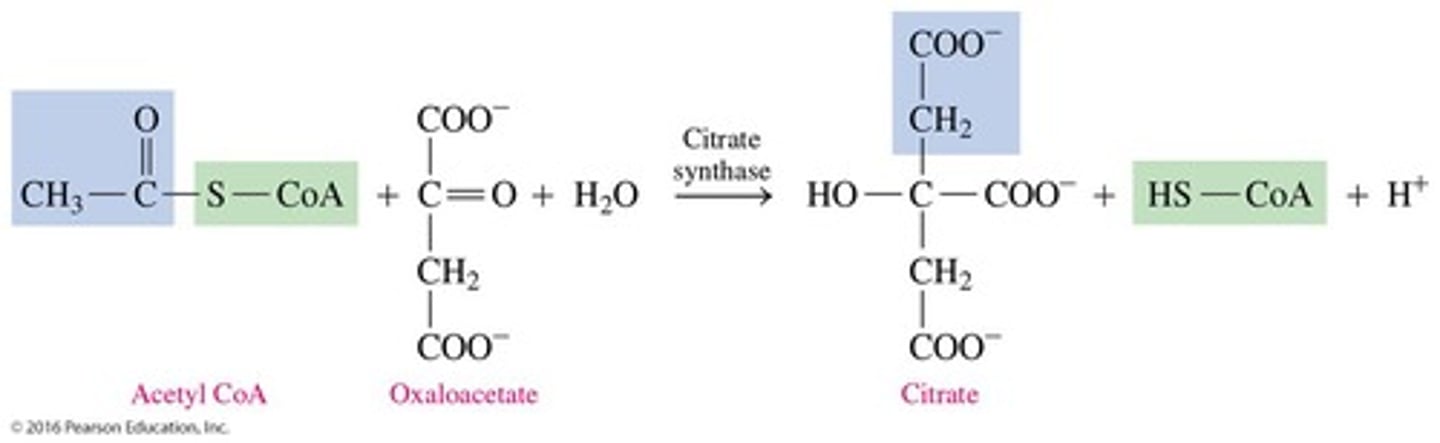
What is the first step of the citric acid cycle?
Condensation of an acetyl group with oxaloacetate to form citrate.
What does citrate synthase do?
Catalyzes the condensation of acetyl CoA and oxaloacetate to yield citrate.
What is produced during the oxidative decarboxylation of isocitrate?
α-ketoglutarate, NADH, and CO2.
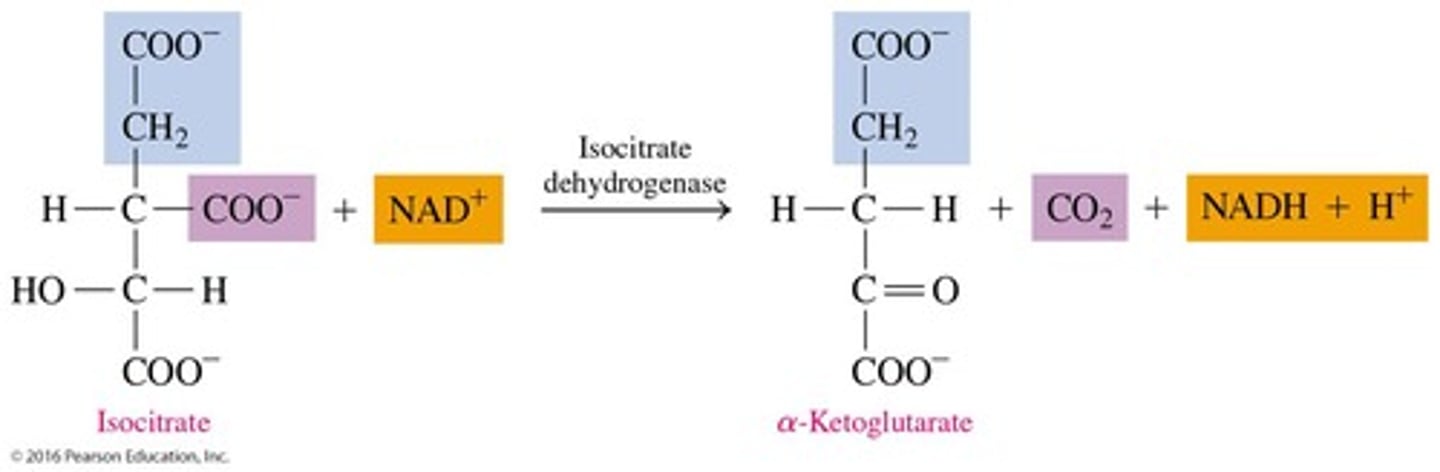
What is the role of isocitrate dehydrogenase?
Catalyzes the oxidative decarboxylation of isocitrate.
What is generated from the hydrolysis of succinyl CoA?
Succinate and GTP (or ATP).
What is substrate-level phosphorylation?
The direct transfer of a phosphate group to ADP to form ATP.
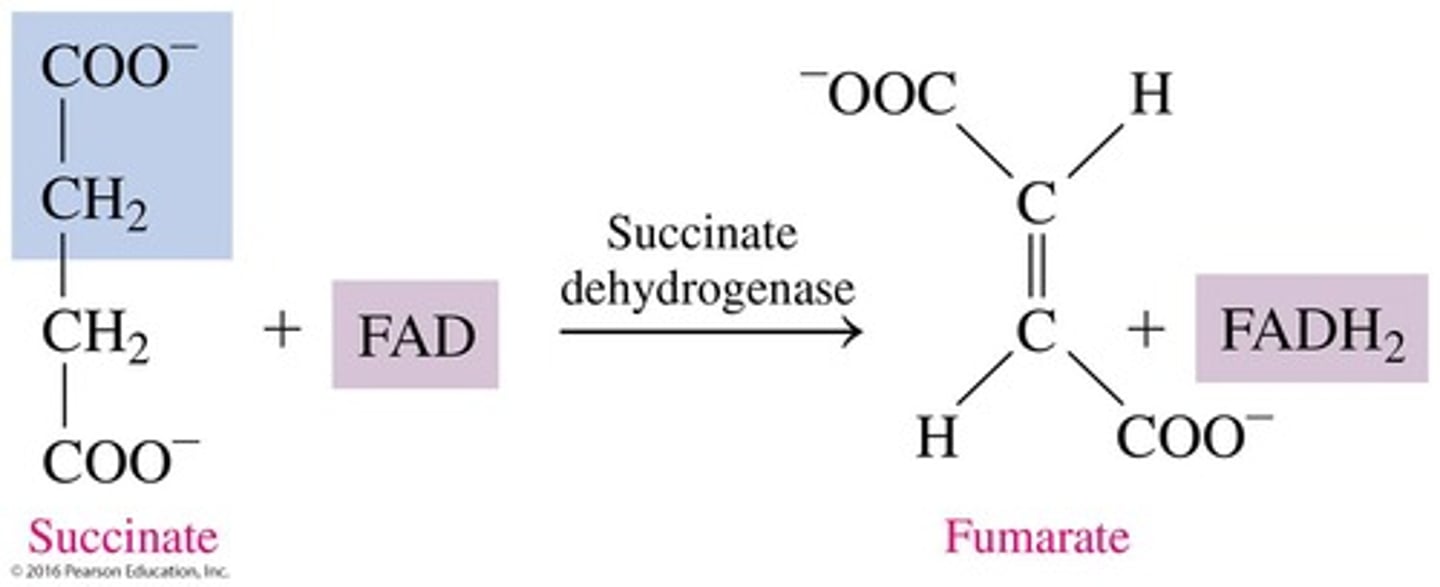
What happens to succinate in reaction 6 of the citric acid cycle?
It is oxidized to fumarate, reducing FAD to FADH2.
What is the final product of the citric acid cycle?
Oxaloacetate, which is regenerated for the cycle to continue.
What are the key control points in the citric acid cycle?
Reactions catalyzed by isocitrate dehydrogenase and α-ketoglutarate dehydrogenase.
What is the significance of the citric acid cycle in biosynthesis?
It provides precursors for the biosynthesis of key biomolecules.
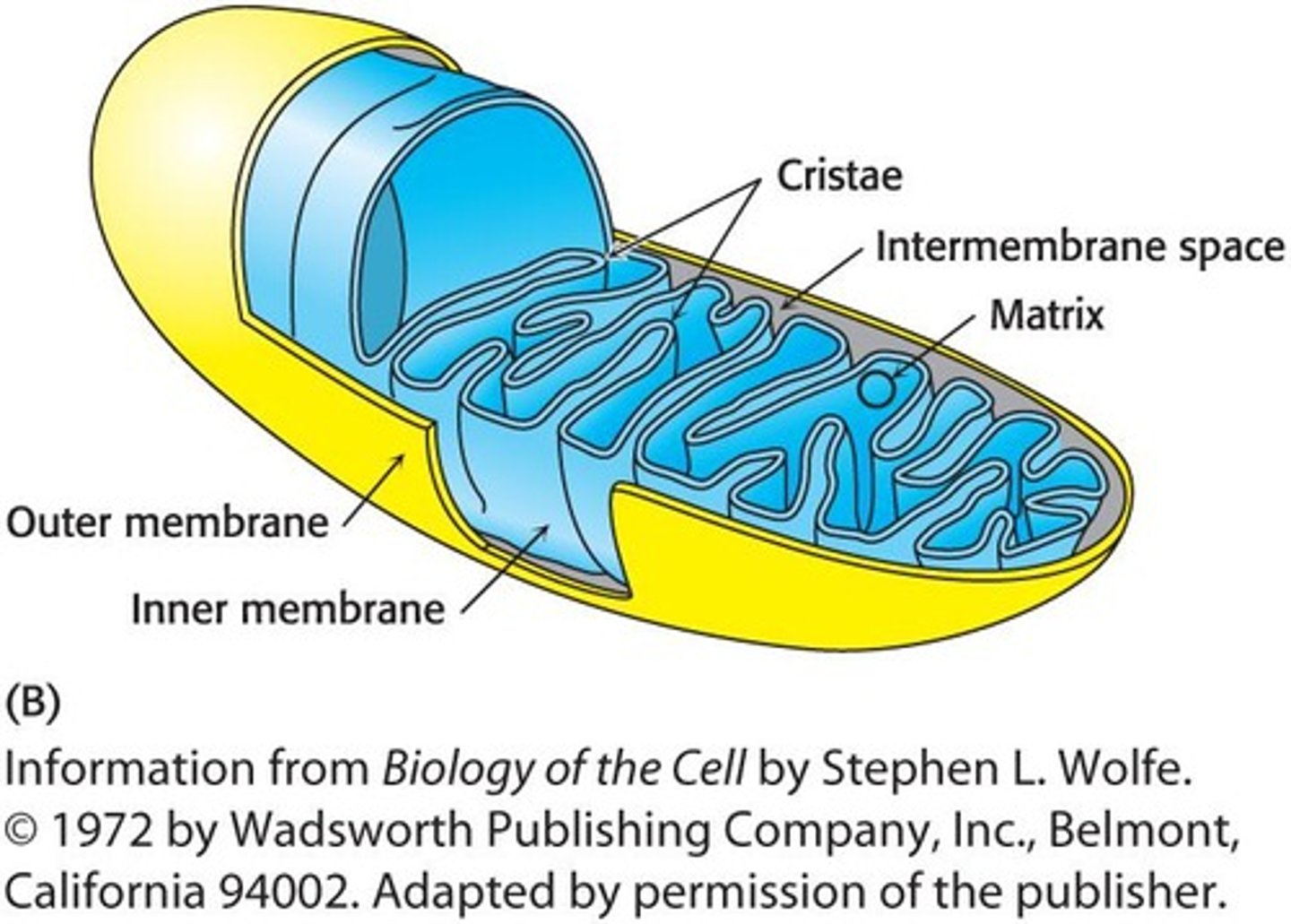
Where does oxidative phosphorylation occur in eukaryotes?
In the mitochondria.
What is the role of NADH and FADH2 in the electron transport chain?
They carry electrons to the chain, facilitating ATP production.
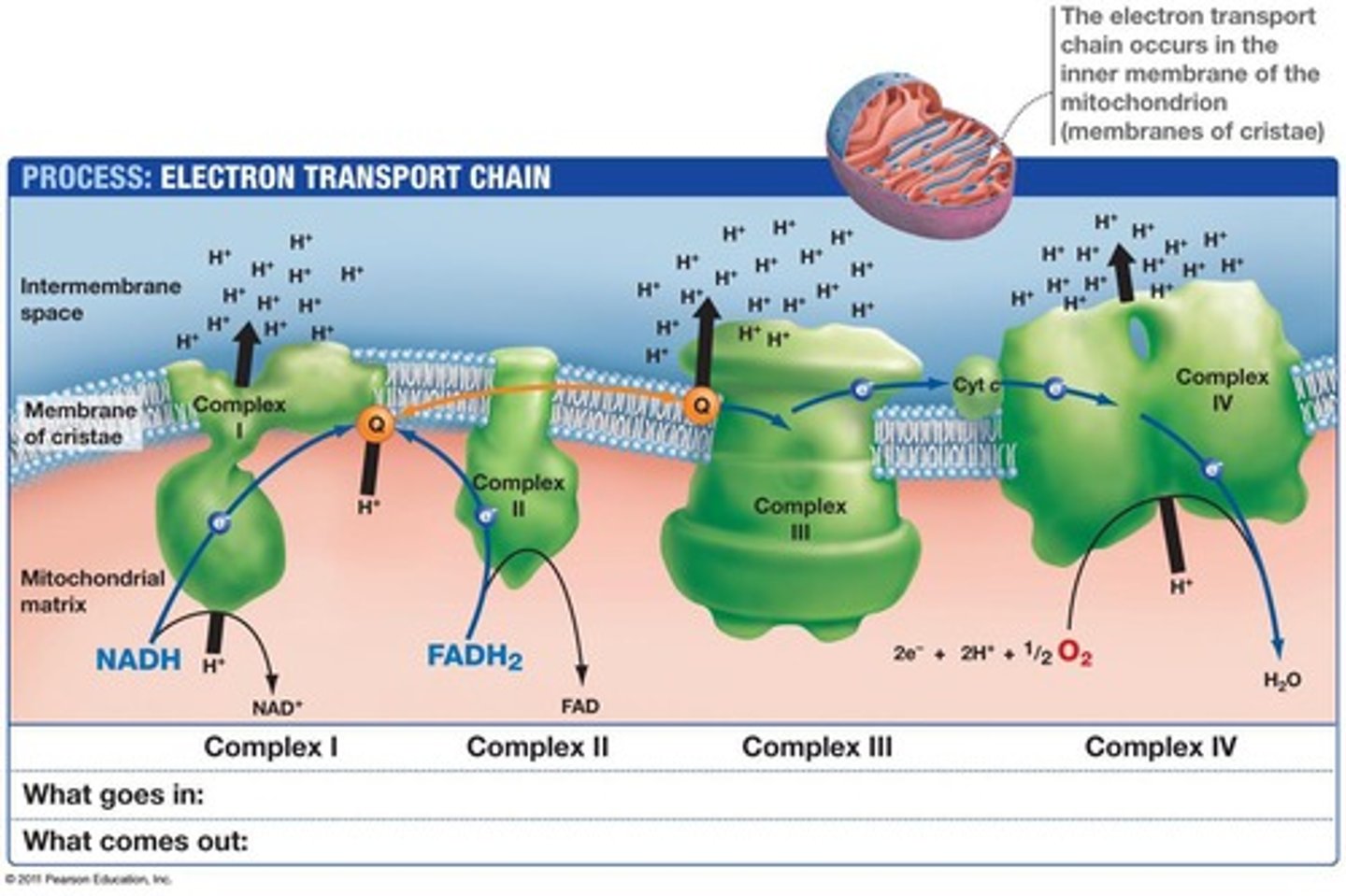
What is the outcome of the electron transport chain?
The generation of ATP through oxidative phosphorylation.
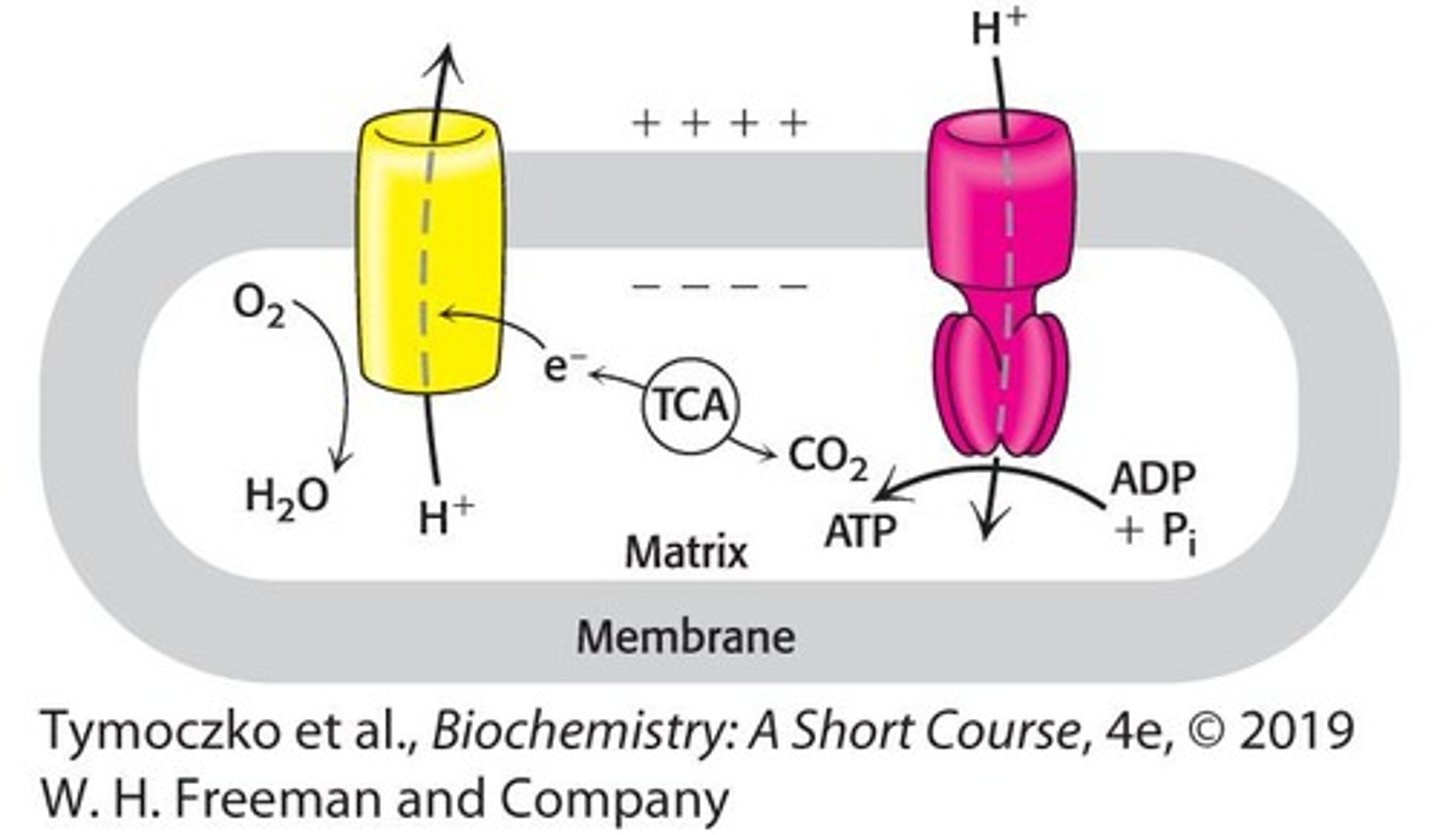
What is the relationship between the citric acid cycle and the electron transport chain?
The citric acid cycle produces NADH and FADH2, which are used in the electron transport chain.
What is released as a byproduct of the citric acid cycle?
Carbon dioxide (CO2).
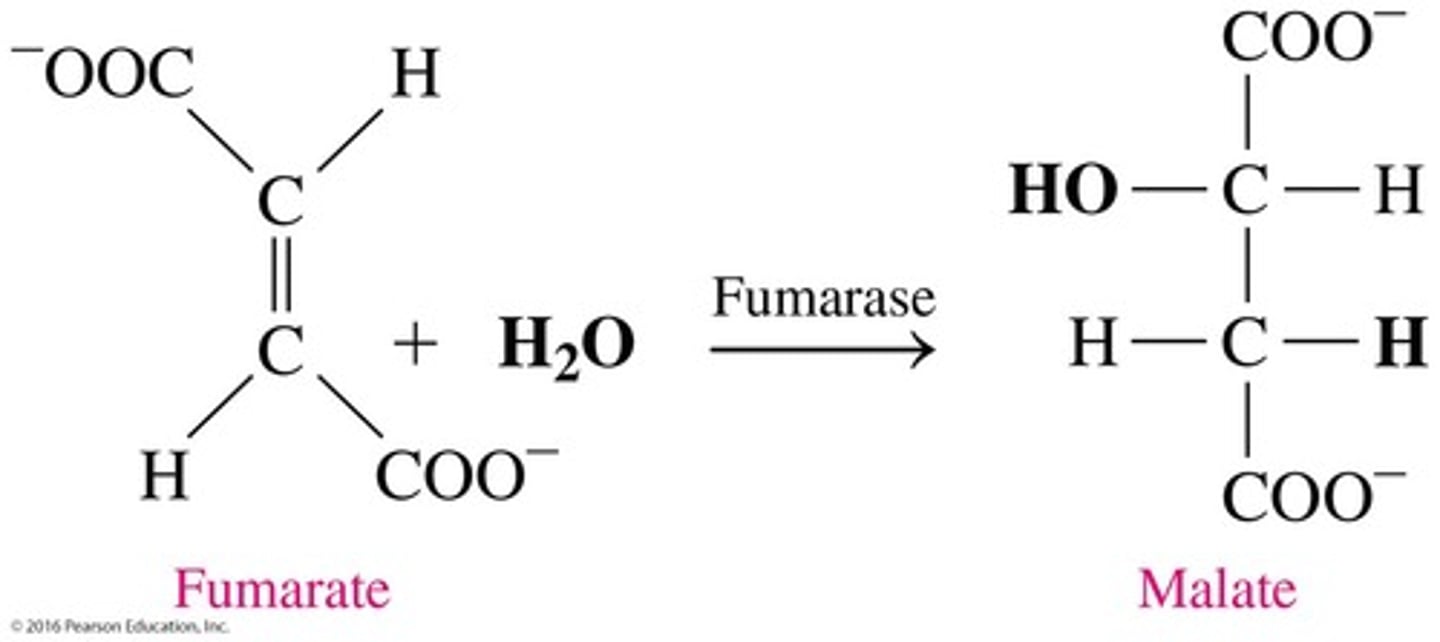
What compound is formed from the hydration of fumarate?
Malate.
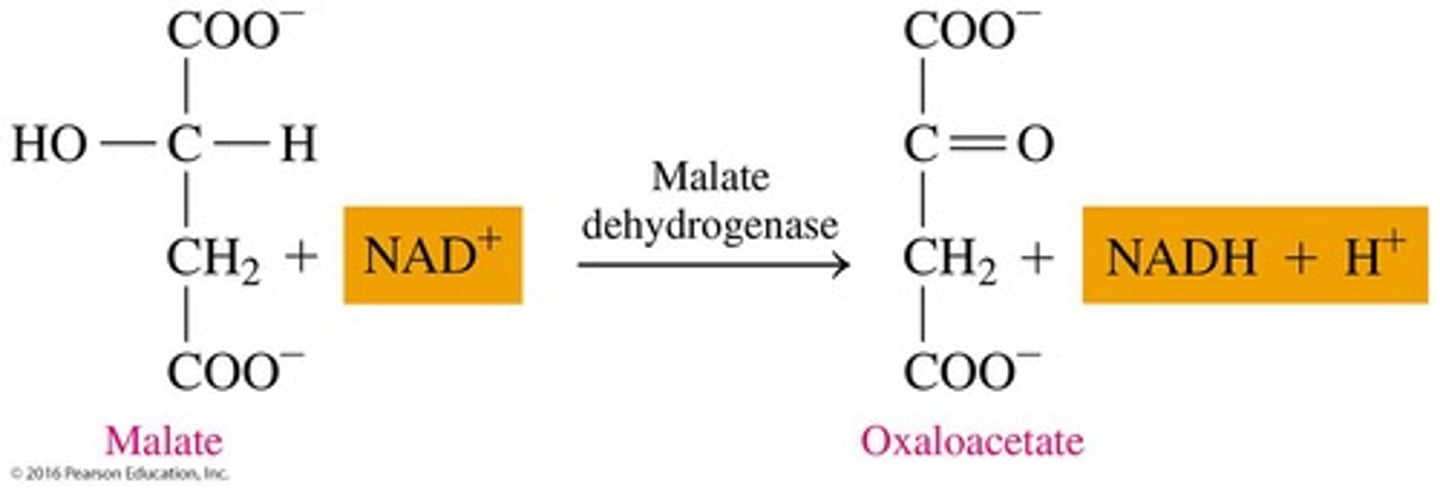
What does malate dehydrogenase do?
Oxidizes malate to oxaloacetate, producing NADH.
How many molecules of CO2 are released during the citric acid cycle?
Two molecules of CO2.
What type of alcohol is isocitrate classified as?
A secondary alcohol.
What is the significance of the high-energy thioester bond in acetyl CoA?
It provides energy for the formation of citrate.
What is the function of aconitase in the citric acid cycle?
Catalyzes the isomerization of citrate to isocitrate.
What happens during the oxidation of succinate?
Succinate is converted to fumarate, and FAD is reduced to FADH2.
What is the role of fumarase in the citric acid cycle?
Catalyzes the hydration of fumarate to form malate.
What is the overall purpose of the citric acid cycle?
To generate high-energy electrons for ATP synthesis and provide biosynthetic precursors.
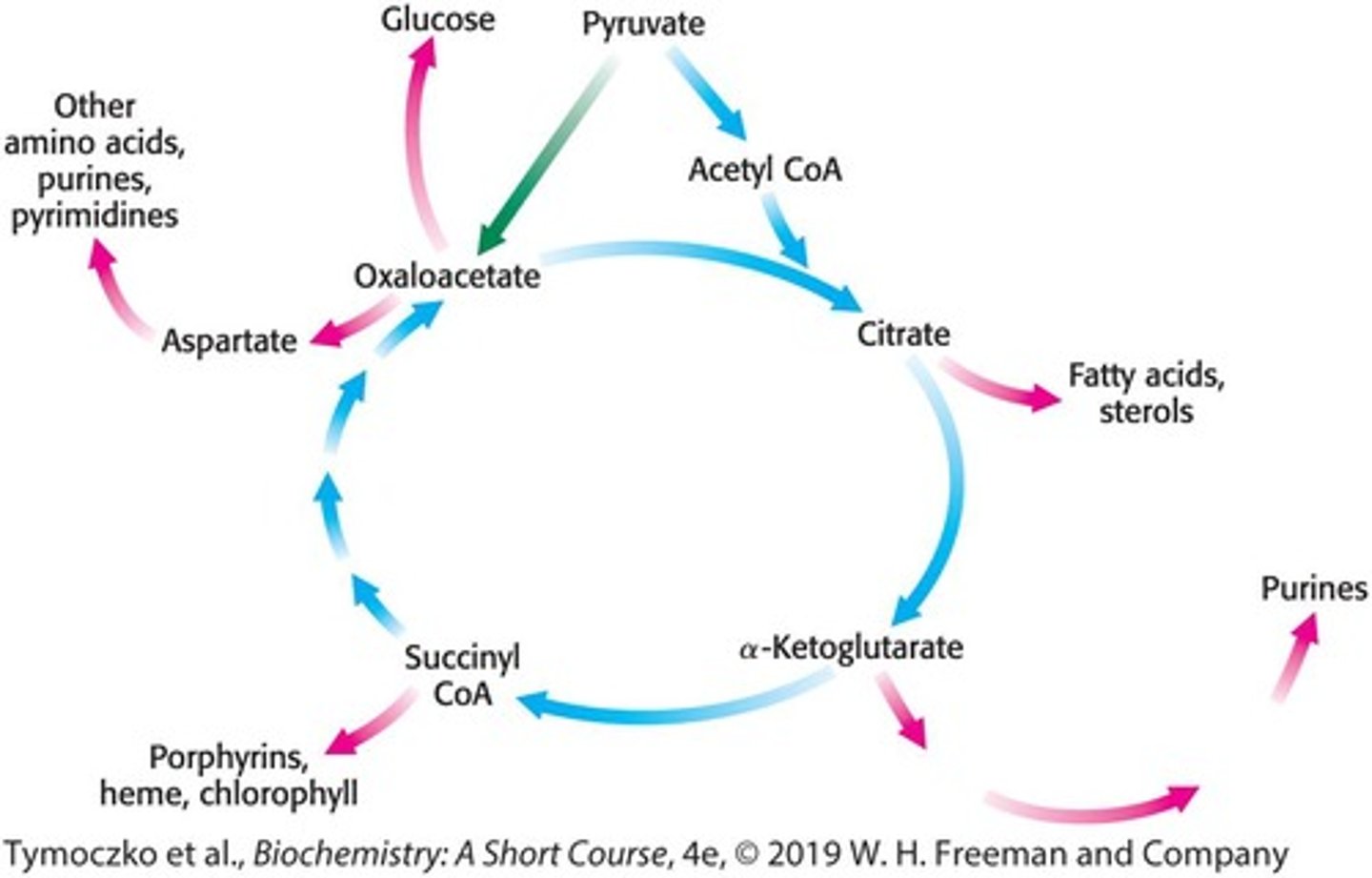
What are the two stages of the citric acid cycle?
The introduction of carbons and the regeneration of oxaloacetate.
What is the significance of GTP in the citric acid cycle?
It is a high-energy compound similar to ATP, generated during substrate-level phosphorylation.
What is produced from one molecule of pyruvic acid during cellular respiration?
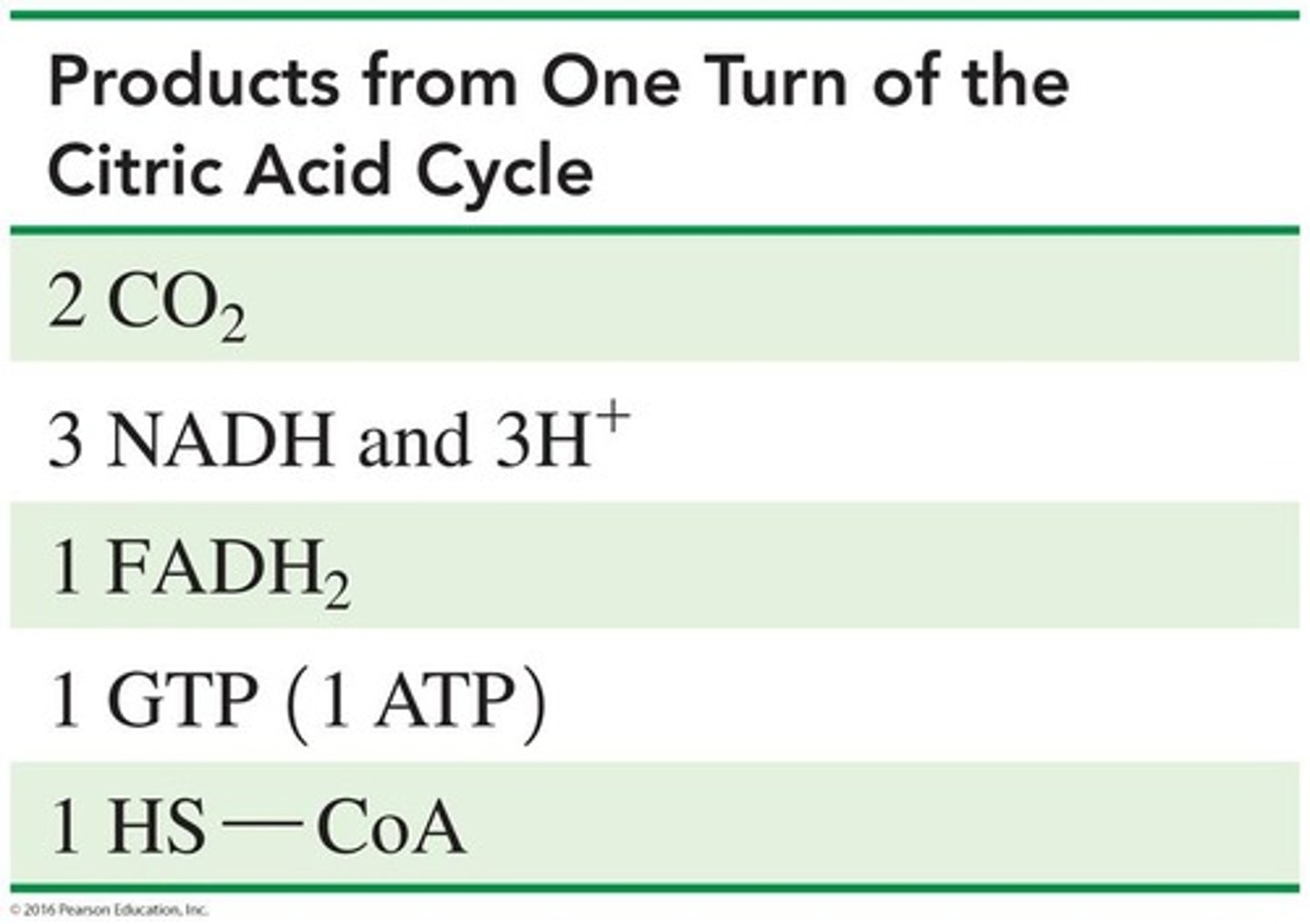
3 NADH, 1 FADH2, and 1 ATP
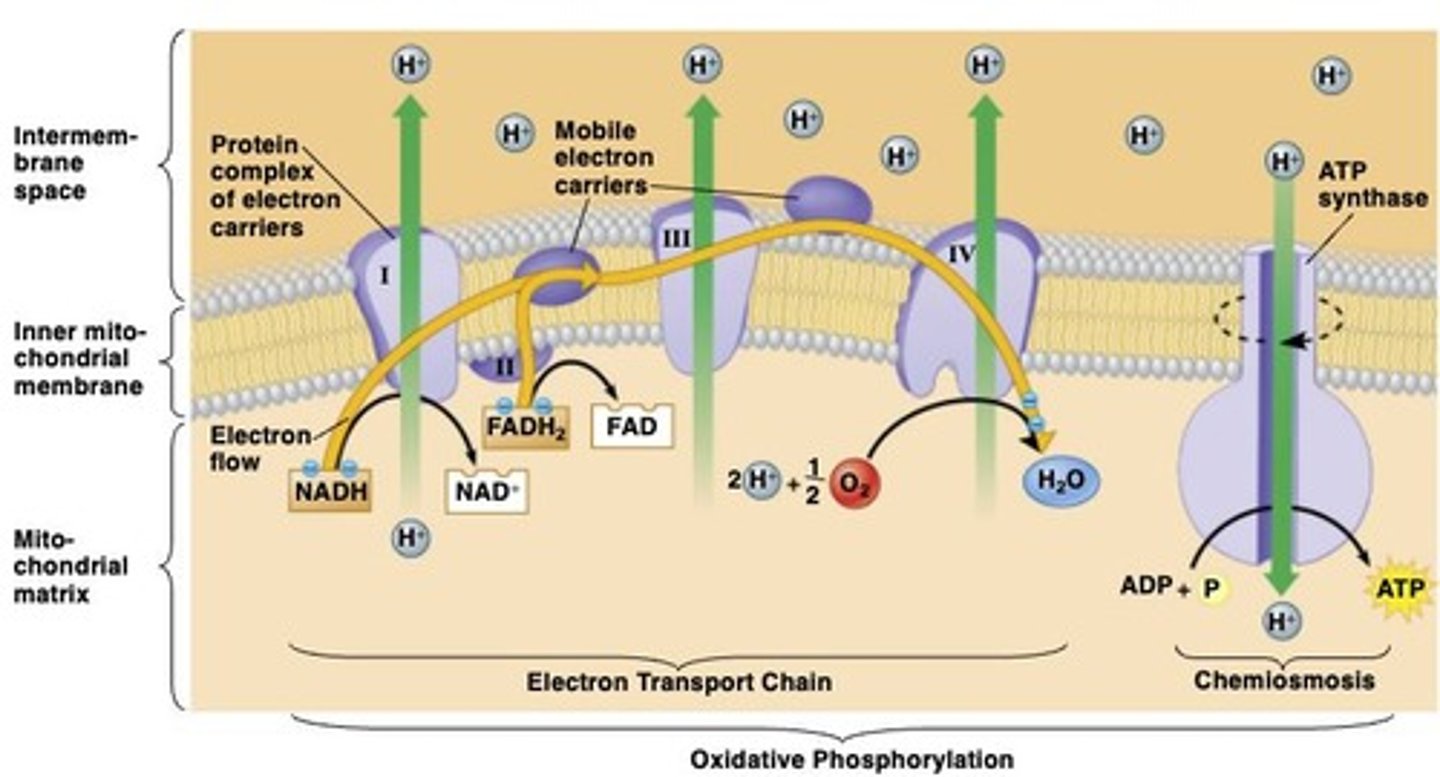
Where does the electron transport chain occur?
In the mitochondria
What is the function of the electron transport chain?
To convert ADP into ATP using high-energy electrons from the citric acid cycle
What is the outer mitochondrial membrane permeable to?
Most small ions and molecules due to mitochondrial porin
What is the inner mitochondrial membrane's role?
It is the site of electron transport and ATP synthesis
What happens at the end of the electron transport chain?
Electrons combine with hydrogen ions and oxygen to form water
What is the charge of the intermembrane space during electron transport?
Positively charged due to the buildup of H+ ions
What is the role of ATP synthase in the mitochondria?
It synthesizes ATP as H+ ions flow through it
How many ATP molecules are produced from glycolysis per glucose molecule?
2 ATP molecules
What is the total ATP yield from the complete breakdown of glucose through cellular respiration?
38 ATP molecules
What is oxidative phosphorylation?
The process that captures energy from high-energy electrons to synthesize ATP
What is redox potential?
A measure of a molecule's tendency to donate or accept electrons
What are reactive oxygen species (ROS)?
Highly reactive oxygen derivatives generated during partial reduction of O2
What is the role of superoxide dismutase?
To protect against damage from reactive oxygen species
What are the components of the electron transport chain?
NADH-Q oxidoreductase (Complex I), Q-cytochrome c oxidoreductase (Complex III), Cytochrome c oxidase (Complex IV), and succinate Q-reductase (Complex II)
What is the function of the proton gradient established by the electron transport chain?
To power the synthesis of ATP
What is the significance of the Q pool in the inner mitochondrial membrane?
It contains oxidized and reduced coenzyme Q (Q) that participates in electron transfer
What happens to electrons as they move through the electron transport chain?
They are passed to electron carriers and release energy used to pump protons out of the mitochondria
What is the role of flavin mononucleotide (FMN) in the electron transport chain?
It acts as an electron carrier within the protein complexes
What is the effect of oxygen as the final electron acceptor in the electron transport chain?
It removes low-energy electrons and hydrogen ions, forming water
What is the relationship between the citric acid cycle and oxidative phosphorylation?
The citric acid cycle provides high-energy electrons for oxidative phosphorylation
What is the standard reduction potential (E0′)?
A measure of a molecule's tendency to gain electrons, with positive values indicating strong oxidizing agents
How does the electron transport chain contribute to ATP production?
By establishing a proton gradient that drives ATP synthesis through ATP synthase
What are the toxic derivatives of molecular oxygen?
Superoxide ion, peroxide ion, and hydroxyl radical
What is the role of catalase in cellular respiration?
To help protect cells from damage caused by reactive oxygen species