Parasites by Host - Dog (Exam 5)
 Call Kai
 Learn
Learn Practice Test
 Spaced Repetition
 Match
Match Flashcards
 Knowt Play
1/44

Earn XP
Description and Tags
Exam 5 of Parasitology is Parasites by Host review, this is part 1 Dog. Blue text is testable material, black text is general info or potential extra credit. General note: Dr. Wu uses the class name Secernentea, but Modern genetic studies use name Chromadorea (Secernentea is deeply nested within Chromadorea, making them closely related in taxonomy. Secernentea is not considered a separate, co-equal class; it is now typically reclassified as the order Rhabditida under the class Chromadorea)
Name | Mastery | Learn | Test | Matching | Spaced | Call with Kai |
|---|
No analytics yet
Send a link to your students to track their progress
45 Terms
Thinking of all the parasites studied so far, What could be some differential diagnoses for an itching dog?
Sarcoptes
Ctenocephalides
Otodectes
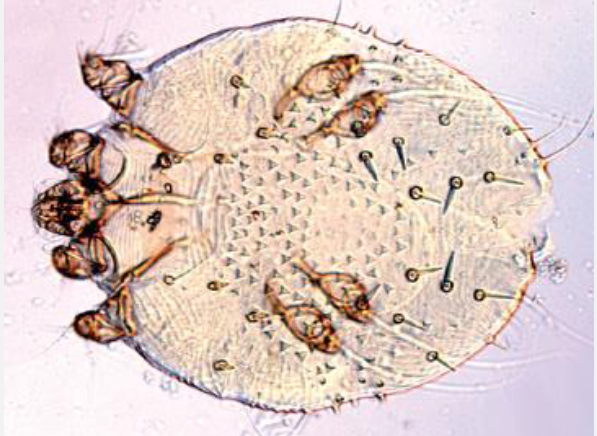
Sarcoptes: morphological features
Arthropods > Arachnids > Acari > Astigmata > Sarcoptidae > Sarcoptes
Long, unsegmented pedicels
Anus on posterior edge of body
Sarcoptes causes what? (Disease/Clinical signs)
Causes mange in humans, dogs, foxes, horses, and cattle → Relatively host-specific, interspecies transmission uncommon
Burrow in tunnels under the epidermis → Begins in hairless areas (elbow, pinna), can progress to generalized
Causes Intense pruritus with papules, erythema, crusts, and excoriations develop, progresses to hyperkeratosis → Secondary bacterial infection common
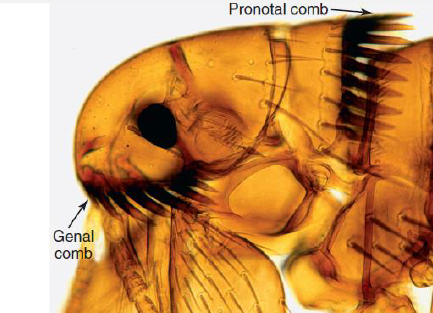
Ctenocephalides: morphological features
Arthropods > Insecta > Siphonaptera (fleas) > Ctenocephalides
Genal and pronotal combs
Genal teeth run parallel to head
Which species of Ctenocephalides is more common: C. felis or C. canis?
Ctenocephalides felis
Ctenocephalides: how long does it take adults to emerge?
Eggs laid on host, fall off into environment
Adults emerge by weeks 3-4
Ctenocephalides is the intermediate host for what other parasites?
Intermediate hosts of tapeworm Dipylidium caninum and nematode Acanthocheilonema reconditum
Ctenocephalides: Disease
Can cause flea allergy dermatitis due to hypersensitivity
Can cause exsanguination of host (flea anemia)
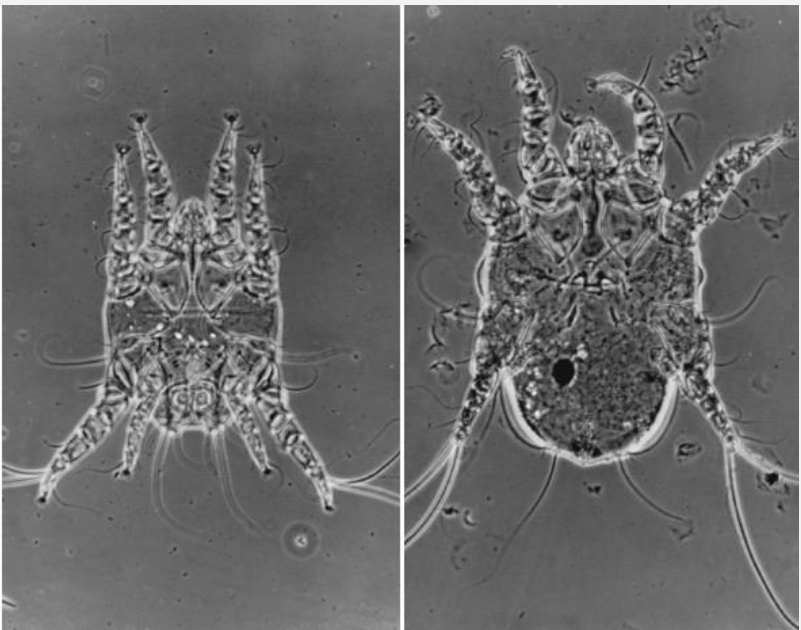
Otodectes: morphological features
Arthropods > Arachnids > Acari > Astigmata > Psoroptidae > Otodectes > Otodected cynotis
Short, unsegmented pedicels
Where does Otodectes infest on host body?
Infests external ear canal and adjacent skin of dogs, cats, foxes, and ferrets, and sometimes humans
Otodectes: Disease/Clinical signs
Cause intense irritation, dark cerumen and tan flaky material in ear canal
Leads to head shaking that can cause aural hematomas
How would you treat a Sarcoptes infestation?
Sarcoptic mite treatments: Selamectin, moxidectin, fipronil, flumethrin, off-label isoxazolines
How would you treat a Ctenocephalides flea infestation?
Flea treatments: Isoxazolines (afoxolaner, fluralaner, lotilaner, sarolaner), nitenpyram, spinosad, selamectin, fipronil, imidacloprid, dinotefuran, flumethrin, indoxacarb
and Insect growth regulators (lufenuron, pyriproxyfen, methoprene) used to prevent development of larvae and pupae
Considering all of the parasites studied so far, what is a differential diagnosis for a vomiting dog?
Spirocerca lupi
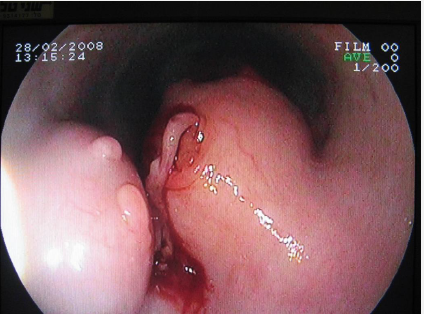
Spirocerca lupi can cause what clinical signs?
Nematoda > Secernetea > Spirurida > Spirurina > Spirocerca > Spirocerca lupi
Mostly nonpathogenic
Can see dysphagia, coughing, and vomiting
Can cause aortic aneurysm or hypertrophic osteopathy
Can cause esophageal neoplasia (fibrosarcoma, osteosarcoma, chondrosarcoma)
Aberrant migration can cause neurologic signs
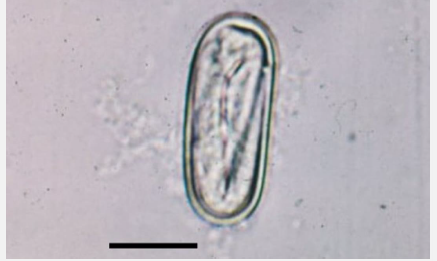
What features on this egg help identify it as Spirocerca lupi?
Small eggs with vermiform embryo passed in fecal flotation or sedimentation,
nodules on endoscopy
Considering all of the parasites we have learned so far, what are some differential diagnoses for a dog with diarrhea?
Cystoisospora
Giardia
Toxocara
Trichuris
Strongyloides
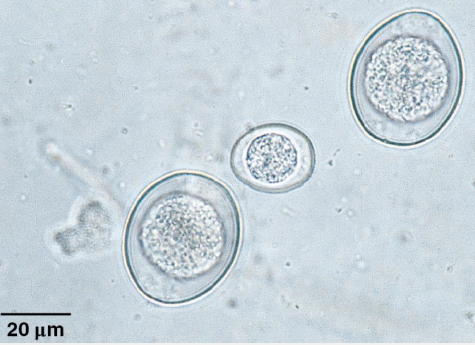
Cystoisopora: canine species
Protists > SAR > Apicomplexa > Coccidians > Cystoisospora
C. canis, C. ohioensis, C. burrowsi
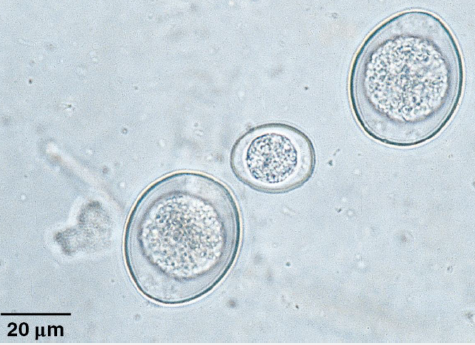
How is Cystoisospora infection acquired?
Infection via ingestion of oocysts or paratenic hosts (in dogs and cats)
Cystoisospora clinical signs?
May cause diarrhea (hemorrhagic or nonhemorrhagic) in dogs (usually puppies)
Usually resulting from change of environment
Respiratory and nervous signs reported in some animals
How do you treat Cystoisospora infection?
Sulfadimethoxine
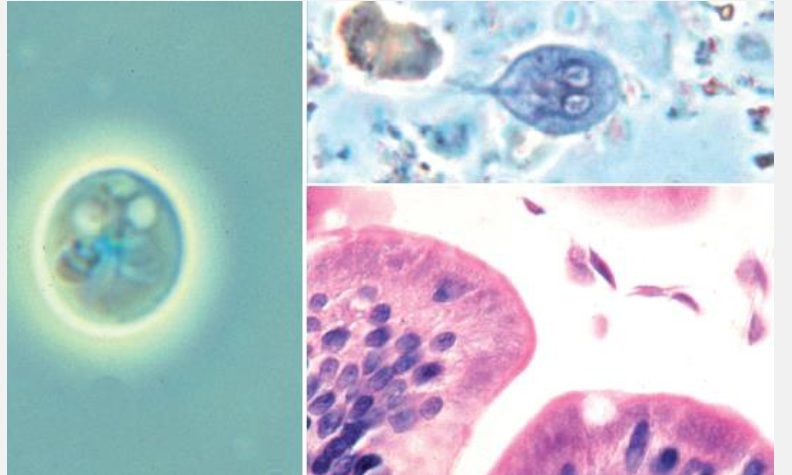
Giardia: what life cycle stage is infectious and not infectious?
Protists > Excavata (flagellates) > Diplomonadida > Giardia
Trophozoites can be passed in diarrheic feces but not considered infectious
Cysts are immediately infectious when passed
Giardia Assemblage C & D (Dogs): Clinical signs
Dogs may be subclinical
Puppies and debilitated dogs more likely to develop diarrhea
How is Giardia diagnosed and treated?
Diagnosis: Cysts on direct smear or fecal flotation with zinc sulfate, ELISA
Treatment: Metronidazole, fenbendazole
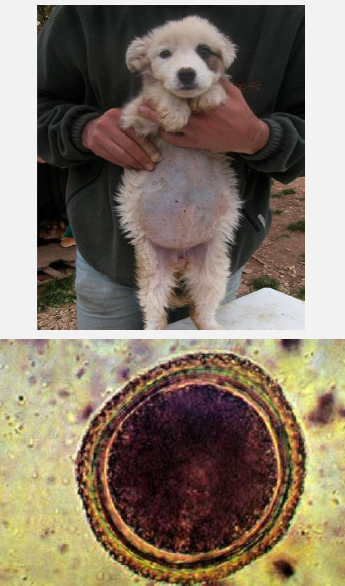
Toxocara canis: clinical signs
Nematoda > Secernetea > Ascaridia (roundworms) > Toxocara
Disease: Ill-thrift, pot-bellied appearance
Intestinal rupture or obstruction can occur
Toxocara: Diagnosis
Identification of adults in vomit or feces, eggs in fecal flotation
Toxocara: Treatment
Benzimidazoles, macrocyclic lactones, pyrantel, piperazine
Start as early as 2-weeks old in puppies, treat every 2 weeks to prevent environmental contamination
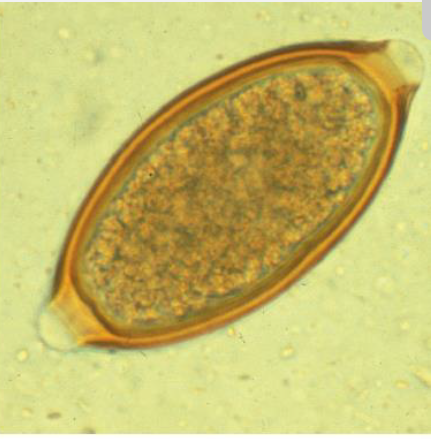
Trichuris: common name and species name for dogs
Nematoda > Adenophorea (Enoplida) > Trichinelloidea > Trichuris
Aka whipworms
Trichuris vulpis common among dogs in U.S.
Adults found embedded within wall of large intestine and cecum
Trichuris vulpis: clinical signs
Heavy T. vulpis infections can cause weight loss and diarrhea with mucus and blood
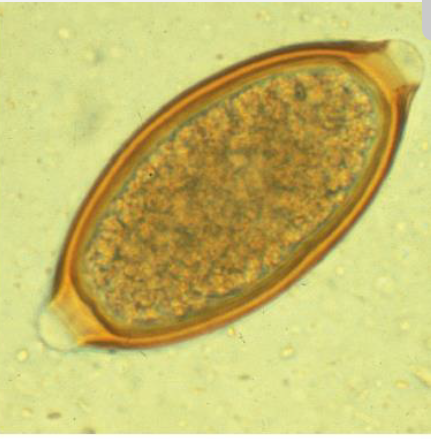
Trichuris: Diagnosis, Treatment
Prepatent period: 3 months in dogs
Diagnosis Lemon shaped eggs with bipolar plugs and a single cell on fecal flotation
Treatment: Macrocyclic lactones, benzimidazoles → Every month for 3 months
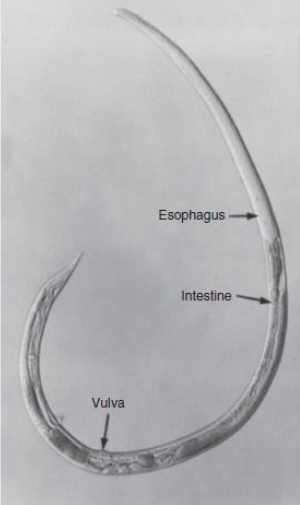
Strongyloides: species in dogs
Nematoda > Secernetea > Rhabditida > Strongyloides
Lives in mucosal crypts of small intestine
Strongyloides stercoralis: humans and dogs
Strongyloides: Modes of transmission
Transmammary transmission occurs in dogs, horses, pigs, and ruminants
Infection can be chronic due to autoinfection of larvae in Strongyloides stercoralis
Strongyloides: Diagnosis, Treatment
Diagnosis: L1 larvae in feces detected via Baermann
Treatment: Ivermectin, oxibendazole, levamisole, doramectin
Considering all of the parasites we have learned so far, what are some differential diagnoses for a client stating “there’ stuff in my dog’s poop”?
Cestodes
Acanthocephalans
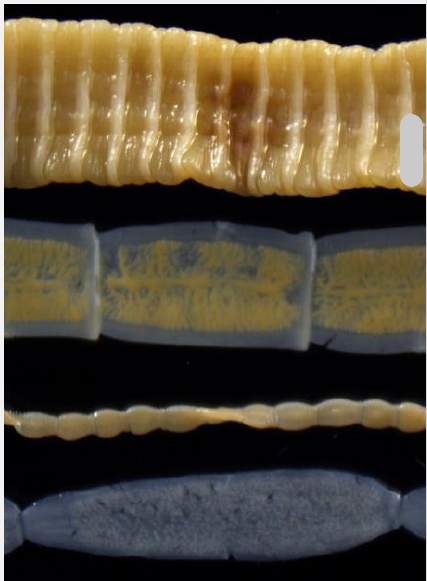
Identify top cestode: how is infection acquired and diagnosed?
Dibothriocephalus latum
Infection: Plerocercoids in fish
Diagnosis: Whole tapeworm or long segment
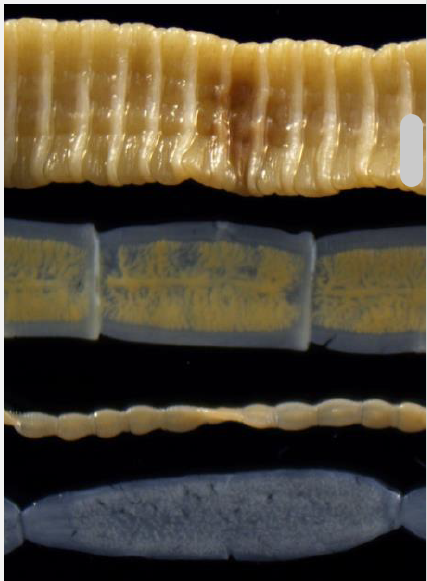
Identify second cestode: how is infection acquired and diagnosed?
Taenia spp.
Infection: Cysticercus or coenurus in sheep and rabbits
Diagnosis: Square-shaped segments
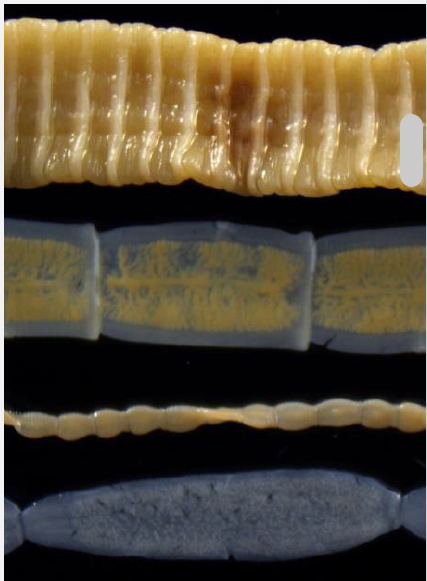
Identify third cestode: how is infection acquired and diagnosed?
Mesocestoides spp.
Infection: Tetrathyridium in snakes, birds, and small mammals
Diagnosis: Small sesame seed-shaped segments
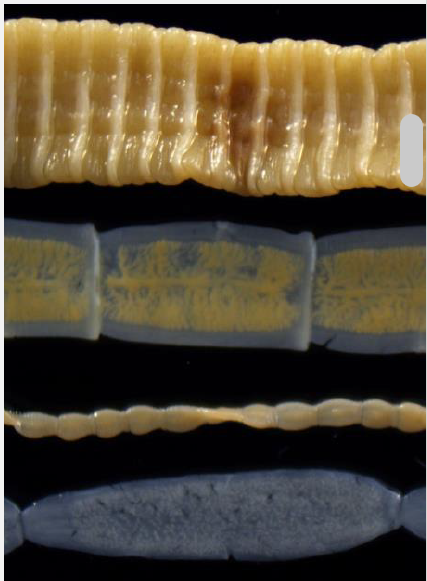
Identify bottom cestode: how is infection acquired and diagnosed?
Dipylidium caninum
Infection: Cysticercoids in fleas
Diagnosis: Pumpkin seed-shaped segments
What is the treatment for cestodes?
Praziquantel
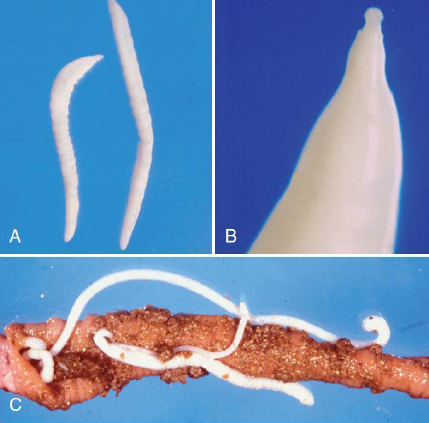
How do hosts acquire Acanthocephalan infection?
AKA Thorny-headed worms → White, flattened body (become cylindric when placed in water)
Final host infected by ingesting arthropod or paratenic host
Dung beetle for Macracanthorhynchus hirudinaceus
Millipede for Macracanthorhynchus ingens
Acanthocephalans: Diagnosis, Treatment, Clinical Signs
Usually asymptomatic in dogs
Diagnosis:Thick, multilayered eggs with a dark brown shell on fecal flotation or sedimentation. Adults can be passed in feces
Treatment:No approved treatment in dogs
Considering all of the parasites we have learned so far, what are some differential diagnoses for a sneezing dog?
Pneumonyssoides
Eucoleus