BIO 14 - 3RD LE - 1 - FUNGAL DIVERSITY
 Call Kai
 Learn
Learn Practice Test
 Spaced Repetition
 Match
Match Flashcards
 Knowt Play
1/47

There's no tags or description
Looks like no tags are added yet.
Name | Mastery | Learn | Test | Matching | Spaced | Call with Kai |
|---|
No analytics yet
Send a link to your students to track their progress
48 Terms
Fungi
_____________ are essential players in ecosystems, industry, and evolution. This module introduces their structural features, nutritional strategies, life cycles, classification, and ecological roles
multicellular
Hyphae
Mycelium
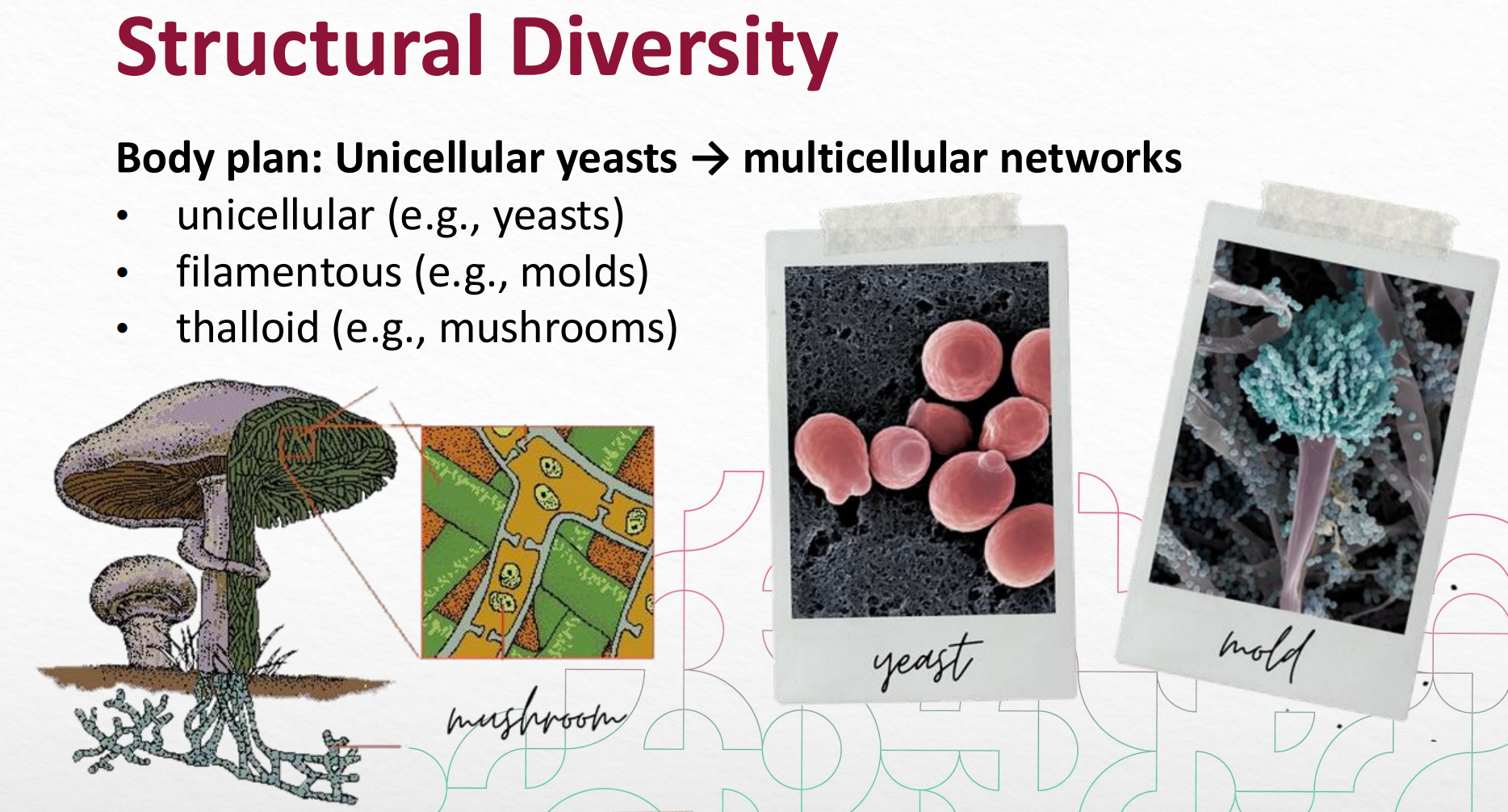
Structural Diversity
Unicellular yeasts → ____________ networks
Adaptations to diverse ecological niches
___________ as the basic structural unit
___________ as absorptive network
hyphae (singular hypha); mycelium (plural mycelia)
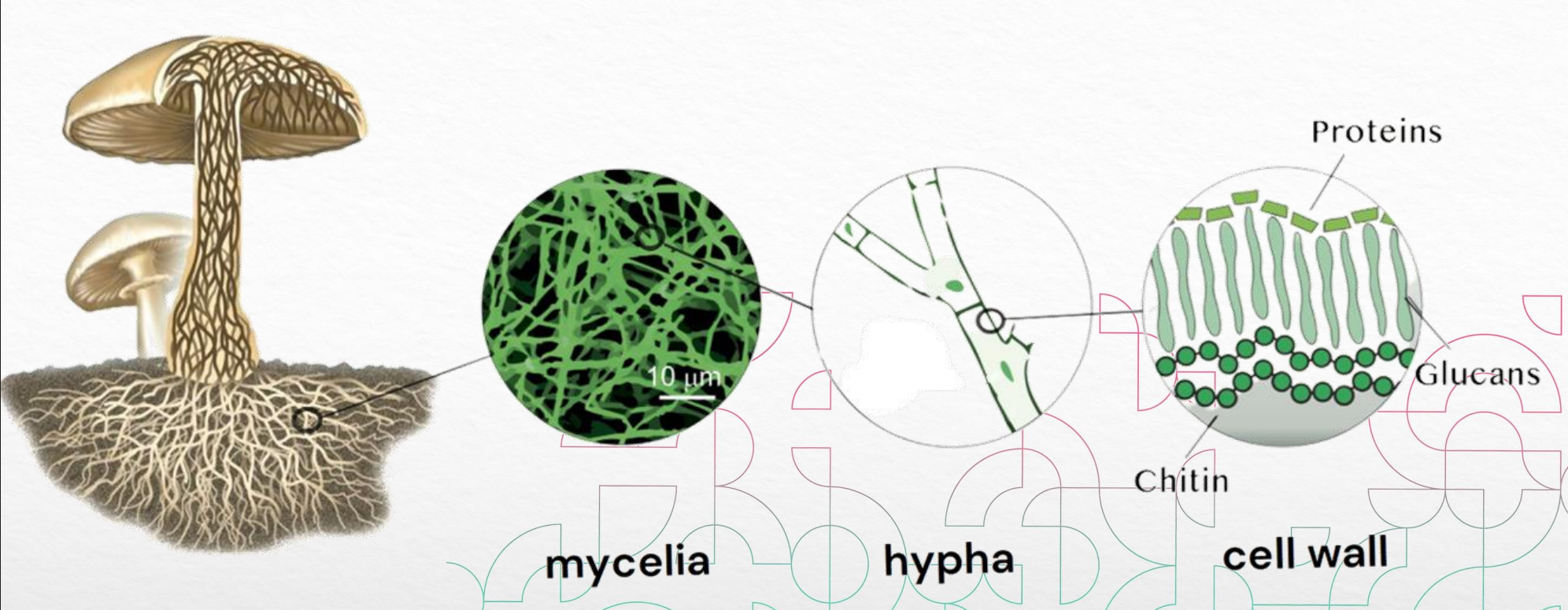
For filamentous and thalloid representatives, individual filaments are called __________________ with several branches forming a network termed as ____________________
Septate
Coenocytic
______________: hyphae with cross-walls, compartmentalization
______________: hyphae with continuous cytoplasm, rapid flow
Absorptive Heterotrophy
exoenzymes
Saprotrophs
Symbionts
Parasites
Nutrition: ________________________
External digestion via _______________
Three nutritional modes:
______________
______________
______________
SAPROTROPHS
______________- decomposers of dead organic matter
Dead Man's Fingers - Ascomycota - Xylaria sp.
Cup-shaped fungi - Ascomycota - 𝘛𝘳𝘪𝘤𝘩𝘢𝘭𝘦𝘶𝘳𝘪𝘯𝘢 sp
Carbon balls - Ascomycota - Daldinia sp.
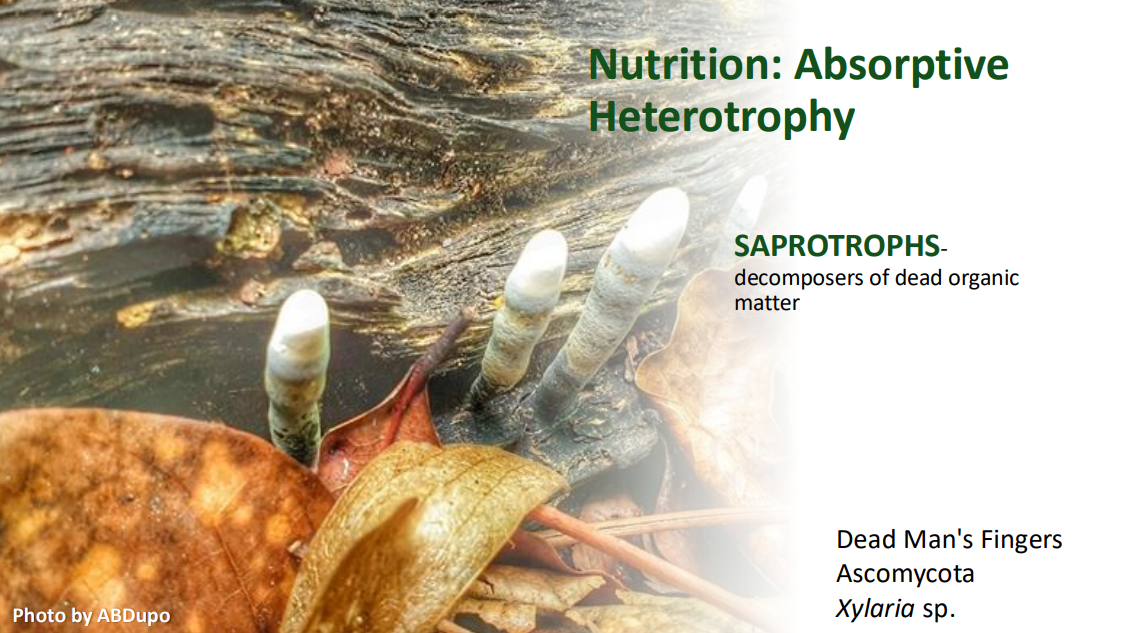
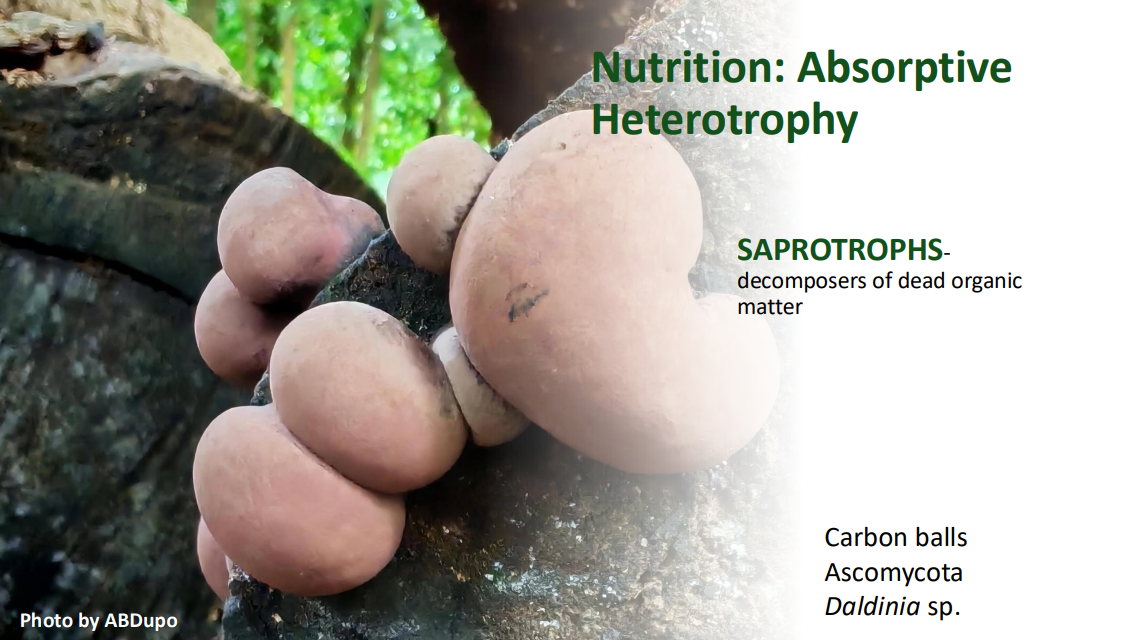
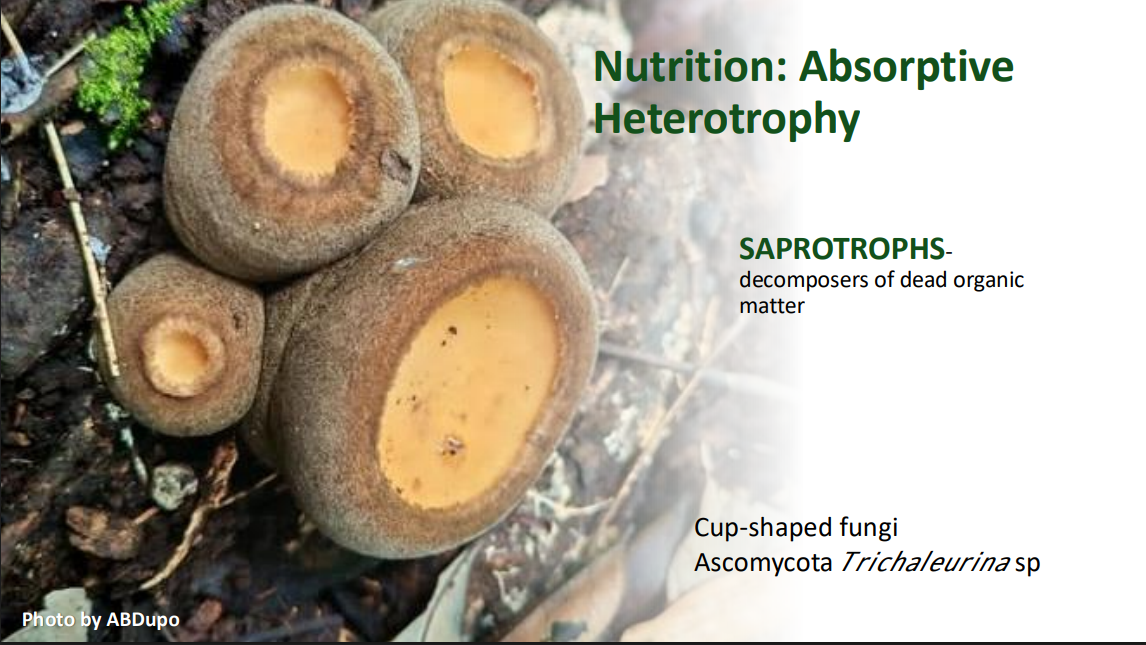
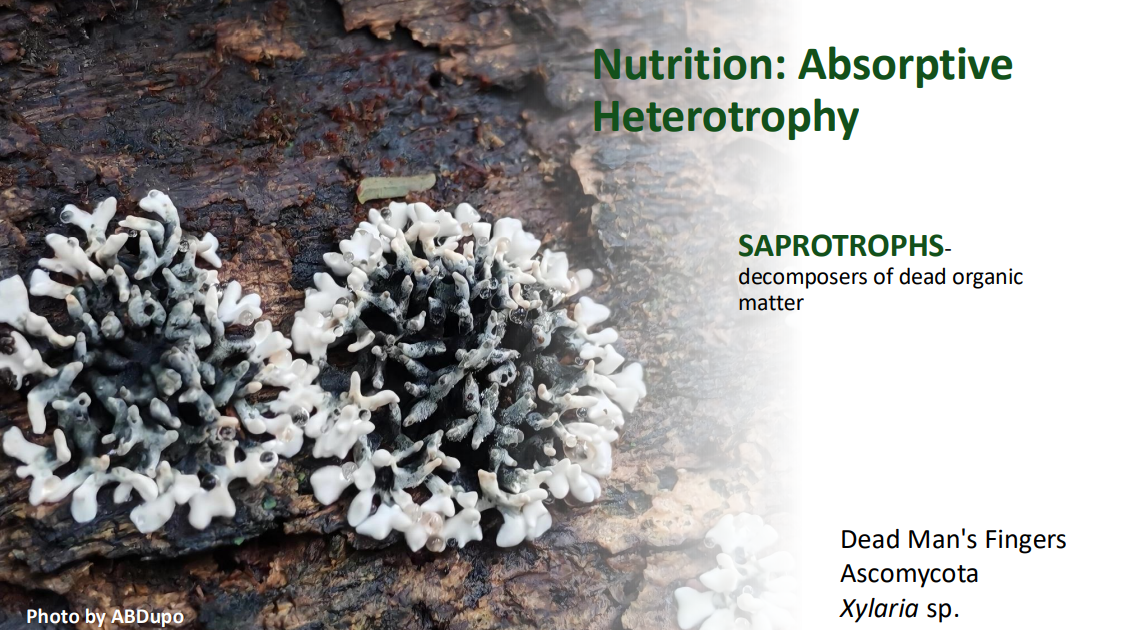
List down all the given examples of SAPROTROPHS.
Common name - Phylum - Scientific name
Common name - Phylum - Scientific name
Common name - Phylum - Scientific name
SYMBIONTS; mycorrhizae
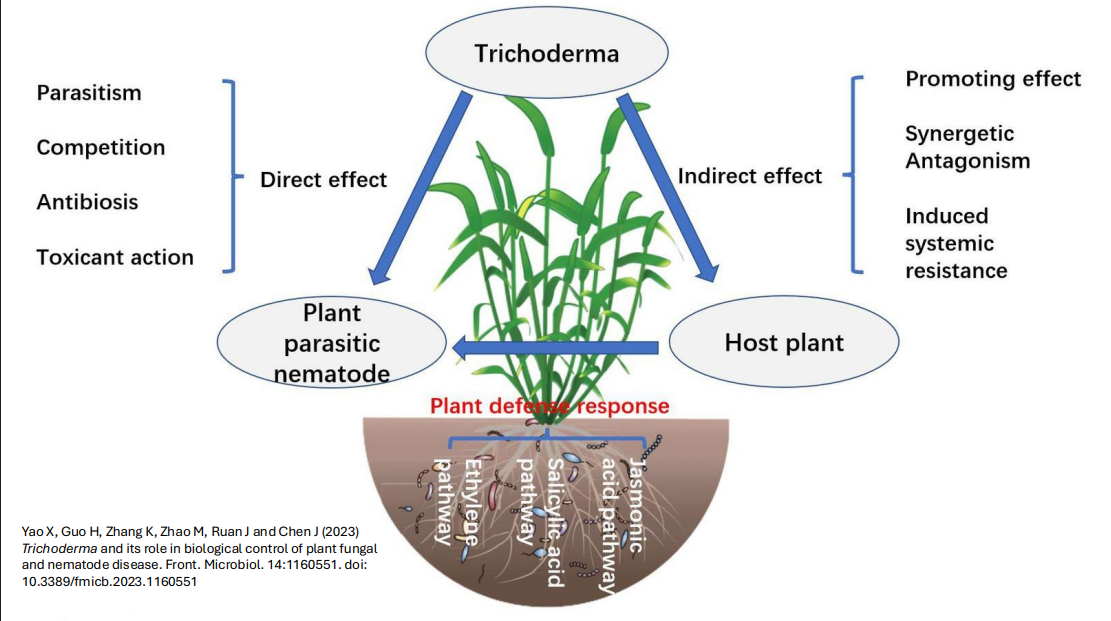
_______________ - partners in mutualistic relationships (e.g., ____________, ______________)
Parasite
_______________ - organisms that extract nutrients from living hosts
BIOTROPHS
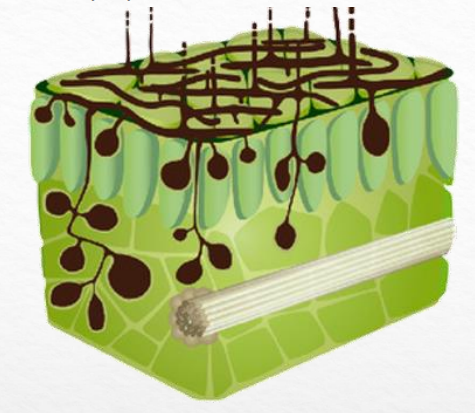
_____________ - fungi which develop in living host tissue and cause symptoms of disease
biotrophs; Ustilago maydis
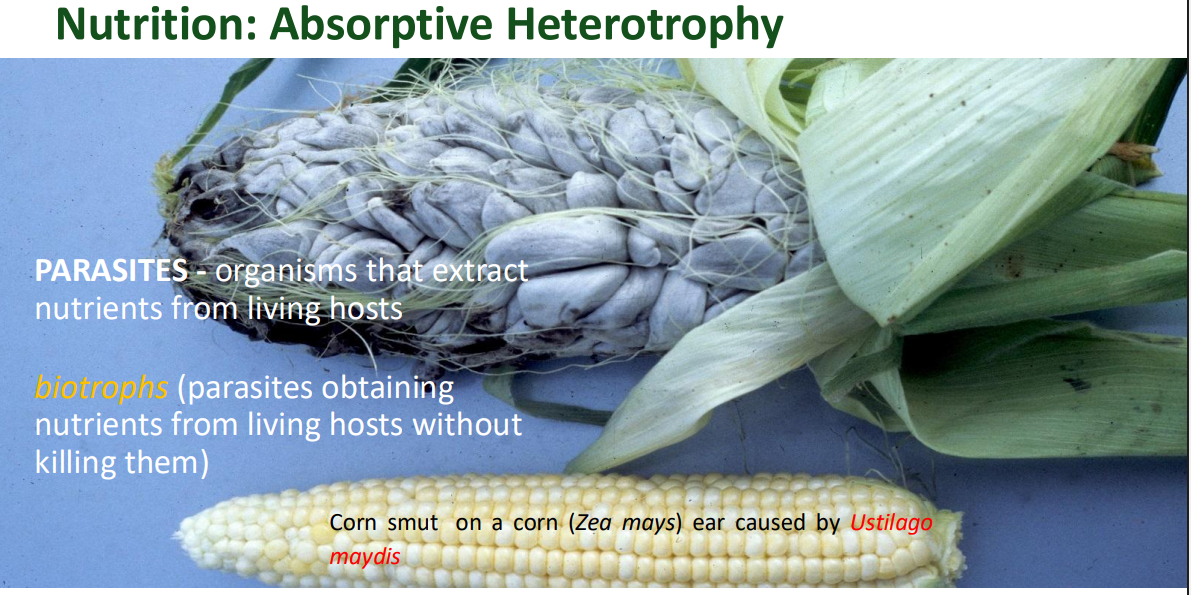
______________ - parasites obtaining nutrients from living hosts without killing them
For example: Corn smut on a corn (Zea mays) ear caused by _________________
NECROTROPHS
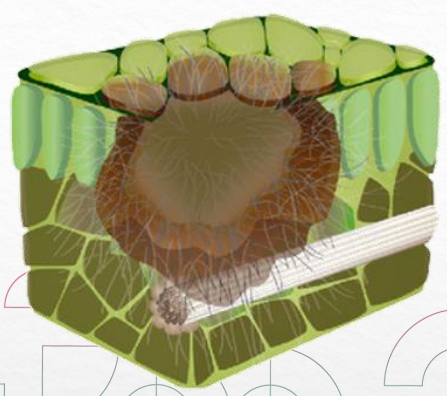
________________ - fungi which actively kill host cells and live in dead tissue
necrotrophs
Ascomycota - Cordyceps
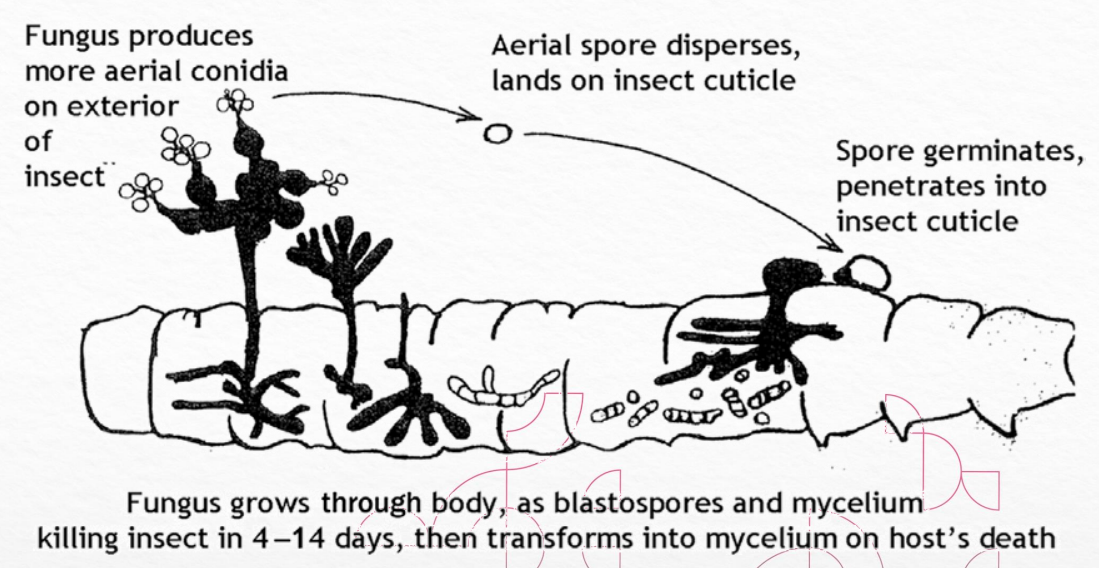
________________ - parasites obtaining nutrients from living hosts, eventually killing them. For example:
Phylum - Genus
Plasmogamy
Karyogamy
Meiosis
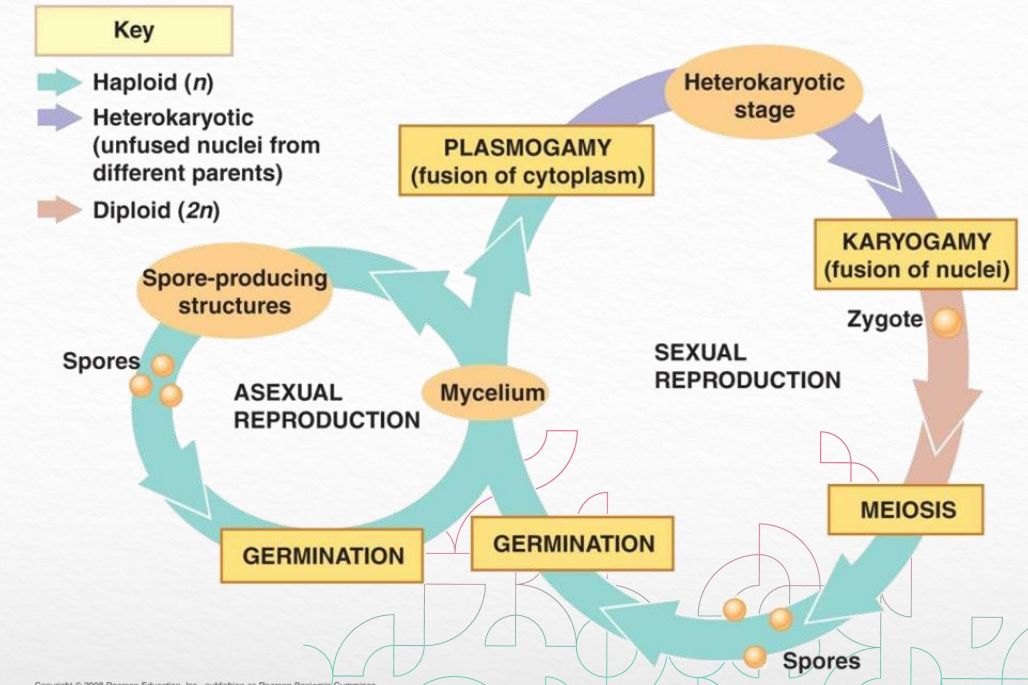
Fungal life cycles are dominated by the haploid (n) stage
_____________ → cytoplasm fuses → dikaryotic (n+ n)
_____________ → nuclei fuse → diploid (2n)
_____________ → spores → haploid (n)
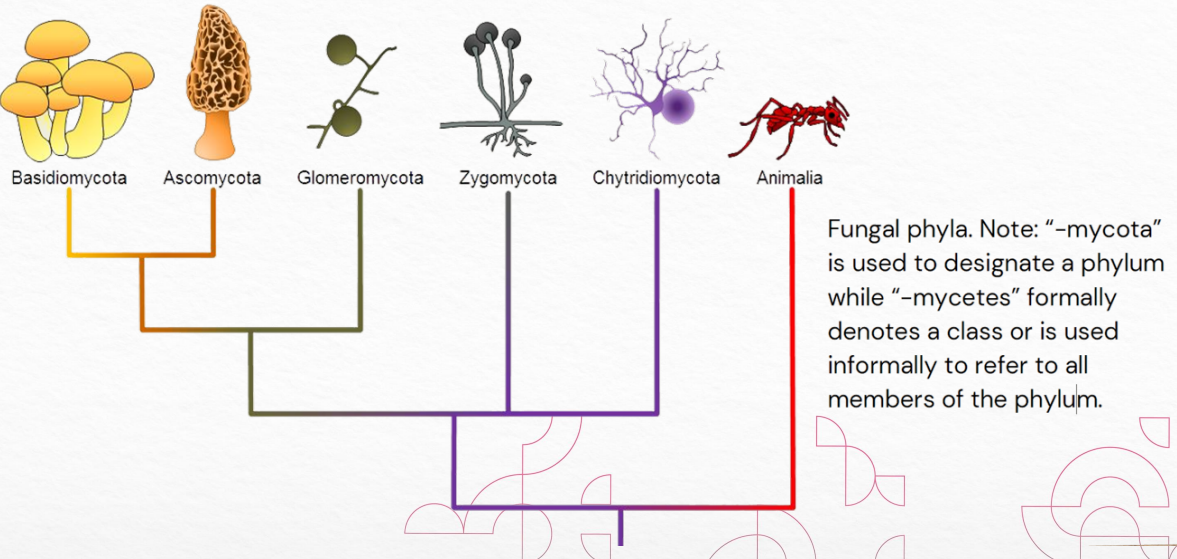
What is the difference between -mycota and -mycetes?
Opisthosporidia,
Chytridiomycota,
Neocallimastigomycota,
Blastocladiomycota,
Zoopagomycota,
Mucoromycota,
Glomeromycota,
Ascomycota, and
Basidiomycota
What are all the 9 Phyla [Naranjo-Ortiz and Gabaldon (2019)] of Fungi?
O___________________
C___________________
N___________________
B___________________
Z___________________
M___________________
G___________________
A___________________
B___________________
Chytridiomycota
Which Fungal Phyla?
distinct in having flagellated motile cells—a characteristic not found in other fungi
Chytridiomycota
Which Fungal Phyla?
mostly water molds found in freshwater
unicellular
most chytrids are ______________
Chytridiomycota
Which Fungal Phyla?
some are parasitic to other water molds, algae, or plants while others feed on detritus
Batrachochytrium dendrobatidis
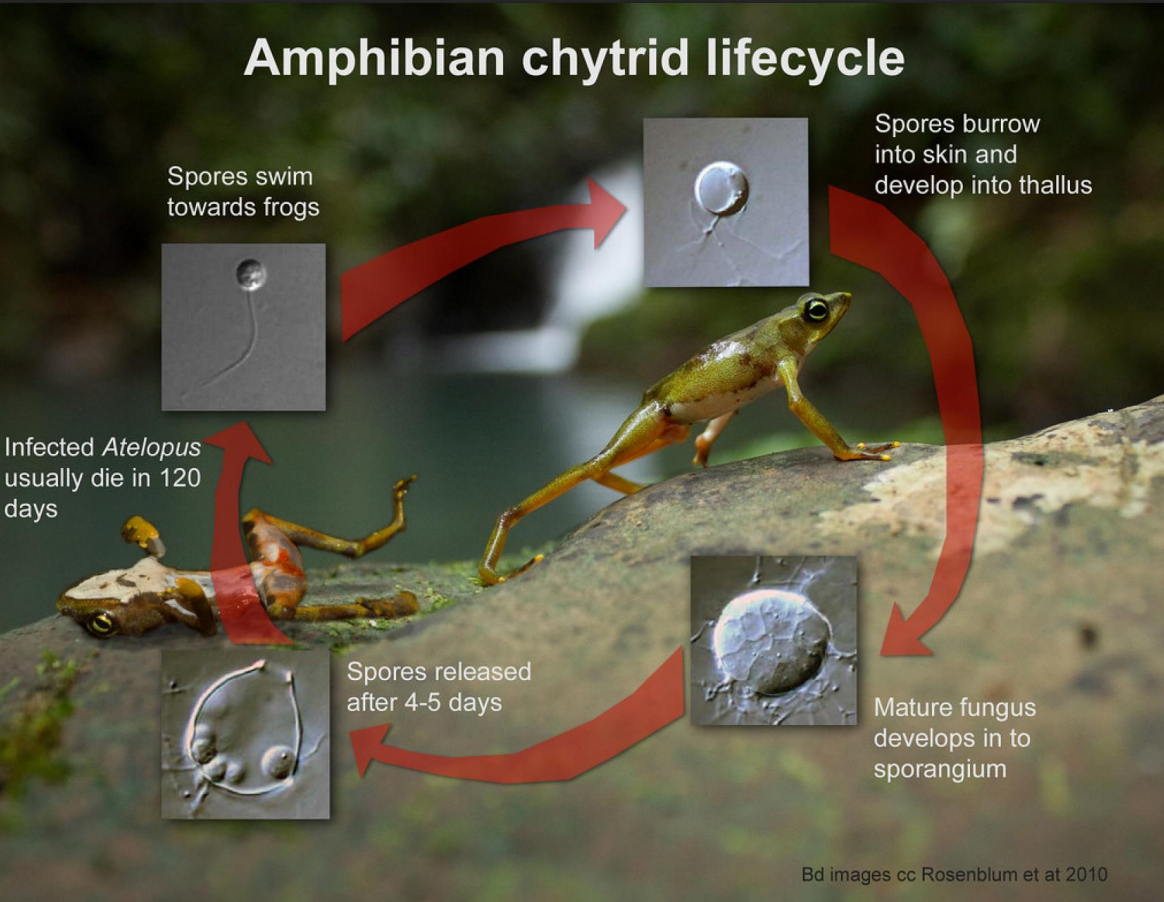
"Amphibian chytrid lifecycle. B_______________m d___________s. Panama."
Mucromycota
Which Fungal Phyla?
includes some members of the now-defunct phylum Zygomycota, e.g. common bread mold (Rhizopus)
Mucromycota
Which Fungal Phyla?
most are saprobes while others are parasites or symbionts
Mucromycota
Which Fungal Phyla?
their hyphae have no septa
Mucromycota
Which Fungal Phyla?
they form thick-walled zygospore after karyogamy
Mucromycota
Which Fungal Phyla?
zygospore often becomes dormant for months before germinating
Mucromycota
Rhizopus oligosporus; R. oryzae
Which Fungal Phyla?
Tempeh is a traditional Javanese food made from fermented soybeans.
During fermentation, ___________________ or ______________ binds the soybeans into a firm cake, serving as the tempeh starter.
Zygomycota
Which Fungal Phyla?
glomeromycetes, are also formerly placed in ______________
Mucromycota and Glomeromycota
What are the two fungal phyla who’s members used to be placed in Zygomycota?
Glomeromycota
Which Fungal Phyla?
do not produce zygospore or any sexual structure
Glomeromycota
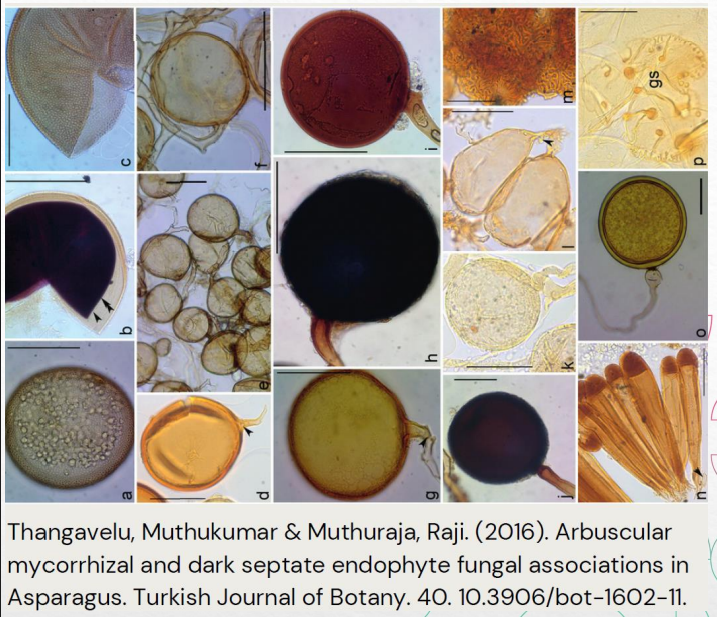
Which Fungal Phyla?
almost all are obligate symbionts of land plants = arbuscular mycorrhiza
Glomeromycota
Which Fungal Phyla?
similar to Mucoromycota, the mycelia lack septa
Ascomycota
Which Fungal Phyla?
the largest fungal phylum
Ascomycota
Which Fungal Phyla?
ascus, the sexual structure containing spores are the defining feature
Saccharomyces; Cookeina
ascomycetes, range from unicellular yeasts (e.g., ________________) to thalloid cup fungi (e.g., ______________)
Ascomycota
Which Fungal Phyla?
They range from unicellular yeasts (e.g., Saccharomyces) to thalloid cup fungi (e.g., Cookeina)
Basidiomycota
Which Fungal Phyla?
second largest group of fungi
Basidiomycota
Which Fungal Phyla?
range from unicellular (e.g., Cryptococcus, a genus of yeasts) to multicellular (e.g.,mushrooms, puffballs, stinkhorns, etc.)
Cryptococcus;
mushrooms; puffballs; stinkhorns
Basidiomycota, range from unicellular (e.g., _______________, a genus of yeasts) to multicellular (e.g., ______________, ___________, ______________, etc.)
Basidiomycota
Which Fungal Phyla?
except for the unicellular representatives, they have bodies composed of hyphae and sexually reproduce through club-shaped cells called basidia
Basidiomycota
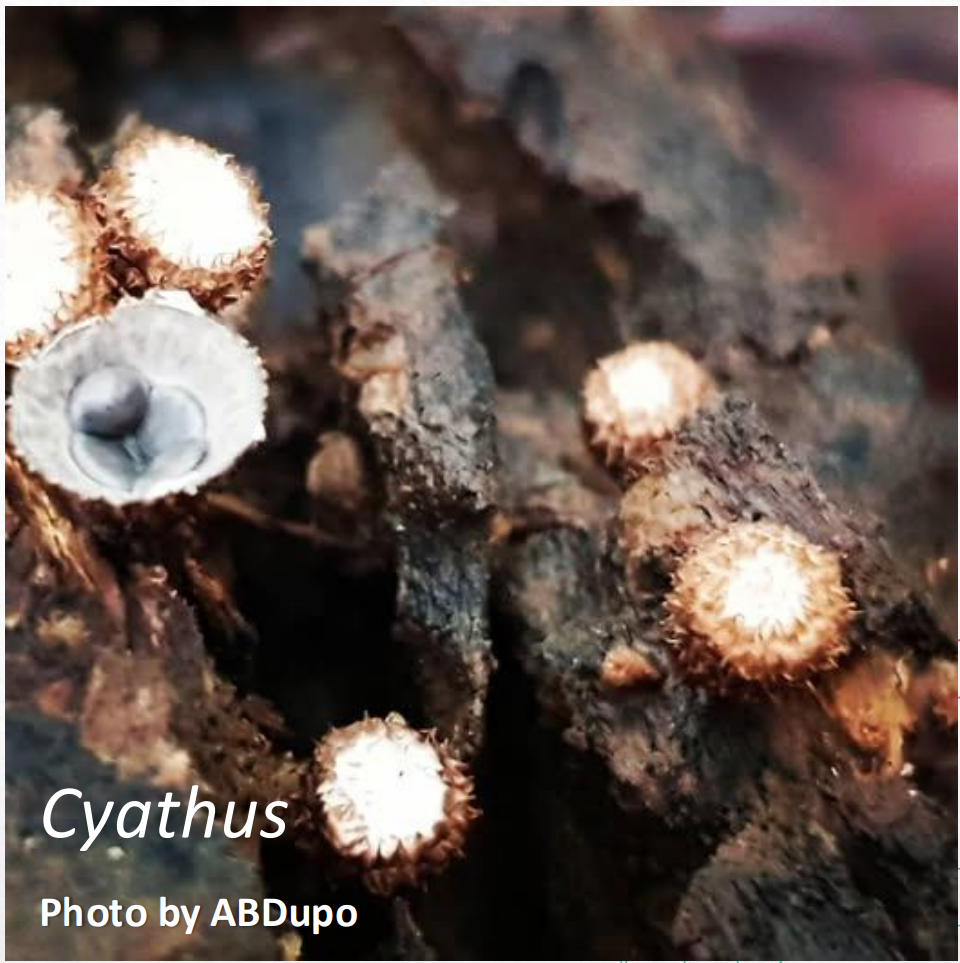
Which Fungal Phyla?
Cyathus
Basidiomycota
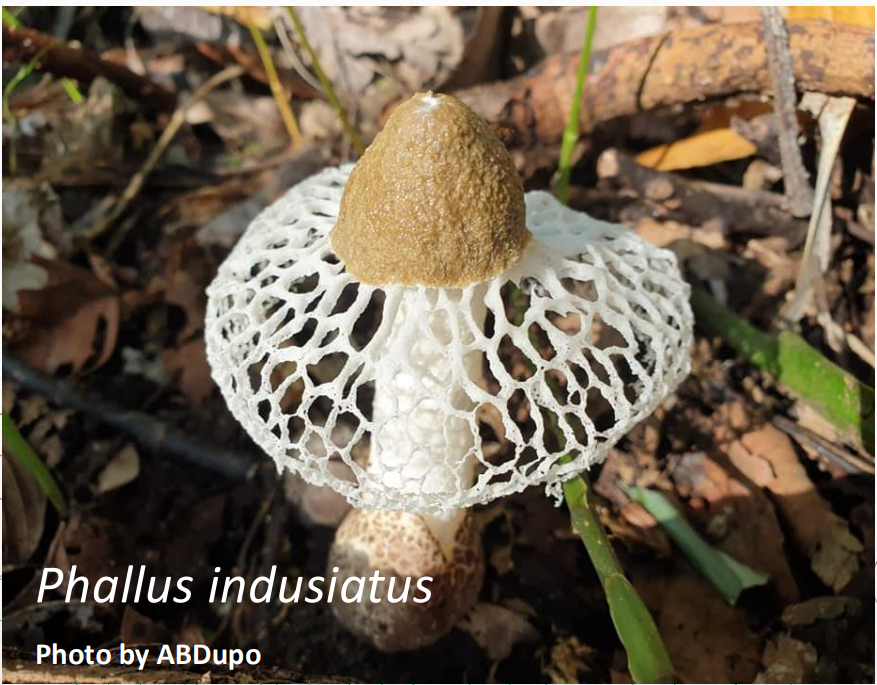
Which Fungal Phyla?
Phallus indusiatus
Dikarya
Ascomycota and Basidiomycota form the ____________
Ascomycota and Basidiomycota
Which Fungal Phyla?
Their shared feature is the prolonged dikaryotic stage, which supports complex multicellular structures
Ecological Engineers
Symbiotic Innovators
Industrial & Medical Workhorses
Ecological Importance
_______________________
_______________________
_______________________
lignin; cellulose
Ecological Importance of Fungi - Ecological Engineers
Decomposition of __________, ___________
Nutrient recycling
Ecosystem stability
Mycorrhizae
Lichens
Ecological Importance of Fungi - Ecological Engineers
____________: 10–100× nutrient uptake
____________: soil formation, colonization of bare rock
Fermentation
Antibiotics
Applications of fungi in medical sciences include the use of antibiotics such as penicillin, which is derived from Penicillium
Ecological Importance of Fungi - Industrial & Medical Workhorses
_____________: bread, beer, wine
_____________: penicillin
Enzymes for detergents, food processing, biotech