Biology makeup test lectures 1-7
 Call Kai
 Learn
Learn Practice Test
 Spaced Repetition
 Match
Match Flashcards
 Knowt Play
1/396

There's no tags or description
Looks like no tags are added yet.
Name | Mastery | Learn | Test | Matching | Spaced | Call with Kai |
|---|
No analytics yet
Send a link to your students to track their progress
397 Terms
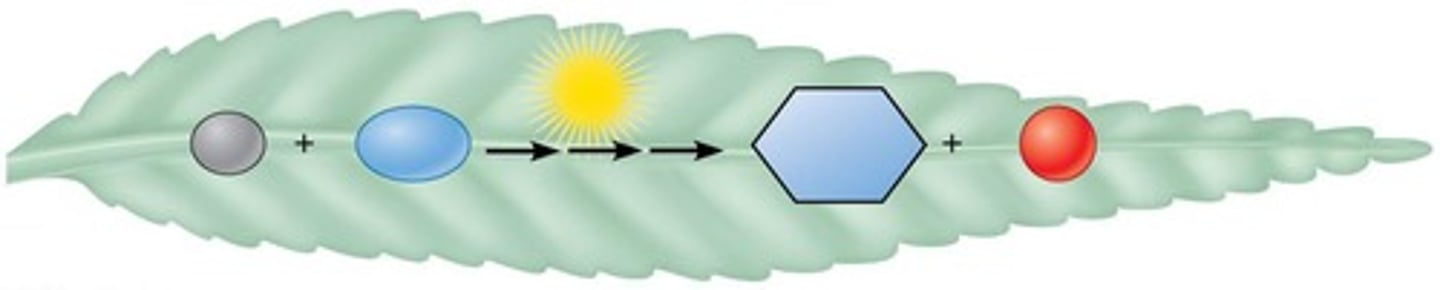
What is the primary function of photosynthesis?
To convert solar energy into the chemical energy of food molecules (glucose).
What energy form does photosynthesis require?
Sunlight energy.
What are the main products of photosynthesis?
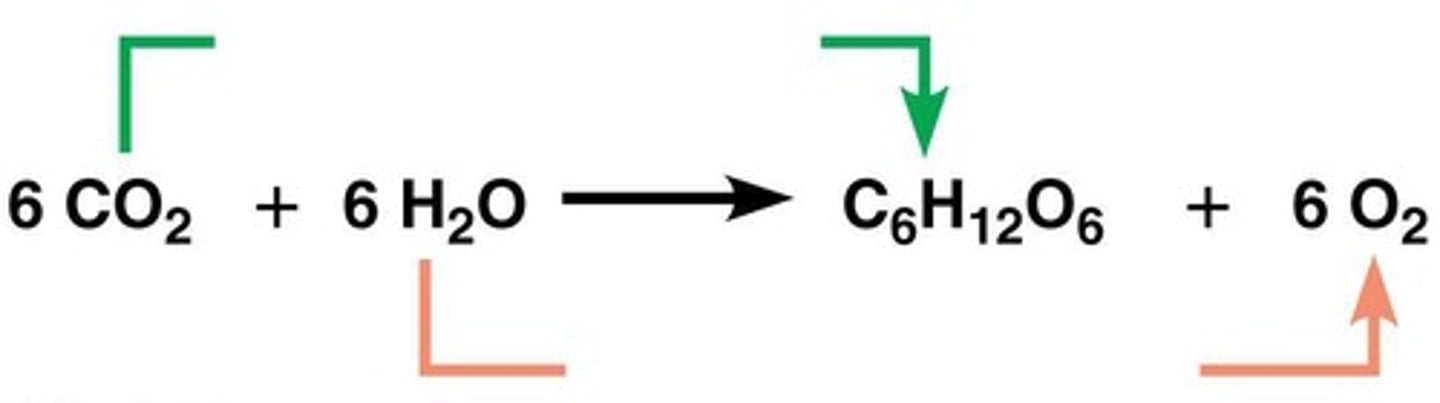
Glucose (C6H12O6) and oxygen (O2).
What are the main reactants in photosynthesis?
Carbon dioxide (CO2) and water (H2O).
How does photosynthesis relate to cellular respiration?
Photosynthesis is the opposite redox reaction of cellular respiration.
What happens to carbon dioxide during photosynthesis?
It gains hydrogens (and electrons) and becomes reduced.
What happens to water during photosynthesis?
It loses hydrogens (and electrons) and becomes oxidized.
Where does photosynthesis primarily occur in plants?
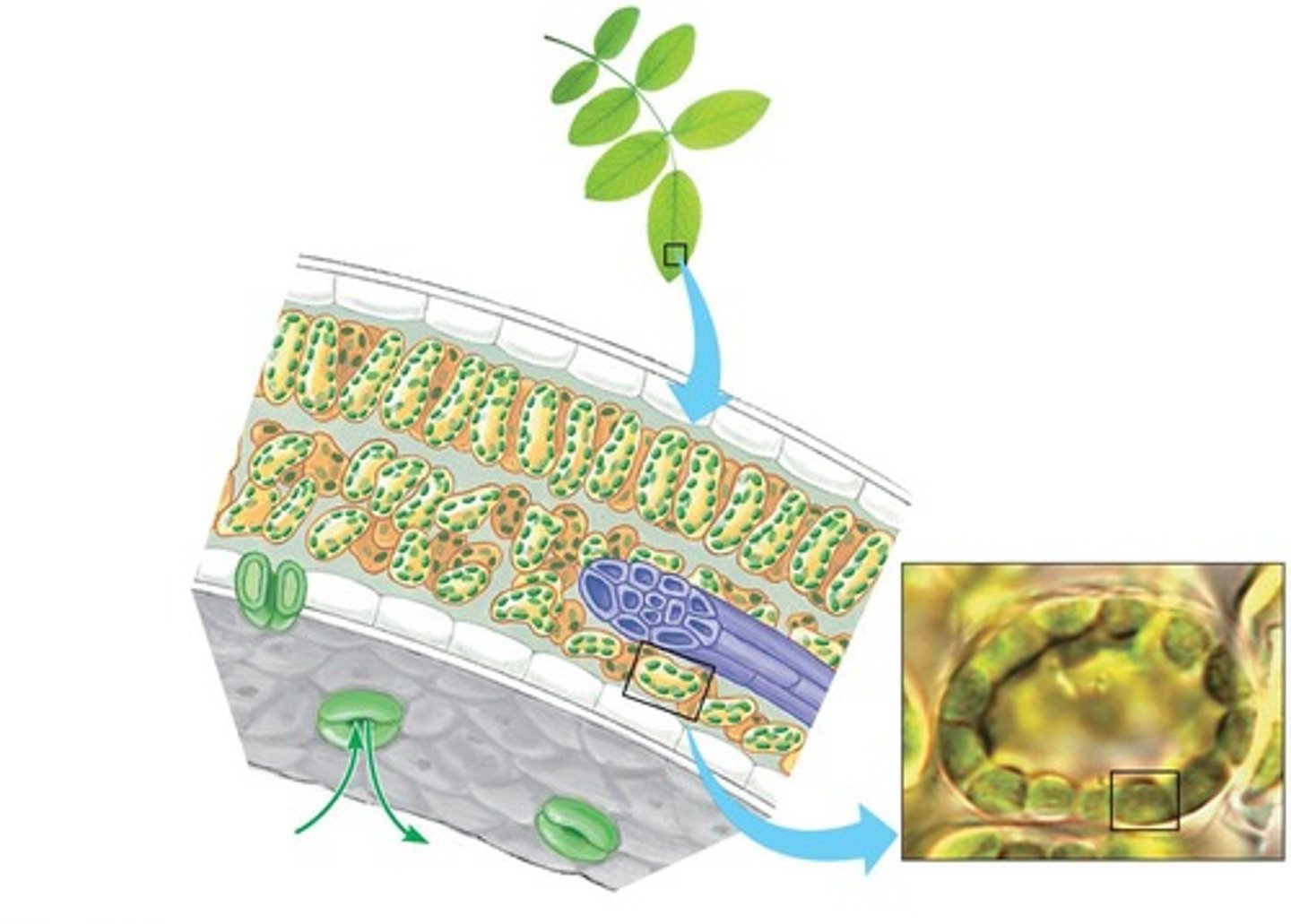
In the leaves.
What structures in leaves allow gas exchange?
Pores called stomata.
What is the function of xylem in plants?
To transport water from the roots to the leaves.
What is the function of phloem in plants?
To transport glucose from the leaves to the rest of the plant.
What are mesophyll cells?
Cells within the leaves that contain abundant chloroplasts for photosynthesis.
What type of energy is sunlight classified as?
Electromagnetic energy.
How does the wavelength of light relate to its energy?
The shorter the wavelength, the higher the energy.
What wavelengths of visible light do chlorophyll pigments absorb?
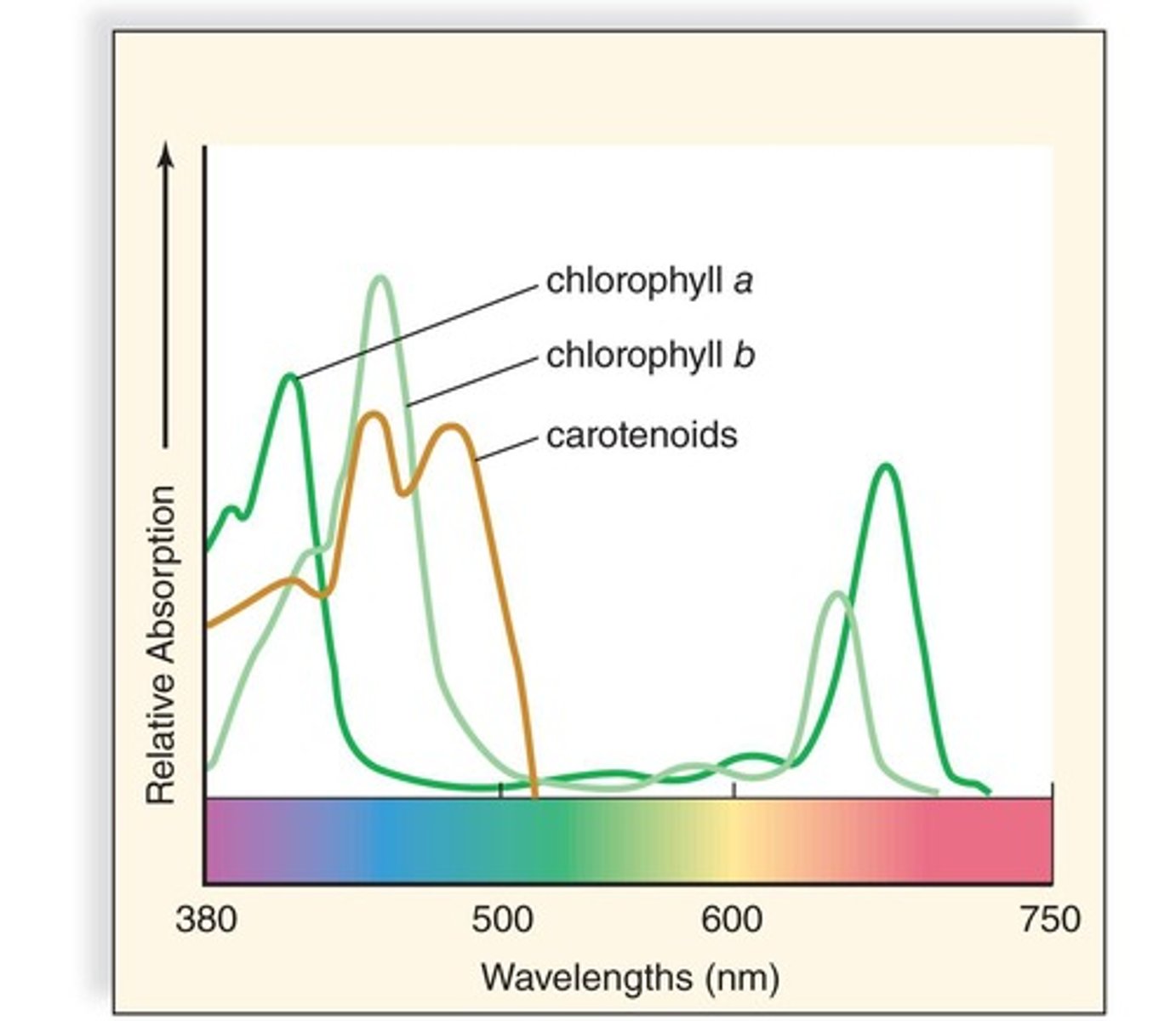
Chlorophyll absorbs light in the blue and red regions of the visible spectrum.
Which wavelength is not absorbed by chlorophyll?
Green wavelengths are not absorbed and are reflected.
What is the role of chlorophyll in photosynthesis?
To capture sunlight energy.
What is the electromagnetic spectrum?
The range of all types of electromagnetic radiation, from very short to very long wavelengths.
What is the significance of the color of an object in relation to light?
The color is the wavelength of visible light reflected by the object; all other wavelengths are absorbed.
What are the two types of chlorophyll found in chloroplasts?
Chlorophyll a and chlorophyll b.
What is the primary pigment involved in photosynthesis?
Chlorophyll.
What is the primary function of chlorophyll in photosynthesis?
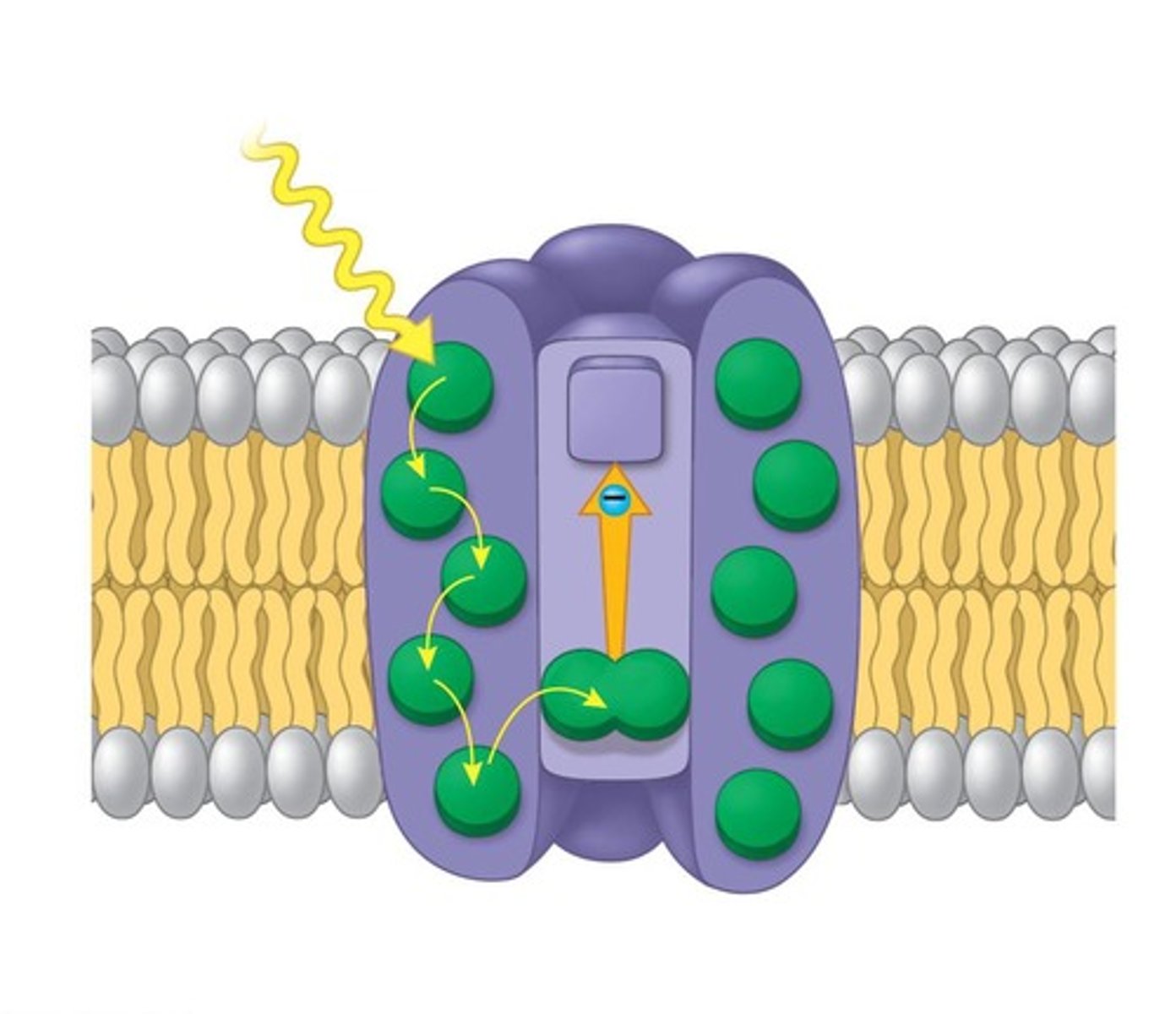
Chlorophyll absorbs light energy to boost electrons to a high-energy state.
What are carotenoids?
Pigment molecules that absorb specific wavelengths of light and are visible in flowers, fruits, and autumn leaves.
What are the two main stages of photosynthesis?
Light reactions and the Calvin cycle.
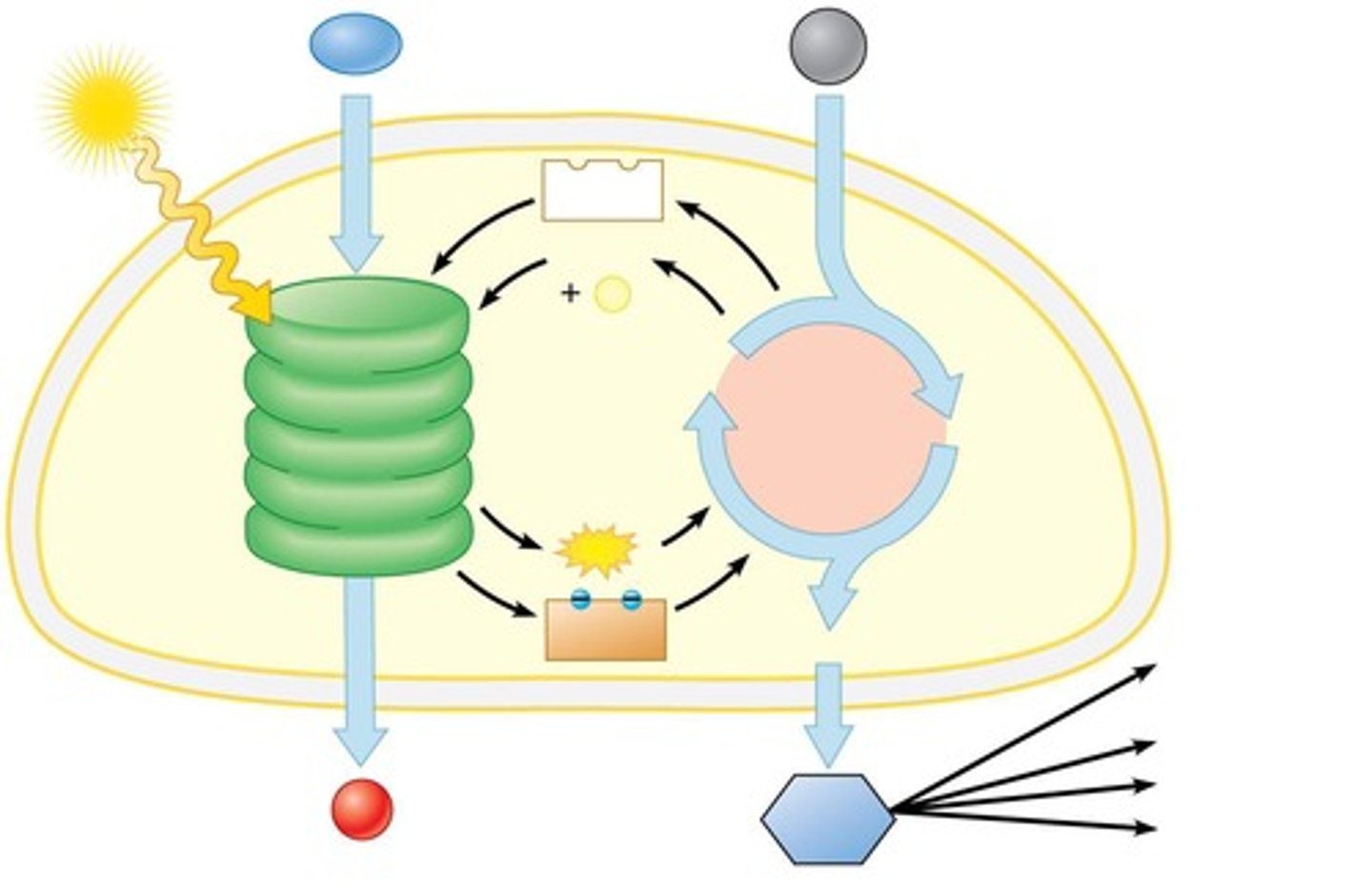
Where do light reactions occur in the chloroplast?
On the thylakoid membranes.
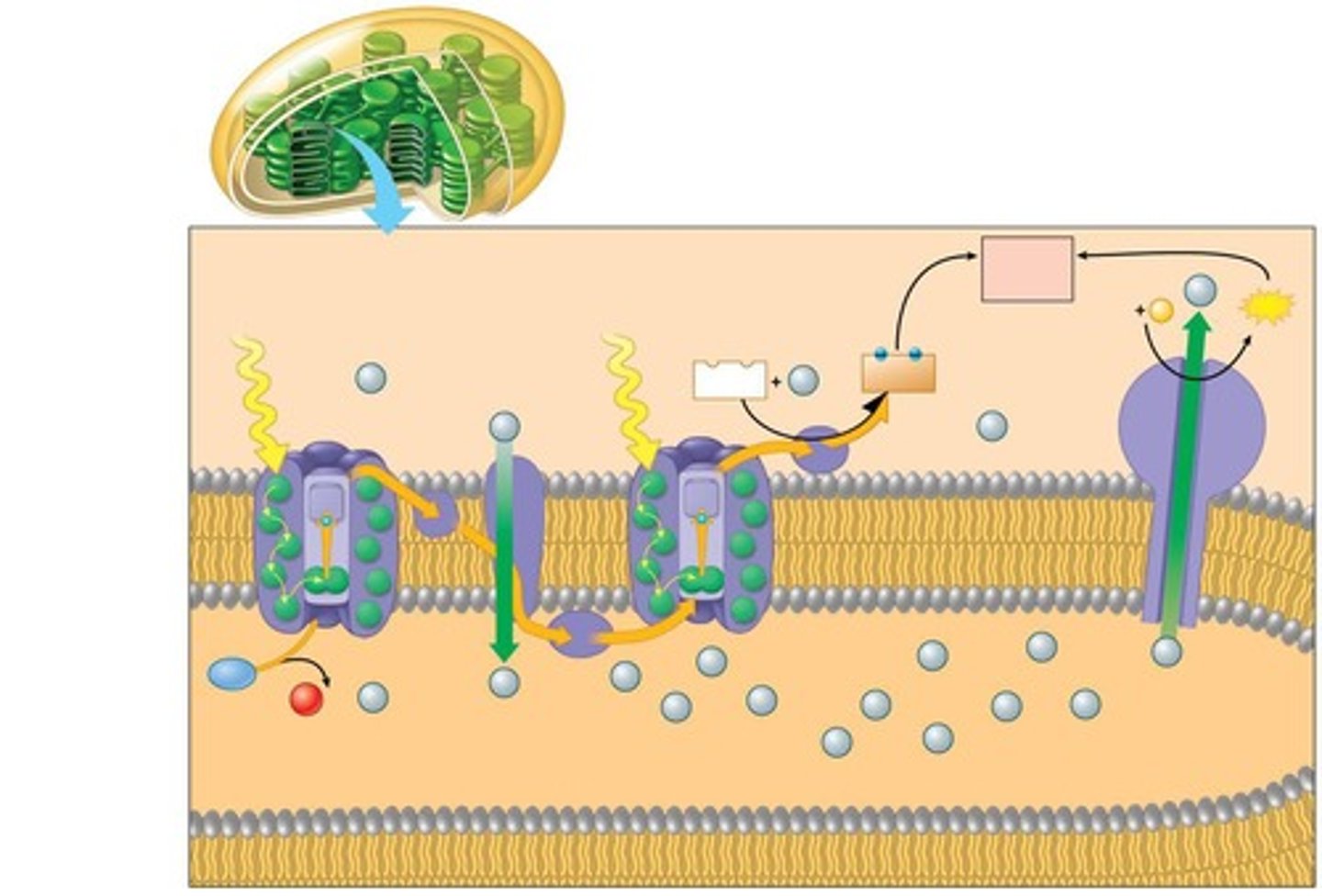
What are the products of the light reactions?
Oxygen, ATP, and NADPH.
What is the role of NADPH in photosynthesis?
NADPH carries high-energy electrons to the Calvin cycle.
What is the Calvin cycle's primary function?
To produce glucose using ATP and NADPH from the light reactions.
What enzyme catalyzes the binding of CO2 in the Calvin cycle?
Rubisco.
What happens to the 6-carbon molecule formed in the Calvin cycle?
It immediately splits into two 3-carbon molecules called 3-PGA.
How many turns of the Calvin cycle are needed to produce one glucose molecule?
Two turns are needed to produce two G3P molecules that combine to form glucose.
What is the significance of ATP in photosynthesis?
ATP is produced during light reactions but consumed in the Calvin cycle.
What is the primary electron acceptor in Photosystem II?
The primary electron acceptor traps the high-energy electron from chlorophyll.
What is the purpose of the electron transport chain in photosynthesis?
To transfer electrons from Photosystem II to Photosystem I, generating ATP and NADPH.
What is the role of H+ ions in ATP synthesis during photosynthesis?
H+ ions move through ATP synthase, converting potential energy into kinetic energy to synthesize ATP.
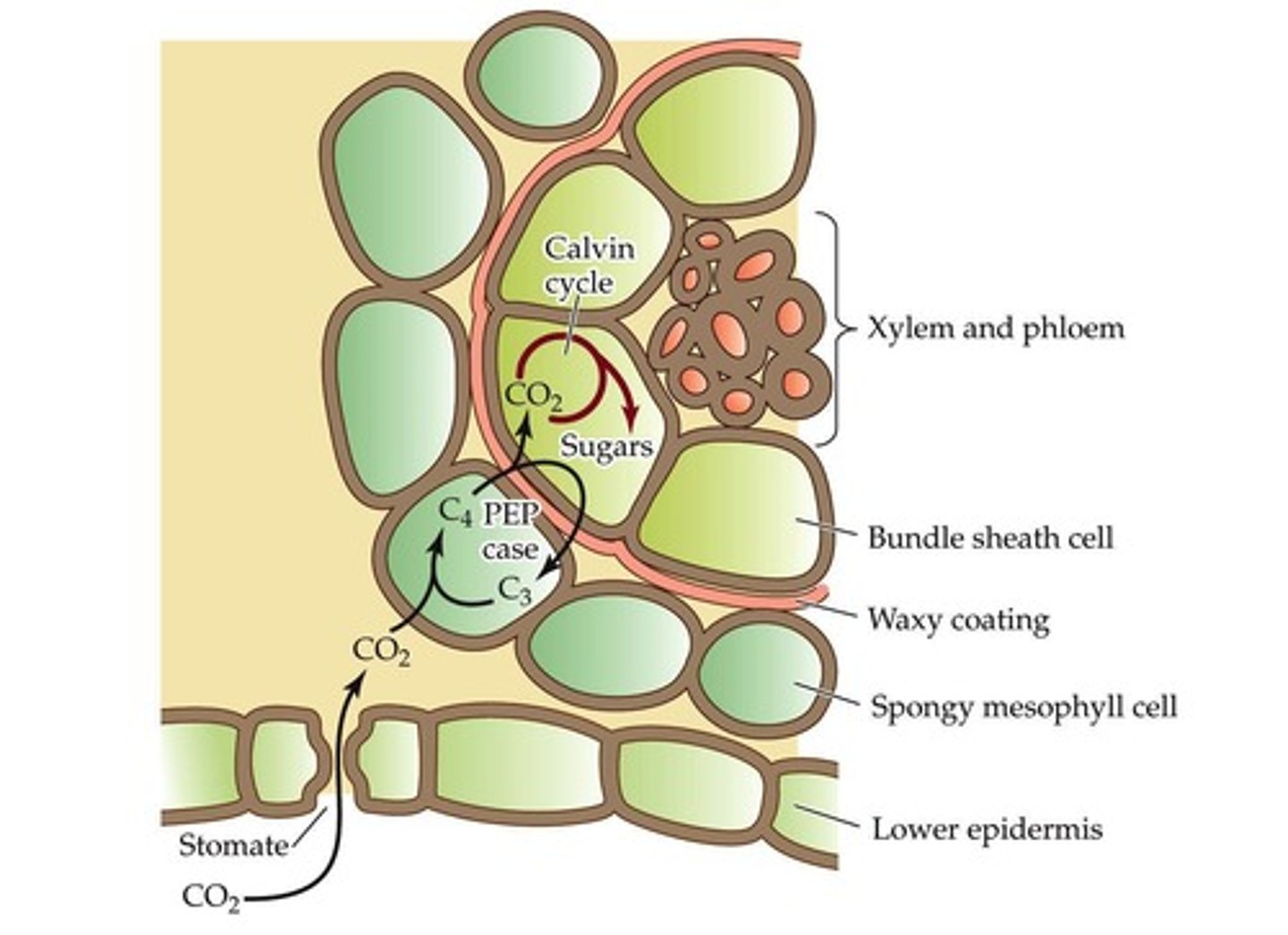
What is the difference between C3, C4, and CAM plants?
C3 plants fix CO2 directly, C4 plants separate CO2 fixation and the Calvin cycle spatially, and CAM plants fix CO2 at night.
What is water use efficiency (WUE)?
WUE relates the amount of CO2 entering a plant to the amount of H2O lost.
What adaptation do C4 plants have for increasing WUE?
They use PEP carboxylase to bind CO2, which reduces the impact of O2.
How do CAM plants conserve water?
They open their stomata at night to minimize water loss.
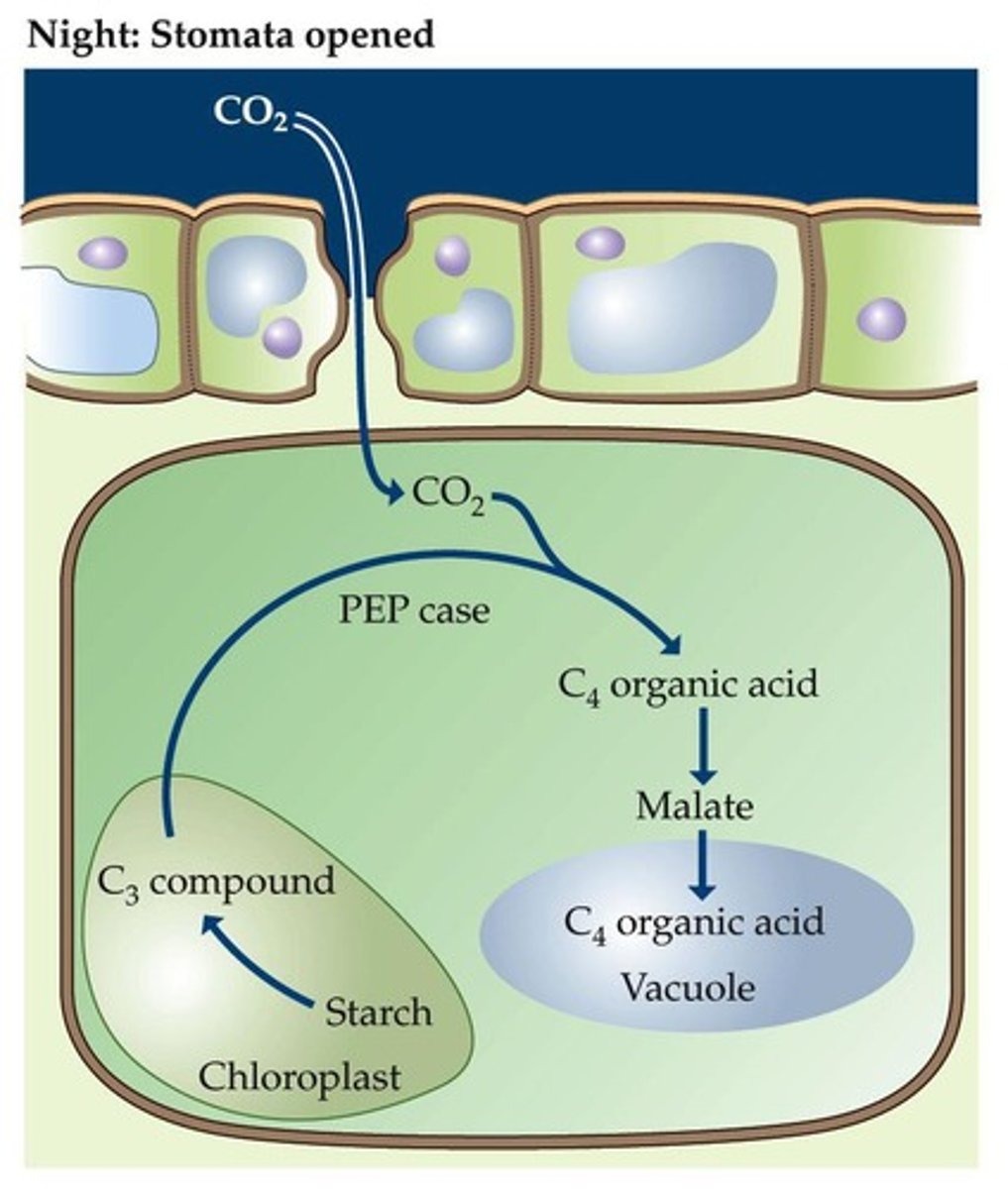
What is the outcome of the Calvin cycle?
The production of G3P, which can be converted into glucose.
What is the role of light in the light reactions?
Light provides energy to excite electrons in chlorophyll.
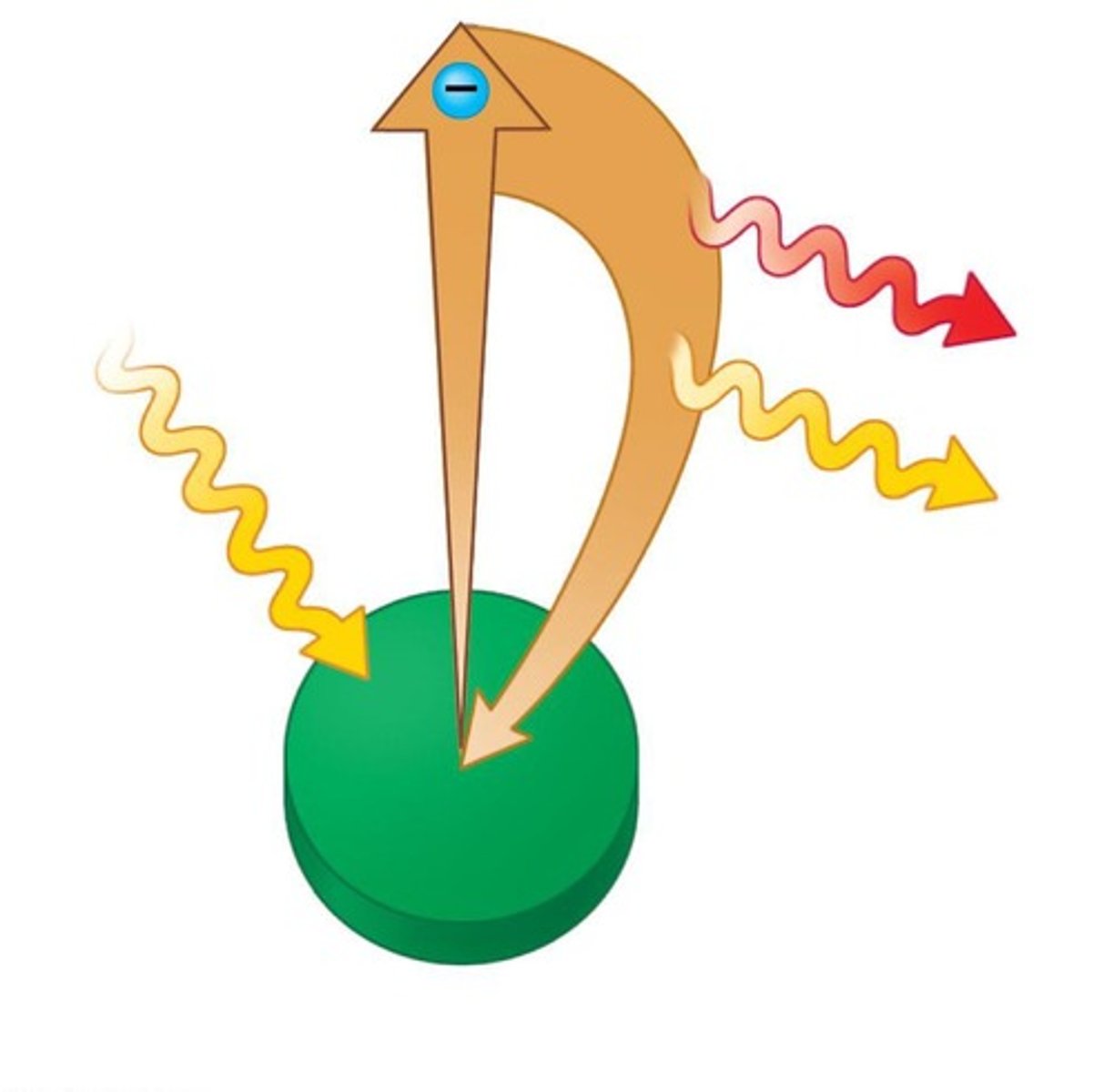
What is fluorescence in the context of chlorophyll?
Fluorescence is the release of energy as heat when an excited electron returns to its ground state.
What is the significance of the thylakoid membrane?
It houses the photosystems and is where the light reactions occur.
What happens to the electrons lost from chlorophyll in Photosystem II?
They are replaced by electrons from water, which is split to release oxygen.
What does the Calvin cycle produce from carbon dioxide?
Glucose, which can be used as fuel or stored.
How does the ATP synthase enzyme function?
It synthesizes ATP as H+ ions flow through it, converting potential energy into chemical energy.
What is the final product of the Calvin cycle after two turns?
Two G3P molecules, which can combine to form glucose.
What is the relationship between light reactions and the Calvin cycle?
The Calvin cycle requires ATP and NADPH produced in the light reactions to synthesize glucose.
What is the importance of the primary electron acceptor in Photosystem I?
It transfers the excited electron to NADP+, forming NADPH.
What is the role of water in photosynthesis?
Water is split to provide electrons and protons, and oxygen is released as a byproduct.
What is the relationship between photosynthesis and cellular respiration?
Photosynthesis is the opposite redox reaction of cellular respiration.
What are the main inputs of photosynthesis?
Carbon dioxide (CO2) and water (H2O).
What are the main outputs of photosynthesis?
Glucose (C6H12O6) and oxygen (O2).
What role do roots play in photosynthesis?
Roots take in water from the soil and transport it to the leaves.
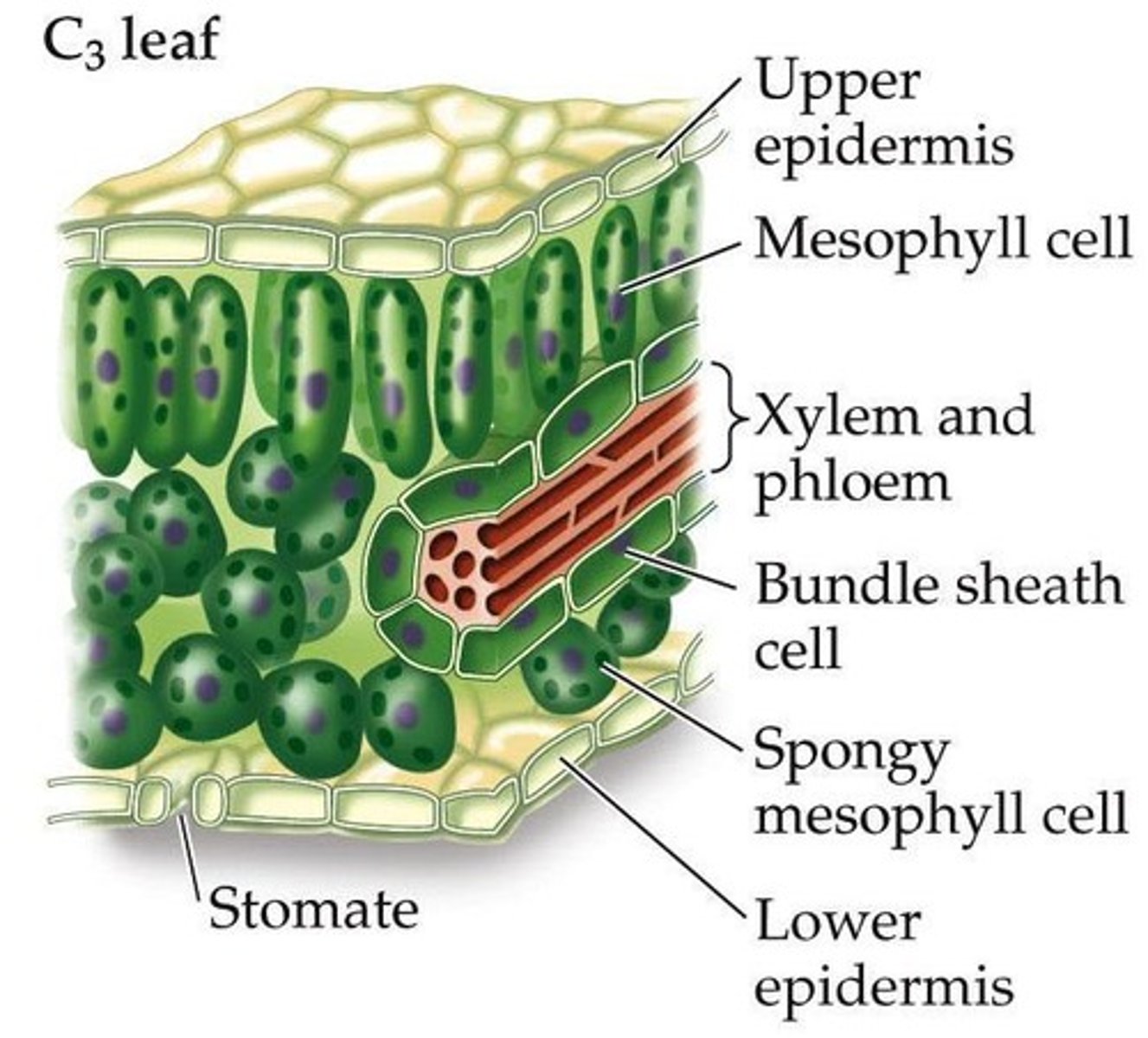
What are stomata?
Pores in leaves that allow CO2 to enter and O2 to exit.
What is the role of mesophyll cells in photosynthesis?
They contain abundant chloroplasts for photosynthesis.
What is sunlight in terms of energy?
A form of electromagnetic energy that travels as waves.
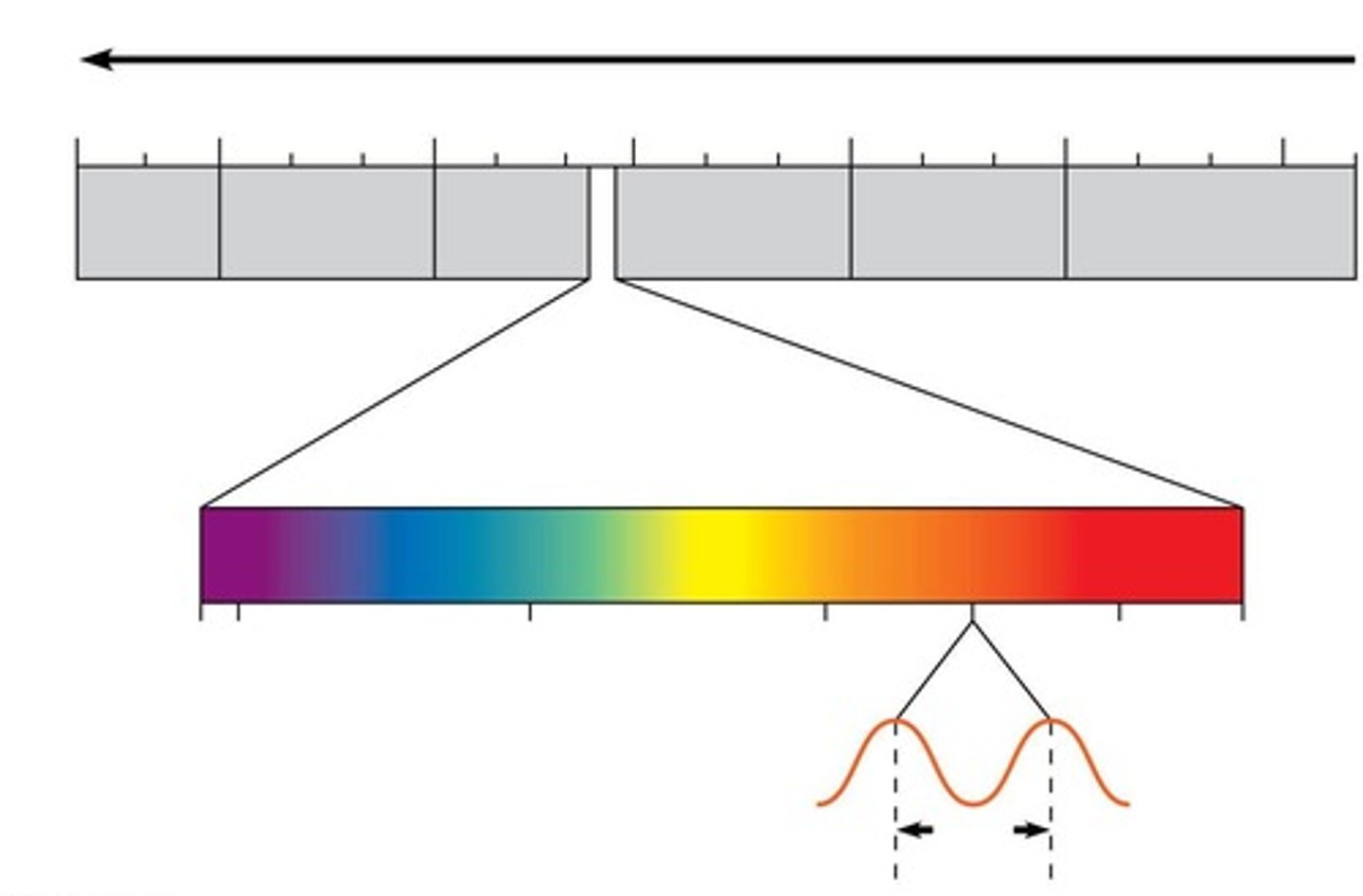
How does wavelength relate to energy in sunlight?
The shorter the wavelength, the higher the energy.
What pigments are involved in capturing sunlight energy?
Chlorophyll (a and b) and carotenoids.
Which wavelengths of light do chlorophyll pigments absorb?
Chlorophyll absorbs visible light in the blue and red regions.
What happens to the absorbed light energy in chlorophyll?
It boosts an electron to a high-energy excited state.
What is NADPH's role in photosynthesis?
It carries high-energy electrons to the Calvin cycle.
Where do light reactions occur?
On the thylakoid membranes of chloroplasts.
What do light reactions produce?
Oxygen, ATP, and NADPH.
Where does the Calvin cycle occur?
In the stroma of chloroplasts.
What is the primary enzyme involved in carbon fixation in the Calvin cycle?
Rubisco.
What is the first product formed when CO2 enters the Calvin cycle?
A 6-carbon molecule that immediately splits into two 3-carbon molecules (3-PGA).
What happens to G3P molecules in the Calvin cycle?
One G3P exits the cycle, while five are used to regenerate RuBP.
What is the significance of water use efficiency (WUE) in plants?
It relates the amount of CO2 entering the plant to the amount of H2O lost.
What is the C4 pathway?
A photosynthetic pathway that binds CO2 to PEPcase, minimizing O2 interference.
What is the CAM pathway?
A strategy where stomata open at night to minimize water loss.
Why are most plants C3 plants?
C3 pathways require less energy, making them more efficient in moderate environments.
What is the role of ATP in photosynthesis?
ATP provides energy for the Calvin cycle but is consumed during the process.
What happens to the excited electron in Photosystem II?
It is transferred to the primary electron acceptor and lost from the chlorophyll molecule.
How is ATP synthesized during the light reactions?
Through chemiosmosis as H+ ions flow back through ATP synthase.
What is the significance of the electron transport chain in photosynthesis?
It connects Photosystem II to Photosystem I and helps generate ATP.
What is the final product of two turns of the Calvin cycle?
Two G3P molecules combine to form one glucose molecule.
What is the impact of high WUE in plants?
It indicates efficient CO2 uptake relative to water loss.
What is the role of carotenoids in photosynthesis?
They absorb wavelengths not absorbed by chlorophyll and help capture light energy.
What is the importance of chloroplasts in plant cells?
They are the sites of photosynthesis, containing chlorophyll and other pigments.
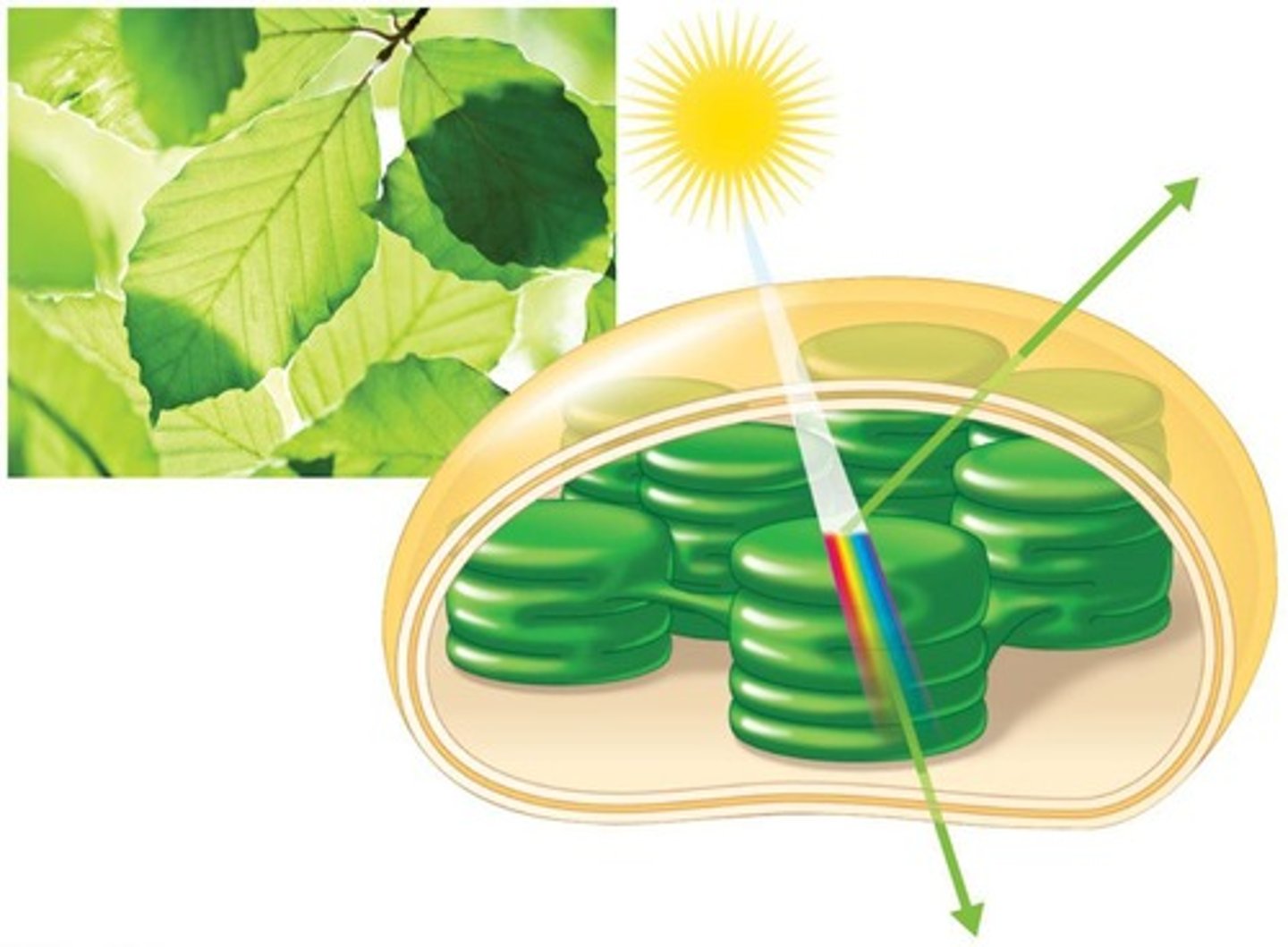
What is the role of the thylakoid membrane?
It hosts the light reactions of photosynthesis.
What is the purpose of the Calvin cycle?
To produce glucose from the ATP and NADPH generated in the light reactions.
What happens to the oxygen produced during photosynthesis?
It is released as a byproduct into the atmosphere.
What is biology?
Biology is the scientific study of life.
What distinguishes life from non-life?
Life is characterized by properties such as order, energy processing, regulation, response to the environment, reproduction, growth and development, and evolutionary adaptation.
What are the levels at which biologists study life?
Biologists study life at levels ranging from the biosphere to the submicroscopic, including ecosystems, communities, populations, organisms, cells, organelles, molecules, atoms, and tissues.
What are emergent properties?
Emergent properties are new characteristics that arise at each level of biological organization due to the interactions of parts within lower levels.
What is the lowest level in the biological hierarchy that can be considered alive?
The cell is the lowest level in the biological hierarchy that can be considered alive.
What are the two types of cells?
The two types of cells are prokaryotic and eukaryotic.
What is taxonomy?
Taxonomy is the science of naming and classifying organisms.
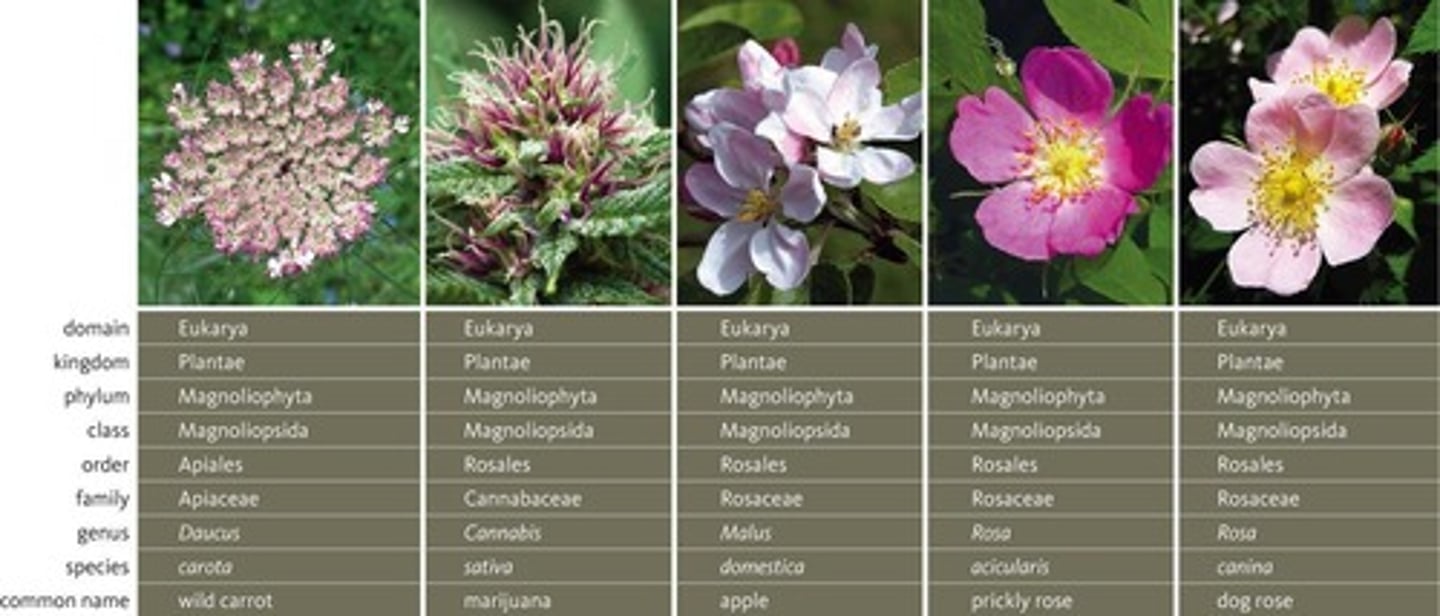
Who established the system of taxonomy?
Taxonomy was established by Carl Linnaeus in the mid-1700s.
What are the two components of taxonomy?
The two components of taxonomy are nomenclature (naming species) and classification (categorizing species).
What is binomial nomenclature?
Binomial nomenclature is a two-part naming system for species, consisting of the genus and specific epithet.
What are the eight levels of hierarchical classification?
The eight levels are Domain, Kingdom, Phylum, Class, Order, Family, Genus, and Species.
What are the three domains of life?
The three domains of life are Bacteria, Archaea, and Eukarya.
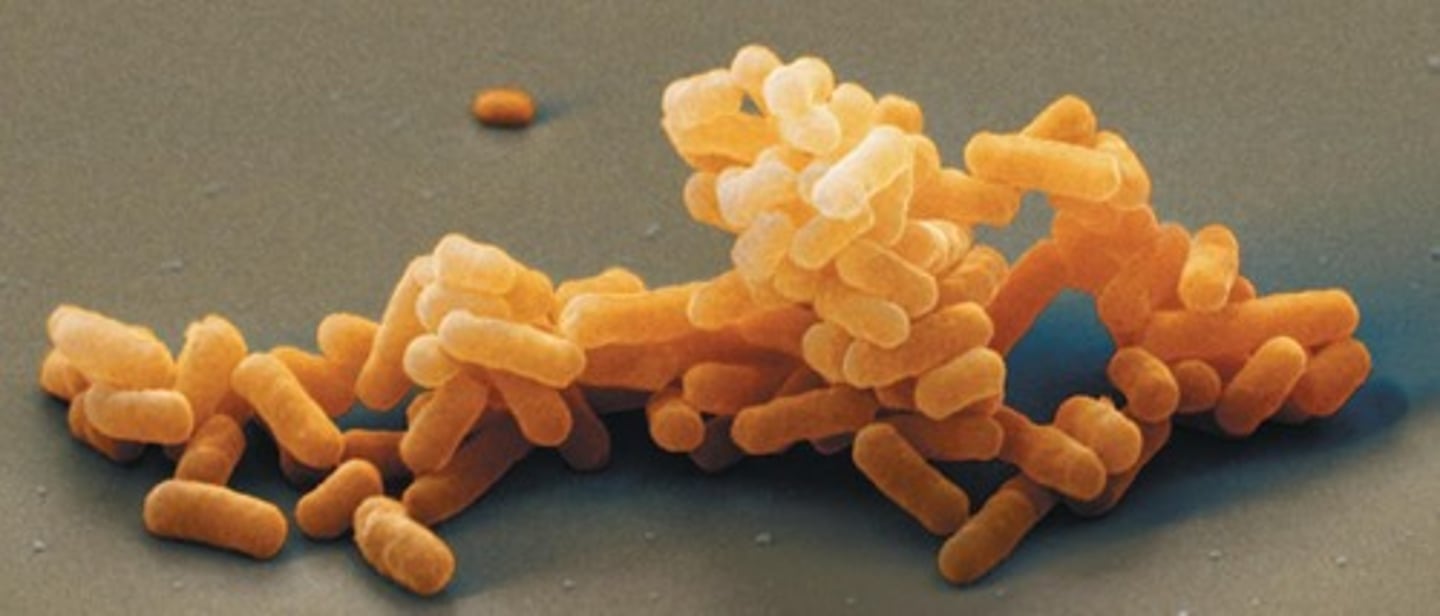
What characterizes organisms in the domain Bacteria?
All organisms in the domain Bacteria are unicellular.
What are the four kingdoms within the domain Eukarya?
The four kingdoms are Animalia, Fungi, Plantae, and Protista.
What is natural selection?
Natural selection is the process by which individuals with traits that enhance survival and reproductive success are more likely to pass those traits to the next generation.
What are the two observations Darwin made about natural selection?
Darwin observed that individuals within a species exhibit variation and that species have the potential to produce more offspring than the environment can support.
What is artificial selection?
Artificial selection is the process by which humans modify plants and animals by selecting and breeding individuals with desirable traits.