Lab #4 Cerebellum

0.0(0)
Studied by 0 people
call kaiCall Kai
learnLearn
examPractice Test
spaced repetitionSpaced Repetition
heart puzzleMatch
flashcardsFlashcards
GameKnowt Play
Card Sorting

1/32

encourage image

There's no tags or description

Looks like no tags are added yet.

Last updated 10:59 PM on 4/16/26
Name
Mastery
Learn
Test
Matching
Spaced
Call with Kai

No analytics yet

Send a link to your students to track their progress

33 Terms
1
New cards
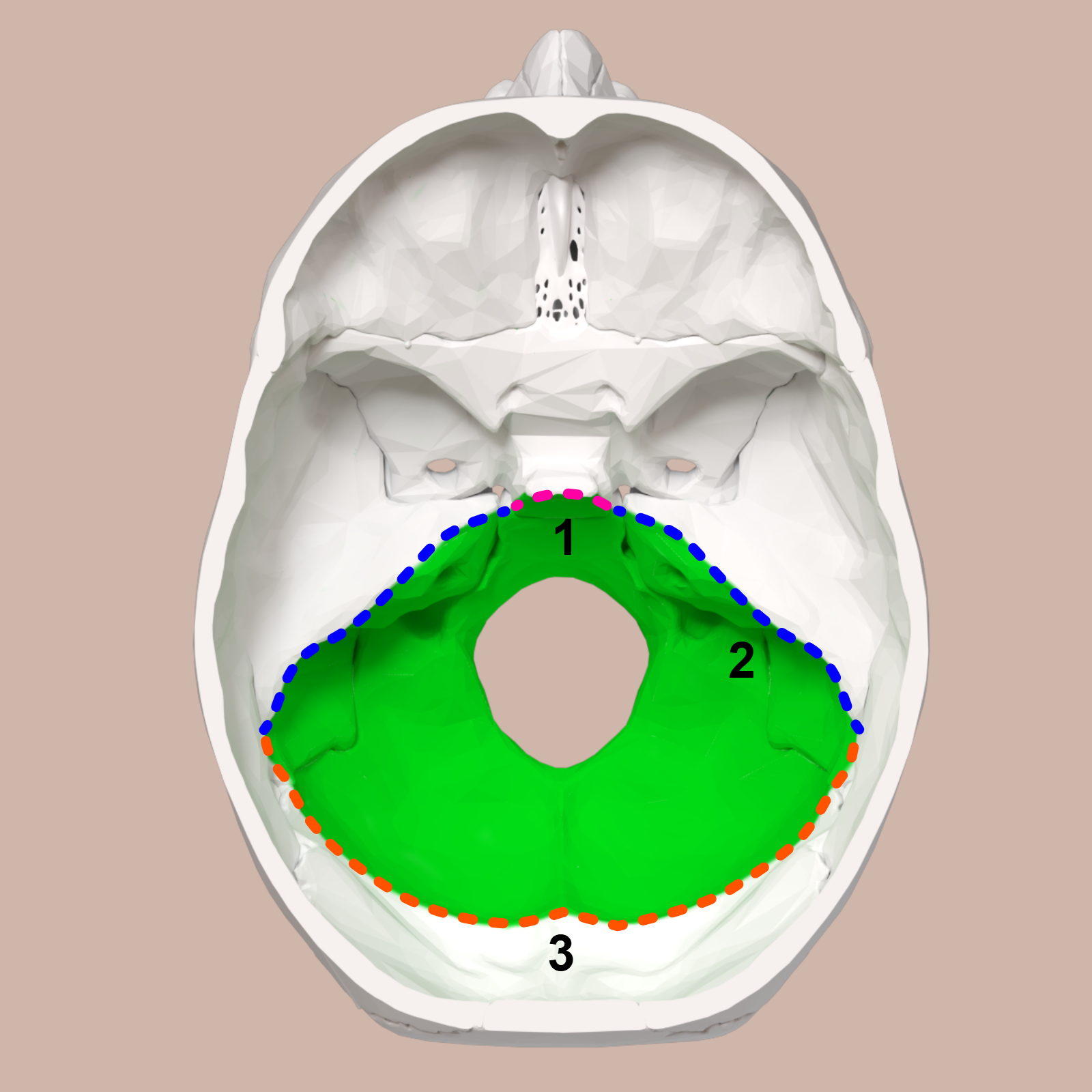
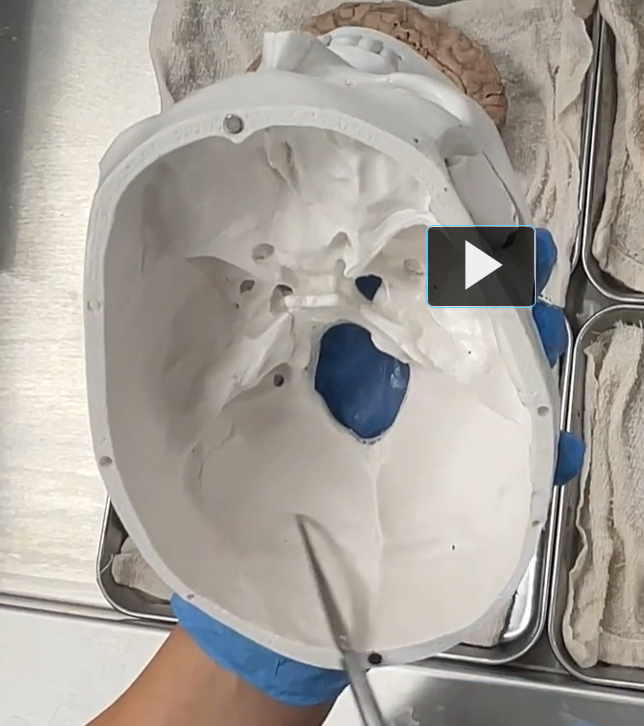
<p>The cerebellum sits in a region called the <strong>posterior cranial fossa</strong></p><p>The posterior cranial fossa is the <strong>deepest and most posterior depression on the floor of the skull</strong>. It houses the <strong>cerebellum, pons, and medulla oblongata</strong>. It is the part of the cranial cavity behind the petrous temporal bones and around the foramen magnum.</p><ul><li><p><strong>Posterior</strong>: <strong>behind</strong></p></li><li><p><strong>Cranial</strong>: <strong>skull</strong></p></li><li><p><strong>Fossa</strong>: <strong>ditch</strong></p></li></ul><p></p>

The cerebellum sits in a region called the posterior cranial fossa

The posterior cranial fossa is the deepest and most posterior depression on the floor of the skull. It houses the cerebellum, pons, and medulla oblongata. It is the part of the cranial cavity behind the petrous temporal bones and around the foramen magnum.

  • Posterior: behind

  • Cranial: skull

  • Fossa: ditch

knowt flashcard image
2
New cards
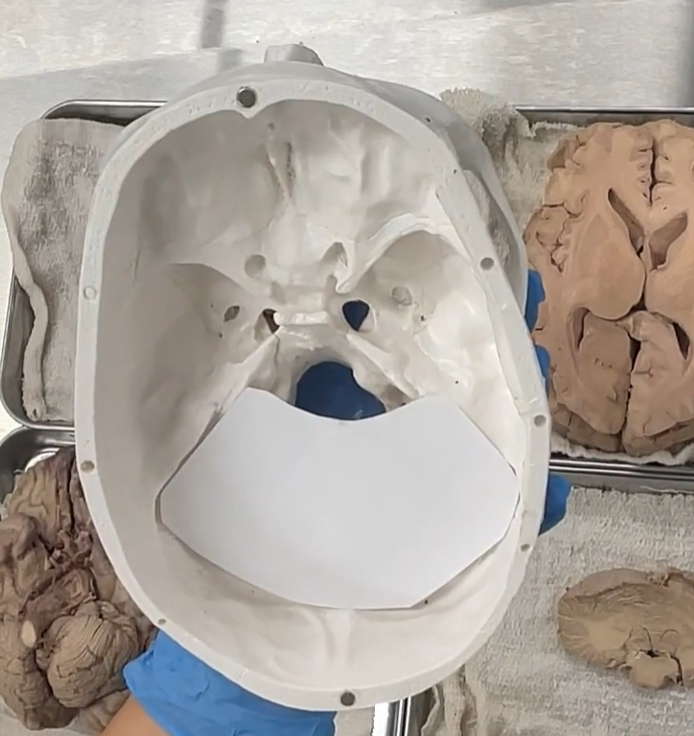
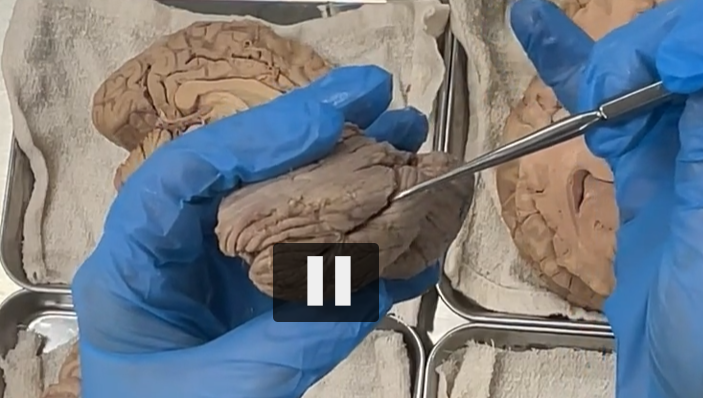
<p>Tentorium Cerebelli </p><p>she cut out a piece of paper to show the tentorium Cerebelli. </p><p>The tentorium cerebelli is superior to the cerebellum, and inferior to the cerebrum. </p>

Tentorium Cerebelli

she cut out a piece of paper to show the tentorium Cerebelli.

The tentorium cerebelli is superior to the cerebellum, and inferior to the cerebrum.

The tentorium cerebelli is a fold of dura mater that forms a horizontal “tent-like” partition separating:

  • the cerebellum (below)
    from

  • the occipital lobes of the cerebrum (above)

It acts as a support structure for the brain and helps compartmentalize the cranial cavity.

  • Tentorium: from Latin tentorium = tent

  • Cerebelli: from Latin cerebellum = little brain (cerebellum)

So it literally means:
“the tent over the little brain.”
3
New cards
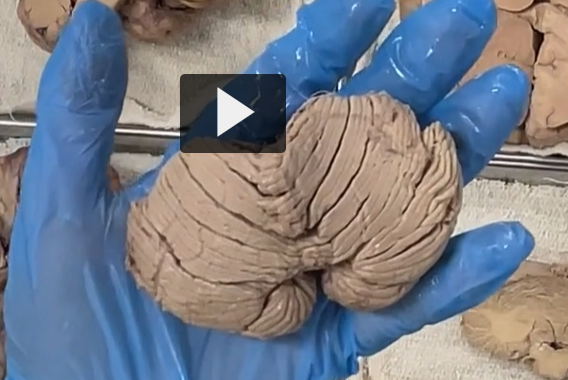
<p>superior surface of the cerebellum </p>

superior surface of the cerebellum

inferior surface of the cerebellum
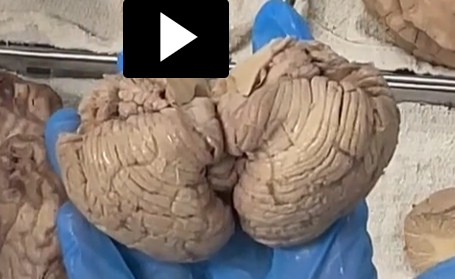
<p>inferior surface of the cerebellum </p>
4
New cards
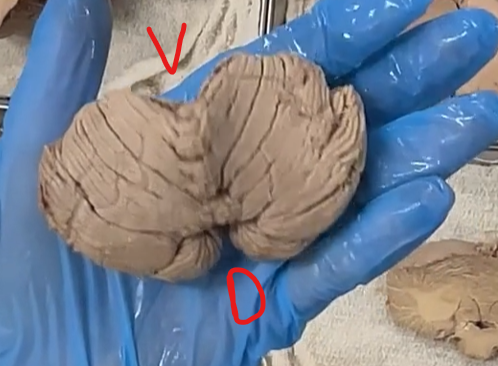
<p>V: ventral (front)</p><p>D: dorsal (back)</p><p>The cerebellum can be separated into left and right hemispheres. </p>

V: ventral (front)

D: dorsal (back)

The cerebellum can be separated into left and right hemispheres.

The left and right hemisphers are separated by a midline structure called the vermis.
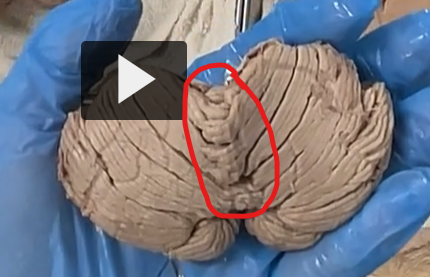
<p>The <strong>left </strong>and <strong>right hemisphers</strong> are separated by a midline structure called the <strong>vermis</strong>. </p>
5
New cards
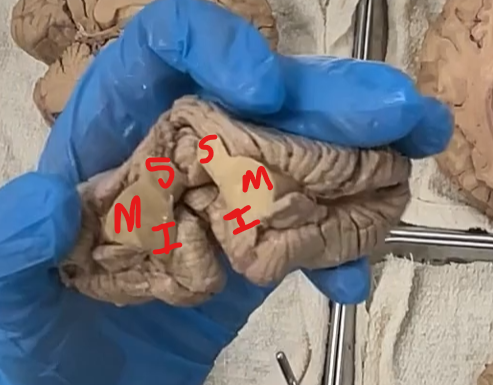
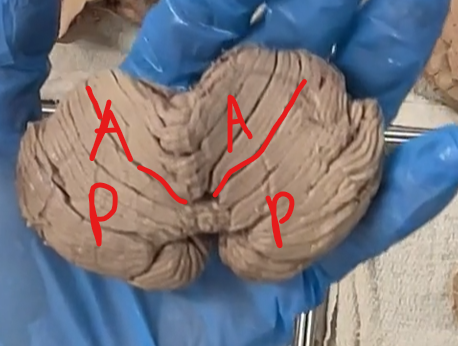
<p>S: superior peduncle</p><p>M: middle peduncle</p><p>I: inferior peduncle </p>

S: superior peduncle

M: middle peduncle

I: inferior peduncle
6
New cards
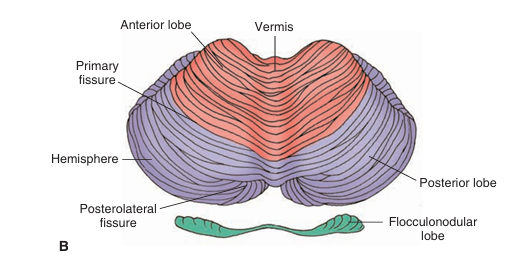
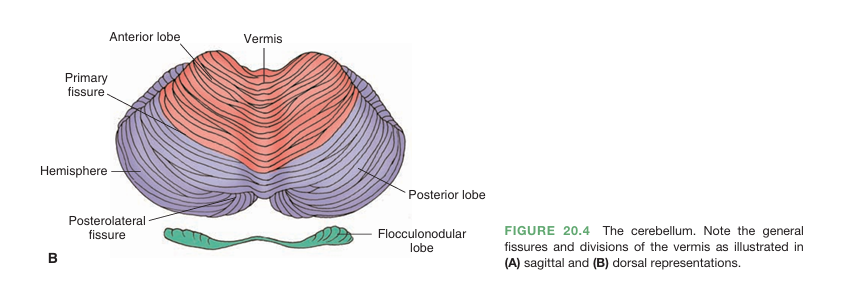
<p>Anterior lobe</p><p>Posterior lobe</p><p>Primary fissure </p>

Anterior lobe

Posterior lobe

Primary fissure
knowt flashcard image
7
New cards
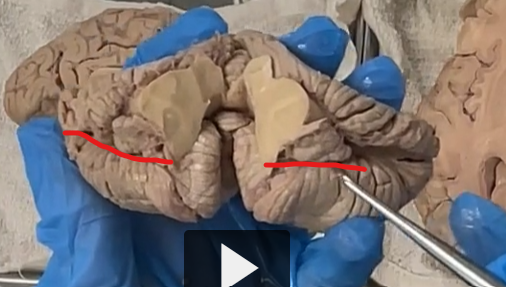
<p>lateral view of the <strong>horizontal fissure: </strong>splits the cerebellum into a superior and inferior or upper and lower part of the cerebellum. </p>

lateral view of the horizontal fissure: splits the cerebellum into a superior and inferior or upper and lower part of the cerebellum.
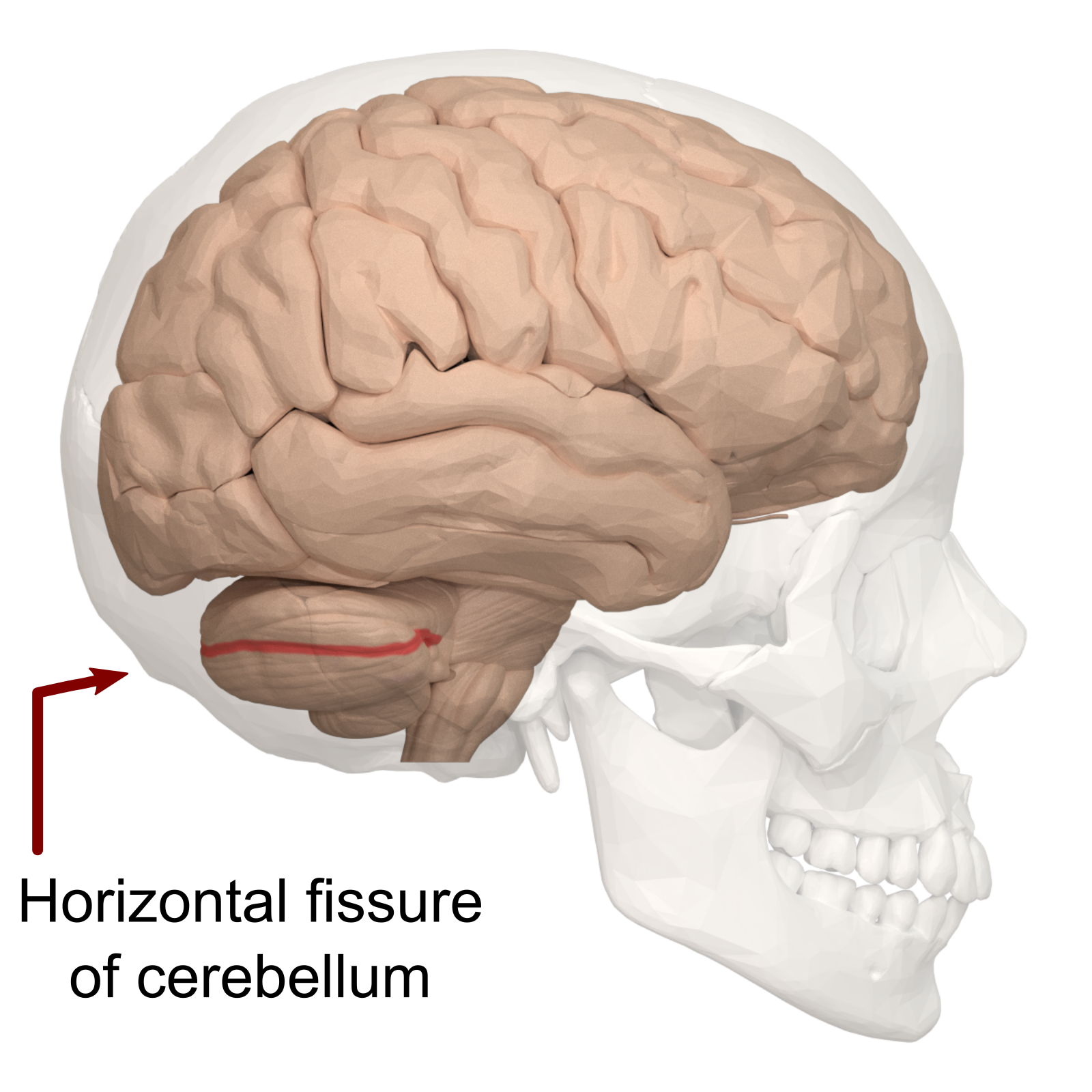
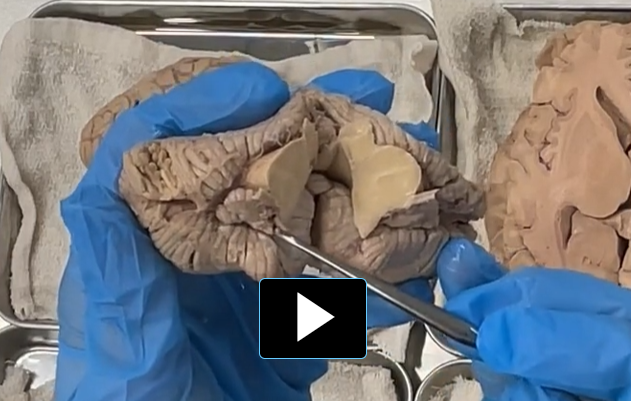
knowt flashcard image
8
New cards
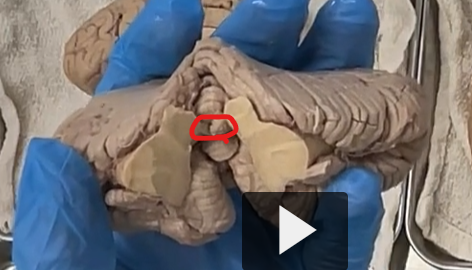
<p>postero-lateral fissure </p>

postero-lateral fissure

knowt flashcard image
9
New cards
<p>postero-lateral fissures </p>

postero-lateral fissures

posterior-lateral fissures separates the Flocculus (which is a feature of the floccular-nodular lobe) from the posterior lobe.
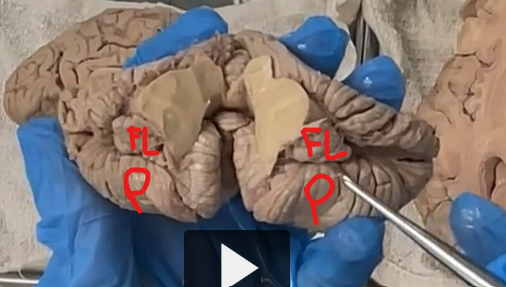
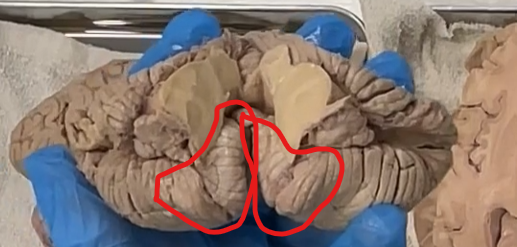
<p><strong>posterior-lateral fissures </strong>separates the <strong>Flocculus </strong>(which is a feature of the floccular-nodular lobe)<strong> </strong>from the<strong> posterior lobe</strong>. </p>
10
New cards
<p>The little bumps on the posterior lobes are the cerebellar tonsils. </p><ul><li><p><strong>Cerebellar</strong>: from Latin <em>cerebellum</em> = <strong>“little brain”</strong></p></li><li><p><strong>Tonsils</strong>: from Latin <em>tonsillae</em> = <strong>“almonds”</strong> (referring to their shape)</p></li></ul><p>Literal meaning:<br><strong>“almond-shaped parts of the little brain.”</strong></p><p>The <strong>cerebellar tonsils</strong> are <strong>two rounded lobules on the inferior (bottom) surface of the cerebellum</strong>, located <strong>just above the foramen magnum</strong>.</p><p>They are the <strong>lowest part of the cerebellum</strong>, sitting close to where the brain transitions into the spinal cord.</p>

The little bumps on the posterior lobes are the cerebellar tonsils.

  • Cerebellar: from Latin cerebellum = “little brain”

  • Tonsils: from Latin tonsillae = “almonds” (referring to their shape)

Literal meaning:
“almond-shaped parts of the little brain.”

The cerebellar tonsils are two rounded lobules on the inferior (bottom) surface of the cerebellum, located just above the foramen magnum.

They are the lowest part of the cerebellum, sitting close to where the brain transitions into the spinal cord.

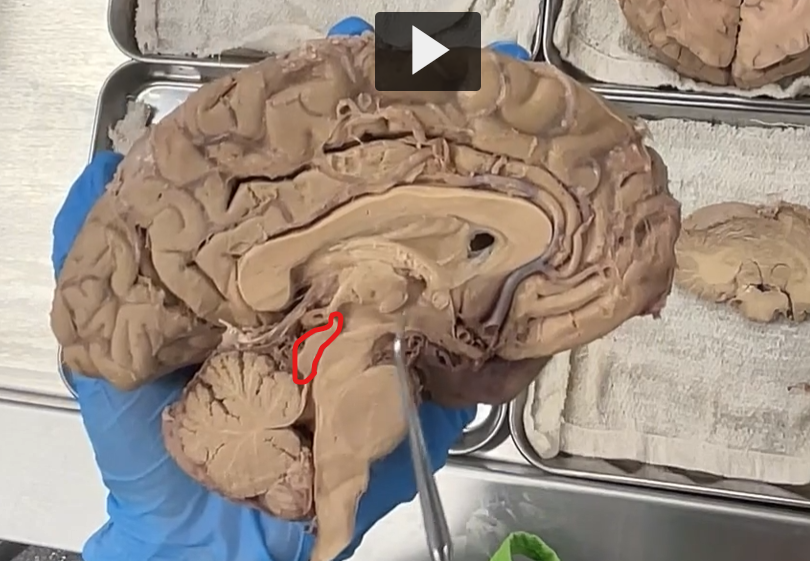
lingula, feature of the superior vermis.

In neuroanatomy, the lingula is a small, tongue-shaped lobule of the cerebellar vermis located on the superior surface of the cerebellum.

  • It is the most anterior (front-most) part of the vermis

  • Lies just above the superior medullary velum

Etymology

  • Lingula: from Latin lingula = “little tongue”

Literal meaning:
“small tongue-like structure.”
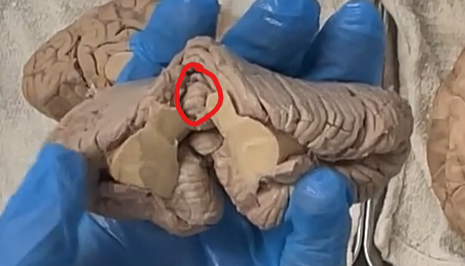
<p>lingula, feature of the superior vermis. </p><p>In neuroanatomy, the <strong>lingula</strong> is a <strong>small, tongue-shaped lobule of the cerebellar vermis</strong> located on the <strong>superior surface of the cerebellum</strong>.</p><ul><li><p>It is the <strong>most anterior (front-most) part of the vermis</strong></p></li><li><p>Lies just above the <strong>superior medullary velum</strong></p></li></ul><p><strong>Etymology</strong></p><ul><li><p><strong>Lingula</strong>: from Latin <em>lingula</em> = <strong>“little tongue”</strong></p></li></ul><p>Literal meaning:<br><strong>“small tongue-like structure.”</strong></p>
11
New cards
<p>superior medullary velum </p><p><strong>Definition</strong> </p><p>The <strong>superior medullary velum</strong> is a <strong>thin sheet of white matter</strong> that forms part of the <strong>roof of the fourth ventricle</strong>.</p><ul><li><p>It connects the <strong>left and right superior cerebellar peduncles</strong></p></li><li><p>Lies <strong>just beneath the lingula of the cerebellum</strong></p></li><li><p>Forms the <strong>upper portion of the fourth ventricle roof</strong></p></li></ul><p> <strong>Etymology</strong> </p><ul><li><p><strong>Superior</strong>: Latin <em>superior</em> = <strong>above</strong></p></li><li><p><strong>Medullary</strong>: from Latin <em>medulla</em> = <strong>marrow / inner core</strong> (referring to brainstem/white matter)</p></li><li><p><strong>Velum</strong>: Latin <em>velum</em> = <strong>veil or sail</strong></p></li></ul><p> Literal meaning:<br><strong>“upper veil of the medulla (brainstem region)”</strong></p>

superior medullary velum

Definition

The superior medullary velum is a thin sheet of white matter that forms part of the roof of the fourth ventricle.

  • It connects the left and right superior cerebellar peduncles

  • Lies just beneath the lingula of the cerebellum

  • Forms the upper portion of the fourth ventricle roof

Etymology

  • Superior: Latin superior = above

  • Medullary: from Latin medulla = marrow / inner core (referring to brainstem/white matter)

  • Velum: Latin velum = veil or sail

Literal meaning:
“upper veil of the medulla (brainstem region)”

  1. spread the tonsils

  2. superior small circle: nodule

  3. inferior large circle: uvula

These are features of the inferior vermis.
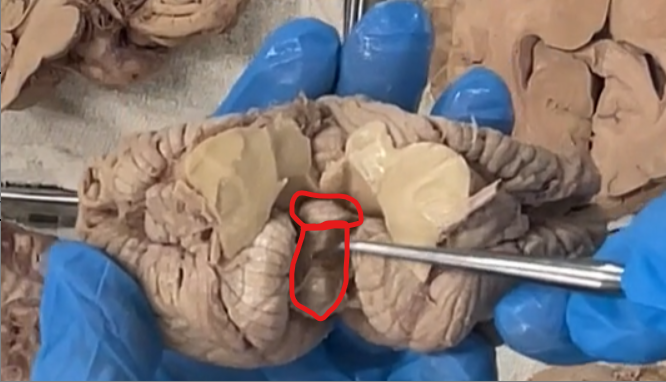
<ol><li><p>spread the tonsils</p></li><li><p>superior small circle: nodule</p></li><li><p>inferior large circle: uvula</p></li></ol><p>These are features of the inferior vermis. </p>
12
New cards
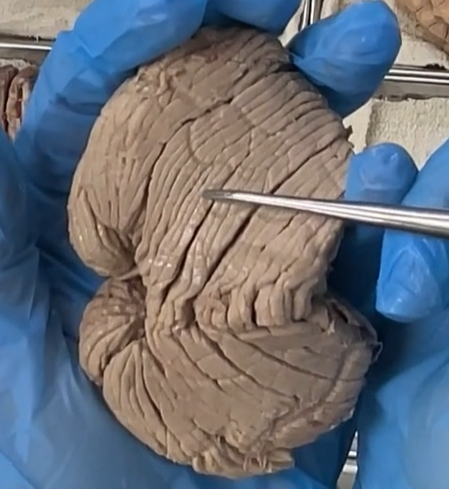
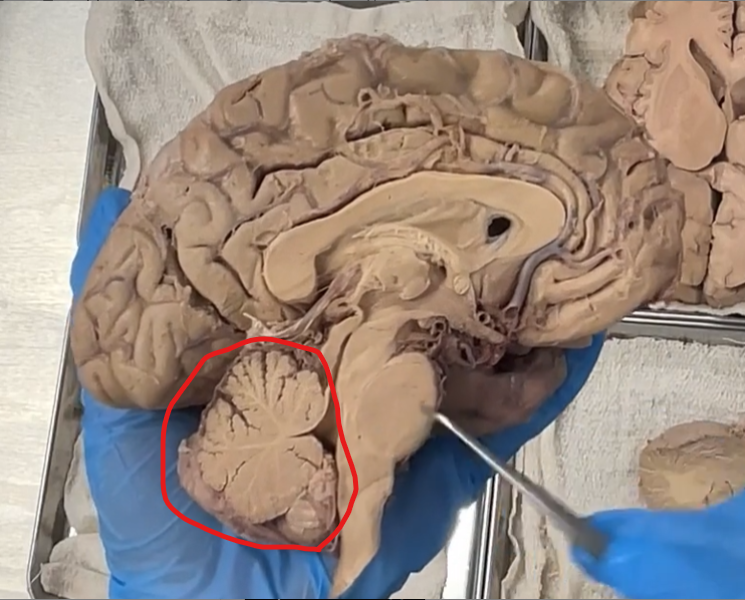
<p>There are little folds called “folia”, which are separated by sulci. </p>

There are little folds called “folia”, which are separated by sulci.

This is a hemisection of the cerebellum.
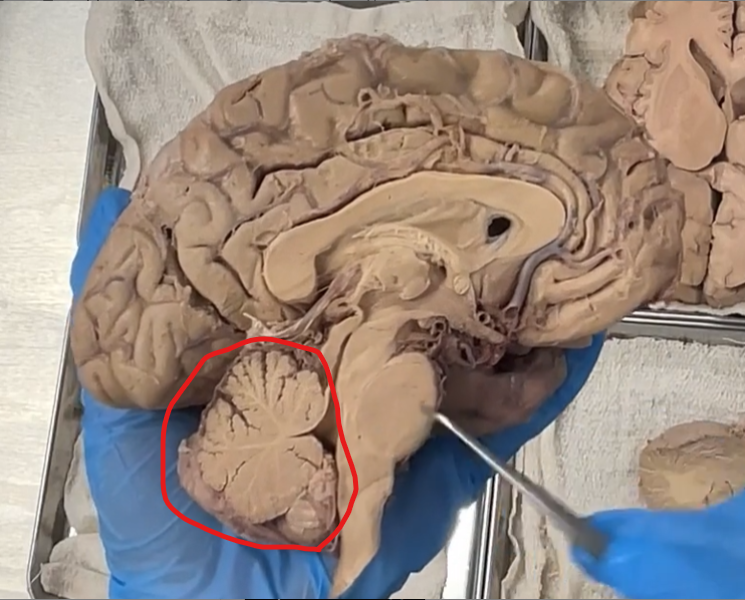
<p>This is a hemisection of the cerebellum. </p>
13
New cards
<p>We can see there is a white fiber tract, which is called the <strong>arbor vitae</strong>. </p><p><strong>Arbor Vitae — Etymology &amp; Definition</strong> </p><p><strong>Etymology</strong> </p><ul><li><p><strong>Latin roots:</strong></p><ul><li><p><strong><em>arbor</em></strong> = “tree” <span data-name="deciduous_tree" data-type="emoji">🌳</span></p></li><li><p><strong><em>vitae</em></strong> = “of life” (from <em>vita</em> = life)</p></li></ul></li></ul><p>So, <strong><em>arbor vitae</em> literally means “tree of life.”</strong></p><p><strong>Definition (Neuroanatomy)</strong> </p><ul><li><p>The <strong>arbor vitae</strong> refers to the <strong>tree-like pattern of white matter</strong> seen within the <strong>cerebellum</strong>.</p></li><li><p>It is formed by <strong>myelinated nerve fibers</strong> that branch extensively, resembling a tree.</p></li></ul><p> <strong>Functional Meaning</strong> </p><ul><li><p>The arbor vitae:</p><ul><li><p><strong>Carries signals</strong> between the cerebellar cortex and deeper brain regions</p></li><li><p>Helps coordinate <strong>movement, balance, and motor learning</strong></p></li></ul></li></ul><p></p>

We can see there is a white fiber tract, which is called the arbor vitae.

Arbor Vitae — Etymology & Definition

Etymology

  • Latin roots:

    • arbor = “tree” 🌳

    • vitae = “of life” (from vita = life)

So, arbor vitae literally means “tree of life.”

Definition (Neuroanatomy)

  • The arbor vitae refers to the tree-like pattern of white matter seen within the cerebellum.

  • It is formed by myelinated nerve fibers that branch extensively, resembling a tree.

Functional Meaning

  • The arbor vitae:

    • Carries signals between the cerebellar cortex and deeper brain regions

    • Helps coordinate movement, balance, and motor learning

Therefore, the folia look like little leaves that are part of the arbor vitae.

  • From Latin folium = “leaf” 🍃

  • folia = plural form → “leaves”

👉 So, folia literally means “leaves.”

Definition (Neuroanatomy)

  • Folia are the thin, leaf-like folds of the cerebellum.

  • They are the cerebellum’s version of cortical folds (like gyri in the cerebrum), but:

    • Much thinner

    • More tightly packed

    • Arranged in parallel, repeating layers
14
New cards
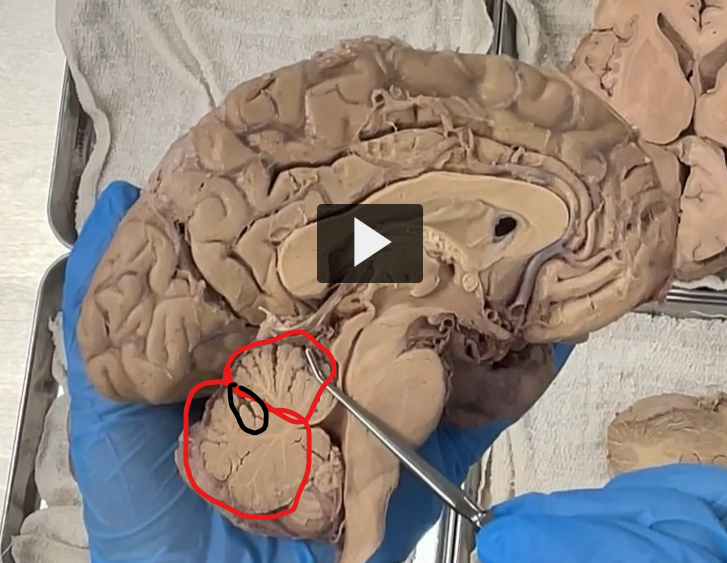
<p>anterior lobe (top red)</p><p>Primary fissure circled in black.</p><p>posterior lobe (bottom red)</p>

anterior lobe (top red)

Primary fissure circled in black.

posterior lobe (bottom red)

horizontal fissure
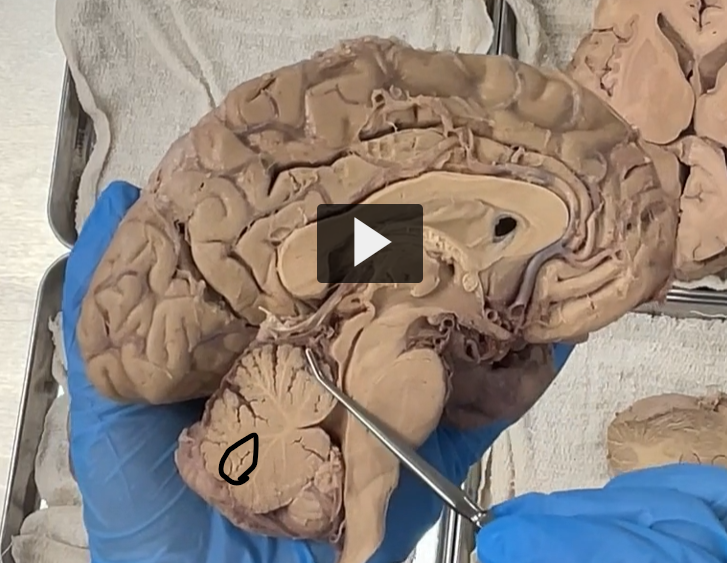
<p>horizontal fissure </p>
15
New cards
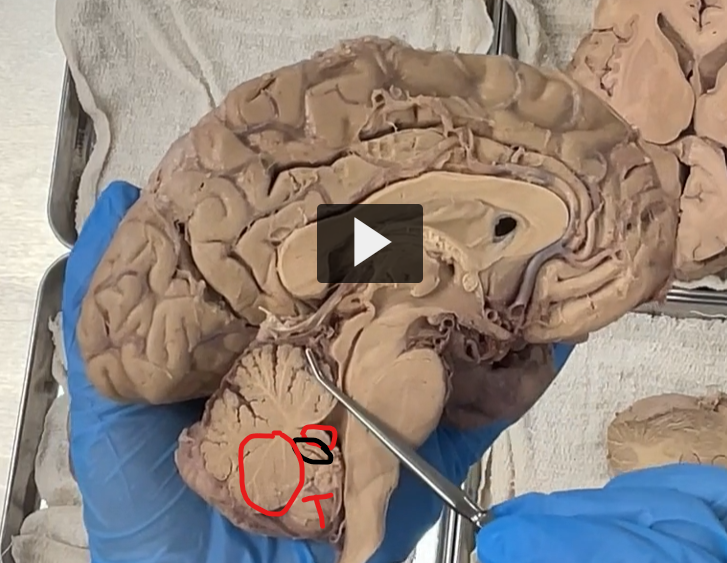
<p>little red cirlce: floculonoddular</p><p>black circle: postero-lateral fissure</p><p>large red circle: posterior lobe</p><p>“T”: Tonsils (feature of the posterior lobe)</p><p><strong>Cerebellar Tonsils (Posterior Lobe) — Etymology &amp; Definition</strong> </p><p><strong>Etymology</strong> </p><ul><li><p><strong>“Tonsil”</strong> comes from Latin <strong><em>tonsillae</em></strong> = “almonds”<br><span data-name="point_right" data-type="emoji">👉</span> Named for their <strong>rounded, oval shape</strong>, similar to the <strong>palatine tonsils</strong> in the throat</p></li></ul><p> <strong>Definition (Neuroanatomy)</strong> </p><ul><li><p>The <strong>cerebellar tonsils</strong> are:</p><ul><li><p><strong>Paired, rounded lobules</strong> located on the <strong>inferior surface</strong> of the <strong>cerebellum</strong></p></li><li><p>Part of the <strong>posterior lobe</strong> (the largest lobe of the cerebellum)</p></li><li><p>Positioned <strong>just above the foramen magnum</strong></p></li></ul></li></ul><p></p>

little red cirlce: floculonoddular

black circle: postero-lateral fissure

large red circle: posterior lobe

“T”: Tonsils (feature of the posterior lobe)

Cerebellar Tonsils (Posterior Lobe) — Etymology & Definition

Etymology

  • “Tonsil” comes from Latin tonsillae = “almonds”
    👉 Named for their rounded, oval shape, similar to the palatine tonsils in the throat

Definition (Neuroanatomy)

  • The cerebellar tonsils are:

    • Paired, rounded lobules located on the inferior surface of the cerebellum

    • Part of the posterior lobe (the largest lobe of the cerebellum)

    • Positioned just above the foramen magnum

Window through the septum pellucidum to look into the lateral ventricle.

Septum Pellucidum — Etymology & Definition

Etymology

  • Latin roots:

    • septum = “partition” or “wall”

    • pellucidum = “transparent” (per = through + lucidus = light)

So, septum pellucidum literally means “transparent partition.”

Definition (Neuroanatomy)

  • The septum pellucidum is:

    • A thin, translucent membrane

    • Located in the midline of the brain

    • It separates the left and right anterior horns of the lateral ventricle

Lateral Ventricle — Etymology & Definition

Etymology

  • Latin roots:

    • lateralis = “side”

    • ventriculus = “little belly” or “small cavity”

So, lateral ventricle literally means “side cavity.”

Definition (Neuroanatomy)

  • The lateral ventricles are:

    • A pair of large, C-shaped fluid-filled cavities

    • Located within each cerebral hemisphere

    • Part of the brain’s ventricular system that contains cerebrospinal fluid (CSF)
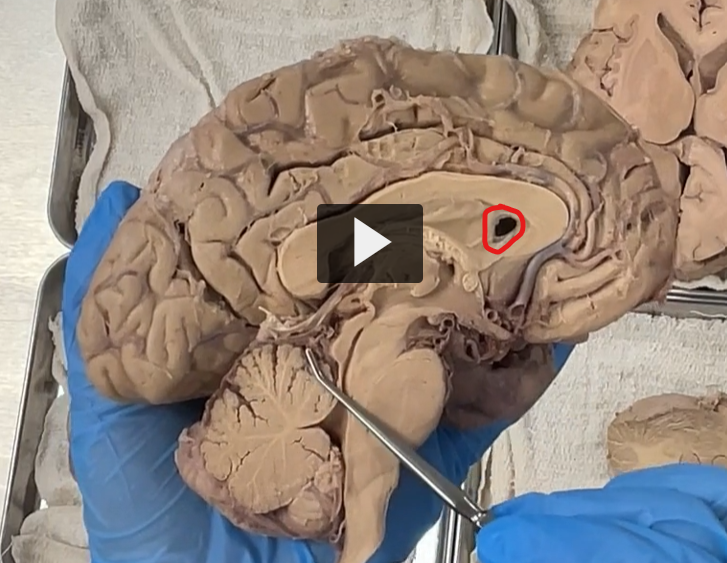
<p>Window through the septum pellucidum to look into the lateral ventricle.</p><p><strong>Septum Pellucidum — Etymology &amp; Definition</strong> </p><p><strong>Etymology</strong> </p><ul><li><p><strong>Latin roots:</strong></p><ul><li><p><strong><em>septum</em></strong> = “partition” or “wall”</p></li><li><p><strong><em>pellucidum</em></strong> = “transparent” (<em>per</em> = through + <em>lucidus</em> = light)</p></li></ul></li></ul><p>So, <strong><em>septum pellucidum</em> literally means “transparent partition.”</strong></p><p>  <strong>Definition (Neuroanatomy)</strong> </p><ul><li><p>The <strong>septum pellucidum</strong> is:</p><ul><li><p>A <strong>thin, translucent membrane</strong></p></li><li><p>Located in the midline of the brain</p></li><li><p>It <strong>separates the left and right anterior horns</strong> of the <strong>lateral ventricle</strong></p></li></ul></li></ul><p><strong>Lateral Ventricle — Etymology &amp; Definition</strong> </p><p> <strong>Etymology</strong> </p><ul><li><p><strong>Latin roots:</strong></p><ul><li><p><strong><em>lateralis</em></strong> = “side”</p></li><li><p><strong><em>ventriculus</em></strong> = “little belly” or “small cavity”</p></li></ul></li></ul><p>So, <strong><em>lateral ventricle</em> literally means “side cavity.”</strong></p><p>  <strong>Definition (Neuroanatomy)</strong> </p><ul><li><p>The <strong>lateral ventricles</strong> are:</p><ul><li><p>A <strong>pair of large, C-shaped fluid-filled cavities</strong></p></li><li><p>Located within each cerebral hemisphere</p></li><li><p>Part of the brain’s <strong>ventricular system</strong> that contains <strong>cerebrospinal fluid (CSF)</strong></p></li></ul></li></ul><p></p>
16
New cards
<p>Third ventricle</p><p><strong>Third Ventricle — Etymology &amp; Definition</strong> </p><p> <strong>Etymology</strong> </p><ul><li><p><strong>Latin:</strong></p><ul><li><p><strong><em>ventriculus</em></strong> = “little cavity”</p></li><li><p><strong>third</strong> = refers to its position in the sequence of brain ventricles</p></li></ul></li></ul><p>So, <strong>third ventricle = the “third cavity” of the ventricular system</strong></p><p> <strong>Definition (Neuroanatomy)</strong> </p><ul><li><p>The <strong>third ventricle</strong> is:</p><ul><li><p>A <strong>narrow, midline, slit-like cavity</strong></p></li><li><p>Located in the <strong>diencephalon</strong></p></li><li><p>Lies <strong>between the right and left</strong> thalamus</p></li></ul></li></ul><p></p>

Third ventricle

Third Ventricle — Etymology & Definition

Etymology

  • Latin:

    • ventriculus = “little cavity”

    • third = refers to its position in the sequence of brain ventricles

So, third ventricle = the “third cavity” of the ventricular system

Definition (Neuroanatomy)

  • The third ventricle is:

    • A narrow, midline, slit-like cavity

    • Located in the diencephalon

    • Lies between the right and left thalamus

The lateral ventricle and the third ventricle communicate through an interventricular foramen.

Interventricular Foramen — Etymology & Definition

Etymology

  • Latin roots:

    • inter- = “between”

    • ventriculus = “little cavity”

    • foramen = “opening”

So, interventricular foramen literally means “opening between the ventricles.”

Definition (Neuroanatomy)

  • The interventricular foramen (also called the foramen of Monro) is:

    • A small channel connecting each lateral ventricle to the third ventricle

    • Present on both sides (one per hemisphere)
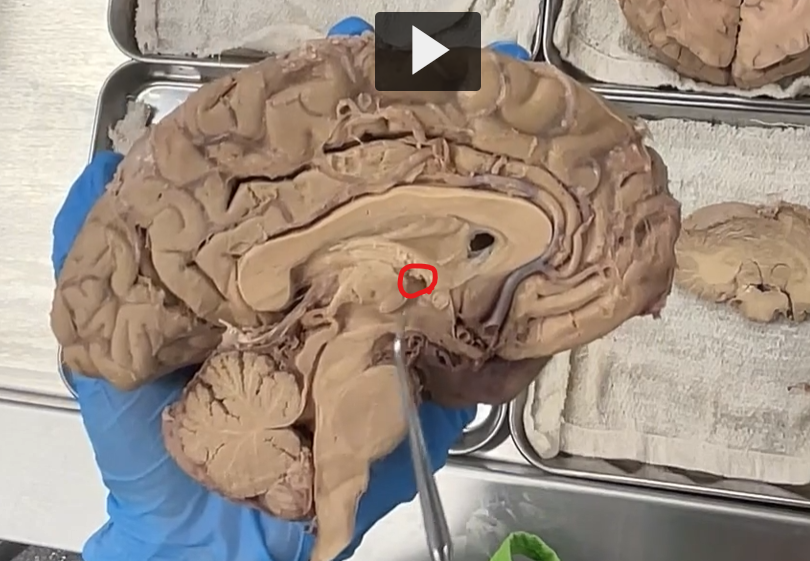
<p>The <strong>lateral ventricle</strong> and the<strong> third ventricle communicate</strong> through an <strong>interventricular foramen.</strong></p><p><strong>Interventricular Foramen — Etymology &amp; Definition</strong> </p><p><strong>Etymology</strong> </p><ul><li><p><strong>Latin roots:</strong></p><ul><li><p><strong><em>inter-</em></strong> = “between”</p></li><li><p><strong><em>ventriculus</em></strong> = “little cavity”</p></li><li><p><strong><em>foramen</em></strong> = “opening”</p></li></ul></li></ul><p>So, <strong><em>interventricular foramen</em> literally means “opening between the ventricles.”</strong></p><p> <strong>Definition (Neuroanatomy)</strong> </p><ul><li><p>The <strong>interventricular foramen</strong> (also called the <strong>foramen of Monro</strong>) is:</p><ul><li><p>A <strong>small channel</strong> connecting each <strong>lateral ventricle</strong> to the <strong>third ventricle</strong></p></li><li><p>Present <strong>on both sides</strong> (one per hemisphere)</p></li></ul></li></ul><p></p>
17
New cards
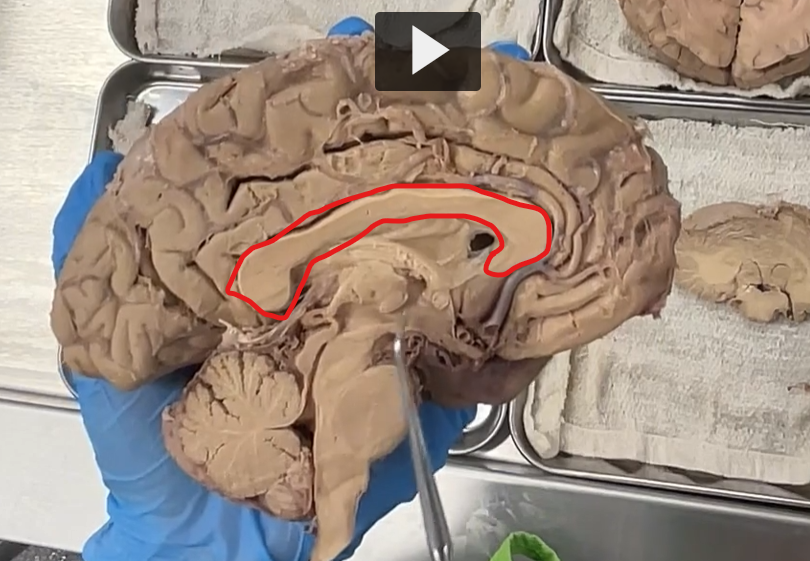
<p>Corpus Collosum (structure that connects the left and right sides of the brain).</p><p><strong>Corpus Callosum — Etymology &amp; Definition</strong> </p><p><strong>Etymology</strong> </p><ul><li><p><strong>Latin roots:</strong></p><ul><li><p><strong><em>corpus</em></strong> = “body”</p></li><li><p><strong><em>callosum</em></strong> = “hard” or “tough”</p></li></ul></li></ul><p>So, <strong><em>corpus callosum</em> literally means “tough body.”</strong><br>(This reflects its dense bundle of myelinated fibers.)</p><p> <strong>Definition (Neuroanatomy)</strong> </p><ul><li><p>The <strong>corpus callosum</strong> is:</p><ul><li><p>The <strong>largest white matter structure in the brain</strong></p></li><li><p>A <strong>commissural fiber bundle</strong> connecting the <strong>left and right cerebral hemispheres</strong></p></li><li><p>Essential for <strong>interhemispheric communication</strong></p></li></ul></li></ul><p></p>

Corpus Collosum (structure that connects the left and right sides of the brain).

Corpus Callosum — Etymology & Definition

Etymology

  • Latin roots:

    • corpus = “body”

    • callosum = “hard” or “tough”

So, corpus callosum literally means “tough body.”
(This reflects its dense bundle of myelinated fibers.)

Definition (Neuroanatomy)

  • The corpus callosum is:

    • The largest white matter structure in the brain

    • A commissural fiber bundle connecting the left and right cerebral hemispheres

    • Essential for interhemispheric communication

anterior commissure

Anterior Commissure — Etymology & Definition

Etymology

  • Latin roots:

    • anterior = “front”

    • commissura = “joining together” (com- = together + mittere = to send)

So, anterior commissure literally means “front connection.”

Definition (Neuroanatomy)

  • The anterior commissure is:

    • A small bundle of commissural fibers

    • Located in the anterior (front) part of the brain

    • Connects parts of the left and right hemispheres, especially regions of the temporal lobes
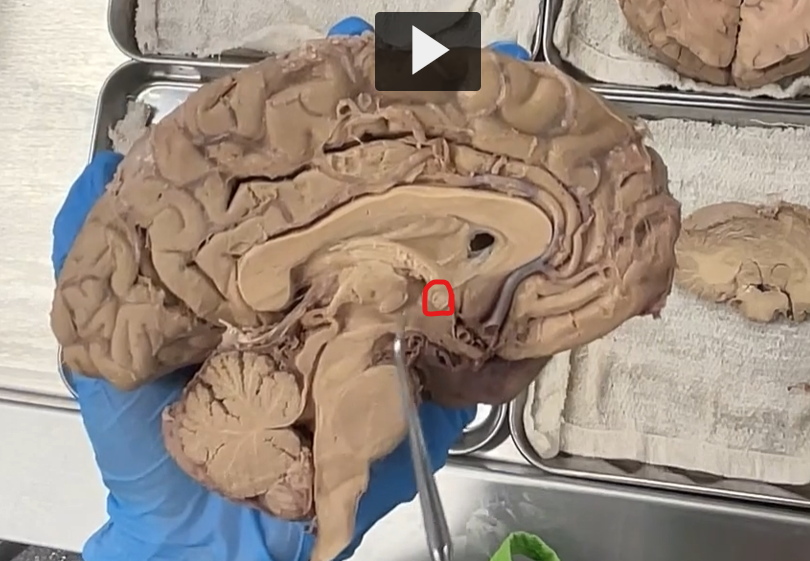
<p>anterior commissure</p><p><strong>Anterior Commissure — Etymology &amp; Definition</strong> </p><p><strong>Etymology</strong> </p><ul><li><p><strong>Latin roots:</strong></p><ul><li><p><strong><em>anterior</em></strong> = “front”</p></li><li><p><strong><em>commissura</em></strong> = “joining together” (<em>com-</em> = together + <em>mittere</em> = to send)</p></li></ul></li></ul><p>So, <strong><em>anterior commissure</em> literally means “front connection.”</strong></p><p>  <strong>Definition (Neuroanatomy)</strong> </p><ul><li><p>The <strong>anterior commissure</strong> is:</p><ul><li><p>A <strong>small bundle of commissural fibers</strong></p></li><li><p><strong>Located</strong> in the <strong>anterior (front) part of the brain</strong></p></li><li><p>Connects parts of the <strong>left and right hemispheres</strong>, especially regions of the <strong>temporal lobes</strong></p></li></ul></li></ul><p></p>
18
New cards
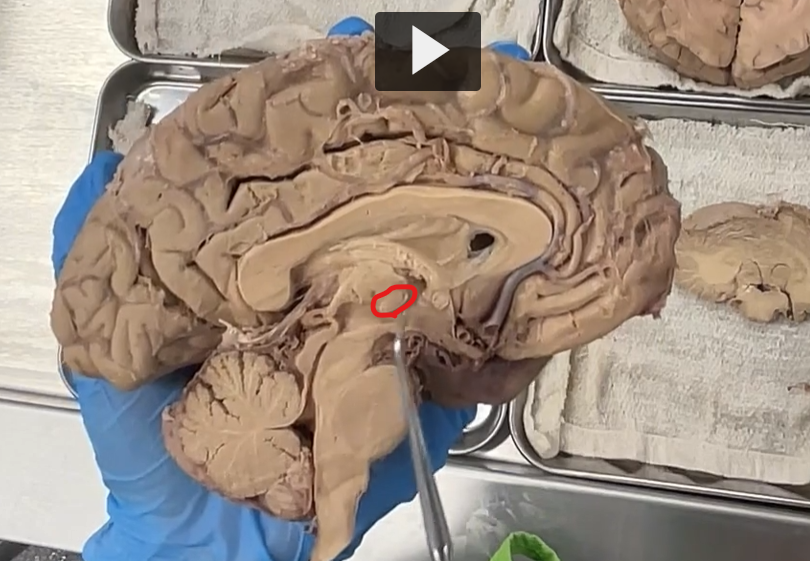
<p>inter-thalamic adhesion: <strong>connecting the left</strong> and<strong> right thalamus.</strong></p><p><strong>Inter-thalamic Adhesion — Etymology &amp; Definition</strong> </p><p><strong>Etymology</strong> </p><ul><li><p><strong>Latin roots:</strong></p><ul><li><p><strong><em>inter-</em></strong> = “between”</p></li><li><p><strong><em>thalamus</em></strong> = “inner chamber” or “room”</p></li><li><p><strong><em>adhesion</em></strong> = “sticking together”</p></li></ul></li></ul><p>So, <strong><em>interthalamic adhesion</em> literally means “a sticking together between the thalami.”</strong></p><p><strong>Definition (Neuroanatomy)</strong> </p><ul><li><p>The <strong>interthalamic adhesion</strong> (also called the <strong>massa intermedia</strong>) is:</p><ul><li><p>A <strong>midline connection</strong> between the right and left <strong>thalamus</strong></p></li><li><p>Located within the <strong>third ventricle</strong></p></li><li><p>Appears as a <strong>small bridge of gray matter</strong> crossing the ventricle</p></li></ul></li></ul><p></p>

inter-thalamic adhesion: connecting the left and right thalamus.

Inter-thalamic Adhesion — Etymology & Definition

Etymology

  • Latin roots:

    • inter- = “between”

    • thalamus = “inner chamber” or “room”

    • adhesion = “sticking together”

So, interthalamic adhesion literally means “a sticking together between the thalami.”

Definition (Neuroanatomy)

  • The interthalamic adhesion (also called the massa intermedia) is:

    • A midline connection between the right and left thalamus

    • Located within the third ventricle

    • Appears as a small bridge of gray matter crossing the ventricle

Thalamus

Thalamus — Etymology & Definition

Etymology

  • From Greek thalamos = “inner chamber”

So, thalamus literally means “inner chamber.”
(This reflects its deep, central location in the brain.)

Definition (Neuroanatomy)

  • The thalamus is:

    • A paired mass of gray matter

    • Located in the diencephalon

    • Forms the lateral walls of the third ventricle

    • Acts as the brain’s major relay station
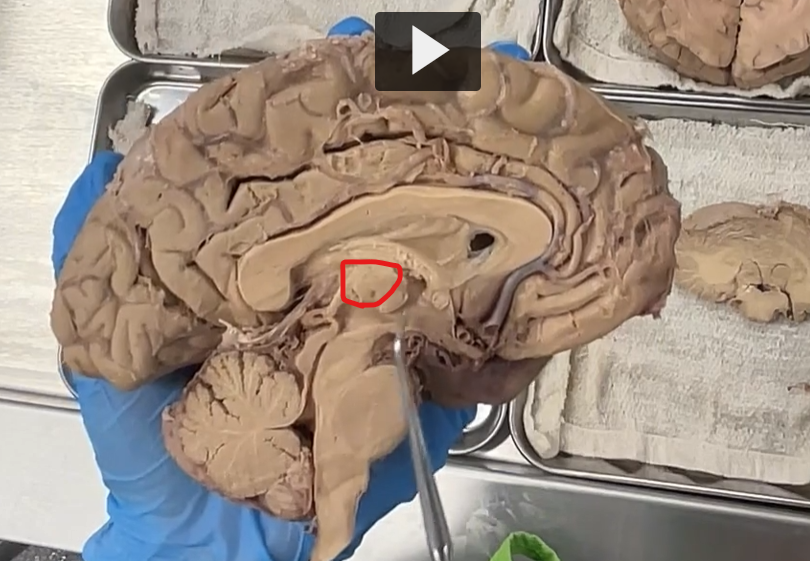
<p>Thalamus</p><p><strong>Thalamus — Etymology &amp; Definition</strong> </p><p> <strong>Etymology</strong> </p><ul><li><p>From Greek <strong><em>thalamos</em></strong> = “inner chamber”</p></li></ul><p>So, <strong><em>thalamus</em> literally means “inner chamber.”</strong><br>(This<strong> reflects</strong> its<strong> deep, central location</strong> in the <strong>brain.</strong>)</p><p><strong>Definition (Neuroanatomy)</strong> </p><ul><li><p>The <strong>thalamus</strong> is:</p><ul><li><p>A <strong>paired mass of gray matter</strong></p></li><li><p>Located in the <strong>diencephalon</strong></p></li><li><p>Forms the <strong>lateral walls</strong> of the <strong>third ventricle</strong></p></li><li><p>Acts as the brain’s <strong>major relay station</strong></p></li></ul></li></ul><p></p>
19
New cards
<p>posterior to the thalamus is the<strong> posterior commissure</strong>.</p><p><strong>Posterior Commissure — Etymology &amp; Definition</strong> </p><p><strong>Etymology</strong> </p><ul><li><p><strong>Latin roots:</strong></p><ul><li><p><strong><em>posterior</em></strong> = “behind”</p></li><li><p><strong><em>commissura</em></strong> = “joining together” (<em>com-</em> = together + <em>mittere</em> = to send)</p></li></ul></li></ul><p>So, <strong><em>posterior commissure</em> literally means “back (rear) connection.”</strong></p><p>  <strong>Definition (Neuroanatomy)</strong> </p><ul><li><p>The <strong>posterior commissure</strong> is:</p><ul><li><p>A <strong>small bundle of crossing (commissural) nerve fibers</strong></p></li><li><p>Located in the <strong>posterior part of the diencephalon</strong>, near the midbrain</p></li><li><p>Connects structures on the <strong>left and right sides of the brain</strong></p></li></ul></li></ul><p></p>

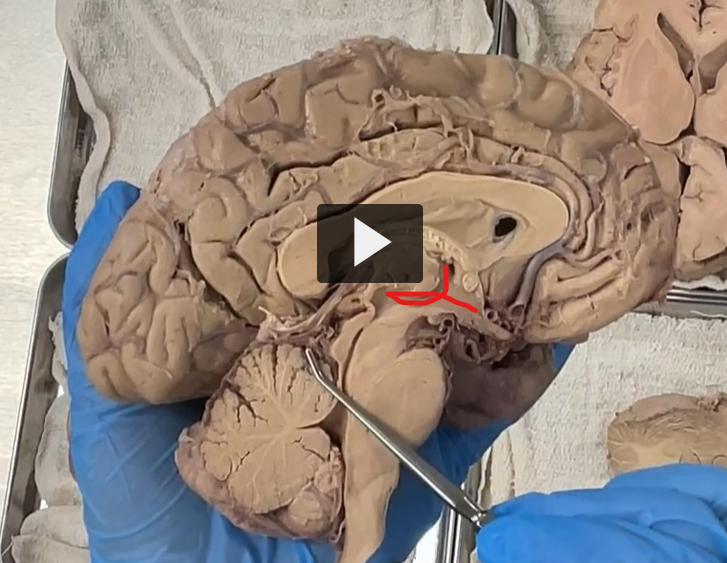
posterior to the thalamus is the posterior commissure.

Posterior Commissure — Etymology & Definition

Etymology

  • Latin roots:

    • posterior = “behind”

    • commissura = “joining together” (com- = together + mittere = to send)

So, posterior commissure literally means “back (rear) connection.”

Definition (Neuroanatomy)

  • The posterior commissure is:

    • A small bundle of crossing (commissural) nerve fibers

    • Located in the posterior part of the diencephalon, near the midbrain

    • Connects structures on the left and right sides of the brain

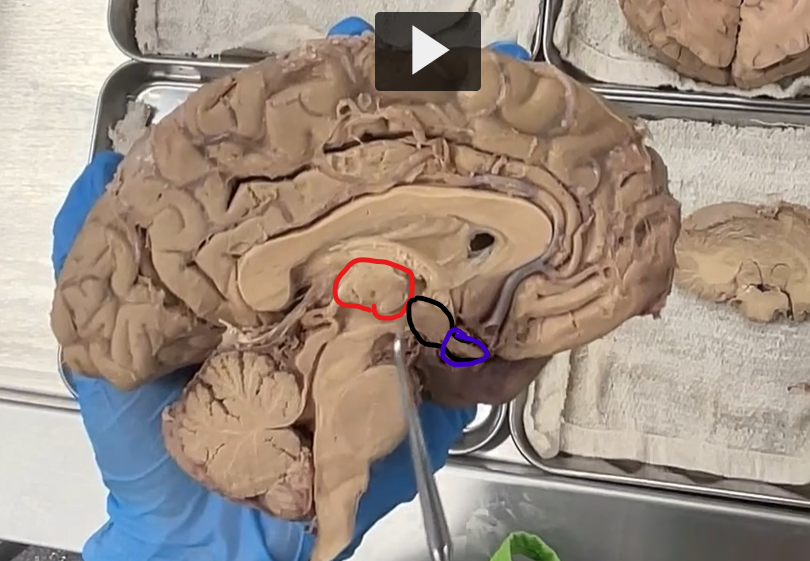
Now, let’s talk about the hypothalamus.

Red: thalamus

Black: hypo-thalamus (under the thalamus)

Hypothalamus — Etymology & Definition

Etymology

  • Greek roots:

    • hypo- = “under”

    • thalamos = “inner chamber” (→ thalamus)

So, hypothalamus literally means “below the thalamus.”

Definition (Neuroanatomy)

  • The hypothalamus is:

    • A small but critical region of the brain

    • Located in the diencephalon

    • Forms the floor and part of the walls of the third ventricle

    • Serves as the main regulator of homeostasis
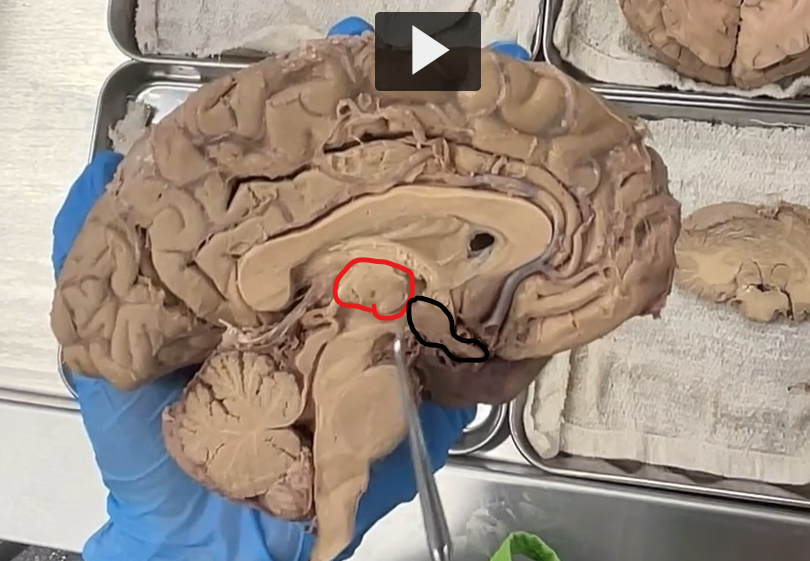
<p>Now, let’s talk about the hypothalamus.</p><p>Red: thalamus</p><p>Black: hypo-thalamus (under the thalamus)</p><p><strong>Hypothalamus — Etymology &amp; Definition</strong> </p><p><strong>Etymology</strong> </p><ul><li><p><strong>Greek roots:</strong></p><ul><li><p><strong><em>hypo-</em></strong> = “under”</p></li><li><p><strong><em>thalamos</em></strong> = “inner chamber” (→ thalamus)</p></li></ul></li></ul><p>So, <strong><em>hypothalamus</em> literally means “below the thalamus.”</strong></p><p><strong>Definition (Neuroanatomy)</strong> </p><ul><li><p>The <strong>hypothalamus</strong> is:</p><ul><li><p>A <strong>small but critical region of the brain</strong></p></li><li><p>Located in the <strong>diencephalon</strong></p></li><li><p>Forms the <strong>floor and part of the walls</strong> of the <strong>third ventricle</strong></p></li><li><p>Serves as the <strong>main regulator of homeostasis</strong></p></li></ul></li></ul><p></p>
20
New cards
<p>Purple: pituitary stalk (extension of the hypothalamus)</p><p><strong>Pituitary Stalk — Etymology &amp; Definition</strong> </p><p> <strong>Etymology</strong> </p><ul><li><p><strong><em>pituitary</em></strong>: from Latin <em>pituita</em> = “phlegm”<br>(historically, the gland was thought to secrete mucus)</p></li><li><p><strong><em>stalk</em></strong>: from Old English <em>stalc</em> = “stem” or “support”</p></li></ul><p> So, <strong><em>pituitary stalk</em> literally means “the stem connecting to the pituitary gland.”</strong></p><p> <strong>Definition (Neuroanatomy)</strong> </p><ul><li><p>The <strong>pituitary stalk</strong> (also called the <strong>infundibulum</strong>) is:</p><ul><li><p>A <strong>thin, funnel-shaped structure</strong></p></li><li><p>Connecting the <strong>hypothalamus</strong> to the <strong>pituitary gland</strong></p></li><li><p>Serves as the <strong>physical and functional link</strong> between the <strong>nervous</strong> and<strong> endocrine systems</strong></p></li></ul></li></ul><p></p>

Purple: pituitary stalk (extension of the hypothalamus)

Pituitary Stalk — Etymology & Definition

Etymology

  • pituitary: from Latin pituita = “phlegm”
    (historically, the gland was thought to secrete mucus)

  • stalk: from Old English stalc = “stem” or “support”

So, pituitary stalk literally means “the stem connecting to the pituitary gland.”

Definition (Neuroanatomy)

  • The pituitary stalk (also called the infundibulum) is:

    • A thin, funnel-shaped structure

    • Connecting the hypothalamus to the pituitary gland

    • Serves as the physical and functional link between the nervous and endocrine systems

Red: mammillary bodies

Mammillary Bodies — Etymology & Definition Etymology

  • Mammillary comes from Latin mammilla, meaning “little breast” or “nipple.”

  • Bodies just means rounded structures.

So mammillary bodies literally means “little breast-like bodies”, named for their small rounded shape.

Definition

  • The mammillary bodies are a pair of small rounded nuclei on the inferior surface of the hypothalamus.

  • They are part of the limbic system and are involved mainly in memory processing, especially recollective memory.
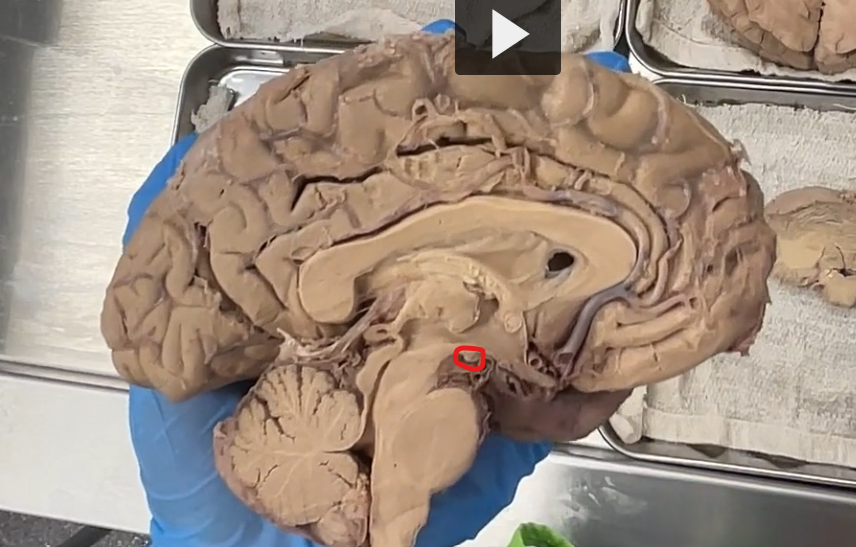
<p>Red: mammillary bodies</p><p><strong>Mammillary Bodies — Etymology &amp; Definition</strong> <strong>Etymology</strong> </p><ul><li><p><strong>Mammillary</strong> comes from Latin <strong><em>mammilla</em></strong>, meaning <strong>“little breast”</strong> or <strong>“nipple.”</strong></p></li><li><p><strong>Bodies</strong> just means rounded structures.</p></li></ul><p>So <strong>mammillary bodies</strong> literally means <strong>“little breast-like bodies”</strong>, named for their small rounded shape.</p><p> <strong>Definition</strong> </p><ul><li><p>The <strong>mammillary bodies</strong> are a pair of <strong>small rounded nuclei</strong> on the <strong>inferior surface of the hypothalamus</strong>.</p></li><li><p>They are part of the <strong>limbic system</strong> and are involved mainly in <strong>memory processing</strong>, especially <strong>recollective memory</strong>.</p></li></ul><p></p>
21
New cards

To locate the subthalamus: we want to look posterior and lateral to the hypothalamus.

Since we are in the midline, we are not going to see the subthalamus, but we want to remember that it’s posterior and lateral to the hypothalamus.

Sub-thalamus — Etymology & Definition

Etymology

  • Greek roots:

    • sub- = “under”

    • thalamos = “inner chamber” (→ thalamus)

So, subthalamus literally means “below the thalamus.”

Definition (Neuroanatomy)

  • The subthalamus is:

    • A small region of the diencephalon

    • Located inferior to the thalamus and superior to the midbrain

    • Functionally linked to the basal ganglia system

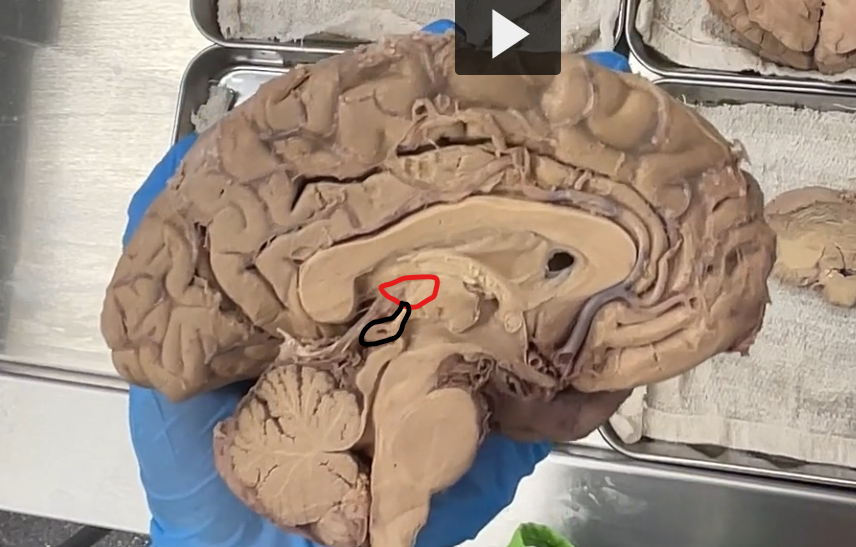
red: epithalamus (posterior to the thalamus)

black: pineal gland (projection from the epithalamus)

Epithalamus — Etymology & Definition

Etymology

  • Greek roots:

    • epi- = “upon” or “above”

    • thalamos = “inner chamber” (→ thalamus)

So, epithalamus literally means “upon/above the thalamus.”

Definition (Neuroanatomy)

  • The epithalamus is:

    • The posterior–superior part of the diencephalon

    • Located above and behind the thalamus

    • Forms part of the roof of the third ventricle

Key Structures (High-Yield)

  • pineal gland

  • Habenular nuclei (emotion/reward pathways)

  • posterior commissure

Functions

  • Pineal gland:

    • Secretes melatonin

    • Regulates circadian rhythms (sleep–wake cycle)

  • Habenular nuclei:

    • Involved in emotional processing, reward, and aversion

  • Posterior commissure:

    • Coordinates bilateral eye reflexes (especially pupillary light reflex)

Pineal Gland — Etymology & Definition

Etymology

  • From Latin pinea = “pine cone”

  • gland = a secreting organ

So, pineal gland literally means “pine cone–shaped gland.”

Definition (Neuroanatomy)

  • The pineal gland is:

    • A small endocrine gland

    • Located in the epithalamus

    • Positioned posterior to the third ventricle, between the two thalami

Function (High-Yield)

Regulates circadian rhythms via melatonin

  • Secretes melatonin (not melanin)

  • Controls:

    • Sleep–wake cycle

    • Biological clock

  • Light exposure ↓ melatonin

  • Darkness ↑ melatonin

<p>red: epithalamus (posterior to the thalamus)</p><p>black: pineal gland (projection from the epithalamus)</p><p><strong>Epithalamus — Etymology &amp; Definition</strong> </p><p><strong>Etymology</strong> </p><ul><li><p><strong>Greek roots:</strong></p><ul><li><p><strong><em>epi-</em></strong> = “upon” or “above”</p></li><li><p><strong><em>thalamos</em></strong> = “inner chamber” (→ thalamus)</p></li></ul></li></ul><p> So, <strong><em>epithalamus</em> literally means “upon/above the thalamus.”</strong></p><p>  <strong>Definition (Neuroanatomy)</strong> </p><ul><li><p>The <strong>epithalamus</strong> is:</p><ul><li><p>The <strong>posterior–superior part of the diencephalon</strong></p></li><li><p>Located <strong>above and behind the thalamus</strong></p></li><li><p>Forms part of the <strong>roof of the third ventricle</strong></p></li></ul></li></ul><p><strong>Key Structures (High-Yield)</strong> </p><ul><li><p><strong>pineal gland</strong></p></li><li><p><strong>Habenular nuclei</strong> (emotion/reward pathways)</p></li><li><p><strong>posterior commissure</strong></p></li></ul><p><strong>Functions</strong> </p><ul><li><p><strong>Pineal gland:</strong></p><ul><li><p>Secretes <strong>melatonin</strong></p></li><li><p>Regulates <strong>circadian rhythms (sleep–wake cycle)</strong></p></li></ul></li><li><p><strong>Habenular nuclei:</strong></p><ul><li><p>Involved in <strong>emotional processing</strong>, reward, and aversion</p></li></ul></li><li><p><strong>Posterior commissure:</strong></p><ul><li><p>Coordinates <strong>bilateral eye reflexes</strong> (especially pupillary light reflex)</p></li></ul></li></ul><p><strong>Pineal Gland — Etymology &amp; Definition</strong> </p><p> <strong>Etymology</strong> </p><ul><li><p>From Latin <strong><em>pinea</em></strong> = “pine cone” </p></li></ul><ul><li><p><strong><em>gland</em></strong> = a secreting organ</p></li></ul><p>So, <strong><em>pineal gland</em> literally means “pine cone–shaped gland.”</strong></p><p> <strong>Definition (Neuroanatomy)</strong> </p><ul><li><p>The <strong>pineal gland</strong> is:</p><ul><li><p>A <strong>small endocrine gland</strong></p></li><li><p>Located in the <strong>epithalamus</strong></p></li><li><p>Positioned <strong>posterior to the third ventricle</strong>, between the two thalami</p></li></ul></li></ul><p><strong>Function (High-Yield)</strong> </p><p>Regulates circadian rhythms via melatonin</p><ul><li><p>Secretes <strong>melatonin </strong>(not melanin)</p></li><li><p>Controls:</p><ul><li><p><strong>Sleep–wake cycle</strong></p></li><li><p><strong>Biological clock</strong></p></li></ul></li><li><p>Light exposure ↓ melatonin</p></li><li><p>Darkness ↑ melatonin</p></li></ul><p></p>
22
New cards
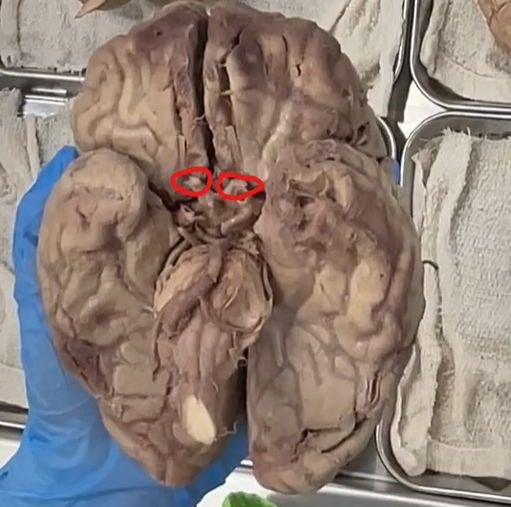
<p>red: optic nerves</p><p>where the crossing occurs: optic chiasm</p>

red: optic nerves

where the crossing occurs: optic chiasm

red: mammillary bodies
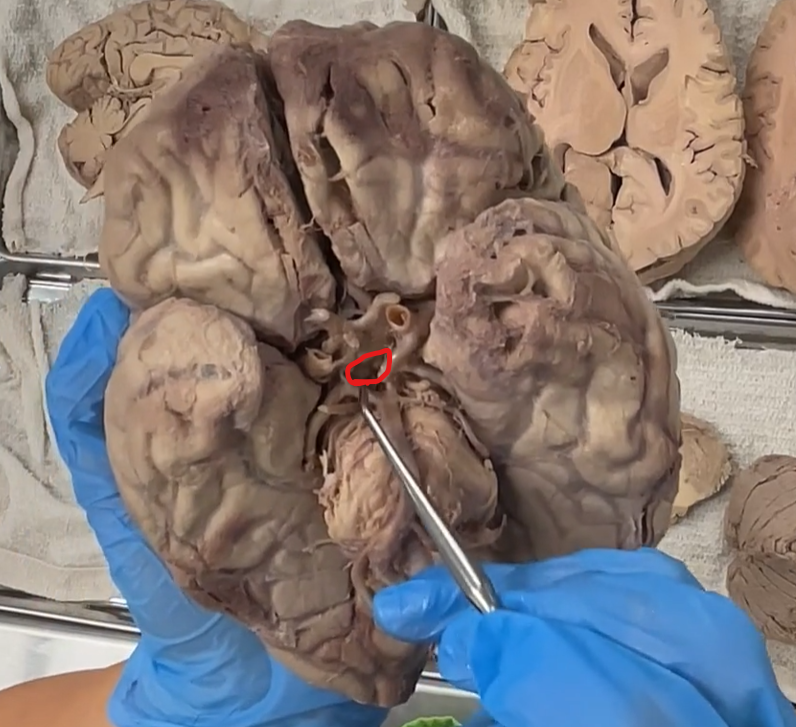
<p>red: mammillary bodies</p>
23
New cards
<p>located between the mammillary bodies and the optic chiasm we have a region called the <strong>Tuber Cinereum</strong></p><p>The Tuber Cinereum is not the stalk, it’s the place between the end of the pituitary stalk and the mammillary bodies.</p><p><strong>Etymology</strong></p><ul><li><p><strong>Latin roots:</strong></p><ul><li><p><strong><em>tuber</em></strong> = “swelling”</p></li><li><p><strong><em>cinereum</em></strong> = “ashen” or “gray”</p></li></ul></li></ul><p>So, <strong><em>tuber cinereum</em> literally means “gray swelling.”</strong></p><p><strong>Definition (Neuroanatomy)</strong></p><ul><li><p>The <strong>tuber cinereum</strong> is:</p><ul><li><p>A <strong>region of gray matter</strong> in the <strong>hypothalamus</strong></p></li><li><p>Located on the <strong>inferior surface of the brain</strong></p></li><li><p>Forms part of the <strong>floor of the third ventricle</strong></p></li></ul></li></ul><p><strong>Function</strong></p><ul><li><p>Contains the <strong>median eminence</strong></p></li><li><p>Important for:</p><ul><li><p><strong>Hormone release into the hypophyseal portal system</strong></p></li><li><p>Communication between <strong>hypothalamus → anterior pituitary</strong></p></li></ul></li></ul><p></p>

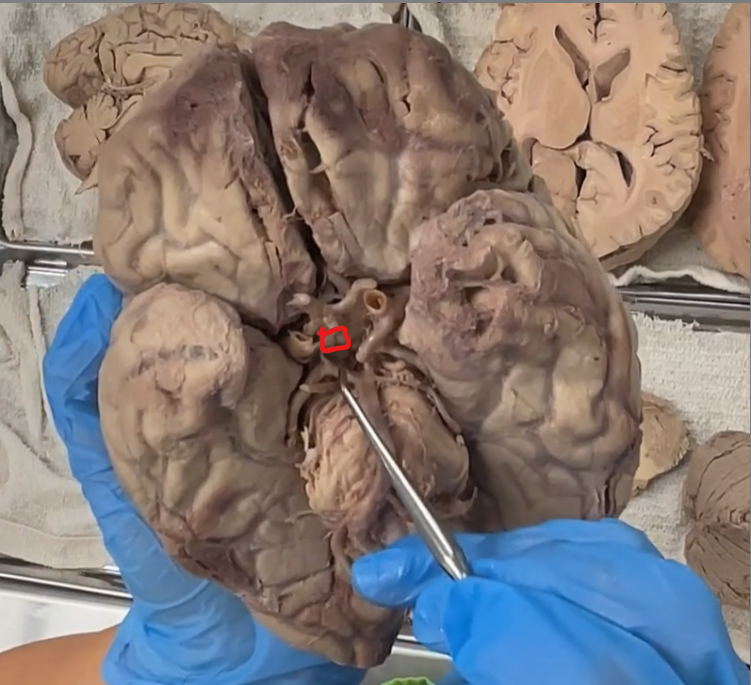
located between the mammillary bodies and the optic chiasm we have a region called the Tuber Cinereum

The Tuber Cinereum is not the stalk, it’s the place between the end of the pituitary stalk and the mammillary bodies.

Etymology

  • Latin roots:

    • tuber = “swelling”

    • cinereum = “ashen” or “gray”

So, tuber cinereum literally means “gray swelling.”

Definition (Neuroanatomy)

  • The tuber cinereum is:

    • A region of gray matter in the hypothalamus

    • Located on the inferior surface of the brain

    • Forms part of the floor of the third ventricle

Function

  • Contains the median eminence

  • Important for:

    • Hormone release into the hypophyseal portal system

    • Communication between hypothalamus → anterior pituitary

pituitary stalk
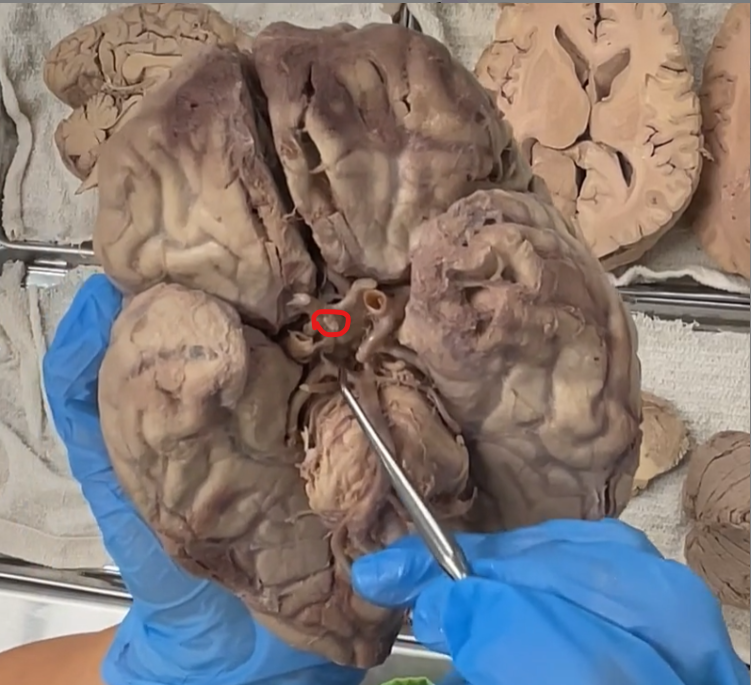
<p>pituitary stalk </p>
24
New cards
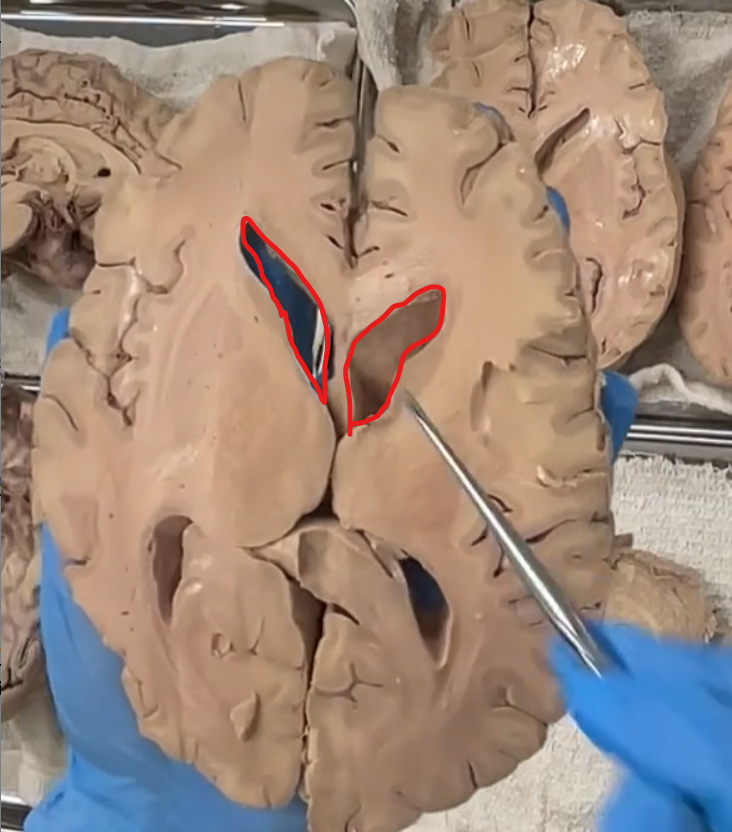
<p>lateral ventricles</p><p><strong>Lateral Ventricles — Etymology &amp; Definition</strong> </p><p> <strong>Etymology</strong> </p><ul><li><p><strong>Latin roots:</strong></p><ul><li><p><strong><em>lateralis</em></strong> = “side”</p></li><li><p><strong><em>ventriculus</em></strong> = “little belly” or “small cavity”</p></li></ul></li></ul><p>So, <strong><em>lateral ventricles</em> literally means “side cavities.”</strong></p><p> <strong>Definition (Neuroanatomy)</strong> </p><ul><li><p>The <strong>lateral ventricles</strong> are:</p><ul><li><p>A <strong>pair of large, C-shaped cavities</strong></p></li><li><p>Located within each <strong>cerebral hemisphere</strong></p></li><li><p><strong>Filled </strong>with <strong>cerebrospinal fluid (CSF)</strong></p></li></ul></li></ul><p><strong>Main Parts (High-Yield)</strong> </p><p><strong>Each lateral ventricle</strong> has<strong> four key regions:</strong></p><ul><li><p><strong>Anterior (frontal) horn</strong> → in frontal lobe</p></li><li><p><strong>Body</strong> → central portion</p></li><li><p><strong>Posterior (occipital) horn</strong> → in occipital lobe</p></li><li><p><strong>Inferior (temporal) horn</strong> → in temporal lobe</p></li></ul><p>  <strong>Connections</strong> </p><ul><li><p>Each lateral ventricle connects to the <strong>third ventricle</strong> via the<br><strong>interventricular foramen</strong></p></li></ul><p>  <strong>Function</strong> </p><ul><li><p><strong>Contain</strong> and<strong> circulate CSF</strong>, which:</p><ul><li><p>Cushions the brain</p></li><li><p>Removes waste</p></li><li><p>Maintains chemical balance</p></li></ul></li><li><p>CSF is produced by the <strong>choroid plexus</strong></p></li></ul><p></p>

lateral ventricles

Lateral Ventricles — Etymology & Definition

Etymology

  • Latin roots:

    • lateralis = “side”

    • ventriculus = “little belly” or “small cavity”

So, lateral ventricles literally means “side cavities.”

Definition (Neuroanatomy)

  • The lateral ventricles are:

    • A pair of large, C-shaped cavities

    • Located within each cerebral hemisphere

    • Filled with cerebrospinal fluid (CSF)

Main Parts (High-Yield)

Each lateral ventricle has four key regions:

  • Anterior (frontal) horn → in frontal lobe

  • Body → central portion

  • Posterior (occipital) horn → in occipital lobe

  • Inferior (temporal) horn → in temporal lobe

Connections

  • Each lateral ventricle connects to the third ventricle via the
    interventricular foramen

Function

  • Contain and circulate CSF, which:

    • Cushions the brain

    • Removes waste

    • Maintains chemical balance

  • CSF is produced by the choroid plexus

posterior and lateral to the lateral ventricles is the caudate nucleus

Caudate Nucleus — Etymology & Definition

Etymology

  • From Latin:

    • cauda = “tail”

    • -ate = “having the form of”

👉 So, caudate = “tail-like”
👉 Caudate nucleus = “tail-shaped nucleus”

Definition (Neuroanatomy)

  • The caudate nucleus is:

    • A C-shaped mass of gray matter

    • Part of the basal ganglia

    • Closely follows the contour of the lateral ventricles

Function (Basal Ganglia Role)

Movement regulation + cognition

  • Helps:

    • Initiate and control voluntary movement

    • Suppress unwanted movements

    • Participate in learning, habit formation, and cognition
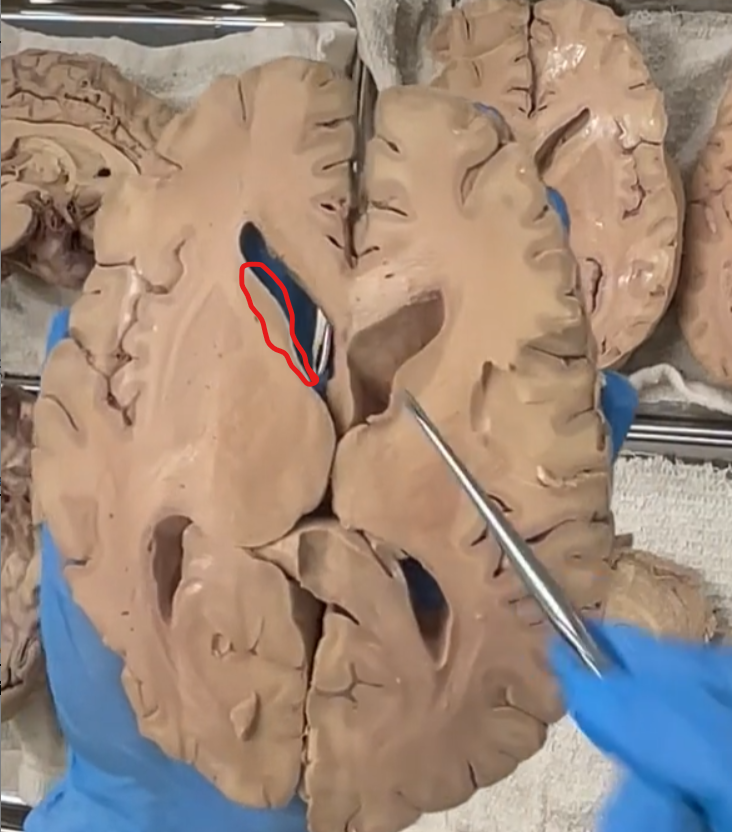
<p><strong>posterior</strong> and <strong>lateral</strong> to the<strong> lateral ventricles</strong> is the<strong> caudate nucleus</strong></p><p><strong>Caudate Nucleus — Etymology &amp; Definition</strong> </p><p> <strong>Etymology</strong> </p><ul><li><p>From Latin:</p><ul><li><p><strong><em>cauda</em></strong> = “tail”</p></li><li><p><strong><em>-ate</em></strong> = “having the form of”</p></li></ul></li></ul><p><span data-name="point_right" data-type="emoji">👉</span> So, <strong><em>caudate</em> = “tail-like”</strong><br><span data-name="point_right" data-type="emoji">👉</span> <strong>Caudate nucleus = “tail-shaped nucleus”</strong></p><p><strong>Definition (Neuroanatomy)</strong> </p><ul><li><p>The <strong>caudate nucleus</strong> is:</p><ul><li><p>A <strong>C-shaped mass of gray matter</strong></p></li><li><p>Part of the <strong>basal ganglia</strong></p></li><li><p>Closely follows the contour of the <strong>lateral ventricles</strong></p></li></ul></li></ul><p><strong>Function (Basal Ganglia Role)</strong> </p><p>Movement regulation + cognition</p><ul><li><p>Helps:</p><ul><li><p><strong>Initiate</strong> and<strong> control</strong> <strong>voluntary movement</strong></p></li><li><p><strong>Suppress unwanted movements</strong></p></li><li><p>Participate in <strong>learning, habit formation, and cognition</strong></p></li></ul></li></ul><p></p>
25
New cards
<p>posterior and lateral to the caudate nucleus is the internal capsule.</p><p><strong>Internal Capsule — Etymology &amp; Definition</strong> </p><p> <strong>Etymology</strong> </p><ul><li><p><strong>Latin roots:</strong></p><ul><li><p><strong><em>internus</em></strong> = “within”</p></li><li><p><strong><em>capsula</em></strong> = “little box” or “container”</p></li></ul></li></ul><p><span data-name="point_right" data-type="emoji">👉</span> So, <strong><em>internal capsule</em> literally means “inner container.”</strong><br>(Think of it as a <strong>bundle of fibers enclosed deep within the brain</strong>.)</p><p><strong>Definition (Neuroanatomy)</strong> </p><ul><li><p>The <strong>internal capsule</strong> is:</p><ul><li><p>A <strong>dense bundle of projection fibers</strong></p></li><li><p>Located deep within the cerebral hemispheres</p></li><li><p><strong>white matter</strong> that carries information <strong>to and from the cerebral cortex</strong></p></li></ul></li></ul><p></p>

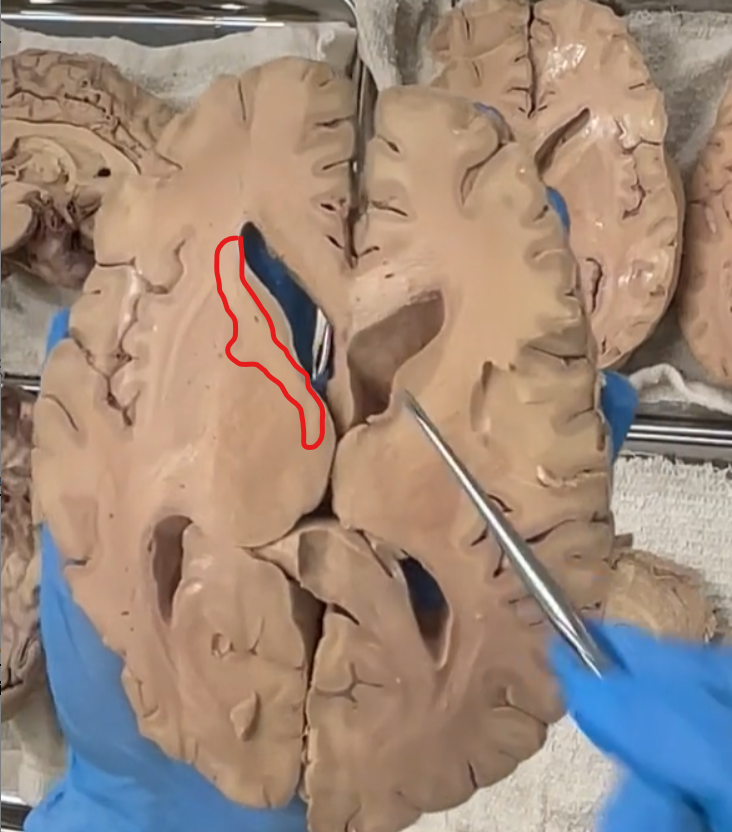
posterior and lateral to the caudate nucleus is the internal capsule.

Internal Capsule — Etymology & Definition

Etymology

  • Latin roots:

    • internus = “within”

    • capsula = “little box” or “container”

👉 So, internal capsule literally means “inner container.”
(Think of it as a bundle of fibers enclosed deep within the brain.)

Definition (Neuroanatomy)

  • The internal capsule is:

    • A dense bundle of projection fibers

    • Located deep within the cerebral hemispheres

    • white matter that carries information to and from the cerebral cortex

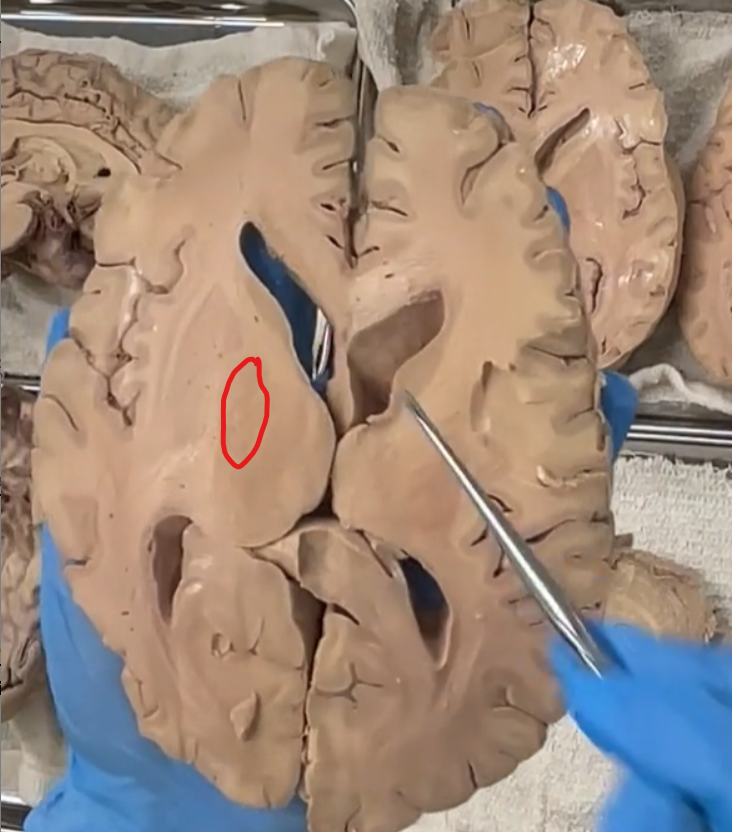
putamen (red)

the caudate nucleus is separated from the putamen by the internal capsule.

Putamen — Etymology & Definition

Etymology

  • From Latin putamen = “shell” (like the outer covering of a nut)

So, putamen literally means “shell-like structure.”
(This reflects its position as an outer part of the basal ganglia.)

Definition (Neuroanatomy)

  • The putamen is:

    • A round mass of gray matter

    • Part of the basal ganglia

    • Located lateral to the globus pallidus

Function (Basal Ganglia Role)

Movement regulation (especially execution and modulation)

  • Helps:

    • Initiate and smooth voluntary movement

    • Regulate muscle tone

    • Suppress unwanted movements

Functional Circuit

  • Receives input from the cortex

  • Sends signals to:

    • globus pallidus

    • Then → thalamus → cortex

This loop controls movement precision
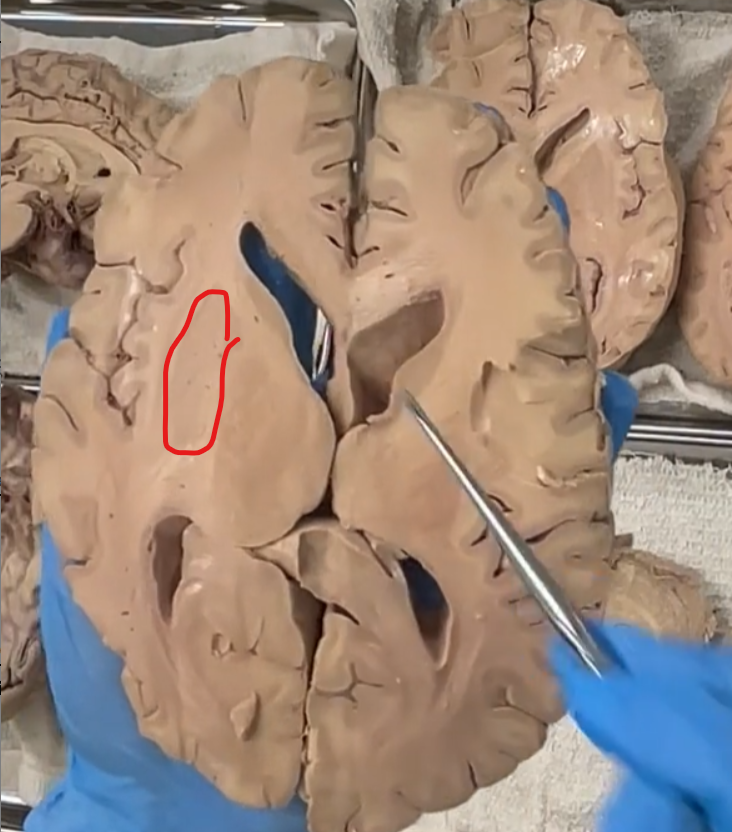
<p>putamen (red)</p><p>the caudate nucleus is separated from the <strong>putamen</strong> by the internal capsule.</p><p><strong>Putamen — Etymology &amp; Definition</strong> </p><p><strong>Etymology</strong> </p><ul><li><p>From Latin <strong><em>putamen</em></strong> = “shell” (like the outer covering of a nut)</p></li></ul><p>So, <strong><em>putamen</em> literally means “shell-like structure.”</strong><br>(This reflects its position as an outer part of the basal ganglia.)</p><p><strong>Definition (Neuroanatomy)</strong> </p><ul><li><p>The <strong>putamen</strong> is:</p><ul><li><p>A <strong>round mass of gray matter</strong></p></li><li><p>Part of the <strong>basal ganglia</strong></p></li><li><p>Located <strong>lateral to the globus pallidus</strong></p></li></ul></li></ul><p><strong>Function (Basal Ganglia Role)</strong> </p><p><strong>Movement regulation (especially execution</strong> and<strong> modulation)</strong></p><ul><li><p>Helps:</p><ul><li><p><strong>Initiate</strong> and<strong> smooth</strong> <strong>voluntary movement</strong></p></li><li><p>Regulate <strong>muscle tone</strong></p></li><li><p>Suppress unwanted movements</p></li></ul></li></ul><p><strong>Functional Circuit</strong> </p><ul><li><p><strong>Receives input </strong>from the <strong>cortex</strong></p></li><li><p>Sends signals to:</p><ul><li><p>globus pallidus</p></li><li><p>Then → thalamus → cortex</p></li></ul></li></ul><p>This loop controls movement precision</p>
26
New cards
<p>medial to the putamen is the <strong>globus pallidus</strong></p><p><strong>Globus Pallidus — Etymology &amp; Definition</strong> </p><p> <strong>Etymology</strong> </p><ul><li><p><strong>Latin roots:</strong></p><ul><li><p><strong><em>globus</em></strong> = “sphere” or “ball”</p></li><li><p><strong><em>pallidus</em></strong> = “pale”</p></li></ul></li></ul><p>So, <strong><em>globus pallidus</em> literally means “pale globe.”</strong><br>(It looks lighter than surrounding structures due to fewer cell bodies and more myelinated fibers.)</p><p> <strong>Definition (Neuroanatomy)</strong> </p><ul><li><p>The <strong>globus pallidus</strong> is:</p><ul><li><p>A <strong>paired mass of gray matter </strong></p></li><li><p>Located <strong>medial to the putamen</strong></p></li><li><p>Part of the <strong>lentiform nucleus</strong> (putamen + globus pallidus)</p></li><li><p>A key <strong>output structure</strong> of the basal ganglia</p></li></ul></li></ul><p></p>

medial to the putamen is the globus pallidus

Globus Pallidus — Etymology & Definition

Etymology

  • Latin roots:

    • globus = “sphere” or “ball”

    • pallidus = “pale”

So, globus pallidus literally means “pale globe.”
(It looks lighter than surrounding structures due to fewer cell bodies and more myelinated fibers.)

Definition (Neuroanatomy)

  • The globus pallidus is:

    • A paired mass of gray matter

    • Located medial to the putamen

    • Part of the lentiform nucleus (putamen + globus pallidus)

    • A key output structure of the basal ganglia

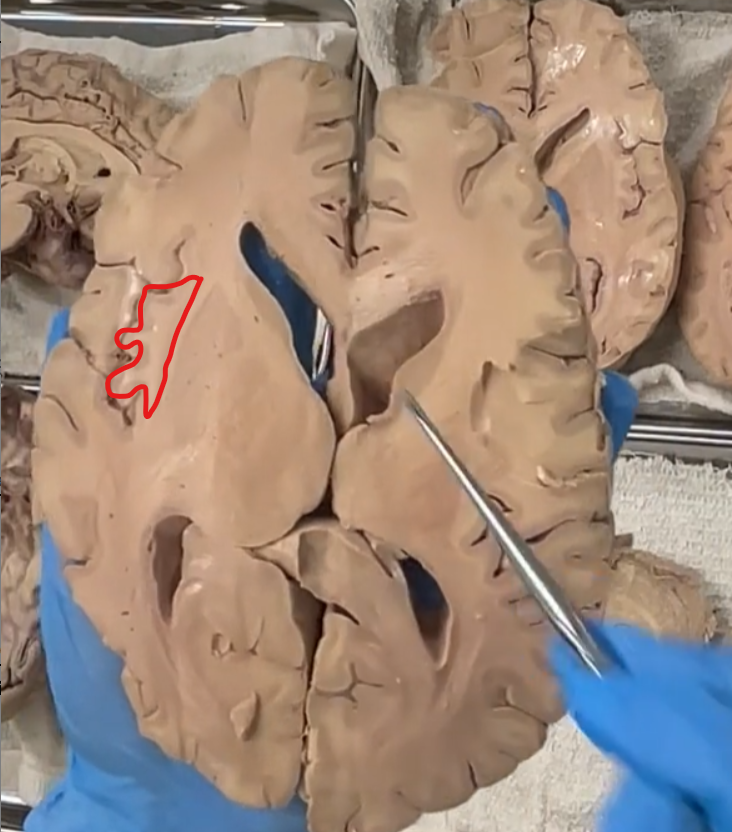
external capsule (in red), the myelinated layer

lateral to the putamen is the external capsule
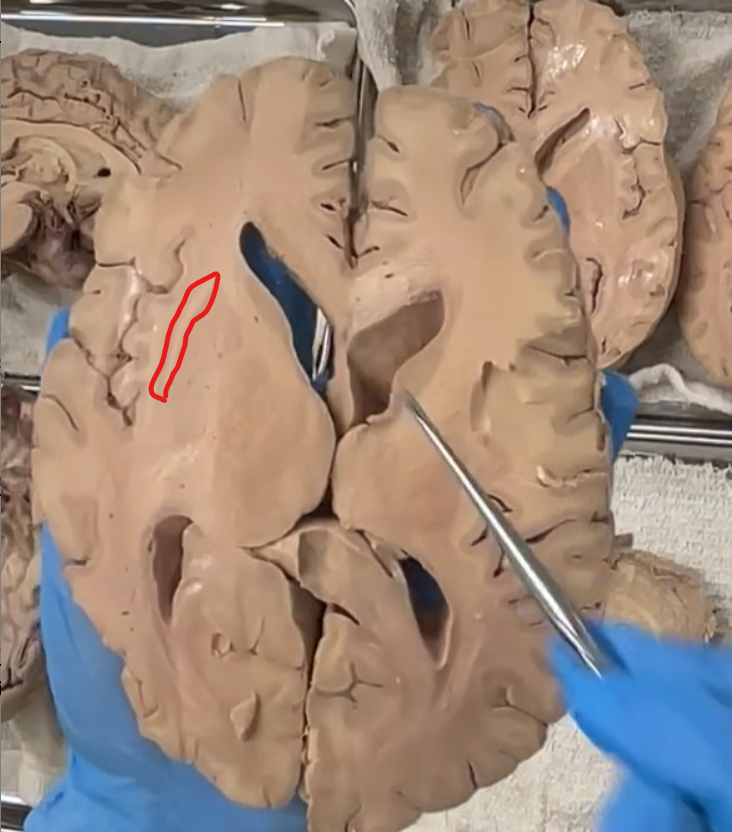
<p>external capsule (in red), the myelinated layer</p><p>lateral to the putamen is the external capsule</p>
27
New cards
<p>lateral to the external capsule is the collustrum.</p><p>the insular cortex is the outer of the collustrum. </p>

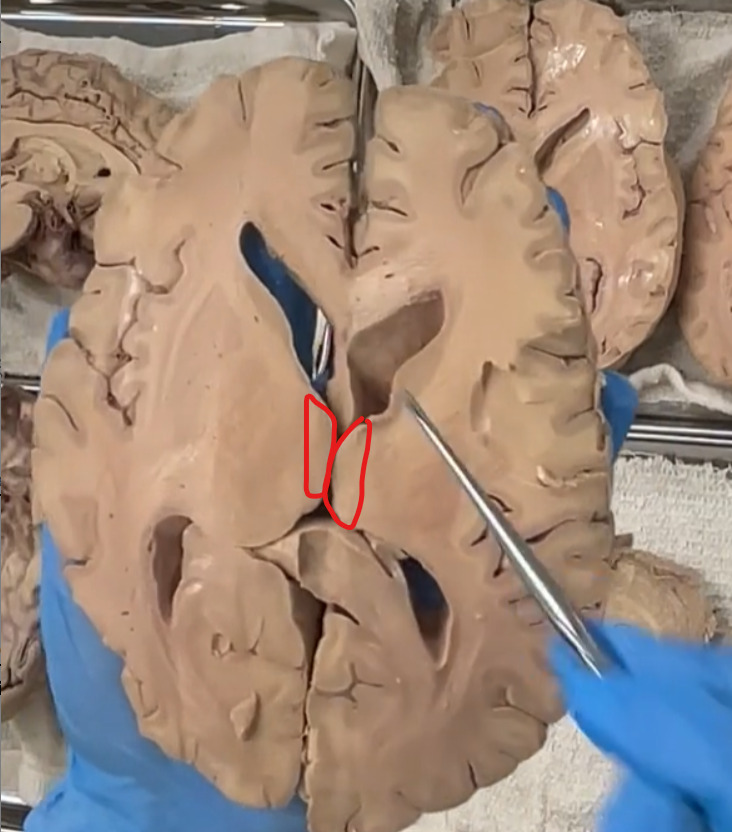
lateral to the external capsule is the collustrum.

the insular cortex is the outer of the collustrum.
28
New cards
<p>medial to the globus pallidus is the thalamus.</p>

medial to the globus pallidus is the thalamus.

third ventricle
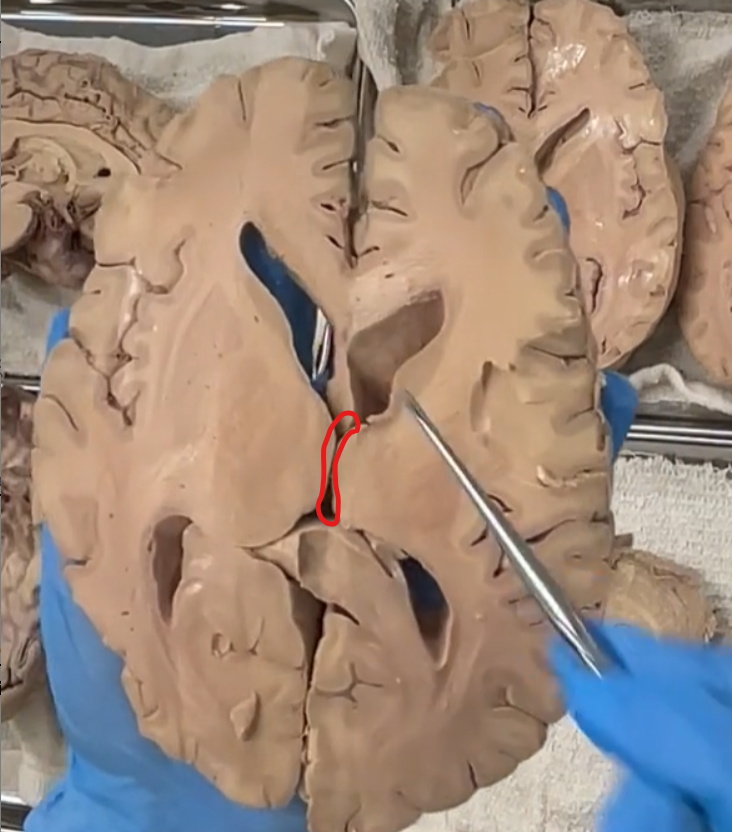
<p>third ventricle</p>
29
New cards
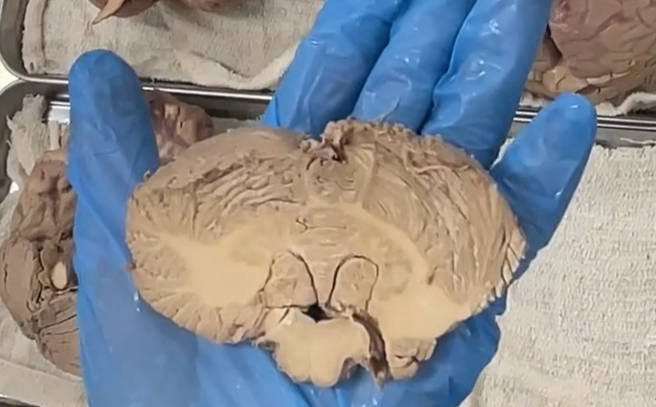
<p>horizontal section of the cerebellum at the level of the rostral medulla. </p>
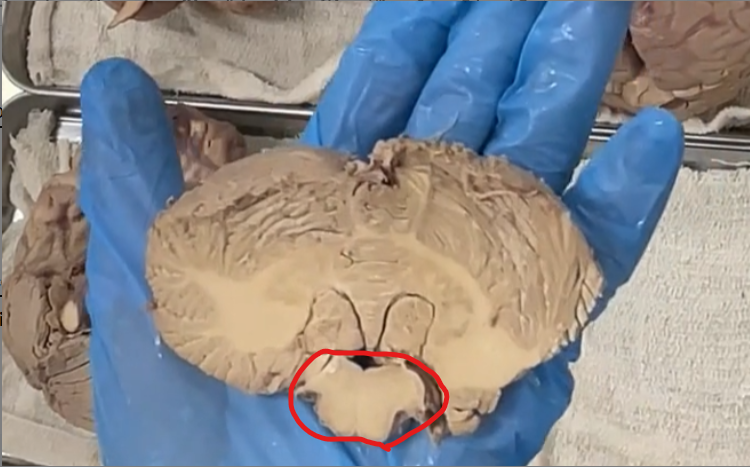
horizontal section of the cerebellum at the level of the rostral medulla.
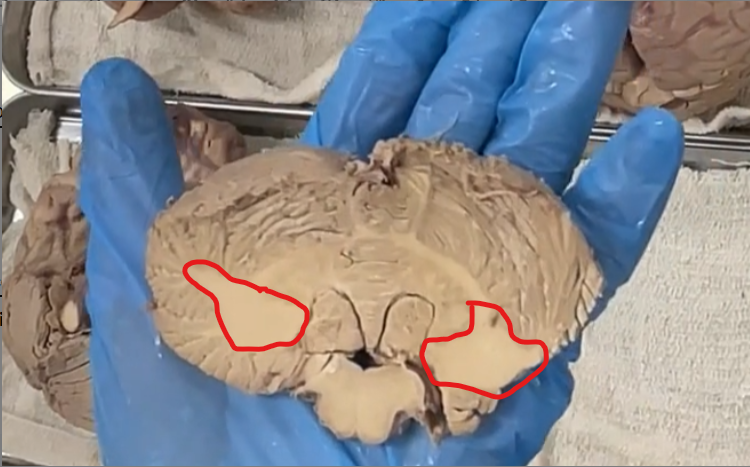
<p></p>
30
New cards
term image

the only cerebellar nucleus we are able to see with the naked eye is the dentate nucleus.
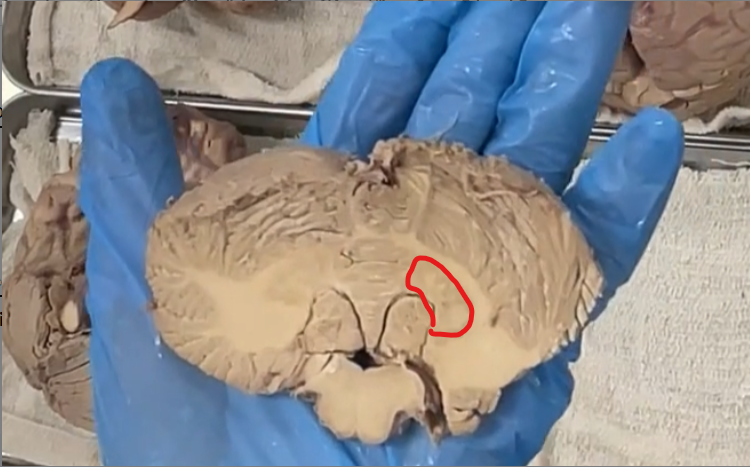
<p>the only cerebellar nucleus we are able to see with the naked eye is the dentate nucleus. </p>
31
New cards

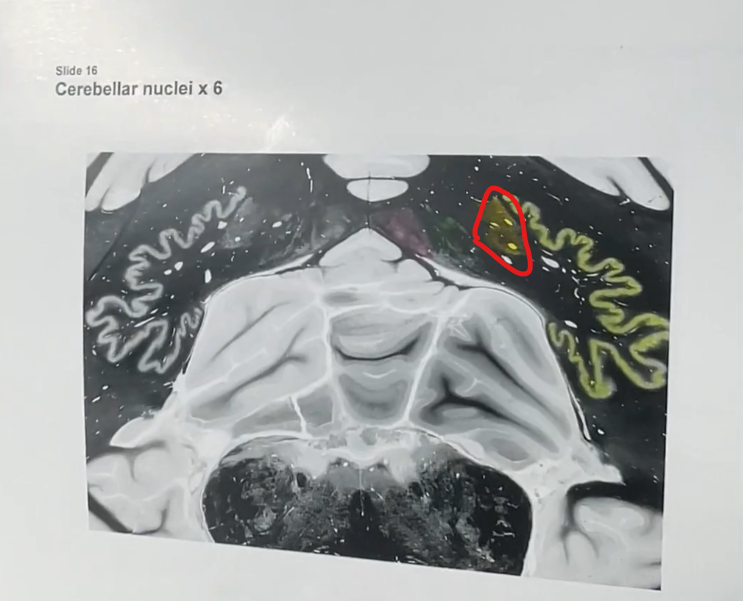
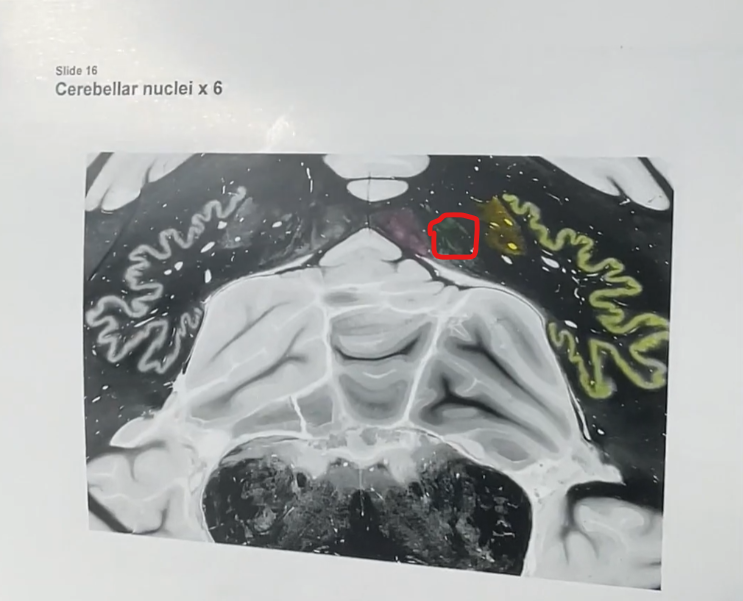
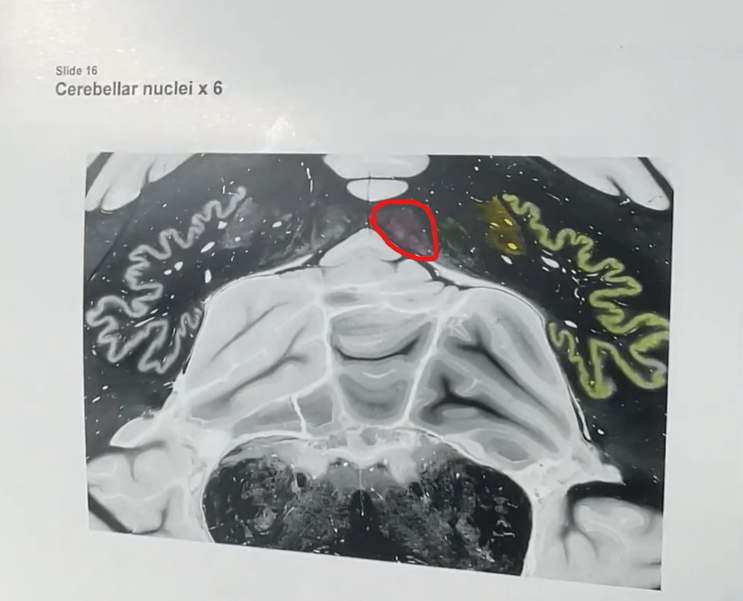
“dont eat greasy foods” this refers to the cerebellar nuclei as we work our way from lateral to medial.

Supplemental image so we can talk about the cerebellar nuclei.

The swiggly green structure is the dentate nucleus that we were able to see grossly.
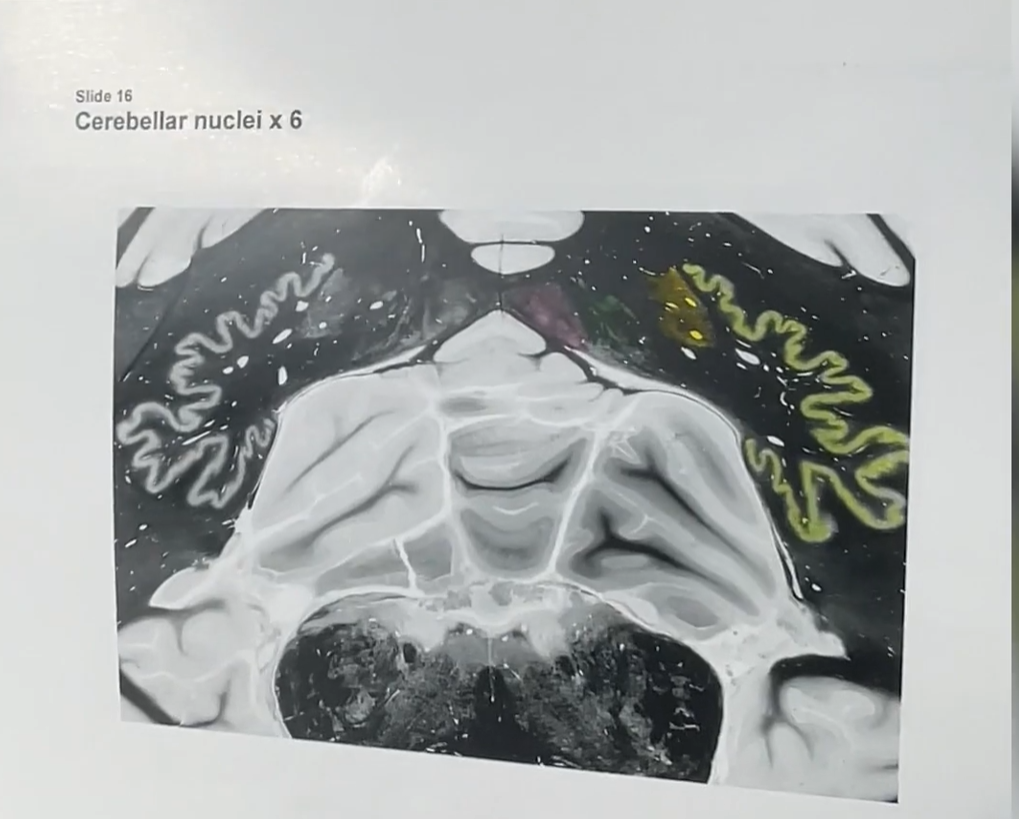
<p>Supplemental image so we can talk about the cerebellar nuclei. </p><p>The swiggly green structure is the dentate nucleus that we were able to see grossly. </p>
32
New cards
<p>working our way medially, this is the “eat” part of “dont eat greasy foods”. </p><p>Circled in red is the <strong>emboliform nucleus</strong> of the cerebellum. </p>

working our way medially, this is the “eat” part of “dont eat greasy foods”.

Circled in red is the emboliform nucleus of the cerebellum.

more medially is the globos nucleus is green, “greasy” of “dont eat greasy foods”.
<p>more medially is the globos nucleus is green, “greasy” of “dont eat greasy foods”. </p>
33
New cards
<p>the most medial part, the "foods” in “dont eat greasy foods” is the <strong>vestigial nucleus</strong>. </p>

the most medial part, the "foods” in “dont eat greasy foods” is the vestigial nucleus.