Sem 2, Unit 6: Ecology
 Call Kai
 Learn
Learn Practice Test
 Spaced Repetition
 Match
Match Flashcards
 Knowt Play
1/65

There's no tags or description
Looks like no tags are added yet.
Name | Mastery | Learn | Test | Matching | Spaced | Call with Kai |
|---|
No analytics yet
Send a link to your students to track their progress
66 Terms
ecology
the study of interactions among organisms and their environment
1) also known as the study of ecosystems
population chain (order)
organism → population → community → ecosystem → biome
ecosystem
the collection of abiotic and biotic factors in an environment
abiotic factors
non-living factors in an environment
1) ex: pH, weather, etc.
biotic factors
living factors in an environment
1) ex: animals in an community
matter cycles (explanation)
matter cycles through an ecosystems (matter doesn’t just disappear)
1) ex: water cycle
2) decomposers = important for nutrient cycling
energy flow (explanation)
energy flows through an ecosystem (eventually exits the ecosystem)
1) ecosystems need a constant fresh supply of energy from the sun
2) sunlight → chemical energy → heat that escapes out into space; ecosystems reset by taking up sunlight again
autotrophs
primary producers of ecosystem
1) synthesize food from sunlight (or chemicals)
aquatic autotrophs (examples)
diatoms, algae, and phytoplankton
land autotrophs
terrestrial land plants
consumers
organisms that receive energy from eating producers and/or other consumers
primary consumers
consumers that eat producers
secondary consumers
consumers that eat primary consumers
tertiary consumers
consumers that eat secondary consumers
1) (and so forth and so forth; system depends on what you eat)
omnivores
primary and secondary consumers
organisms that eat dead organisms
decomposers, detritivores, and scavengers
1) recycle nutrients
scavengers
break down/eat large dead things things
1) ex: vulture
detritivores
eat smaller dead things
decomposers
eat microscopic dead things
food chains
show the flow of energy within an ecosystem
levels of a food chain (high → low)
4) tertiary consumers
3) secondary consumers
2) primary consumers
1) producers
number of organisms per tier (explanation
as you go up the chain, number of organisms decreases as amount of available energy decreases it
1) Rule of 10%
energy amount in food chain (explained)
energy decreases as you move up the food chain because every organism that takes energy uses some of the gained energy for daily activities (converts into thermal energy)
1) so when you climb up the food chain, consumers are eating things with less and less energy to pass on, leading to an energy decrease as you move up
Rule of 10%
10% = the average percentage of energy transferred from one layer to another
1) less energy to pass on as you move up the chain because spend it as thermal energy for daily activities
community
all the different living species in a given area
1) shows biotic ←→ biotic interactions
coevolution
when closely associated species influence each other’s evolution
1) ex: flower flower adopting the smell of female bees to attract male bees (could have only evolved this way because of interaction) or flowers/hummingbirds evolving together with shape
symbiosis
extremely close longterm relationships
1) three types = mutualism, commensalism, and parasitism
mutualism
+,+ symbiotic relationships
1) ex: humans and gut bacteria
parasitism
+,- symbiotic relationships
1) ex: parasites in pig intestine that starve the host by using its food
2) # of parasites >= # of free living organisms b/c every parasite needs a host
3) parasites typically don’t kill hosts because rely on them for life
commensalism
+,0 symbiotic relationships
1) barnacles using whales as transport or trees and birds with nests
endoparasites
parasites within an organism
1) ex: tapeworm
ectoparasities
parasites living outside of an organism
1) ex: ticks
non-symbiotic relations
when species are less close than symbiosis but still close enough for coevolution to commonly occur
1) competition (-,-)
2) facilitation (+,-/0)
3) predations (+,-)
competition
a non-symbiotic relationship dependent on organisms fighting for the same resource
1) negative for both sides
interspecific competition
competition between two separate species; = fighting
1) bad for both species (lion might beat hyena in one fight, but it’s now injured and wasted energy; ultimately negative)
Interspecific Competition Theory
theory that true competition doesn’t exist in nature unless under extreme circumstances [ASK IF JUST INTERSPECIFIC]
1) because competition is negative for both sides, nature would never promote it
2) extreme circumstances ex: not having enough food to go around
facilitation
when organisms help each other out
1) ex: moss + lichens break down rocks to help form soil for larger plants
predation
when one organism eats the other (+,-) (animal on animal)
1) coevolution response typically = camouflage or mimicry
mimicry
prey mimicking another species
1) types = Batesian Mimicry and Mullerian Mimicry
Batesian Mimicry
when a harmless species mimics a poisonous or unpalatable species
1) ex: viceroy butterflies (mimic poorly tasting monarch butterflies to avoid being eaten by bird who previously ate those butterflies)
2) ex: scarlet kingsnake imitating the dangerous/poisonous corn snake
Mullerian Mimicry
2 or more unpalatable species resembling each other
1) gives the appearance that all of those species are on the same team, so don’t try to mess with one when you just failed to fight the other
2) is an analogous development; we don’t know how they got to be this way
1) ex: similar colored bees/wasps that all have the same defense mechanism
herbivory
predation but when animal eats a plant
1) one benefits; other suffers
2) plants coevolved to develop strategies to fight off predators (ex: poison) but are at a disadvantage because they can’t move
succession
how a community re-establishes itself after a disturbance
1) occurs pretty much all the time because disturbances are constantly happening
2) ex: ecosystem rebuilding after eruption of Mt. St. Helens
primary succession
succession that starts with barren rock (no soil)
1) begins with no life because most plants need fertile soil and moist environments (except pioneer community that comes in here)
2) takes a long time
3) occurs on the community level
secondary succession
succession that starts with soil present
1) would happen for ex: after a forest fire
2) takes less time than primary succession
3) occurs on the community level
pioneer community
the first colonizers of a land after a disturbance
1) = low growing plants (mosses, ferns, and lichens)
2) have low nutrient requirements, are small, and are photosynthetic
3) break weathered rock surface, creating the first layer of soil
climax community
the last organisms to colonize an area
1) are the most stable
2) include large trees
3) typically end up killing the pioneer community because are 1. taller than those low-growing plants to shade them out and 2. have seeds that can erminate in the shade of other plants unlike pioneer community
seral communities
communities formed between the pioneer and climax communities
1) typically, newer community kills off the earlier generation
2) include animals that begin to appear to feed on growing plant diversity; pioneer plants die and animals poop leading to more nutrients in the soil; grazing animals also control population
soil
provides water, nutrients, and a place for plants to grow
ecology niche
all of a species’ requirements and roles in an ecosystem
1) animal niches: temperature, species it eats, places to breed, etc.
2) plant niches: soil, water, light, and pollinator requirements
range of tolerance
an organism’s optimal range for a specific niche
specialists
animals with narrow niches
1) less adaptable; more likely to become extinct; easily effected by changing conditions
2) have an advantage in constant conditions because nobody else wants what they want (ex: koalas with eucalyptus leaves or pandas with bamboo)
generalists
animals with broad niches
1) very adaptive; less likely to become extinct; large range of tolerance
2) have advantage when conditions change but are at a disadvantage in constant conditions (competition0
3) ex: rats and raccoons
competitive exclusion
theory that two species cannot occupy the same niche
1) 2 species with the same niche can survive separately, but in the same environment, one species always dies out/declines
2) competition in general doesn’t exist naturally because is bad for both
resource partitioning
species coevolving to try to make niches as different as possible among one resource (to avoid competition)
1) is the result of coevolution (evolved to avoid competition)
2) ex: roots of close species have roots at different lengths to take nutrients from different depths of the soil
keystone species
a species (or set of species) whose impact on its community or ecosystem is much larger and more influential than would be expected from mere abundance
1) basically, a high-impact connecting piece of a species within an ecosystem (Derrick White)
2) can be a predator or prey
3) ex: salmon, otters, white oak trees, pollinators, beavers, and wolves
indicator species
can be used to measure an environmental factor or change because are influenced by/linked heavily to a factor
1) ex: mayfly nymphs indicating low pollution and high dissolved oxygen or certain amphibians signaling climate change or pollution or fecal coliforms
fecal coliforms
indicator species found in intestines and waste of warm-blooded animal
1) ex: E.Coli (don’t necessarily cause diseases though)
2) indicate animal waste contamination with the potential for the presence of pathogens
exotic species
a species that entered an ecosystem from their foreign ecosystem
invasive species
a harmful exotic species
1) don’t play by the rules of non-competition in other communities because didn’t coevolve with those organisms; out-compete natives
2) ex: zebra mussels, brown tree snakes, bush honeysuckle (shades understory plants), and starlings (push out native birds out of nesting cavities)
pyramid types
1) pyramid of numbers
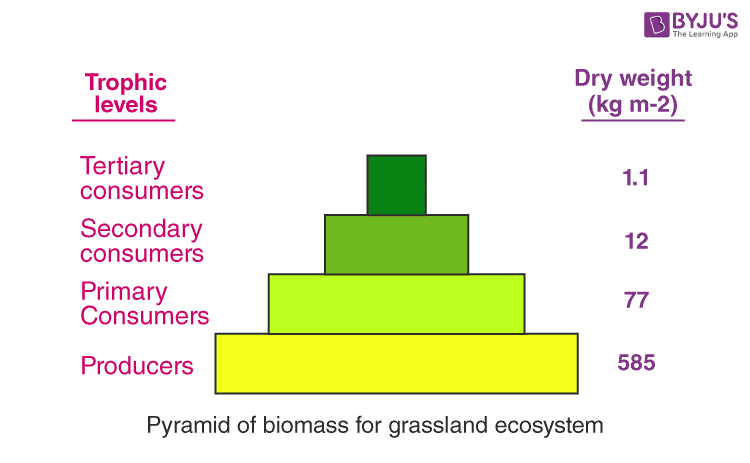
2) pyramid of biomass
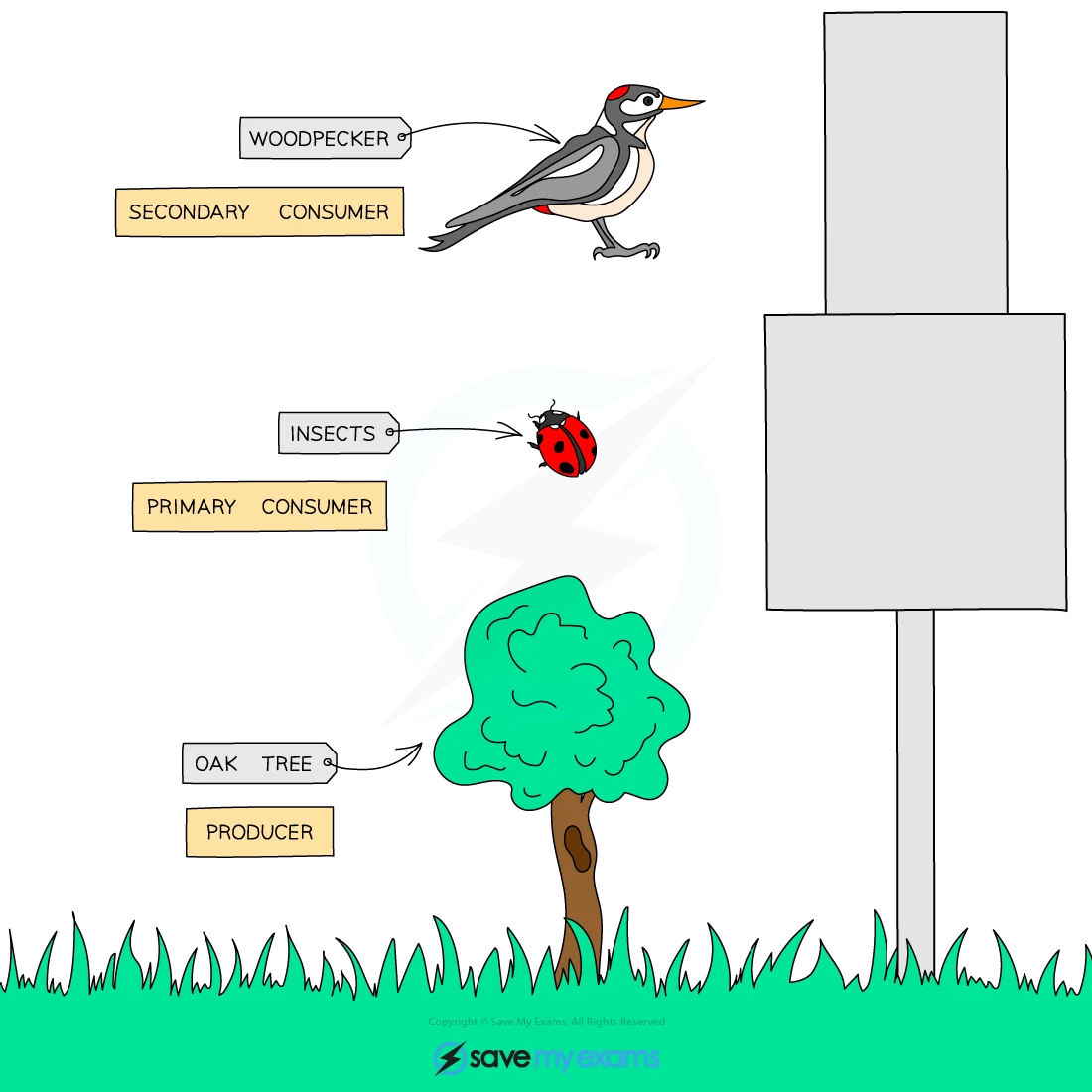
pyramid of numbers
show the population at each level of a community
1) not always great because makes it seem like one oak tree has less energy than a ton of caterpillars (not true)
pyramid of biomass
shows the total mass of a population
1) better because makes it seem like the oak tree has more energy (which is true)
limiting factors
something that restricts
aquatic limiting factors
sunlight, DO, nitrogen, and phosphorus
terrestrial limiting factors
water, nitrogen, phosphorus, and potassium [ADD MORE NOTE CARDS]