NZ Fisheries Management: Quotas, Māori Rights, and Marine Reserves
 Call Kai
 Learn
Learn Practice Test
 Spaced Repetition
 Match
Match Flashcards
 Knowt Play
1/98

There's no tags or description
Looks like no tags are added yet.
Name | Mastery | Learn | Test | Matching | Spaced | Call with Kai |
|---|
No analytics yet
Send a link to your students to track their progress
99 Terms
What is the total land area of New Zealand?
270,534 km²
What is the size of New Zealand's Exclusive Economic Zone (EEZ)?
4,053,000 km²
How long is New Zealand's continental coastline?
15,650 km
What is New Zealand's rank in terms of the size of its EEZ in the world?
4th largest
What percentage of New Zealand's waters are more than 1000 meters deep?
72%
What was the GDP contribution of fisheries to New Zealand in 2022?
$4.6 billion
What percentage of New Zealand's GDP is contributed by fisheries?
0.7%
How many jobs does the fisheries sector support in New Zealand?
Approximately 11,700 jobs
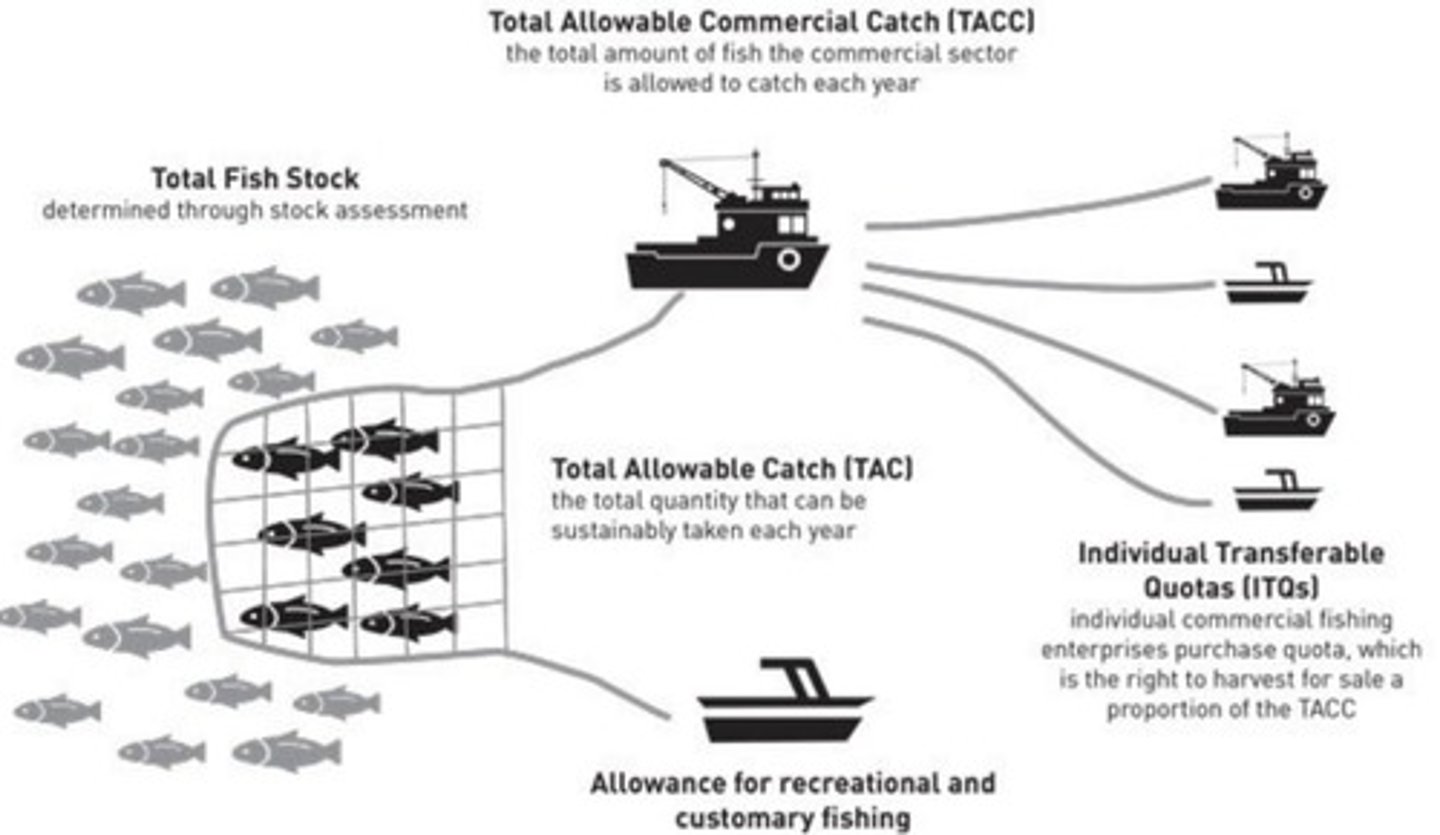
What is the Total Allowable Commercial Catch (TACC) for fish production in New Zealand?
460,000 tonnes
What percentage of fish production in New Zealand comes from the Chatham Rise and Subantarctic regions?
60%
How much fish does New Zealand export?
250,000 tons
What percentage of world fish production does New Zealand account for?
1%
What is the 'Tragedy of the Commons' in relation to fisheries?
It describes the overuse of shared resources leading to depletion.
What is the alternative to the 'Tragedy of the Commons' in fisheries management?
Quota Management System (QMS)
When was the individual Quota Management System (ITQs) introduced in New Zealand?
1986
What does TAC stand for in fisheries management?
Total Allowable Catch
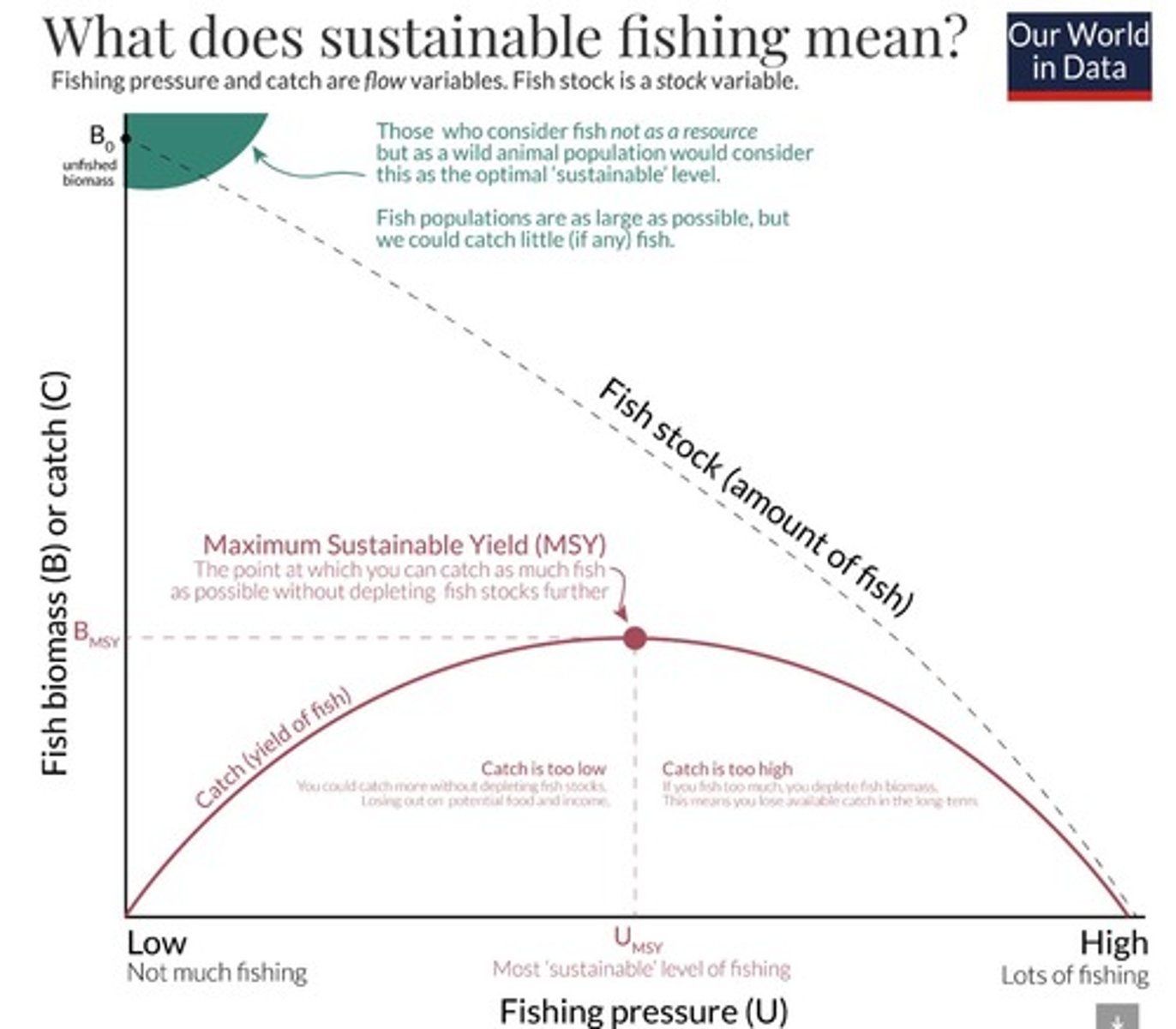
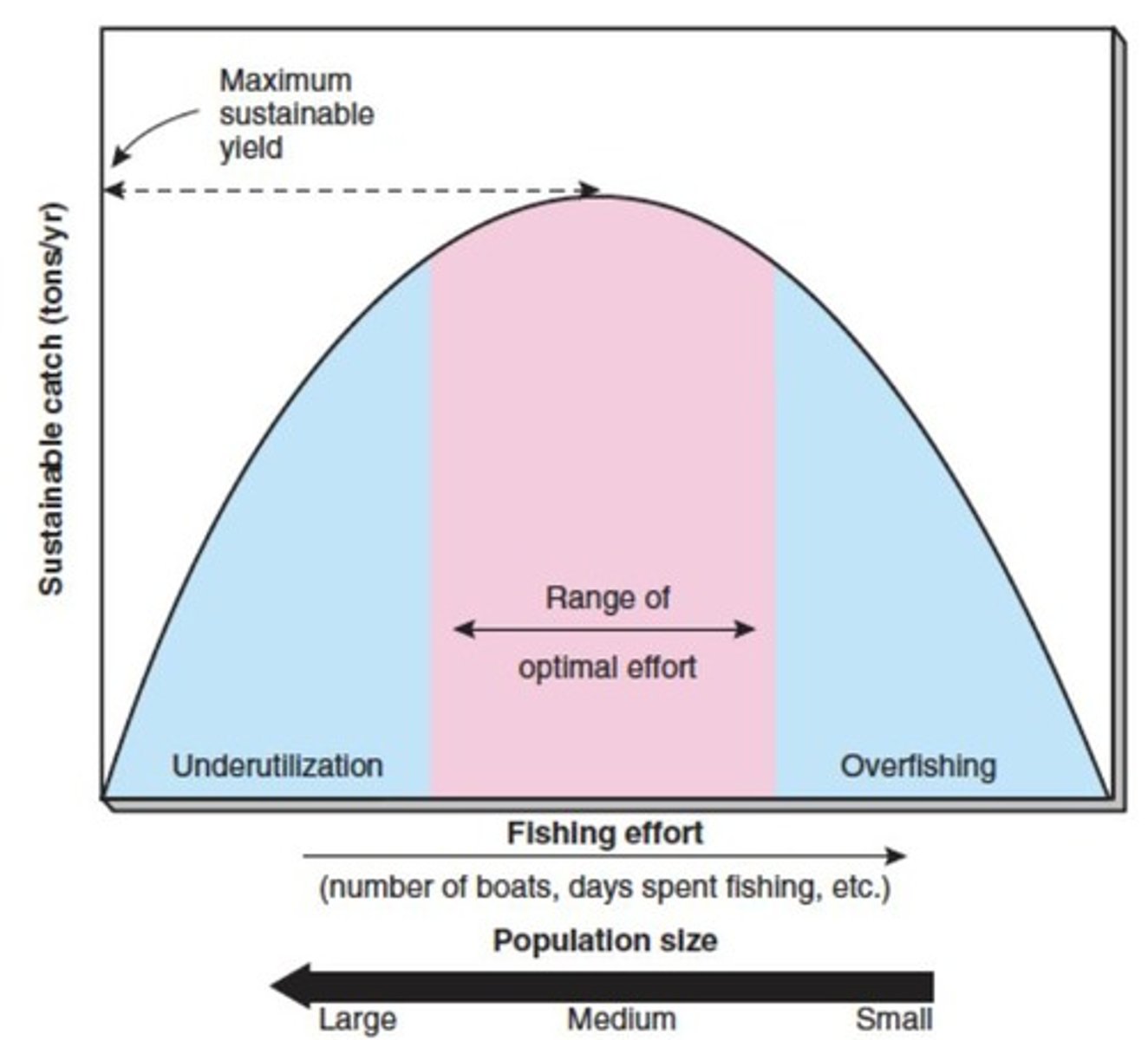
What is the Maximum Sustainable Yield (MSY)?
The greatest yield that can be achieved over time while maintaining a stock's productive capacity.
What is the significance of Catch Per Unit Effort (CPUE) in fisheries?
It indicates stock size estimates based on catch efficiency over time.
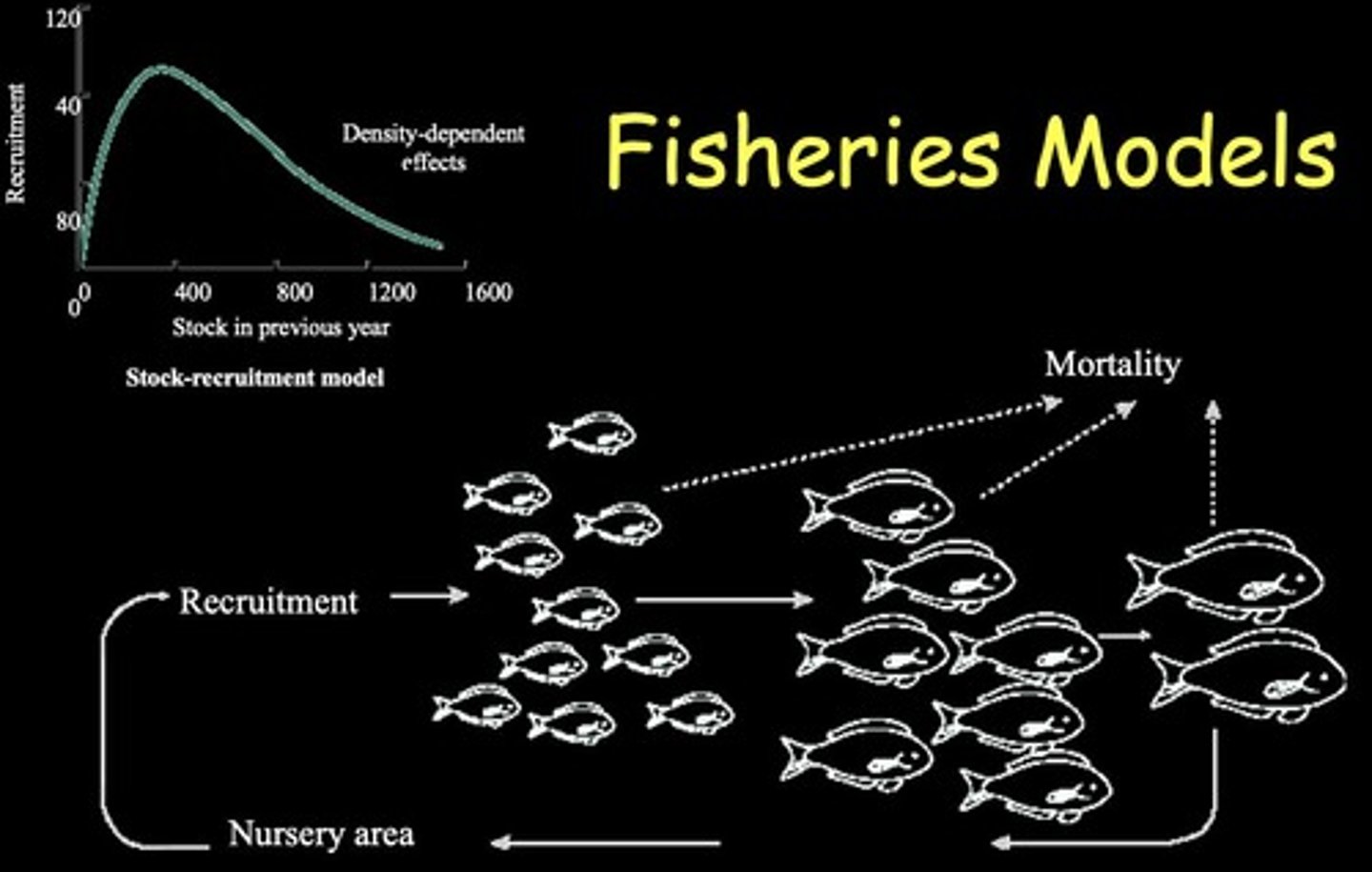
What is the relationship between stock size and recruitment in fisheries?
As stock size increases, recruitment generally decreases due to density-dependent effects.
What is a virgin biomass?
A population that has not been fished before.
What happens to fish catch as fishing effort increases, according to the catch-effort curve?
Catch increases up to a biologically optimal point, after which it declines.
What is the role of the Ministry for Primary Industries (MPI) in fisheries management?
To ensure fish stocks are maintained at or above levels that can produce MSY.
What is the effect of overfishing on species like Toheroa in New Zealand?
Toheroa's fishing season is now limited to five days a year due to overfishing.
What is the impact of technology on fishing limits in the past?
Technology previously limited the amount of fish caught, but this is no longer the case.
What is the expected outcome of implementing ITQs in fisheries?
To end the race to fish and increase economic efficiency.
What is the relationship between fishing pressure and the need for fisheries management?
Increasing fishing pressure necessitates management to prevent overfishing.
What does the MSY approach fail to account for?
Size and age structure within fish stocks.
What is a consequence of the MSY approach regarding fishing vessels?
It encourages significant investment in fishing vessels to achieve initial stock decline.
How can MSY be identified?
By overshooting it, which can lead to a bad state for the population.
What does the MSY approach assume about annual production?
It assumes constant annual production, ignoring natural variability.
What ecological impact can a decrease in snapper population have?
It could create urchin barrens.
What is the significance of technological advances in fishing?
They can create the illusion of stock decrease when fishing methods improve.
What is the global impact of Individual Transferable Quotas (ITQs)?
They have been shown to prevent fisheries collapse.
What is the status of the Orange Roughy population?
It has declined to ~5% of 1970 biomass, recovery may take decades to centuries.
What are the characteristics of deep-sea fish like the blue whale?
They grow slowly, mature late, and have low reproductive rates.
What happened to the Atlantic cod stocks in 1992?
They collapsed, leading to a fishing moratorium and 40,000 job losses.
What was the Canadian government's response to the cod population decline?
They declared the Newfoundland cod population 'endangered' in 2003.
What fishing methods were used in early cod harvesting?
Handline, longline, and gillnets.
What was the impact of factory-freezer trawlers on cod stocks?
They dramatically increased cod harvests, leading to overfishing.
What is the trend of fish stocks globally as of 2024?
64.5% are considered biologically sustainable, while 35.5% are overexploited.
What controversy arose regarding the Kermadec Islands marine reserve?
The NZ government created it without consulting Māori, violating treaty partnerships.
What are some area management tools in fisheries?
Use, protection, restoration, and maintenance/monitoring (e.g., catch limits).
What is a key consideration in fisheries management?
Determining whether an issue is its own problem or a symptom of another problem.
What was the public's reaction to the invasive Japanese worm issue in Lyttelton Harbour?
Public opinion led to funding for removal, despite scientific evidence showing it was impossible.
What is the significance of understanding fish population dynamics?
Wild animal population growth is often greatest at moderate sizes, around the MSY.
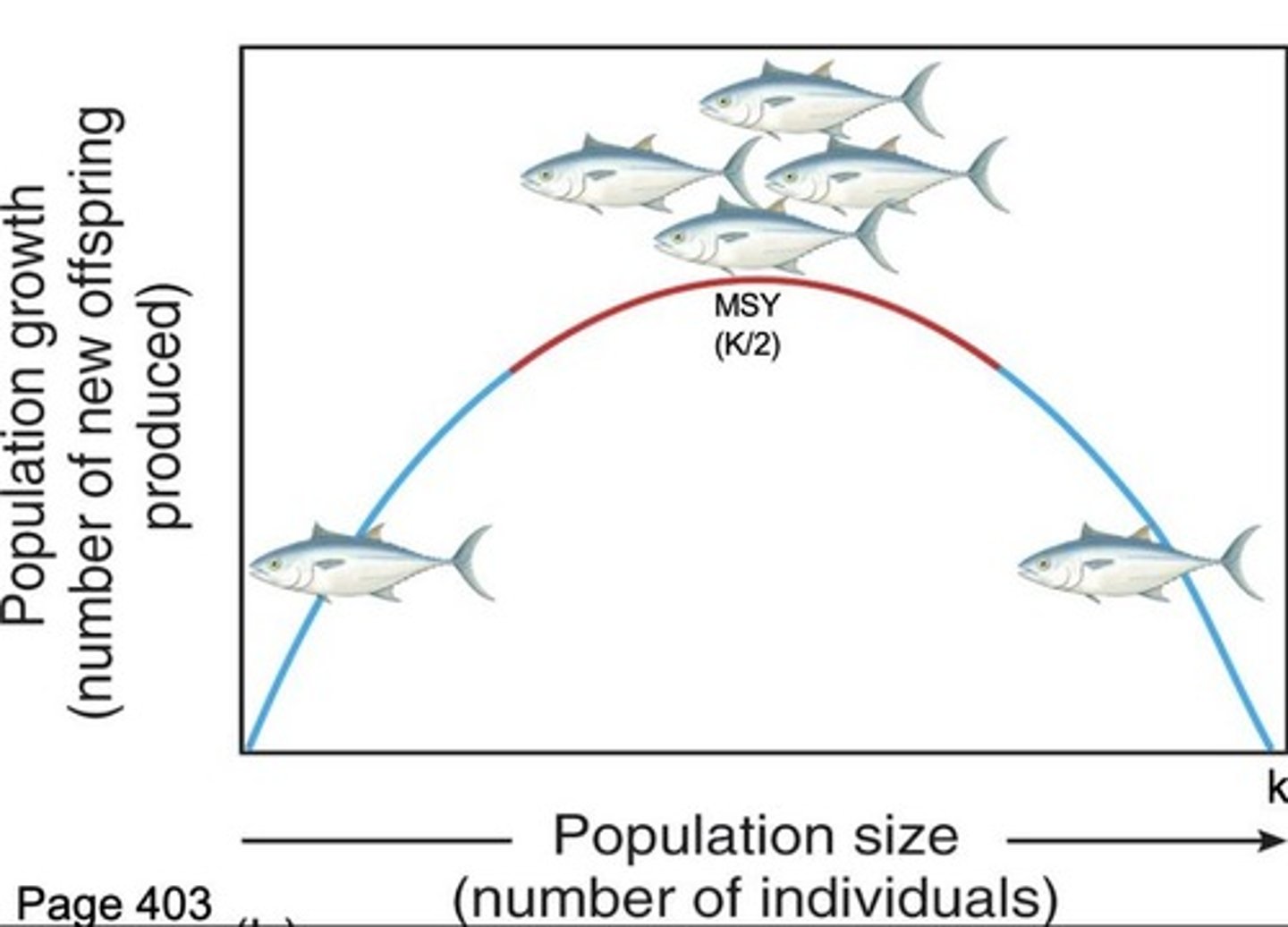
What does it mean for a fish stock to be considered 'overfished'?
It has an abundance below the biomass that would produce the maximum sustainable yield (MSY).
What does Tāngata Tiaki/Kaitiaki mean in Māori?
Guardians; formally appointed as Māori customary representatives under the Fisheries Act.
What are Mātaitai?
Designated customary food gathering areas managed by local communities.
What is the purpose of a Taiāpure?
To make better provision for rangatiratanga (chieftainship) and Article II Treaty rights.
What is Rāhui?
Temporary closures traditionally set by chiefs, now lacking legal enforcement.
What does Article II of the Treaty of Waitangi safeguard?
It guarantees the full, exclusive, and undisturbed possession of lands, fisheries, and properties to Māori.
What was the QMS system introduced in 1986?
A system regulating fisheries that did not consider Māori rights, leading to legal challenges.
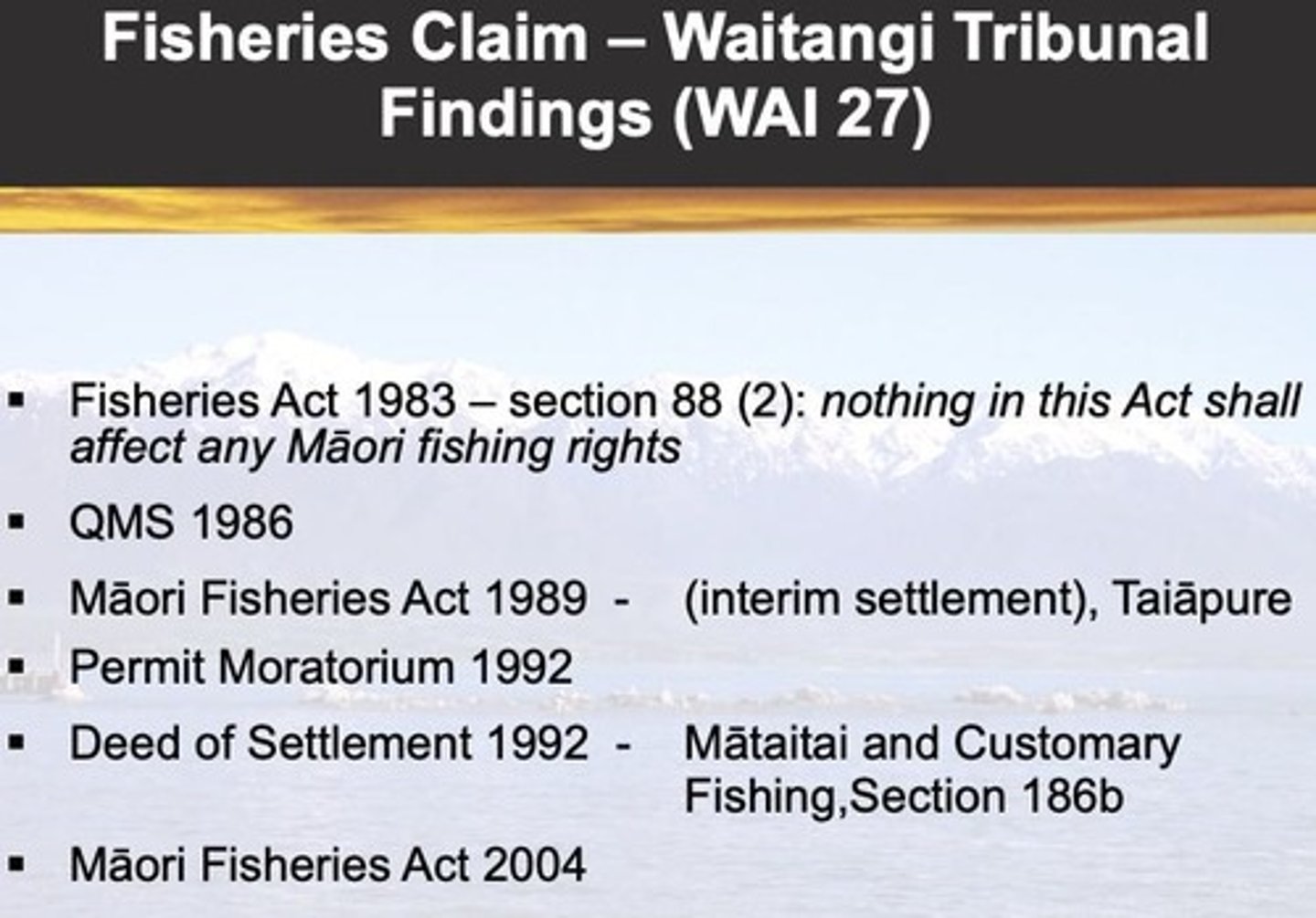
What was the High Court ruling regarding the QMS?
The Crown committed a fundamental breach of the Treaty of Waitangi by giving non-Māori rights that belonged to Māori.
What were the two major assumptions made by legislators about Māori fisheries?
1. Māori fisheries were not commercial. 2. Māori fishing was minor compared to modern commercial and recreational fishing.
What is a hakari in Māori culture?
A large feast that represents mana and community interaction, often involving seafood.
What did the Waitangi Tribunal find regarding Ngāi Tahu's fishing rights in 1840?
Ngāi Tahu had full, exclusive, and undisturbed possession of their sea fishery out to 12 nautical miles.
What did the 1989 Māori Fisheries Act establish?
It created a division between commercial and customary fishing for Māori and established the Māori Fisheries Commission.
What is the Permit Moratorium of 1992?
It unified different fishing permits under the QMS umbrella, eliminating previous distinctions.
What is the significance of the Deed of Settlement in 1992?
It introduced Mātaitai and Section 186B, addressing issues from the QMS.
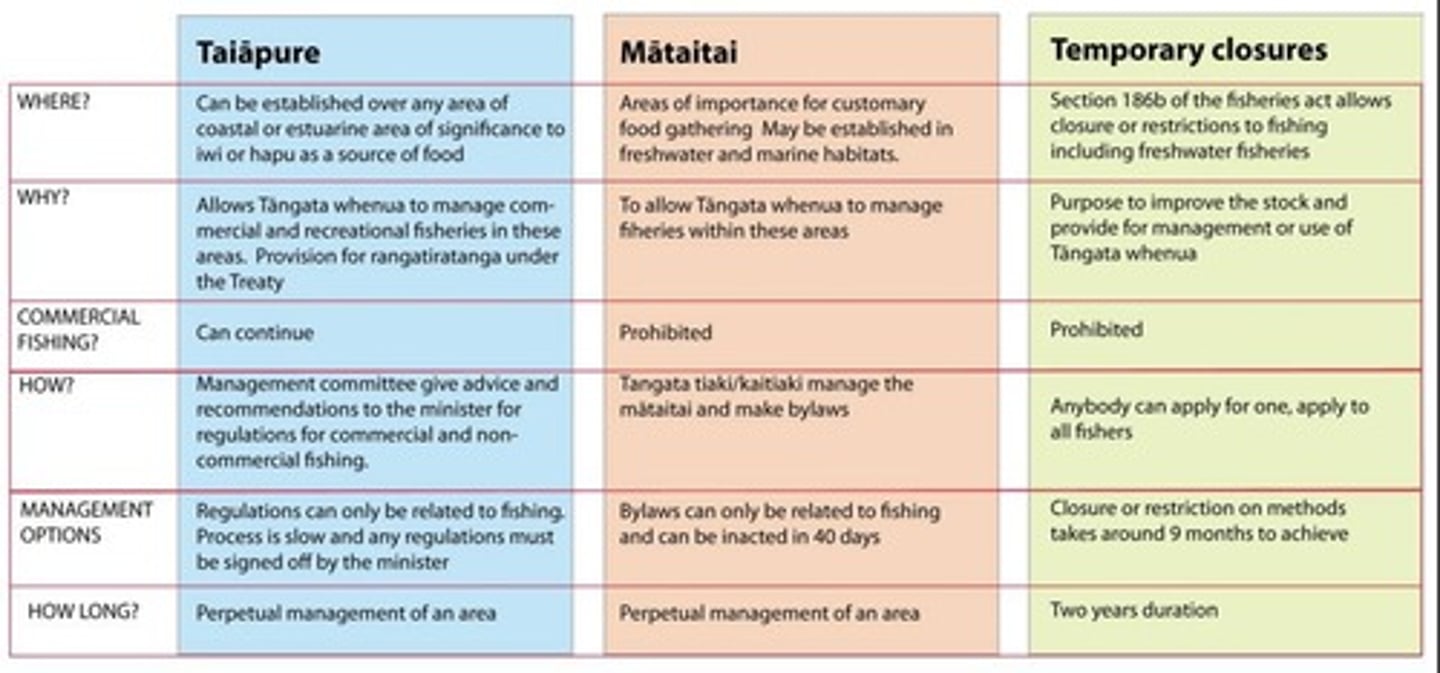
What is the difference between Mātaitai and Taiāpure?
Mātaitai are smaller areas managed by local marae and tangata tiaki, while Taiāpure are larger and require more complex management.
What are the non-commercial components of fisheries settlements?
Taiāpure, customary regulations, and kaitiaki (fisheries managers).
What are the responsibilities of a Taiāpure committee?
To decide on bylaws and regulations for the taiāpure, including species, quantities, and fishing methods.
What is the role of Tāngata Whenua in Taiāpure management?
They nominate committee members who provide advice on regulations to manage fishing.
What is the significance of the term 'mahinga kai'?
It refers to the traditional Māori practice of food gathering, which is protected under the Treaty.
What does the Fisheries Act 1983 state regarding Māori fishing rights?
Section 88 (2) states that nothing in the Act shall affect any Māori fishing rights.
What is the role of the Minister of Fisheries in Taiāpure management?
The Minister appoints committee members and oversees their obligations to Tāngata Whenua.
What are the management areas of Taiāpure?
They identify areas of special significance, applicable to estuarine and littoral coastal waters.
What legal challenges have arisen regarding the littoral zone?
Court cases have sought to define what constitutes the littoral zone for management purposes.
What is the significance of the 20% of new species in fisheries settlements?
It represents a share of newly identified species allocated to Māori under fisheries settlements.
What does the term 'kaitiaki' refer to?
Fisheries managers responsible for overseeing the sustainable use of marine resources.
What is the impact of historical racialized policy on Māori fishing rights?
Māori communities received fewer government grants and support, assuming they could fish for food.
What was the outcome for Te Wēhi from Ngāti Porou in court regarding customary rights?
The court agreed he was exercising his customary right to fish, despite being caught with undersized Paua.
What must applications for fishing management be heard by?
A Tribunal or the Māori Land Court
Who manages the Taiāpure management committee?
A committee nominated by Tāngata Whenua and appointed by the Minister of Fisheries
What do Mahinga kai laws apply to?
Everyone, Māori or not, unless an exemption from a kaitiaki is obtained
What are Mātaitai management areas generally not allowed to do?
Allow commercial fishing
Who can apply for a Mātaitai area?
Tangata Tiaki/Kaitiaki or the Tāngata Whenua who nominated them
How long does it typically take to establish a Mātaitai?
Approximately 6-8 months from the time of application
What is the purpose of Mātaitai reserves?
To manage non-commercial fishing in traditional fishing grounds
What is the timeframe to establish a bylaw for a Mātaitai reserve?
Approximately 2 months
What is a Rāhui?
A temporary closure that can restrict or prohibit fishing methods
What is the maximum duration for which a Rāhui can be applied?
A maximum of 2 years
What is a limitation of the taiāpure and mātaitai management systems?
Managers can only manage fish, not the habitat that supports them
What is the main difference in location between Taiāpure and Mātaitai?
Taiāpure can be in estuarine and littoral coastal waters; Mātaitai can be in any area of NZ fisheries waters
What is the main purpose of Taiāpure?
To provide for tino rangatiratanga and fisheries rights under the Treaty of Waitangi
What is prohibited in Mātaitai areas?
Commercial fishing
How many Taiāpure are currently gazetted around New Zealand?
11 Taiāpure
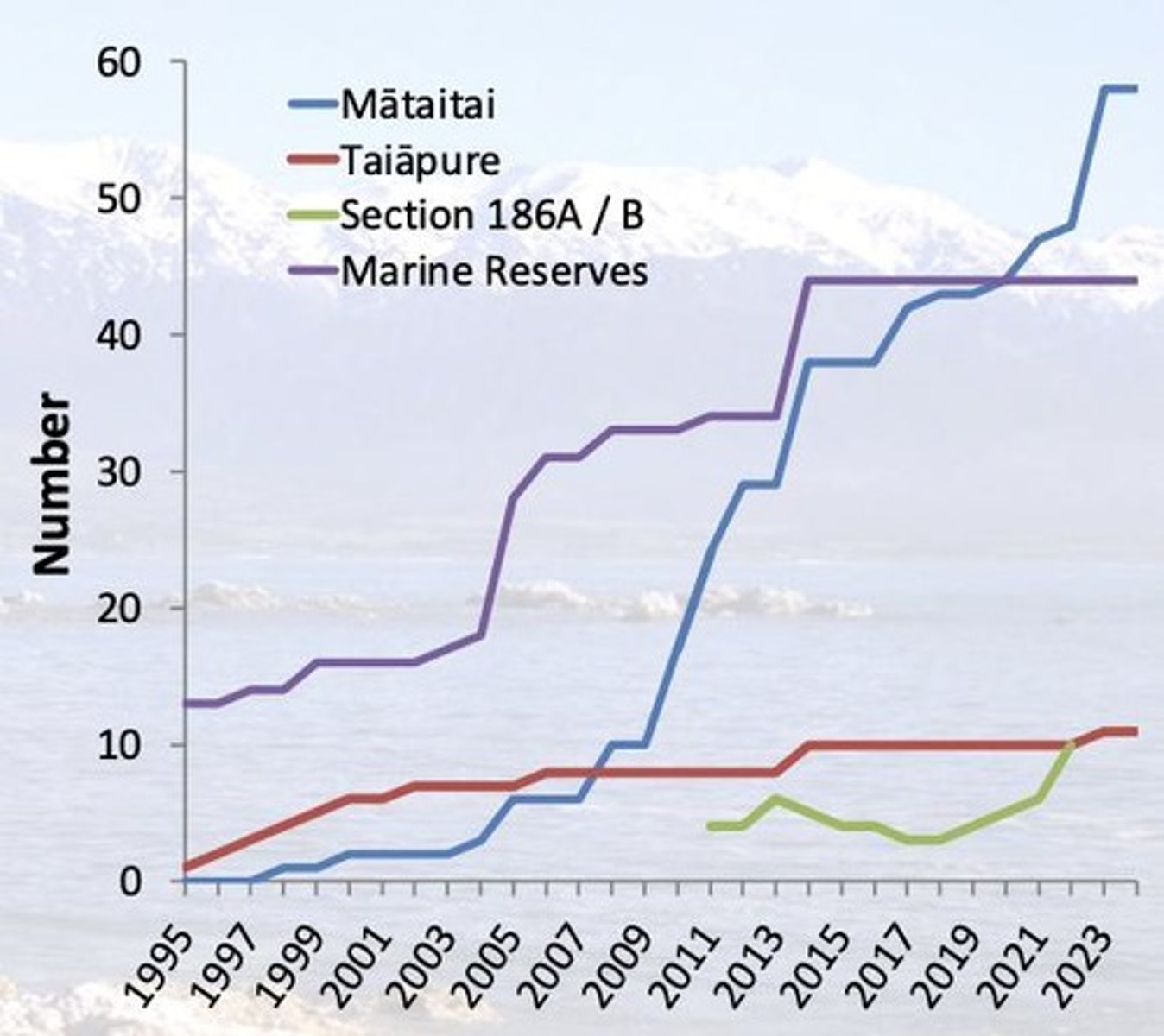
How many Mātaitai are currently gazetted around New Zealand?
58 Mātaitai
What is the establishment process for Mātaitai?
Clearly defined, approximately 9 months
What is a key characteristic of Rāhui?
It can apply to all fishers, including customary fishing
What is the commonality of Rāhui compared to Taiāpure and Mātaitai?
Rāhui are temporary and usually the least common
What is a significant challenge for the establishment of Mātaitai?
There is no funding support; it must be funded by the marae
What is the role of Tangata Tiaki/Kaitiaki in Mātaitai?
They manage the Mātaitai and make bylaws
What is the process for establishing a Taiāpure?
Not clearly defined, making it less common
What is the main focus of Mātaitai management?
To recognize and provide for the relationship between Tangata Whenua and customary food gathering
What is the purpose of temporary closures under Section 186B?
To improve fish stocks or recognize customary fishing practices
What is a key difference in management between Taiāpure and Mātaitai?
Taiāpure allows for commercial fishing; Mātaitai does not
What is the role of the Minister in the Taiāpure management process?
To appoint the management committee and approve regulations
What is a common timeframe for the establishment of a Rāhui?
Timeframe varies depending on issues involved in the proposal