exam 4 zoology
 Call Kai
 Learn
Learn Practice Test
 Spaced Repetition
 Match
Match Flashcards
 Knowt Play
1/29

There's no tags or description
Looks like no tags are added yet.
Name | Mastery | Learn | Test | Matching | Spaced | Call with Kai |
|---|
No analytics yet
Send a link to your students to track their progress
30 Terms
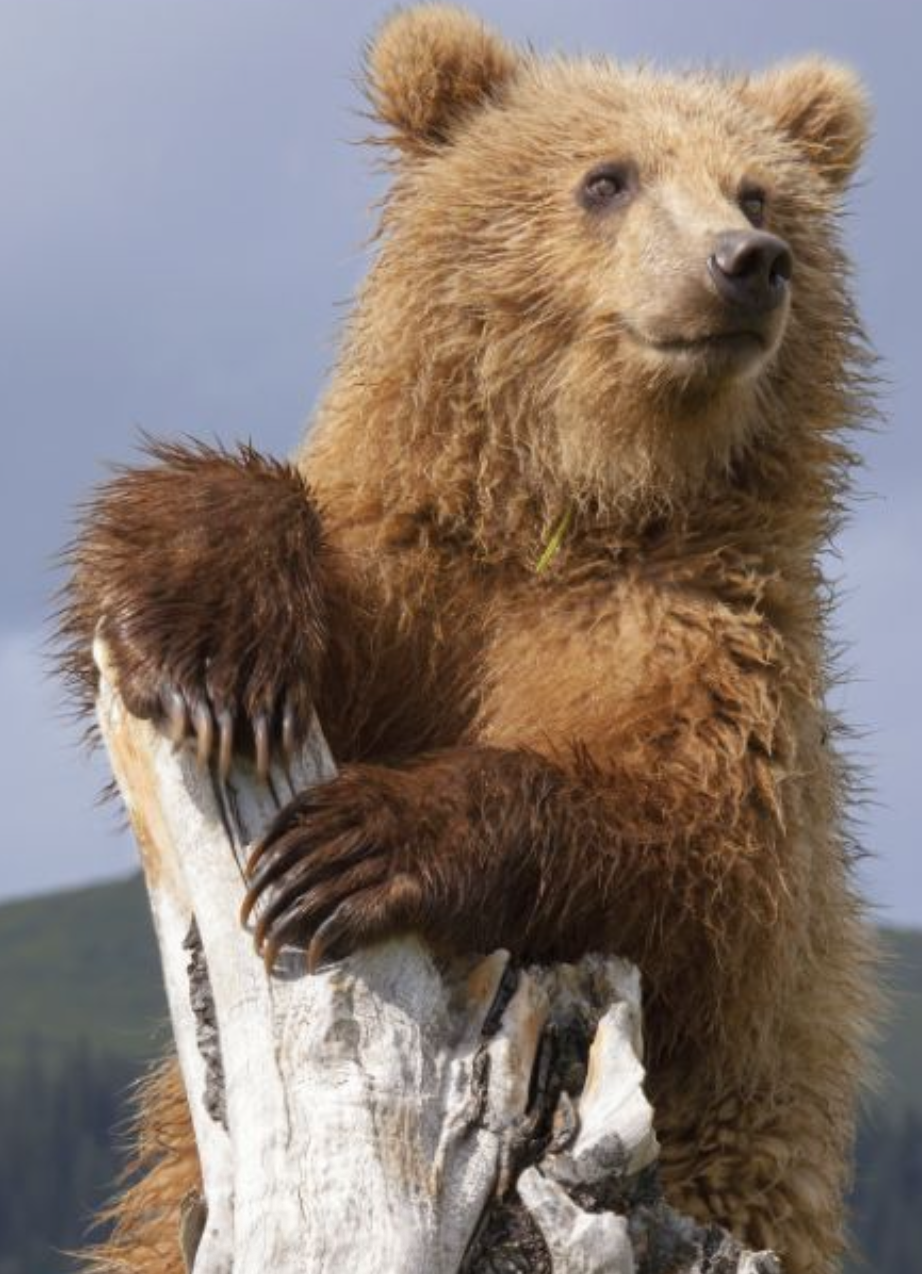
• Hair evolved in a common ancestor of all mammals.
• Hair is diagnostic for mammals – T/F: all have hair at some point in their lives.
• Mammalian hair has undergone numerous (list 6 and the most important one) adaptive modifications for diverse uses:
• Other evolutionary innovations include (list 5):
TRUE.
• Concealment
• Behavioral signaling
• Waterproofing
• Buoyancy
• Sensitiveness (vibrissae and quills)
• Thermal insulation – the most important use of hair
• A set of middle ear bones
• Mammary glands
• Large brain with neocortex
• A diaphragm
• Highly developed sense of smell
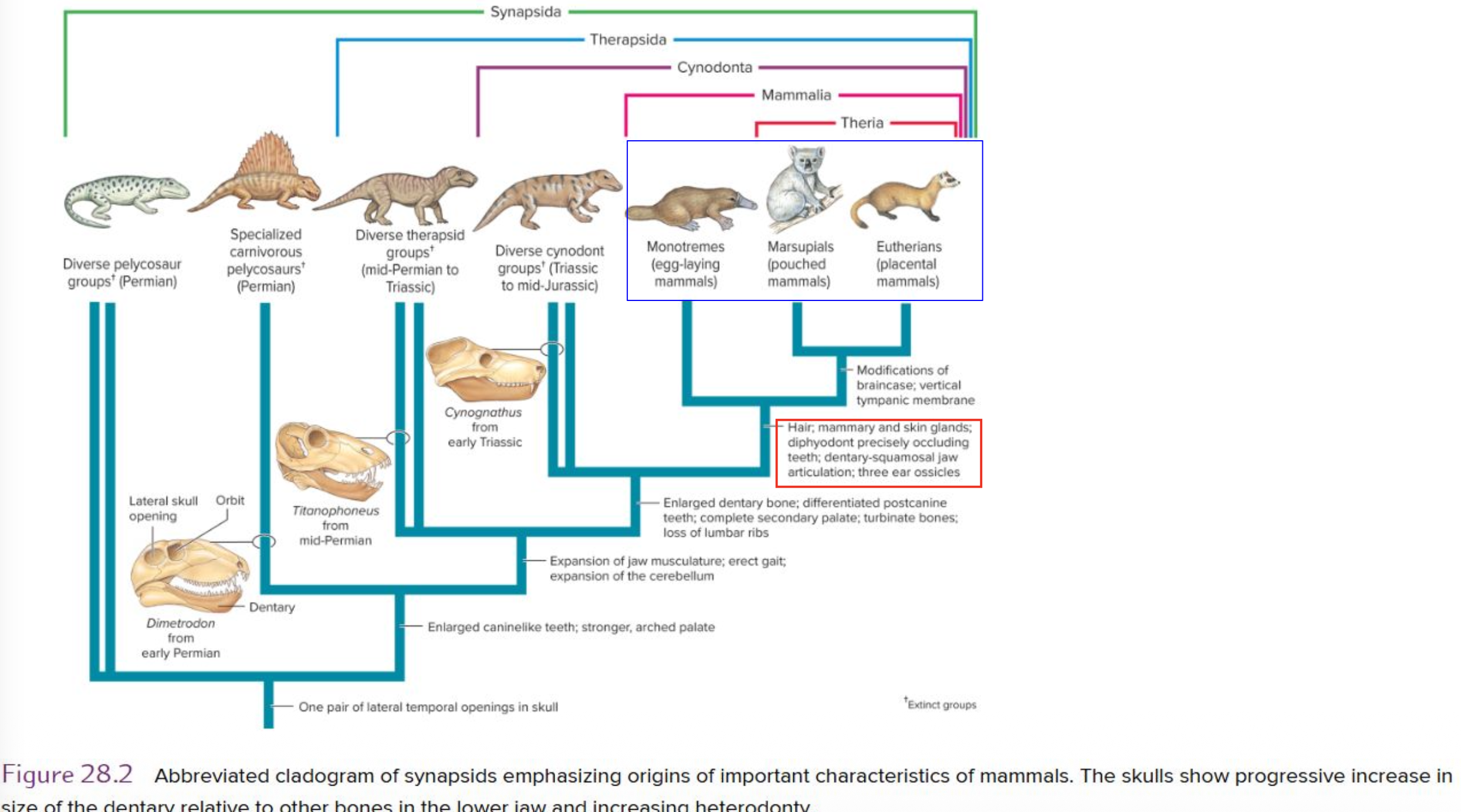
Main diagnostic characteristics defining the Clade Mammalia:
- presence of __ at some point in life
- ? and ? glands
- three/four ear ossicle
hair.
mammary and skin.
three.
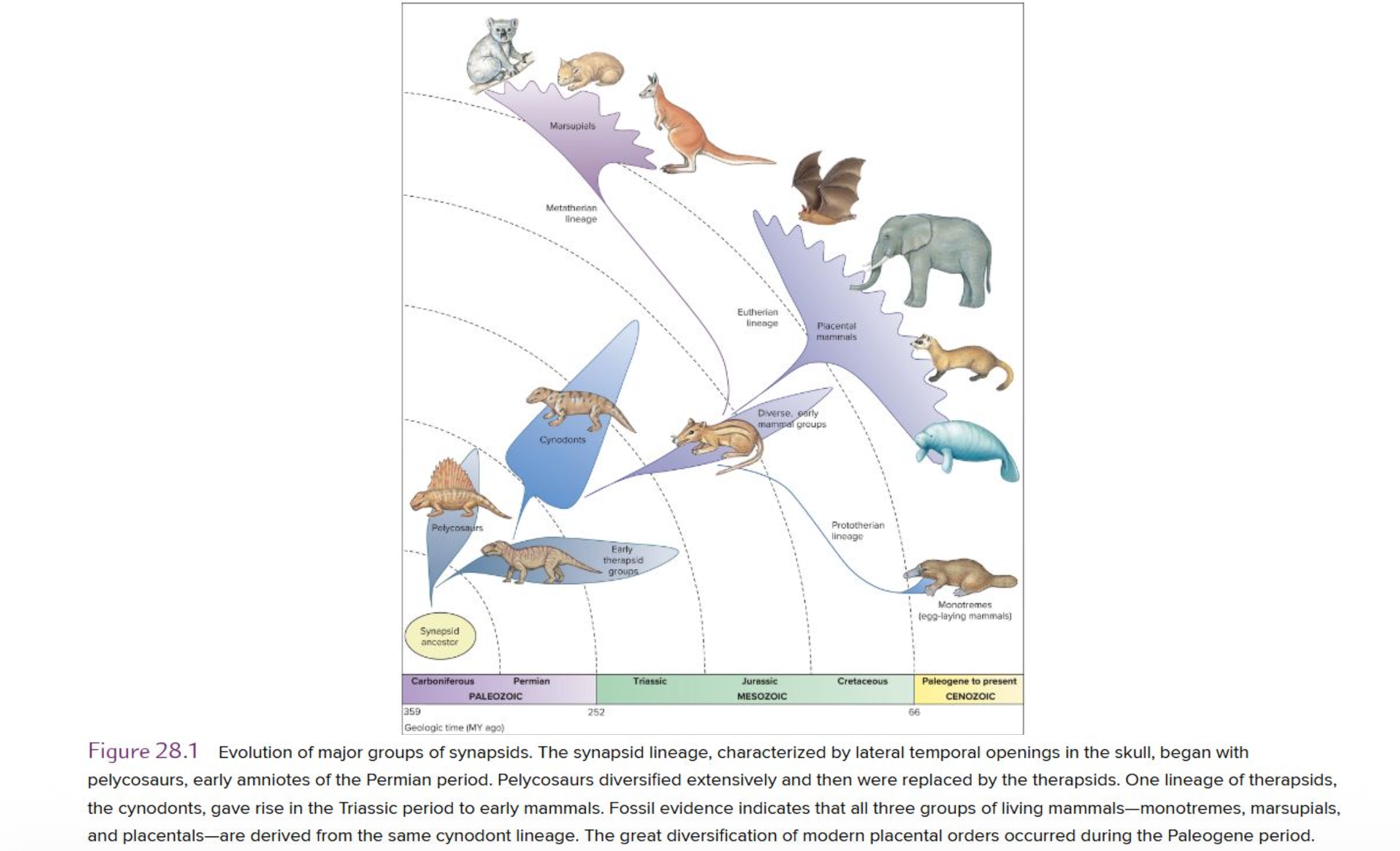
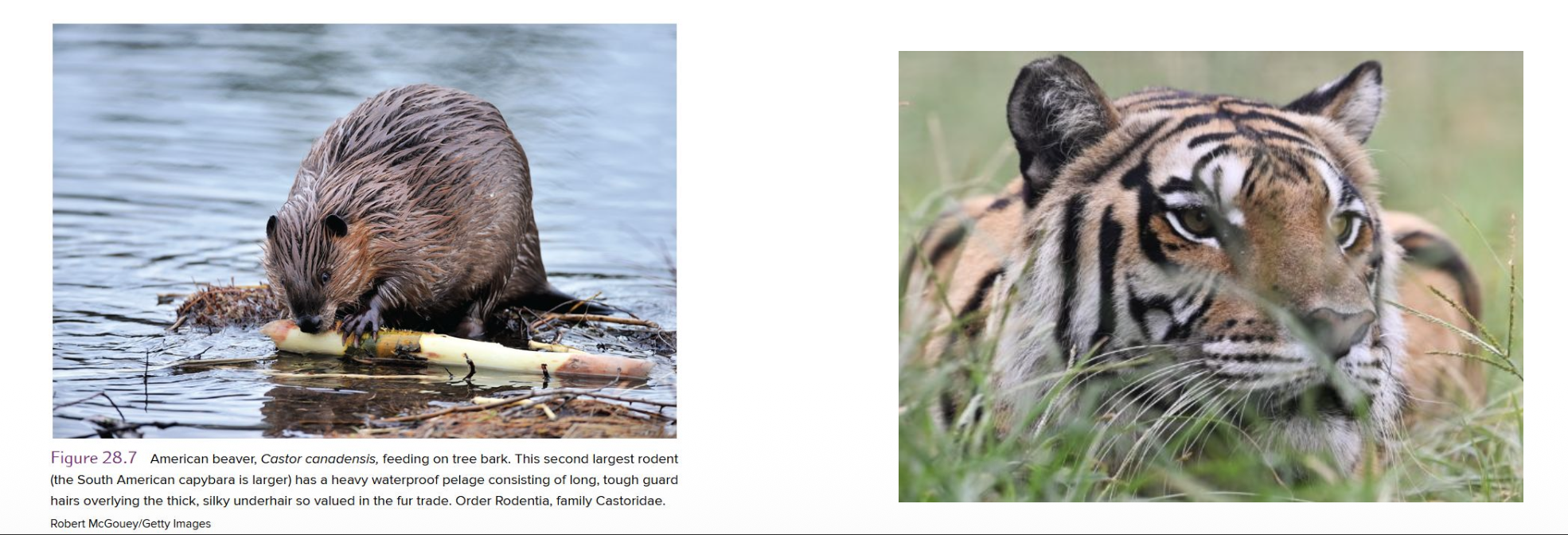
Hair
• True hair, found only in mammals, is composed of __ cells.
• Two kinds of hair form the pelage (fur coat) of mammals:
• T/F: Most mammals experience periodic molts of the entire coat
• Vibrissae (whiskers) are __ hairs that provide a tactile sense to many animals
↪ Movement generates ? in sensory nerve endings
↪ Vibrissae are specially long in ? and ? animals
dead, keratin-packed epidermal.
1 – dense and soft underhair for insulation
2 – coarse and longer guard hair for protection against wear and to provide coloration
TRUE.
sensory.
impulses.
nocturnal and burrowing.
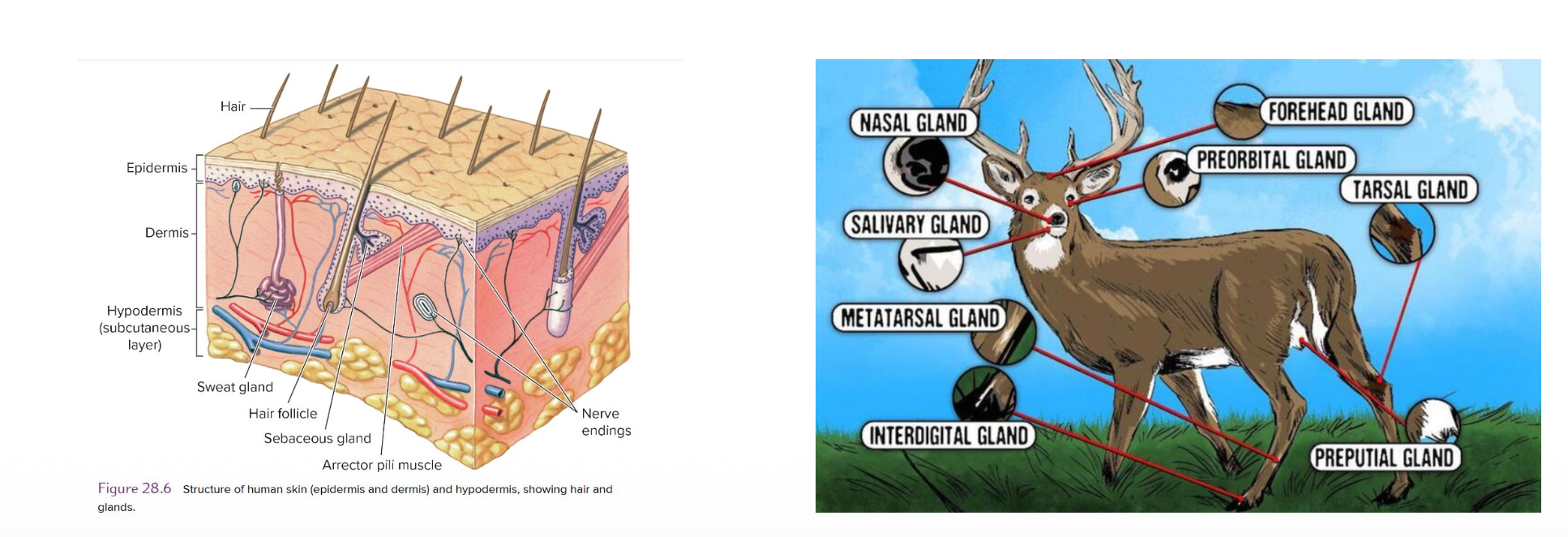
Glands
• Mammals have the greatest variety of integumentary glands: ?,?,?,?
• All are derivatives of __
• Sweat glands: ? List the two types of glands:
↪ ? glands
↪ ? glands
• Scent gland: __.
• Sebaceous gland: __.
↪ Cells are expelled as a greasy mixture called ? into the __
sweat, scent, sebaceous, mammary.
epidermis.
absent from other vertebrates; of two kinds.
Eccrine.
Apocrine.
used for co-specific communication, marking territory, warning, or for defense.
secreted in their entirety and are continuously renewed by cell division.
sebum. hair follicle.
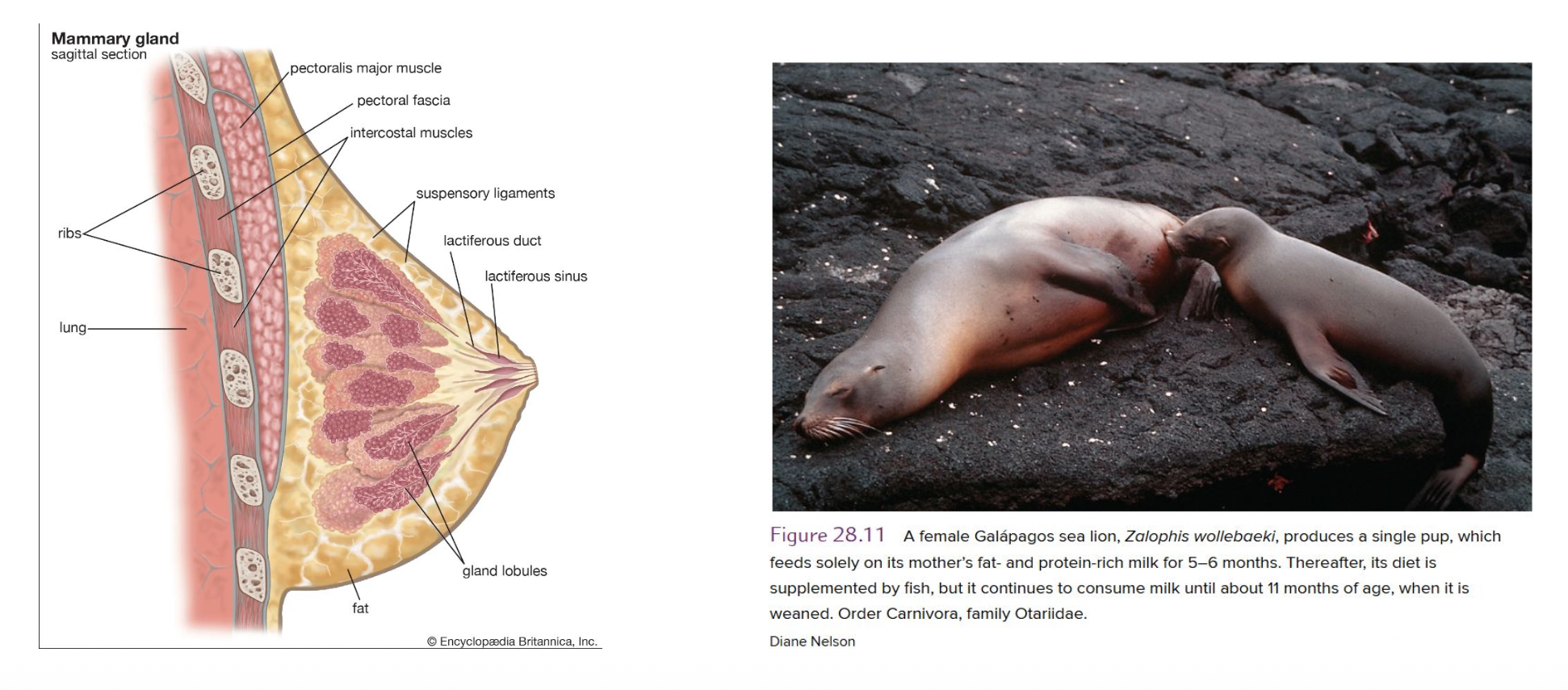
Mammary gland
• Occur in all female/male mammals and in a rudimentary form on all female/male mammals
• They develop from downward-growing/upward-growing epidermal cells that form a branching system of ? surrounding by ?
• In most mammals milk is secreted via ?
• __ lack nipple: secrete milk onto the ? of the mother’s belly
female. male.
downward-growing. ducts. milk-producing cells.
nipples.
Monotremes. fur.
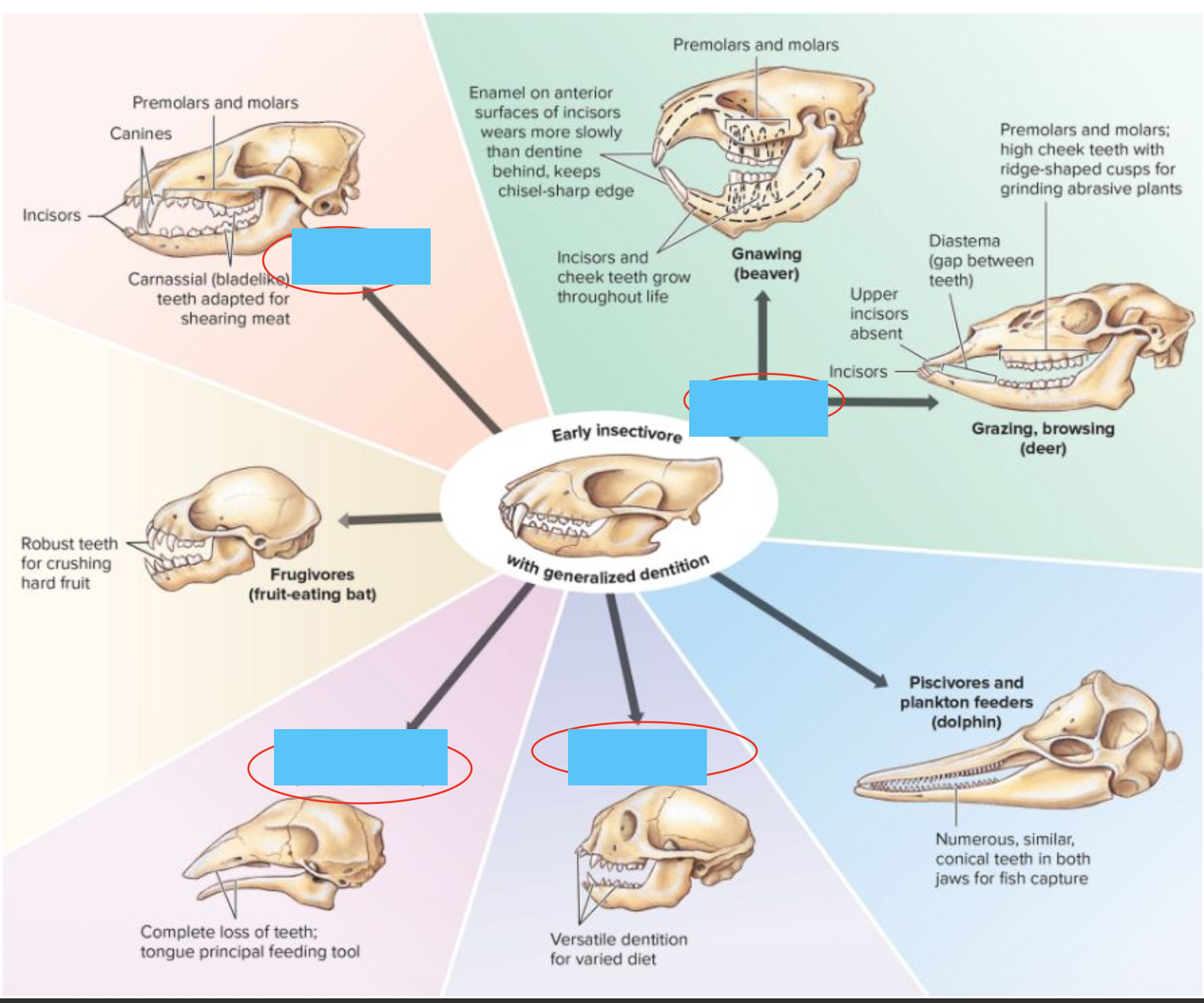
Feeding specializations
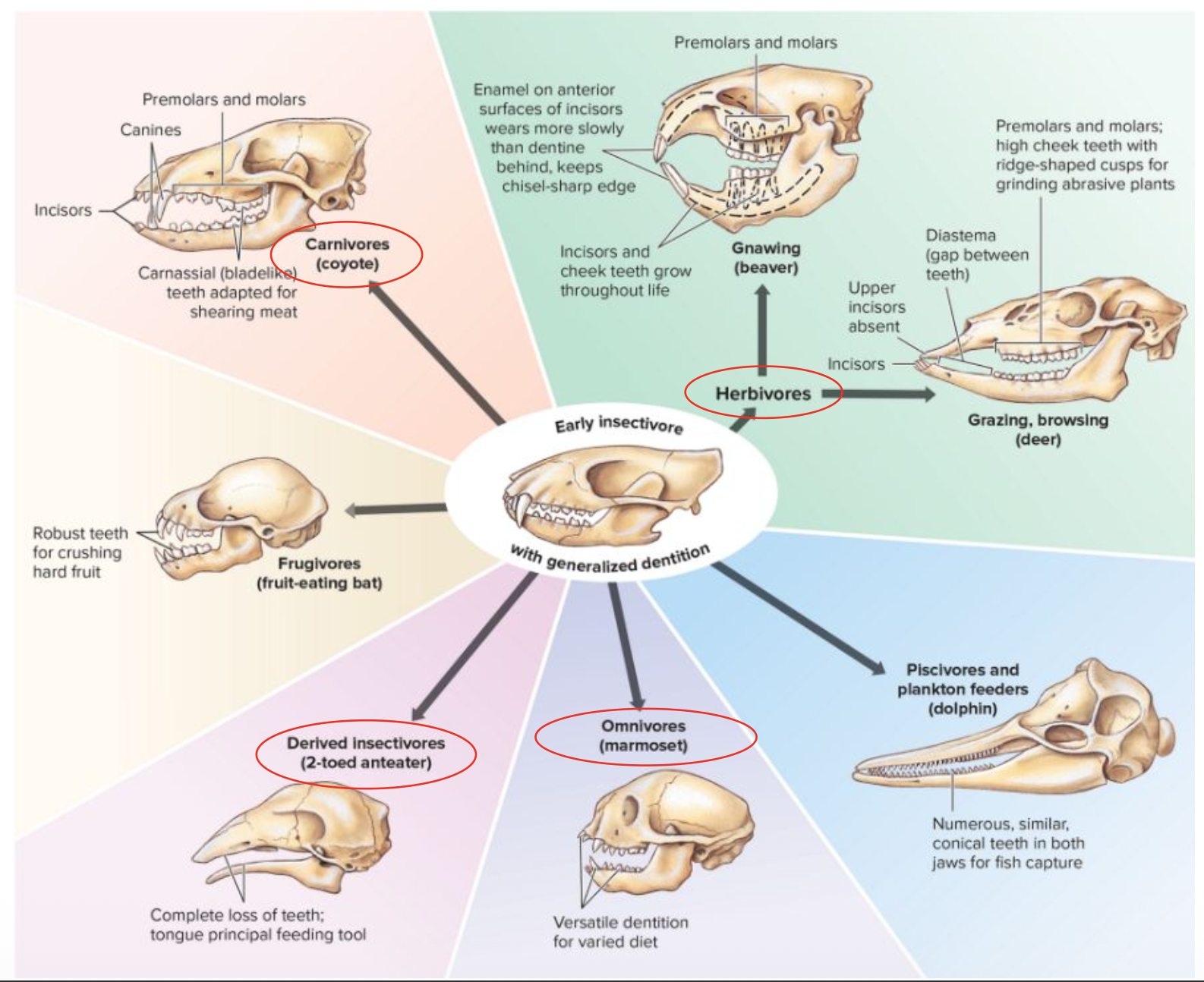
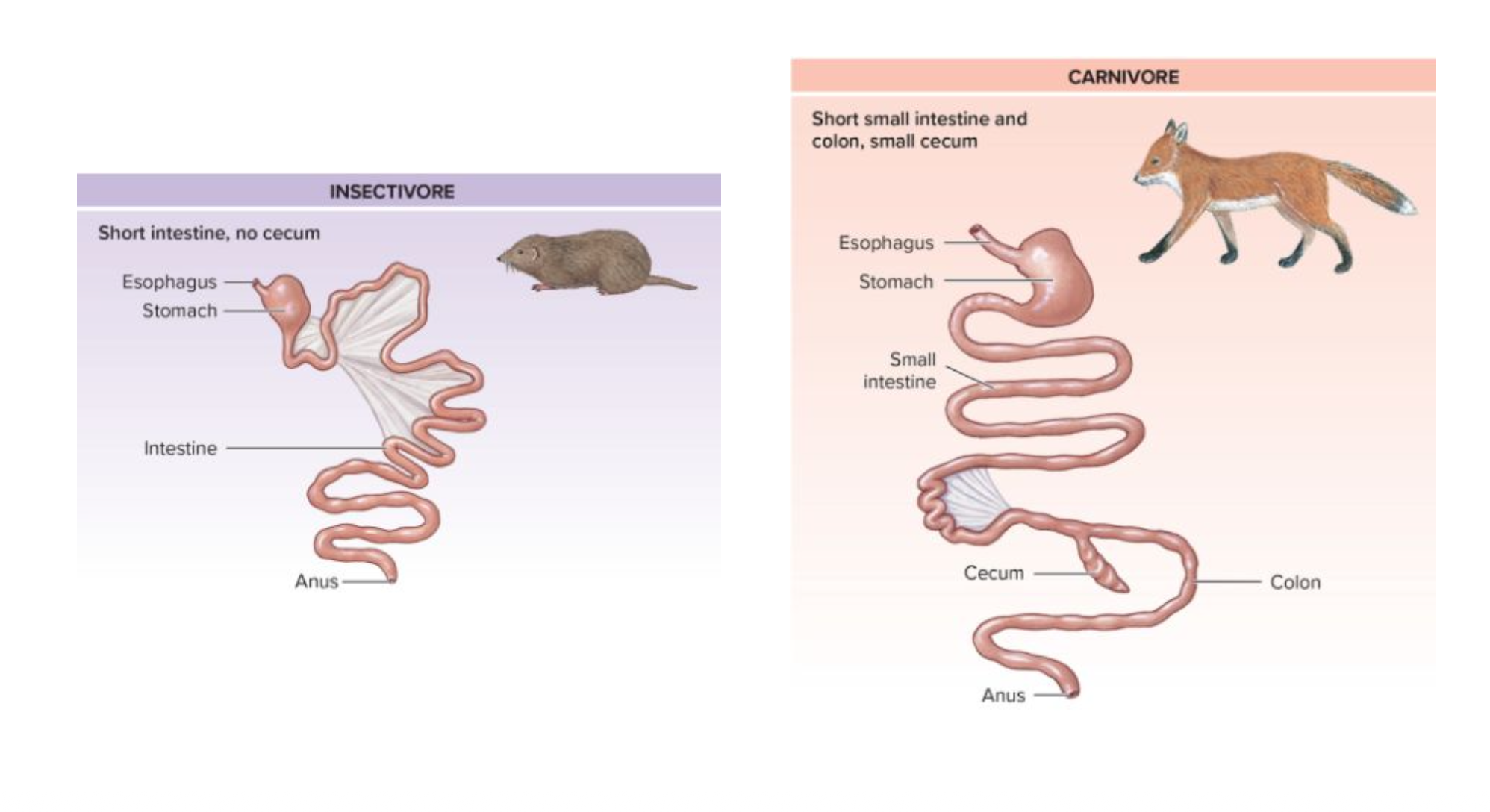
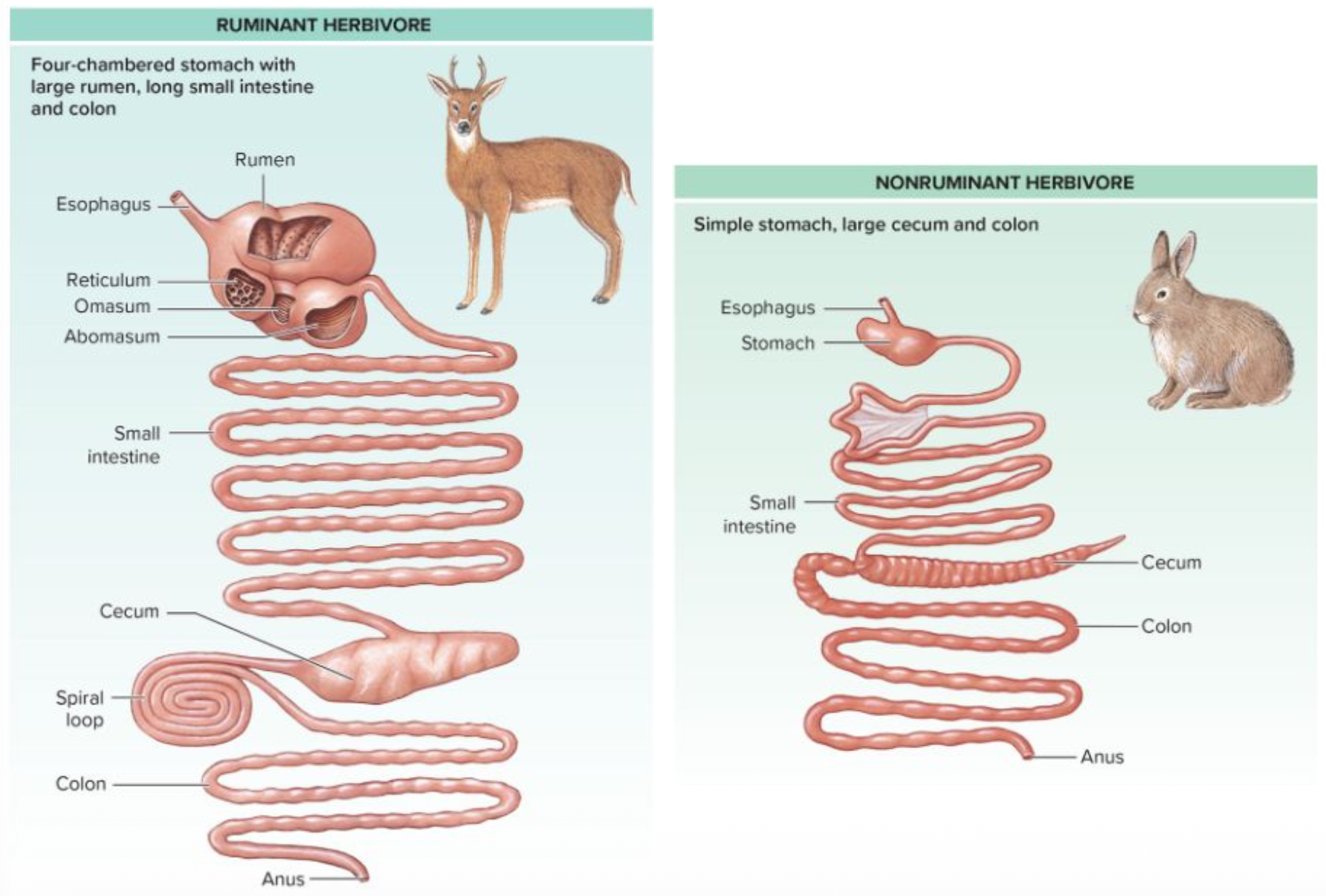
Browsers and grazers – ?
Gnawers – ?,?,?
Herbivores generally have large, long/small, short digestive tracts and must eat a considerable amount of plant food to survive.
hooved animals.
rodents, rabbits and hares.
large, long.
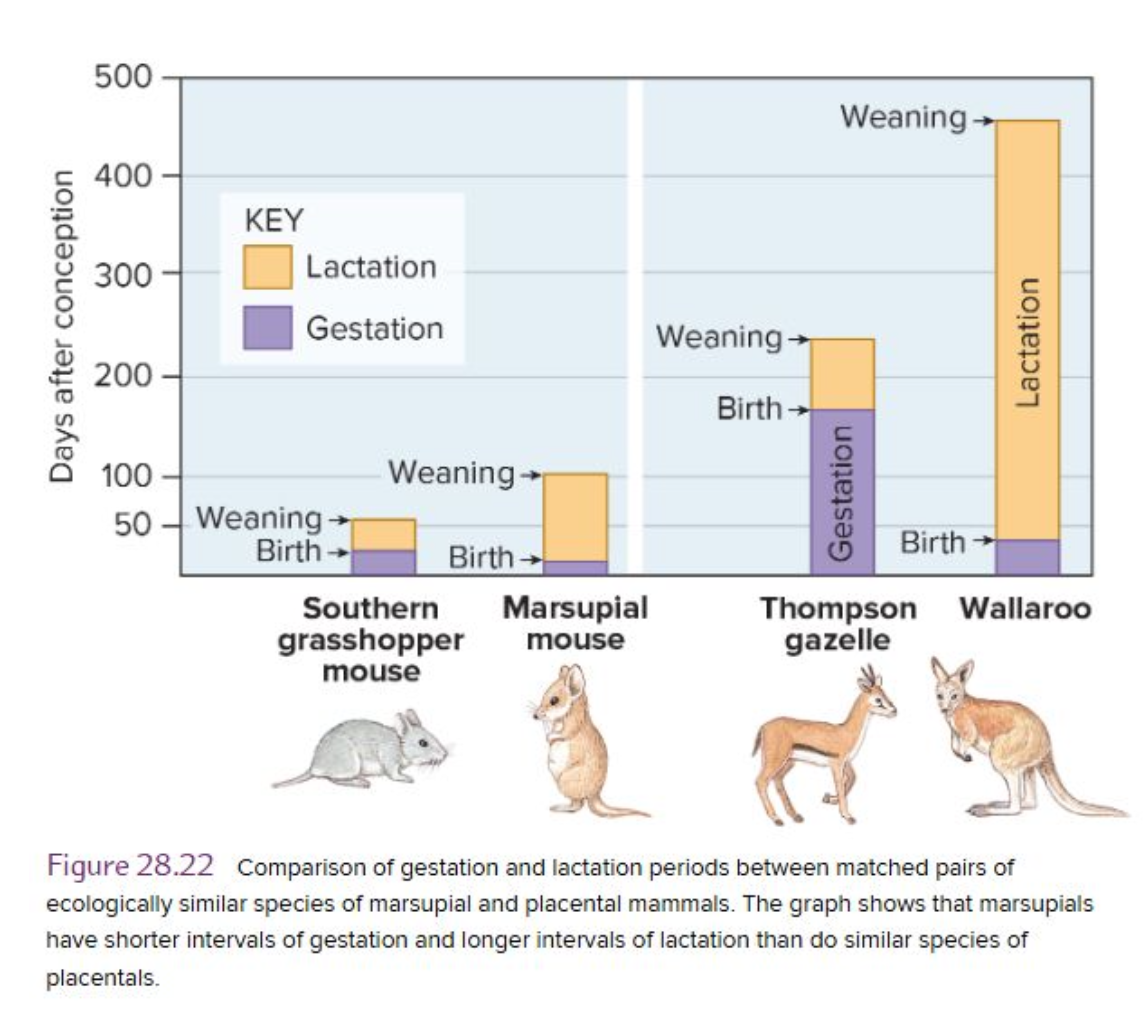
Reproduction – Marsupials vs. Eutherians
• Marsupials are pouched/not pouched:
• Embryo (blastocyst) is at first __ and floats in uterine fluids for several days
• After hatching, they do/do not implant in the uterus
• Marsupials give birth to __ (short/long gestation time).
• Early birth is followed by a prolonged interval of ? and ?
• Eutherians
• ? mammals
• Embryos implant in ?
• Reproductive investment is __ gestation
• Shorter __ period
pouched.
encapsulated by shell membranes.
do not.
embryo forms (short gestation time).
lactation and parental care.
Placental.
uterus.
prolonged.
lactation.
Evolutionary Diversification of Primates
• All primates share certain significant characteristics:
↪ __ fingers on all ? limbs
↪ __ fingernails instead of claws
↪ Forward pointing/Lateral pointing eyes with binocular vision and excellent depth perception
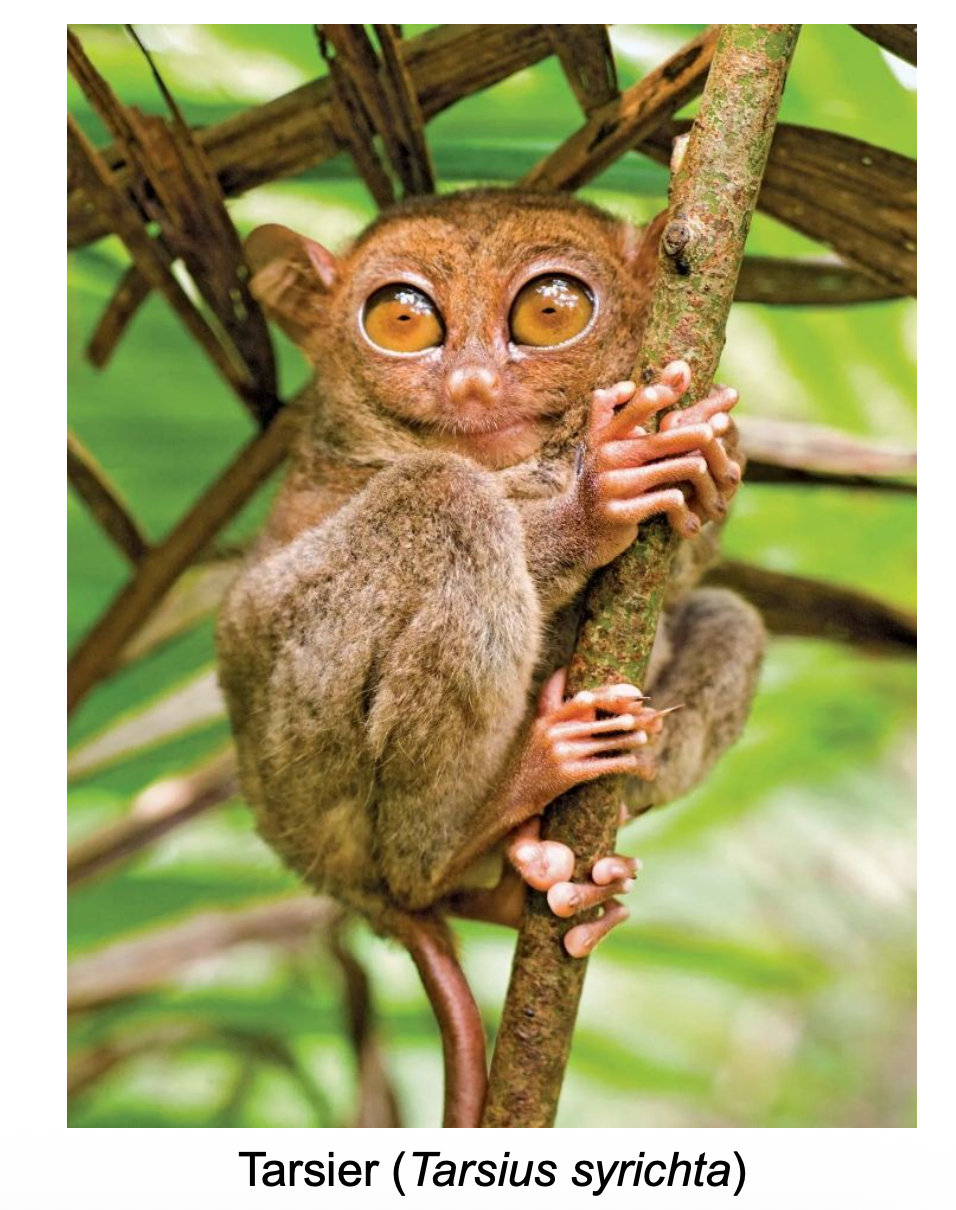
• The ancestral primate lineage split into two lineages: ?
• Three clades of monkeys and apes are recognized:
1 – __ of Central and South America: howler monkeys, spider monkeys, and tamarins
2 – __ of Africa and Asia: baboons, mandrills, and colobus monkeys
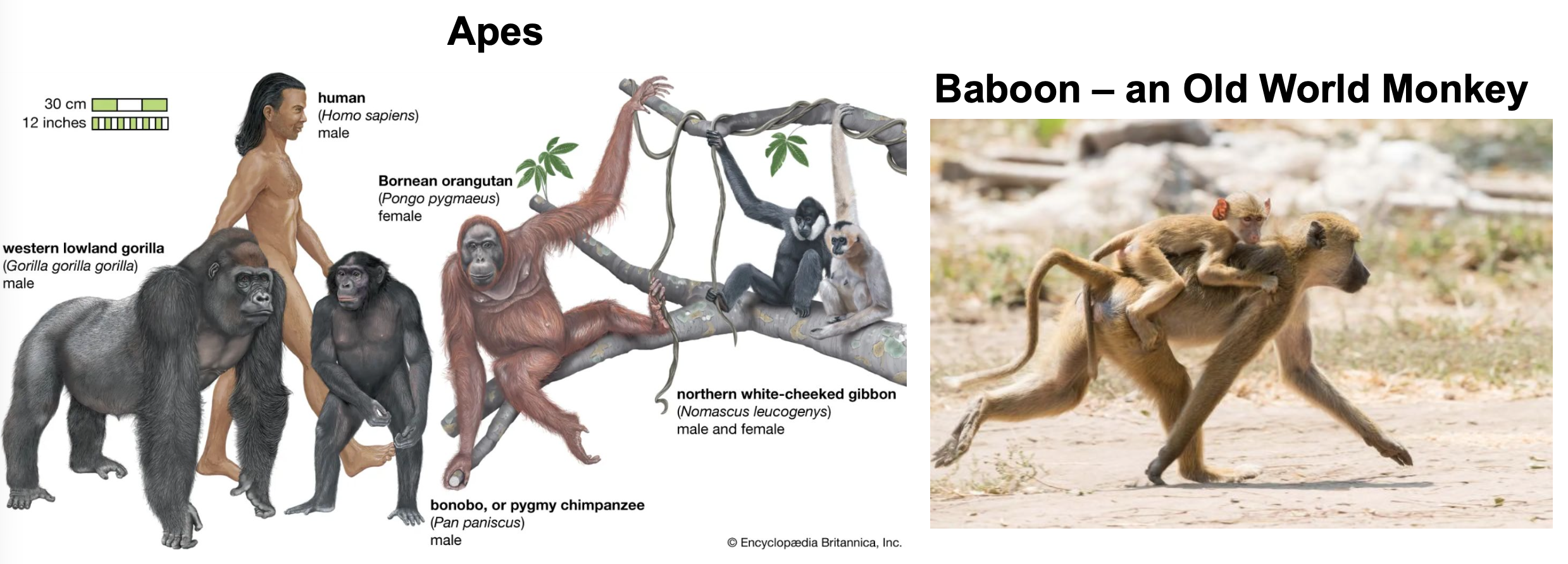
3 – __: Include gibbons, orangutans, gorillas, chimpanzees, bonobos, and humans
Grasping. four.
Flat.
Forward pointing.
• One of which gave rise to lemurs and lorises
• Other to tarsiers, monkeys and apes
New world monkeys.
Old world monkeys.
Apes.
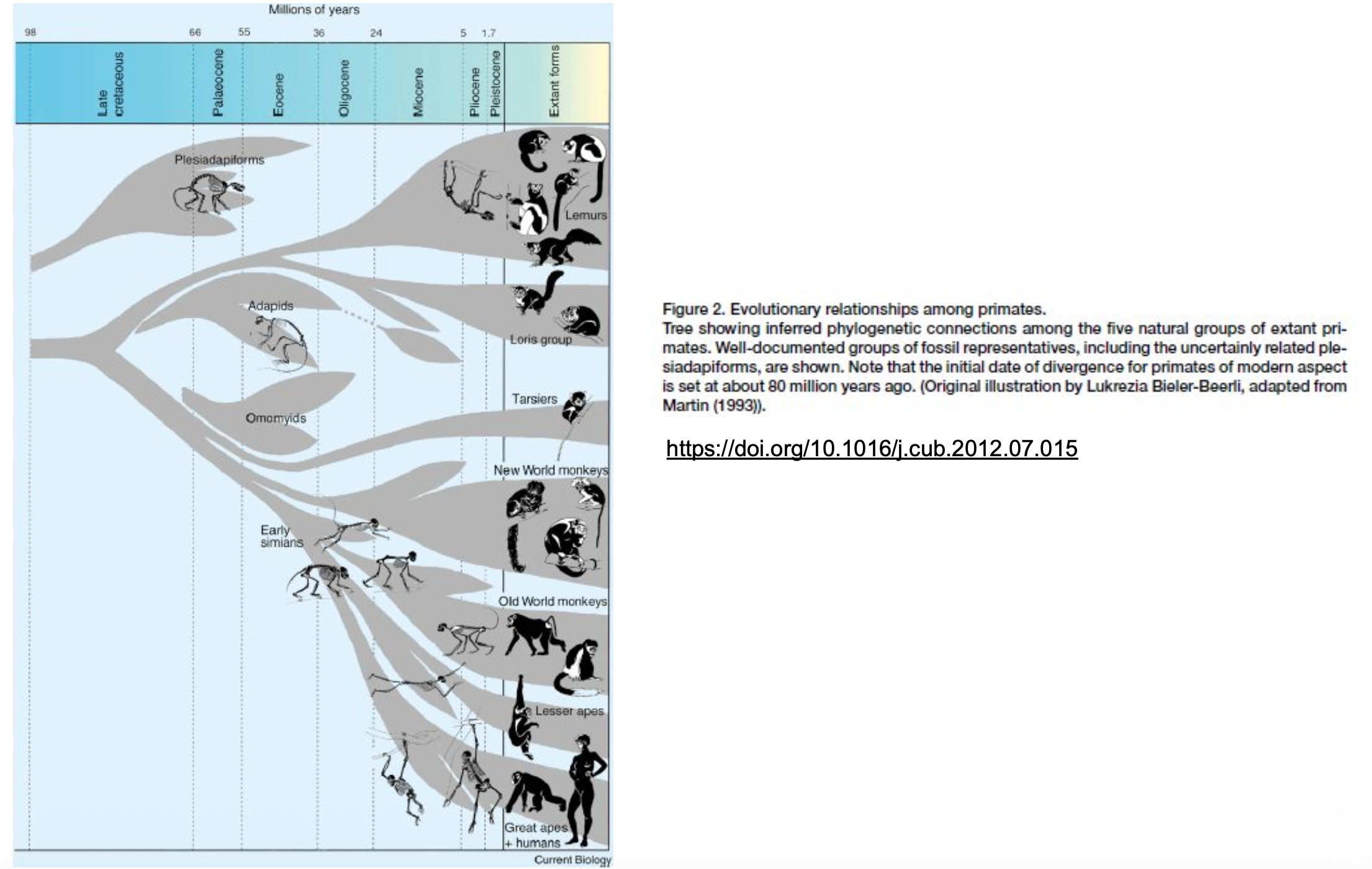
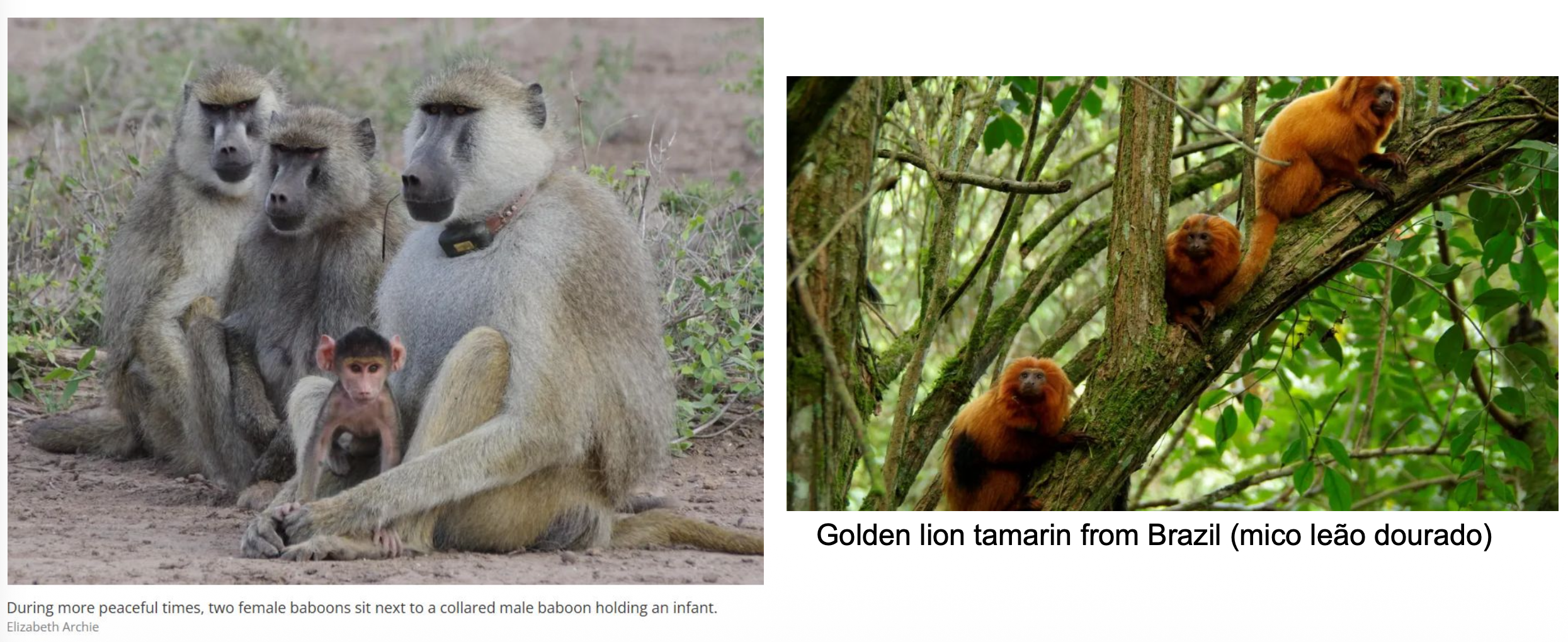
• Old World monkeys differ from New World monkeys in:
• Lacking a __
• Having close-set, downward-facing/far-set, upward-facing nostrils
• Better opposable, grasping __
• Two __ in each jaw half
grasping tail.
close-set, downward-facing.
thumbs.
pre-molars.
• Apes differ from Old World Monkeys in:
• Having a large cerebrum/short cerebrum
• Loss of a tail/Gain of a tail
large cerebrum.
Loss of a tail.
• Behavioral biologists ask ? and ?
__: describe the behavior of non-human animals in their natural habitat:
↪ Data are gathered by __ and experiments
↪ __ are measurable entities like anatomical or physiological traits
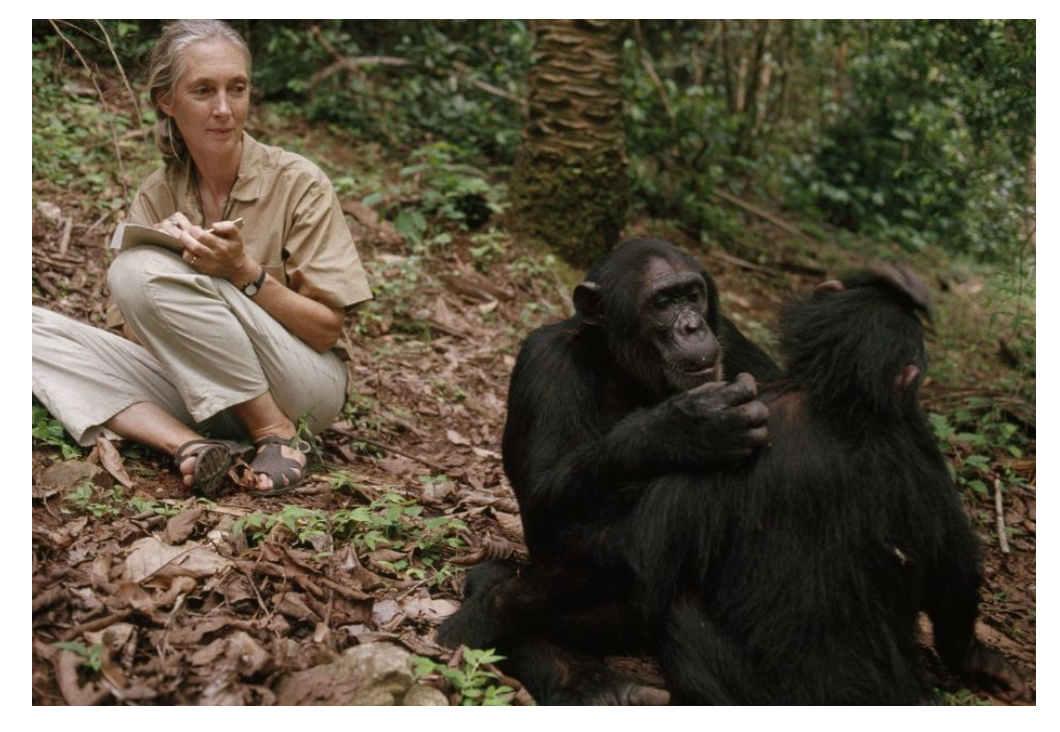
Dame Jane Morris Goodall is an English zoologist, primatologist and anthropologist. She is considered the world's foremost expert on __, after 60 years' studying the social and family interactions of ?.
how animals behave. why they behave the way they do.
Ethology.
field observations.
Behavioral traits.
chimpanzees. wild chimpanzees.
Control of Behavior
• Innate behavior: ?
• Preprogrammed __ appear suddenly in an animal’s ontogeny and are indistinguishable from similar behavior performed by older, experienced adults.
• Learned Behavior: modification of behavior through __.
inherited.
behavior.
experience.
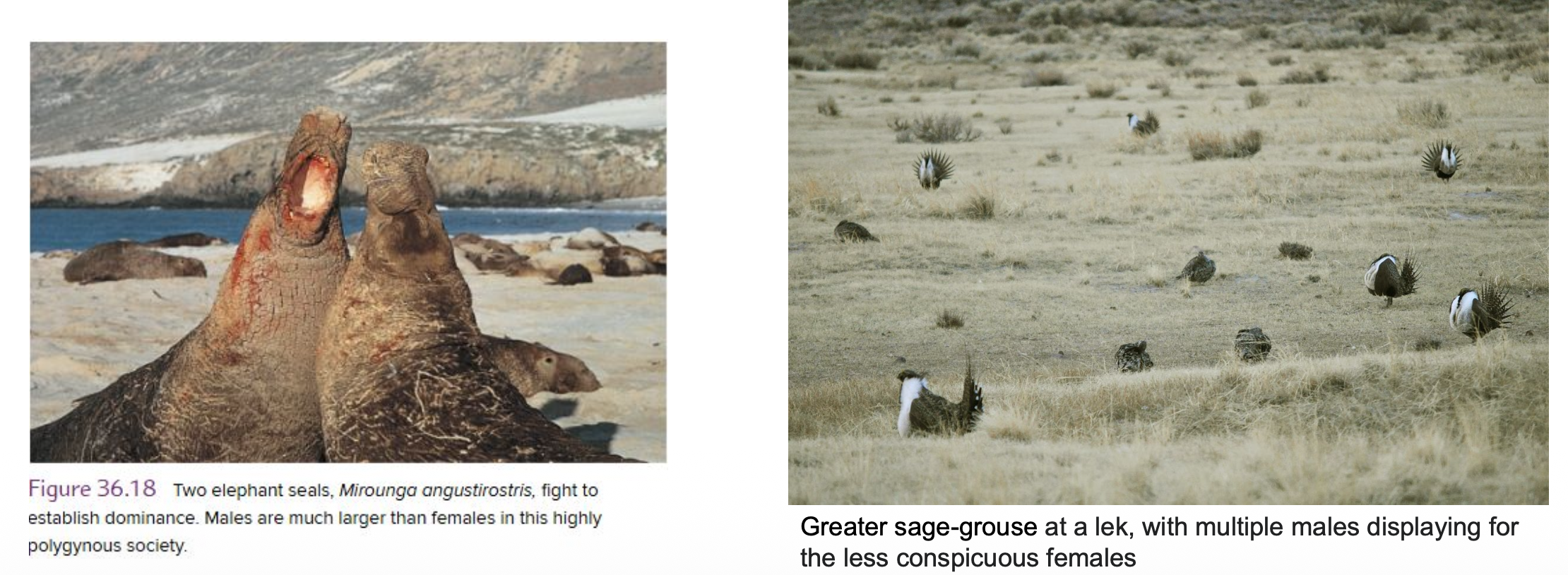
Mating systems
• __ is an association between one male and one female at a time
• __ when females or males have more than one mate
↪ __ refers to a male that mates with more than one female:
- ? polygyny
- ? polygyny
- ? polygyny
↪ __: a female mates with more than one male
Monogamy.
Polygamy.
Polygyny.
- Resource-defense polygyny
- Female-defense polygyny
- Male-dominance polygyny
Polyandry.
• The physical space where an animal lives is its __.
• Niche - __:
↪ What an animal does in its habitat and how it ? and stays adapted.
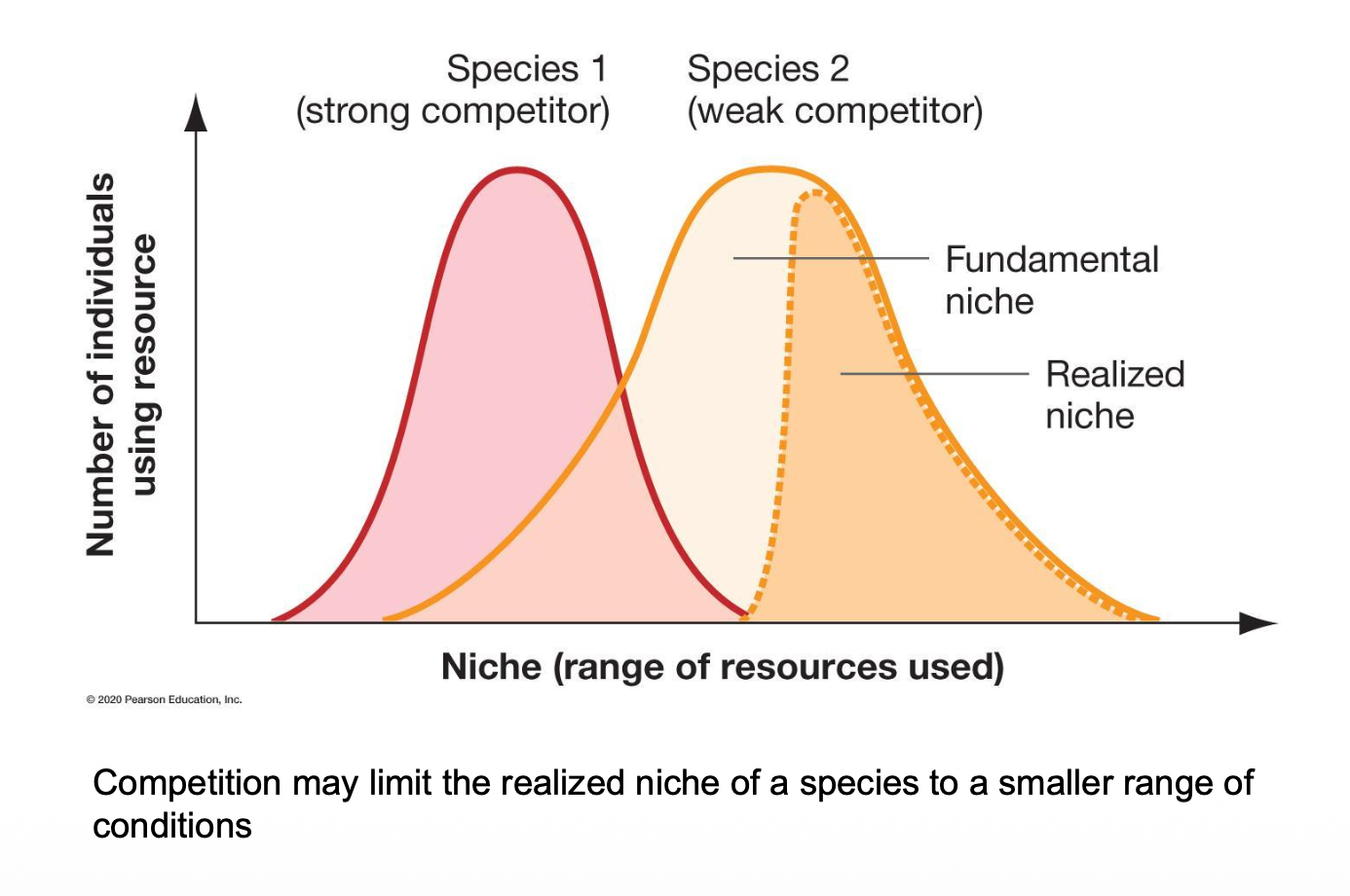
• __: potential role
• __: the subset of potentially suitable environments that an animal actually experiences
habitat.
the specific set of environmental conditions required by an organism or the functions it performs in nature.
survives.
Fundamental niche. [This is the full range of conditions an organism could live in if there were no limits (like competition or predators). It’s the organism’s ideal situation].
Realized niche. [This is where the organism actually lives and functions in real life. It’s usually smaller than the fundamental niche because of: Competition, Predators, Limited resources].
Demography
• Each population or deme has a characteristic ?,?,?
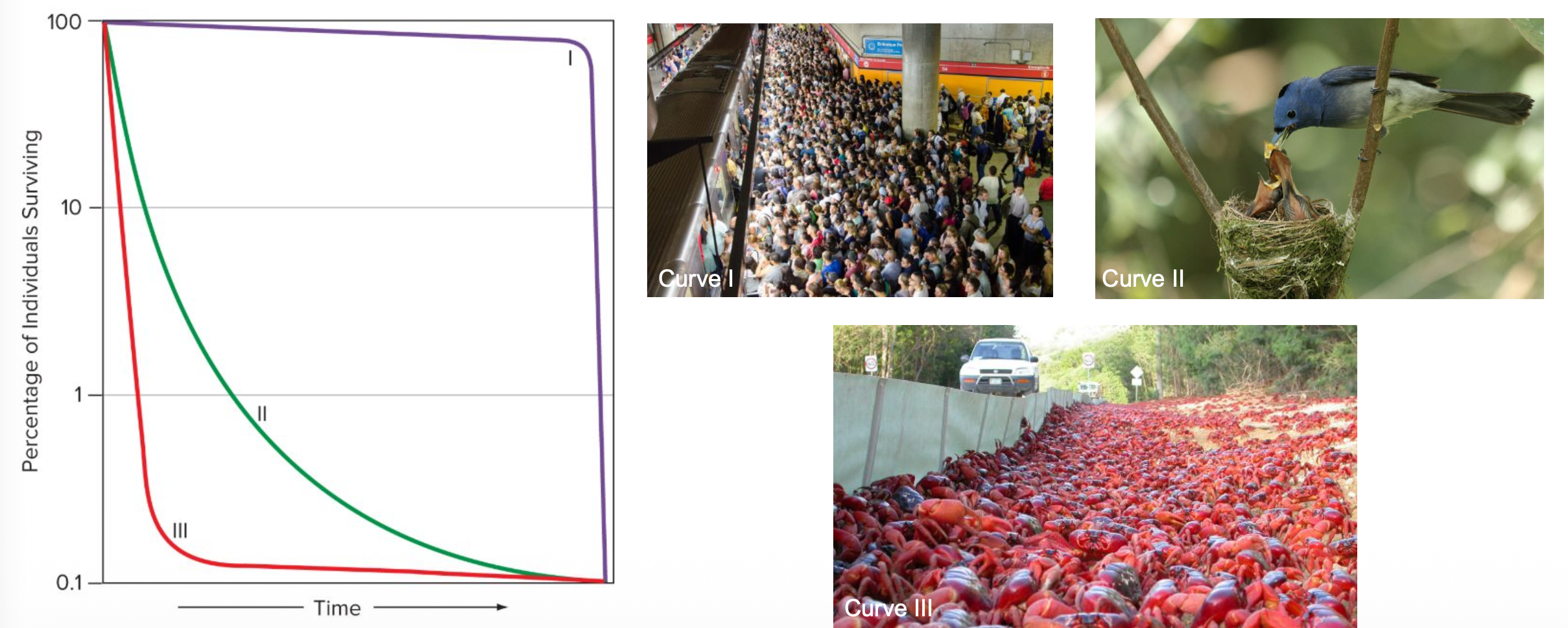
• Animal species have different characteristic patterns of __:
• Curve I: ?
• Curve II: ?
• Curve III: ?
age structure, sex ratio, and growth rate.
survivorship.
most individuals die at old age through senescence [aging].
rate of mortality as a proportion of survivors is constant over all ages [Individuals have a constant chance of dying at any age].
characterizes populations whose infant or juvenile mortality is very high [Very high death rate in early life (infants/juveniles)].
Community Ecology
Interactions among __ in communities
• Populations in a community interact in ways that can be:
↪ ?,?,?
• There are three/four types of interactions among species in a community: What are they?
populations.
Detrimental (-); beneficial (+); or neutral (0).
four.
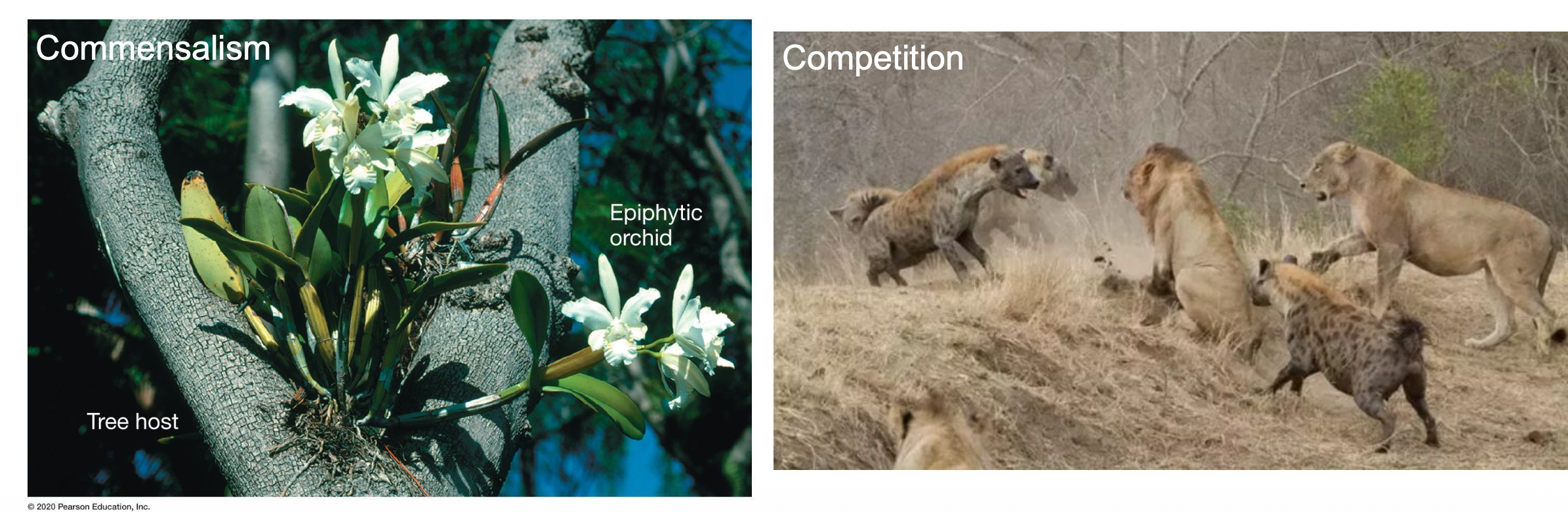
1 – Commensalism (+/0): Benefits one species and neither harms nor benefits the other.
2 – Competition (-/-): Detrimental to both species, reducing their abundance.
3 – Consumption (+/-): Benefits one to the detriment of the other.
4 – Mutualism (+/+): Both species benefit from their ecological interaction.
• Cryptic defense: ?
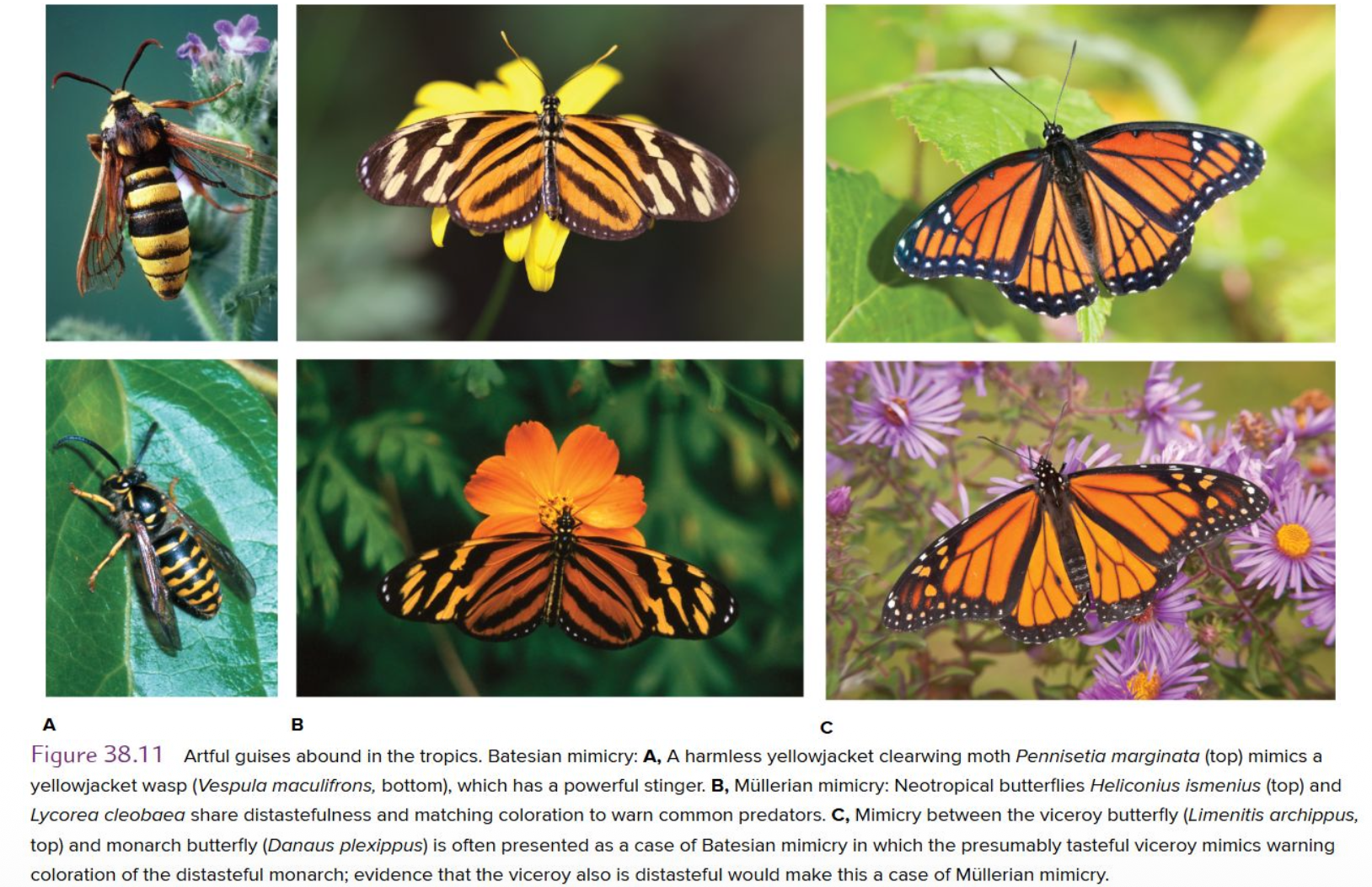
• Batesian mimicry: Palatable (Tasteful) prey can deceive potential predators by __.
• Müllerian mimicry: ?
• A predator needs only to experience the __ to avoid all similar species.
potential prey can escape predator detection by matching their background, or by resembling some inedible feature of the environment.
mimicking distasteful prey.
Two or more species that are toxic or otherwise harmful resemble each other.
toxicity of one species.
Keystone species
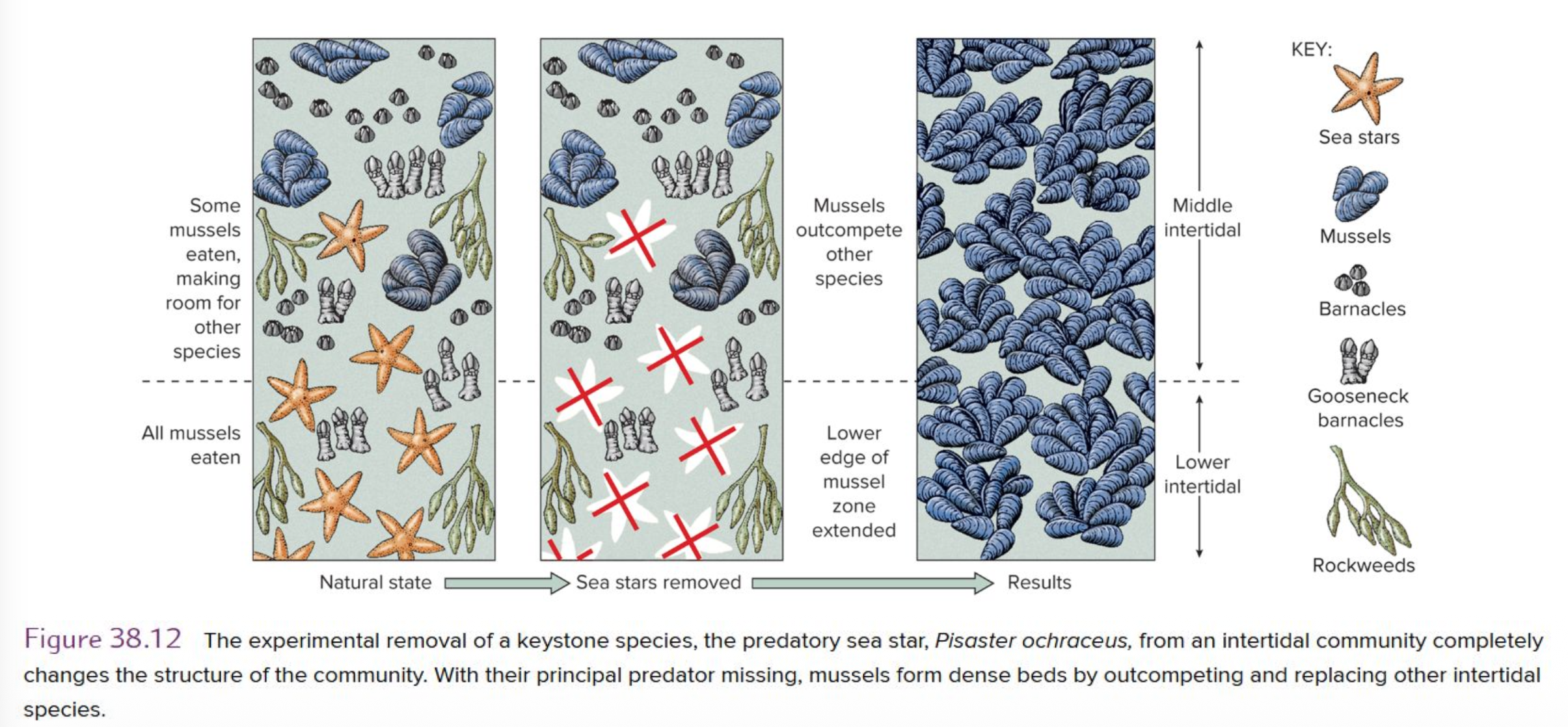
• __ act by reducing prey populations below the level at which resources are limiting.
• By reducing __, keystone species may allow more species to co-exist on the same resource.
• Maintain __ in a ?.
Keystone predators.
competition.
diversity. community.
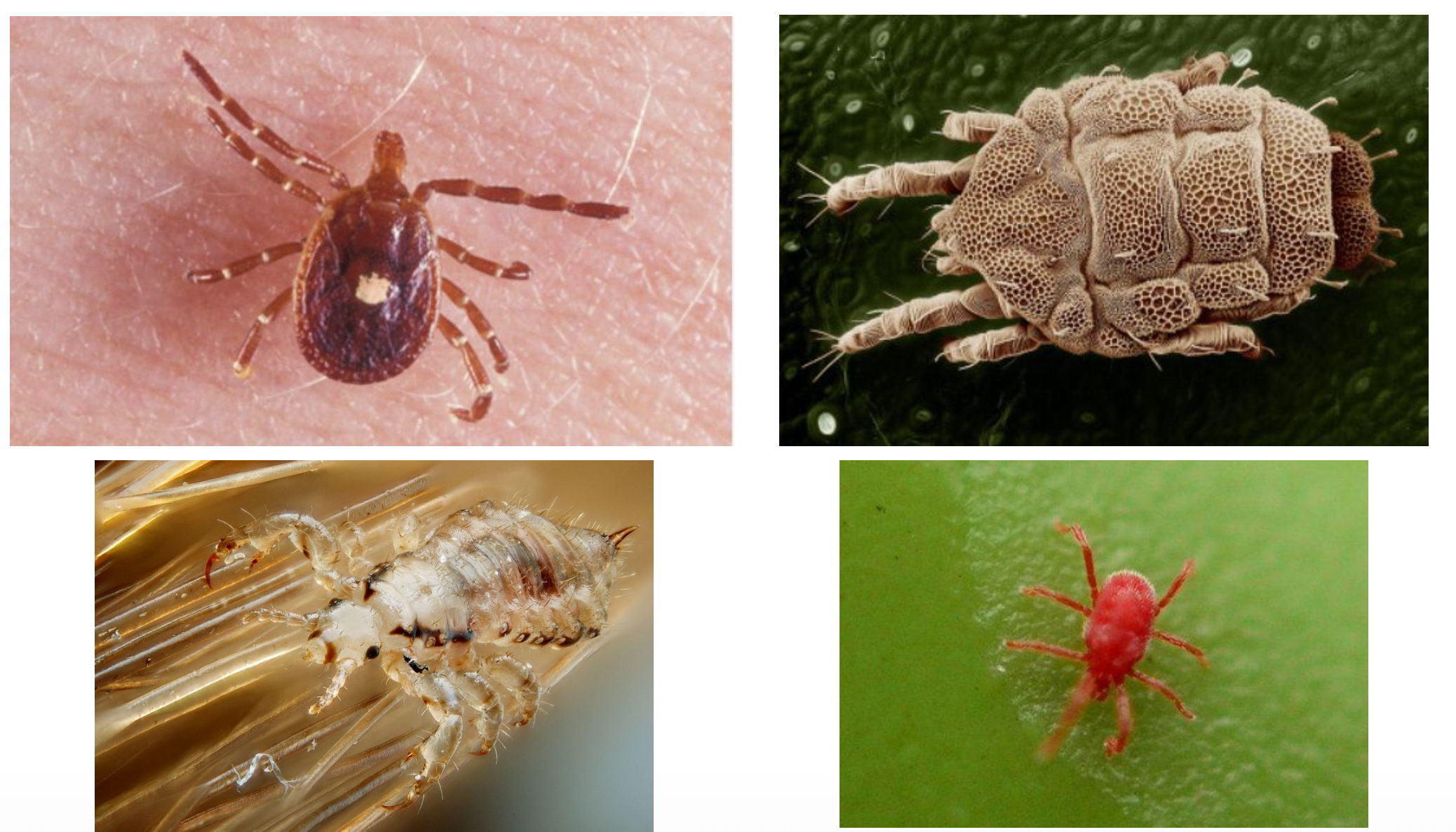
• Parasites benefit from their hosts at __.
• __ infest many kinds of animals (generalists).
• The host provides ? and aids __.
no expense.
Ectoparasites.
nutrition. dispersal of the parasite.
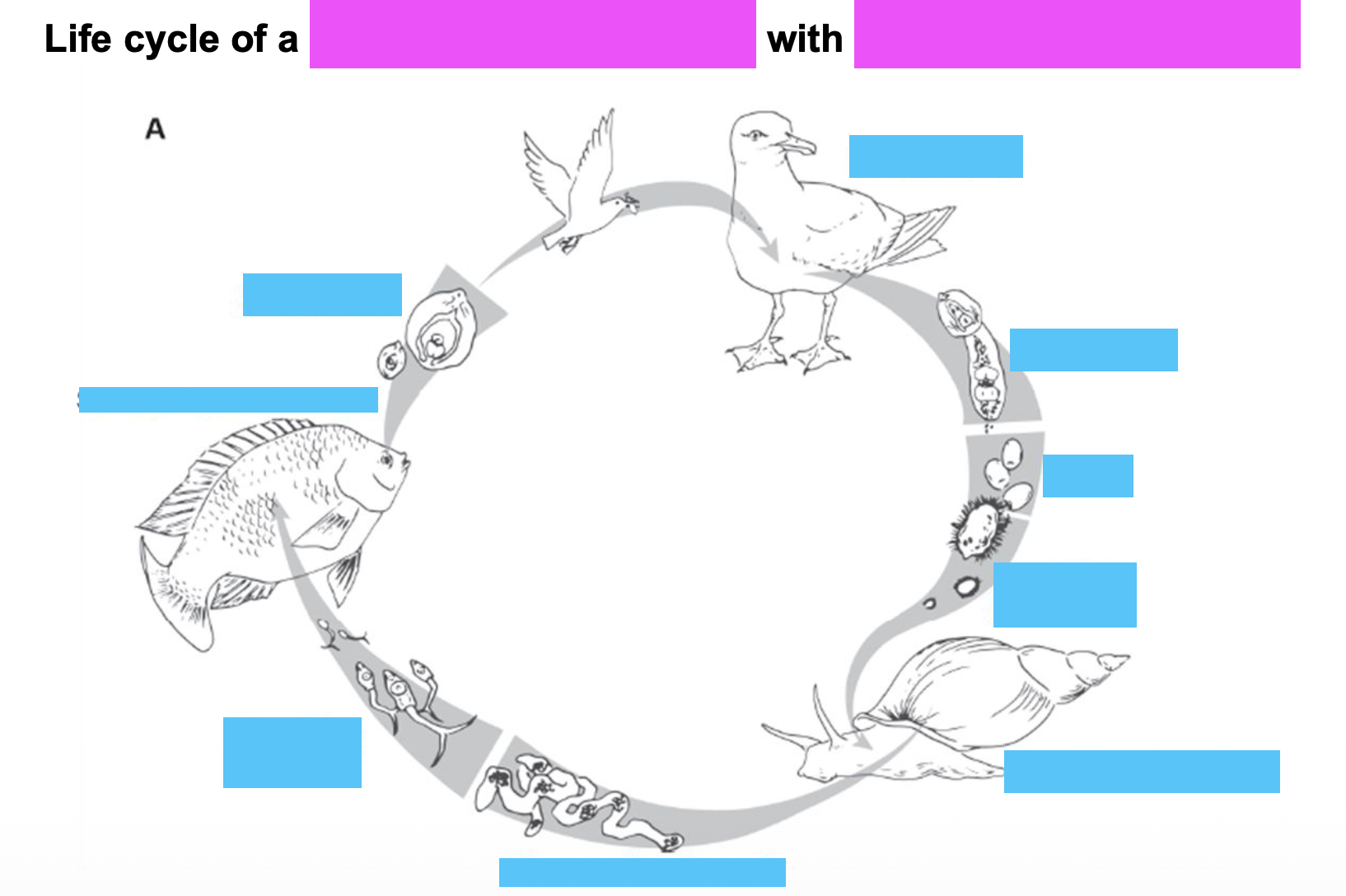
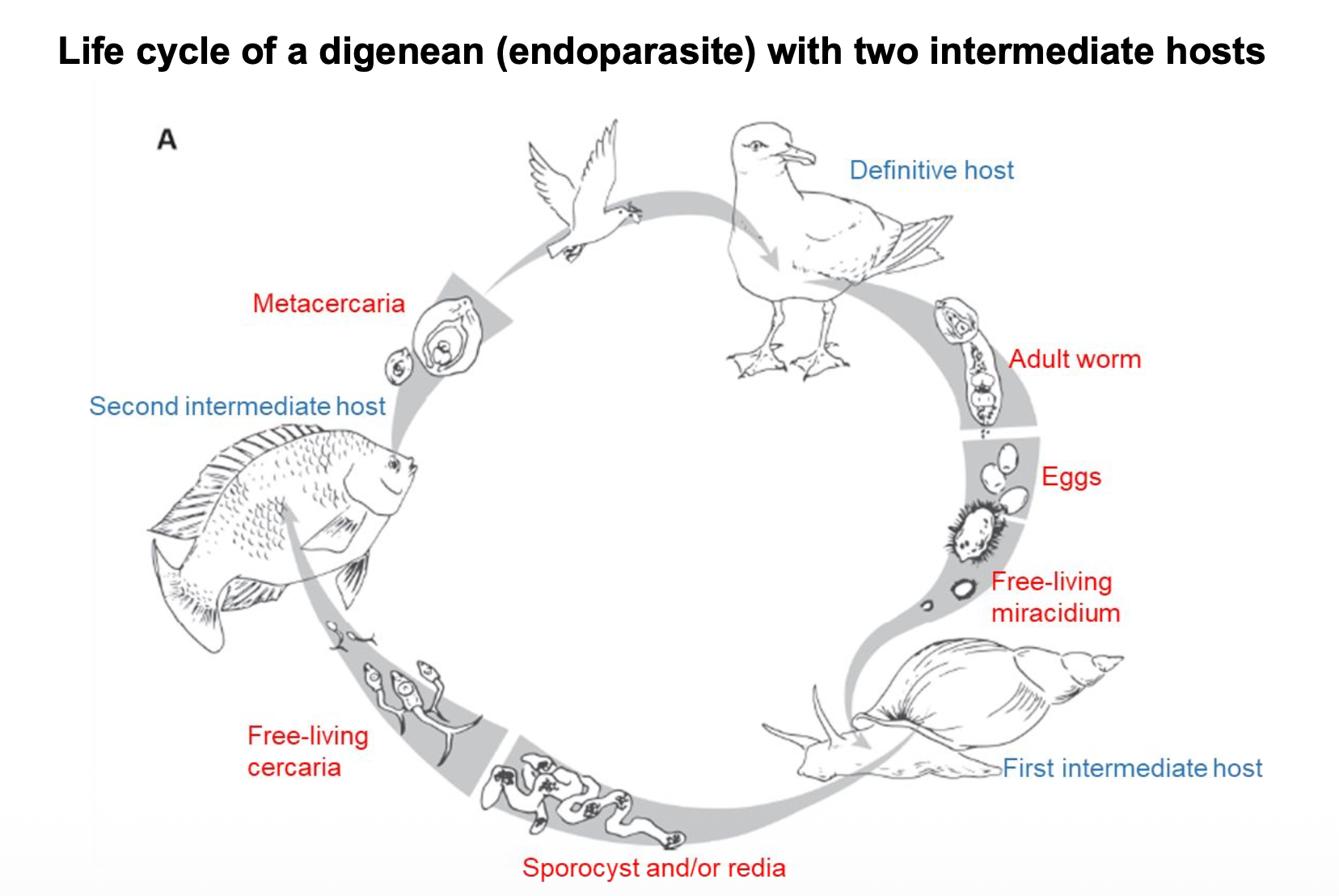
• Endoparasites
• They must __ to complete their life cycle
• The chance that a single individual will live to reproduce is very low/very high
• A __ must happen to balance ?
move among hosts.
very low.
greater reproductive output. mortality.
Zoonoses (Zoonotic Diseases)
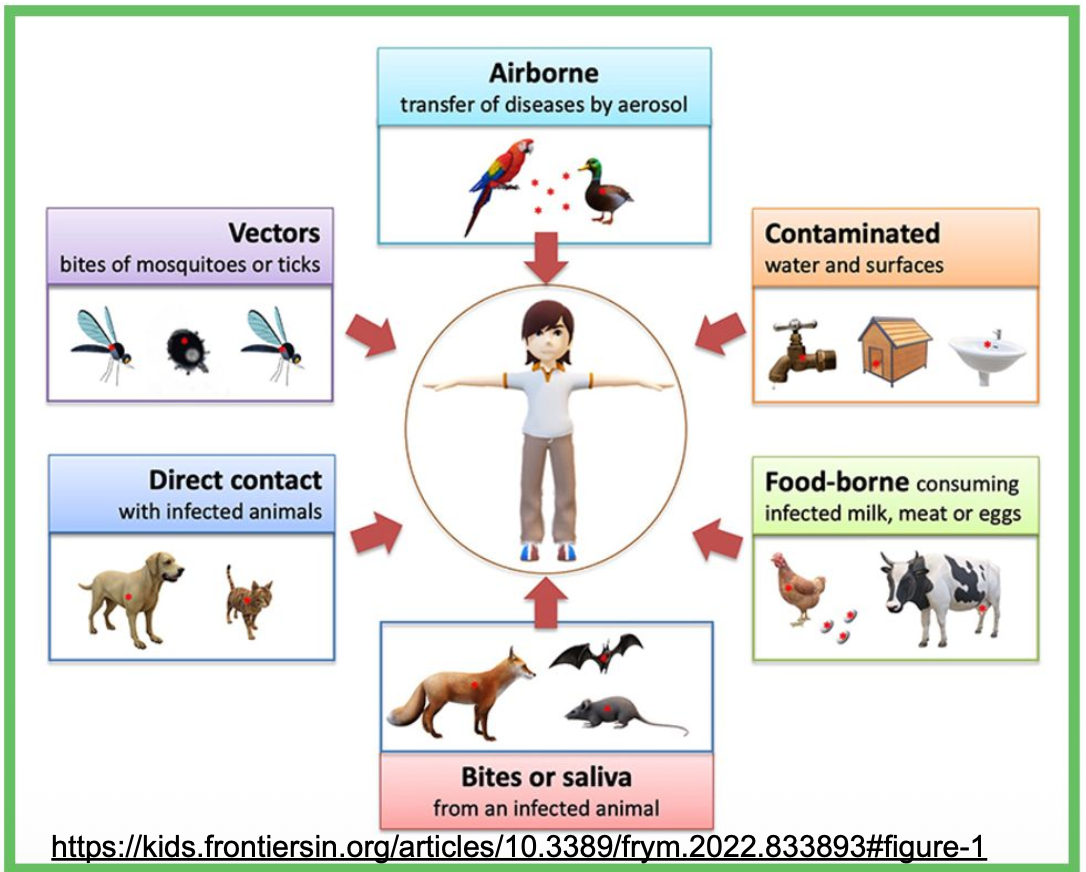
• A zoonosis is any disease or infection that is naturally transmissible from ? to humans
• Zoonotic pathogens may be ?,?,?
• Can spread to humans through ? or ?, ? or the ?
animals.
bacterial, viral, or parasitic.
direct contact or through food, water or the environment.
Epidemiology
• The study of how __
• Epidemiological information is used to __
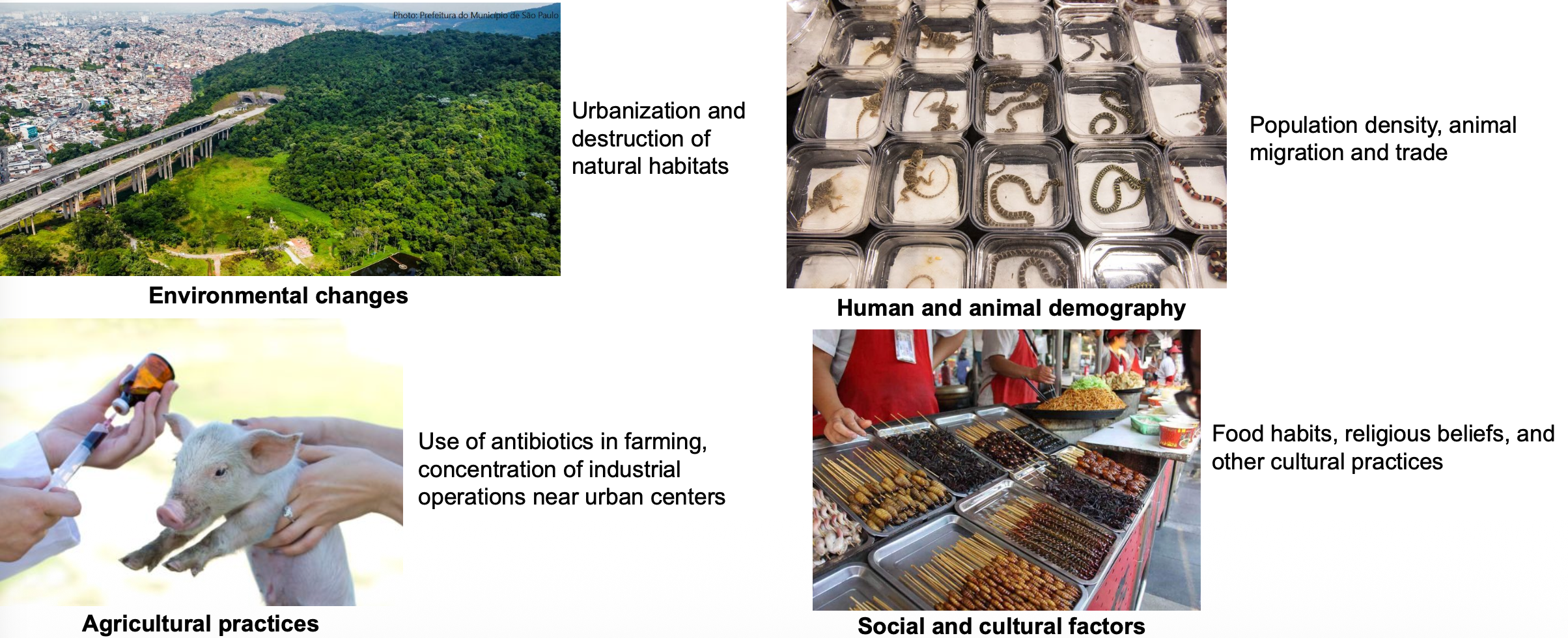
• Epidemiology of zoonotic disease is influenced by many factors:
often diseases occur in different groups of people and why.
plan and evaluate strategies to prevent illness.
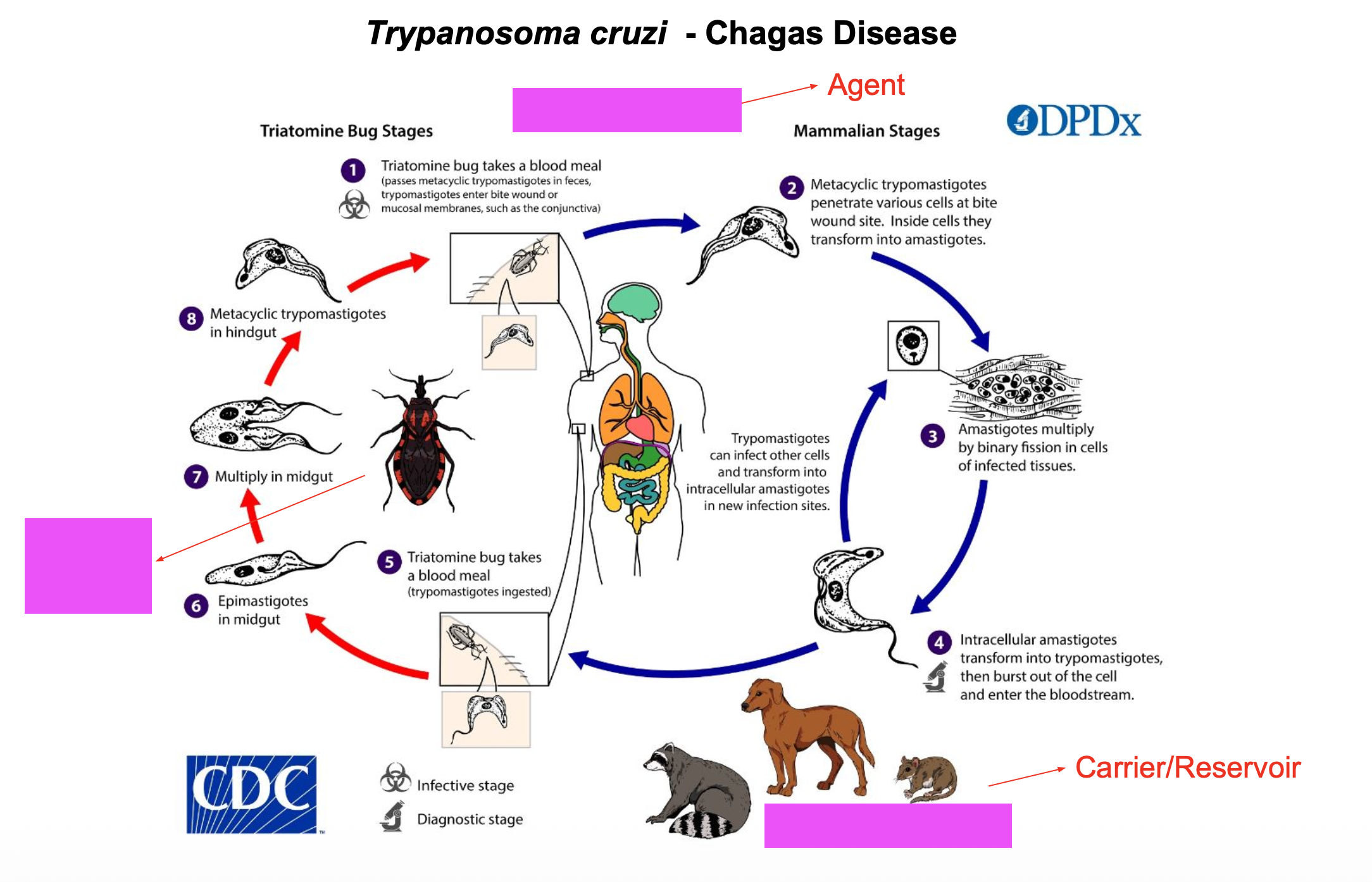
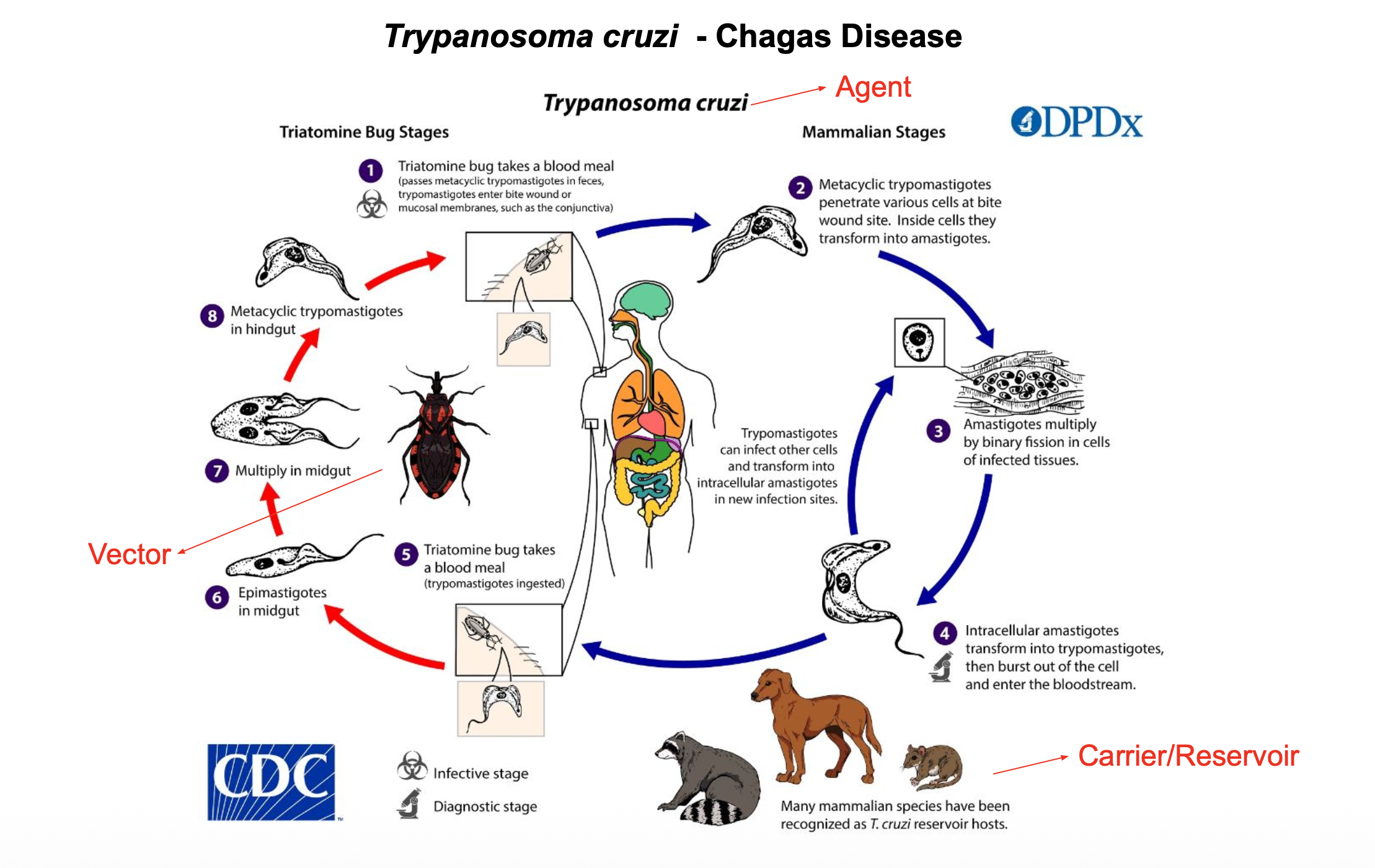
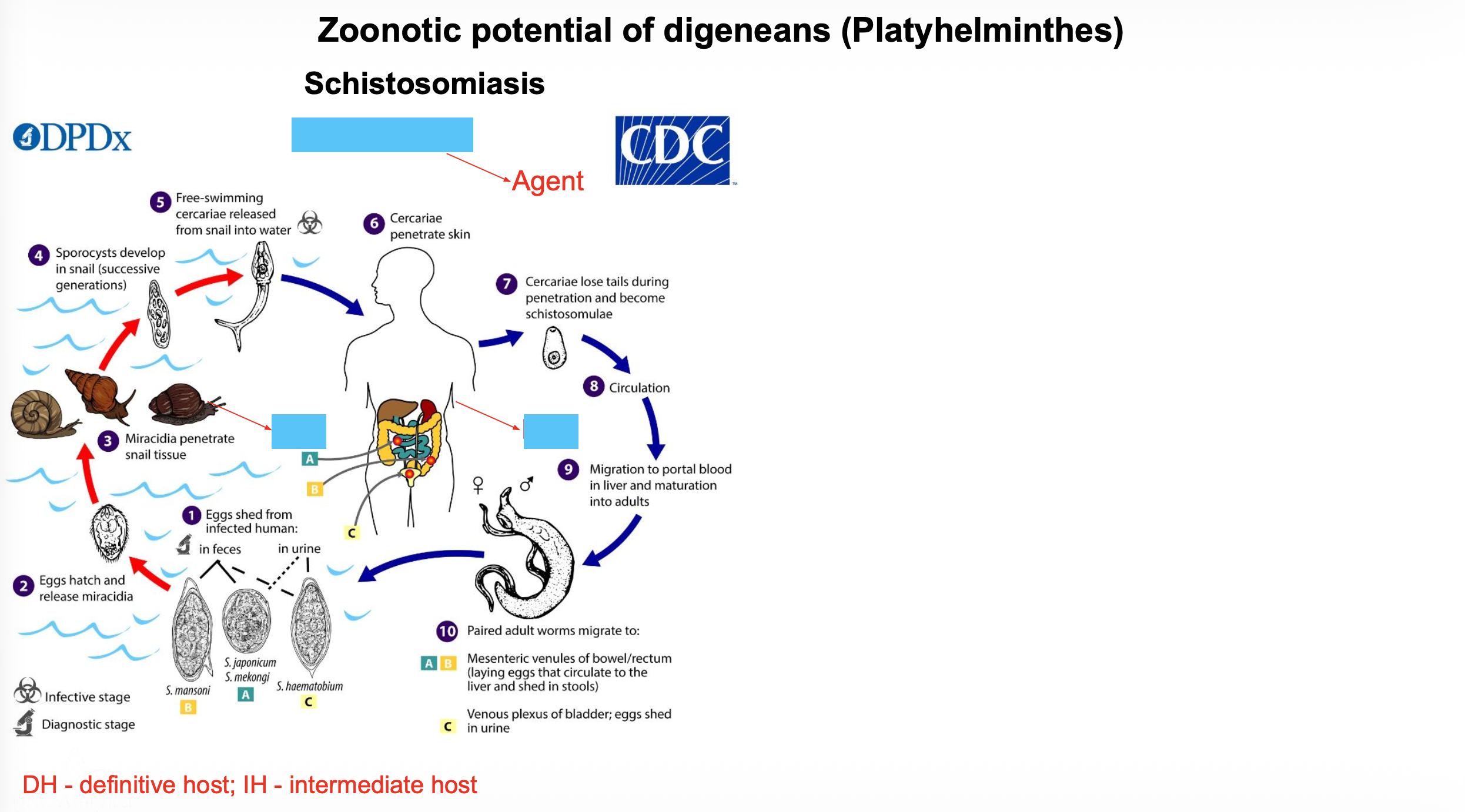
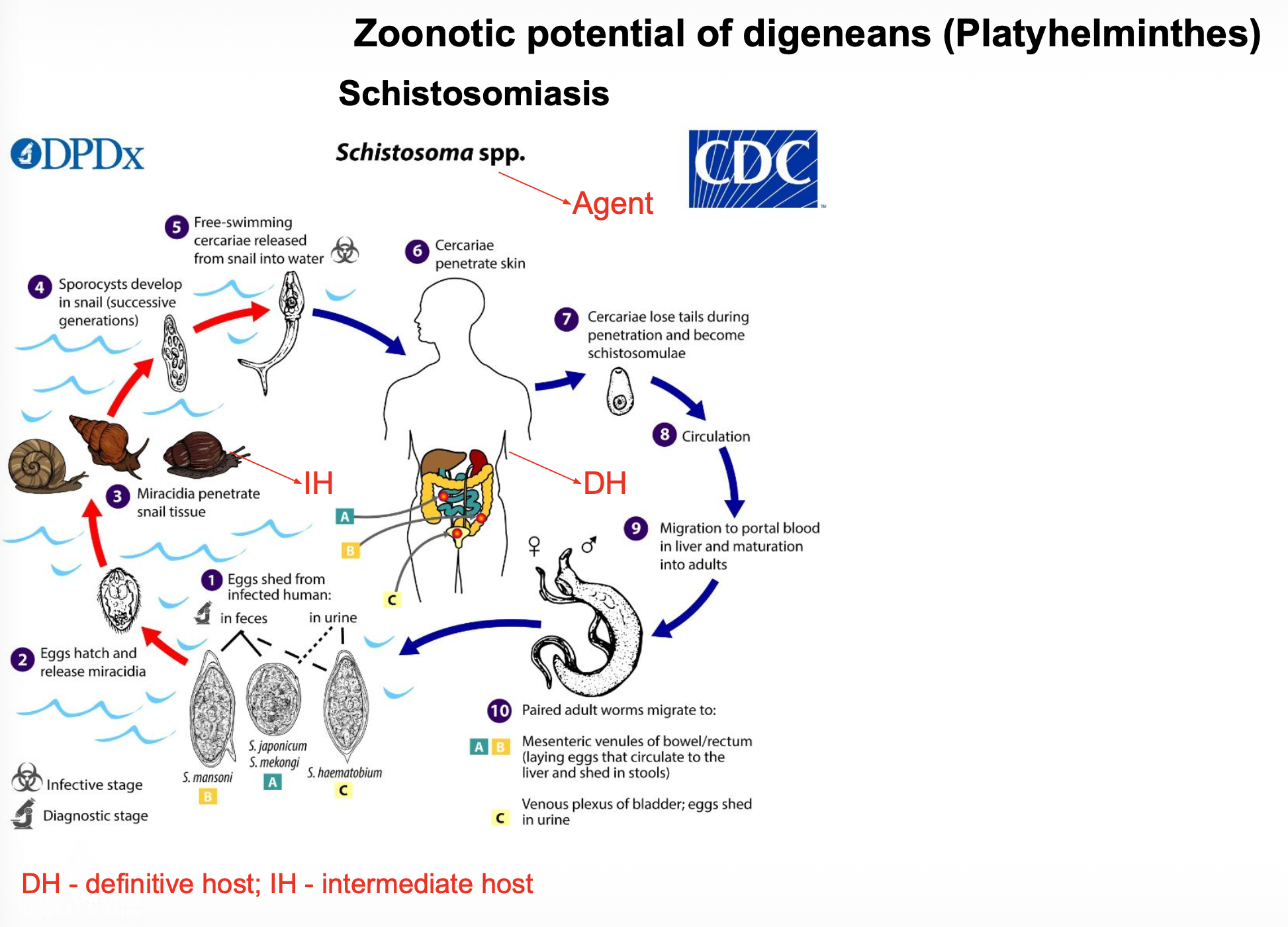
Rabies →
Lyme Disease →
Malaria →
Schistosomiasis →
Dracunculiasis →
Rabies → viral disease
Lyme Disease → bacterial infection
Malaria → protozoans
Schistosomiasis (also known as bilharzia) → platyhelminthes
Dracunculiasis → nematodes
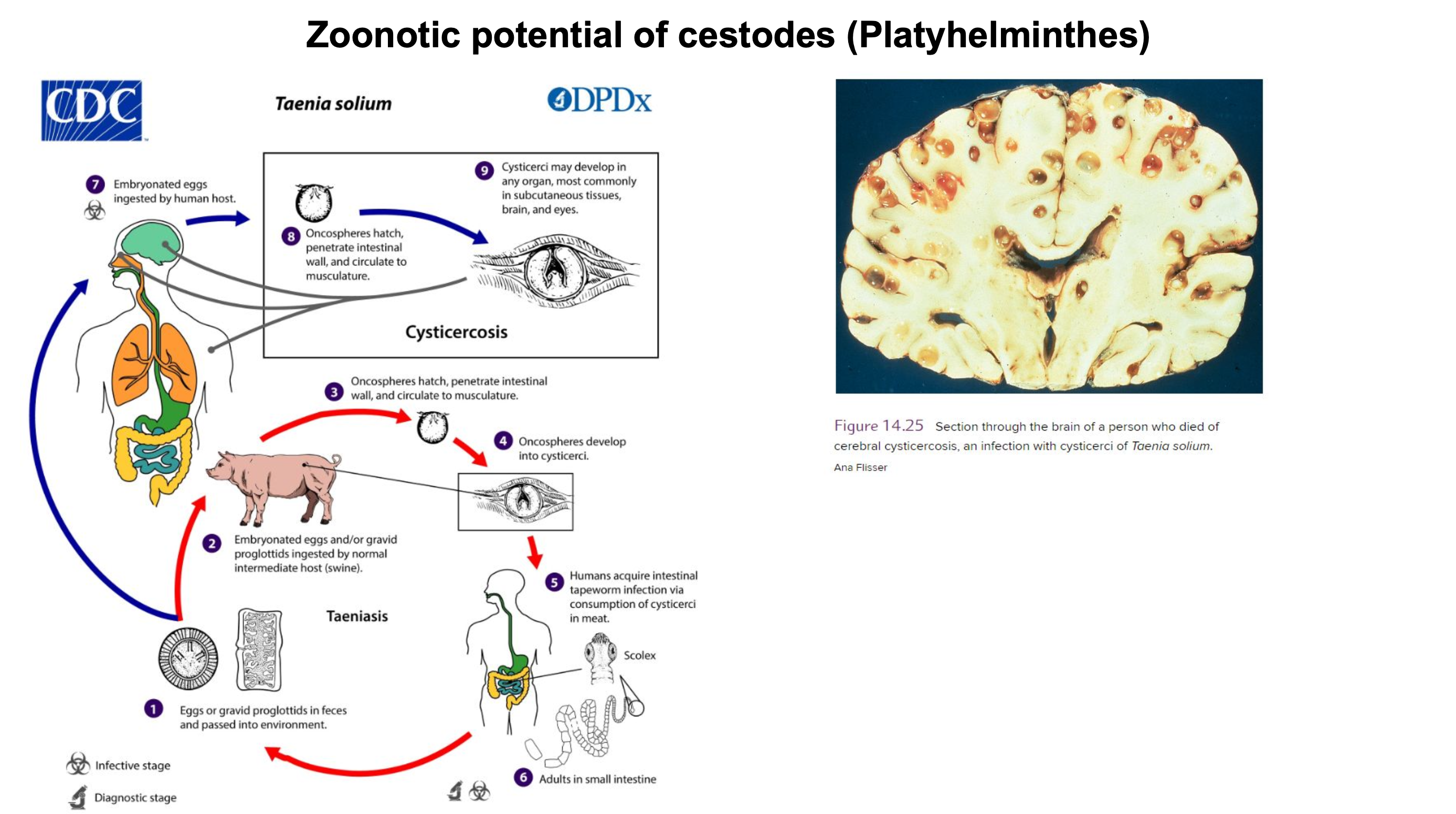
Zoonotic potential of cestodes (Platyhelminthes)
Taeniasis or Cysticercosis, which are both caused by __ are acquired in humans.
Humans acquire Taeniasis via consumption of __– adults develop from cysticerci in the small intestine of humans.
Humans acquire Cysticercosis via consumption of __ – oncospheres hatch, penetrate intestinal wall and circulate to musculature, cysticerci may develop in any organ.
Taenia solium (the pork tapeworm).
cysticerci encysted in meat. [How humans get it: By eating undercooked meat (pork or beef) that contains cysticerci (larval cysts). What happens next: The cysticerci develop into adult tapeworms in the small intestine. The worm attaches to the intestinal wall and grows. Key idea: You eat the larval stage → it becomes an adult worm in your gut].
eggs or gravid proglottids. [How humans get it: By ingesting tapeworm eggs or gravid proglottids (segments full of eggs), usually through: contaminated food or water, poor hygiene (fecal-oral transmission). What happens next: Eggs hatch into oncospheres (early larvae). These: penetrate the intestinal wall, enter the bloodstream, travel to different tissues (muscles, brain, eyes, etc.), They form cysticerci (larval cysts) in organs. Key idea: You eat the eggs → larvae spread through your body and form cysts].