bio quiz
 Call Kai
 Learn
Learn Practice Test
 Spaced Repetition
 Match
Match Flashcards
 Knowt Play
1/156

There's no tags or description
Looks like no tags are added yet.
Name | Mastery | Learn | Test | Matching | Spaced | Call with Kai |
|---|
No analytics yet
Send a link to your students to track their progress
157 Terms
ecology
study of interactions among organisms and their environment
Biotic interactions
interactions among living things
abiotic interactions
interactions between organisms and their nonliving environment
organismal
investigates how adaptations and choices by individual animals affect reproduction and survival
population
focuses on groups of interbreeding individuals and species interactions
community
studies how populations of species interact to form communities
ecosystem
deals with the flow of energy and cycling of elements between organisms and the environment
scientific method
1. make an observation
2. form a hypothesis
3. perform an experiment
4. analyze your data
5. acceptance or rejection of hypothesis
temperature
regulates physiological processes, dictating species survival and geographic distribution based on growth conditions
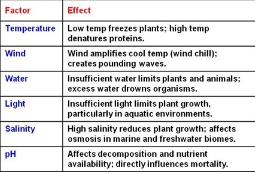
wind
shapes vegetation structures and influences seed dispersal, affecting plant community composition and ecosystem dynamics
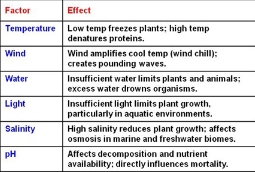
water
determines species aggregation, vegetation, and biodiversity
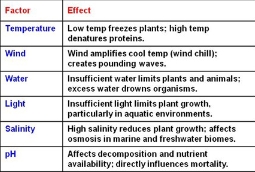
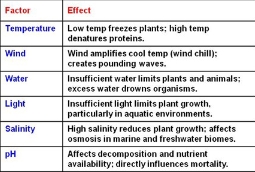
light, salinity, pH variables
light availability is crucial for photosynthesis, while specific salinity and pH levels restrict species to environments they can tolerate, such as salt marshes or peat bogs.
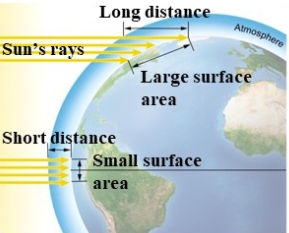
sun in polar areas
sun’s rays strike the earth at an oblique angle and deliver 40% less energy than at tropical locations.
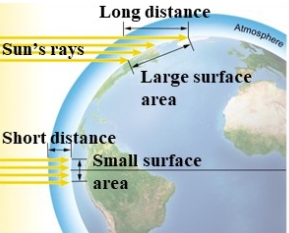
sun in tropical areas
sun’s energy is concentrated over a smaller surface area and travels a shorter distance through the atmosphere
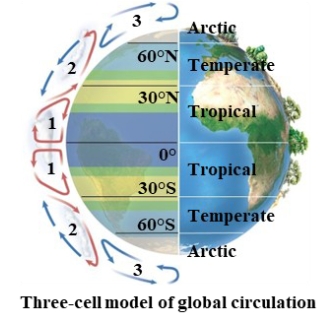
movement of high temp equatorial air
rises and falls back towards the poles at 30 degrees latitude; provides rainfall for equatorial forests. air at poles has little moisture left
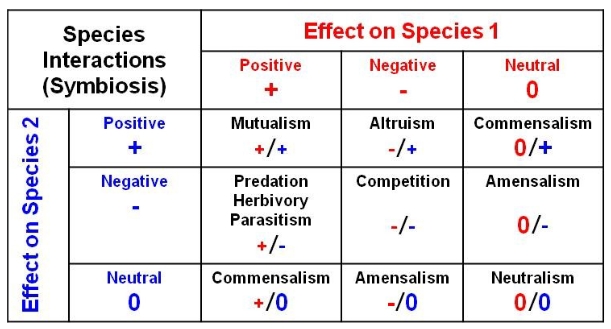
mutualism
ecological relationship between two or more species in which both members benefit
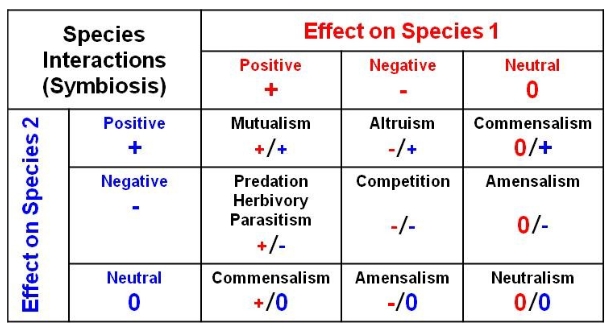
altruism
behavior by an individual that increases the fitness of another individual while decreasing its own fitness.
- an organism can pass on its genes by ensuring that relatives survive
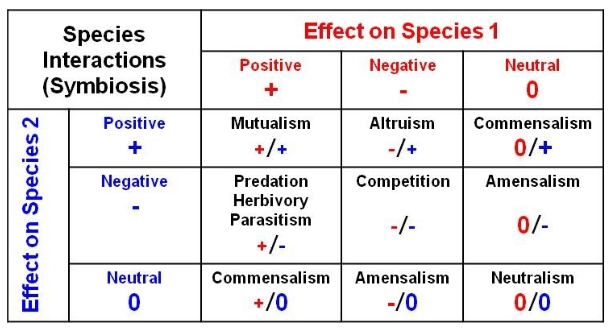
commensalism
relationship between two species in which one species benefits while the other is neither helped nor harmed
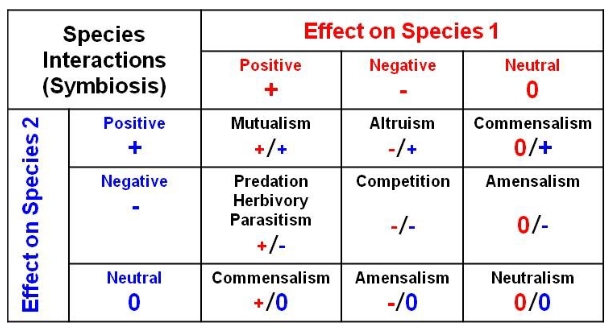
competition
the interaction between organisms or species in which both are harmed when they vie for the same limited resources.
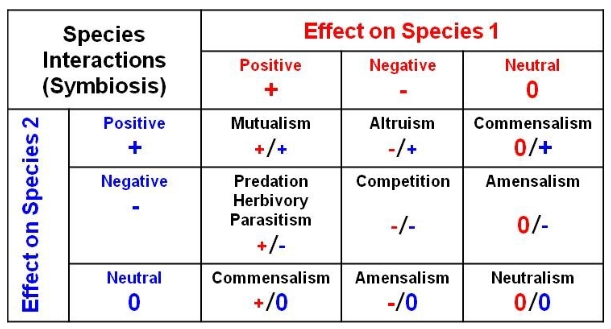
amensalism
biological interaction where one organism is harmed or inhibited while the other remains unaffected
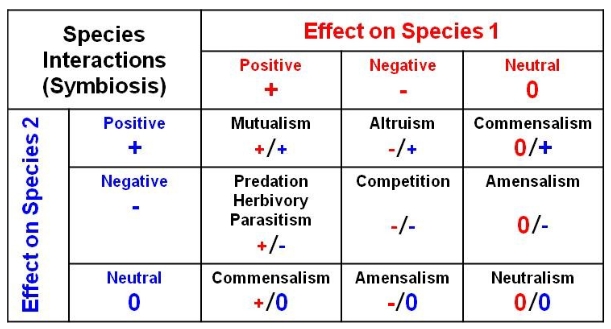
neutralism
biological interaction in which two species coexist without affecting each other’s survival, growth, or reproduction.
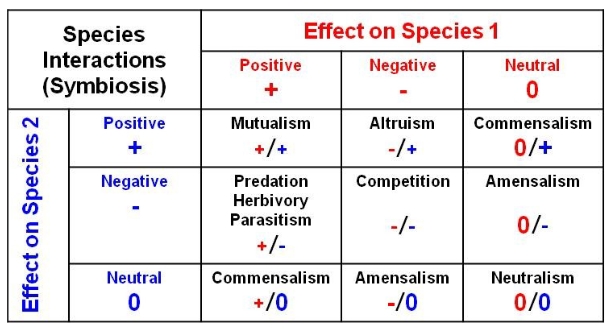
predation/ herbivory/ parasitism
antagonistic interactions where one organism benefits at the expense of another, shaping ecosystems and driving evolutionary adaptations.
can two different species occupy the same exact ecological niche at the same time?
no
competitive exclusion
this hypothesis asserts that two species competing for the same limited resource cannot coexist at constant population values. If one species has even the slightest advantage over another, the less competitive one will be driven to extinction
resource partitioning
differentiation of niches in space and time enables similar species to coexist
chemical defense
the use of specialized biochemical compounds by organisms to protect themselves from predators or threats
aposematic coloration
(of coloration or markings) serving to warn or repel predators.
cryptic coloration
type of animal coloration that helps an organism blend into its surroundings, making it difficult for predators or prey to detect it.
batesian mimicry
mimicry in which an edible animal is protected by its resemblance to a noxious one that is avoided by predators
intimidation
refers to behaviors that deter or coerce individuals by threatening violence or other forms of coercion
What did plants develop in order to deter herbivores? Why?
secondary metabolites like alkaloids, phenolics, and terpenoids. Theyre toxic or bitter but beneficial to humans
additional antipredation strategies include:
- armor: involves the use of physical defenses to deter predators. These strategies can include hard shells, spines, and toxic substances.
- masting: production of exceptionally large seed crops by a population of plants at irregular intervals (in non-masting years, controls the “predator” population and then overwhelms them all at once)
- agility: is a locomotor defense that allows an animal to escape even when it isn't faster than its attacker. While speed is a straight line, agility is the ability to change direction and velocity rapidly and with precision.
- fighting back: often used when escape is impossible or when the prey has evolved specific "weaponry" that makes the cost of an attack too high for the predator.
communication is used to __
modify the behavior of others
what do animals use to attract mates?
visual, auditory, and pheromone signals
how can scent be used?
to mark territories
example of tactile communication?
honeybee waggle dance
inclusive fitness
total number of copies of genes passed on through one’s relatives or as one’s own offspring
kin selection
behavior that lowers an individual’s own fitness but enhances the reproductive success of relatives
reciprocal altruism
behavior where an organism provides a benefit to another with an expectation of receiving a benefit in return at a later time.
genetic relatedness
impacts the evolution of social behaviors, particularly the favoring of altruistic genes through natural selection
hamilton’s rule
predicts altruistic behavior based on genetic relatedness
- altruism favored if rB > C, where r=relatedness coefficient, B=benefit to recipient, and C=cost to donor
polygyny
seen in elephant seals, involves one male mating with many females
polyandry
exemplified by pipefish, involves one female mating with many males
monogamy
common in many bird species, involves one male and one female forming a pair bond
promiscuity
observed in chimpanzees, involves both males and females having multiple mating partners
innate behavior: fixed action patterns
involuntary, automatic sequences of behavior triggered by a specific stimulus (ex. egg rolling in geese)
innate behaviors: migration
seasonal, long-distance movement of animals typically driven by genetic and environmental cues (ex. bird migration)
learned behaviors: foraging
the act of searching for and exploiting food resources, which can be refined through experience and social learning
learned behaviors: imprinting
a form of learning occurring at a specific life stage where young animals form attachments and learn behaviors from their parents (ex. ducklings following their mother)
learned behaviors: classical conditioning
associative learning where an animal learns to associate a neutral stimulus with a significant one (ex. pavlov’s dogs salivating at the sound of a bell)
learned behaviors: operant conditioning
behavior is shaped by rewards or punishments (ex. a rat pressing a lever to receive food)
learned behaviors: cognitive learning
learning that involves understanding, problem-solving, and reasoning, often through observation and insight (ex. chimpanzees using tools to obtain food)
mullerian mimicry
occurs when two or more genuinely harmful species evolve similar warning signals to mutually reinforce predator avoidance
sexual dimorphism: monogamous species tend to ___
have similar sized genders
sexual dimorphism: polygynous species tend to ___
have larger males
sexual dimorphism: polyandrous species tend to ____
have larger females
population ecology
studies factors affecting population size and how they change over space and time
demography
birth rates, death rates, age distributions, and sizes of populations
density
number of organisms in a given unit area
quadrat method
estimates population size by counting individuals within a series of randomly placed square plots that are extrapolated to the entire habitat
mark-recapture
capture and mark some individuals, release back into the wild, and then recapture to determine the % marked
dispersion
degree of spacing between individuals in a population
survivorship
proportion of individuals in a population that survive to a particular age
fecundity
the potential reproductive capacity of an individual or population, often measured by the number of offspring produced
semelparity
produce all offspring in a single reproductive event
iteroparity
patterns of repeated reproductions throughout life cycle
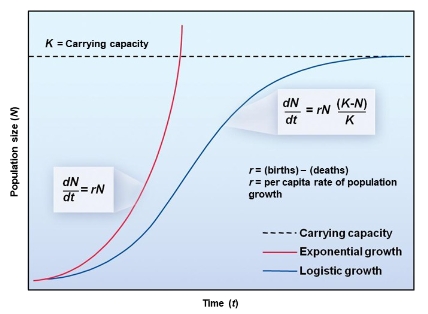
exponential growth
represented by the red curve, showing rapid population increase without constraints, following the equation: dN/dt= rN
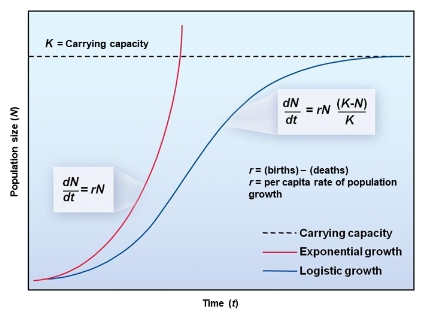
logistic growth
represented by the blue curve, showing population growth slowing as it approaches carrying capacity K, following the equation: dN/dt= rN [(K-N)/K]
![<p>represented by the blue curve, showing population growth slowing as it approaches carrying capacity K, following the equation: dN/dt= rN [(K-N)/K]</p>](https://assets.knowt.com/user-attachments/4f1c529b-4c1e-43ab-9bf3-8fdbf4b092ac.jpg)
carrying capacity (K)
the maximum population size that an environment can sustain, indicated by the dashed line
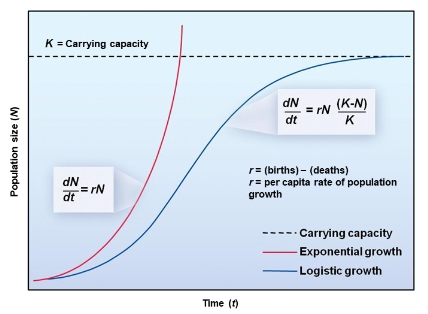
population dynamics
logistic growth incorporates limiting factors, demonstrating how resources and environmental pressures regulate population size
density-dependent factors
competition, predation, disease; become more intense as pop size increases
density-independent factors
affect population size regardless of density; weather and natural disasters
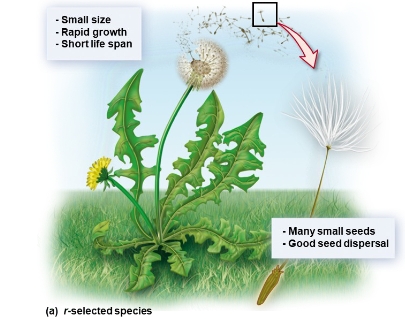
r-selected species
thrive in unpredictable environments, with high fecundity and low parental investment often influenced by density-independent factors
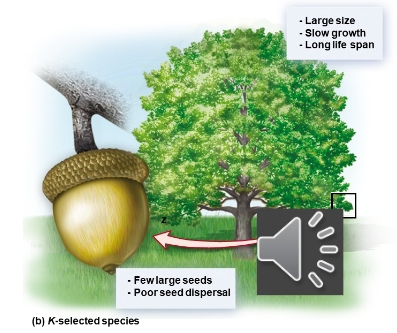
k-selected species
adapted to stable environments, with low fecundity and high parental investment, often regulated by density-dependent factors
species-area relationship
studies have shown that the number of species present increases with the size of the habitat, demonstrating that larger habitats support higher species richness
biodiversity-stability
elton’s hypothesis suggests a linear correlation between species diversity and ecosystem function, indicating that more diverse ecosystems tend to be more stable and resilient.
field experiments
experiments with plots of native prairie plants showed that more diverse plots had increased productivity, used nutrients more efficiently, and had higher resistance to invasive species
community function
increased species richness improves overall community function, as evidenced by higher arthropod species richness and better resource utilization in diverse plant communities
extinction
the permanent loss of all individuals of a species, resulting in its disappearance from the planet. it is a natural process, but human activities have accelerated the rate significantly
main causes of extinction
major causes include introduced species, direct exploitation, habitat destruction, climate change, loss of genetic diversity, genetic drift, and limited mating opportunities
impact of human population growth
The rapid increase in human population is directly linked to the rise in animal extinctions, particularly since the 17th century. This relationship highlights the significant impact of human activities on biodiversity loss.
threats to biodiversity
Introduced species often outcompete native species for resources, leading to extinctions. Overharvesting, habitat loss, and climate change further exacerbate the decline in biodiversity, posing severe threats to various species' survival
what are the main threats to species?
humans
extinction example: introduced species
hawaiian honeycreeper exterminated by avian malaria from introduced mosquitoes
extinction example: direct exploitation
passenger pigeon hunted to extinction for its meat
extinction example: habitat destruction
ivory-billed woodpecker likely extinct due to loss of habitat
extinction example: climate change
human induced global warming is predicted to cause 15-37% of species in biodiverse regions to go extinct by 2050
inbreeding
Breeding among genetically related relatives. More likely in small populations. Tends to increase recessive homozygotes, decrease genetic diversity and decrease reproductive fitness of the population.
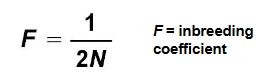
limited mating
The effective population size (EPS) is the number of individuals that contribute genes to future populations.
• Harem breeding structures where only a few dominant males breed have a smaller EPS.
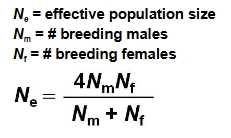
genetic drift
Random changes in allele frequencies due to chance. Small population sizes (N) can result in decreased genetic diversity over time
community ecology
examines interactions between species within a shared habitat
species diversity
refers to the number of different species in a habitat and their relative abundance.
shannon diversity index
measures the species diversity of a community
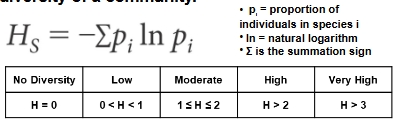
elton’s diversity-stability hypothesis
Disturbances in a species-rich community are cushioned by large numbers of interacting species and do not produce as drastic an effect as it would on a less diverse community
indicator species
species status provides indication of overall ecosystem health
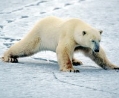
umbrella species
Have very large habitats; protecting them protects many species
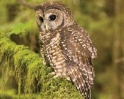
flagship species
a single, large or instantly recognizable species
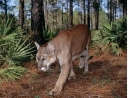
keystone species
have a disproportionate impact on the community
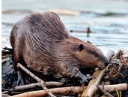
foundation species
considered the base or bedrock of a community
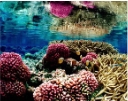
endemic species
species that are only found in a specific location and nowhere else