Economics Chapter 2 the Allocation of resources 5-14
 Call Kai
 Learn
Learn Practice Test
 Spaced Repetition
 Match
Match Flashcards
 Knowt Play
1/58

Earn XP
Description and Tags
ECONOMICS IGCSE CIE CHAPTER/ SECTION 2 The Allocation of Resources
Name | Mastery | Learn | Test | Matching | Spaced | Call with Kai | Chat |
|---|
No analytics yet
Send a link to your students to track their progress
59 Terms
What is the definition of a market?
A place where buyers and sellers can engage in trade
What do markets do?
Help allocate resources through supply and demand
Answers the 3 economic problems
What is the Market System?
-Sometimes called the Price mechanism
-establishes market equilibrium
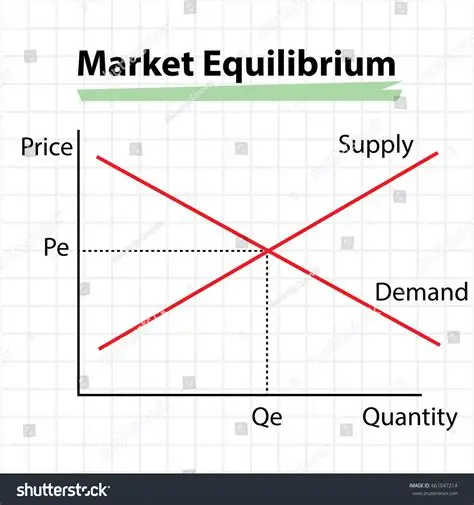
What is market equilibrium?
The price where supply and demand are equal
DRAW MARKET EQUILIBRIUM GRAPH
Like this
What is Economic Demand?
The quantity of goods that consumers are willing and able to buy over a period of time
What is the relationship between price and demand?
The higher the price the lower the demand.
The opposite is also true
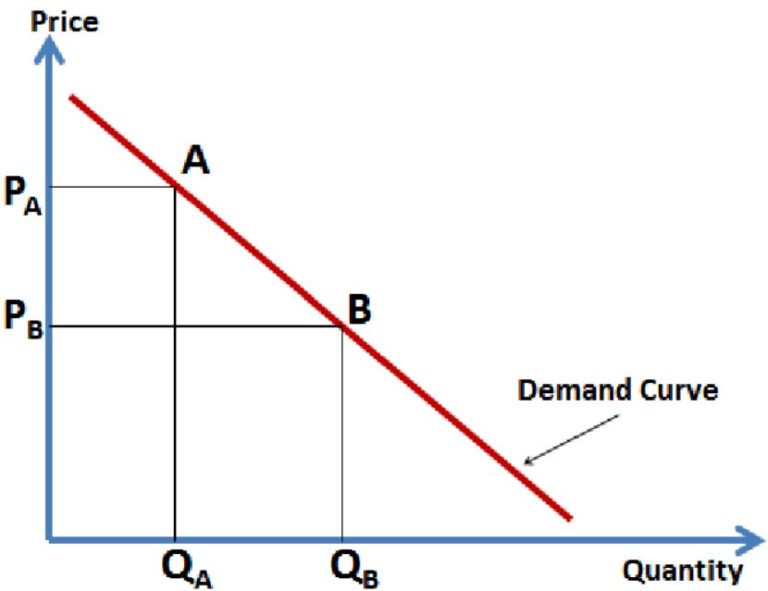
What is the law of demand?
The quantity of demand rise as prices falls and vice versa
Why is the law of demand true?
-As the price falls people can afford to buy more of the product
-As prices falls more people could afford it
What are the determinants of Demand?
Habits, fashions, and taste
Income
Supplements and complements
Advertising
Government policies
Economy
Others
Weather
Demographics of population
DRAW the DEMAND GRAPH
What are the two types of movement and how do they happen?
-Contraction and Extension
Changes in Price
-Shifts
Changes from HISAGE Factors
What are individual and market demand?
Individual—Demand of a certain demographic
Market Demand-Demand of entire market
What is the Law of Supply?
Quantity of supply lowers as price lowers whilst it rises when prices are increased
Why is the Law of Supply the case?
Cover the costs of production for new firms
Old firms are able to earn higher profits
Determinants of supply?
Time
Weather
Opportunity costs
Taxes
Innovations
Production Costs
Subsidies
What are the two types of supply changes?
Shifts in supply
Caused by TWO TIPs
Contraction/ Extension
Caused by price
What are the characteristics of a price mechanism/ market system?
No government intervention in the affairs of the market
Goods and services are allocated through the market
Allocation of factors of production based on financial incentives
Competition creates opportunities for firms and consumers
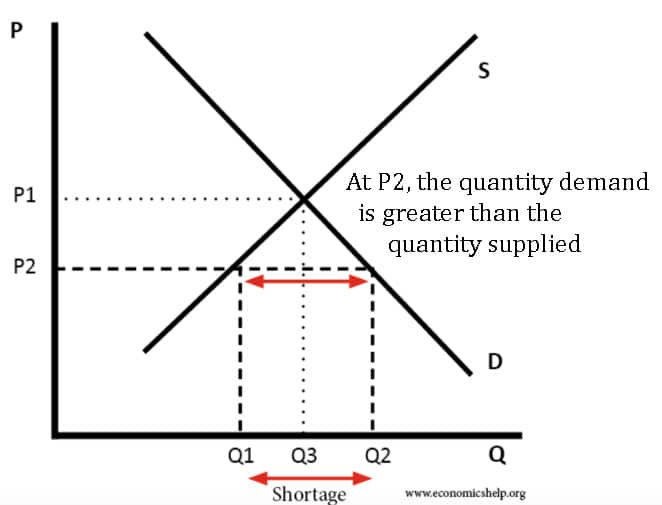
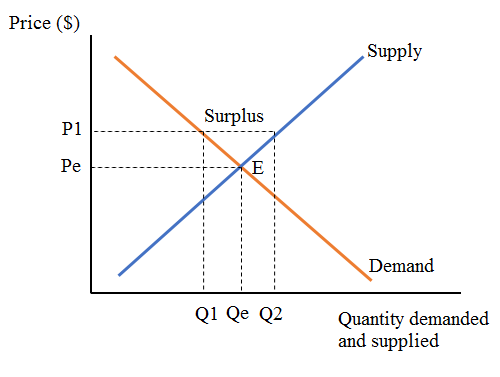
What is a shortage and what is a surplus?
-Too much demand
-Too much supply
-Causes market disequilibrium
Graph for Shortage
Graph for Surplus
What is the relationship between price/ demand and price changes?
Higher demand increases price
Lower demand decreases price
Higher supply decreases price
Lower supply increases price
What is Price Elasticity of Demand?
How much the demand for a good/ service responds to changes in price
How to calculate PED?
Percentage Change in Demand
__________________________
Percentage change in price
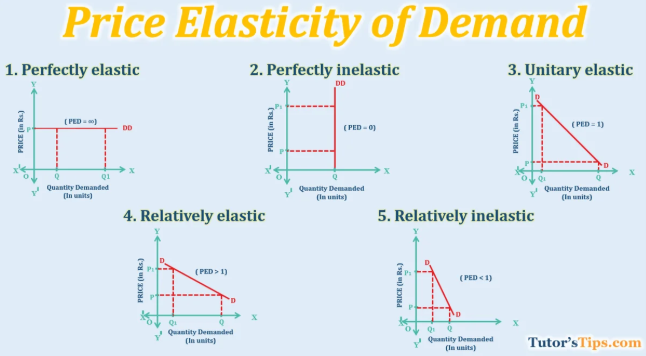
What are the 5 types of PED categories
Inelastic <1
Elastic >1
Perfect Inelastic=0
Perfect Elastic= infinity
Unitary elastic=1
Draw the five types of PED graphs
What are the determinants of Price Elasticity of Demand
Substitution
Cost of Switching
Advertising
Time/ length of change
Habits
Income
Necessity
Definition
PED and pricing explain the relationship
Inelastic- would be better to raise prices to make profit
Elastic- would be better to lower prices to make profit
Why does PED matter to decision makers?
Helping producers decide their pricing strategies
Predicting the producer’s change’s impact
Price discrimination- charging different prices for the same product for different demographics
Deciding where to raise sales-tax
Determining tax policies
Wage negotiations
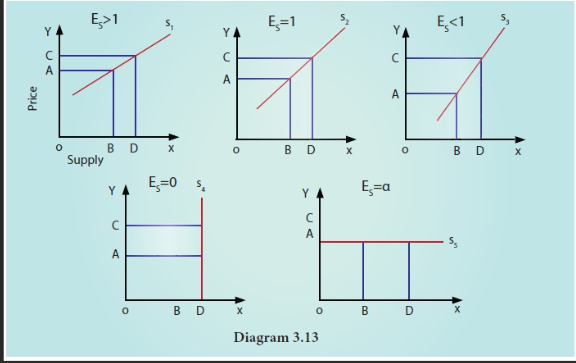
How to calculate Price elasticity of supply?
percentage change in quantity supplied
Percentage change in price
How to draw the five of PES
Determinants of PES
Degree of Spare capacity
The Level of stocks remaining
The number of firms in an industry
Time frame
The ease of factor substitution
What is an economic system?
A way an economy is ran and organized
What are the two main modern types of economic systems and their definitions?
Market Economy-relies on the private sector market forces to allocate scare resources through monetary incentives with minimal governmental interference.
Mixed Economy-a mix of government resources allocation and market systems
What are the advantages of a market system?
Efficiency-firms are forced to pay attention to what consumers desire and innovate to compete
Freedom of choice-consumers are free to choose what to purchase and pursue
incentives-monetary incentives make people work
What are the disadvantages of a market system?
Income and wealth inequalities-the economy is geared to meet the needs of the wealthy and neglect those who cannot pay
environmental issues- pollution, resource depletion, and destruction for profit
Social hardships-basic necessities may not be provided
Wasteful competition-useless spending such advertising
What is market failure?
When market forces fail to allocate resources efficiently leading to effects on a third-party
What are Private costs, benefits, external benefits, external costs, and social cost?
Social costs-Private+External costs
Private benefits-individual benefits
Private costs-individual costs
External costs-negative side-affects
External benefits-positive side effects
What are public goods and market failures related?
Public goods do not produce profits and do not get built unless governmental forces step in causing bad effects on the public
What are merit and demerit goods?
merit-external benefits
demerit-external costs
How is abuse of monopoly an example of market failure?
without government they would exploit the consumers
What are the main points for and against mixed economies?
For-Best of both worlds
able to provide both necessary and consumer goods
Against
higher taxes
Same problems as market economy still
Ways to regulate market failure?
Maximum price
Minimum price
Subsidies
Regulation
Education
Privatization
Nationalization
Direct provision
Quotas
Maximum price good
-Prevents giant rise
-allows consumers to afford necessary goods and services
maximum price bad
-shortages
-unofficial markets will rise
-excess demand
Minimum price good
-guarantee supply
-more incentives to work
-encourages supply
Minimum bad
excess supply
Subsidies good
-increases supply
Subsidies bad
-opportunity costs
Rules and regulations good
-Less of demerit goods
-more merit goods
R&R bad
-unofficial markets
-Break rules
-require necessary punishment
Education good
-awareness of demerit and merit goods
Private good
-one off payments
-less debts
no maintenance
earns revenue from tax
corporate tax
-reduce tax-payer burden
-incentive to be more efficient
Private bad
-private monopolies
-intervention may still be needed
-opportunity cost
Direct provision good
accessible to all
help maintain high quality
Direct provision bad
-cost of opportunity
-over consumption
who to prioritize
some may take advantage
quotas good
-no over production
-protects environment
Quotas bad
-may increase price
-may be too expensive to implement