Soul, mind and body
 Call Kai
 Learn
Learn Practice Test
 Spaced Repetition
 Match
Match Flashcards
 Knowt Play
1/47

There's no tags or description
Looks like no tags are added yet.
Name | Mastery | Learn | Test | Matching | Spaced | Call with Kai |
|---|
No analytics yet
Send a link to your students to track their progress
48 Terms
Soul
The immaterial/non-physical essence of a person
(often regarded as the spiritual component that connects with the divine + defines individuality)
Self
To refer to the subject of mental states + of spiritual experience
(same meaning as soul, but philosophers often favour ‘self’ as it doesn’t have the religious connotations)
Consciousness
Awareness/perception
The state of being awake and aware of one's surroundings, thoughts, + experiences, often linked to self-awareness + the mind
Dualism
Belief that reality can be divided into 2 distinct parts, such as good + evil or physical + non-physical
Substance dualism
Belief that mind + body both exist as 2 distinct + separate entities
Materialism
Belief that everything that exists is physical or made of matter, and that all phenomena, including thoughts and consciousness, can ultimately be explained by physical processes
Reductive materialism/identity theory
Mental states are identical to physical brain states, meaning the mind can be explained in physical terms as chemical activity in the brain
Mental states can be classified into different types such as memory, pain, happiness, desire - correspond to activities in different parts of the brain
Materialist view on consciousness?
Caused by physical phenomena (chemical reactions), explained by neuroscience
Dawkins
Survival machines
vehicles of genes
mixture of chemicals
→ Dawkins is saying:
Our behaviours and mental processes have evolved because they aid survival and reproduction
Consciousness can be understood as a product of evolutionary biology and brain activity rather than an immaterial soul
Category error
A problem of language that arises when things are talked about as if they belong to one category when in fact they belong to another
(this often leads to confusion or misunderstanding in discussions about the mind and body, as it fails to recognize the distinct nature of different kinds of entities)
The argument from recollection
*Eval
Plato argued that all knowledge was recollection of Realm of Forms (all learning = remembering) e.g. Meno’s slave geometry - shows that the boy must have been using knowledge he already had before birth, as his status in life meant that it couldn’t of been from education
This argument suggests that the soul is immortal and knows everything, as it has seen the Forms before being incarnated in the body. - We have innate knowledge
Lacks verifiable evidence but there are some instances that recognition through reason is successful
The argument from opposites (one of Plato’s arguments for the soul)
*Eval
Empirical world is full of opposites e.g. light + dark, big, small
As there is ‘living’ there is also ‘death’ but since ‘living’ is an actual state of being, so must ‘death’
Therefore, Plato believed in reincarnation.
Based on assumptions - we have never seen any forms
Plato’s beliefs on the soul
Plato was a dualist and believed that the soul is deformed through its association with the body.
The soul is separable from the body and as it is non-material, it is, in a sense, indestructible.
He posited that the soul is eternal, existing before and after the physical body, and is the source of true knowledge and virtues.
Plato’s view on the body
The temporary, physical, material aspect of the person
Plato’s view on the soul
The essential (essence of the person), immaterial aspect, temproarily united with body
What was Aristotle’s view on the soul?
The soul is the form of the body that gives it life + function, inseparable from the physical form.
Unlike Plato, Aristotle believed the soul + body are intertwined, with the soul being the essence that actualizes the potential of the body.
Relationship of form + cause
For Aristotle, the form of something is related to the cause, specifically the formal cause, which is the ‘blueprint’ or map of something
The form of something is found in its function
e.g. if you have a collection of human parts, you cannot say that there is a soul or form of human there unless they all function together
Does Aristotle think body + soul can be separated?
No
Believes they are inseparable; the soul is the essence that actualizes the body
e.g. when the body dies, you cannot meaningfully speak of a form or soul of the body because decomposition begins
What is Aristotle’s wax and stamp analogy?
Wax = body
Stamp = soul → purpose
It is impossible to separate the imprint of the seal from the wax. So the form of the body, the soul, is imprinted on it but is also inseparable from the working of the body itself.
The formal cause of the body = soul
Aristotle key quote about soul + body?
‘It indubitably follows that the soul is inseparable from the body’ - Aristotle, De anima
Why is Aristotle sometimes called both a dualist + monist?
Because his view of the soul is complex: he believed the soul is the "form" of the body and cannot exist without it (monist), but he also described the intellect as possibly separable or immortal (dualism). This mix of ideas makes his view hard to classify clearly.
What did Aristotle mean by ‘substance’ when talking about the soul?
(Also known as ousia)
Is what makes something what it is. For living things - soul = primary substance - essential principle that gives the body life + identity
What did Aristotle mean by ‘essence’ when talking about the soul?
A thing’s defining nature - what it truly is
The soul is the essence of a living body - what makes a body alive rather than just a collection of matter
What did Aristotle mean by ‘psyche’ when talking about the soul?
In Greek psyche = soul
Aristotle saw it as the ‘form’ of the body + the source of life that encompasses the essential qualities + functions of an organism
Who was Descarte and what theory did he develop?
A French philosopher (17the century)
Known for his substance dualism theory, which posits that mind + body are distinct entities that interact
How did he reach his theory?
Cartesian scepticism → led him to doubt everything except his own existence, encapsulated in the phrase "I think, therefore I am."
What was Descartes’ evil demon thought experiment?
An all-powerful demon deceives individuals into thinking that everything perceived is real, raising doubts about the reliability of senses + knowledge → the point of this experiment was that you cannot be entirely certain that this is not true
But even if you assume there is a deceiver, it follows from you being deceived that there is a ‘you’ - that much is certain
Conclusion of thought experiment?
Whilst you can be deceived about the content of thoughts, you cannot be deceived that you are a thinking subject that seems to perceive things
So, there needs to be a subject - you - who is the subject of such deception
What was Descartes’ foundational belief?
Following on from the thought experiment → Descarte frames his finding as cogito ergo sum or I think, therefore I am
So, we can have certainty that there is a mental substance or ‘thinking’ + we can be sure that that isn’t the same as matter
This foundational belief asserts that the act of thinking is proof of one’s existence + establishes a distinction between mind and body
How can we be sure that mental substance or thinking isn’t the same as matter?
By application of Leibniz’ law
If 2 things are the same thing, they must share all the same properties
Argument that arises using Leibniz’s law (that soul + body are separate)
I can be sure that my mind exists (thought experiment + cogito ergo sum)
I cannot be sure that my body exists since my perceptions could be deceptive
So, by application of Leibniz’ law, mind + body must be 2 separate substances (if they were the same thing, we would be able to be certain the body existed as well)
Body + soul are not the same
Descartes’ key difference between mind + body?
Descartes concludes that mind + body aren’t the same
Descarte says that the key difference is that matter (body) is extended in space + mind is unexpended + indivisible. This distinction highlights that the essence of mental substance is fundamentally different from physical substance
This echoes Plato’s earlier dualism in which the soul (mind) is non-material + indivisible
What is the problem of subjective experience (qualia) for materialism, and how does substance dualism address it?
SD does account for some features of consciousness that materialism finds difficult to explain
Qualia are the subjective, first-person experiences (e.g., the redness of red, the pain of a headache) that cannot be fully captured by physical descriptions of brain activity.
Materialism struggles to explain how physical processes produce these inner experiences. Substance dualism explains qualia by claiming that consciousness is a fundamentally non-physical substance, naturally capable of subjective experience.
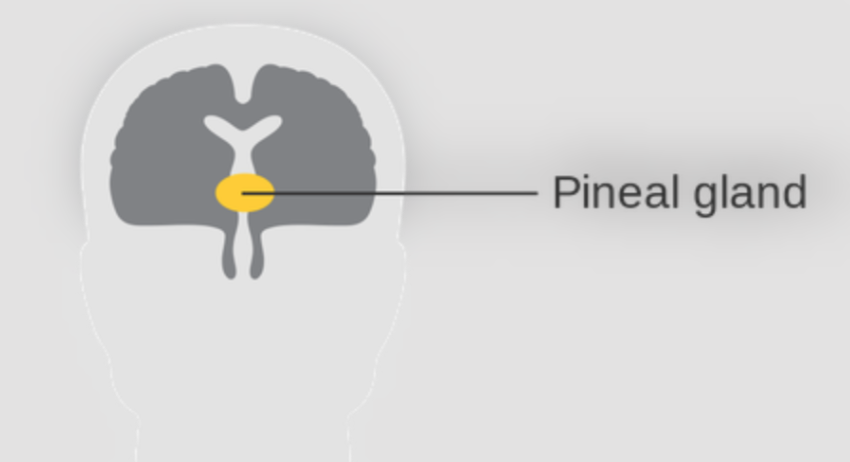
Why doesn’t Descartes’ use of the pineal gland solve the interaction problem?
Because the pineal gland is physical but Descartes’ mind is non-physical
Naming a physical site doesn’t explain how different substances interact - it just moves the problem without solving it
A physical thing cannot bridge the gap between immaterial mind + material body
What is the problem of the unity of consciousness for materialism, and how does substance dualism address it?
Materialism struggles to explain how a unified, coherent experience emerges from billions of separate, parallel brain processes.
Consciousness feels like a single, seamless stream, not fragmented activity. SD explains this unity by positing that a non-physical mind integrates experiences as a whole, something the scattered activity of the brain alone cannot achieve.
What is the problem of the persistence of self over time for materialism, and how does substance dualism address it?
Materialism struggles to explain how a stable sense of self endures despite constant physical + psychological changes (e.g., brain cell turnover, memory loss).
SD explains persistence by proposing that the non-physical mind or soul remains the same over time, providing personal identity beyond physical changes.
What is the criticism of Descartes' use of Leibniz's Law in arguing for mind-body dualism?
Descartes claims the mind + body have different properties, so they must be different substances. However, critics argue that the differences may arise from how we experience consciousness "from within" and the body "from outside," not because they are actually different substances. Thus, Descartes’ use of Leibniz’s Law may be invalid, since it assumes real differences where there may be only apparent ones.
Who was Gilbert Ryle + what was his criticism of Descarte called?
Ryle was a materialist known for his critique of Cartesian dualism, which he called "the ghost in the machine." - ghost = mind, machine = body
As if we were physical machines being operated by some kind of invisible mind - makes fun of this idea
Argued that any talk of a 'self' or 'soul' existing beyond the physical body is a mistake in the way we use language - THE CATEGORY ERROR
Descarte thinks the mind is a ‘thing’ but it is not
What is the university analogy?
Imagine a visitor at a university. A lecturer is showing the person round: "This is the research area, this is the library, this is the lecture theatre." The visitor then asks "But where is the university?" as though the university was another building.
The university analogy illustrates a category error, suggesting that the concept of the university is not a separate entity like the buildings but rather the system of interactions + functions those buildings represent.
What did Ryle think about behaviour and the mind?
When we refer to someone as "intelligent" then we are, in fact, making judgements about that person's behaviour, that they acted intelligently on a particular occasion. Intelligence therefore does not refer to some hidden private entity called a mind which has intelligence. Intelligence is a way of behaving.
Eg. when someone is depressed or angry, we look at the pattern of behaviour they exhibit in each different case. We cannot see beyond this behaviour
Ryle’s definition of the mind
Referring to types of behaviour or dispositions to behave
Mind isn’t a separate entity made of a different substance
‘Having a mind’ refers not to a thing that a body has, but to certain ways of behaving
Limitations of Ryle’s philosophical behaviourism: wishing
Ryle's philosophical behaviourism struggles to account for internal states such as wishing. Wishing is a private mental event that may not have clear, observable behaviour (may not have outward signs).
Ryle’s CA: Appropriate behaviour is regarded as potential + can be anticipated given certain circumstances. e.g. a person wishing to go on holiday may spend a lot of time on travel websites
Limitation of Ryle's Philosophical Behaviourism: Pretending
Ward
Ward feels Ryle’s account is inadequate
Someone can pretend to be angry but still exhibit the exact same behaviour as an actual angry person
Limitation of Ryle's Philosophical Behaviourism: Describing pain
Pain is a deeply subjective experience that cannot be fully captured through external behaviour. People may behave differently when in pain (some hide it, some exaggerate it), making it difficult to tie the experience solely to observable actions, as Ryle’s view would require.
Limitation of Ryle's Philosophical Behaviourism: self-awareness
It is impossible to say how being aware of yourself as a thinking being is capable of being described in terms of behaviour or a ‘disposition to behave’ in a certain way.
Steven Pinker's View on Free Will and Reductive Materialism
CA to Descarte + SD
No "soul" or "ghost in the machine" — only brain processes.
Behaviour is physically determined but unpredictable due to brain complexity. (like weather: weather patterns follow physical laws, but because the system is so complicated, it’s hard to predict exactly where and when it will rain)
Distinguishes reflexes (simple, automatic) from choices (complex, involving the frontal lobes and future prediction).
"Free will" is complex brain activity, not a mystical force
Behaviour is physically determined by the complex brain; no mystical soul needed for "free will”
Richard Dawkins on Consciousness and Materialism
Humans are "survival machines" for selfish genes (metaphorically selfish).
Mental events = brain events (no non-physical mind).
Consciousness evolved for planning and future prediction, giving survival advantages.
Brains can override genetic drives (e.g., choosing not to reproduce).
Humans are survival machines; consciousness evolved as an advantage; mental life is purely physical.
Dawkins quote
‘Survival machines got bigger and more elaborate…Now they go by the name of genes and we are their survival machines.’ The Selfish Gene
We are our genes - genetics explains rather than theology
Dawkins: soul one and two
Soul One: Traditional idea — a non-material essence separate from the body (rejected by Dawkins).
Soul Two: Poetic/metaphorical — aesthetic sense of awe and wonder at the natural world.
Soul Two does not challenge materialism; it's an emotional or artistic reaction, not a spiritual substance.
The concept of soul two is only the soul in a weak sense + is not a challenge or threat to a materialist worldview - soul in this sense is just an ability to react with awe/wonder in natural world