Principles of Finance
 Call Kai
 Learn
Learn Practice Test
 Spaced Repetition
 Match
Match Flashcards
 Knowt Play
1/49

There's no tags or description
Looks like no tags are added yet.
Name | Mastery | Learn | Test | Matching | Spaced | Call with Kai |
|---|
No analytics yet
Send a link to your students to track their progress
50 Terms
Short-term debt securities
promise 1 cash flow in the future
Use simple interest
such as treasury note, promissory note/one name paper, bill of exchange/bank bill
Treasury note
A short-term debt security issued by the government
Promissory note/one name paper
A short-term debt security issued by a company, with higher risk than a treasury note but higher yield
Bills of exchange/bank bill
a guarantee of repayment by a bank if the borrower is unable to pay
Stated vs effective interest rate
Stated: rate without frequency of compounding per period
Effective: rate with
Capital market efficiency/efficient market hypothesis
A market is informationally efficient if prices quickly and unbiasedly reflect all avaliable, relevant information
When do diversification benefits exist
When securities’returns are less than perfectly positvely correlated
Logical foundations to capital market efficiency
large number of profit-maximising participants that analyse and value securities independent of each other
estimates adjusted quickly without bias
no expectation of abnormal returns
Unrealised return
Holding on to shares without selling them
Realised return
Selling shares and not holding on to them
Systematic risk
Risk that cannot be diversified
Calculated with beta
When a portfolio is formed, it is averaged not eliminated
Also called covariance/market risk
Share split
a company issues additional new shares for shares already owned by shareholders
NPV
Accept if NPV>0
Reject if NPV<0
Alternatives to NPV
IRR
Payback rule
Payback rule
Accept if the payback period<than a pre-specified length of time
Reject if the payback period>than a pre-specified length of time
Internal rate of return/IRR
accept, if the cost of capital < IRR
reject, if the cost of capital > IRR
Drawbacks of payback rule
Arbitrary cut off period in summing cash flows
Doesn’t discount future cashflows
Ignores time value of money, but sums cash flows and compares them to cash outflow in the present
Ignores cash flows after the payback period
Choosing between projects
Independent projects: do all of the projects with a positive NPV
Mutually exclusive projects: choose the project with the highest NPV
Equivalent annual annuity (EAA)
The level annual cash flow with the same present value as the cash flows of the project
used to evaluate projects with different lives
Free cash flows
the cash generated by the firm's operations that is available after funding all operating expenses
Capital budgeting
analysing investment opportunities and deciding which ones to accept
Modigliani–Miller Propositions 1
Firm value is independent of capital structure
The project's operating cash flows determine total value
Modigliani–Miller Propositions 2
The cost of capital of levered equity is equal to the cost of capital of unlevered equity plus a premium that is proportional to the debt–equity ratio (measured using market values).
Interest tax shield
gain to investors from the tax deductibility of interest payments
Formula: Corporate tax rate x Interest payments
How does debt decrease agency costs
keeps ownership more concentrated, improving managerial oversight
requires regular interest and principal payments, reducing cash under managers' discretion
Consequences of asymmetric payoffs
Risk shifting ("rolling the dice"): taking excessively risky, negative-NPV projects.
Asset stripping: paying out cash to shareholders before creditors take over.
Underinvestment: conserving cash instead of funding good projects.
New investment requires cash today (often funded by equity or internal funds).
Investment going to debt and not shareholders
Information asymmetry
Managers know the firm and cash flows better than investors
So they can adjust firm’s capital structure, which could misprice securities
Adverse selection
Investors fear that equity is being sold because it is overvalued
How to avoid adverse selection
Use retained earnings/internal cash
Pecking order hypothesis
First choice: retained earnings
Second choice: debt
Last resort: equity
Declaration date of dividends
date the Board of Directors announces the dividend per share
Ex-dividend date
If shareholders buy shares BEFORE this date, they get the dividends
Uses of free cash flow
Invest in new projects
Increase cash reserves (do nothing)
pay out dividends
repurchase shares
Record date of dividend
5.00pm, day company closes share register to determine which shareholders get the current dividend
Payable date
The date company pays dividends
Cum dividend period
Period up to, EXCLUDING ex dividend date
Special dividend
Dividend paid due to either selling off an assets or provide shareholder with tax benefits
Open market repurchase
A firm repurchases their shares through buying them back from the market over time
Off market buyback
A firm invites its shareholders to offer to sell their shares to the firm by way of a tender process/offer
Dutch auction
investors indicate the shares they want to sell and then the firm tries to bid for them at the lowest price
Modigliani-Miller and dividend irrelevance
In perfect capital markets, holding fixed the investment policy of a firm, the firm’s choice of dividend policy is irrelevant and does not affect the initial share price
Classical tax system
No imputation/franking credits, investor is taxed twice
Imputation tax system
Yes franking credits
Dividend smoothing
maintaining relatively constant dividends
Dividend signaling
dividend changes reflect managers' views about a firm's future earnings prospects
Hedging
Investor has put option to protect them against downward movement in the market
Factors affecting option prices
Exercise date
volatility
market price of share
risk free rate
Option prices and exercise date
American: Exercise date further away, option increases
European: Exercise date further away, option decreases
Black-Scholes option pricing formula

Nd1, Nd2 are probabilities
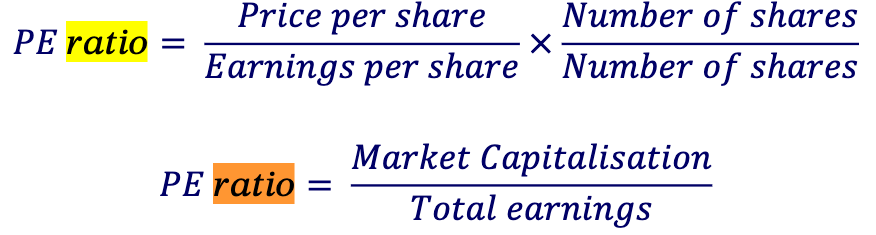
P/E ratio
How much the market values each $ of earnings