natural and manufactured timbers
 Call Kai
 Learn
Learn Practice Test
 Spaced Repetition
 Match
Match Flashcards
 Knowt Play
1/33

There's no tags or description
Looks like no tags are added yet.
Name | Mastery | Learn | Test | Matching | Spaced | Call with Kai | Chat |
|---|
No analytics yet
Send a link to your students to track their progress
34 Terms
softwood
comes from a coniferous tree
bears needles (leaves) and has cones (seeds)
evergreen - usually keep their needles all year round, even in winter
grows quickly - cheap and readily available
used in construction industry
examples: pine, larch, cedar
hardwood
comes from deciduous trees
broad-leafed variety - lose their leaves in winter
produce seeds in fruits / nuts
grows slowly - more expensive
examples: oak, sycamore, beech
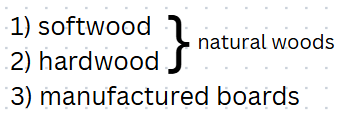
what are the 3 categories that timber-based materials can be separated into?
felling
term used for cutting down a tree
traditionally done by hand using an axe / very long saw
now: chainsaws - modern chainsaw attachments can fell a tree, de-branch it and cut it into equal length logs in one action
growth rings
once cut, we can see the cross section
has growth rings - show the age of the tree (each ring represents one year of growth)
hardwood cell structure
less porous and denser cell structure than softwoods - makes many varieties harder wearing and less prone to rotting
value of hardwoods?
comes in a variety of colours
has many sought-after aesthetic and physical properties
caused much illegal felling of trees, especially in rainforest areas - large areas have already been cleared, negatively impacting the natural environment and wildlife habitats
ash (pale brown / cream)
flexible
tough + shock resistant
laminates well
uses of ash
sports equipment
tool handles
beech (dense/close grain with an attractive pink hue)
fine finish
tough
durable
uses of beech
children’s toys and models
furniture
veneers
mahogany (rich reddish-brown)
easily worked
durable
finishes well
uses of mahogany
high end furniture and joinery
veneers
oak (light brown with an interesting and variable grain)
tough
hard
durable
high quality finish possible
uses of oak
flooring
furniture
railway sleepers
veneers
balsa (pale cream / white - an open grained, large and unusually fast-growing hardwood tree)
very soft and spongy
very lightweight
can snap in thin sections
uses of balsa
prototyping and modelling - especially model aircraft
softwood cell structure
more porous cell structure than hardwoods
if unprotected, it can absorb moisture and begin to rot - cedar contains natural oils which protects it + makes it suitable for exterior roofing
softwood - colours?
not available in as many colours as hardwood
can easily be stained
frequently coloured to look like more expensive hardwood
larch (pale to reddish brown with a contrasting grain)
durable + tough
good water resistance
good surface finish
machines well
issues with loose knots
uses of larch
exterior cladding
flooring
machined mouldings
furniture
joinery
pine (pale yellow to pale brown - attractive grain that darkens with age)
lightweight
easy to work
can split and be resinous near knots
uses of pine
interior construction (and exterior if treated)
cheaper furniture
decking
spruce (white/cream with fine even grain)
easy to work
high stiffness to weight ratio
variable results when staining
uses of spruce
construction
furniture
musical instruments
manufactured boards
usually sheets of processed natural timber waste products or veneers combined with adhesives
made from waste wood, low-grade timber & recycled timber
can be covered with a veneer to give appearance of solid wood
veneers
produced by taking thin slices of natural wood from the trunk of a tree
then bonded to the surface of cheaper sheet materials, such as mdf or plywood
medium density fibreboard - mdf (smooth, dull, light brown finish available in many veneered options - edges can be hard to finish well)
rigid and stable
good value with a smooth, easy to finish surface
very absorbent so not good in high humidity or damp areas
uses of mdf
flat pack furniture
toys
kitchen units
internal construction
plywood (alternating layers of natural grain veneers with outer material usually of higher quality for aesthetics)
very stable in all directions due to alternate layering at 90° with outside layers running in the same direction
thin flexible versions available (flexiply)
uses of plywood
furniture
shelving
toys
construction
interior, exterior and marine grades available for greater water resistance
chipboard (pale grey/brown with no natural grain - frequently covered with a laminate such as melamine formaldehyde)
good compressive strength
not water resistant unless treated
good value
prone to chipping on edges and corners
uses of chipboard
flooring
low-end furniture
kitchen units and worktops
fsc
forest stewardship council
an international non-profit organisation that promotes responsible management of the world’s forests