Poultry nematodes
 Call Kai
 Learn
Learn Practice Test
 Spaced Repetition
 Match
Match Flashcards
 Knowt Play
1/43

There's no tags or description
Looks like no tags are added yet.
Name | Mastery | Learn | Test | Matching | Spaced | Call with Kai |
|---|
No analytics yet
Send a link to your students to track their progress
44 Terms
List the nematodes of poultry
Syngamus trachea
Capillaria spp.
Trichostrongylus tenuis
Ascaridia galli
Heterakis gallinarum
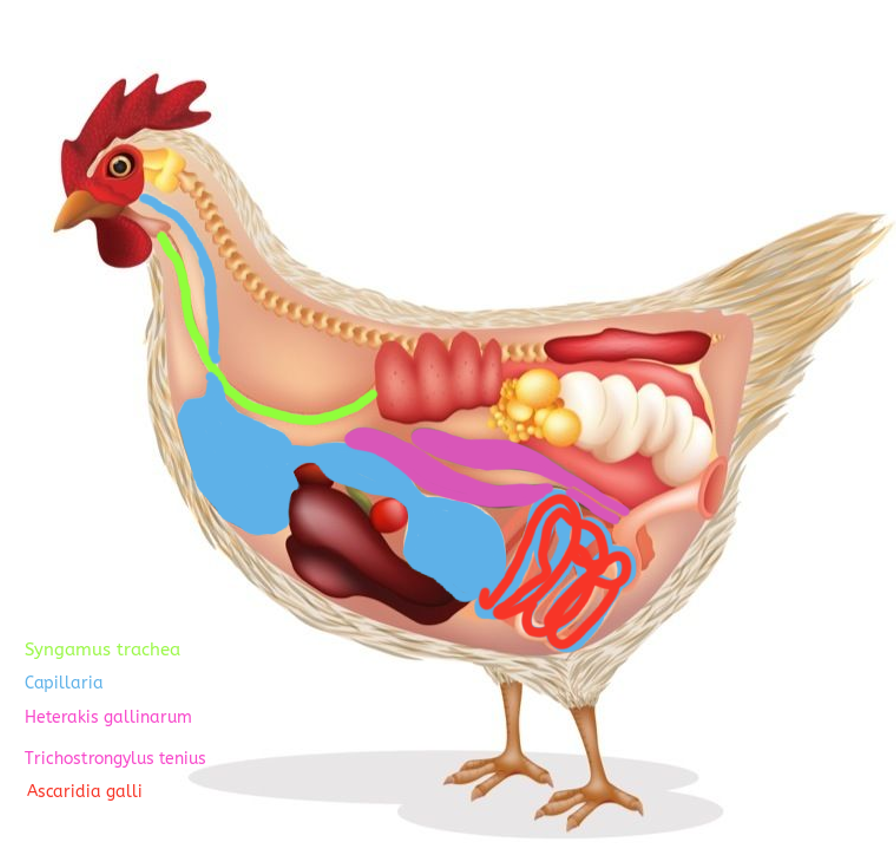
What are the features of Syngamus trachea?
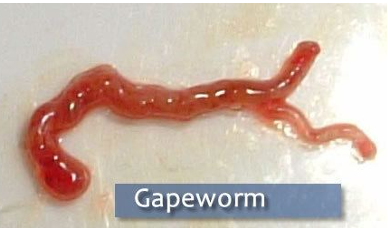
Poultry gape worm
Hookworm
Affects chickens, gamebirds, turkeys etc.
Wild bird reservoir
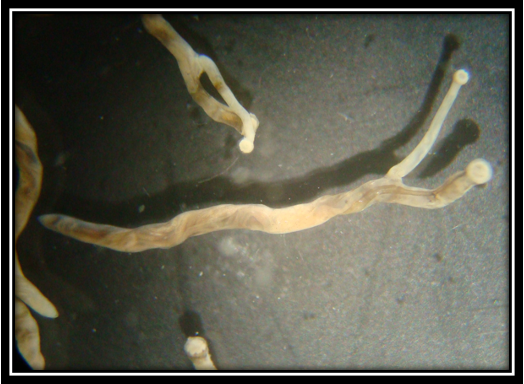
Larger female, smaller male attached
Where in the bird is syngamus trachea adult found?
Trachea, permanently paired (male worm constantly fertilising eggs & embedded within female —> M smaller than female = “Y” shaped)
How does the disease of syngamus trachea present?
Mechanical blockage of trachea:
Asphyxia
Coughing
Gasping
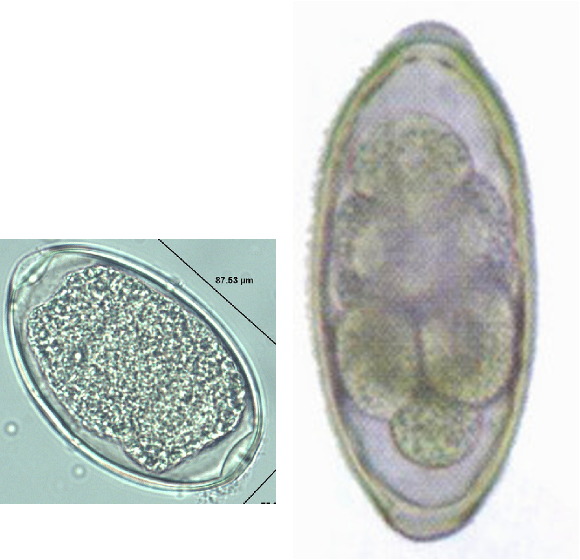
What are the characteristics of Syngamus trachea eggs?
Characteristically shaped mucoid eggs (thickening at either end)
80µm
L3 develops in egg
Passed in faeces
How do birds get infected with syngamus trachea?
Ingestion of:
L3 in egg
Hatched L3
L3 in transport/paratenic host —> earthworm (not an intermediate host as not essential)
Describe the lifecycle of Syngamus trachea
L3 ingested
Migrates from small intestine, enters blood stream
Larvae reach lung via pulmonary capillaries
Migrate through alveoli to trachea
Adults develop in trachea & attach there, males & females in copula
What is the PPP of Syngamus trachea?
18-20 days
What are the general features of capillaria?
Three species
Direct & indirect life cycles.
Direct —> bigger threat to indoor (lots of birds, close prox.)
Indirect —> bigger threat to outdoor
What are the morphological features of capillaria?
Very thin (capillary-like) worms
1-5cm long
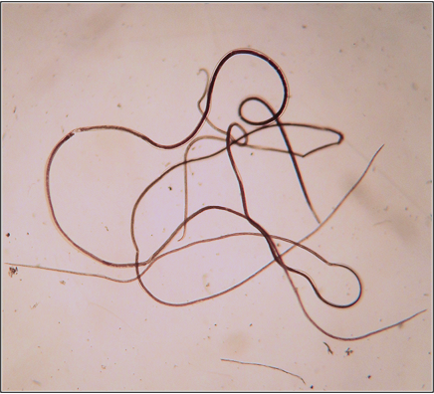
Where in the bird is Capillaria found?
Upper digestive tract (crop, oesophagus) or small intestine
What are the morphological features of a Capillaria spp egg?
Lemon shaped —> similar to trichurius spp. egg
Barrel with two mucoid plugs
50-70µ

What is the infective stage of capillaria?
L1 (develops in egg)
What is the intermediate host of Capillaria (those with indirect lifcycle)?
Earthworm
Birds infected by ingesting earthworm
What is the PPP of Capillaria?
3-4 weeks
Describe the direct lifecycle of Capillaria
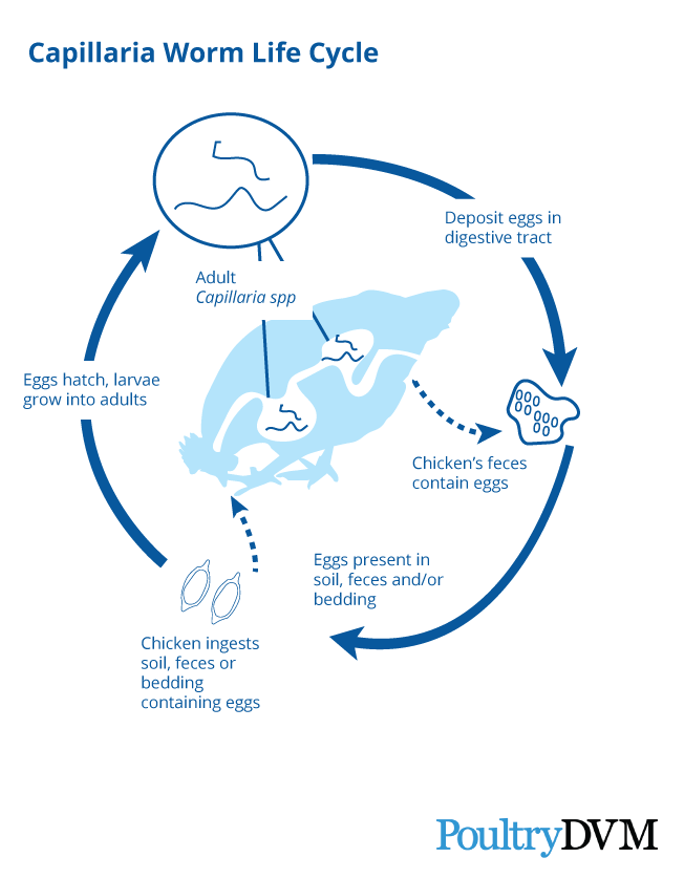
Describe the pathogenesis of Capillaria
Highly pathogenic
Head of worm buried deep in mucosa leading to diphtheritic inflammation → sloughing of the mucosa followed by haemorrage
What are the clinical signs of Capillaria in birds?
Inappetence
Weight loss
Decreased egg production
What bird is most affected by Trichostrongylus tenuis?
Red grouse (game bird)
Where in the bird are Trichostrongylus tenuis found?
Caeca
What is the infective stage of Trichostrongylus tenuis
L3
What are the morphological features of Trichostrongylus tenuis egg?
80-100
Typical trichostrongyle egg
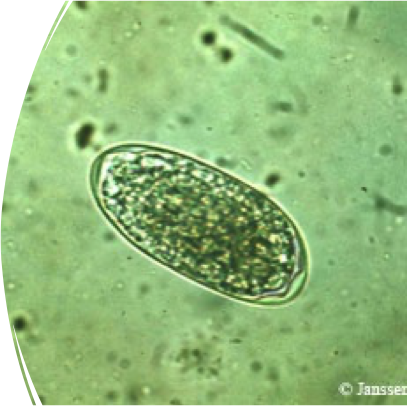
What is the pathogenesis of Trichostrongylus tenuis?
Adults burrow into caecal mucosa
Localised flattening
Bleeding
What are the clinical signs of Trichostrongylus tenuis in birds?
Reduced body condition and weight
Explain the lifecycle of T. tenuis
Larvae ingested when grouse feeding on heather (larvae wrapped round)
Larvae move to caeca
Adults reproduce
Eggs passed in caecal droppings
Eggs hatch inside caecal dropping and develop into L3
L3 dispersed and wrap round heather shoots
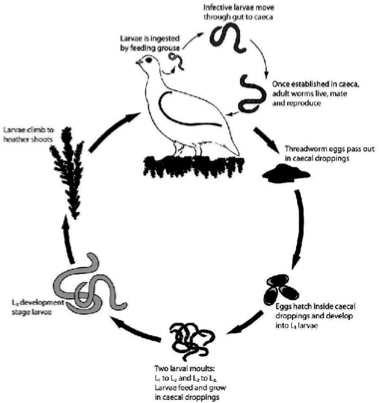
What are the poultry ascarid species?
Ascaridia galli
Heterakis gallinarum
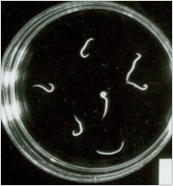
How does the size and location differ between Ascaridia galli & Heterakis gallnarum?
Ascaridia galli —> small intestine, large (12cm)
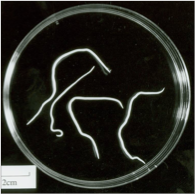
Heterakis gallinarum —> caeca, small (1.5cm)
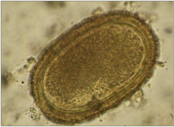
What are the morphological features of the poultry ascarid eggs?
Eggs indistinguishable between them
Thickened wall
Undifferentiated mass inside
Larva develops within egg
What is the infective stage of poultry ascarids?
L2/L3 in egg
Do poultry ascarids migrate?
No —> all development within GI tract
(Most other ascarids migrate)
Describe the pathogenicity of poultry ascarids
Low pathogenicity
BUT Heterakis gallinarum vector for highly pathogenic protozoan —> Histomonas meleagridis
What parasites are significant in housed birds? What are the risks?
Parasites with direct lifecycles
Most have resistant eggs (Ascaridia, Heterakis and Capillaria) so can be infected from prev. batch
How do you control poultry nematodes in housed birds?
Biosecurity —> prevent intro in new batches
Use of anthelmintics in feed
BZs —> flubendazole
What parasites are significant in outdoor reared birds or birds maintained oudoors? What are the risks?
Parasites w/ direct AND indirect lifecycles important
Resistant eggs & intermediate / transport hosts —> parasite stages persist in environment
Wild birds important source of infection
How do you control poultry nematodes in outdoor reared birds or birds maintained outdoors?
Biosecurity —> prevent introduction of nematodes with new batches of birds
Use of BZs in feed —> flubendazole
Rotate pens between batches of birds
e.g. don’t use same pen for different batches of game birds when rearing them
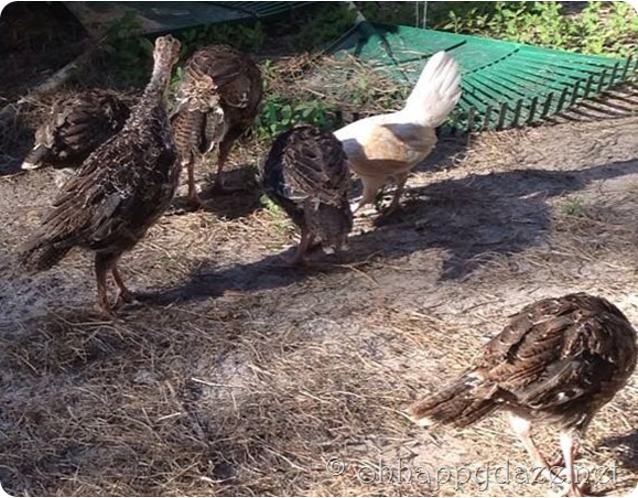
What birds are Histomonas meleagridis highly pathogenic for?
Turkey poults
What does Histomonas meleagridis cause?
'blackhead’ (wattle goes black)
Severe entero-hepatitis
High levels of mortality
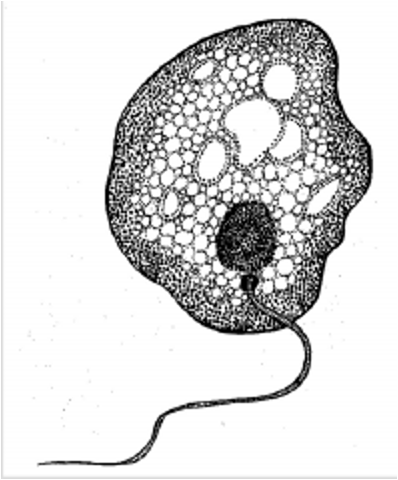
What are the morpholoigcal features of Histomonas meleagridis
Amoeboid protozoan with single flagellum
Describe the pathogenesis of Histomonas meleagridis?
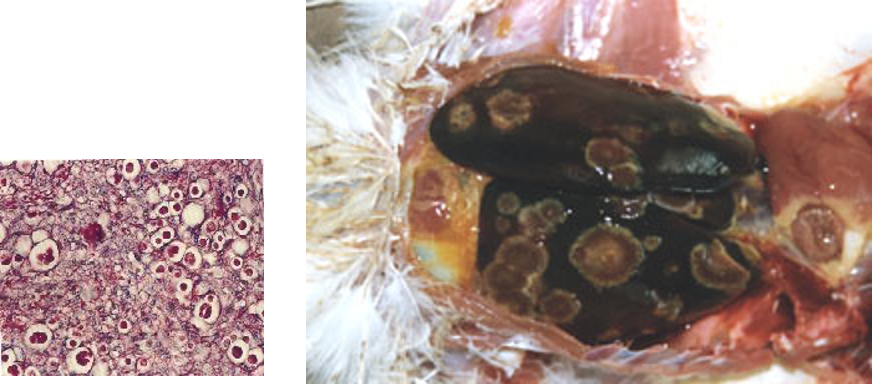
Trophozoites in caecum erode caecal epithelium
Invade liver causing necrosis & typical (pathognomic) saucer-like lesions
What are the clinical signs of Histomonas meleagridis?
Depression
Ruffled feathers
Sulphur yellow faeces
Cyanosis of wattle & comb —> blackhead
How is Histomonas meleagridis transmitted?
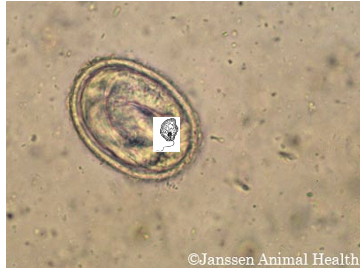
Transmitted in larvated eggs of Heterakis gallinarum
H. gallinarum in caeca & Histomonas also in caeca.
H. gallinarum worm ingests Histomonas —> migrate to uterus of female H. gallinarum
Incorporated into the H. gallinarum egg
Only transmitted in larvated egg
How do you control Histomonas?
Biosecurity
Drug for it withdrawn
Control Hetarakis infection
Flubendazole
Don't use same pens for different batches
If get rid of heterakis = control of histomonas
Chickens asymptomatic carriers —> don't rear turkeys on ground prev., used for chickens
What are the features of Spironucleosis (Hexamita) meleagridis?
Direct transmission.
Young game birds
Causes watery bright yellow D+.
No tx —> prevent by all in/all out, mix age groups, rotate pens.
What are the general features of Trichomonas gallinae?
Direct transmission.
Oral canker, cheesy yellow material around beak.
URT of finches, pigeons, birds of prey