Glass in Forensic Science: Analysis, Manufacturing, and Evidence
 Call Kai
 Learn
Learn Practice Test
 Spaced Repetition
 Match
Match Flashcards
 Knowt Play
1/16

There's no tags or description
Looks like no tags are added yet.
Name | Mastery | Learn | Test | Matching | Spaced | Call with Kai |
|---|
No analytics yet
Send a link to your students to track their progress
17 Terms
chemical composition of glass
--> Amorphous Solid
--> Silicon Oxides
--> Hard, brittle, transparent
What are the main types of glass manufacturing?
Sheet glass, container glass, glass fibers, and optical glass.
components of glass analysis
- fracture match
- radial, concentric, and wallner lines
- becke line method
- elemental composition
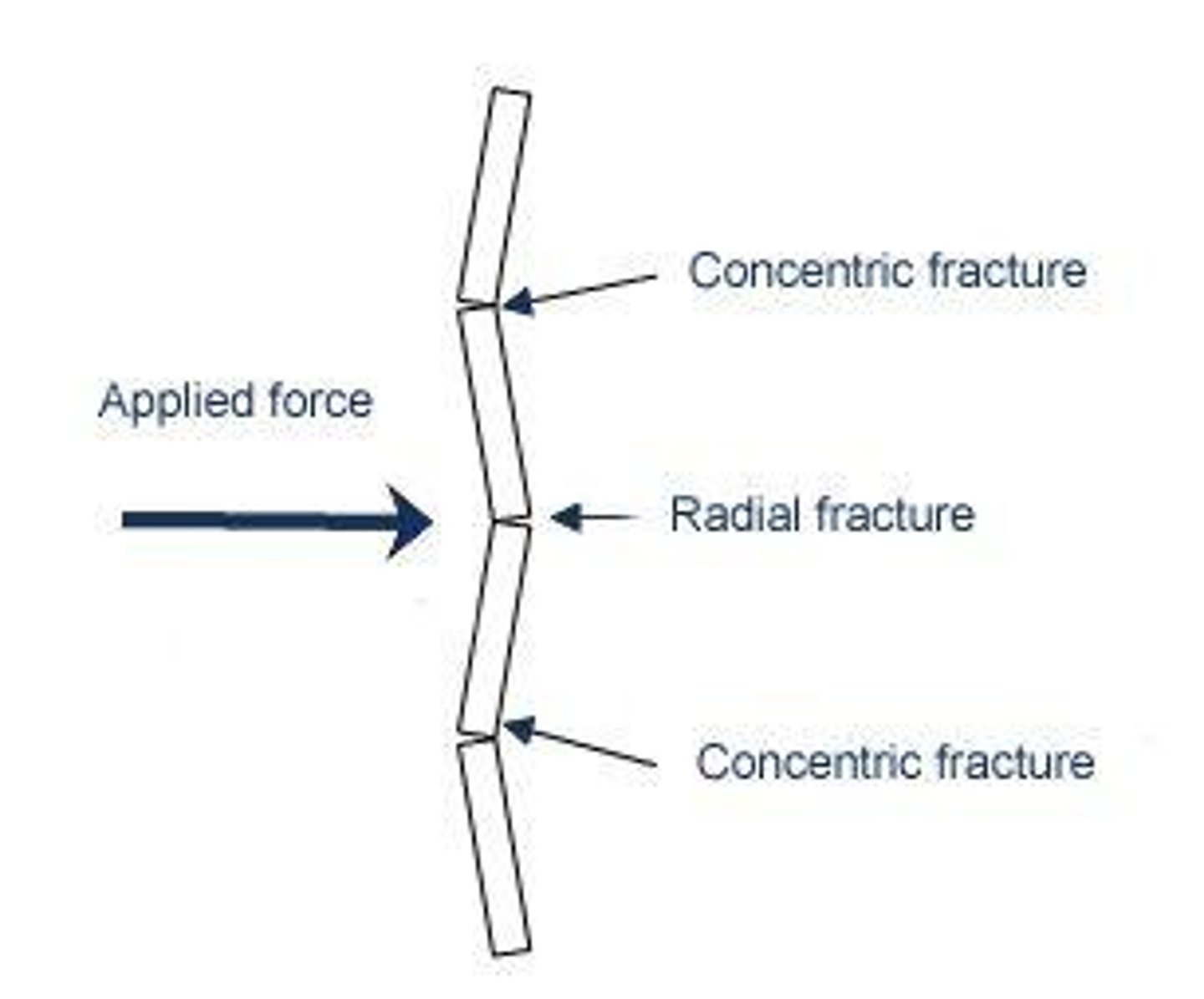
What are radial and concentric fractures?
Radial fractures spread out from the impact point, while concentric fractures form circles around the impact point.
What is the significance of Wallner lines?
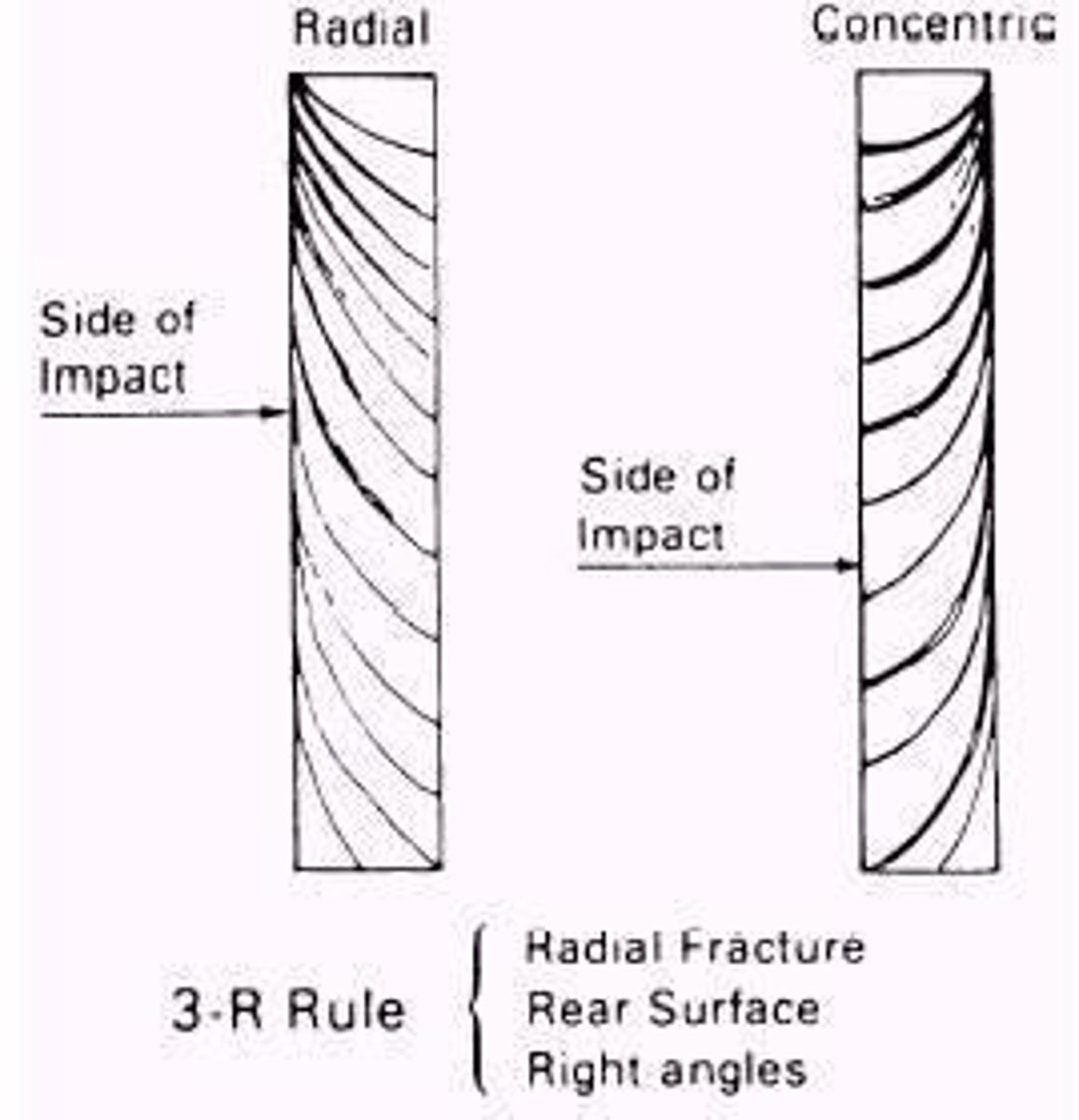
They are stress marks that indicate the order of fractures in glass
- new fracture stops if existing fracture is already there
What happens to radial cracks on the side of impact?
Radial cracks form right angles on the rear side of the impact.
What is the process of glass manufacturing?
Melt sand and other ingredients, then cool without crystallizing to form glass.
types of glass
- glass fibers: fiberglass and fiber optic cables
- container glass: drinking glasses, cookware, bottles, and jars
- optical glass: used in eyeglasses and lenses
- float/sheet glass: cooled on molten tin; windows, light bulbs, windshields
What is a fracture match in glass analysis?
A method of matching broken glass pieces by fitting their edges together, indicating they were once part of the same piece (individual evidence)
- random event
- mass produced is class evidence
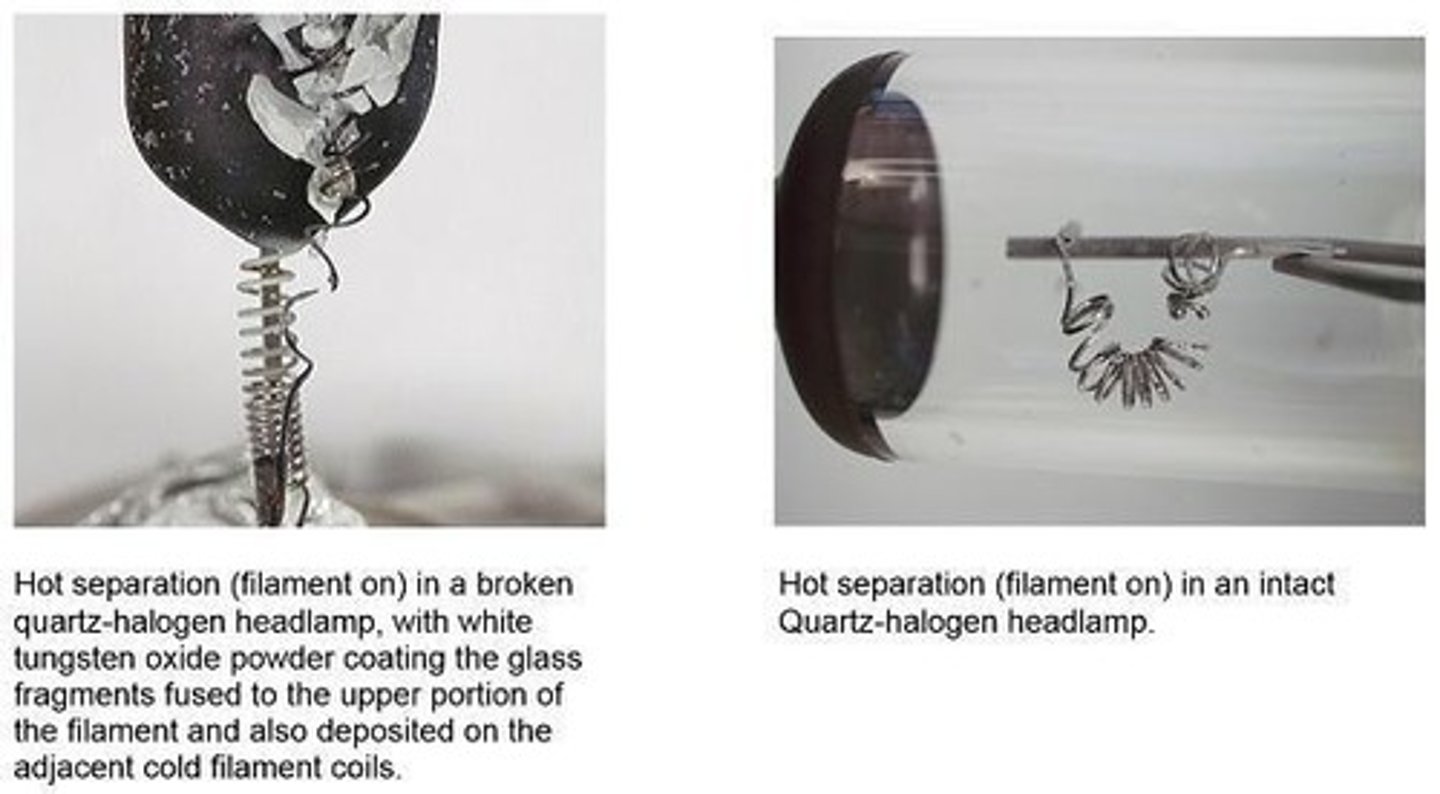
What is the significance of the filament in lamp analysis?
When the filament breaks in a vacuum and is exposed to oxygen, it forms oxides that can be analyzed
- used on headlights
What is the process for identifying small glass particles?
Using class characteristics such as density (physical property), refractive index (optical property), and elemental composition (chemical property)
How is the density of glass determined?
Using the volume displacement method or the sink-float method with liquids of varying densities.
What is the refractive index (RI) of glass?
The ratio of the velocity of light in a vacuum to the velocity of light in the medium, indicating how much light bends when entering the glass.
- as temp and wavelength go up RI goes down
- light moves slowly through glass
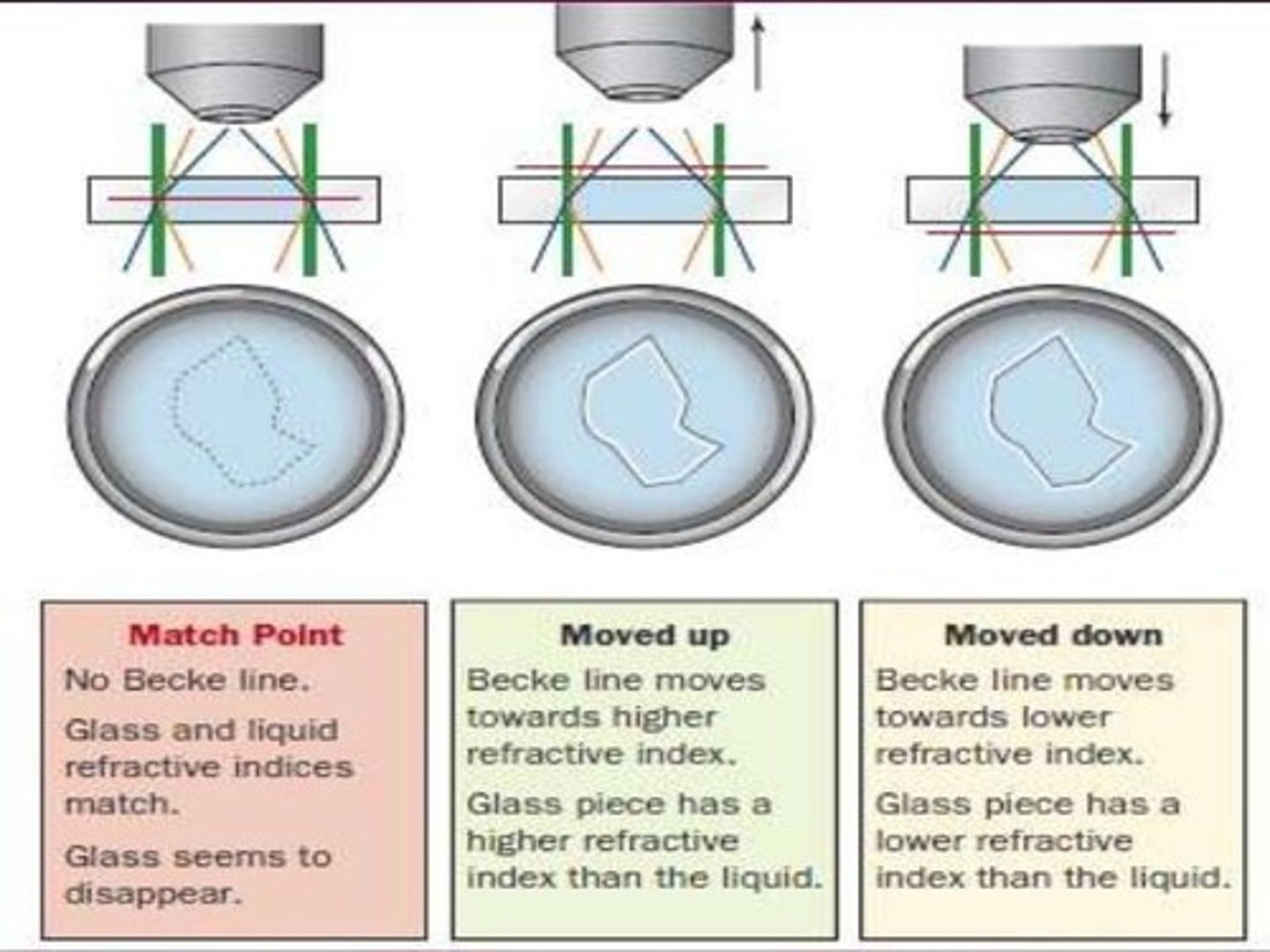
What is the Becke Line method used for?
To determine the refractive index of glass by observing the Becke line under a microscope
- need to know the temperature, RI of oil, and single known wavelength
- as working distance goes up, becke line moves toward higher RI
What is the purpose of the Glass Refractive Index Monitoring System (GRIM)?
To analyze the refractive index of glass samples for forensic identification.
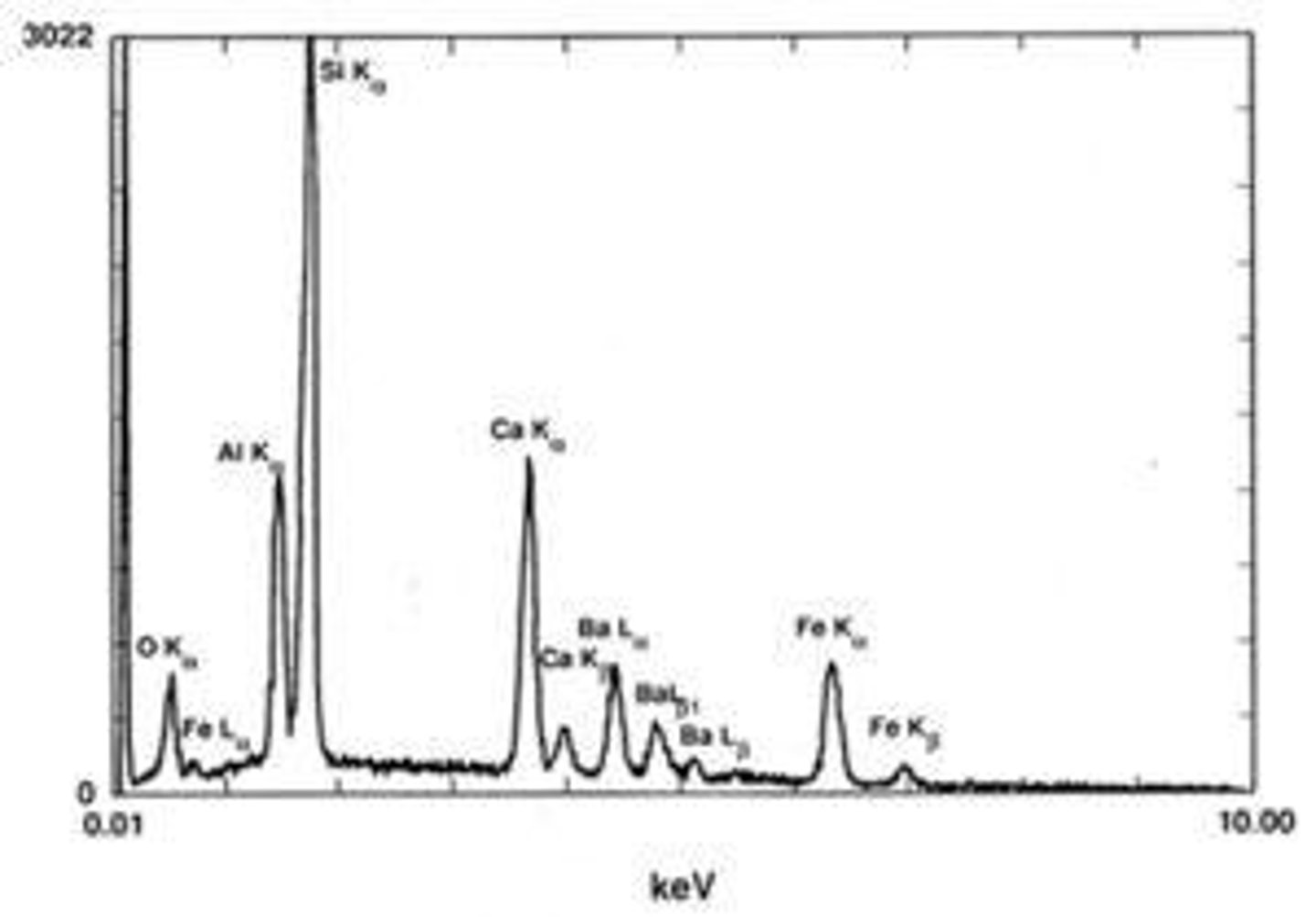
What is the role of scanning electron microscopy in glass analysis?
To analyze the elemental composition of glass using Energy Dispersive X-ray Spectroscopy (SEM-EDS).
What is the difference between class evidence and individual evidence in glass analysis?
Class evidence is mass-produced and not unique, while individual evidence can be linked to a specific source through fracture matching.