BIOL 107 Part F - Cellular Respiration and Metabolism (Terms)
 Call Kai
 Learn
Learn Practice Test
 Spaced Repetition
 Match
Match Flashcards
 Knowt Play
1/29

There's no tags or description
Looks like no tags are added yet.
Name | Mastery | Learn | Test | Matching | Spaced | Call with Kai |
|---|
No analytics yet
Send a link to your students to track their progress
30 Terms
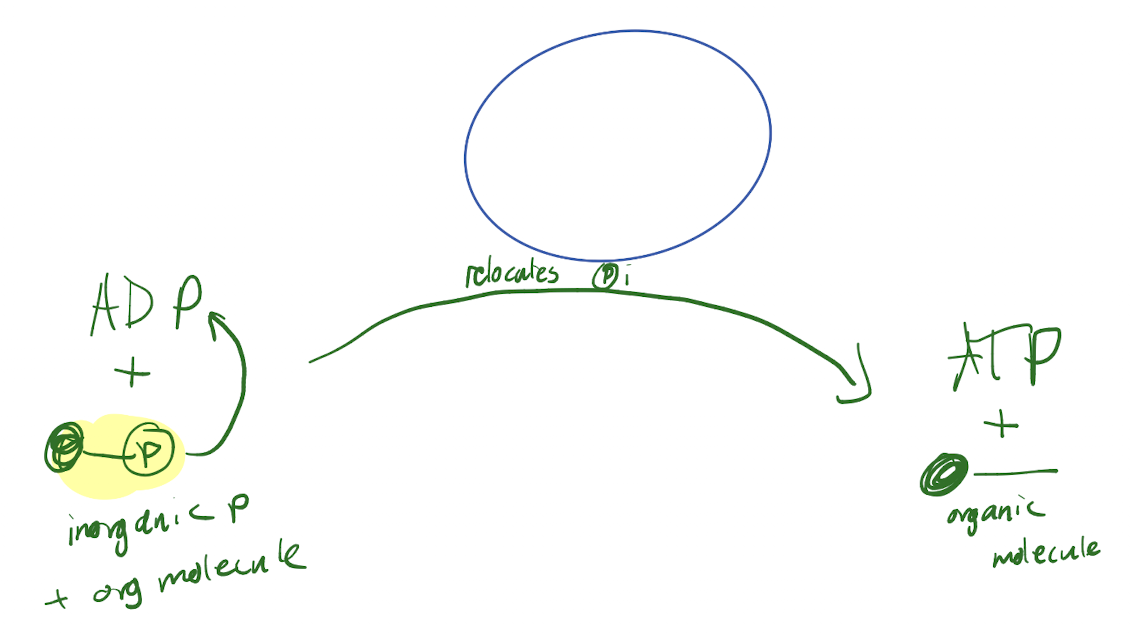
Kinase
An enzyme that synthesizes ATP through the relocation of an inorganic phosphate attached to an organic molecule, forming ATP and an organic molecule
Glycolysis
A metabolic pathway occurring in the cytosol that is preliminary to the citric acid cycle, cellular respiration, and fermentation due to its production of 2 pyruvate from one glucose molecule
Pyruvate
A 3-carbon molecule formed as a product of glycolysis that is used in fermentation and the Krebs cycle
Fermentation
A metabolic process occurring in anaerobic conditions in fermentation enzymes in the cytosol that makes ATP from sugars and produces a characteristic organic end product
Alcohol Fermentation
A type of fermentation occurring in plants and yeast that produces ethanol as its end product
Lactic Acid Fermentation
A type of fermentation occurring in animals that produces lactate as its end product
Cellular Respiration
A metabolic process occurring under aerobic conditions that generates 90% of our ATP
Intermembrane Mitochondrial Space
The space between the inner and outer membrane of the mitochondrion
Mitochondrial Matrix
Space within the inner membrane of the mitochondrion that contains chromosomes (DNA) and ribosomes
Transition Reaction
The first step in cellular respiration occurring in proteins in the inner mitochondrial membrane in which metabolism in the cytosol is connected to metabolism in the mitochondria
Acetyl CoA
A two carbon molecule formed as the product of the transition reaction that is used in the Krebs cycle
Krebs Cycle
The second step of cellular respiration in which acetyl CoA is modified and some ATP is made
Oxidative Phosphorylation
The final step of cellular respiration in which the majority of ATP is created, powered by a proton gradient made by electrons on an ETC
Phosphofructokinase (PFK)
A homotetramer enzyme that catalyzes the phosphorylation of fructose-6-phosphate via ATP, determining the rate of cellular respiration
Cyanide
A molecule that poisons the human body by mimicking an oxygen molecule, thus stopping the heart and diaphgram from making ATP
Uncoupling Proteins
Proteins that lower ATP production by acting as proton channels in the inner mitochondrial membrane
Thermogenesis
The creation of heat in organisms due to a physiological process
Insulin
A protein created and exported by pancreas cells that signals a high level of glucose in the blood
Glucagon
A protein created and exported by pancreas cells that signals a low level of glucose in the blood
Adipocytes
Cells that import glucose and convert it into fat for long term energy storage
Diabetes Mellitus
The inability to maintain safe glucose levels, leading to complications such as fainting and organ damage
Type 1 Diabetes
A type of diabetes that corresponds to an issue with the cells that create insulin, thus lacking insulin in the body
Type 2 Diabetes
A type of diabetes that corresponds to an issue with creating insulin receptors, thus lacking the ability to detect insulin in the body
Cori Cycle
The process in which liver cells recycle lactate created by cells from the blood into glucose through gluconeogenesis
Gluconeogensis
A process in the Cori cycle by which liver cells transform lactate back into glucose by consuming ATP
Nutrition
How an organism is able to receive energy and carbon needed to sustain life
Phototrophs
A category of organisms that obtain energy through light, using sunlight as their source of energy
Chemotrophs
A category of organisms that obtain energy through chemicals, using molecules as their source of energy
Autotrophs
A category of organisms that provide carbon through self-feeding, using carbon dioxide as their source of carbon
Heterotrophs
A category of organisms that provide carbon through diverse feeding, using carbon-containing molecules as their source of carbon