Rotation of a Rigid Body (lecture 10)
 Call Kai
 Learn
Learn Practice Test
 Spaced Repetition
 Match
Match Flashcards
 Knowt Play
1/32

There's no tags or description
Looks like no tags are added yet.
Name | Mastery | Learn | Test | Matching | Spaced | Call with Kai |
|---|
No analytics yet
Send a link to your students to track their progress
33 Terms
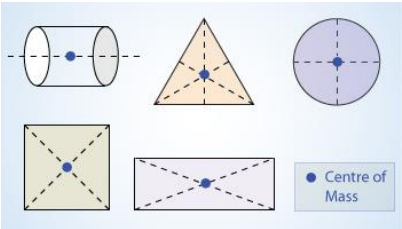
center of mass: defn
the motionless point in a rotating object that every other point in the object undergoes circular motion around
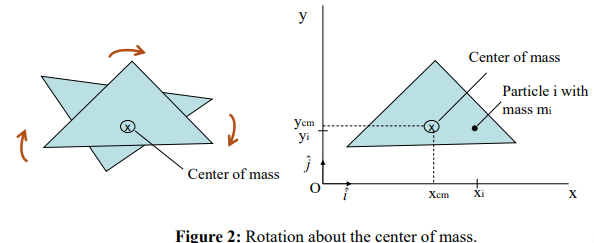
formula for finding the coordinates for center of mass for a discrete mass
M = total mass
m1, m2, m3… = each chunk has its own mass
x1, x2, x3 = each chunk has its own x-coord
y1, y2, y3 = each chunk has its own y-coord
the center of mass is the mass-weighted center of objec
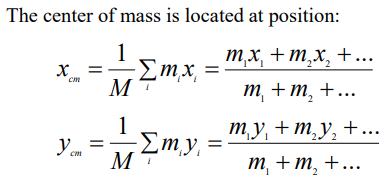
formula for finding the coordinates for center of mass for a continuous object
for a continuous, non-discrete object, the total mass is cut up into infinitesimal pieces → integrate x and y in terms of mass
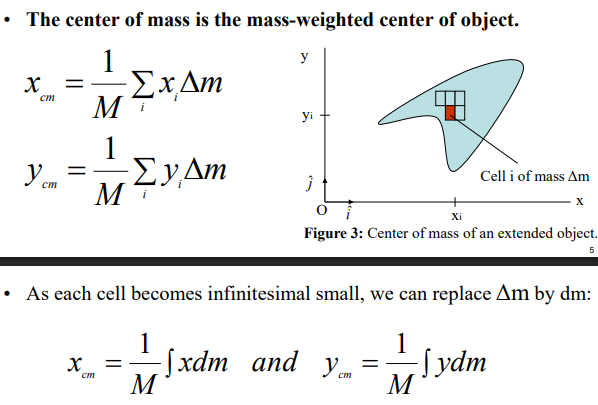
centers of mass of common shapes
rotational kinetic energy
the kinetic energy due to rotation is called rotation kinetic energy
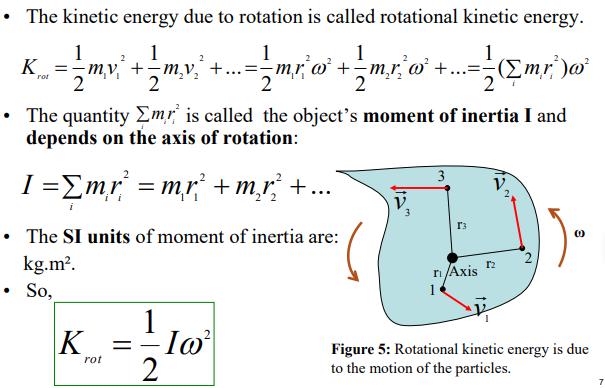
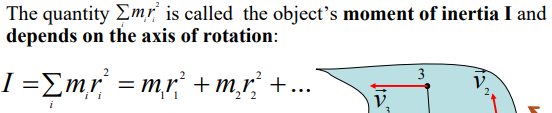
moment of inertia I formula for discrete objects
important in the rotational kinetic energy equation
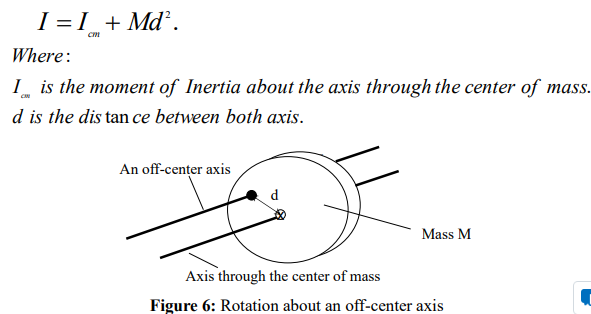
parallel axis theorem for moment of inertia
the theorem is useful for when you want to quickly compute the moment of inertia for an off-center axis of rotation
moment of inertia I formula for continuous objects
find how to express dm and r properly
always define the axis first
make sure that r is the perpendicular distance from the axis
choose mass slices that will reflect the symmetry of the shape: thin rings for disks, thin linear slices for rods, etc
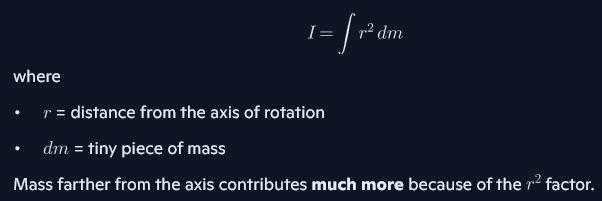
if the mass is distributed further away from the axis of rotation, then the object would have a _______ moment of inertia I
greater
moments of inertia of common shapes and objects
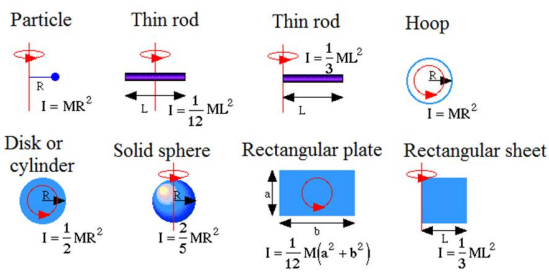
moments of inertia exist even when the object is ______
not actively rotating
the moment of inertia is an intrinsic property of an object
it’s about how mass is distributed in relation to an axis of rotation
when can you sum up moments of inertia of multiple objects?
you can add moments of inertia when the objects rotate about the same axis
if the axis of rotation is the same for all objects
if the axis is fixed
each object is rigidly attached to each other
example: a rod with two masses attached to it: Itotal = Irod + Im1 + Im2
you can add moments of inertia when the objects are all components that make up the same object
you can add moments of inertia after applying the parallel axis theorem
a piece’s center of mass can be shifted via the theorem so that it satisfies the conditions of the first two scenarios
torque: defn
the rotational effect of a force; the measure of how effectively a force causes an object to rotate about an axis.
a small force far from the pivot can create more torque than a large force close to the pivot
torque depends on where you push and the direction you’re pushing
torque is a vector, with the magnitude representing how strong the rotational push is and the direction representing which way the rotation tends to happen
the direction of torque is given by the ____________
right hand rule
point fingers along r
curl towards F
thumb = direction of the torque vector
formula for magnitude of torque
units N * m
r = distance measured from the axis of rotation to the point of application of the force
F = the force applied
angle = the angle between r and F

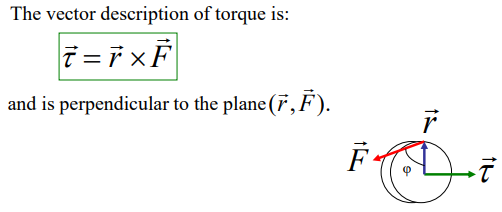
formula for vector of torque
since torque is a cross product of F and r, the torque vector is perpendicular to both the F vector and the r vector
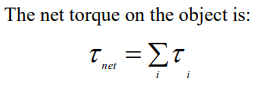
net torque on an object
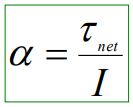
newton’s second law for rotational motion
where the torque here is only the magnitude
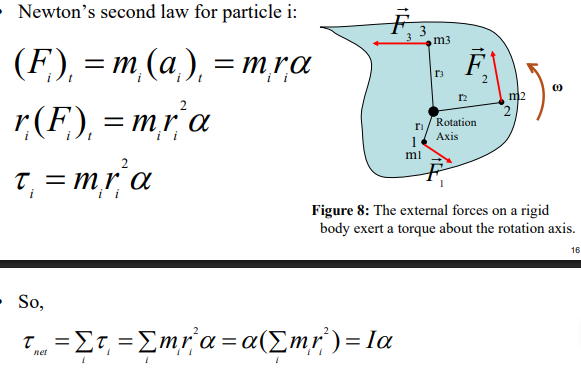
torque formula for a particle in a rigid body
rigid-body equilibrium
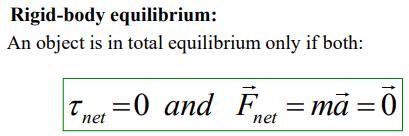
the net torque on the body is 0 and the net force on the body is 0
a rigid body is a shape that won’t deform
if forces cancel each other out: no linear acceleration
if torque cancel each other out: no angular acceleration
rolling motion: defn
combination of rotational and translational motion
the most simple rolling motion involves an object (circular) rotates about an axis while moving alon a straight line trajectory
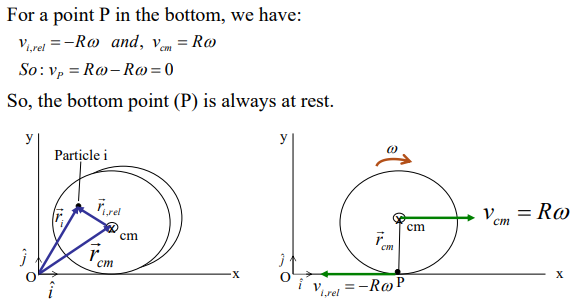
rolling motion: what is the tangential velocity of a particle located at the very bottom of a circular object engaging in rolling motion?
the bottom point (P) is always at rest
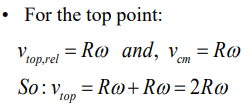
rolling motion: what is the tangential velocity of a particle located at the very top of a circular object engaging in rolling motion?
kinetic energy of a rolling object
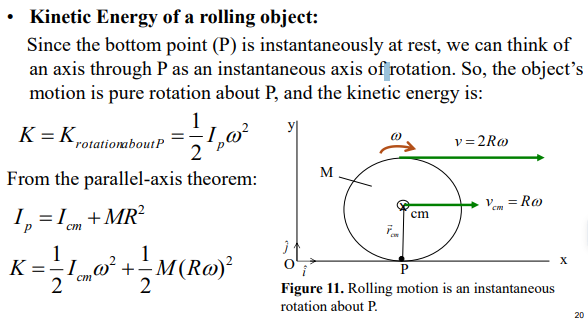
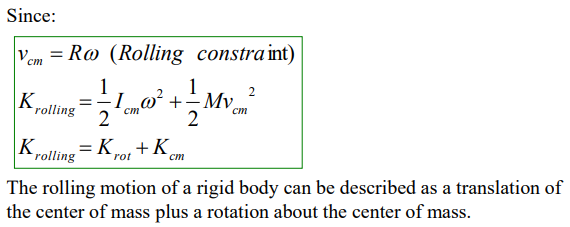
rolling motion formulas
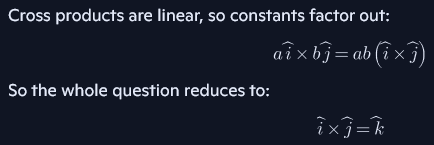
if the cross products are linear, the constants _________
factor out
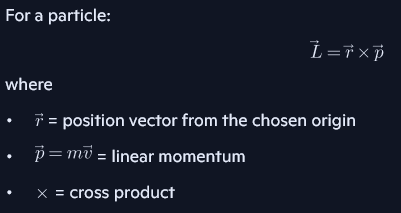
angular momentum: vector formula
direction is perpendicular to the plane of rotation via the right hand rule (point your fingers along r, curl your fingers in the dir of p, and the direction of your thumb is the dir of the angular momentum)
angular momentum: magnitude formula
where the angle is the angle between r and v

derivative of angular momentum
= net torque
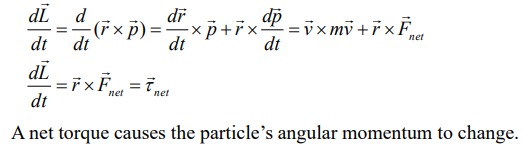
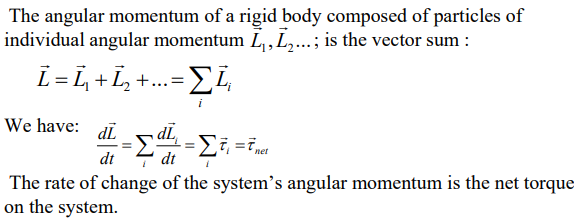
angular momentum of a rigid body
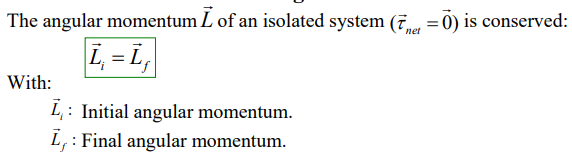
law of conservation of angular momentum (very similar to regular momentum)
net torque is 0 since net torque = to the rate of change of the angular momentum, and since angular momentum remains constant, net torque is 0
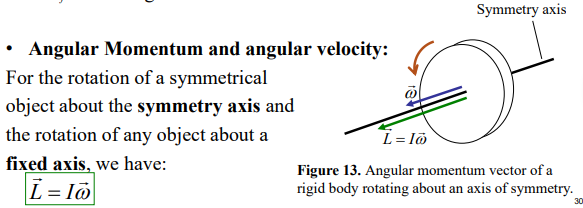
the relationship between angular momentum and angular velocity
angular momentum: all formulas