8 - Virus Introduction
 Call Kai
 Learn
Learn Practice Test
 Spaced Repetition
 Match
Match Flashcards
 Knowt Play
1/78

There's no tags or description
Looks like no tags are added yet.
Name | Mastery | Learn | Test | Matching | Spaced | Call with Kai |
|---|
No analytics yet
Send a link to your students to track their progress
79 Terms
viruses
obligate intracellular pathogens in that they must enter a cell to replicate
obligate intracellular pathogens
what type of pathogens are viruses?
10 to 100 nm in diameter
size of viruses
electron microscope
what microscope can you appreciate the morphology of viruses in?
virions
complete virus particles
virions
extracellular form of the virus that is not capable of reproduction but is capable of infecting
virions
simples form of human viruses
protein coat (capsid)
what do you call the coat of all viruses?
capsid
consists of repeating capsomeres
capsomeres
what composes the capsid?
capsomeres
building blocks of capsid
capsomeres
small protein units
capsid
what is this?
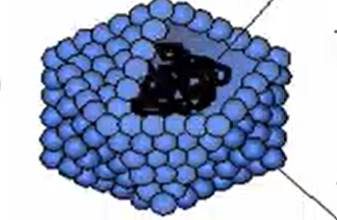
capsomeres
what are the small circles called?
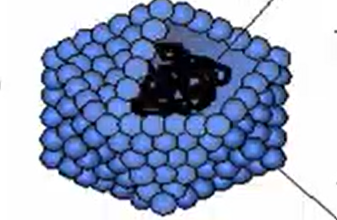
nucleic acid
what do you call the black component in the center?
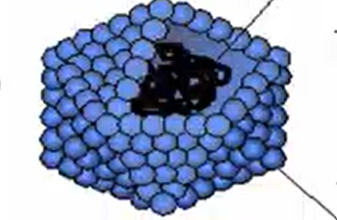
enveloped virus
what type of virus?

non-enveloped virus
what type of virus?

naked virus
other name for non-enveloped virus
lipoprotein envelope
enveloped virus are covered with what?
icosahedral
helical
two types of capsid
nucleic acid genome
capsid
what makes up nucleocapsid?
DNA (deoxyribonucleic acid)
RNA (ribonucleic acid)
genomes of virus
surface proteins
attachment to host cell receptors
envelope protein
what is the first structure being pointed?
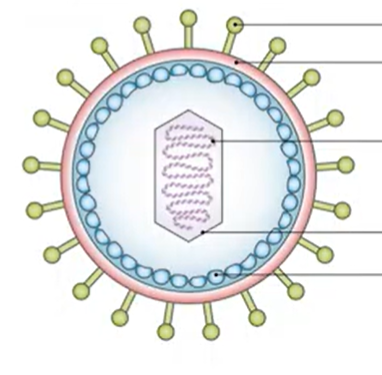
envelope
what is the second structure being pointed?
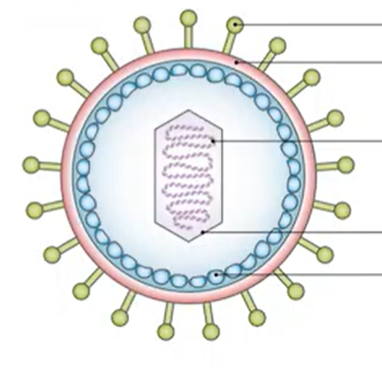
viral genome
what is the third structure being pointed?
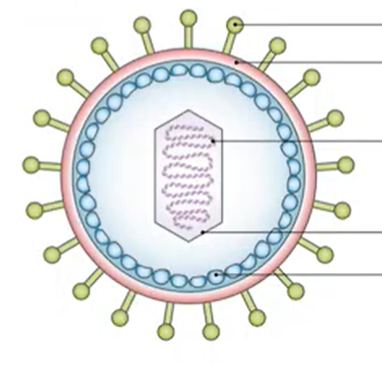
nucleocapsid
what is the fourth structure being pointed?
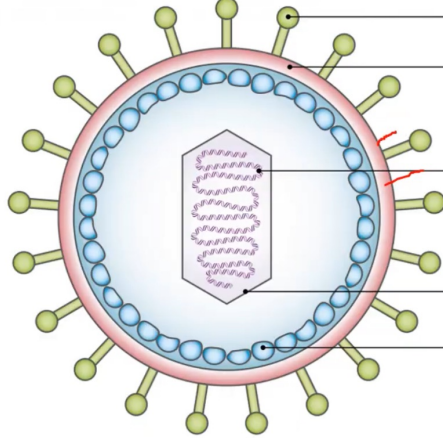
viral tegument
what is the fifth structure being pointed?
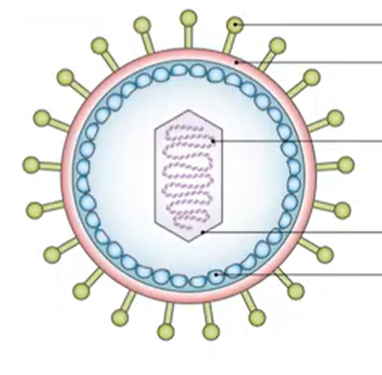
dna
rna
viruses posses which genomes?
ribosomes
mitochondria
what does viruses not contain?
viruses
unable to replicate, make protein and nucleic acid on their own
ribosome enzymes
metabolites
where does viruses rely on?
genes
enzymes
viruses can metabolize because they lack what?
viral replication
how does viruses reproduce?
Herpes virus
Hepadnavirus
Adenovirus
Papovavirus
Poxvirus
Parvovirus B19
DNA viruses
Herpes Simplex Virus
Varicella Zoster Virus
Cytomegalovirus
Epstein Barr Virus
examples of herpes virus
Hepatitis B
example of hepadnavirus
human papillomavirus (HPV)
example of papovavirus
molluscum
smallpox
orf
milker’s nodule
diseases caused by poxvirus
Parvovirus B19
the only single-stranded DNA virus
Hepatitis B virus
what virus

Herpes simplex virus
what virus
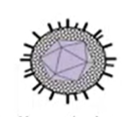
adenovirus
what virus
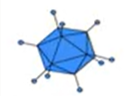
parvovirus
what virus

human papilloma virus
what virus

Reoviruses
the only double stranded rna virus
DNA → Transcription (mRNA) → RNA → Translation (tRNA) → Protein
central dogma of genetics
RNA viruses
viruses that are just like a messenger RNA
RNA viruses
enters a host cell, its RNA can immediately be translated by the host’s ribosomes into protein
DNA viruses
viruses that cannot be translated directly into proteins
NDA viruses
it must be transcribed into mRNA with subsequent translation of mRNA into structural proteins and enzymes
double-stranded DNA
single-stranded RNA
single-stranded DNA
double-stranded RNA
categories of viruses based on the of genomes they possess
Parvovirus B19
the only single stranded DNA virus
circular
linear
categories of viruses based on the shape of genome
icosahedral
helical - coiled tubes
spherical
complex
categories of viruses based on the shape of capsids
attachment
penetration
uncoating
biosynthesis
assembly
release
viral replication process
attachment
phase of viral replication where influenza virus becomes attached to a target epithelial cell
penetration
phase of viral replication where the cell engulfs the virus by endocytosis
uncoating
phase of viral replication where viral contents are released
biosynthesis
phase of viral replication where viral RNA enters the nucleus, where it is replicated by the viral RNA polymerase
assembly
phase of viral replication where new phage particles are assembled
release
phase of viral replication where new viral particles are made and released into the extracellular fluid. The cell, which is not killed in the process, continues to make virus.
inclusion bodies
remnants of infected cells which may be found in the cytoplasm or within the nucleus
Negri bodies
Owl eyes inclusion
examples of inclusion bodies
Negri bodies
cytoplasmic inclusion bodies in nerve cells of cells infected with rabies
owl eyes inclusion
intranuclear inclusion body for CMV (cytomegalovirus)
laten virus infections
infectious disease that may go from symptomatic to asymptomatic, then sometime later go back to symptomatic
herpes virus infections
shingles/varicella zoster infection
examples of latent virus infections
infected person is always harboring virus in nerve cells
fever, stress, or excessive sunlight can trigger the viral genes
produce more viruses
cold sore develops
herpes virus infection pathophysiology
occurs after a chickenpox infection
virus remains latent in the dorsal root nerve ganglia
weakened immune system
laten chickenpox virus resurfaces
shingles pathophysiology
oncogenic viruses
viruses that can cause cancer
Epstein-Barr Virus
Human Herpes Virus 8
Hepatitis B and Hepatitis C
Human Papilloma Virus
Human T Lymphotrophic Virus 1
examples of onxogenic viruses
nasopharyngeal carcinoma
Burkitt lymphoma
B-cell lymphoma
diseases caused by Epstein-Barr Virus as an oncogenic virus
Kaposi’s Sarcoma
diseases caused by Human Herpes Virus 8 as an oncogenic virus
hepatocellular carcinoma
diseases caused by Hepatitis B and Hepatitis C as an oncogenic virus
cervical cancer (women)
penile cancer (men)
diseases caused by Human Papilloma Virus as an oncogenic virus
adult T-cell leukemia
diseases caused by Human T Lymphotrophic Virus 1 as an oncogenic virus
Human T Lymphotrophic Virus -1
the only RNA oncogenic virus provided in the ppt
cell destruction
most of the symptoms of the viral infection are a result of