AP Human Geography Unit 6 (Urbanization)
 Call Kai
 Learn
Learn Practice Test
 Spaced Repetition
 Match
Match Flashcards
 Knowt Play
1/80

There's no tags or description
Looks like no tags are added yet.
Name | Mastery | Learn | Test | Matching | Spaced | Call with Kai |
|---|
No analytics yet
Send a link to your students to track their progress
81 Terms
site
The physical character of a place
situation
the location of a place relative to other places
Urbanization
Movement of people from rural areas to cities
Suburbanization
Movement of people from urban core areas to the surrounding outskirts to escape pollution as well as deteriorating social conditions (perceived and actual).
Origin of Cities
the first cities arose in the hearths of early agriculture
function of cities
Cities served as centers of trade, public performance of religious rituals, and political administration for states and empires.
Megacities
cities with more than 10 million people
metacities
A new term used to describe cities that have 20 million or more people
periphery
the outermost part or boundary of a city
edge cities
clusters of large buildings and services away from the central business district
Exurbs
areas of new development beyond the suburbs that are more rural but on the fringe of urbanized areas
Boomburbs
Rapidly growing suburb cities
sprawl
Development of new housing sites at relatively low density and at locations that are not contiguous to the existing built-up area.
Decentralization
shifting of business and services out of the CBD (core) of the city to suburbs.
world cities
cities generally considered to play an important role in the global economic system
urban hierarchy
A ranking of settlements according to their size and economic functions.
globalization
the process by which businesses or other organizations develop international influence or start operating on an international scale.
resources
all things used in producing goods and services
physical geography
the study of physical features of the earth's surface
Interdependence
the dependence of two or more people or things on each other.
Distribution
The arrangement of something across Earth's surface.
Rank-size Rule
A pattern of settlements in a country, such that the nth largest settlement is 1/n the population of the largest settlement.
primate city
The largest settlement in a country, if it has more than twice as many people as the second-ranking settlement.
Gravity model
A mathematical formula that describes the level of interaction between two places, based on the size of their populations and their distance from each other.

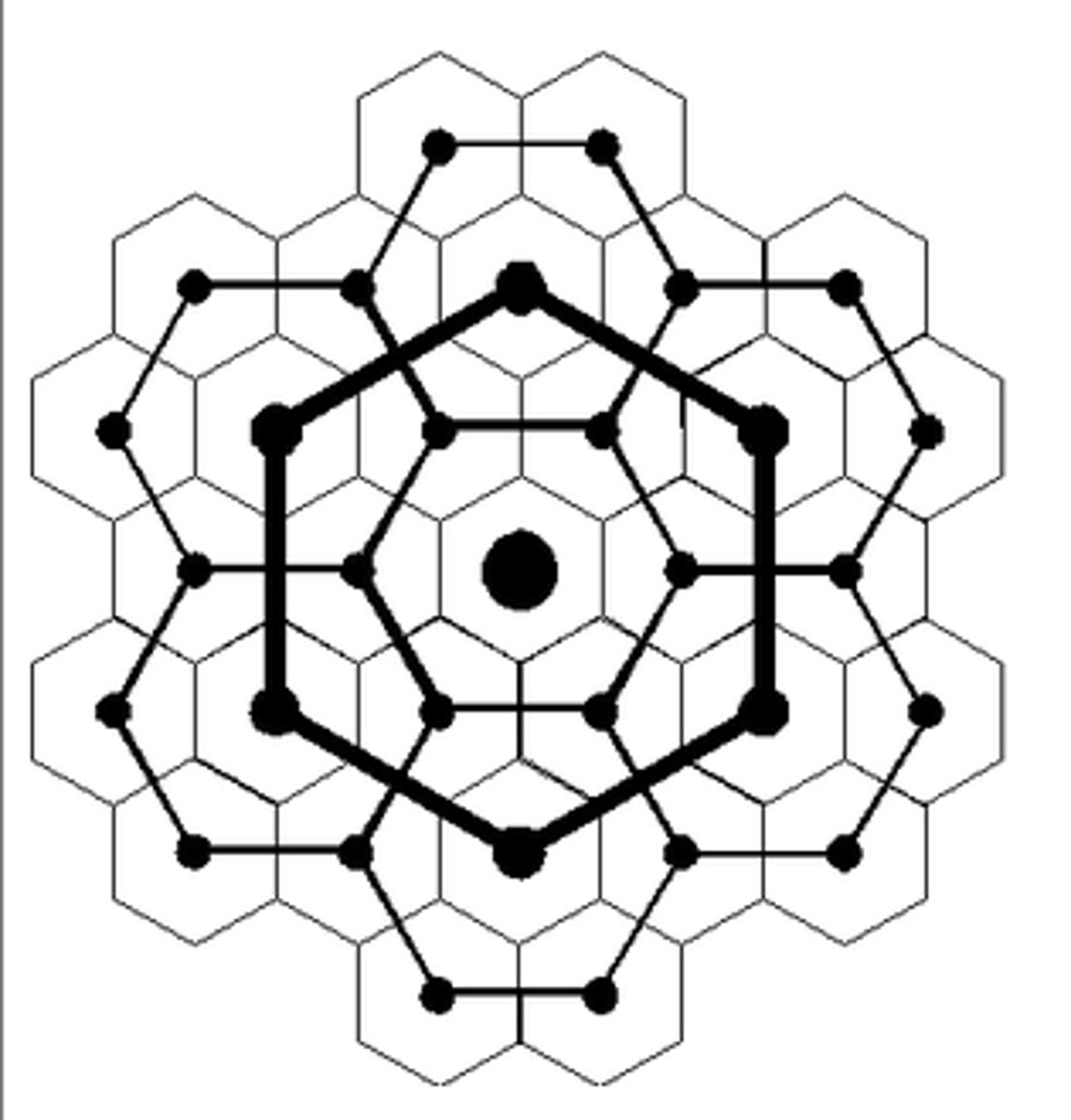
Central Place Theory (Christaller)
A theory that explains the distribution of services, based on the fact that settlements serve as centers of market areas for services; larger settlements are fewer and farther apart than smaller settlements and provide services for a larger number of people who are willing to travel farther.
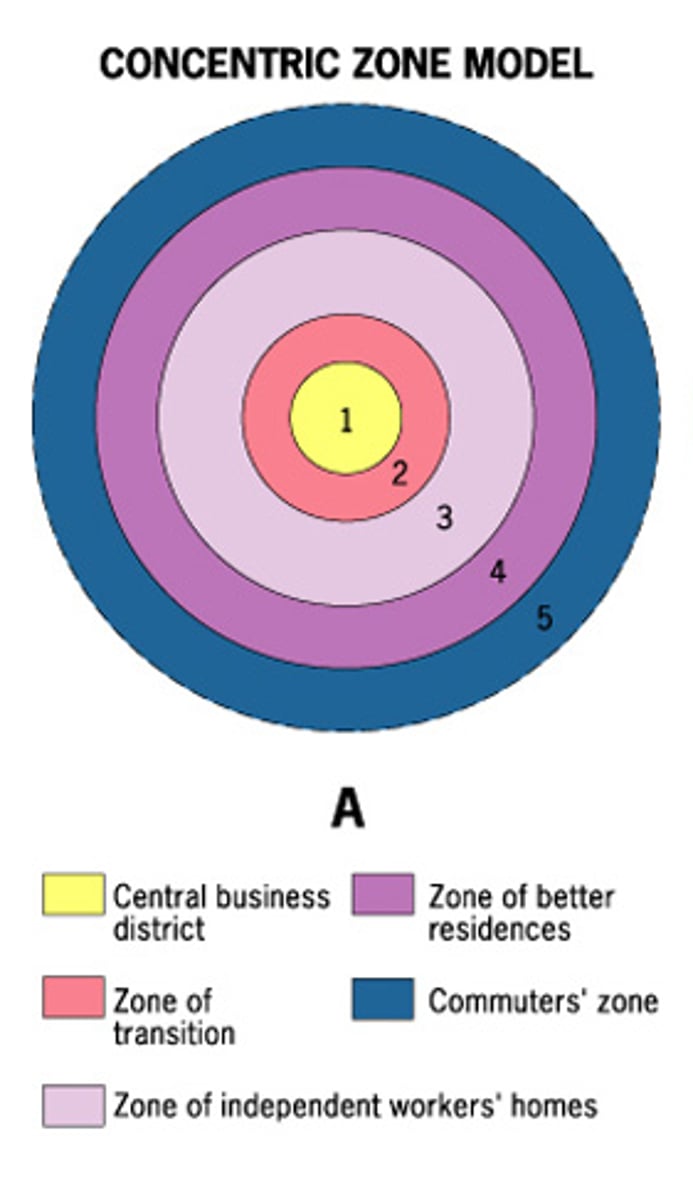
Concentric Zone Model (Burgess)
A model of the American central city that suggests the existence of five concentric land-use rings arranged around a common center.
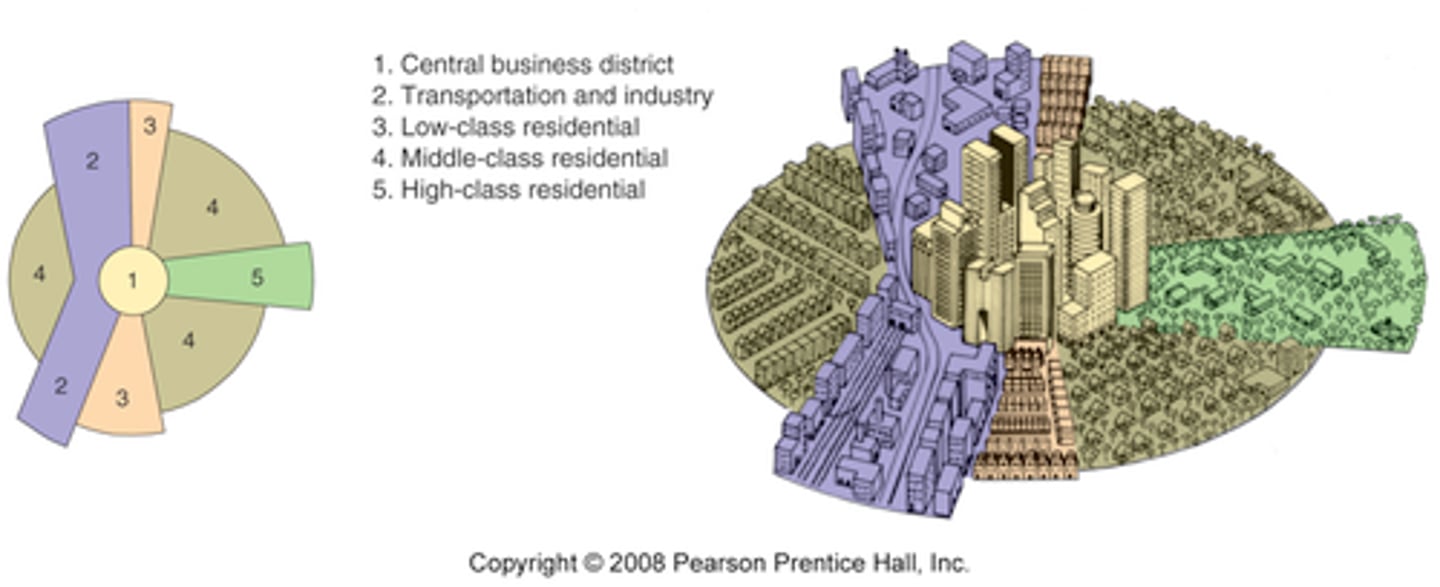
Sector Model (Hoyt)
A model that shows cities develop in a series of sectors radiating out from a CBD
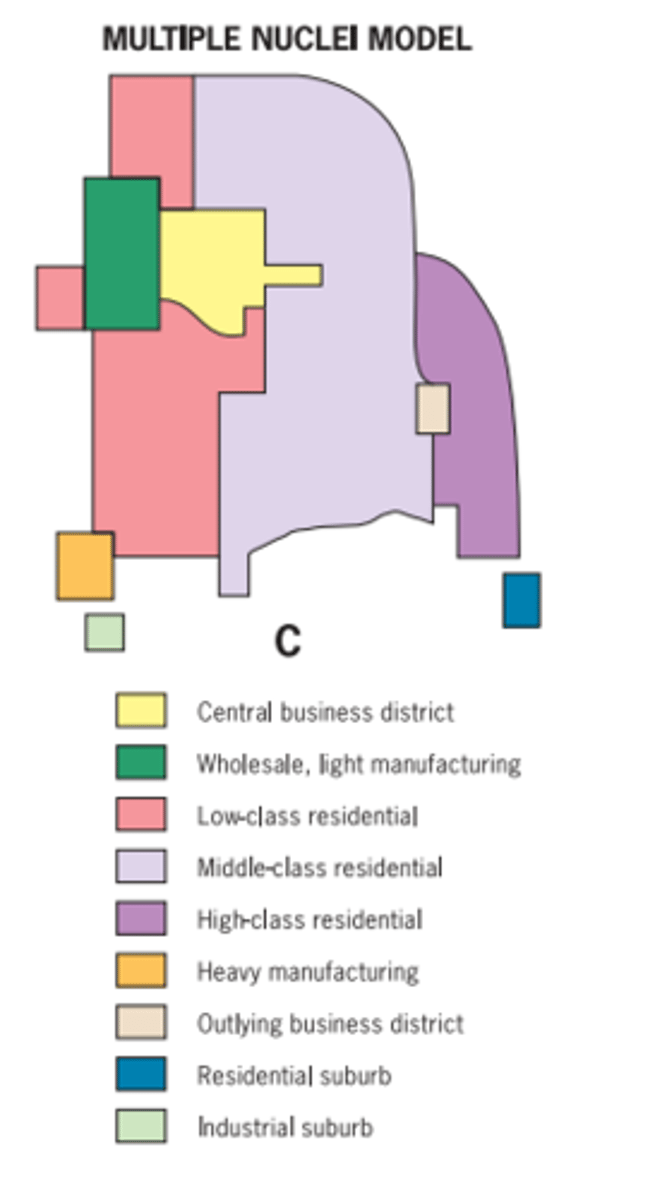
Multiple Nuclei Model (Hans & Ullman)
A model of the internal structure of cities in which social groups are arranged around a collection of nodes of activities.
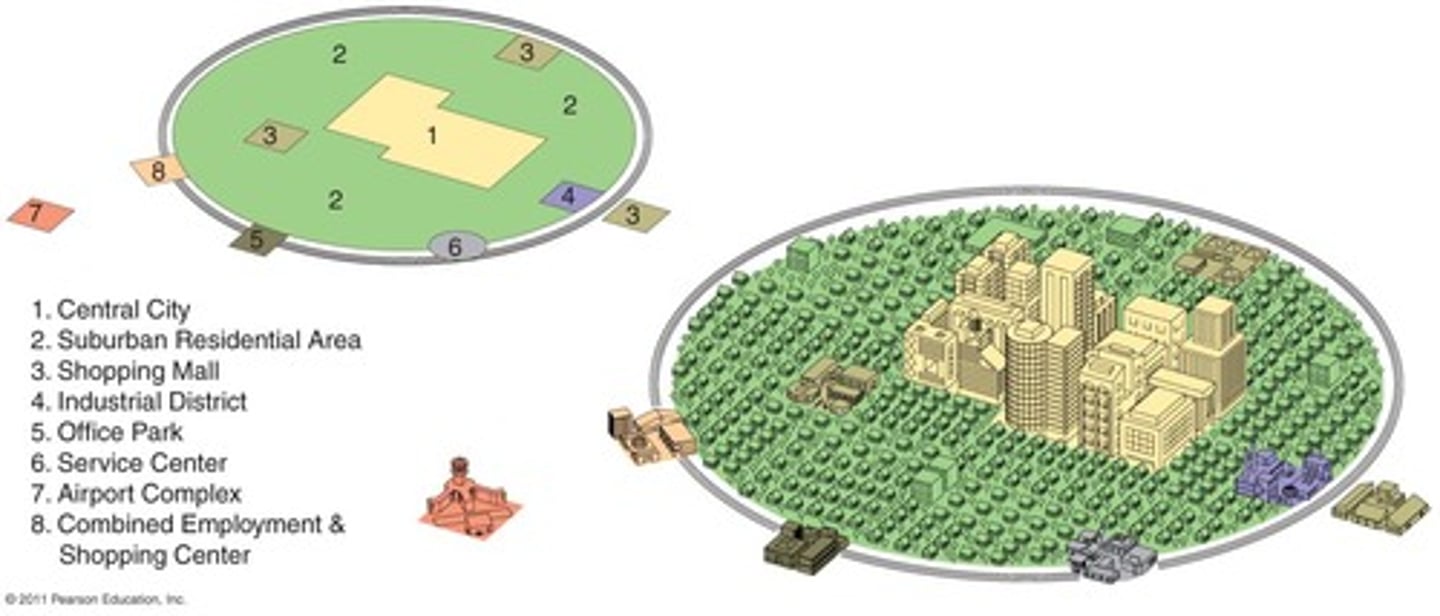
Galactic City Model (Peripheral Model)
model that represents distinct decentralization of the commercial urban landscape as the economy has to be transitioned to services as the leading form of production. Manufacturing declines significantly and becomes more specialized. There are several industrial parks.
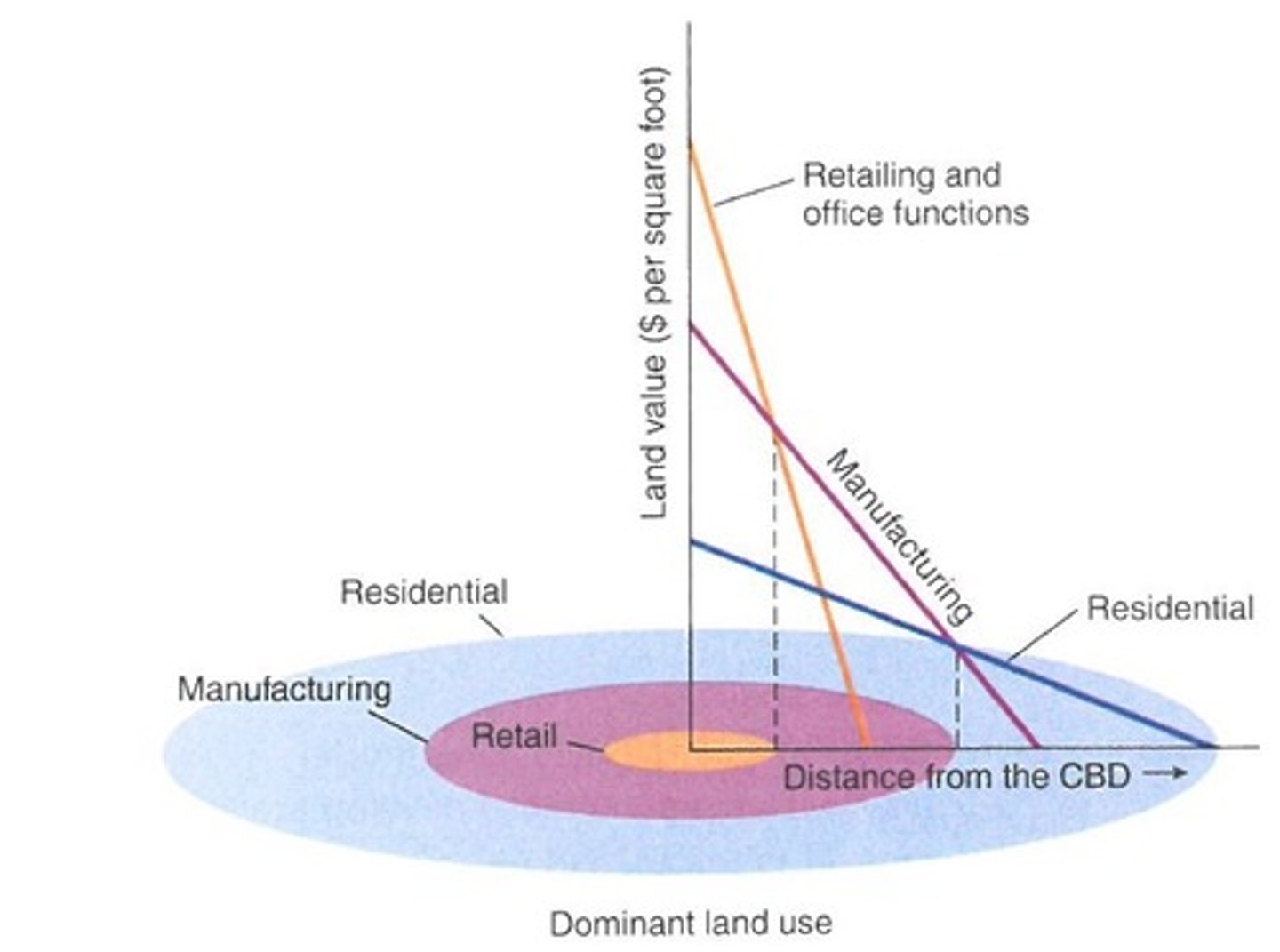
Bid rent theory
theory that refers to how the price and demand on real estate changes as the distance towards the Central Business District (CBD) increases.
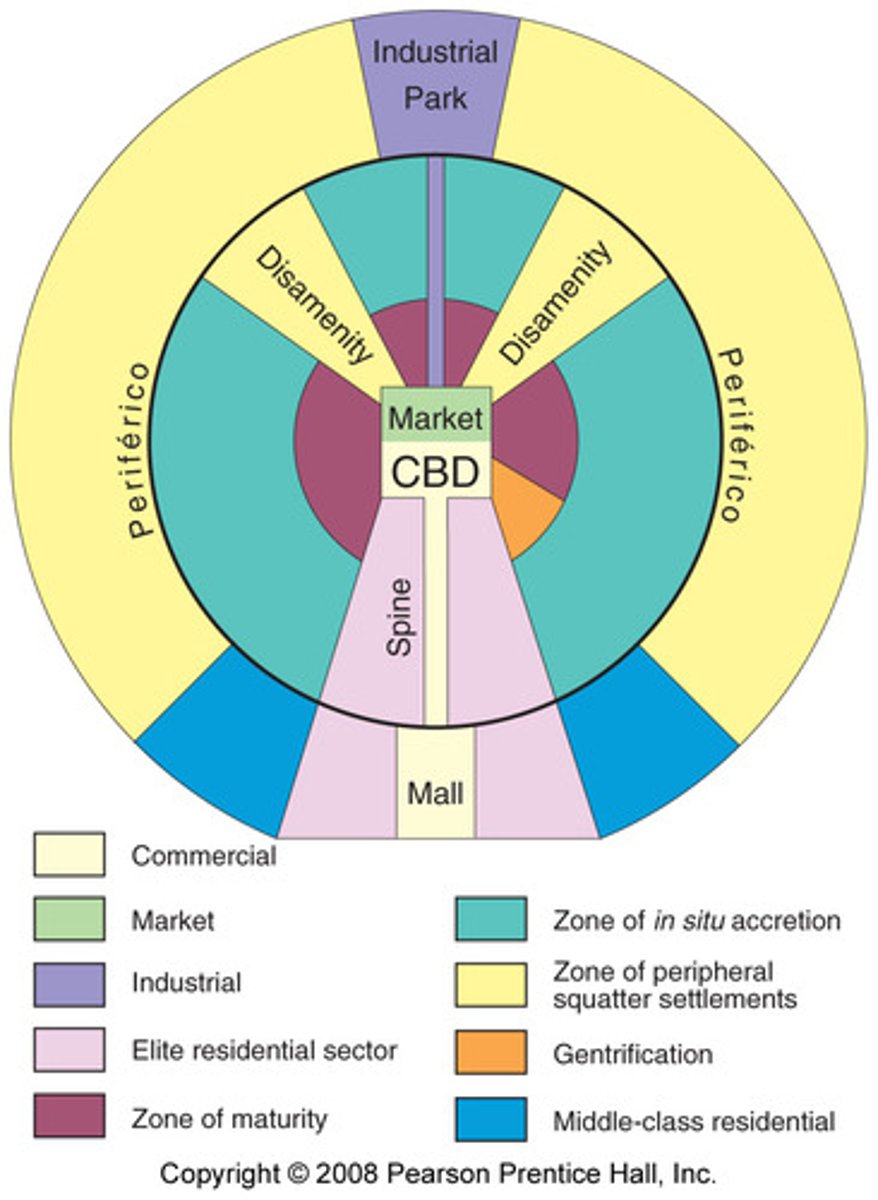
Latin American City Model
The CBD is dominant; it is divided into a market sector and a modern high-rise sector. The elite residential sector is on the extension of the CBD in the "spine". The end of the spine of elite residency is the "mall" with high-priced residencies. The further out, less wealthy it gets. The poorest are on the outer edge.
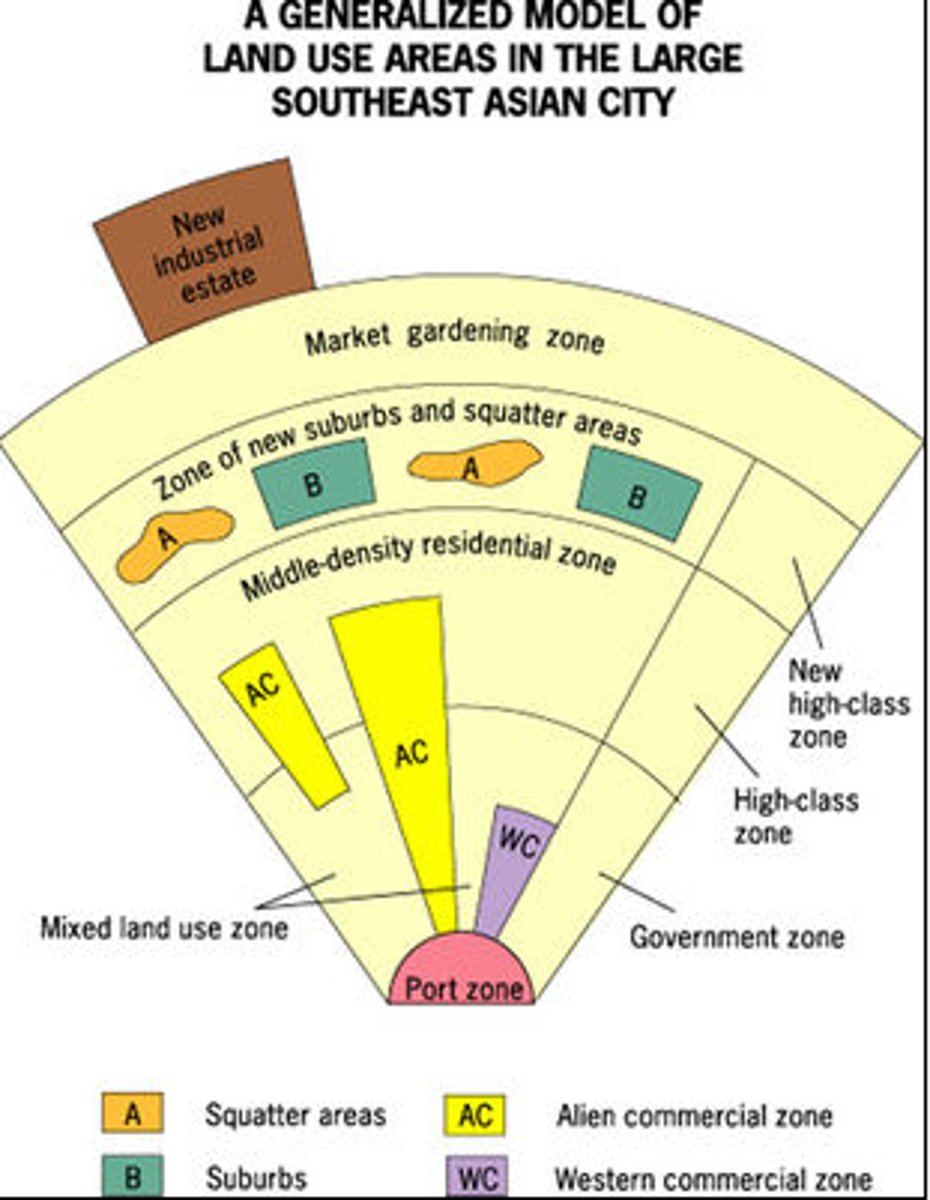
SE Asia City Model
Rapidly growing, modern city based around a port. Often a separate zone for Multinational Corporations.
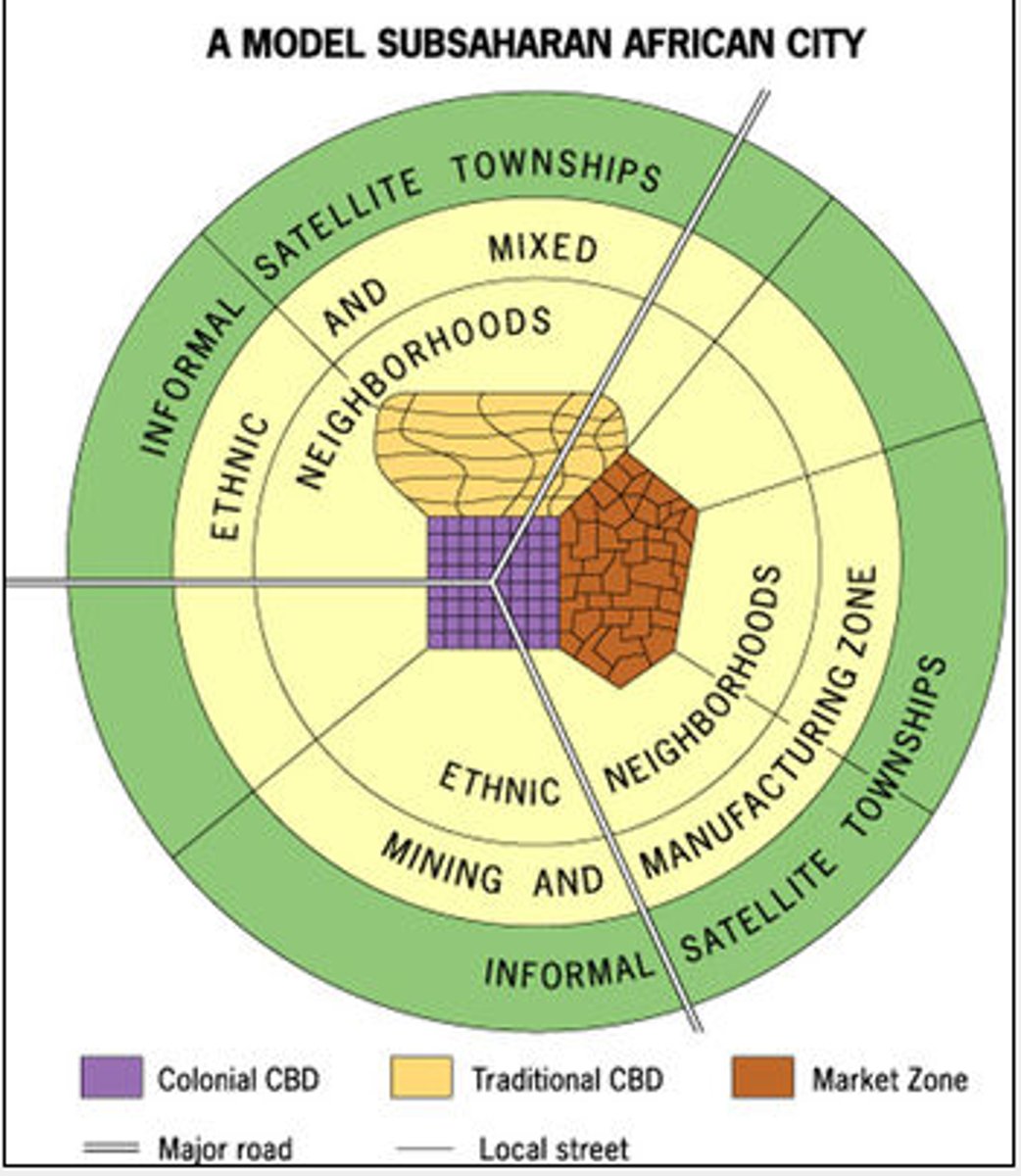
Africa City Model
3 CBDs, colonial, traditional, and market zone
housing density
the number of dwelling units per unit of area
Infilling
the use of vacant land and property within a built-up area for further construction or development
Built Landscape
the part of the physical landscape that represents material culture; the buildings, roads, bridges, and similar structures large and small of the cultural landscape.
residential
Relating to an area where people live
infrastructure
the basic physical and organizational structures and facilities (e.g., buildings, roads, and power supplies) needed for the operation of a society or enterprise.
Urban design
A profession which falls between planning and architecture. It deals with the large-scale organization and design of the city, deciding on the best use of space to be sustainable.
Sustainable design
The idea of designing cities that will not negatively impact the environment or damage a natural resource.
Zoning
A planning tool used to separate industry and business from residential neighborhoods.
mixed land use
More than one type of zoning, such as a condominium that has residential and commercial units (Business, Industry, and Residential all together).
transportation
the moving of goods or people from one place to another
smart growth
city planning that efficiently uses and conserves land and other resources
New Urbanism
A movement in urban planning to promote mixed use commercial and residential development and pedestrian friendly, community orientated cities. This is a reaction to the sprawling, automobile centered cities of the mid twentieth century.
Green belts
Areas around cities where suburban land uses are restricted.
Slow-growth cities
cities that don't develop or grow as fast as others
Sprawl
Development of new housing sites at relatively low density and at locations that are not contiguous to the existing built-up area.
de facto segregation
Segregation resulting from economic or social conditions or personal choice.
Census
population count
Population composition
the biological and social characteristics of a population, including age, sex, race, marital status, education, occupation, income, and size of household
Field study
a research investigation carried out by observing a place.
affordability
the point at which a person can manage to buy something
housing discrimination
The illegal practice of denying an individual or group the right to buy or rent a home based on race, color, religion, national origin, sex, disability or family status.
Land tenure
refers to the way land is owned and distributed in a region (who has the right to be there as well as legal protection from eviction)
redlining
A process by which banks draw lines on a map and refuse to lend money to purchase or improve property within the boundaries.
blockbusting
A process by which real estate agents convince white property owners to sell their houses at low prices because of fear that persons of color will soon move into the neighborhood
Disamenity zones
The very poorest parts of cities that in extreme cases are not connected to regular city services and are controlled by gangs and drug lords.
zones of abandonment
areas that have been deserted in a city for economic or environmental reasons
squatter settlements
Residential developments characterized by extreme poverty that usually exist on land just outside of cities that is neither owned nor rented by its occupants (slums).
Inclusionary zoning
zoning regulations that create incentives or requirements for affordable housing development
Urban renewal
rebuilding of the poor areas of a city
Gentrification
A process of converting an urban neighborhood from a predominantly low-income renter-occupied area to a predominantly middle-class owner-occupied area.
Local food movement
Produced within a fairly limited distance from where it is consumed
Urban sustainability
a city can be organized without reliance on the surrounding countryside and power itself with renewable energy
sanitation
Disposal of waste products
water quality
used to describe the health of a water system
Regional planning
City planning done on broader geographic scales, generally involving multiple municipal governments
Brownfields
contaminated industrial or commercial sites that may require environmental cleanup before they can be redeveloped or expanded
Farmland protection policies
Governmental regulations that try to prevent sprawl and retain farmland
urban growth boundaries
place restrictions on development outside a designated area
Central Business District (CBD)
The area of a city where retail and office activities are clustered (downtown).
food desert
An area in a developed country where healthy food is difficult to obtain
Basic Industries
Industries that sell their products or services primarily to consumers outside the settlement
Non-basic industries
Industries that sell their products primarily to consumers in the community.
range
How far people are willing to travel for a good or service
threshold
minimum number of people needed for a business to operate
megalopolis
a region in which several large cities and surrounding areas grow together
market area (hinterland)
The area surrounding a central place, from which people are attracted to use the place's goods and services.
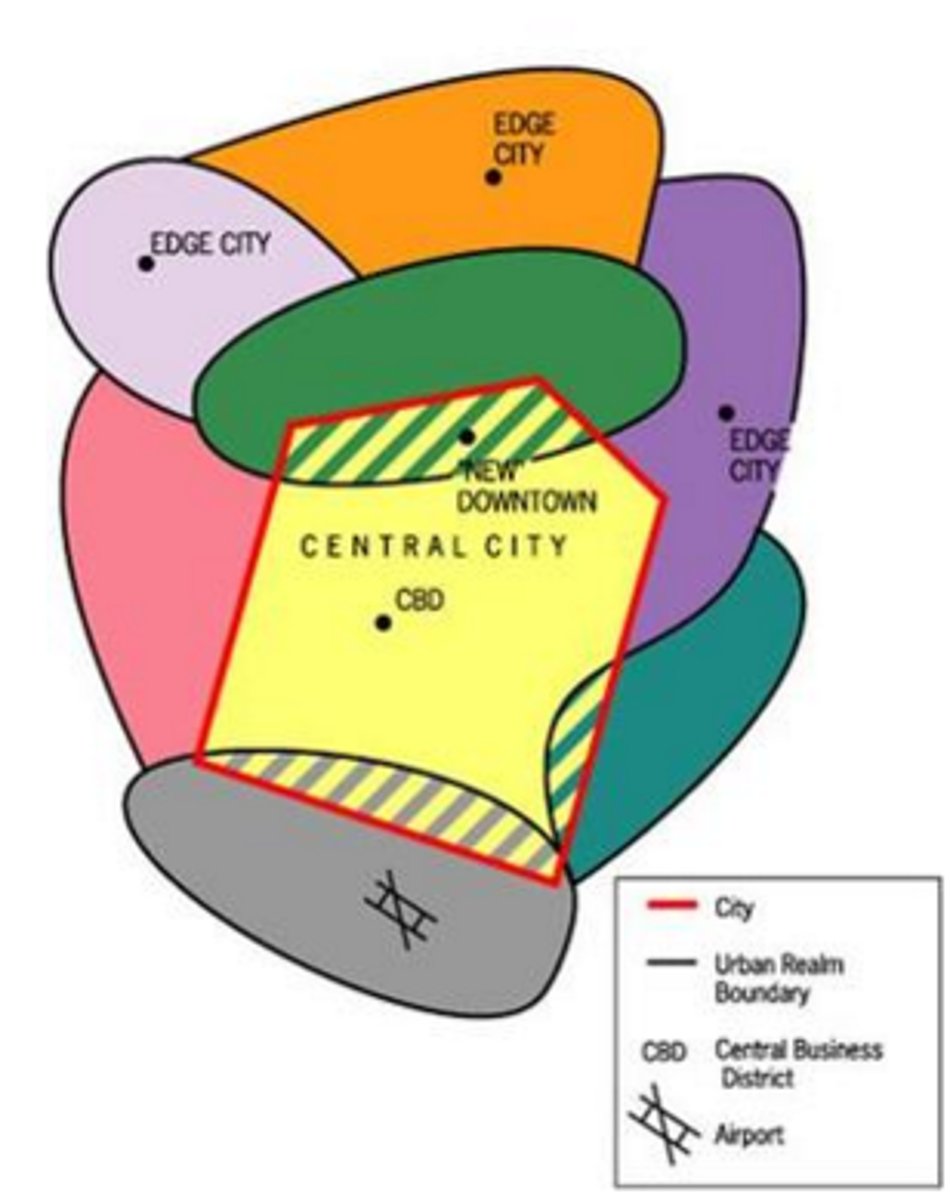
Urban Realms Model
Includes a CBD, central city, new downtown, and suburban downtown.
zone in transition
an area of mixed commercial and residential land uses surrounding the CBD