CELL STRUCTURE, FUNCTION, AND TYPE
 Call Kai
 Learn
Learn Practice Test
 Spaced Repetition
 Match
Match Flashcards
 Knowt Play
1/34

There's no tags or description
Looks like no tags are added yet.
Name | Mastery | Learn | Test | Matching | Spaced | Call with Kai |
|---|
No analytics yet
Send a link to your students to track their progress
35 Terms
are the smallest structural units and basic building blocks of living things.
contain everything necessary to keep living things alive
Varying in size and shape
cells
who came up with the cell theory?
schwann, schleiden, virchow
what is the cell theory ? (3)
All living things are composed of one or more cells.
Cells are alive and represent the basic unit of life.
All cells are produced from pre-existing cells.
what is cell size of prokaryote
Around 0.2–2.0 µm in diameter
nucleus, organelles, flagella of prokaryote
absent, absent, simple in structure
cell size of eukaryote
Around 10–100 µm in diameter
nucleus, organelles, flagella of eukaryote
true nucleus,
Several present, ranging from ribosomes to the endoplasmic reticulum,
Complex in structure
if the prokaryotic cells lacks nuclei, where is their DNA
cytoplasm, surrounded by plasma membrane
are specialized structures with a specific cellular function
organelles
what do ribosomes do for prokaryotes?
aid in protein synthesis
why do prokaryotes have flagellum
hairs attached to the cell helps with locomotion
why do prokaryotes have pili
hair0like structure surrounding the cells, aid in cellular adhesion
what are the most common prokaryotes
bacteria and archaea
most prokaryotes are ____ or made of a single cell, but there are a few _____
unicellular, multicellular organism
cells contain a membrane-bound nucleus where DNA is stored
eukaryotic cells
what type of organelles exist in eukaryotic cells?
membrane-bound organelles
what parts of the cells do eukaryotes and prokaryotes have in common?
cytoplasm, ribosomes, and plasma membrane (unicellular or multicellular)
example of eukaryotes
fungi and people (larger)
what are animal cells?
eukaryotic cells
ex of animal cells
Cheek, nerve, and muscle cells
list structure of animal cells
cell membrane, nucleus, mitochondria, ribosome, vacuoles, endoplasmic reticulum, lysosomes, golgi apparatus
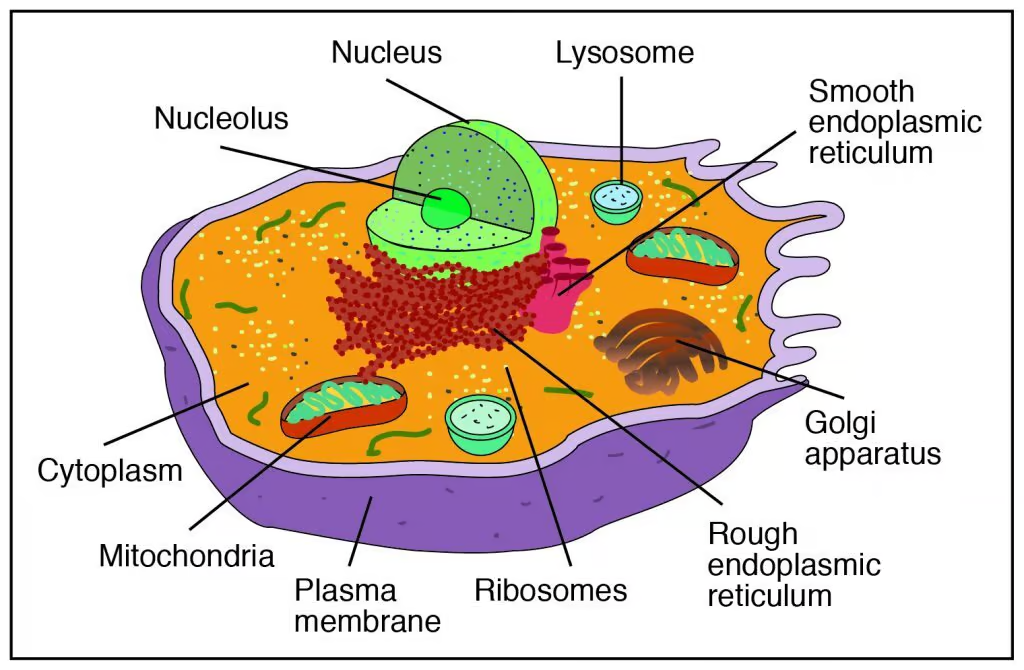
name the part of animal cell
A double layer that separates the inside of the cell from the outside environment. It is semi-permeable, meaning it only allows certain molecules to enter the cell.
cell membrane
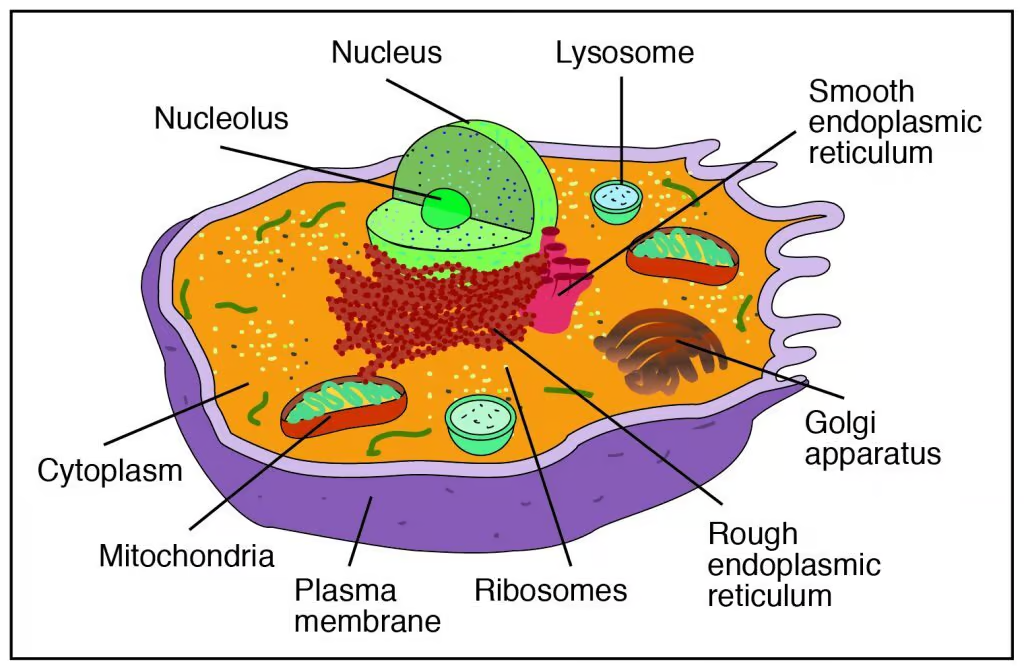
name the part of animal cell
A membrane-bound organelle that contains the genetic material, such as DNA, for a cell. Inside is the nucleolus that plays a role in assembling subunits required to make ribosomes.
nucleus
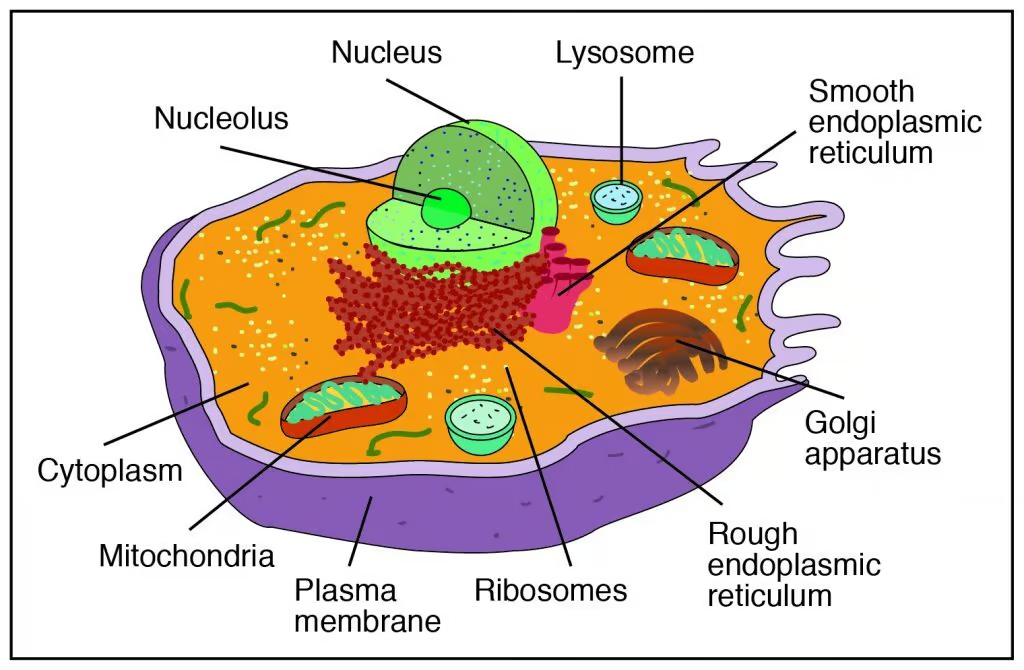
name the part of animal cell
The cell’s powerhouses that provide energy to the cell for it to function. Much of the energy in the form of ATP is produced here.
mitochondria
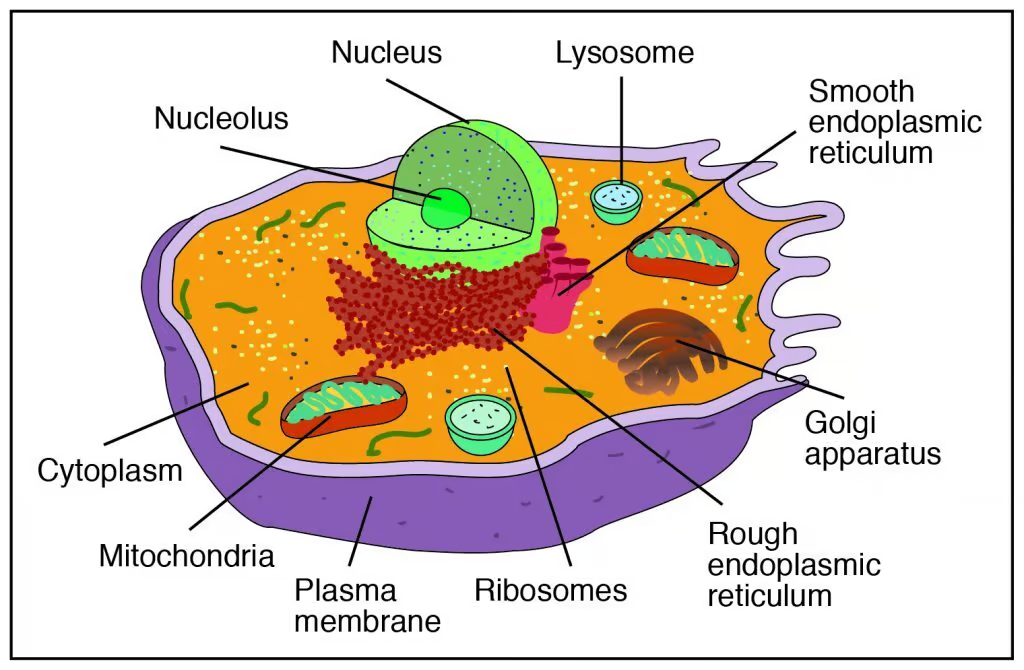
name the part of animal cell
The cell’s protein factories that can be found floating in the cytoplasm or attached to the endoplasmic reticulum.
ribosomes
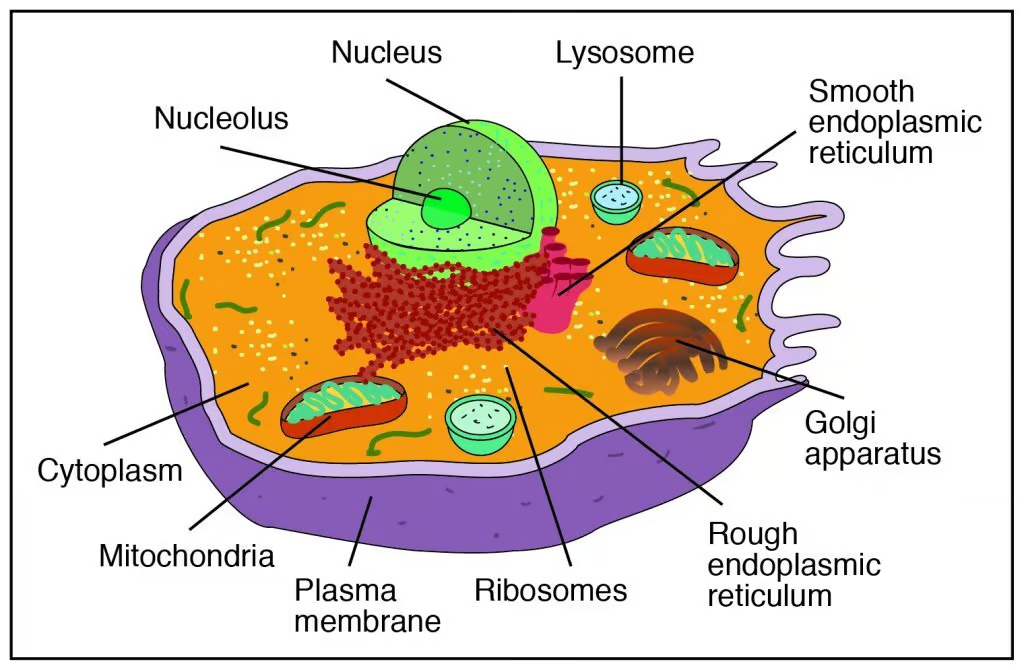
name the part of animal cell
Small sacs in a cell that store water and food for survival. This organelle also stores waste material that is mostly in the form of water.
vacuoles
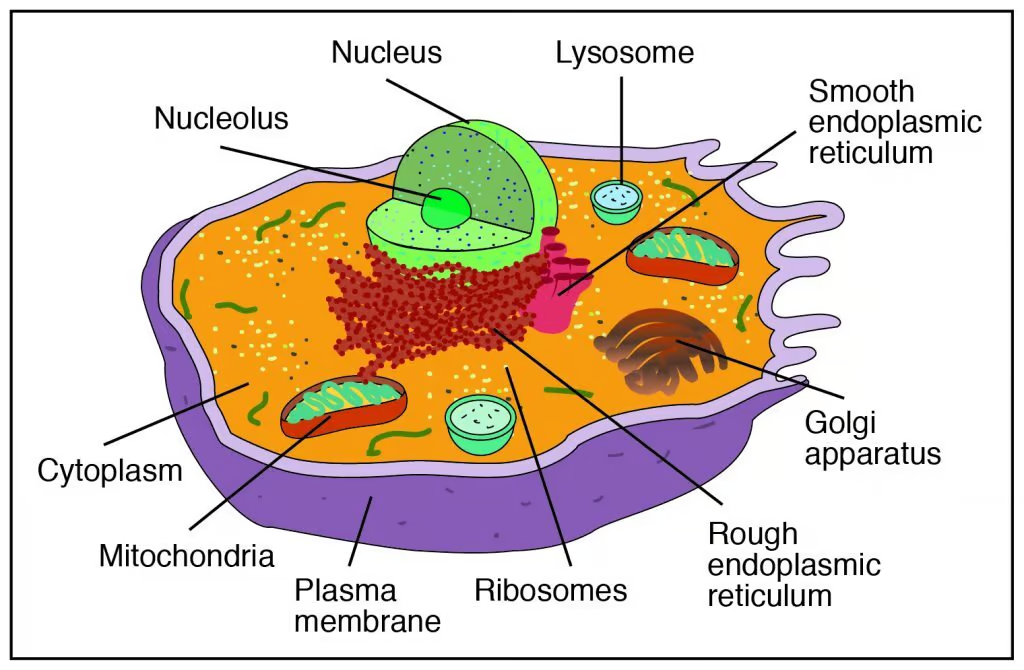
name the part of animal cell
A network of membranes that functions as a cell’s transportation system, shuttling proteins and other materials around the cell. The smooth____ lacks ribosomes, and the rough ______ has ribosomes.
endoplasmic reticulum
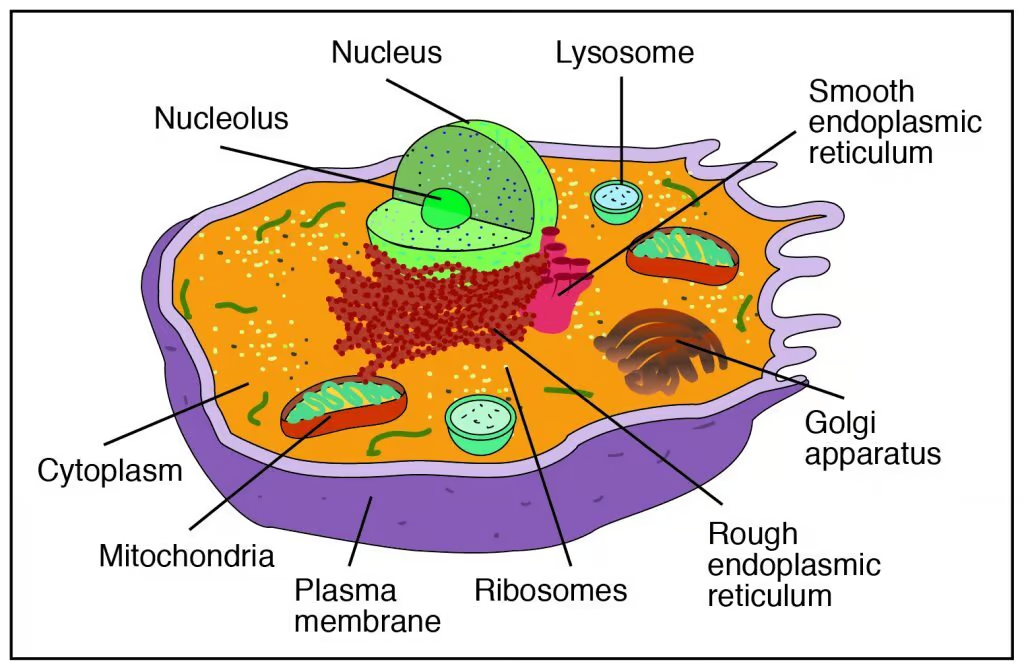
name the part of animal cell
Sac-like structures that contain digestive enzymes that are used to break down food and old organelles.
lysosomes
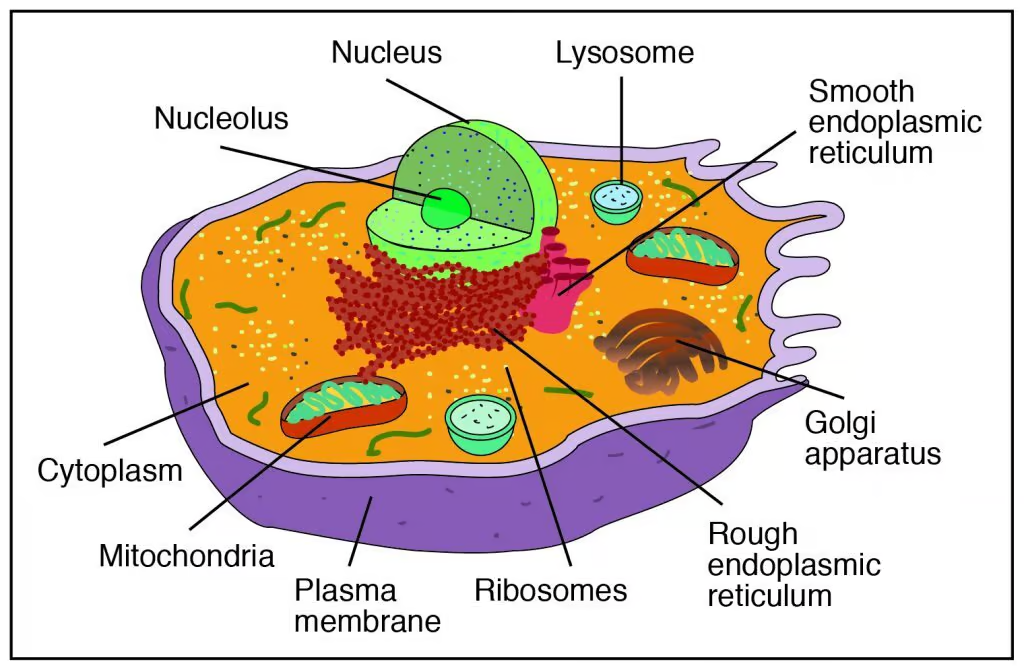
name the part of animal cell
A stack of flattened pouches that plays a role in processing proteins received from the endoplasmic reticulum. It modifies proteins from the endoplasmic reticulum and then packages them into a vesicle that can be sent to other places in the cell.
golgi apparatus
what 2 structures do animal cells not have but plant cells have
cell wall and chloroplasts
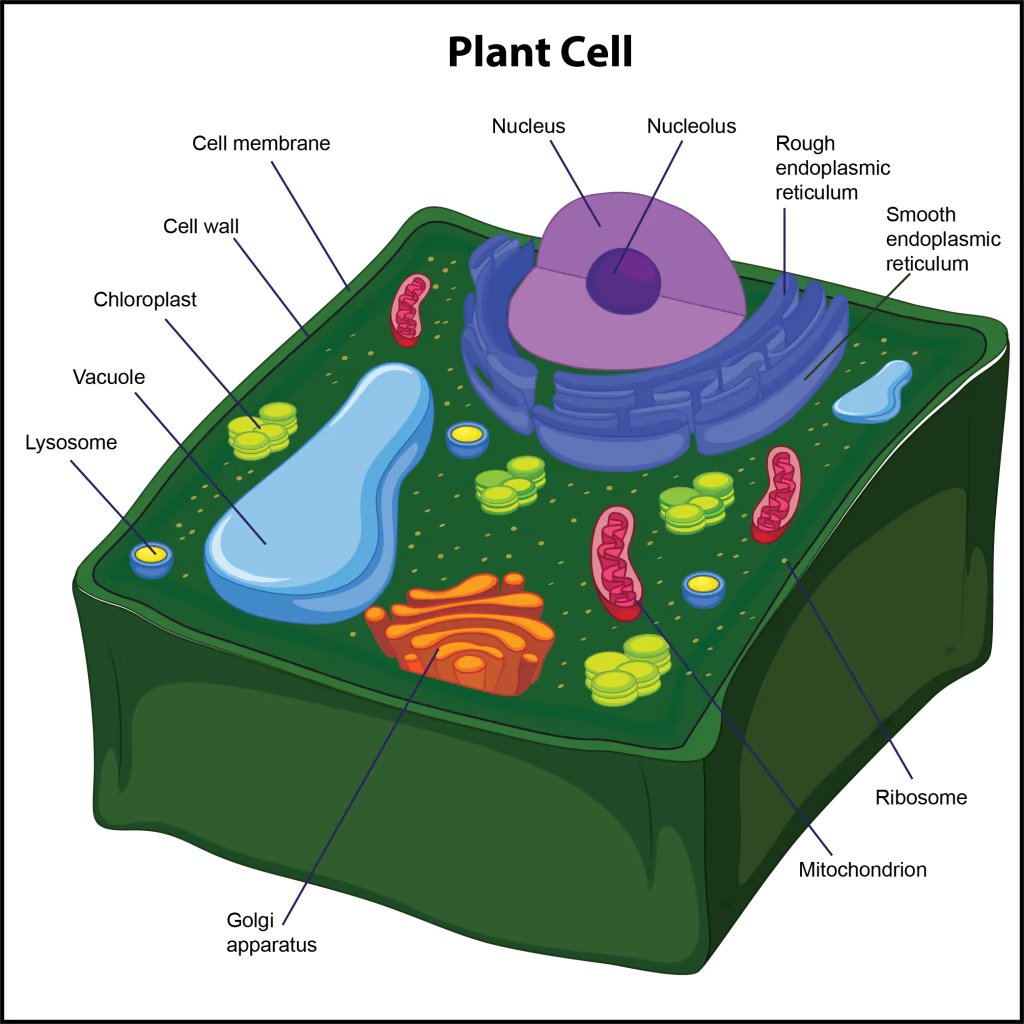
what is function of cell wall
provide protection and support to plant cells
enforces the overall structural integrity of the plant cell, and it is found outside the cell membrane.
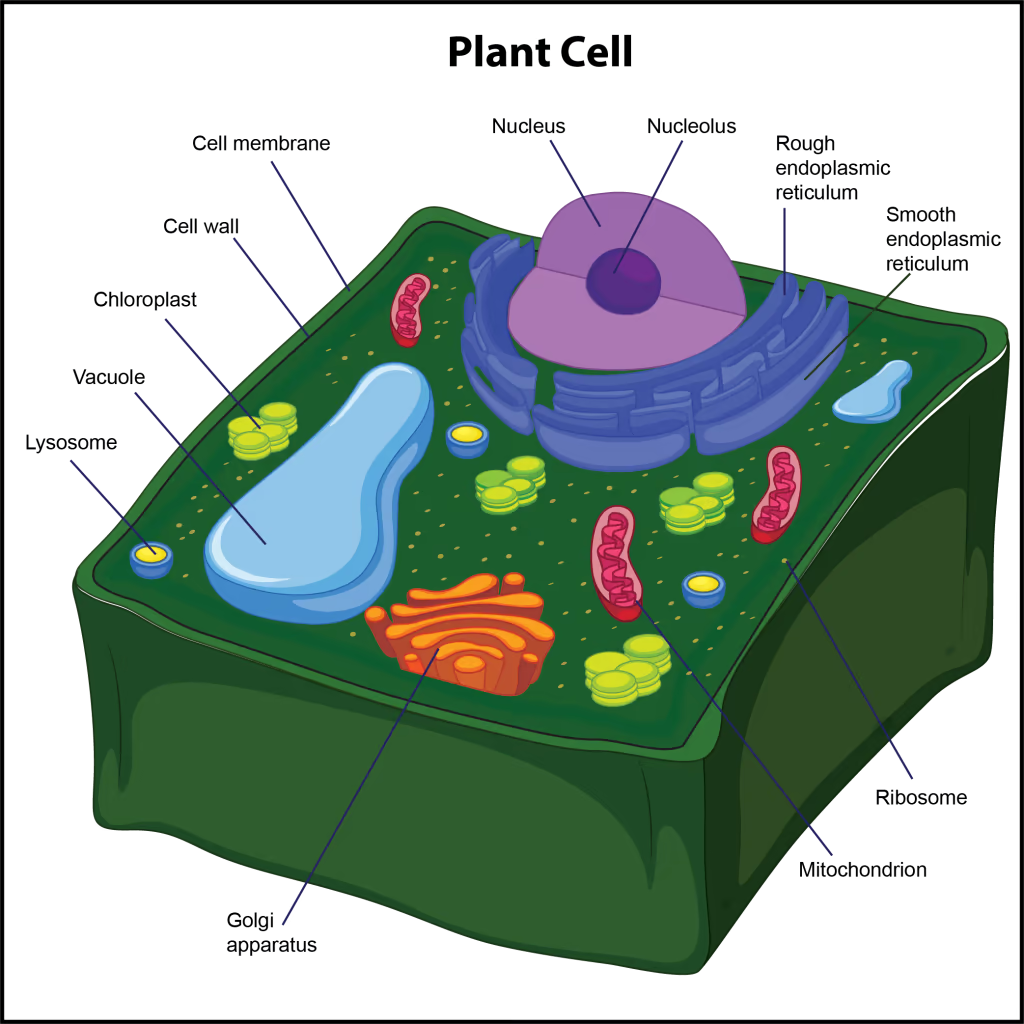
are photosynthetic compounds used to make food for plant cells by harnessing energy from the sun
play a role in photosynthesis
found in the cytoplasm
chloroplasts
are organisms that make energy-rich biomolecules from raw material in nature
using basic energy sources like the sun
rely on photosynthesis
autotrophs
these are animals, and they are unable to make their own food
must consume and metabolize their food sources to absorb the stored energy
ex: animal and fungi and certain bacteria
heterotrophs
how much of energy for life on earth is provided through the process of photosynthesis
99%