Cancer Cell Biology
 Call Kai
 Learn
Learn Practice Test
 Spaced Repetition
 Match
Match Flashcards
 Knowt Play
1/8

There's no tags or description
Looks like no tags are added yet.
Name | Mastery | Learn | Test | Matching | Spaced | Call with Kai |
|---|
No analytics yet
Send a link to your students to track their progress
9 Terms
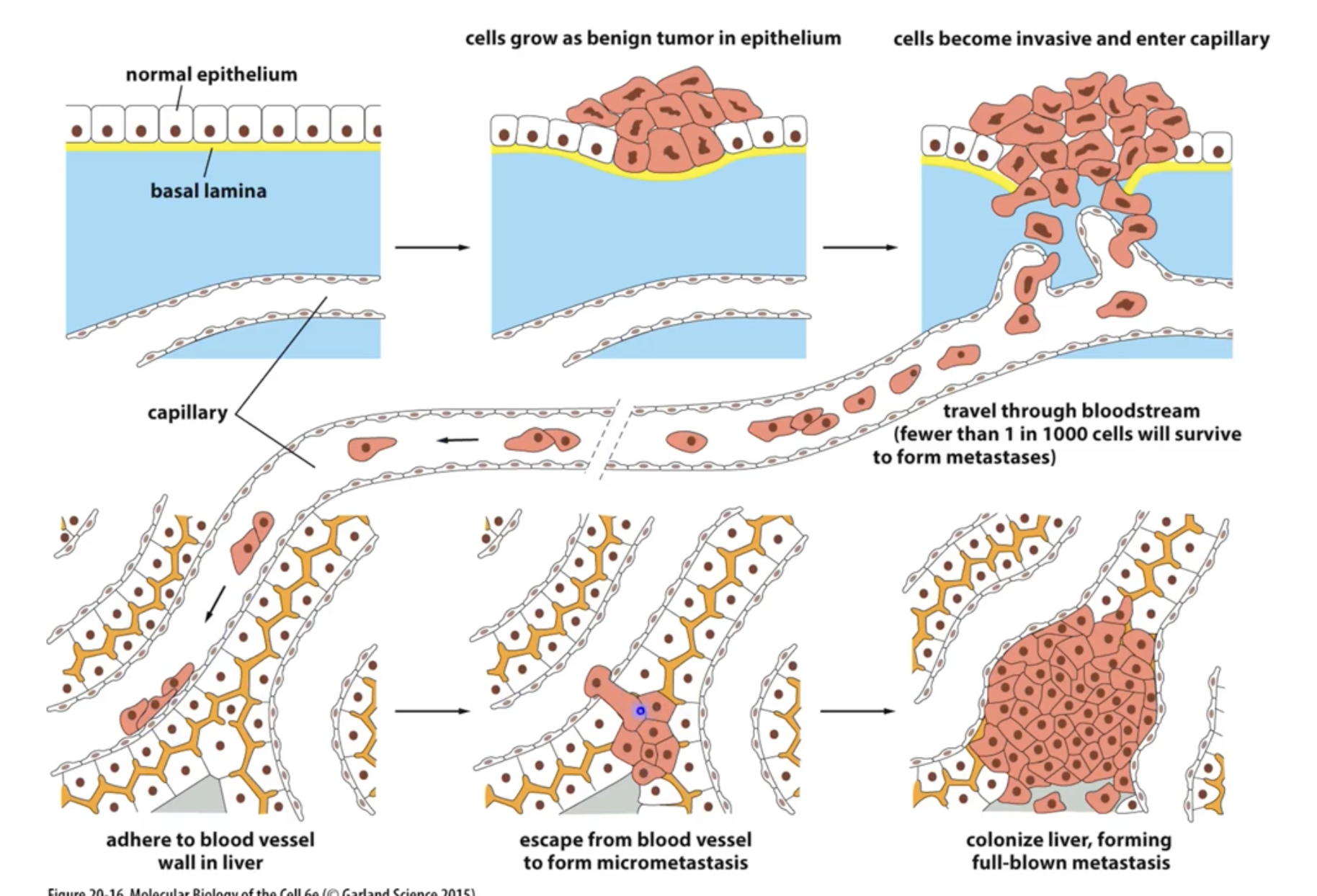
Steps to metastasis.
Neoplasm is a fancy word for tumour!
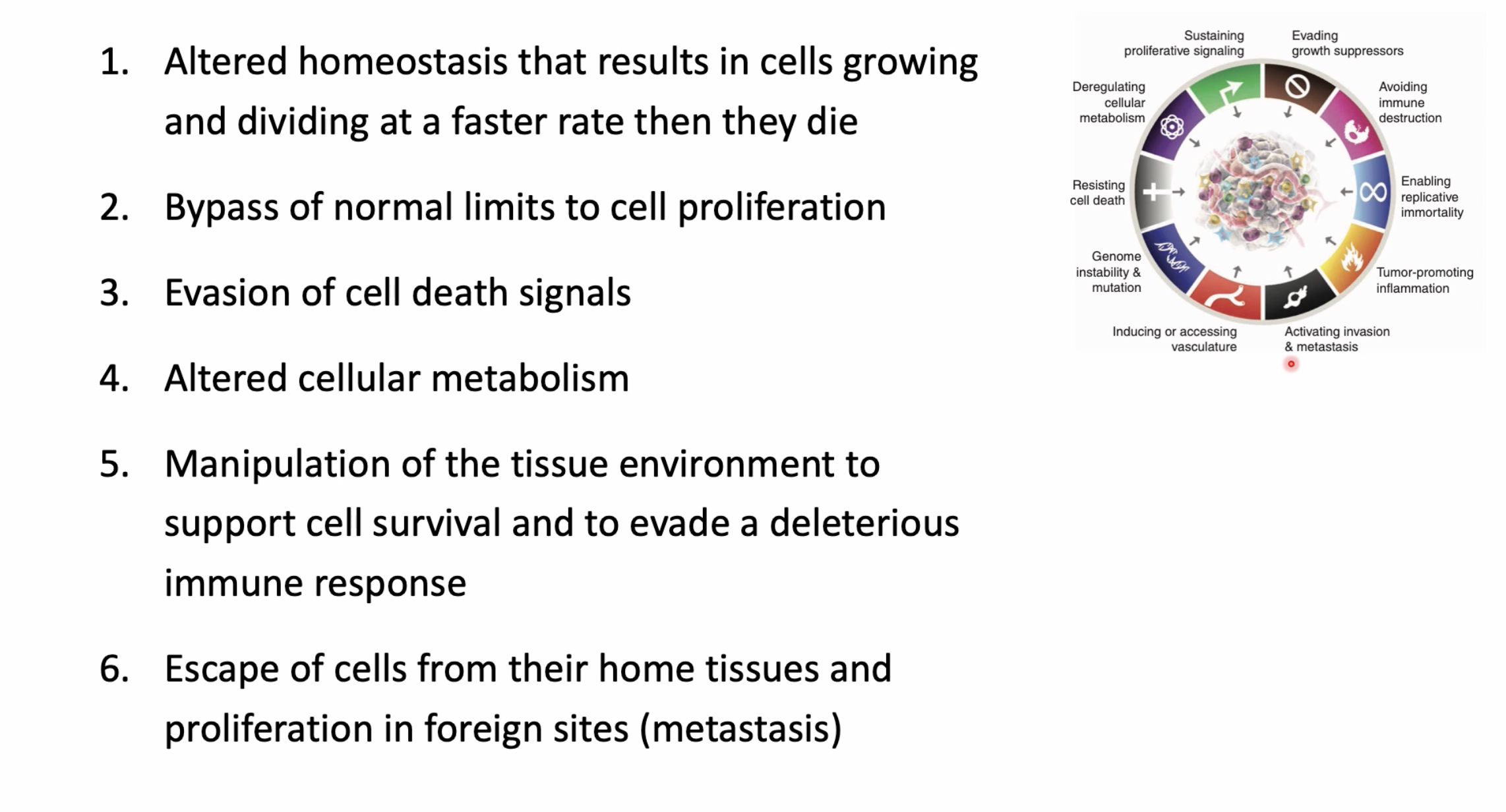
What are the hallmarks of cancer?
Cancer begins in one cell that progressively accumulates mutations, leading to the development of cancer. It can do this because its proliferation is unchecked and its progeny outcompetes normal cells.
Accumulation of mutations increase its proliferative advantage, eventually getting the ability ot envade other tissues and metastasise.
Combination of epigenetic and genetic changes could be involved.
Increase cell divions, normal apoptosis, vice versa, both.
The tumour micro-environment plays a key role in tumourosgenesis. Composed of many different cell types like cancer cells, endothelial cells, pericytes, fibroblasts, and inflammatory WBC. Communication between these cells plays key role in cancer development. Only the cancer cells however, have that genetically unnormal mutaiton.
Describe loss of function, and gain of function mutations.
If the gene abnormality results in reduced production of a key protein or production of a protein that does not do its job, then that is a loss-of-function mutation. For example, loss of a protein that is required for a cell cycle checkpoint to operate normally.
Conversely, a gene abnormality can result in the cell doing something it did not do before, and so is a gain-of-function mutation. For example, it may cause inappropriate production of an enzyme, or activate a regulated pathway when there is no signal for it.
Single GOF in POG forms oncogene.
Two LOF in TSG can lead to cancer
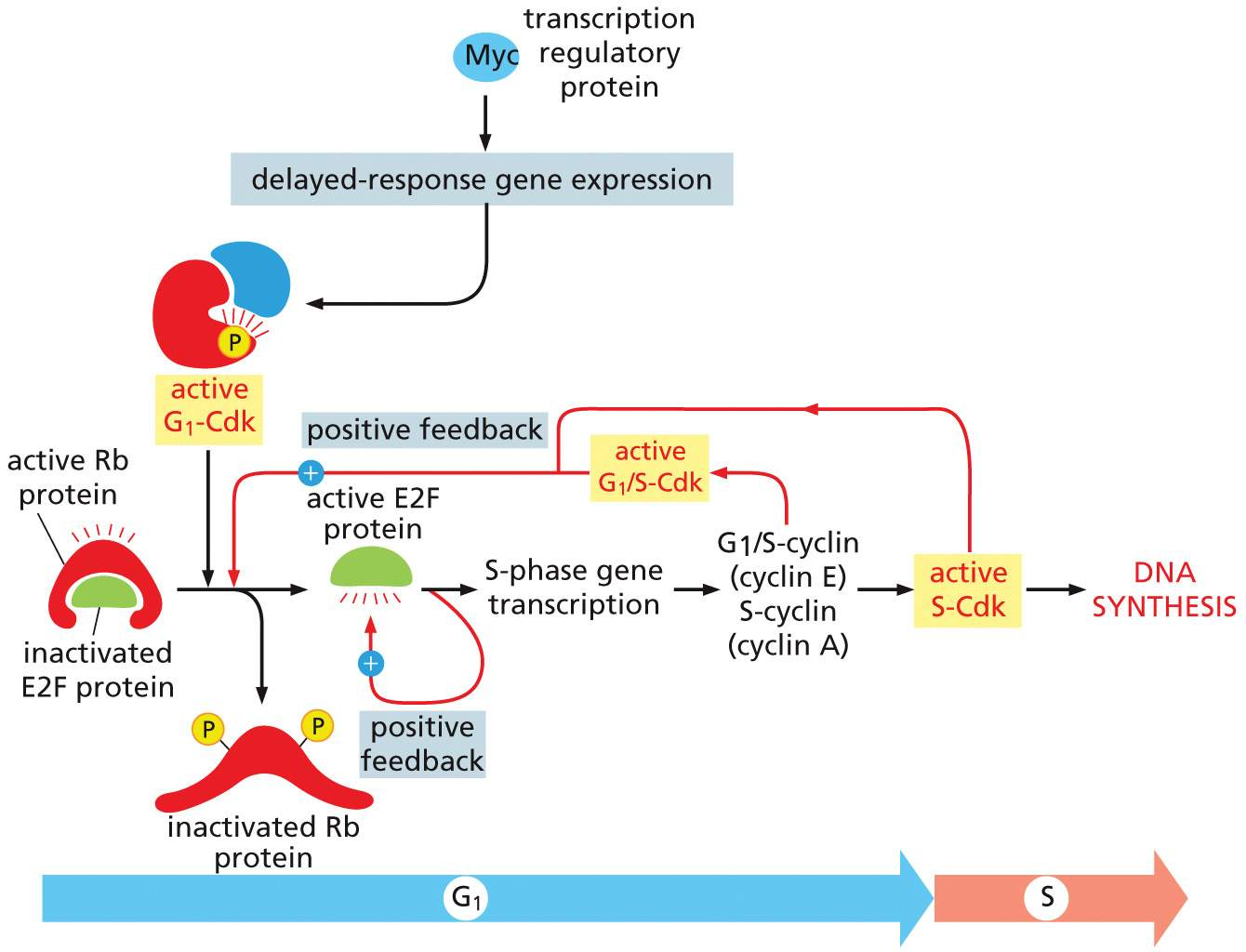
Describe function of Rb.
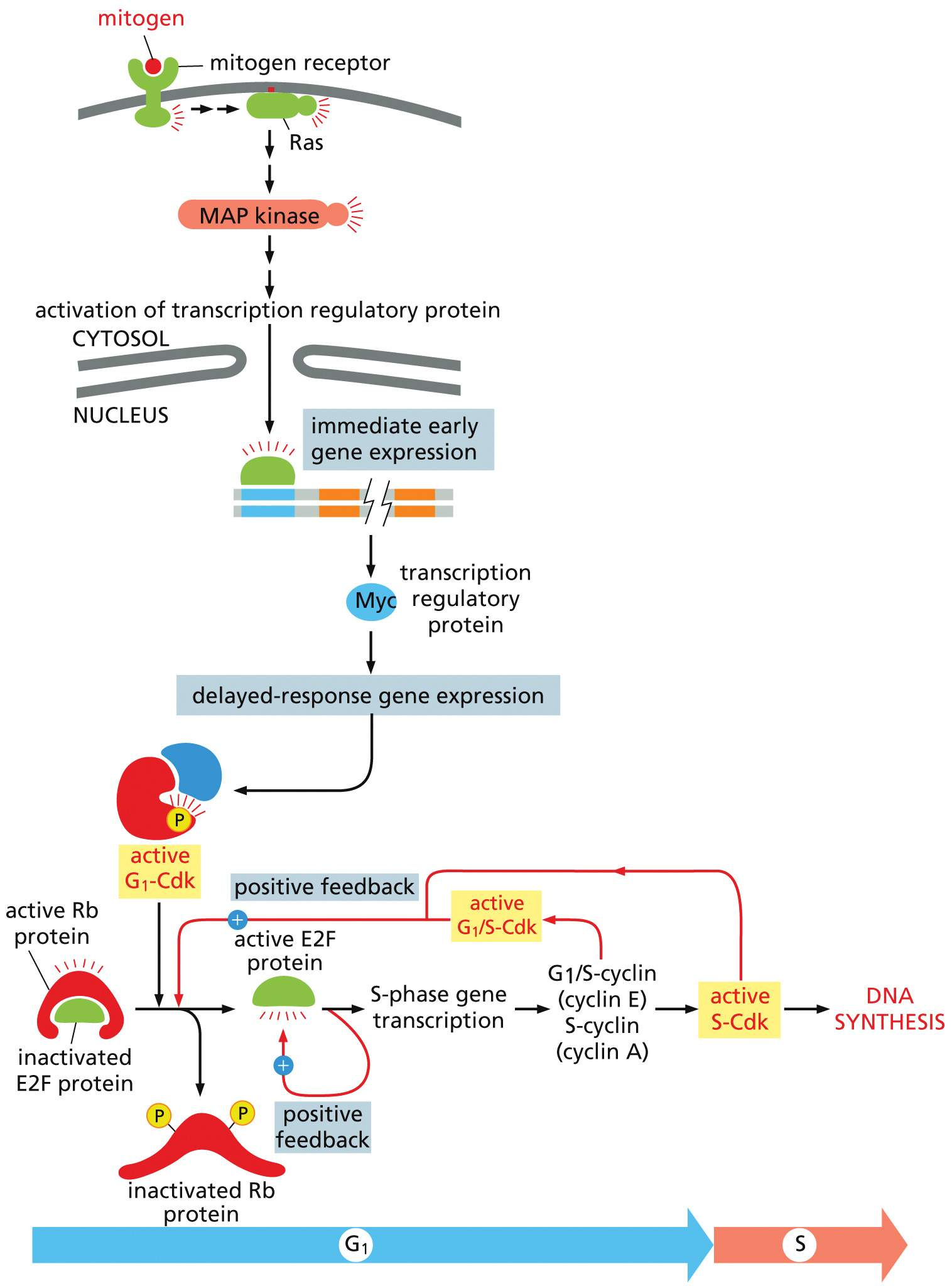
Consider a cell in G1. If it is to go through the cell cycle it will build up levels of G1-cyclins as it prepares to progress into S phase, and these cyclins work in combination with the G1-Cdks. A transcription factor called E2F is important for promoting entry into S phase, provided the checkpoint at the end of G1 is passed. E2F does this by increasing expression of G1/S-cyclin and multiple S phase genes, including S-cyclin.
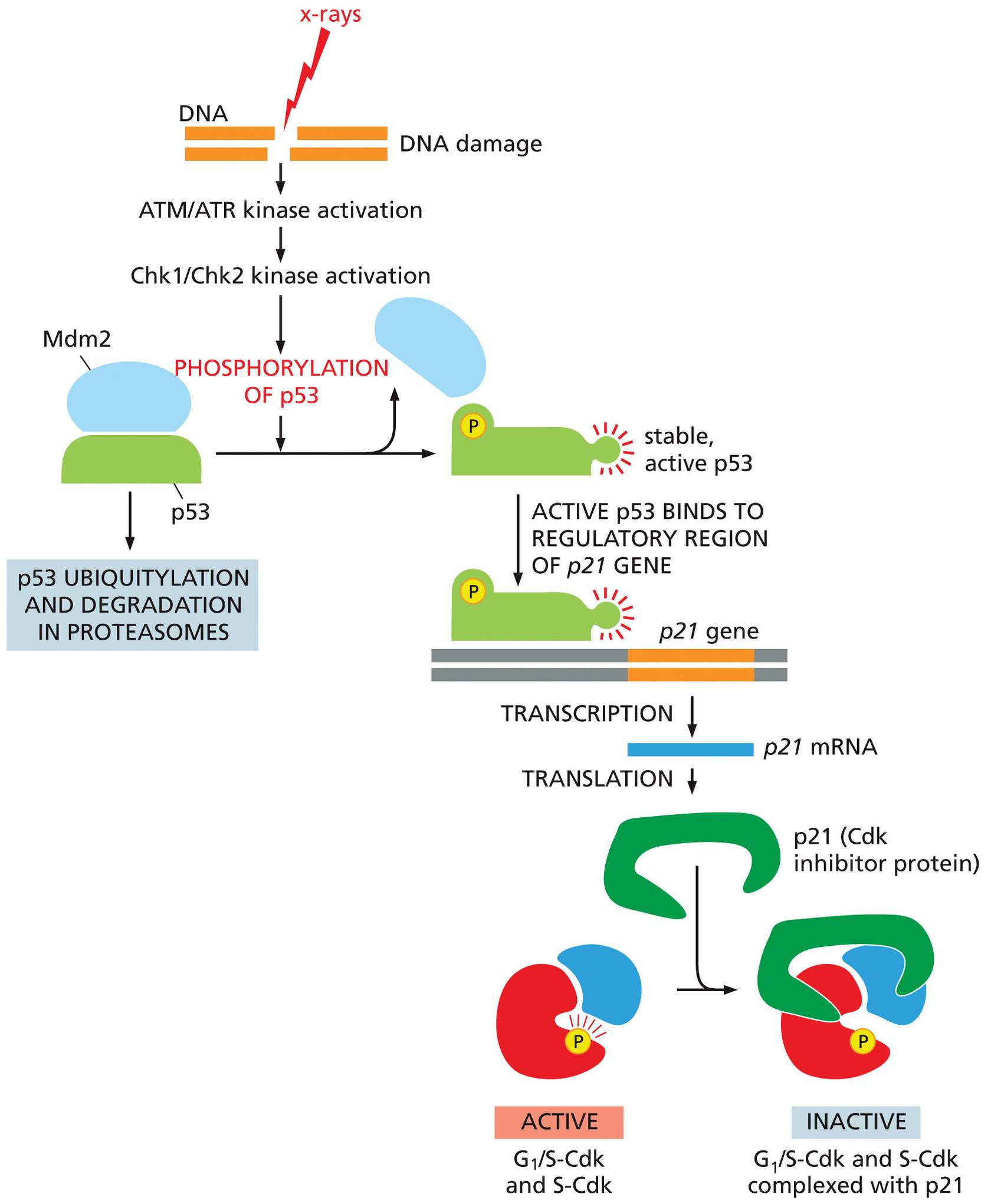
Describe the arrest of cell cycle via p53.
Describe th effect of the mutation in the Ras gene.
How would you classify an abnormal gene that results in a kinase like the Bcr-Abl? Tumour suppressor gene, oncogene, or proto-oncogene? Briefly explain your answer.
It is an oncogene resulting in overactivity (gain of function) in the signaling pathway from the kinase that promotes proliferation. A cell that was heterozygous would likely have a mix of normal and abnormal receptor signaling.
Ras also has enzymatic activity – what does it do? Would a cell that is heterozygous with a Ras oncogene have abnormal Ras function? Outline how Ras dysfunction could cause overactivity in the signaling pathway described above.
Ras is a GTPase. When bound to GTP, Ras is switched on to activate a phosphorylation cascade including MAPK. When the GTP is hydrolysed to GDP, Ras is switched off. Point mutations in Ras commonly impair the GTPase such that Ras remains on for longer or indefinitely. If the oncogene is expressed, then a heterozygous cell would have some abnormal Ras function. Via the MAPK pathway, Ras overactivity would increase Myc expression.
Describe how to stop cancer cells.
Treatment of an early stage primary cancer is often curative, and obviously early treatment depends on early and accurate diagnosis. Therapy for more advanced cancer may try for a cure (sometimes with success), but short and long term outcomes vary greatly. As a rule, metastatic cancer is only curable if it is unusually sensitive to drugs or radiation, but increasingly newer medications are able to control or slow progression.
If the chances of a cure are deemed very small, specific anti-tumour treatments still have a major role in palliative care, as tumour reduction usually improves patient well-being at least for a while.
Note that, in the same way that the primary cancer grows from one cell, the goal of cancer treatments aiming/hoping for a cure is to remove or kill every single cancer cell in the body. With an advanced cancer, this is not only difficult to achieve, it is also largely impossible, after treatment, to know how many viable cancer cells are left or exactly where they are.