Membrane Proteins + Cell Communication 3A+3B
 Call Kai
 Learn
Learn Practice Test
 Spaced Repetition
 Match
Match Flashcards
 Knowt Play
1/76

There's no tags or description
Looks like no tags are added yet.
Name | Mastery | Learn | Test | Matching | Spaced | Call with Kai |
|---|
No analytics yet
Send a link to your students to track their progress
77 Terms
What can cross the cell membrane easily?
Small hydrophobic (nonpolar) molecules (e.g. gases like O2, CO2)
What cannot cross the membrane easily?
Large, polar, or charged molecules (e.g. ions, glucose, amino acids)
What is a concentration gradient?
Difference in concentration of a substance across a space or membrane
What is diffusion?
Movement of molecules from high to low concentration down a concentration gradient
What is equilibrium?
State where concentration is equal and no net movement occurs
What is osmosis?
Movement of water across a semi-permeable membrane
How does osmosis balance solutes?
Water moves to balance solute concentration when solutes cannot cross membrane
What is tonicity?
Relative concentration of solutes outside vs inside a cell
What is isotonic?
Same solute concentration; no net water movement
What is hypertonic?
Higher solute outside; water leaves cell → cell shrinks
What is hypotonic?
Lower solute outside; water enters cell → cell swells
What are integral membrane proteins?
Proteins embedded in lipid bilayer; often transmembrane; penetrate hydrophobic core; often glycosylated
What are peripheral membrane proteins?
Attached indirectly via protein interactions; not embedded; can dissociate easily; soluble in aqueous environments
What are the six major functions of membrane proteins?
Transport; enzymatic activity; signal transduction; cell-cell recognition; intercellular joining; attachment to cytoskeleton and ECM
What are transport proteins?
Proteins that move substances across membrane
What are channel proteins?
Provide corridors for specific ions/molecules to cross membrane
What are carrier proteins?
Bind solute and change shape to move it across membrane
What is facilitated diffusion?
Passive transport using proteins; increases speed; moves down gradient
What is active transport?
Movement against concentration gradient; requires energy (ATP)
What are pumps?
Proteins that actively transport substances using ATP
What is uniport?
Carrier transports one substance
What is symport?
Carrier transports two substances in same direction
What is antiport?
Carrier transports substances in opposite directions
What is co-transport?
Coupled transport where movement of one solute drives movement of another
How does co-transport work?
The first solute is actively transported from low to high concentration, creating a gradient. The second solute then moves from high to low concentration using the energy stored in that gradient.
How are membrane enzymes regulated?
pH; temperature; salt; co-factors; co-enzymes; inhibitors
What is the role of membrane enzymes?
Catalyse biochemical reactions at membrane or within organelles
What is signal transduction?
Process where receptor receives signal and relays it into the cell
What are the three stages of signalling?
Reception; transduction; response
What happens in reception?
Ligand binds receptor → receptor activated
What happens in transduction?
Signal relayed through cascade of molecules (often phosphorylation)
What happens in response?
Cell changes (gene expression, shape, division, death)
What is cell-cell recognition?
Cells identify each other via glycoproteins (carbohydrate tags)
Why is cell-cell recognition important?
Tissue formation; immune response; blood groups; distinguishing self vs non-self
What is intercellular joining?
Proteins connect neighbouring cells (tight junctions, adherens junctions)
What are tight junctions?
Cells tightly packed; form barriers
What are adherens junctions?
Cells connected but with more flexibility/space
How are cells attached to ECM?
Membrane proteins link ECM outside to cytoskeleton inside
What structures connect inside and outside of cell?
Transmembrane proteins linking cytoskeleton (actin) to ECM (collagen, laminin, fibronectin, proteoglycans)
What is the extracellular matrix (ECM)?
Network outside cells providing support and signalling
What problems exist for cell communication in multicellular organisms?
Long distances; ECM barriers; signal dilution
What are ligands?
Signalling molecules that bind receptors to trigger responses :contentReference[oaicite:1]{index=1}
What types of molecules can be ligands?
Proteins; peptides; amino acids; nucleotides; steroids; retinoids; fatty acids; gases
What is long-range signalling?
Communication over long distances via bloodstream or neurons
What is endocrine signalling?
long-distance cell communication in which specialised endocrine glands release hormones directly into the bloodstream. These hormones travel at low concentrations to distant target tissues, producing slower but widespread effects throughout the body.
What is neuronal signalling?
Fast; precise; neurotransmitters released at synapse
short distance
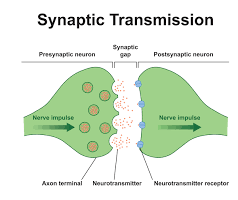
What is synaptic signalling?
Electrical signal travels along axon; neurotransmitters released at synapse (~100 nm gap)
a precise form of cell-to-cell communication where neurons transmit chemical signals (neurotransmitters) across a narrow gap, known as a synapse, to another neuron or muscle cell
What is short-range signalling?
Local signalling between nearby cells
What is paracrine signalling?
Cell releases signal affecting nearby cells
a form of local cellular communication where a cell produces signals (paracrine factors) to induce changes in nearby cells, altering their behavior.
What is autocrine signalling?
Cell releases signal affecting itself
a form of cell communication where a cell secretes hormones or chemical messengers (e.g., growth factors, cytokines) that bind to receptors on the same cell, triggering a self-generated response
What is contact-dependent signalling?
Cells directly interact via membrane-bound proteins
two cells must be in direct physical contact to communicate.
the signalling molecule remains attached to the membrane of one cell, and
it binds to a receptor on the membrane of a neighboring cell.
So, the cells communicate through membrane-bound proteins rather than released chemical signals.
How is paracrine/autocrine signalling regulated?
limited diffusion of signalling molecules
uptake by cells
enzymatic degradation
immobilisation by the extracellular matrix (ECM)
antagonists that block signalling.
What are cell surface receptors?
Proteins on membrane that bind ligands and trigger intracellular signals
What are ion-channel-linked receptors?
cell surface receptors that open or close an ion channel when a ligand binds, allowing ions to pass across the membrane and producing rapid cellular signalling.
What are G-protein coupled receptors (GPCRs)?
seven-pass transmembrane receptors that activate a G protein when a ligand binds, triggering enzymes and intracellular signalling cascades.
What are enzyme-linked receptors?
Single-pass transmembrane receptors that activate an enzyme directly or through interactions with other proteins when a ligand binds.
What are receptor tyrosine kinases?
enzyme-linked receptors that dimerise when a ligand binds and activate tyrosine kinase activity, leading to phosphorylation and intracellular signalling cascades.
What do kinases do?
Transfer phosphate groups to proteins (phosphorylation)
What is phosphorylation?
the addition of a phosphate group to a molecule, usually a protein, by a kinase enzyme to alter the protein’s activity or function.
What are intracellular receptors?
Receptors inside cell; require small/hydrophobic ligands
What types of ligands bind intracellular receptors?
Gases (NO, CO); steroids; thyroid hormones; retinoids; vitamin D
What do intracellular receptors do?
Control gene transcription
What are fast intracellular responses?
when a ligand rapidly activates an existing intracellular protein, producing an immediate cellular effect without changing gene transcription.
Example: nitric oxide signalling.
What are slow intracellular responses?
when intracellular receptors regulate gene transcription, leading to the synthesis of new proteins and slower but longer-lasting cellular effects.
What determines speed of response?
Type of signalling and type of cellular response
Why can the same ligand cause different responses?
Different receptors in different cells → different signalling pathways
What is signal amplification?
One signal activates many molecules in cascade → amplified response
What are second messengers?
Small molecules that relay signals inside cell (e.g. cAMP)
What is cAMP?
Second messenger made from ATP by adenylyl cyclase
What does cAMP do?
Relays signal and activates protein kinase A
How is cAMP inactivated?
Converted to AMP by phosphodiesterase
What is the role of G-proteins?
G-proteins transmit signals from activated receptors to target enzymes, such as adenylyl cyclase, to initiate intracellular signalling pathways.
How can cells regulate sensitivity to signals?
Sequester receptor; degrade receptor; inactivate receptor; inactivate signalling proteins; produce inhibitors
“Sequester receptors” means the cell temporarily hides or removes receptors from the cell surface so signalling molecules cannot bind to them as easily.
What are gap junctions?
Channels connecting cytoplasm of adjacent animal cells
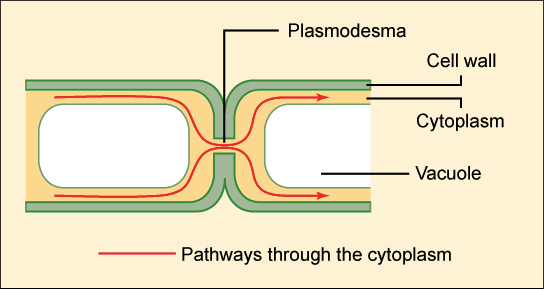
What are plasmodesmata?
Channels connecting cytoplasm of adjacent plant cells
What are possible cellular responses to signals?
Grow; divide; differentiate; survive; die (apoptosis)
What is differentiation?
Process where cells become specialised with specific functions in tissues