Maxillary and Mandibular divisions of the Trigeminal nerve
 Call Kai
 Learn
Learn Practice Test
 Spaced Repetition
 Match
Match Flashcards
 Knowt Play
1/68

There's no tags or description
Looks like no tags are added yet.
Name | Mastery | Learn | Test | Matching | Spaced | Call with Kai |
|---|
No analytics yet
Send a link to your students to track their progress
69 Terms
What is the corneal reflex
-protective blink reflex which is triggered when the cornea is touched or irritated
-prevents damage to the eye
Which nerve is responsible for the sensory (afferent) arm of the corneal reflex
CNV1 (detects irritation of the cornea)
Which nerve is responsible for the motor arm of the corneal reflex
CNVII (closes eyelids via the orbicularis oculi)
What are sneeze and cough reflex
involuntary,protective mechanism designed to clear the respiratory tract of irritants, allergens and pathogens
Which nerves are responsible for the sensory arm of sneeze eflexe
CNV- detects irritation of the nasal mucosa (causes sneezing)
Which nerves are responsible for the motor arm of the sneeze reflex
CNV- closes eyes
CNX- larynx and pharynx
phrenic nerve- diaphrgm
causes you to sneeze
What nerve is responsible for the sensory arm of the cough reflex
CNX- detects irritation int he lower airway fromt he larynx, trachea and bronchi
Which nerves are responsible for the motor arm of the cough reflex
CNX- larynx, controls the glottis
phrenic nerve- diaphragm
What is the jaw jerk reflex
-tap the chin and this causes the jaw to close
Sensory arm of the jaw jerk reflex
CNV3- detects stretch when the chin is tapped
Where does CNV3 send this information to
mesencephalic nucleus of CNV in the brainstem
Motor arm of the jaw jerk reflex
CNV3- goes to muscles of mastication causing them to contract and the jaw to close
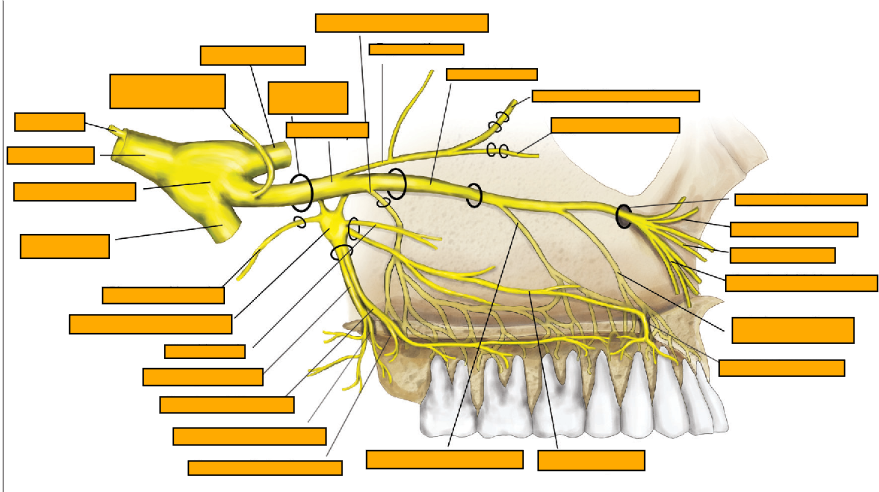
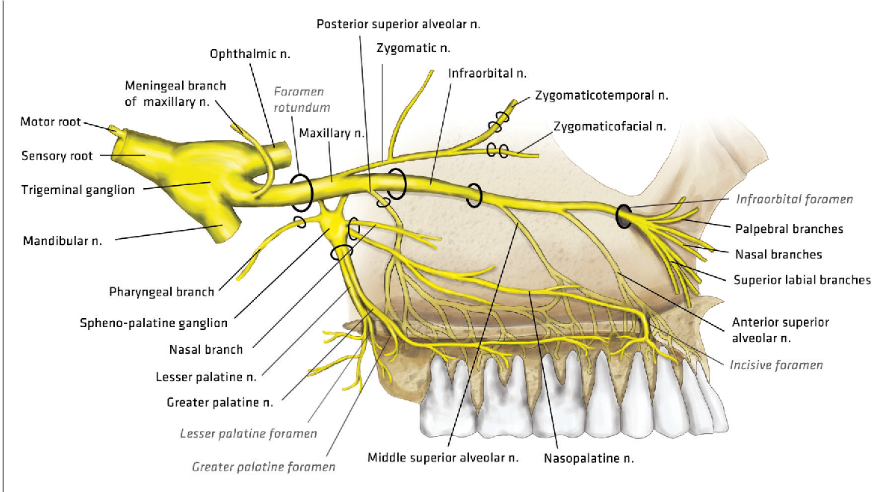
Which structures are supplied by CNV2
maxillary teeth
maxillary sinus
nasal cavity
palate
cheek, lower eyelid, upper lip
Function of the meningeal branch of CNV1
sensory innervation to the dura of the anterior cranial fossa, anterior part of the falxi cerebri and part of the tentorium cerebelli
provides pain sensation from the meninges
Describe the pathway of CNV2 from the trigeminal ganglion to entering the orbit
leaves trigeminal ganglion
travels in lateral wall of cavernous sinus
exits skull via foramen rotundum and enters pterygopalatine fossa
enters the orbit via the inferior orbital fissure
What are the branches coming directly off of CNV2
-meningeal branch
-infraorbital branch
-posterior superior alveolar nerve
Once CNV2 passes through the inferior orbital fissure, what does it become
the infraorbital nerve
Describe the pathway of the infraorbital nerve
passes through the infraorbital groove then travels anteriorly infraorbital canal
exits the face via the infraorbital foramen
What are the 3 terminal branches of the infraorbital nerve
-inferior palpebral
-external nasal
-superior labial
Which other branches are given off by the infraorbital nerve and where are these branches given off
middle superior alveolar nerve
anterior superior alveolar nerve
given off in the infraorbital canal
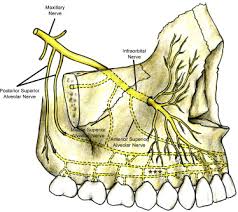
Function of the middle and anterior superior alveolar nerve
innervates the maxillary teeth
middle superior alveolar also innervates the maxillary sinus
Which branch of CNV2 is given off before it exits the skull via the foramen rotundum
the meningeal branch
Function of the meningeal branch of CNV2
provides sensation to the dura mater of the middle cranial fossa
Where does the zygomatic nerve branch off and describe its pathway
branches off CNV2 in the pterygopalatine fossa, enters orbit via the inferior orbital fissure, runs along lateral orbital wall
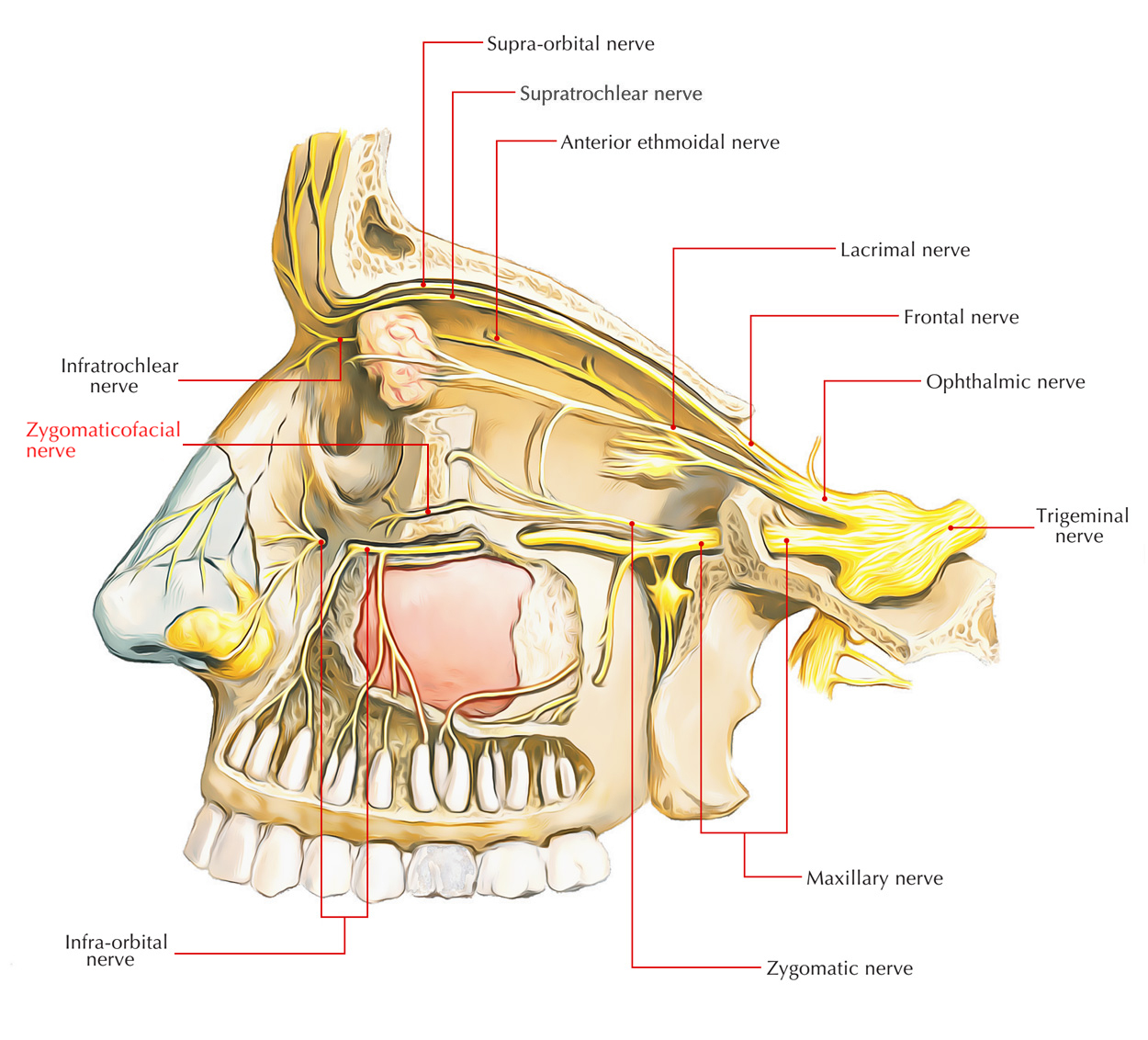
What are the 2 terminal branches of the zygomatic nerve
zygomaticotemporal nerve
zygomaticofacial nerve
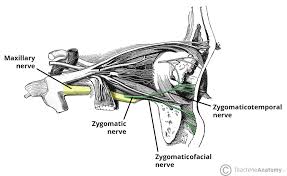
Functino of the zygomaticotemporal nerve
sensory innervation to the skin of the temple region
Function of the zygomaticofacial nerve
sensory innervation to the skin over the cheek
Which other branch is given off by the zygomatic nerve
communicating branch to the lacrimal nerve
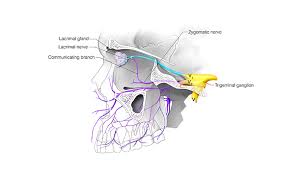
Function of the communicating branch
Allows fibres from the greater petrosal nerve of CNVII (after synapsing in the ptg ganglion) to hitchike onto CNV2 and join the lacrimal nerve to then supply the lacrimal gland
Function of the posterior superior alveolar nerve
innervates maxillary sinus
innervates the molar teeth and their adjacent buccal gingivae
Where does the posterior superior alveolar nerve branch
branches directly off of CNV2 at the pterygopalatine fossa
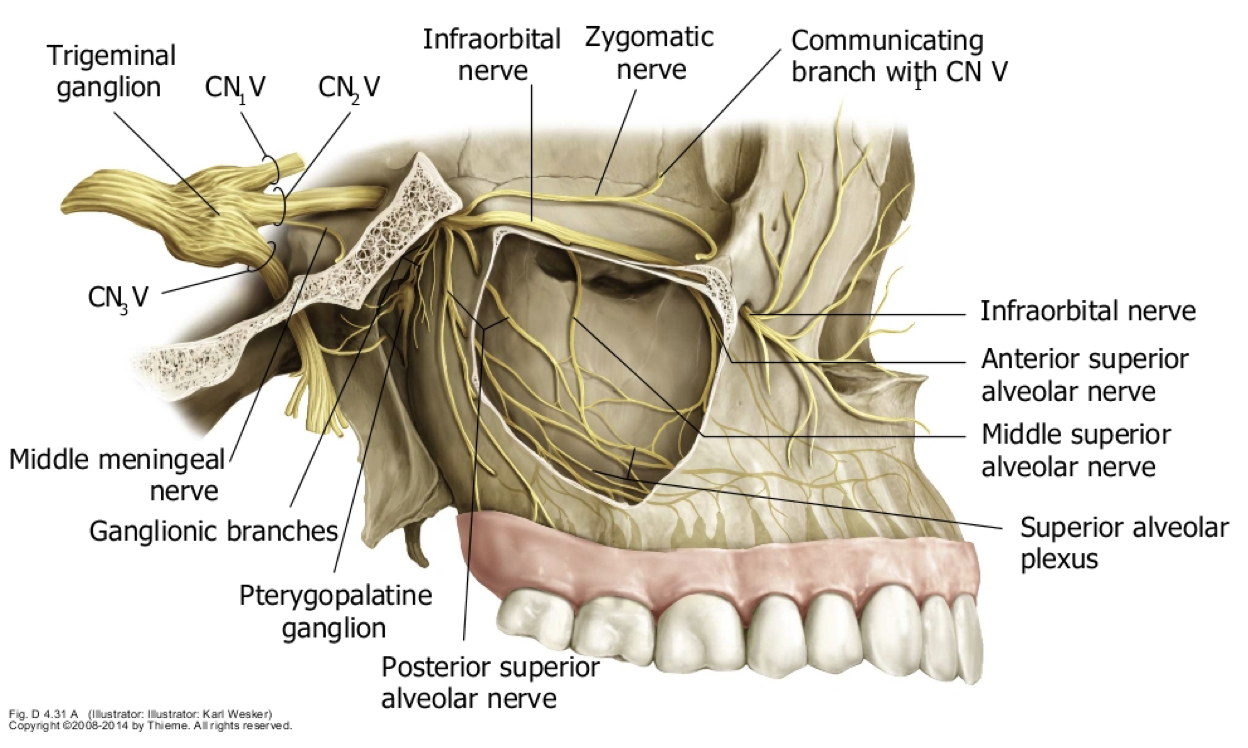
Pathway of the posterior superior alveolar nerve
exits ptg fossa through the pterygomaxillary fissure
enters the infratemporal fossa
travels laterally and inferiorly to enter the posterior surface of the maxilla
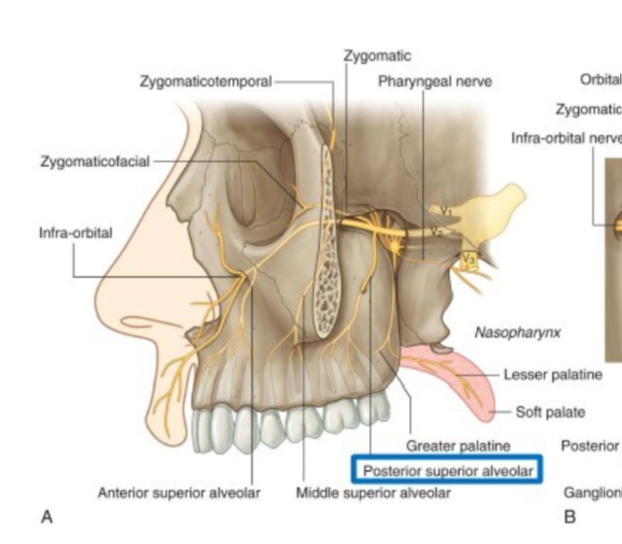
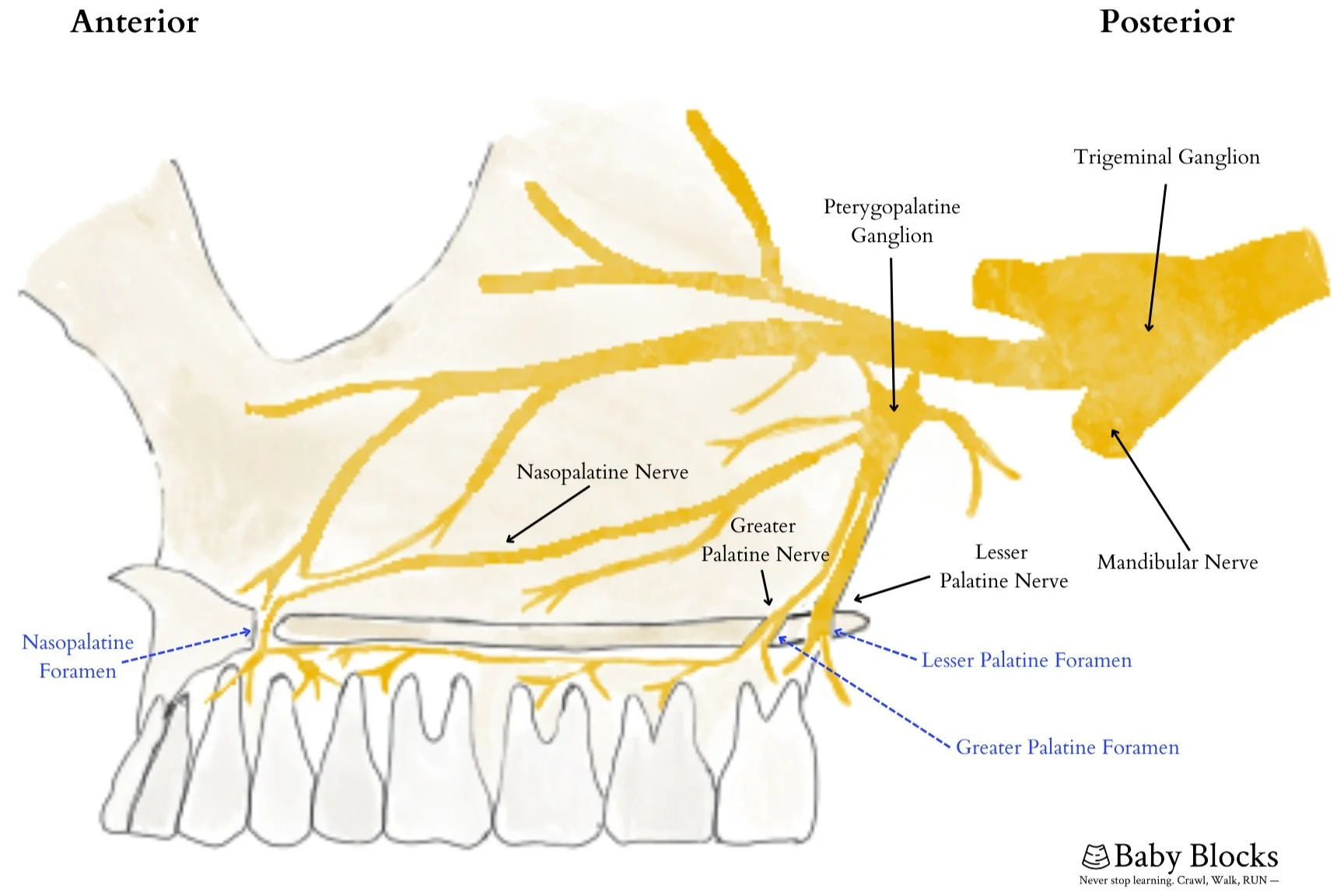
Function of the nasopalatine nerve
innervates the medial wall of the nasal cavity
innervates the mucosa, gingiva and glands near to the incisors
Where does the nasopalatine nerve branch off
Branches of CNV2 when it passes through the pterygopalatne ganglion
Pathway of the nasopalatine nerve
enters the nasal cavity via the sphenopalatine foramen
descends to the roof of the mouth through the incisive canal
exits into the oral cavity via the incisive foramen
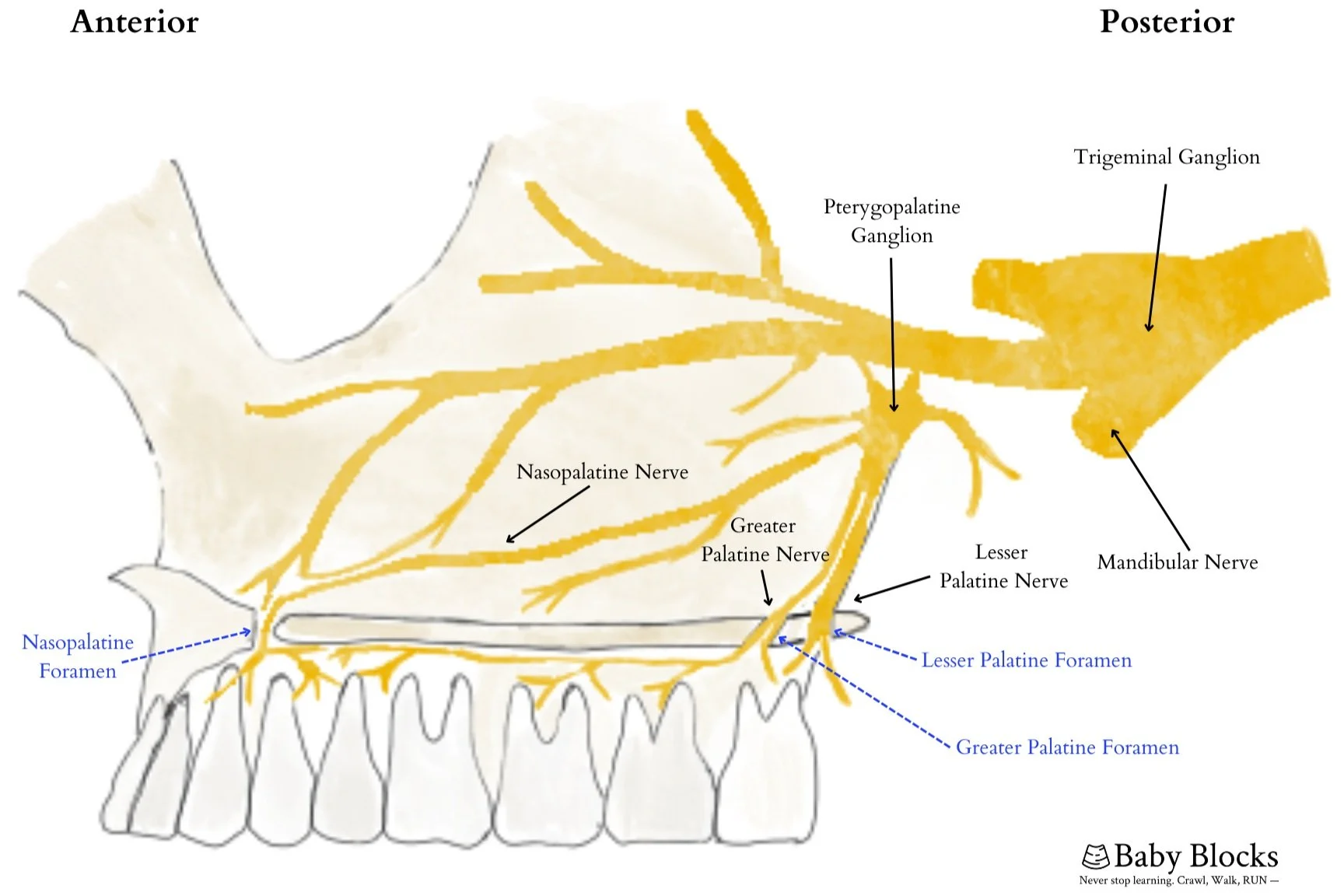
Function of the greater palatine nerve
hard palate and palatal gingiva of upper teeth
Where does the greater palatine nerve branch and describe its pathway
Branches off CNV2 as it passes through the ptg ganglion
runs inferiorly from the ptg ganglion
goes through the greater palatine canal
exits onto the hard palate via the greater palatine foramen
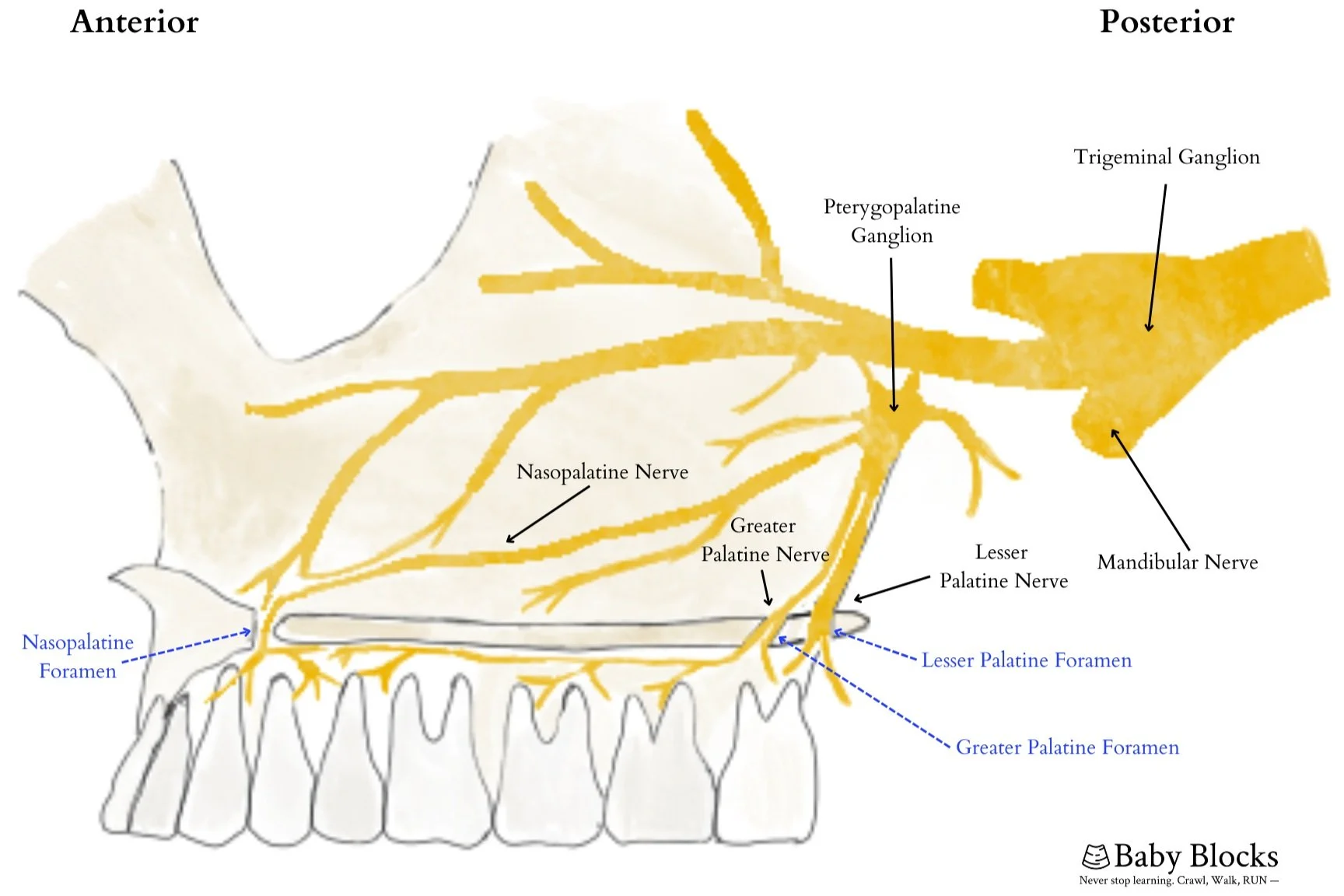
Function of the lesser palatine nerve
sensory innervation to the soft palate, uvula
Where does the lesser palatine nerve branch off and describe its pathway
Branches off of CNV2 as it passes through the ptg ganglion
runs inferiorly from the ptg ganglion
descends through the greater palatine canal
emerges from the lesser palatine foramen
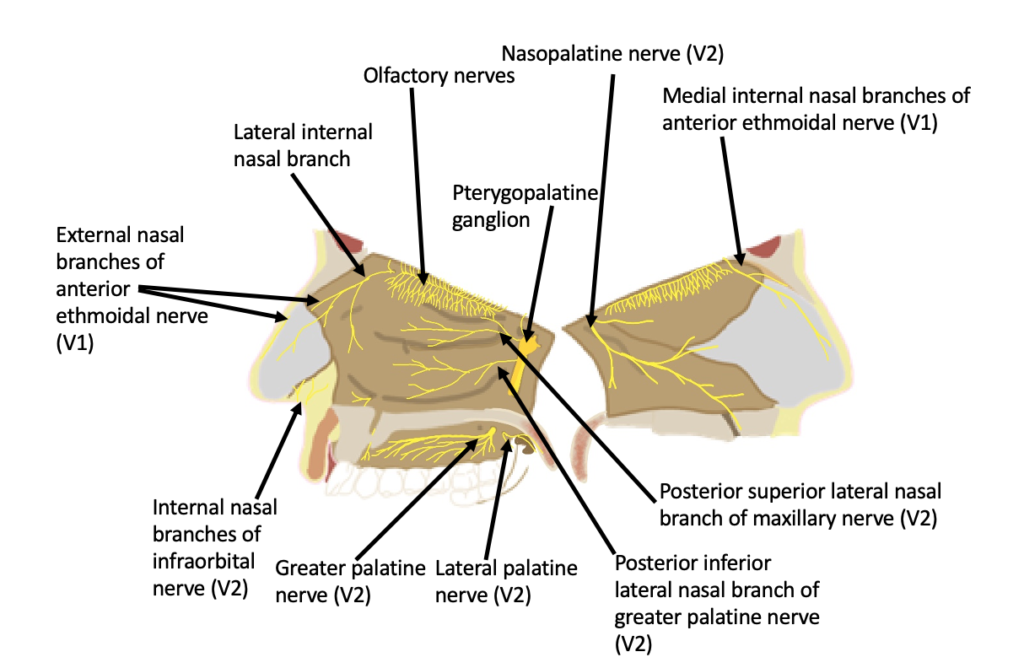
Function of the posterior superior lateral nasal nerve
supplies upper lateral wall of the nasal cavity (superior and middle concha region)
Where does the posterior superior lateral nasal nerve branch off of and describe it pathway
branches off of CNV2 where it passes through the pterygopalatine ganglion
passes through the sphenopalatine foramen to reach the lateral wall of the nasal cavity
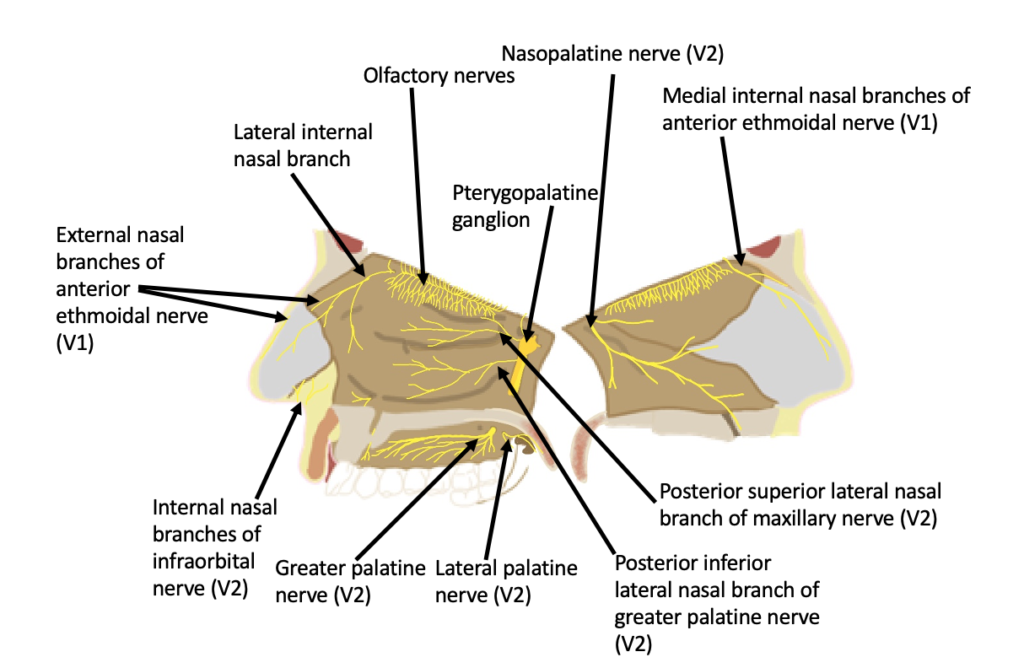
Function of the posterior inferior lateral nasal nerve
supplies the lower lateral wall of the nasal cavity (inferior meatus region)
Where does the posterior inferior lateral nasal nerve branch off of
branches off of the greater palatine nerve within the greater palatine canal
passes through a foramen in the palatine bone to reach the lateral wall of the nasal cavity
Function of the pharyngeal branch of CNV2
provides sensory innervation to the mucosa of the superior nasopharynx
Where does the pharyngeal branch branch off
Branches off of CNV2 from the posterior part of the ptg ganglion
What is the nerve of the pterygoid canal
formed by the junction of the greater petrosal nerve and deep petrosal nerve within the pterygoid canal which then joins the posterior part of the ptg ganglion
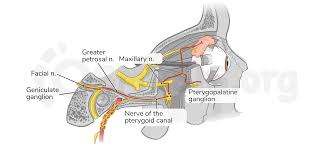
Which type of fibres make up the nerve of the pterygoid canal
greater petrosal nerve- preganglionic parasympathetic fibres from CNVII which synapse in the ptg ganglino
deep petrosal nerve- preganglionic sympathetic fibres from the internal carotid plexus that don’t synapse in the ptg ganglion
Explain how the postganglionic parasympathetic fibres form the greater petrosal nerve are distributed (after synapsing)
Distributed to nasal and palatal glands via the greater and lesser palatine nerve and the nasopalatine nerve
Distributed to the lacrimal gland by joining the zygomatic nerve and joining the communicating branch to the lacrimal nerve
After passing throught the foramen ovale, what does CNV3 divide into
divides into a posterior and anterior division
Branches of the anterior division of CNV3
deep temporal nerves
buccal nerve
nerve to lateral pterygoid (supplies lateral pterygoid)
masseteric nerve (supplies masseter)
Function of the deep temporal enrves
innervate the temporalis muscle
Function of the buccal nerve
purely sensory- innerates the skin over the cheek, buccal mucosa
Which nerves branch off of the main trunk of CNV3
nervus spinosus
nerve to medial pterygoid
Function of the nervus spinosus
sensory innervation to posterior half of dura mater in the middle cranial fossa
How does the nervus spinosus reenter the cranial cavity
via the foramen spinosum (along with the middle meningeal artery)
Function of the nerve to medial pterygoid
motor innervation to the medial pterygoid, tensor tympani and tensor veli palatini
Branches of the posterior division of CNV3
lingual nerve (general sensation to anterior 2/3 of the tongue)
inferior alveolar nerve
auriculotemporal nerve
Pathway of inferior alveolar nerve
gives off nerve to mylohyoid muscle before entering mandibular canal
enters mandible via mandibular foramen
travels through mandibular canal
divides into 2 branches incisive nerve and mental nerve which exits at the mental foramen
Function of mental nerve
sensory innervation to skin of chin and lower lip
Function of incisive nerve
sensory innervation to anterior teeth
Function of nerve to mylohyoid
motor innervation to mylohyoid and anterior belly of the digastric muscle
Branches of the auriculotemporal nerve
auricular branches
articular branches
superficial temporal branches
Function of the auricular branches
general sensation to parts of the external ear
function fo the sueprficial temporal branches
sensory innervation to skin of the temple region
Function of the articular branches
sensory innervation to the TMJ
Relevance of the lesser petrosal nerve to CNV3
preganglionic parasympathetic fibres of the lesser petrosal nerve travel to the otic ganglion where they synapse
postganglionic fibres hitchike onto the auriculotemporal nerve to reacht he parotid gland
Relevance of the chorda tympani to CNV3
chorda tympani hitchikes onto the lingual nerve to reach the submandibular ganglion where it synapses
postaganglionic fibres supply the submandibular and sublingual glands
What is inferior alveola nerve block
numb the inferior alveolar nerve by injecting near where it enters the mandibular foramen