Neuro random/general
 Call Kai
 Learn
Learn Practice Test
 Spaced Repetition
 Match
Match Flashcards
 Knowt Play
1/38

There's no tags or description
Looks like no tags are added yet.
Name | Mastery | Learn | Test | Matching | Spaced | Call with Kai |
|---|
No analytics yet
Send a link to your students to track their progress
39 Terms
Structures that protect the central nervous system
meninges, cerebrospinal fluid, skull, and vertebral column
What is gray matter
unmyelinated neurons - contains capillaries, glial cells, cell bodies, and dendrites
What is white matter
myelinated axons - contains nerve fibers without dendrites
three funiculi of white matter of spina cord
anterior, lateral, and dorsal columns
How many pairs of cranial nerves are there
12
How many pairs of spinal nerves are there
31
What protects PNS nerves
spinal sheaths, though relatively unprotected
Which root/fibers carry motor information away from the CNS?
anterior root/efferent fibers
which root/fibers carry sensory information to CNS
posterior, afferent
what is a ganglia
clusters or swellings of cells that give rise to peripheral and central nerve fibers (act as relay stations)
sympathetic division neurotransmitter
norepinephrine
parasympathetic division neurotransmitter
acetylcholine
interhemispheric fissure (medial longitudinal) separates what?
the two cerebral hemispheres
sylvian fissure (lateral) seperates?
anterior portion- temporal ad frontal
posterior portion- temporal and parietal
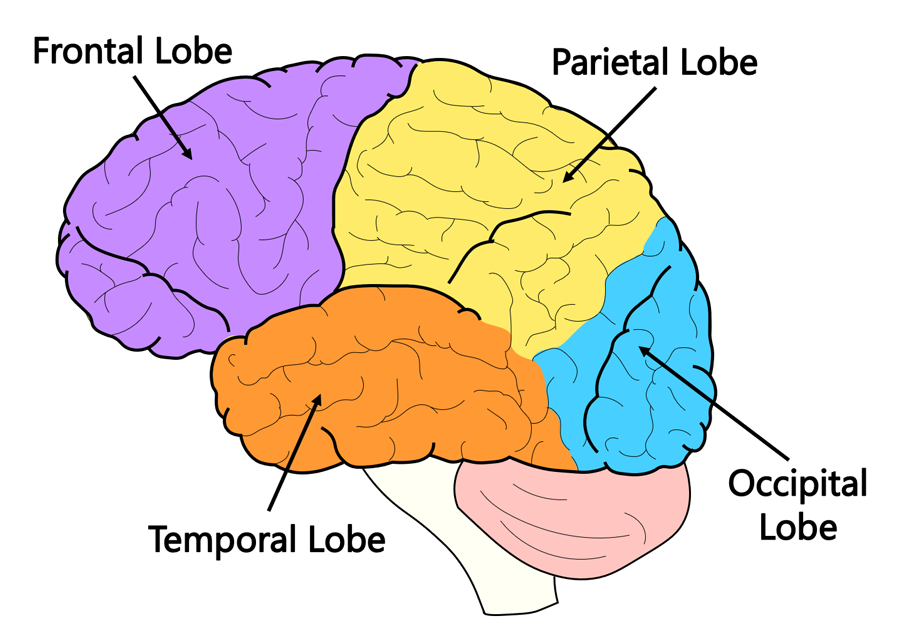
central sulcus separates
frontal and parietal lobes laterally
parieto-occipital sulcus separates
parietal and occipital lobes medially
calcarine sulcus separates
occipital into superior and inferior halves
Left hemisphere characteristics
language, sequence and perform movements, understand language, produce written and spoken language, analytical, controlled, logical, rational, mathematical calculations, express positive emotions, process verbally coded info in organized, logical, and sequential manner
Right hemisphere characteristics
nonverbal processing, process info in holistic manner, artistic abilities, general concept comprehension, hand-eye coordination, spatial relationships, kinesthetic awareness, understand music, understand nonverbal communication, mathematical reasoning, express negative emotions, body image awareness
mononeuropathy
isolated nerve lesion, associated conditions include trauma and entrapment
neuroma
abnormal growth of nerve cells, associated conditions include vasculitis, AIDS, and amyloidosis
peripheral neuropathy
impairment or dysfunction of peripheral nerves, associated conditions include diabetic peripheral neuropathy, trauma, alcoholism
polyneuropathy
diffuse nerve dysfunction that is symmetrical and typically secondary to pathology and not trauma, associated conditions include guillain-barre, peripheral neuropathy, use of neurotoxic drugs, and HIV
neurapraxia
mildest form of acute nerve injury, usually due to myelin dysfunction
axonotmesis
more severe acute peripheral nerve injury, damage occurs to axons with preservation of endoneurium, epineuriam, schwann cells, and supporting structures
neurotmesis
most severe grade injury to peripheral nerve, axon, myelin, connective tissue components all damaged or transected, irreversible.
characteristics of anterior horn cell pathology
sensory component in tact
motor weakness and atrophy
fasciculations
decreased deep tendon reflexes
muscle pathology characteristics
sensory component intact
motor weakness
normal or decreased deep tendon relfexes
neuromuscular junction pathology characteristics
sensory component in tact
motor fatigue greater than weakness
normal deep tendon reflexes
peripheral nerve pathology (mononeuropathy) characteristics
sensory loss along nerve route
motor weakness and atrophy in peripheral distribution
peripheral polyneuropathy pathology characteristics
sensory impairments
motor weakness/atrophy, weaker distally than proximally
decreased deep tendon reflexes
spinal roots and nerves pathology characteristics
sensory component will have corresponding dermatomal deficits
motor weakness in an innervated pattern, may have fasciculations
decreased deep tendon reflexes
Where is upper motor neuron lesion found
descending motor tracts within the cerebral motor cortex, internal capsule, brainstem or spinal cord W
Where is lower motor neuron lesion located
at or below the level of the branstem
athetosis
slow, twisting, writhing movements
chorea
brief, irregular contractions that are rapid
-typically secondary to damage of the caudate nucleus
dystonia
sustained muscle contractions frequently causing twisting, abnormal postures, and repetitive movements
tremors
involuntary, rhythmic, oscillatory movements that are typically classified into: resting, postural, or intention