6 Microbial Metabolism: Fueling Cell Growth
 Call Kai
 Learn
Learn Practice Test
 Spaced Repetition
 Match
Match Flashcards
 Knowt Play
1/13

There's no tags or description
Looks like no tags are added yet.
Name | Mastery | Learn | Test | Matching | Spaced | Call with Kai |
|---|
No analytics yet
Send a link to your students to track their progress
14 Terms
energy
capacity to cause change (do work)
metabolism
All the chemical reactions that occur inside an organism
Enables cells to accomplish two fundamental tasks:
harvest chemical energy from organic molecules to regenerate ATP to power reactions
biosynthesis: synthesize new parts; to make larger molecules from smaller components
eg. cell walls, membranes, ribosomes, nucleic acids in cell division
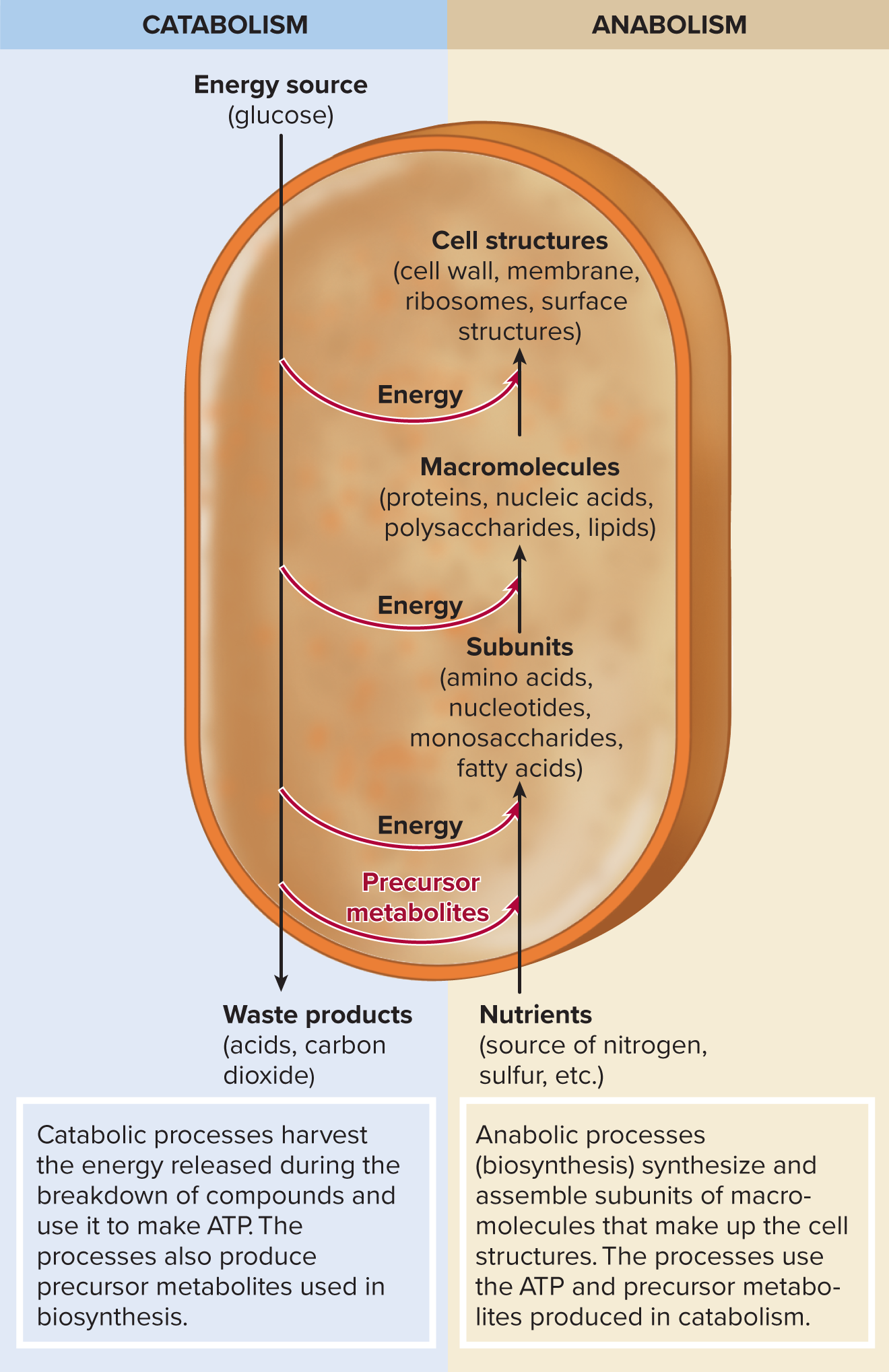
catabolism
½ component of metabolism
Degradative reactions that break larger molecules into smaller components
breaks bonds → releases energy
released energy is captured in order to make ATP
exergonic reaction: reaction that releases energy
anabolism
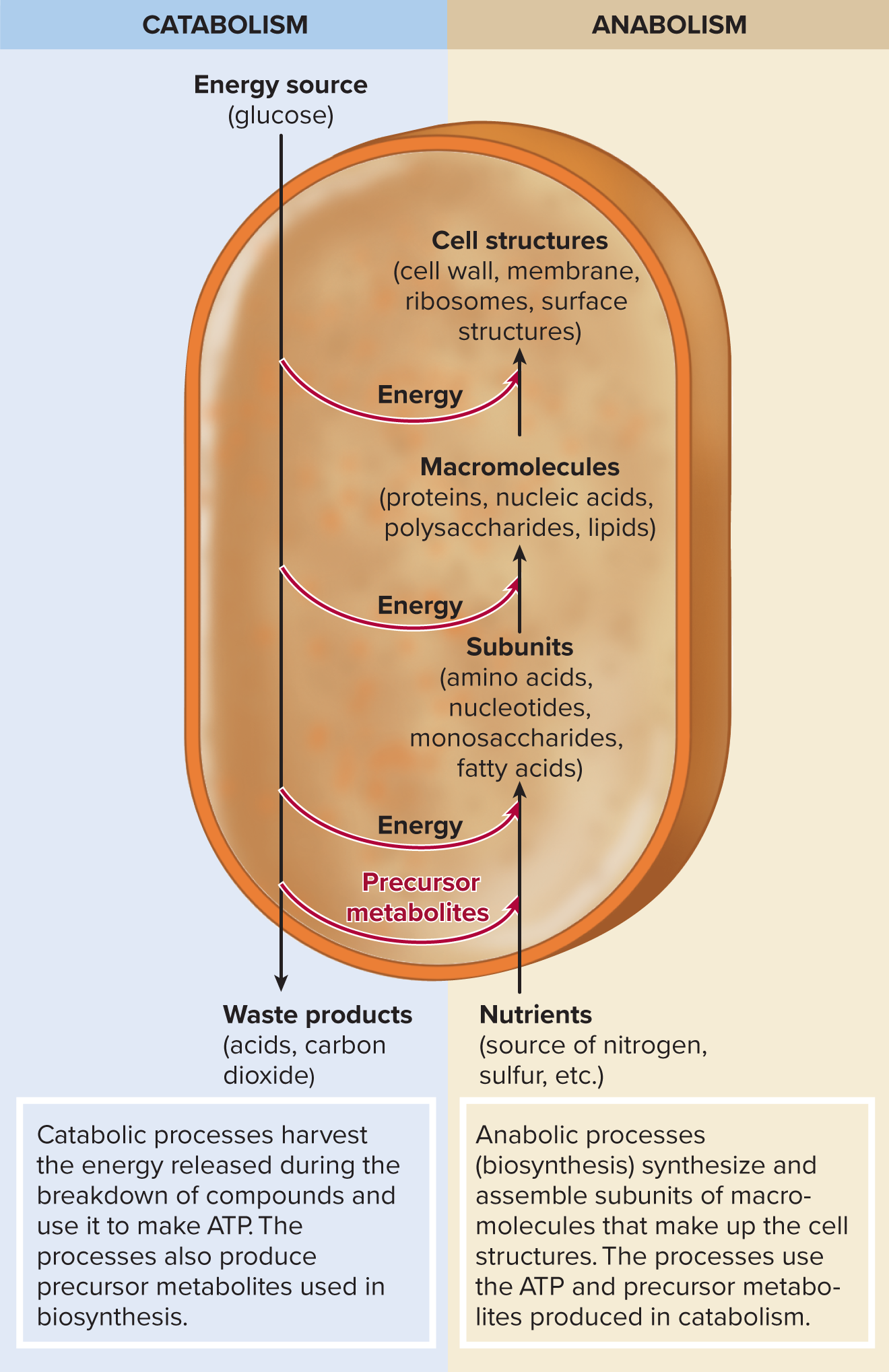
2/2 component of metabolism
building large molecules by bonding simpler ones together
creation of bonds = input of energy
endergonic reaction: reaction that uses energy
Metabolic pathway
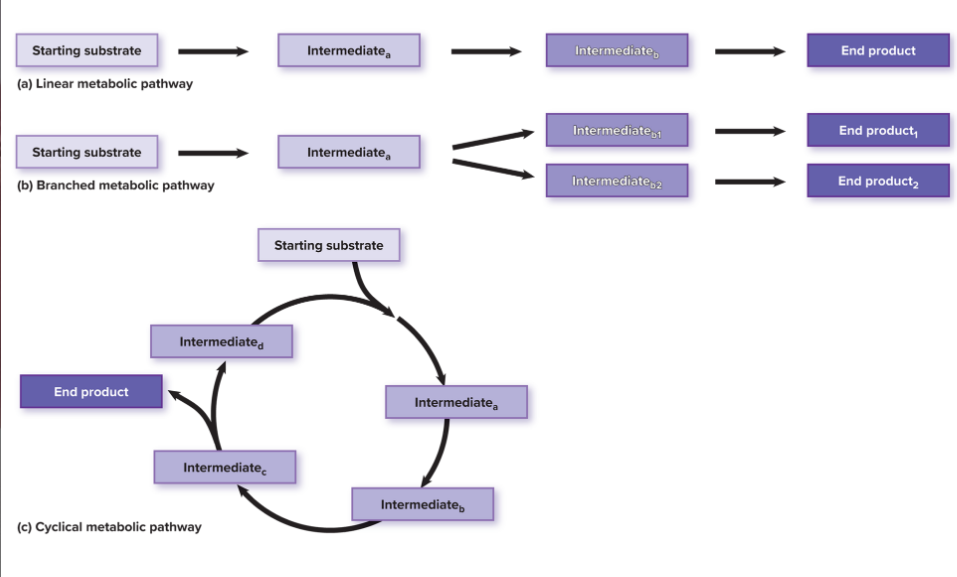
A sequence of chemical reactions that converts a starting molecule to an end-product
each reaction is carried out by a specific enzyme
a [___] may be:
linear → one product
branched → feed into different pathways/different products
cyclic → cycles between end product and starting product
enzyme
¼ components of Metabolic pathways
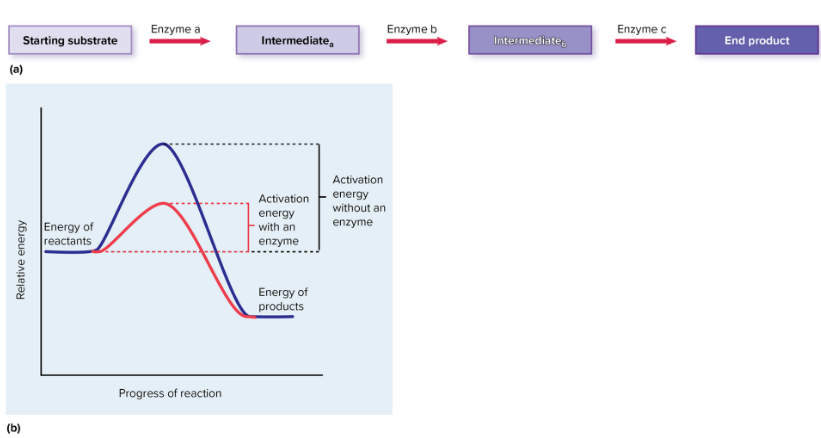
Function as biological catalyst: item that speeds up chemical reactions without being consumed by the reaction
reactions without [__] would occur very slowly
speeds up activation energy: energy needed to start a reaction
specific
Enzymes are highly [___] for their substrate: reactant they are catalyzing
active site: substrate binding site
only the substrate will be able to fit into that site
ATP
2/4 components of Metabolic pathways
Adenosine triphosphate. The universal energy carrying molecule
Nucleotide with an adenine sugar and three phosphates attached to it
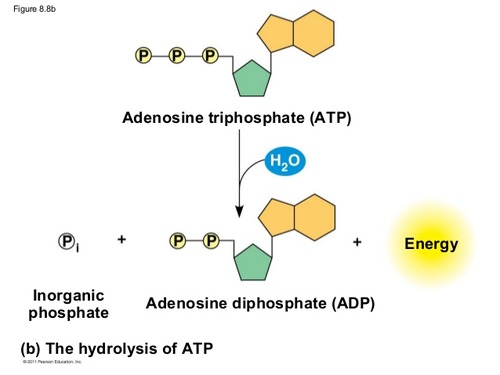
attached by high energy bonds → catalysis of terminal phosphate bond creates large bouts of energy
this energy is used to fuel endergonic reactions →
→ such as anabolism in the addition of phosphate to adenosine diphosphate (ADP)
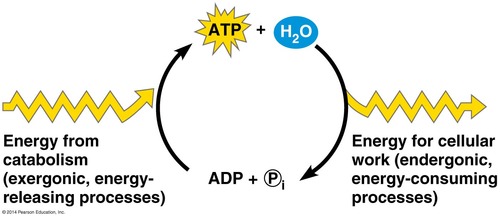
glucose
Most common organic molecule broken down in metabolic pathways
Oxidizes (loses its electrons) to carbon, which is reduced (gains the electrons)
aerobic respiration
Water is produced from oxygen through a process known as [__]
electron
¾ components of Metabolic pathways
Chemical energy source that is released is found in the [__](s)
compound is broken down to release energy → releases e-
transfer of e- during chemical reactions releases the energy stored in organic molecules
released energy is used to synthesize ATP
oxidation
Loss of electrons
reduction
Gaining of electrons
electron carriers
4/4 components of Metabolic pathways
Picks up both electrons and protons
NAD+ «» NADH
FAD «» FADH2
NADP+ «» NADPH