RPD past quizzes and stuff for final
 Call Kai
 Learn
Learn Practice Test
 Spaced Repetition
 Match
Match Flashcards
 Knowt Play
1/80

There's no tags or description
Looks like no tags are added yet.
Name | Mastery | Learn | Test | Matching | Spaced | Call with Kai |
|---|
No analytics yet
Send a link to your students to track their progress
81 Terms
In our lecture A to Z and everything in between, which of the following are needed for phase II final rpd design app?
-the patient in the chair
-patient current diagnostic models accurately mounted on articulator
-current diagnostic model or arch with path of insertion and tripoded
-current diagnostic models surveyed and designed
-copy of tentative rpd design used for phase I
-the patient in the chair
-patient current diagnostic models accurately mounted on articulator
-current diagnostic model or arch with path of insertion and tripoded
-copy of tentative rpd design used for phase I
NO SURVERY
In our lecture A to Z and everything in between, which of the following are needed for phase I final tentative design app?
-the patient in the chair
-patient current diagnostic models accurately mounted on articulator
-current diagnostic model or arch with path of insertion and tripoded
-current diagnostic models surveyed and designed
-the patient in the chair
-patient current diagnostic models accurately mounted on articulator
-current diagnostic model or arch with path of insertion and tripoded
NO survey
In our lecture A-Z and everything in between it was instructed that capturing and anterior reference point is a key part of accurate mounting models on a semi articulator. An initial ARP should be established when placing the heated inter occlusal records in the patient's mouth.
Both are correct
Both are incorrect
The first statement is correct, and the second is incorrect
The first statement is incorrect the statement is correct
The first statement is correct, and the second is incorrect
In our lecture A-to-Z and everything in between you were instructed as part of the comprehensive examination that you should classify and diagnose in which of the following areas on a partially edentulous patient
-Restorative complexity and potential referral (PDI)
-medical complexity, and potential referral ASA
-carries risk assessment and carries management plan
-. Risk assessment and periodontal management plan
-all the above
all of the above
The PDI classification system is designed to indicate increasing levels of diagnostic and treatment complexity, presented by patients of varying degrees of partial edentulism. According to the PDI classification a class IV patient is the most simple in your office.
Both are correct
Both are incorrect
The first statement is correct, and the second is incorrect
The first statement is incorrect the statement is correct
The first statement is correct, and the second is incorrect
what class is this in PDI
IV
The PDI classification system uses four broad categories relevant classification which of the following represent these four categories
-Location and extent of the area
-condition of abutments
-occlusion
-residual Ridge characteristics
-carries assessment
-periodontal diagnosis
-Location and extent of the area
-condition of abutments
-occlusion
-residual Ridge characteristics
The PDI classification system categorizes the maxillary mandibular arches into which of the following determine appropriate assignment
-arches
-quadrants
-sextant
-sextant
After finishing your PDI classification on a new patient in your practice the patient was determined to be a class two and three of the categories however, one diagnostic criteria was class three therefore those patient should be classified as class three
true or false
true
A guide plane is prepared parallel to the path of insertion. A proximal guide plane is prepared after the proximal occlusal rest seat to ensure adequate length occlusal-gingivally.
A. Both statements are correct
B. Both statements are incorrect
C. The first statement is correct, and the second statement is incorrect
D. The first statement is incorrect, and the second statement is correct
C. The first statement is correct, and the second statement is incorrect
A guide plane is prepared on the proximal surface of a tooth to passively guide an RPD along its path of insertion. A guide plate is a rigid RPD cast metal component that passively follows a prepared guide plane along its path of
insertion.
A. Both statements are correct
B. Both statements are incorrect
C. The first statement is correct, and the second statement is incorrect
D. The first statement is incorrect, and the second statement is correc
A. Both statements are correct
Cingulum shaped rests preps and cast metal rests may be made on canines and incisors with prominent cingulums.
The cingulum shaped rest preps follow the contour of the cingulum through the marginal ridges.
A. Both statements are correct
B. Both statements are incorrect
C. The first statement is correct, and the second statement is incorrect
D. The first statement is incorrect, and the second statement is correct
A. Both statements are correct
Which of the following statements are correct when considering an incisal rest prep and cast metal rest (select all that apply)?
A. contraindicated on the maxillary arch
B. contraindicated on the mandibular arch
C. its location should direct occlusal forces parallel to the long axis of the tooth.
D. its width is 1.5-2mm in the mesial-distal direction at a depth of 1.0mm
E. the cast metal rest should fill the normal contours of the incisal edge and be out of centric occlusion
A. contraindicated on the maxillary arch
C. its location should direct occlusal forces parallel to the long axis of the tooth.
D. its width is 1.5-2mm in the mesial-distal direction at a depth of 1.0mm
E. the cast metal rest should fill the normal contours of the incisal edge and be out of centric occlusion
Incisal rests preps and cast metal rests can be used in the design of a maxillary Kennedy class III, Mod 1 RPD.
They are contraindicated in the mandibular arch because the minor connector would interfere with occlusion.
A. Both statements are correct
B. Both statements are incorrect
C. The first statement is correct, and the second statement is incorrect
D. The first statement is incorrect, and the second statement is correc
B. Both statements are incorrect
Which of the following are correct considering an occlusal proximal rest seat and cast metal rest (select all that apply)?
A. located in the fossa adjacent to the edentulous space
B. The rest seat follows the outline of the occlusal fossa and is spoon shaped
C. the width is 50-66% of the distance between the facial and lingual cusp tips
D. the maximum depth is 1.5mm centrally tapering to 1.0mm at the marginal ridge
E. the facial and lingual margins flare towards the proximal line angles
ALL
In referencing the attached picture, which of the following statements are correct considering the rest seats placed
in this design (select all that apply)?
A. there are a total of four rest seats in this design
B. some rest seats function to provide the indirect retention needed in this design
C. provide sufficient space for the cast rest to fill the missing tooth structure and have adequate bulk for rigidity
D. some rests are shaped to allow rotation of the cast rests for this RPD design
A. there are a total of four rest seats in this design
B. some rest seats function to provide the indirect retention needed in this design
C. provide sufficient space for the cast rest to fill the missing tooth structure and have adequate bulk for rigidity
D. some rests are shaped to allow rotation of the cast rests for this RPD design
ALL
A rest seat is placed within the tooth structure to allow seating of a cast metal rest. In its fully seated position, it helps provide positive vertical support for the entire RPD preventing impingement on the underlying gingival tissue.
A. Both statements are correct
B. Both statements are incorrect
C. The first statement is correct, and the second statement is incorrect
D. The first statement is incorrect, and the second statement is correct
A. Both statements are correct
Which of the following is the predominant metal element used for metal framework partial dentures fabrication?
A. Cobalt (Co)
B. Chromium (Cr)
C. Molybdenum (Mo)
D. Iron (Fe)
A. Cobalt (Co)
Heat-curing denture base acrylic is a common activation for polymerization. What inhibitor is used to control and terminate free radical addition polymerization?
A. Benzoyl Peroxide
B. Hydroquinone
C. Methyl Methacrylate
D. Ethylene Glycol Dimethacrylate
B. Hydroquinone
Acrylic denture base materials come in a powder-liquid form using separate containers. The polymer is in liquid form and the monomer is in powder form.
A. Both statements are true
B. Both statements are false
C. The first statement is true, and the second statement is false
D. The first statement is false, and the second statement is true
C. The first statement is true, and the second statement is false
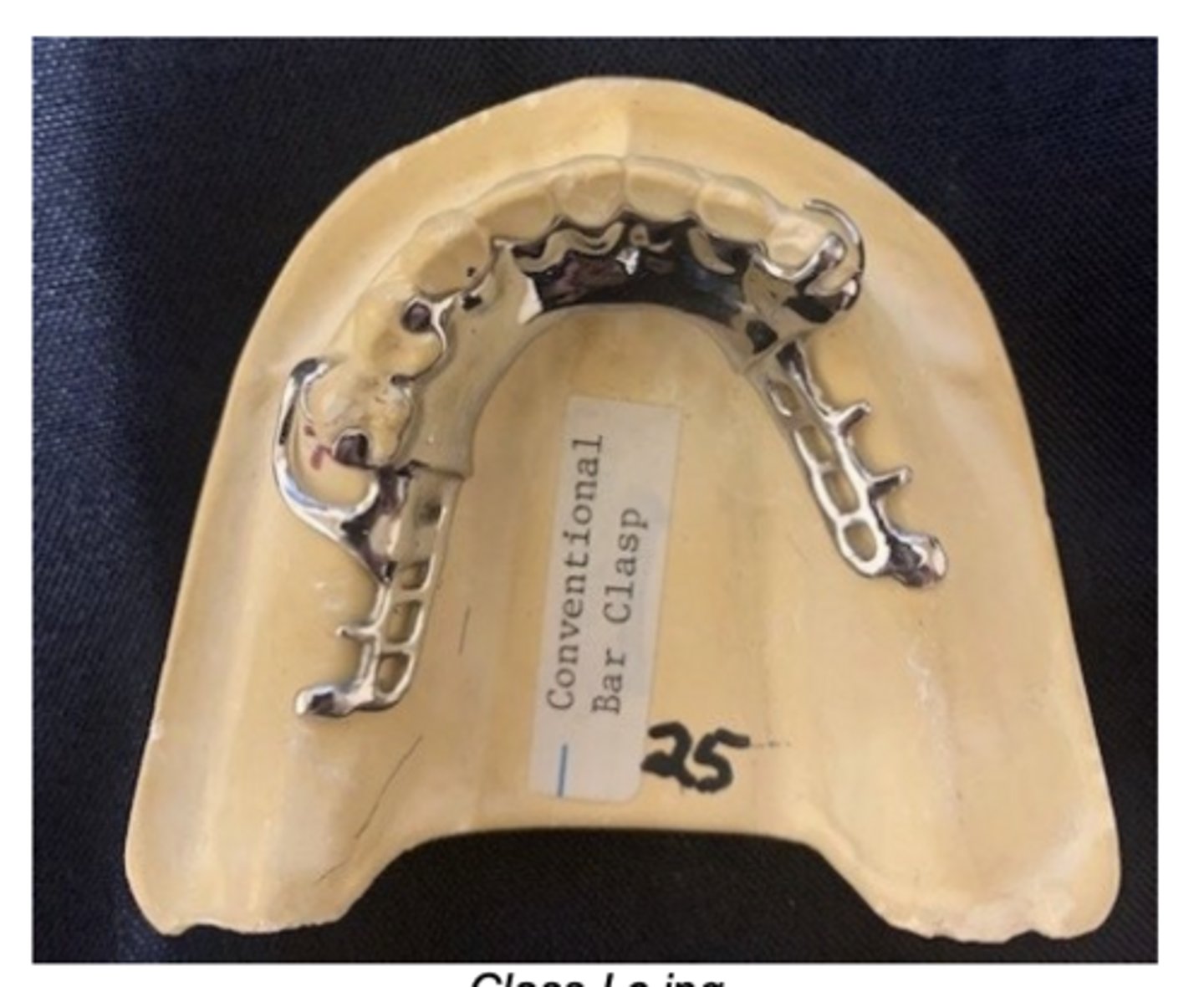
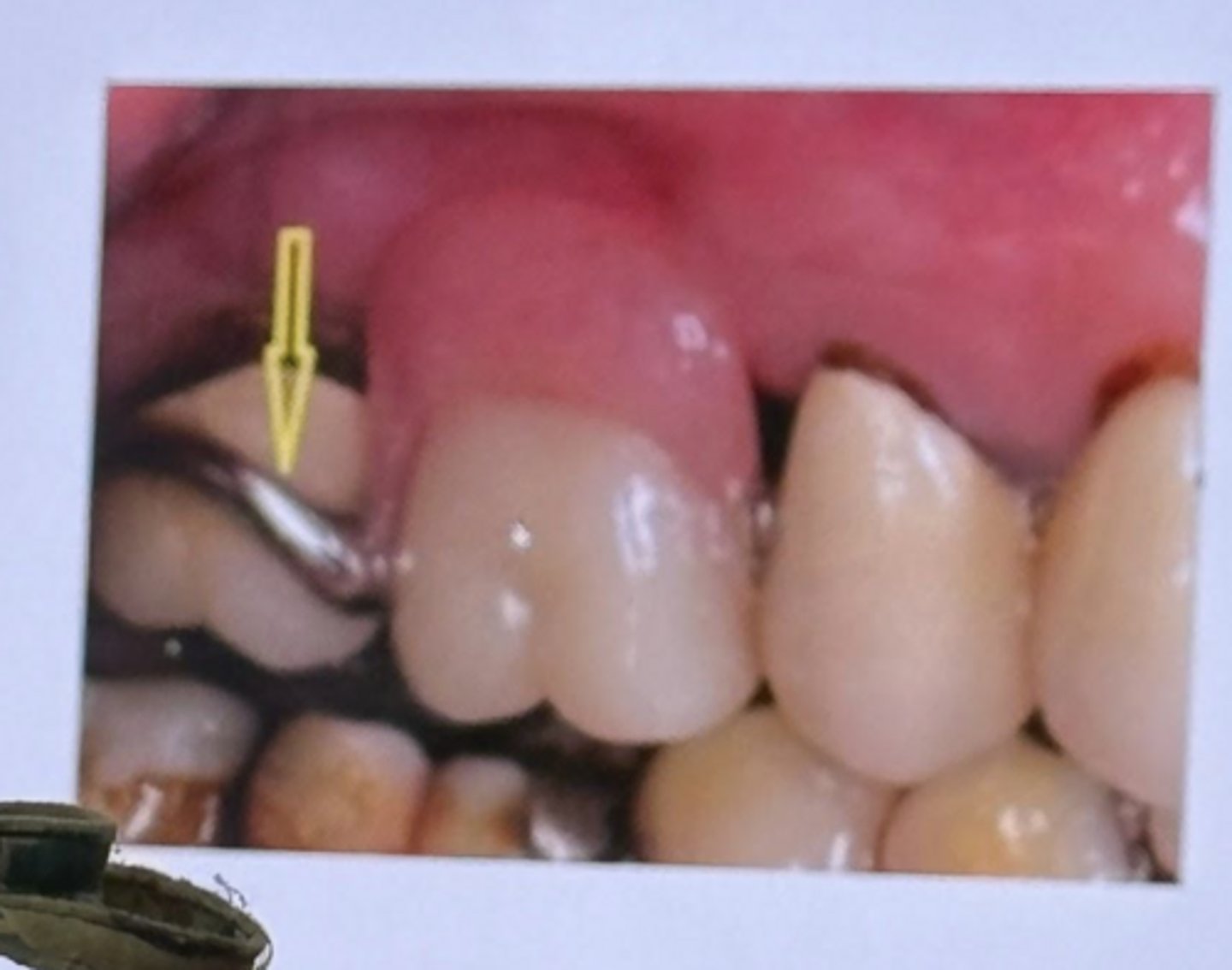
In referencing the attached picture, which of the statements are correct?
A. This is a Kennedy class II metal framework
B. An RPI clasp assembly was used for retention on tooth #20
C. There are two processing stops on this RPD design
D. The incisal rest on tooth #27 is part of the clasp assembly
E. The distal-occlusal rest on tooth #20 and the incisal rest on tooth #27 creates the axis of rotation or fulcrum for this RPD design
C. There are two processing stops on this RPD design
D. The incisal rest on tooth #27 is part of the clasp assembly
E. The distal-occlusal rest on tooth #20 and the incisal rest on tooth #27 creates the axis of rotation or fulcrum for this RPD design
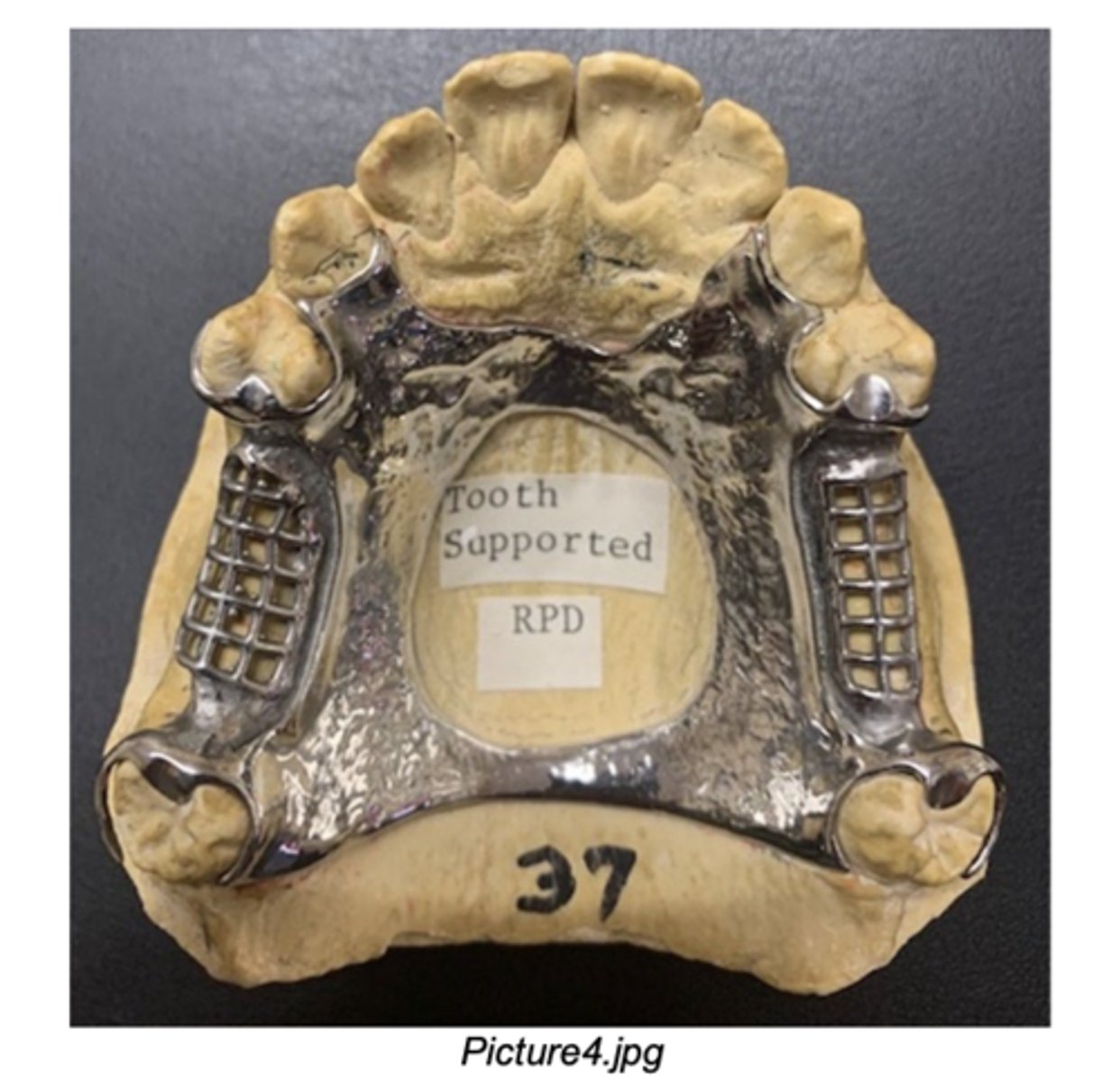
The attached picture represents a maxillary Kennedy class III, mod 1 removable partial denture (RPD) framework.
The canine rests with lingual plating are providing indirect retention to counteract the rotational forces around the
fulcrum created by this design.
A. Both statements are correct
B. Both statements are incorrect
C. The first statement is correct, and the second statement is incorrect
D. The first statement is incorrect, and the second statement is correct
C. The first statement is correct, and the second statement is incorrect
The carbon marker is used to mark the abutment teeth heights of contour once undercut areas are equalized using the analyzing rod.
The carbon marker sheath is an optional tool used only for implant abutment RPD's.
A. The first statement is true, but the second statement is false
B. The first statement is false, but the second statement is true
C. Both statements are false
D. Both statements are true
A. The first statement is true, but the second statement is false
This Ney dental surveyor tool is used to help balance cervical abutment undercut areas in the mesial-distal direction
as well as the buccal-lingual direction before marking heights of contour.
A. Analyzing rod
B. Carbon marker
C. Undercut gauge (0.03 in.)
D. Carbon marker sheath
A. Analyzing rod
After performing a new patient comprehensive exam the patient was determined to be a PDI class two for a single manipular RPD replacing teeth, 23 to 26 and 29 to 30. All other teeth are present. The patient has a that concerns with previously fabricated mandibular RPD's (three RPD) which of the following are true, considering the information provided
-This is a PDI class two case
-This is a PDI class three case
-This is a PDI class four case
-Only due to the patients aesthetic concerns alone this case goes from a PDI class 2 to 3
-Due to the patient factory status, this case has a guarded prognosis and should be a PDI class four
-This is a PDI class four case
-Only due to the patients aesthetic concerns alone this case goes from a PDI class 2 to 3
-Due to the patient factory status, this case has a guarded prognosis and should be a PDI class four
Which of the following statements are correct referencing the attached picture as shown here for tramework tryin? (select all that apply)
-This is a Kennedy Class II, Mod 2 RPD design
-There are three seperate external bnish anes
-There are thre seperate internal linnh lines
-Needs indirect retention placed in its design
-all three metal tase attachments should be resting on tie tissue
Teeth #7-10 are set here to receive an acrytic base and acrylic
-This is a Kennedy Class II, Mod 2 RPD design
-There are three seperate external bnish anes
-There are thre seperate internal linnh lines
-Needs indirect retention placed in its design
-Teeth #7-10 are set here to receive an acrytic base and acrylic
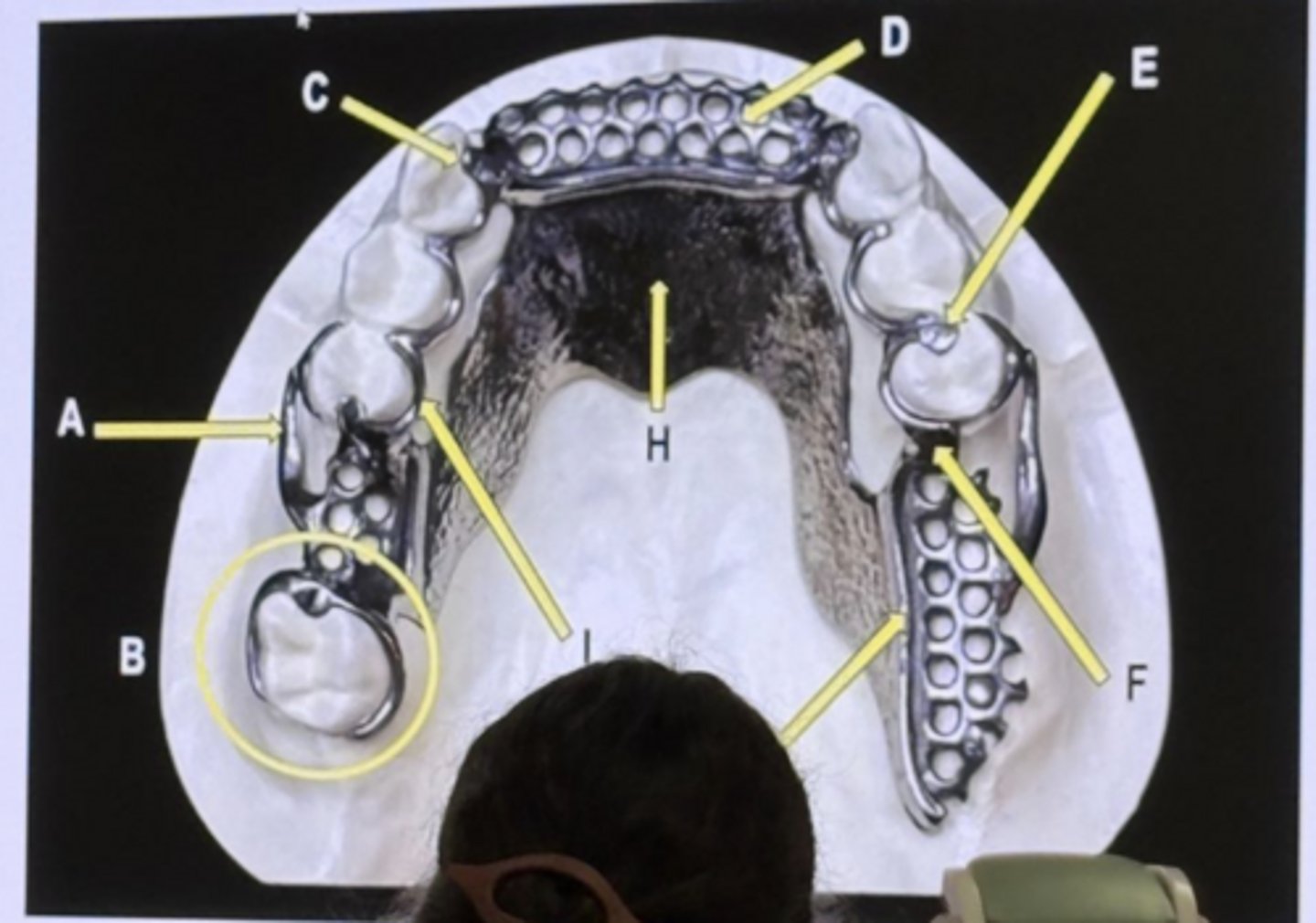
what is B
clasp assembly
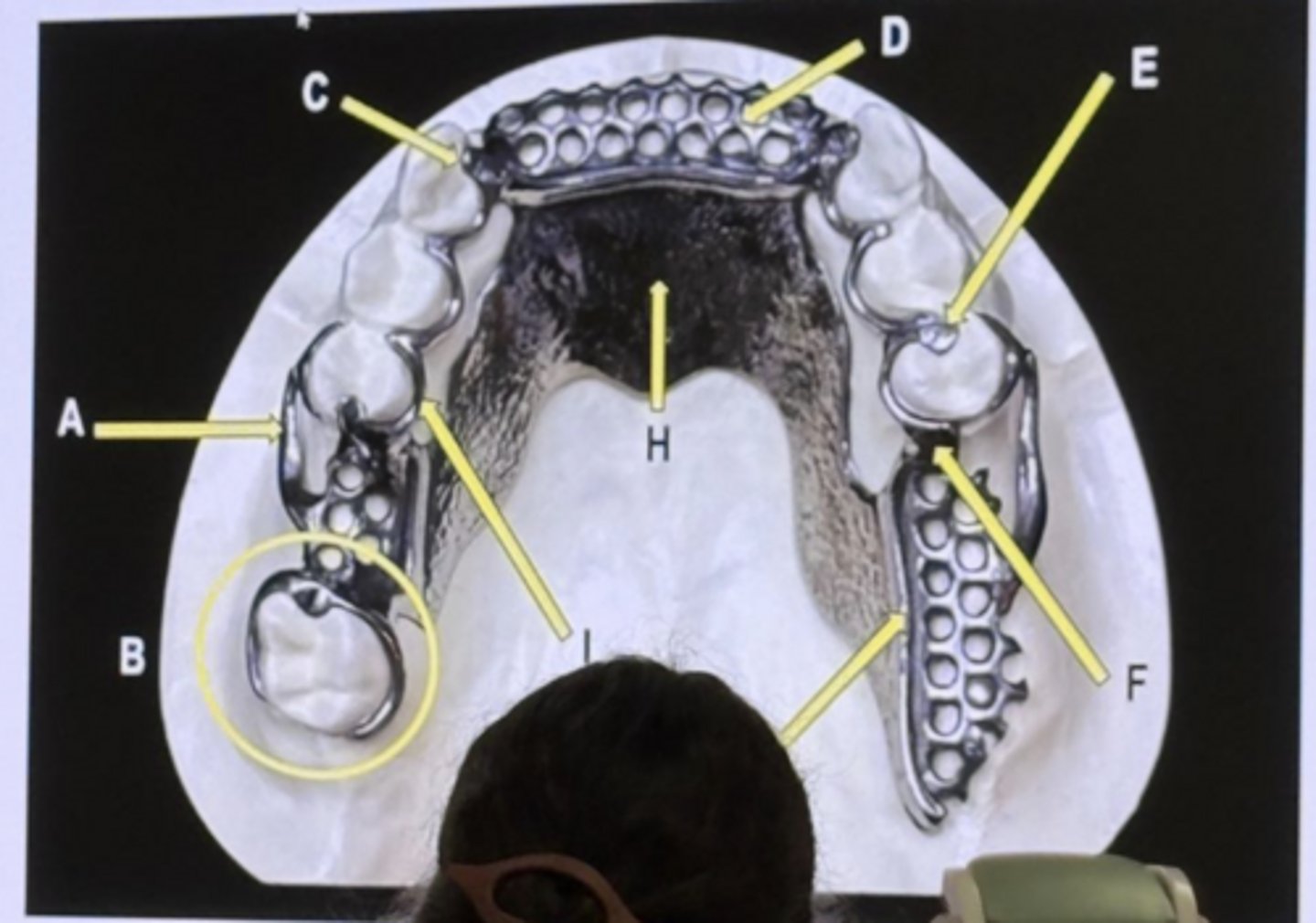
What is A
retentive arm
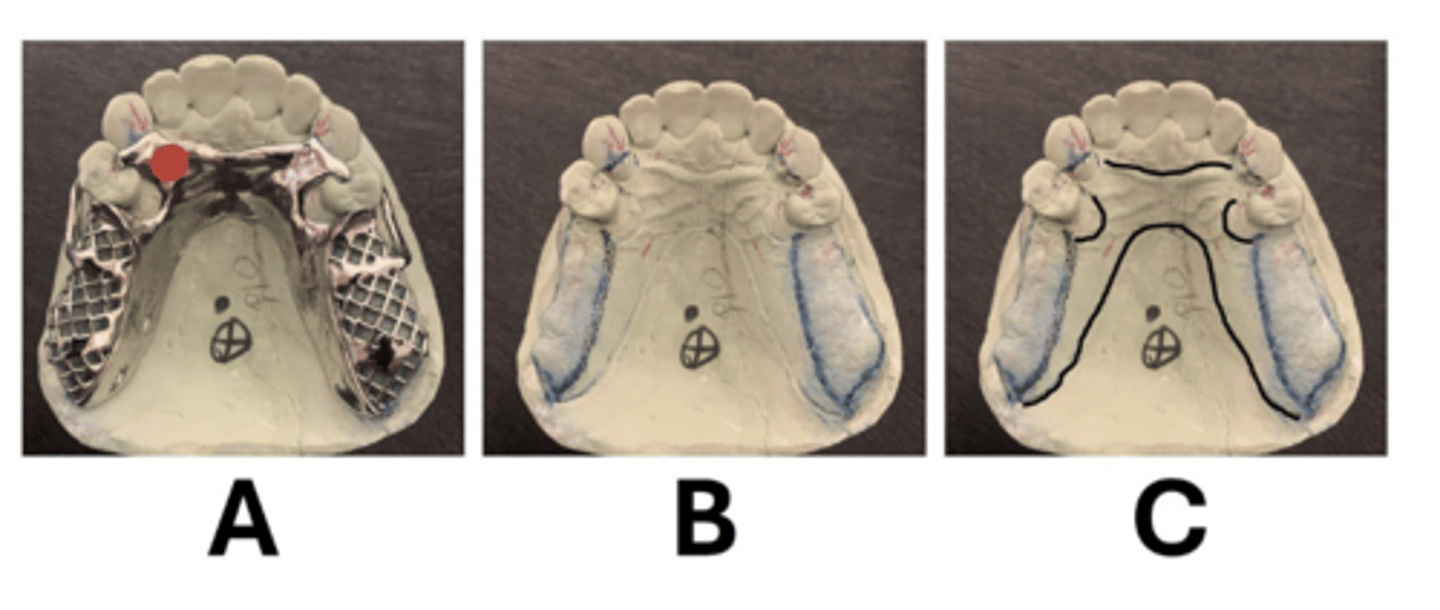
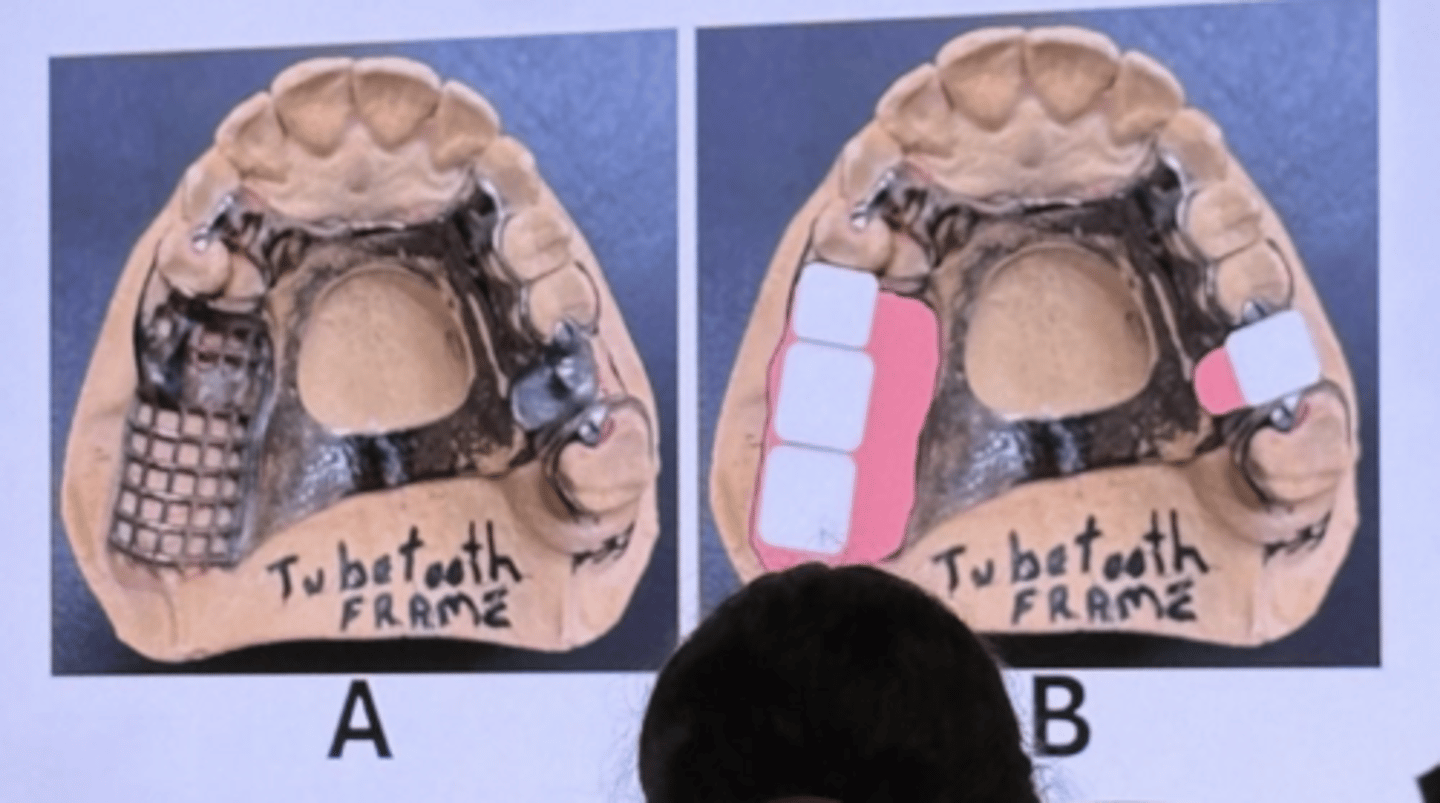
In referencing the attached picture series, picture B was for the class to visualize the external finish lines on this RPD design. The message during this instruction was that there will be two separate external finish lines and two separate internal frish lines
A. Both statements are correct
B. Both statements are incorrect
C. The first statement is correct, and the second statement is incorrect
D. The first statement is incorrect, and the second statement is correct
C. The first statement is correct, and the second statement is incorrect
Which of the following statements are correct referencing the attached picture series shown here?
(Select all that apply)
-this is a Kennedy class two model one
-there are two separate external finish lines and one internal finish line
-there is a true RPI system on the side, determining the class
-shows the carving on the maxillary model to seal and prevent food impaction
-Picture C the yellow line represents fulcrum line and the yellow arrows, pointing to the director retainer
-this is a Kennedy class two model one
-there are two separate external finish lines and one internal finish line
-there is a true RPI system on the side, determining the class
-shows the carving on the maxillary model to seal and prevent food impaction
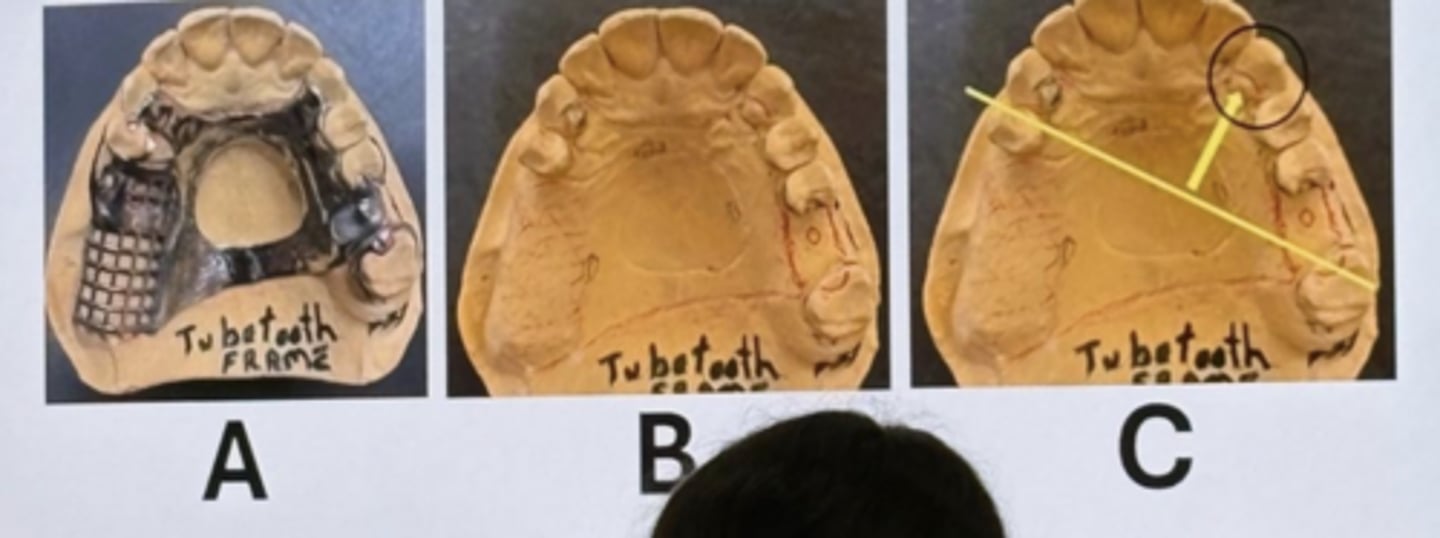
Which is true about the image
-this is a Kennedy class two model one
-there are two separate external finish lines
-there is a true RPI system in this design
-shows the carving on the maxillary model to seal and prevent food impaction
-Picture b there is a prepped canine for indirect retention
-there are two separate external finish lines
-there is a true RPI system in this design
-shows the carving on the maxillary model to seal and prevent food impaction
-Picture b there is a prepped canine for indirect retention
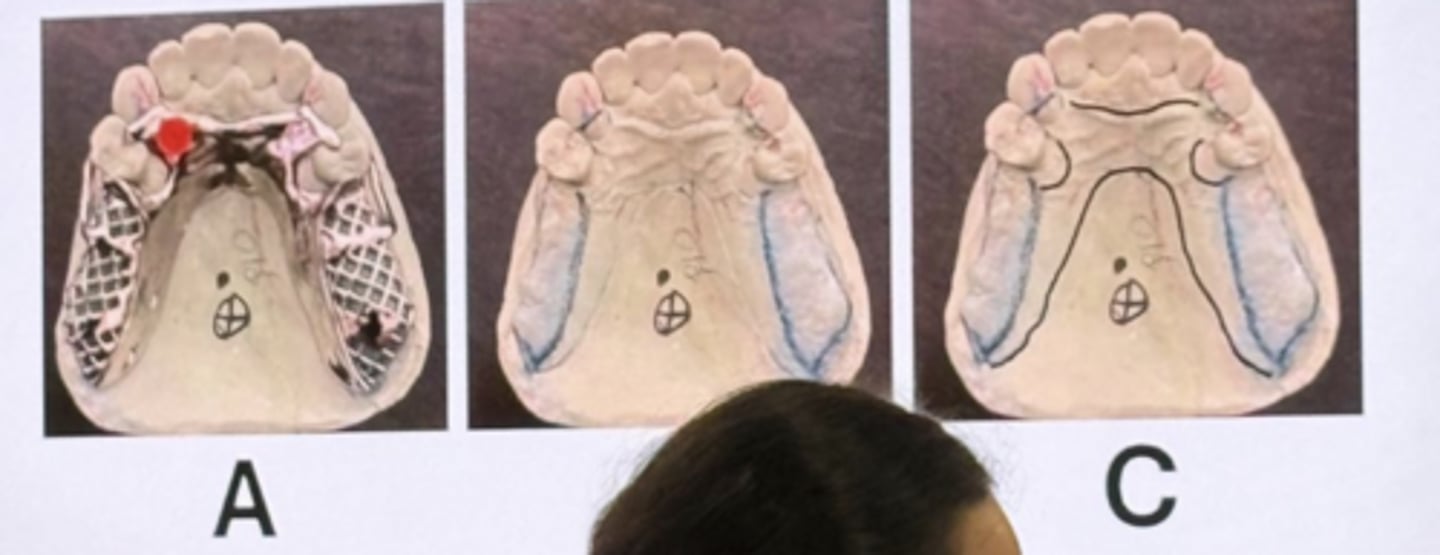
The attached picture represents fulcrum lines for Kennedy class II and IV partial edentulisms Fulcrum lines run through the most posterior rest seats for Kennedy class IV RPD
designs needing more anterior indirect retention.
A. Both statements are correct
B. Both statements are incorrect
C. The first statement is correct, and the second statement is incorrect
D. The first statement is incorrect, and the second statement is correct
C. The first statement is correct, and the second statement is incorrect
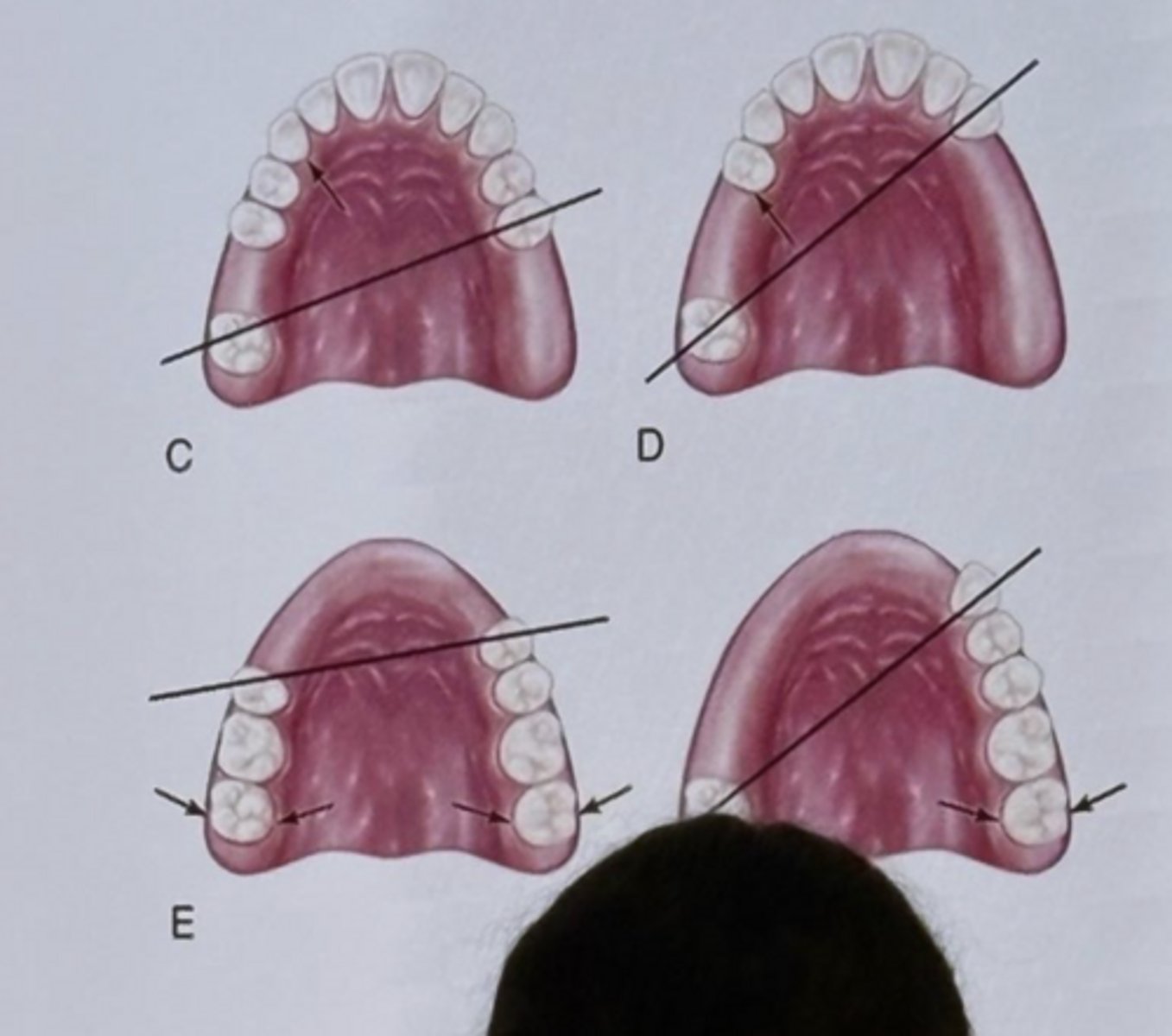
The attached picture represents a maxillary kennedy class IV partial edentulism. The RPD design must include mesial occlusal rests immediately adjacent to the edentulous
space on the first premolars.
A. Both statements are correct
B. Both statements are incorrect
C. The first statement is correct, and the second statement is incorrect
D. The first statement is incorrect, and the second statement is correct
A. Both statements are correct
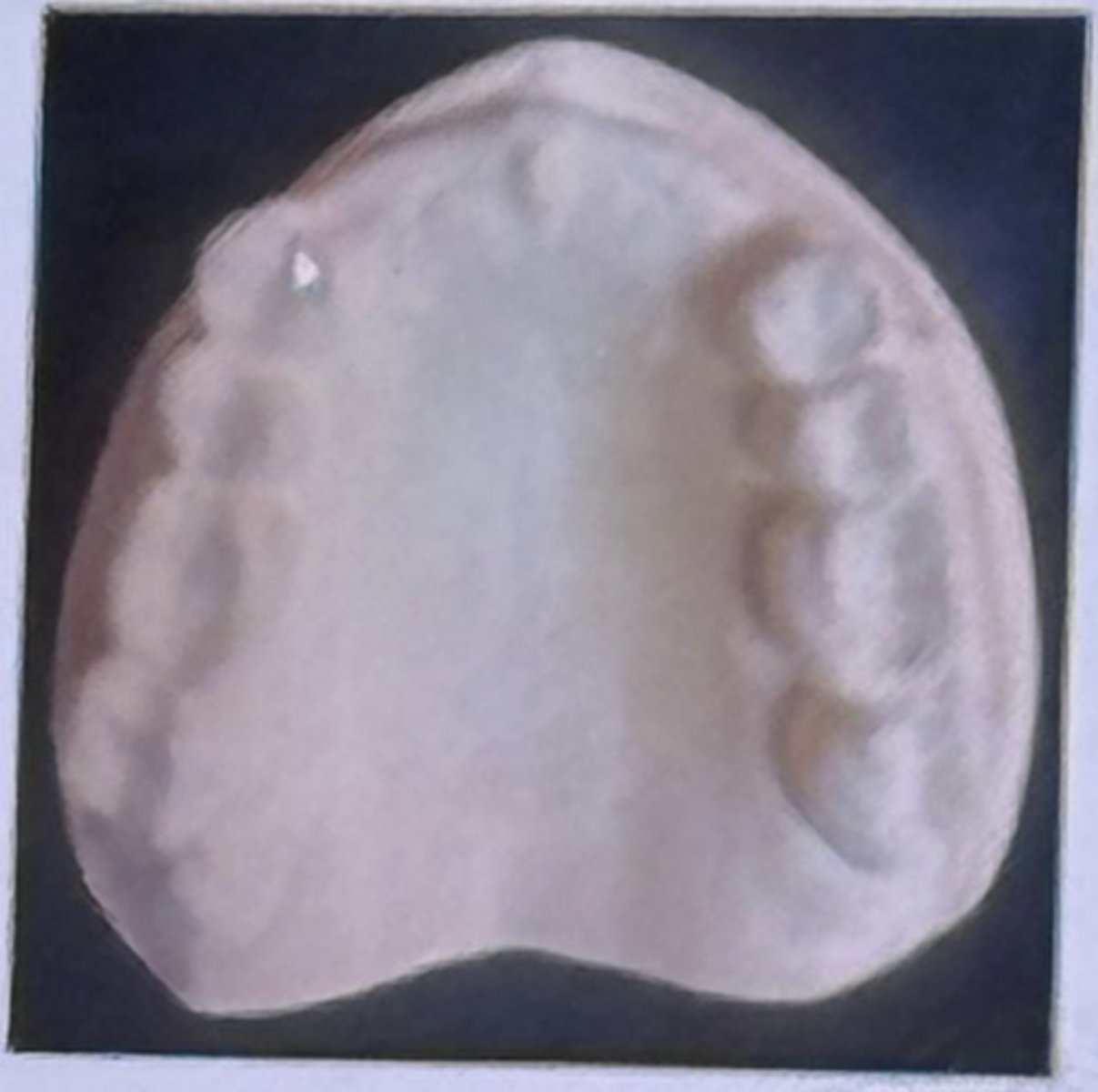
Kennedy class IV edentulous arch can have up to two modifications. A long span Kennedy class IV maxillary edentulous space replacing teeth 6 - 11 can experience rotational forces around a fulcrum so indirect retention is needed
A. Both statements are correct
B. Both statements are incorrect
C. The first statement is correct, and the second statement is incorrect
D. The first statement is incorrect, and the second statement is correct
D. The first statement is incorrect, and the second statement is correct
Select all that apply
-this in a Kennedy Class IV RPD design
-The major connector is an anterior posterior palatal strap
-there are 8 abutment teeth
-there are 6 abutment teeth
-The canine cingulum rests on tooth 6-11 provide indirect retention needed for this RPD design
-The bilateral embrasure rests are providing indirect retention
-this in a Kennedy Class IV RPD design
-The major connector is an anterior posterior palatal strap
-there are 8 abutment teeth
-The bilateral embrasure rests are providing indirect retention
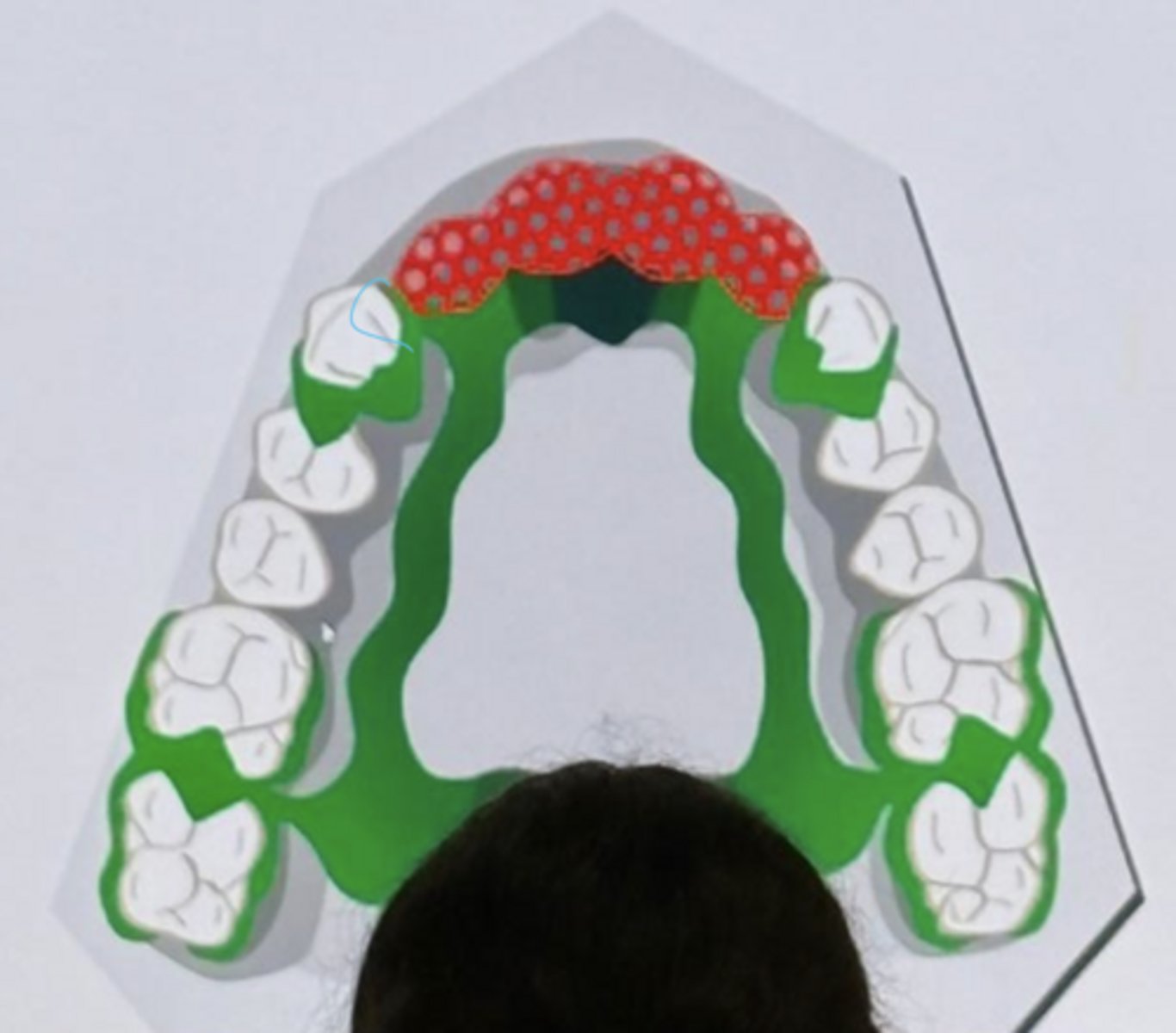
The attached picture represents a maxillary Kennedy class III, mod 1 removable partial denture (KPU) framework. An anterior-posterior palatal strap was used as the major connector
A. Both statements are correct
B. Both statements are incorrect
C. The first statement is correct, and the second statement is incorrect
D. The first statement is incorrect, and the second statement is correct
A. Both statements are correct
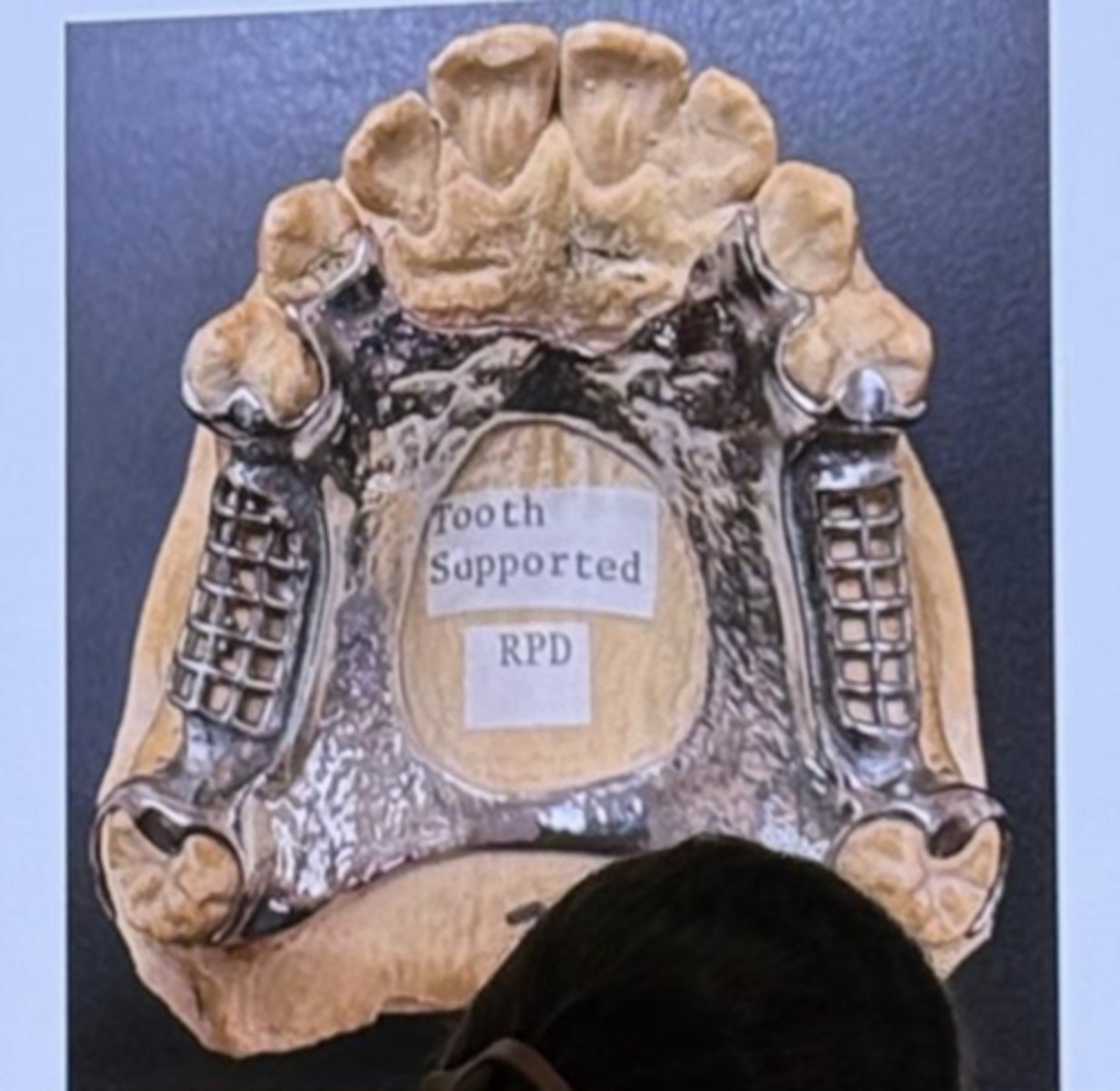
The attached picture represents a maxillary Kennedy class I, mod 1 removable partial denture (RPD) framework. There are four abutment teeth with clasp assemblies in this RPD design mooting balanced retention.
* no image
A. Both statements are correct
B. Both statements are incorrect
C. The first statement is correct, and the second statement is incorrect
D. The first statement is incorrect, and the second statement is correct
A. Both statements are correct
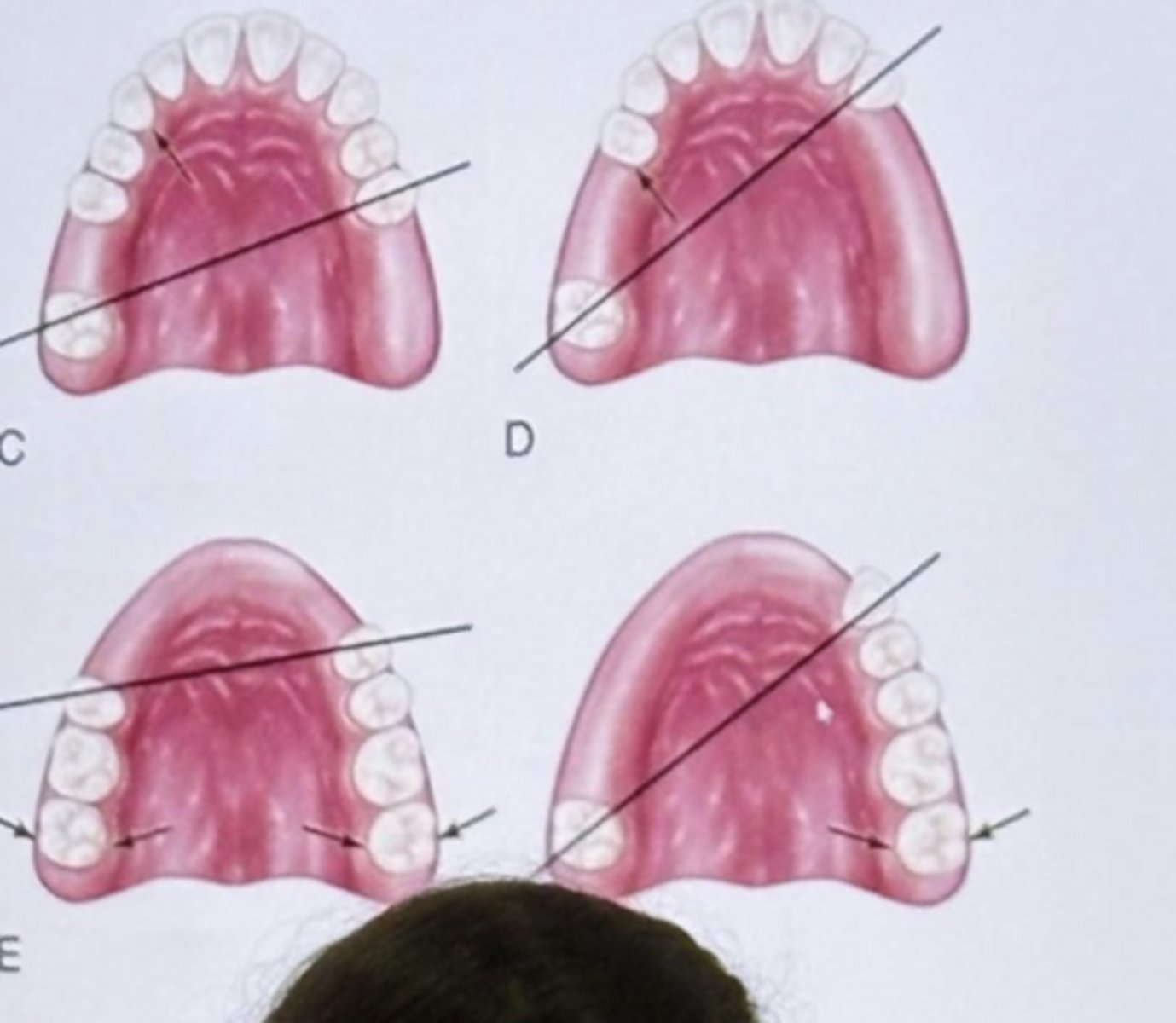
The attached picture represents fulcrum lines for Kennedy class I and IV partial edentulism. Fulcrum lines run through the most posterior rest seats for Kennedy class IV RPD designs needing more anterior indirect retention.
A. Both statements are correct
B. Both statements are incorrect
C. The first statement is correct, and the second statement is incorrect
D. The first statement is incorrect, and the second statement is correct
C. The first statement is correct, and the second statement is incorrect
the carbon marker is used to mark the abutment teeth heights of contour once undercut areas are equalized using the analyzing rod. The tip of the carbon marker must stay at the level of the gingiva while marking so you must have the vertical spindle up and down to prevent false marking
A. Both statements are correct
B. Both statements are incorrect
C. The first statement is correct, and the second statement is incorrect
D. The first statement is incorrect, and the second statement is correct
A. Both statements are correct
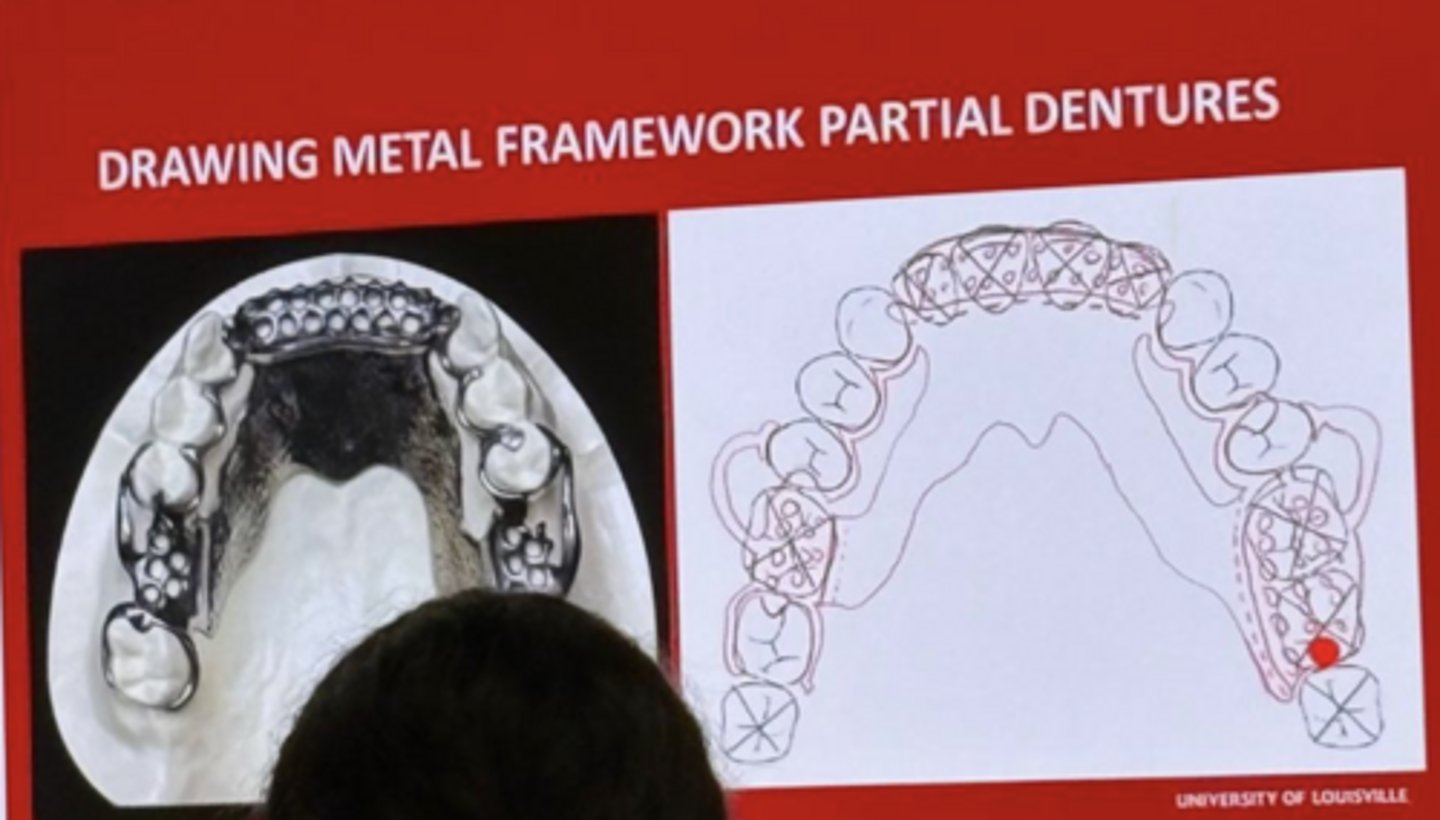
In looking at this final cast metal RPD framework, which of the following statements are correct?
-the drawing is correct
-there are 3 internal finish lines and 3 external
-internal lines are solid red
-external lines are dotted red lines
-the drawing is correct
-there are 3 internal finish lines and 3 external
picture B represents what
reciprical/bracing arm
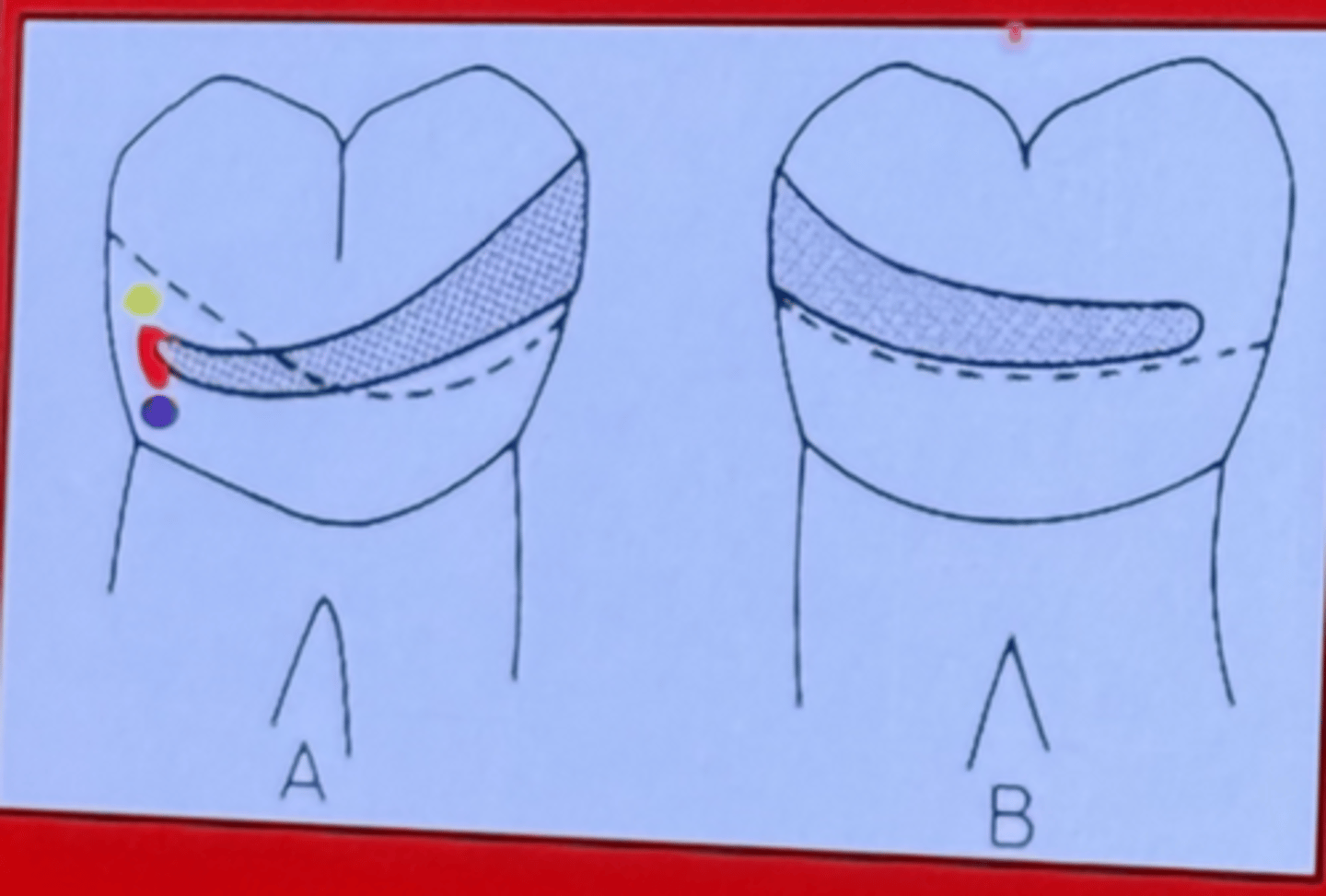
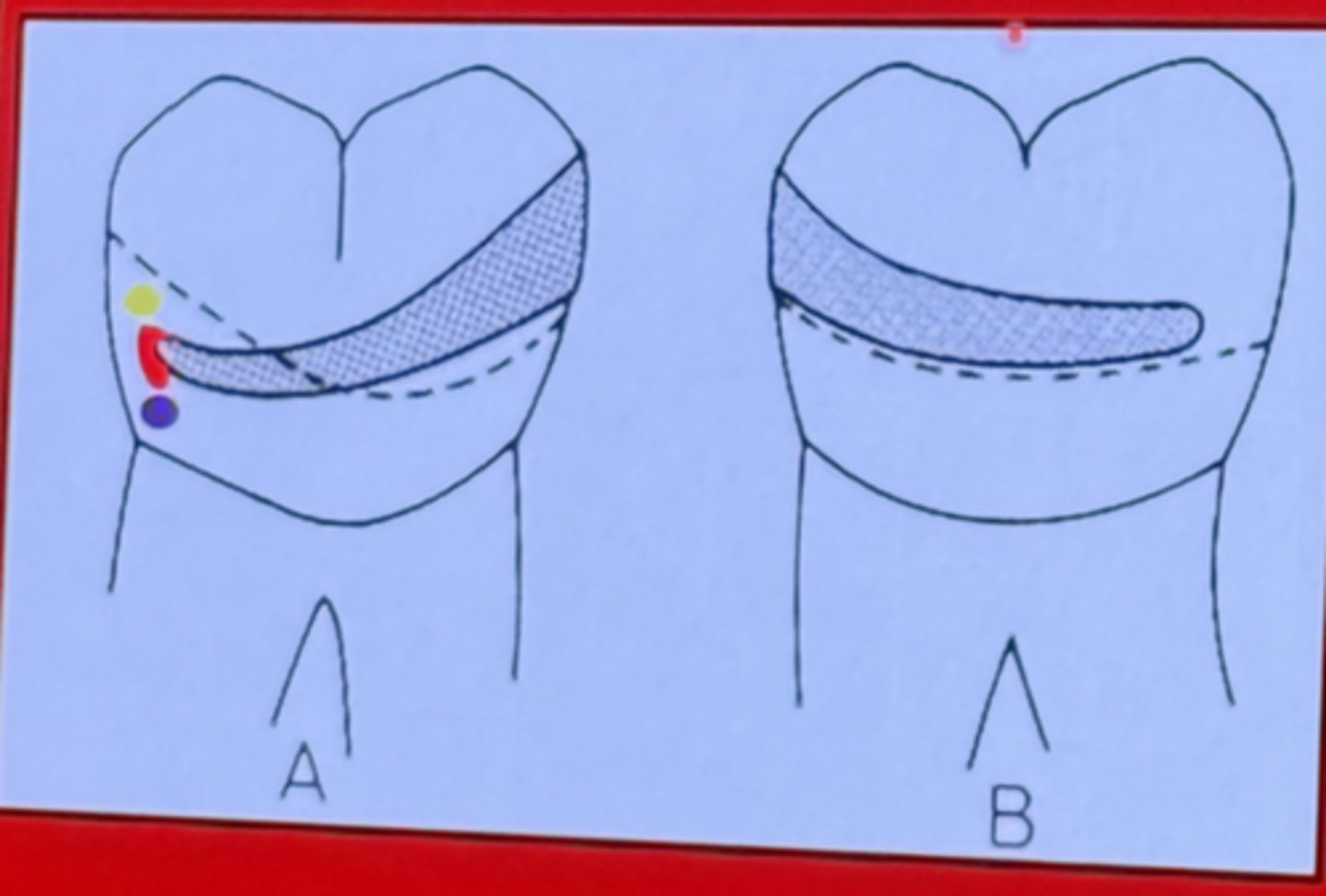
The entire rpd component in pic B should lie where
about the survey line
In picture A what color dot is best for Wrought wire
purple 0.02
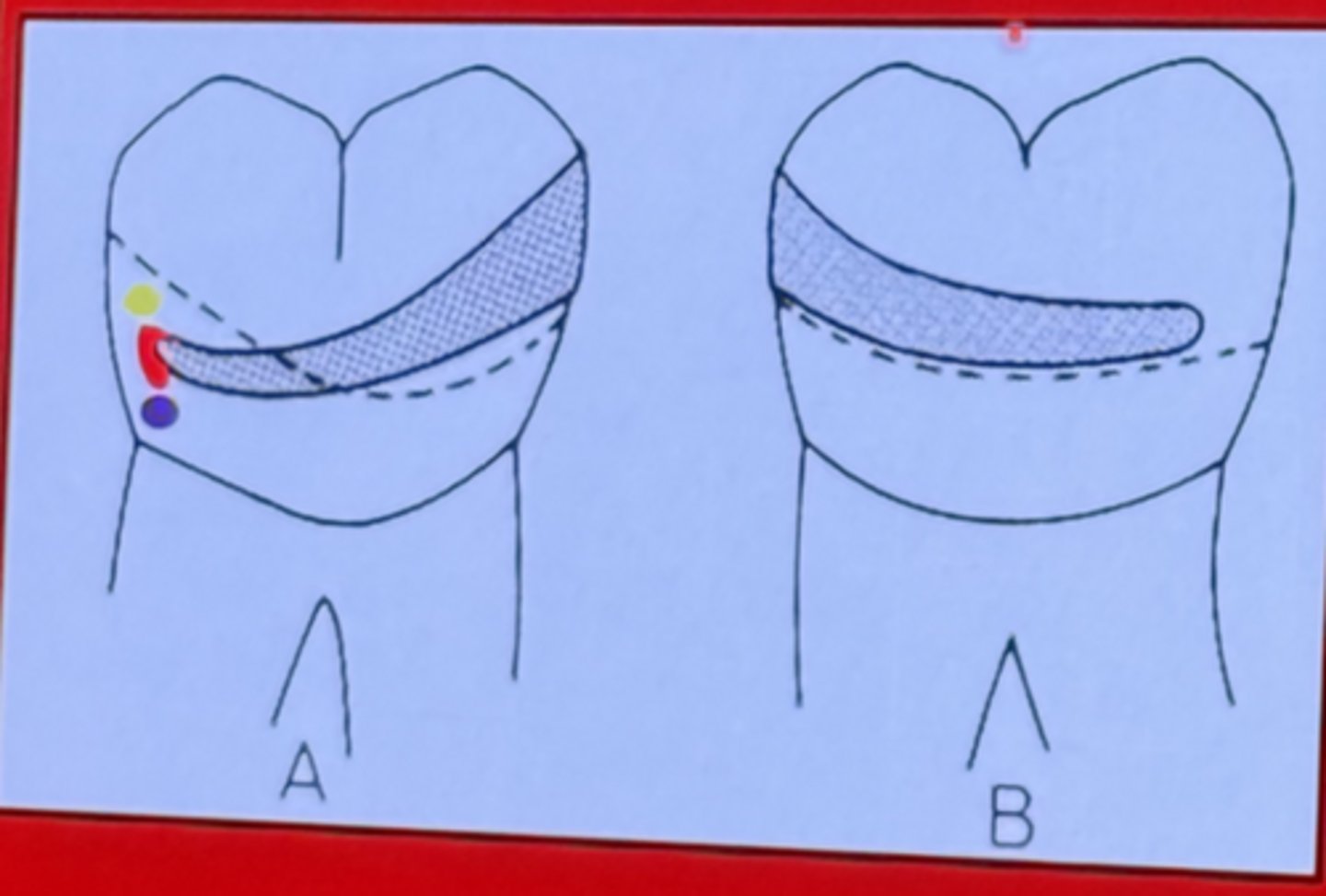
Which color dot would be the most flexible
purple
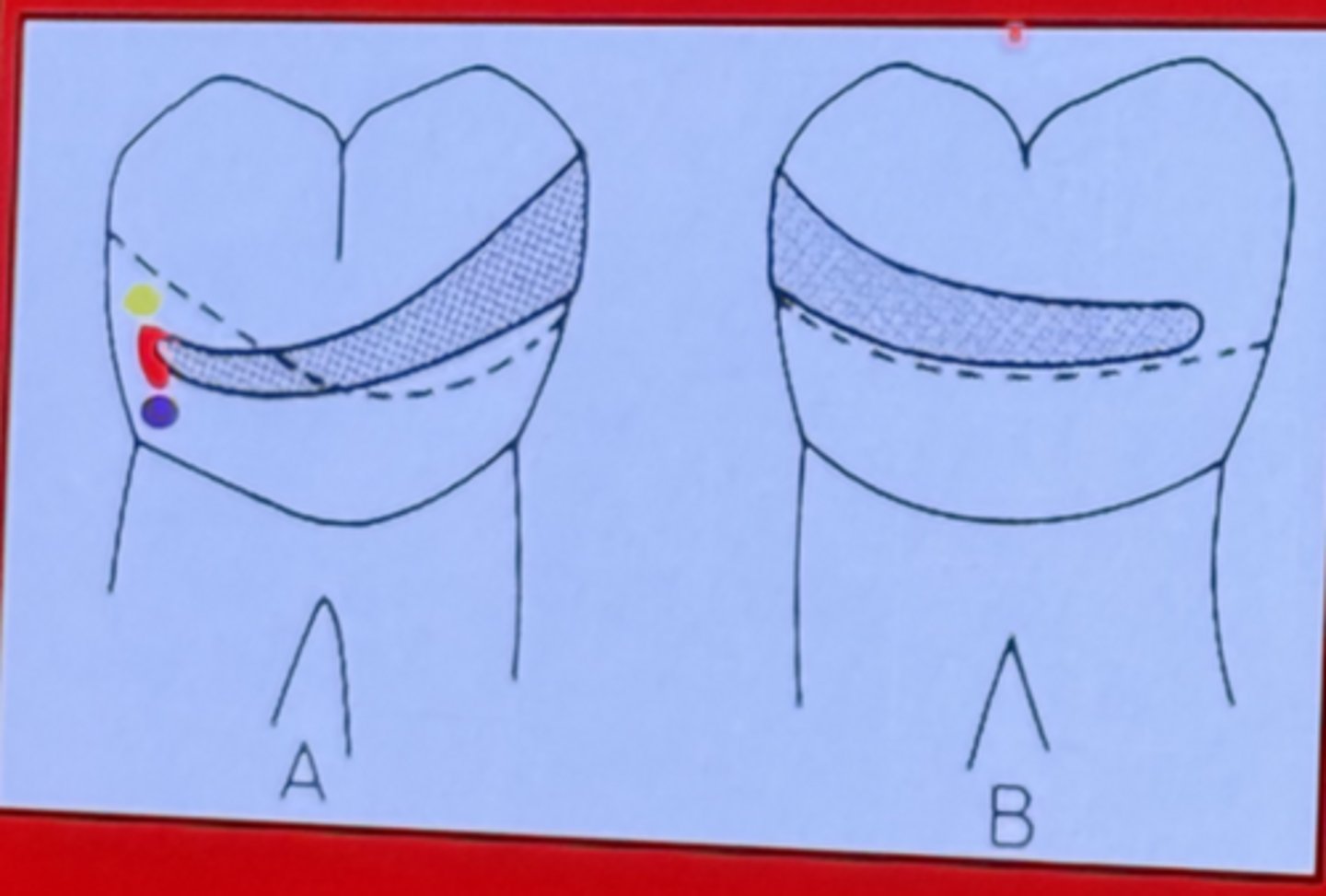
what component is picture a
retentive arm
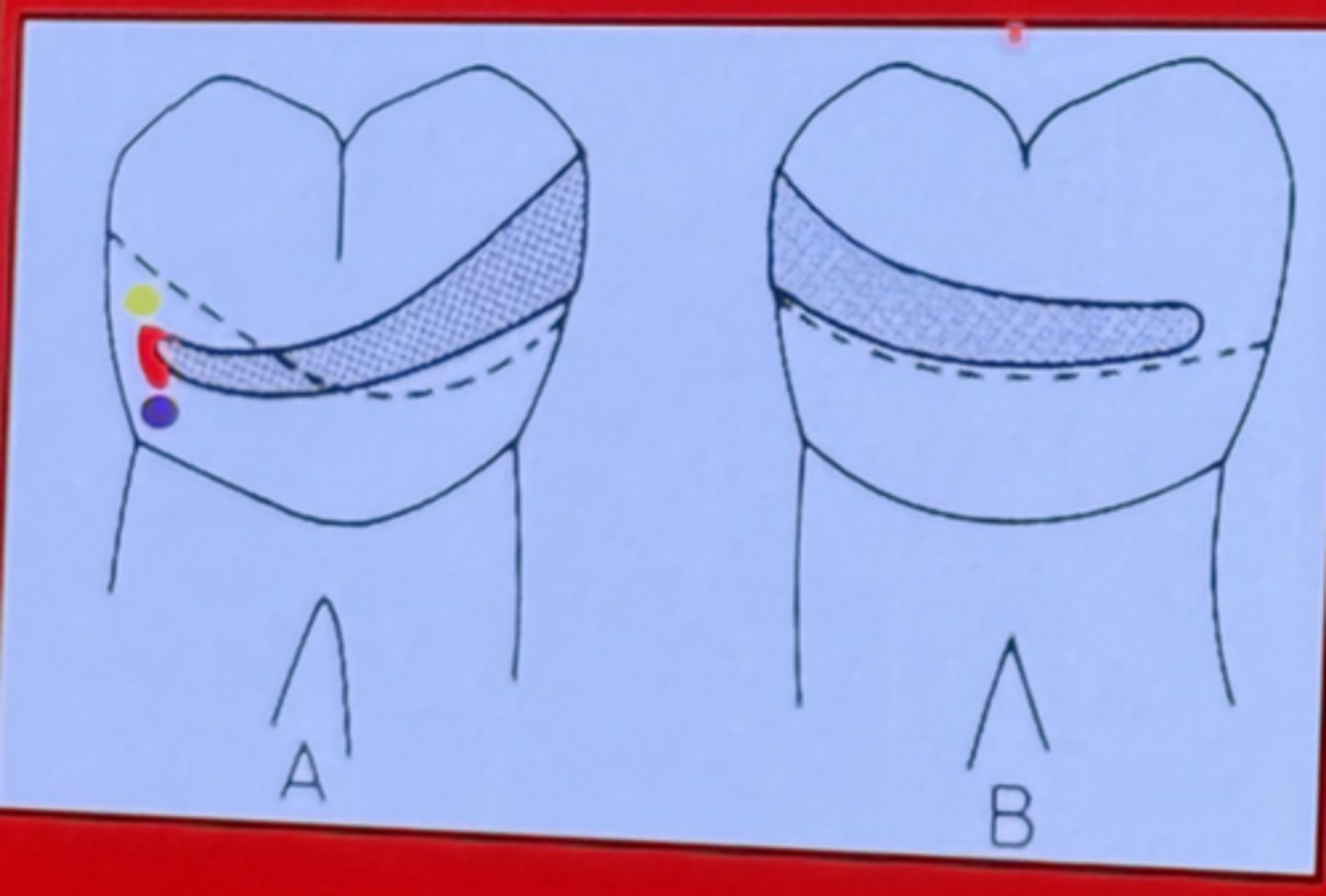
the terminal 1/3 of component a should end where
below the survery line
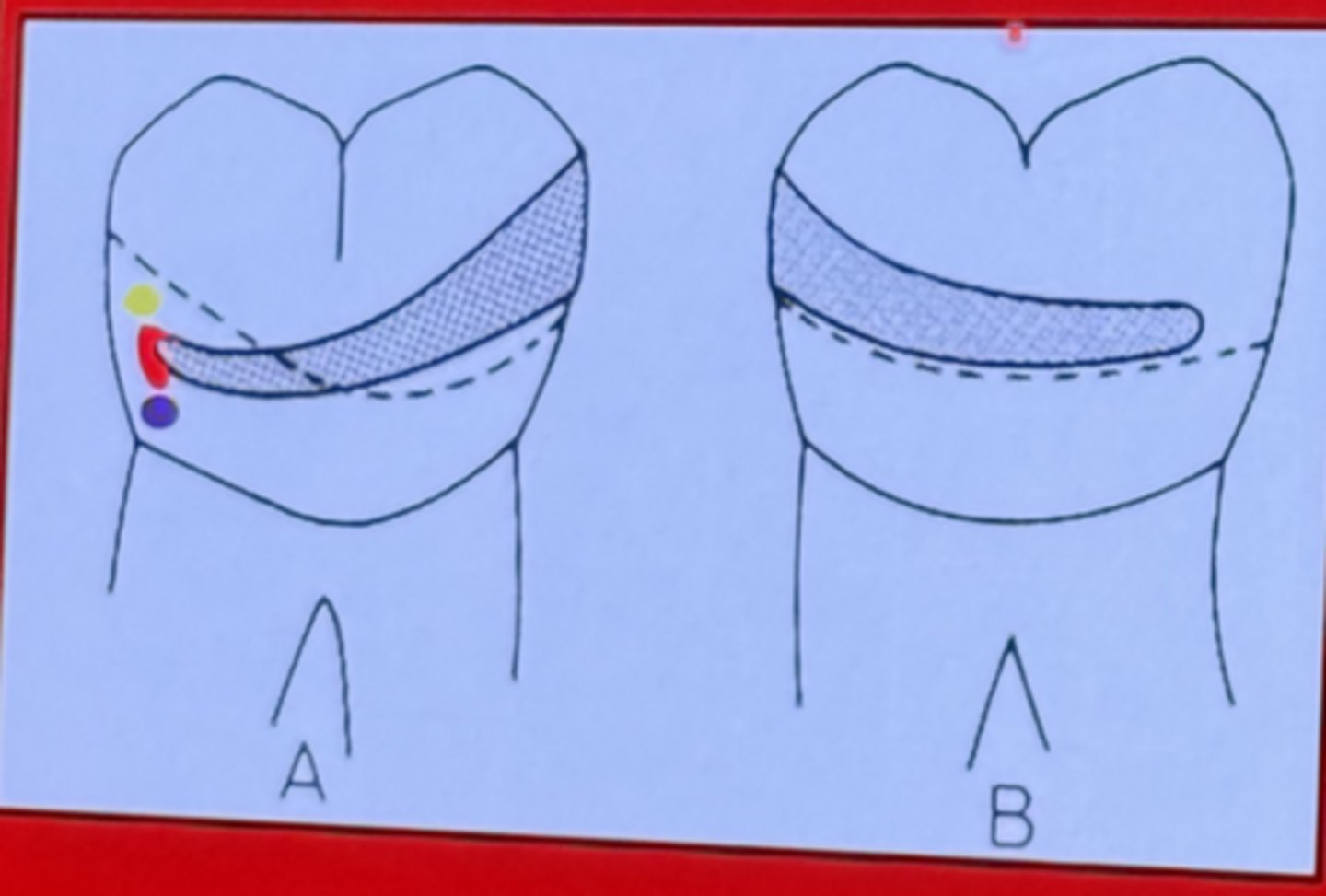
what does the red dot represent
0.01 undercut
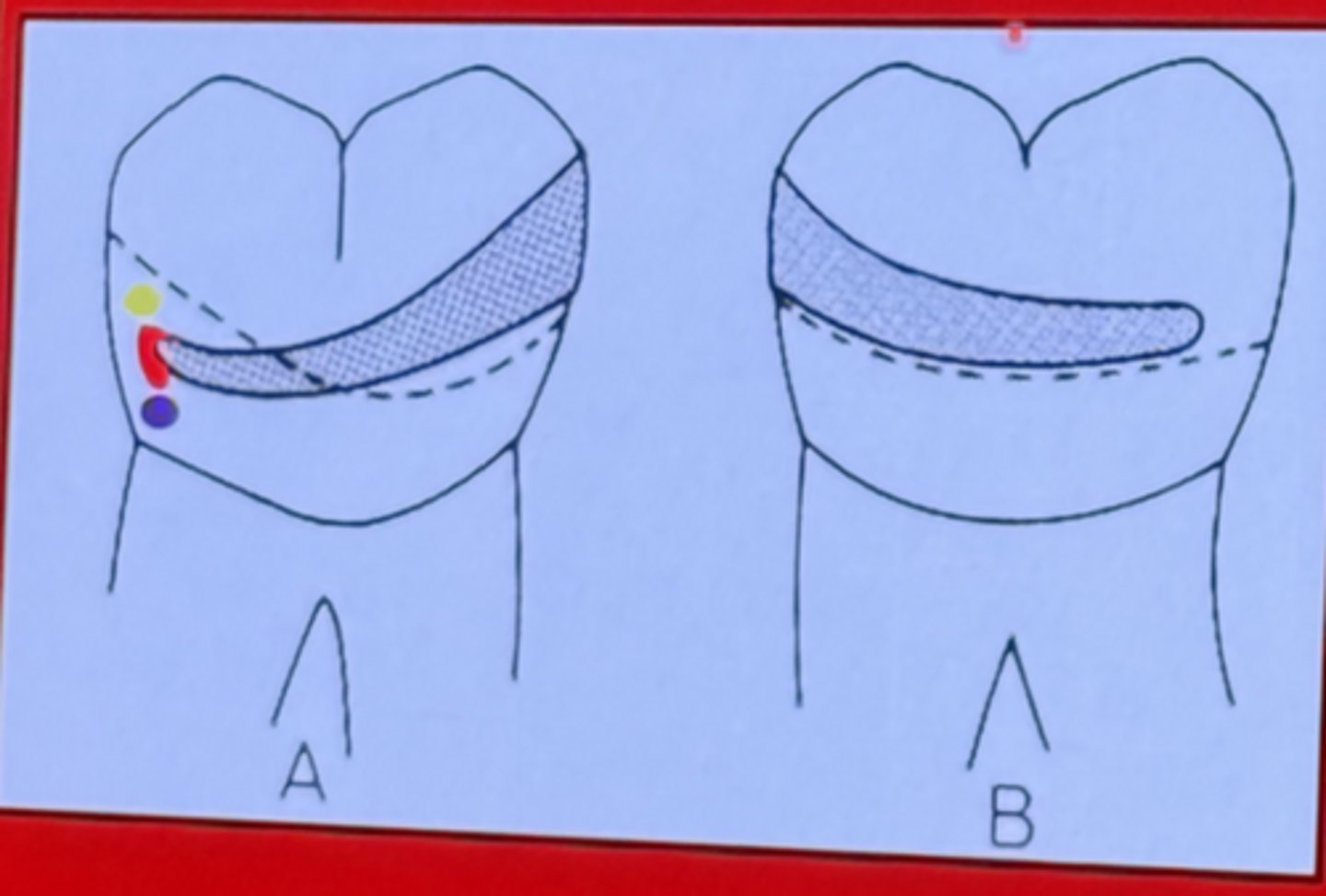
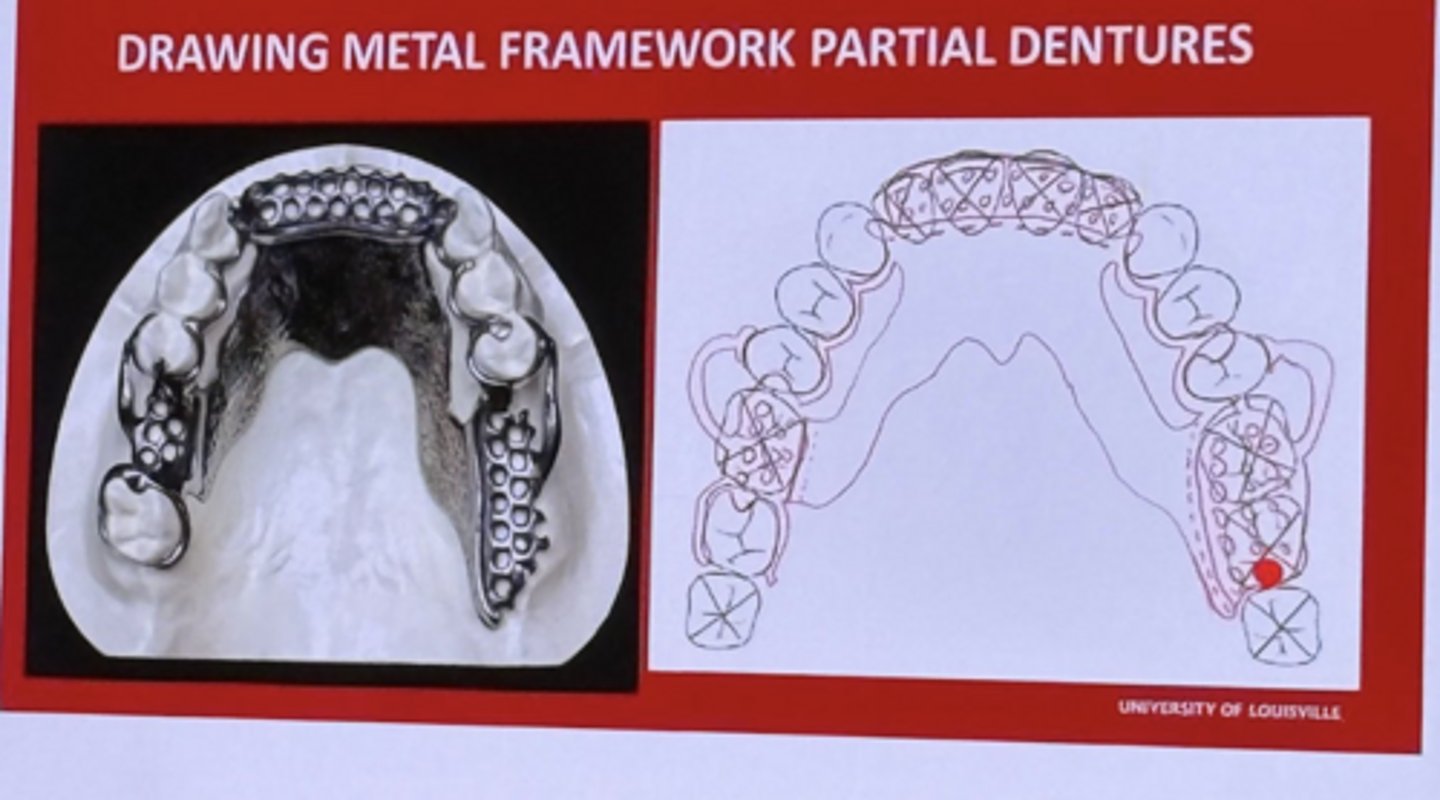
In looking at this which are correct
-there are two base attachments both needing a tissue stop drawn correctly
-there are 3 guide plates used for POI correct
-there are 3 occlusal rests and 1 embrasure rest on five abutment teeth
-there in a cast metal minor connector connecting embrasure rest to major drawn correctly
-the rPI distal extension is using the best design practices
-there are 3 guide plates used for POI correct
-there are 3 occlusal rests and 1 embrasure rest on five abutment teeth
-there in a cast metal minor connector connecting embrasure rest to major drawn correctly
The initial 2/3 of the retentive arm should be where
-occlusal middle 1/3 of the tooth
-Above the survey line
-Below the survey line
-Cervical 1/3 of abutment tooth
-occlusal middle 1/3 of the tooth
-Above the survey line
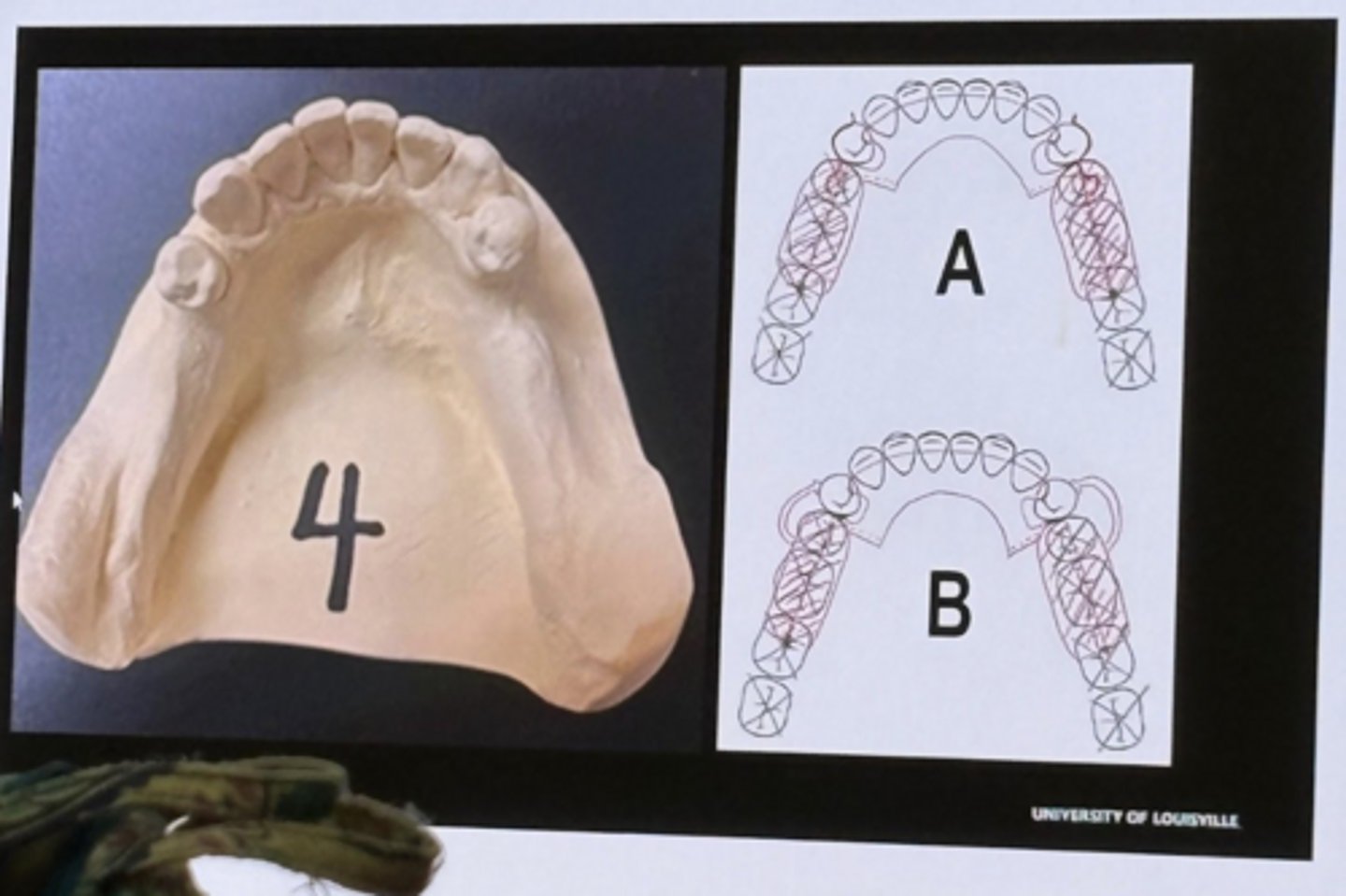
which are true for the following image
A is seeking a 0.02 undercut
b is seeking a 0.01 undercut
a and b will have cingulum rests
-kennedy class 1
-a and b are ideal designs
-neither a or b are right bc they should extend distally and cover the retromolar pad
-a or b are acceptable bc they stop 2/3 of the retromolar pad
-the i-bars in b are more esthetic
-kennedy class 1
-a and b are ideal designs
-a or b are acceptable bc they stop 2/3 of the retromolar pad
-the i-bars in b are more esthetic
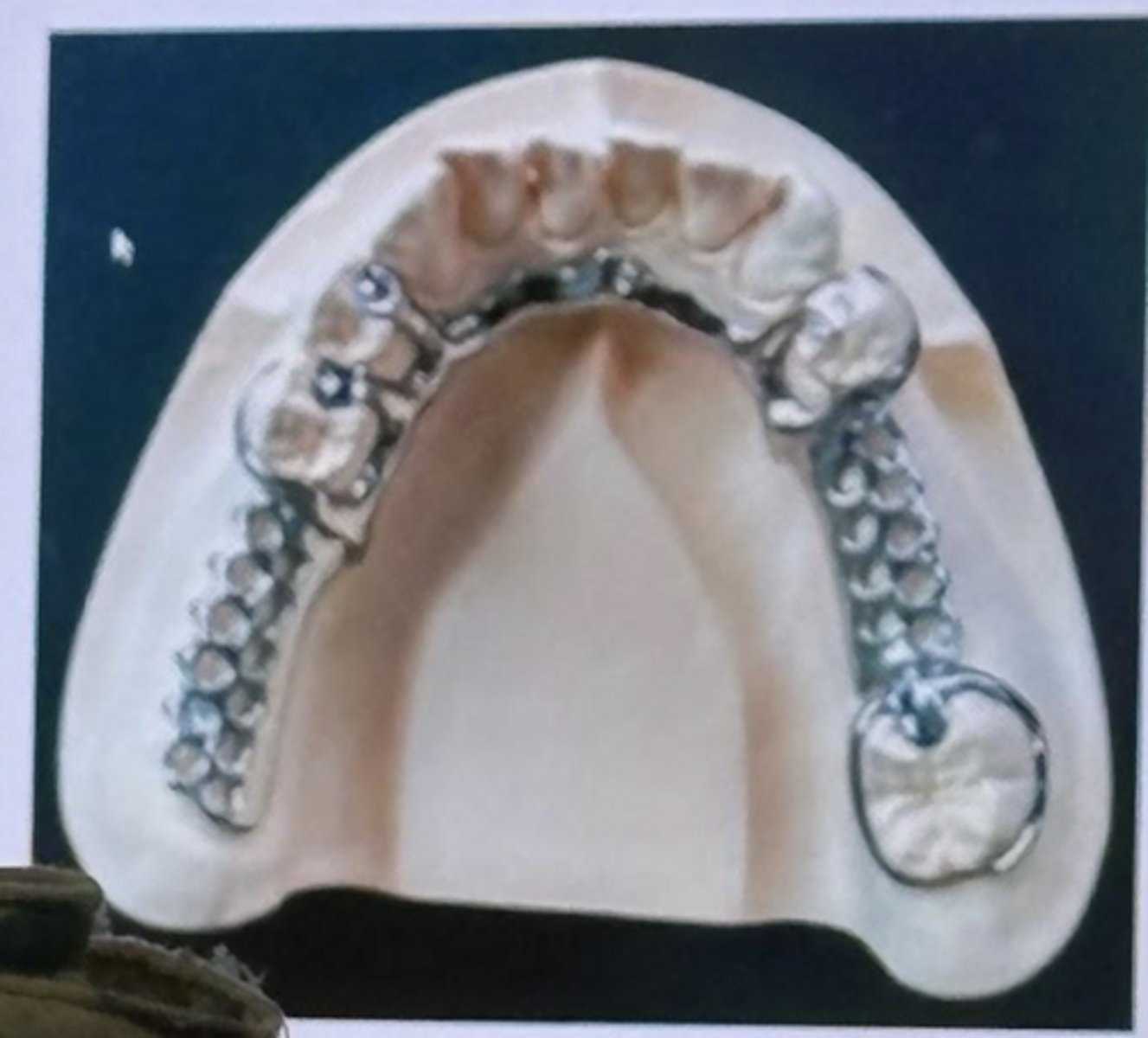
which are true
-kennedy class ii mod i
-mesial rest provided indirect retention
-more ideal place for occlusal rest on 28 would be on the distal
-the lingual bar was used bc of insufficient space
-kennedy class ii mod i
-mesial rest provided indirect retention
-more ideal place for occlusal rest on 28 would be on the distal
In using a cast circumferential class retentive component into the undercut area, which are true
-the terminal and the cast circumferential class should terminate in the cervical third of the tooth
-the terminal end of the cast should ideally terminate in the middle third of the tooth
-the terminal half of the cast clasp should be below the height of contour
-a 0.01 inch undercut is ideal to engage because deeper undercut would exceed the mechanical properties
-the terminal and the cast circumferential class should terminate in the cervical third of the tooth
-the terminal half of the cast clasp should be below the height of contour
-a 0.01 inch undercut is ideal to engage because deeper undercut would exceed the mechanical properties
Which is correct concerning guide plane preparations and cast metal guide plates
-proximal guide plates are prepared before proximal rest seats
-class III and IV have longer guide planes than class I and II
-class III and IV have shorter guide planes than class I and II
-the width of the proximal guide plane stays within the line angles
-the proximal guide plate is considered a minor connector
-proximal guide plates are prepared before proximal rest seats
-class III and IV have longer guide planes than class I and II
-the width of the proximal guide plane stays within the line angles
-the proximal guide plate is considered a minor connector
PMMA is a synthetic polymer used in dental base fabrication. it can be created synthetically using chemical, light or heat polymerization
A. Both statements are correct
B. Both statements are incorrect
C. The first statement is correct, and the second statement is incorrect
D. The first statement is incorrect, and the second statement is correct
A. Both statements are correct
A has a 0.01 undercut
B 0.01 undercut
-class iii mod i
-a have incomplete clasp assemblies
-b is acceptable for patients with esthetic concerns
-a and b have adequate indirect retention
-class iii mod i
-a have incomplete clasp assemblies
-b is acceptable for patients with esthetic concerns
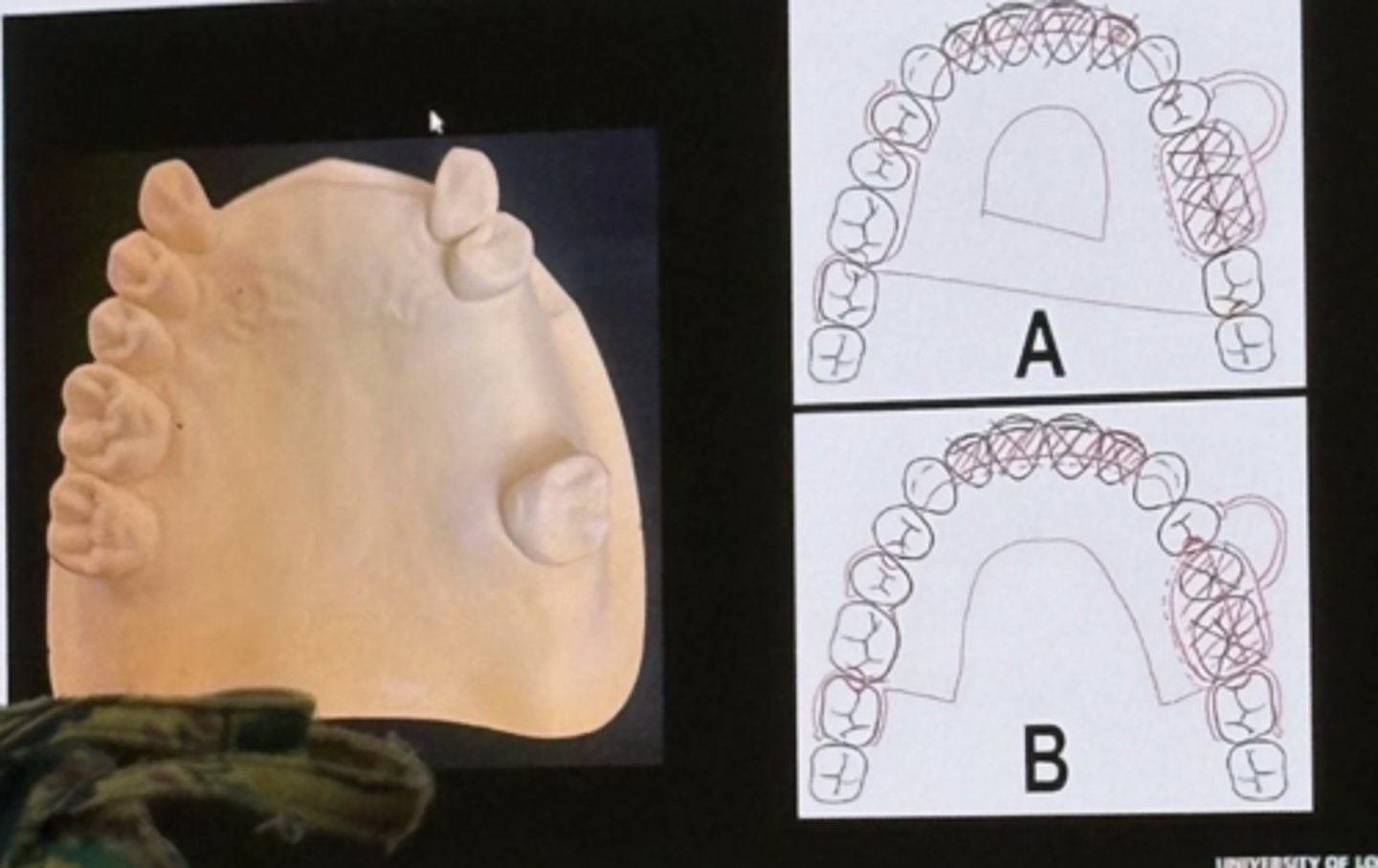
which is true about wrought wires
-0.01 undercut
-cast with framework
-they use a 0.02 undercut
-its more flexible to engage deeper undercuts
-they use a 0.02 undercut
-its more flexible to engage deeper undercuts
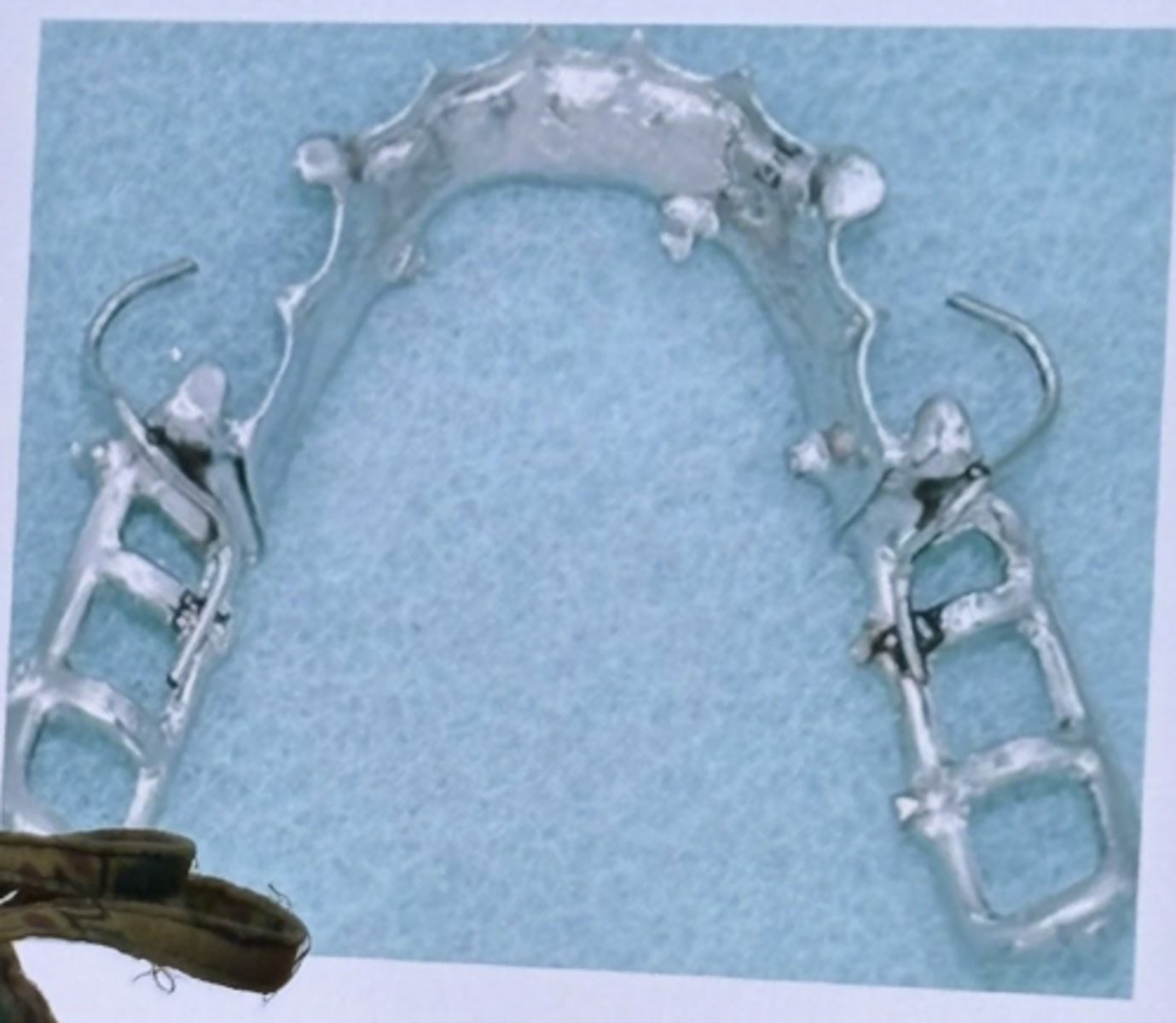
what initiator is used for heat cured?
benzoyl peroxide
what initiator is used for light cured?
camphorquinone
which apply
-The operator achieved ideal balanced retention using four clasp assembles in the mesial-facial and distal facial undercuts of the molars and premolars
-four cast circumferential clasp retentive components are 0.01 undercuts
-all use lingual plating as their source of reciprocation
-the mandibular left determined the class
-The operator achieved ideal balanced retention using four clasp assembles in the mesial-facial and distal facial undercuts of the molars and premolars
-four cast circumferential clasp retentive components are 0.01 undercuts
-the mandibular left determined the class
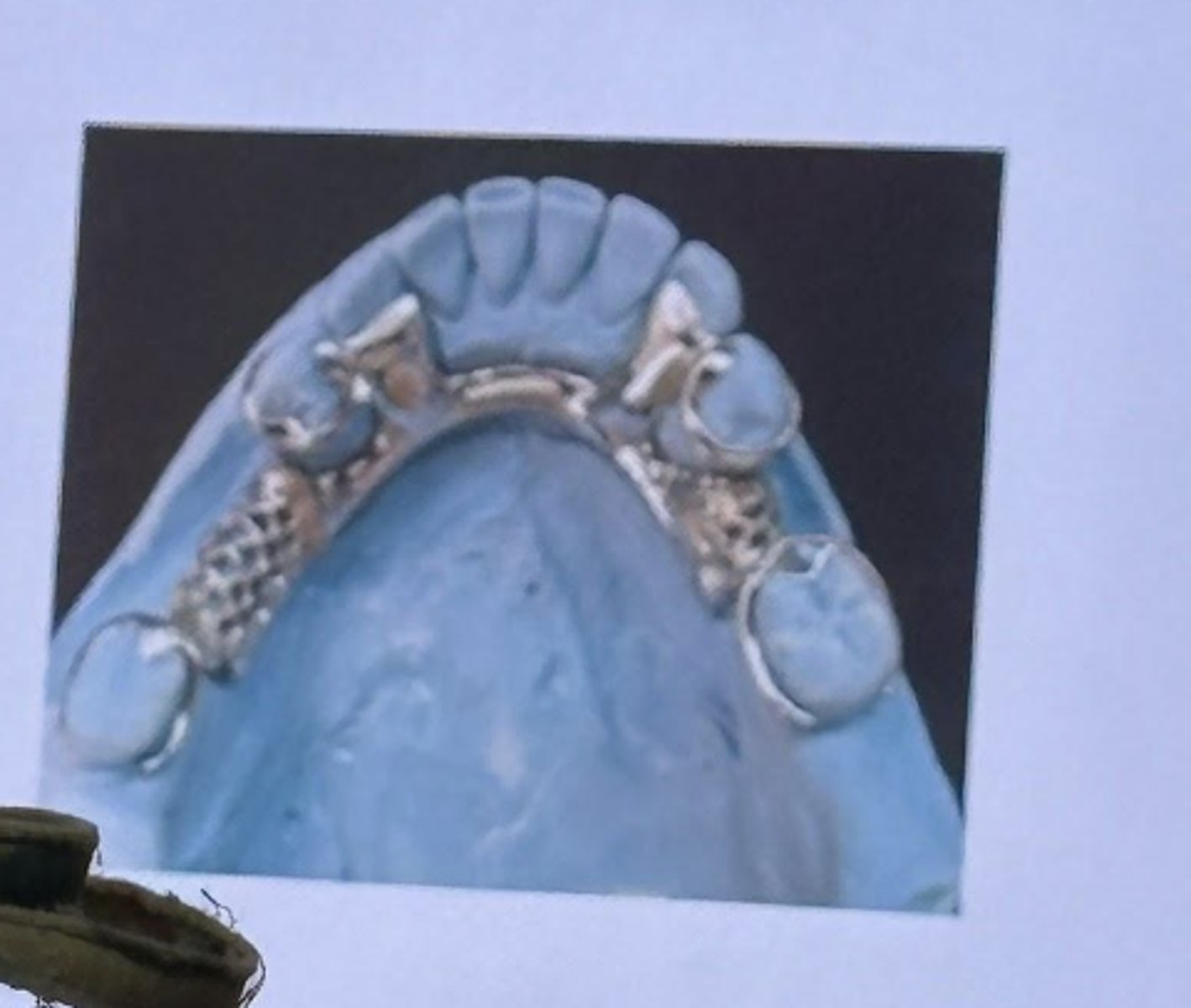
pictures may be wrong but this one I couldn't match up just know it
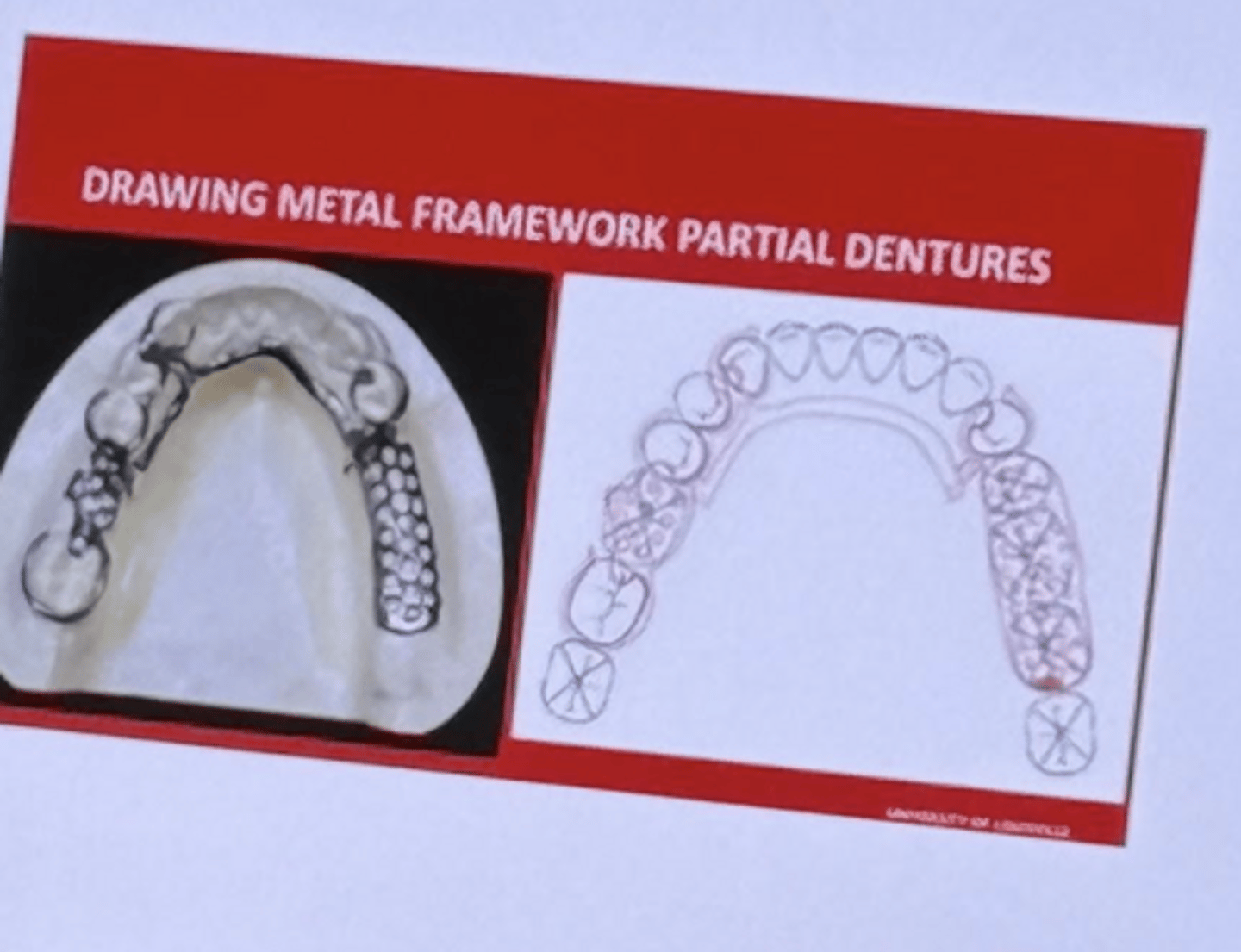
What is a
retentive are
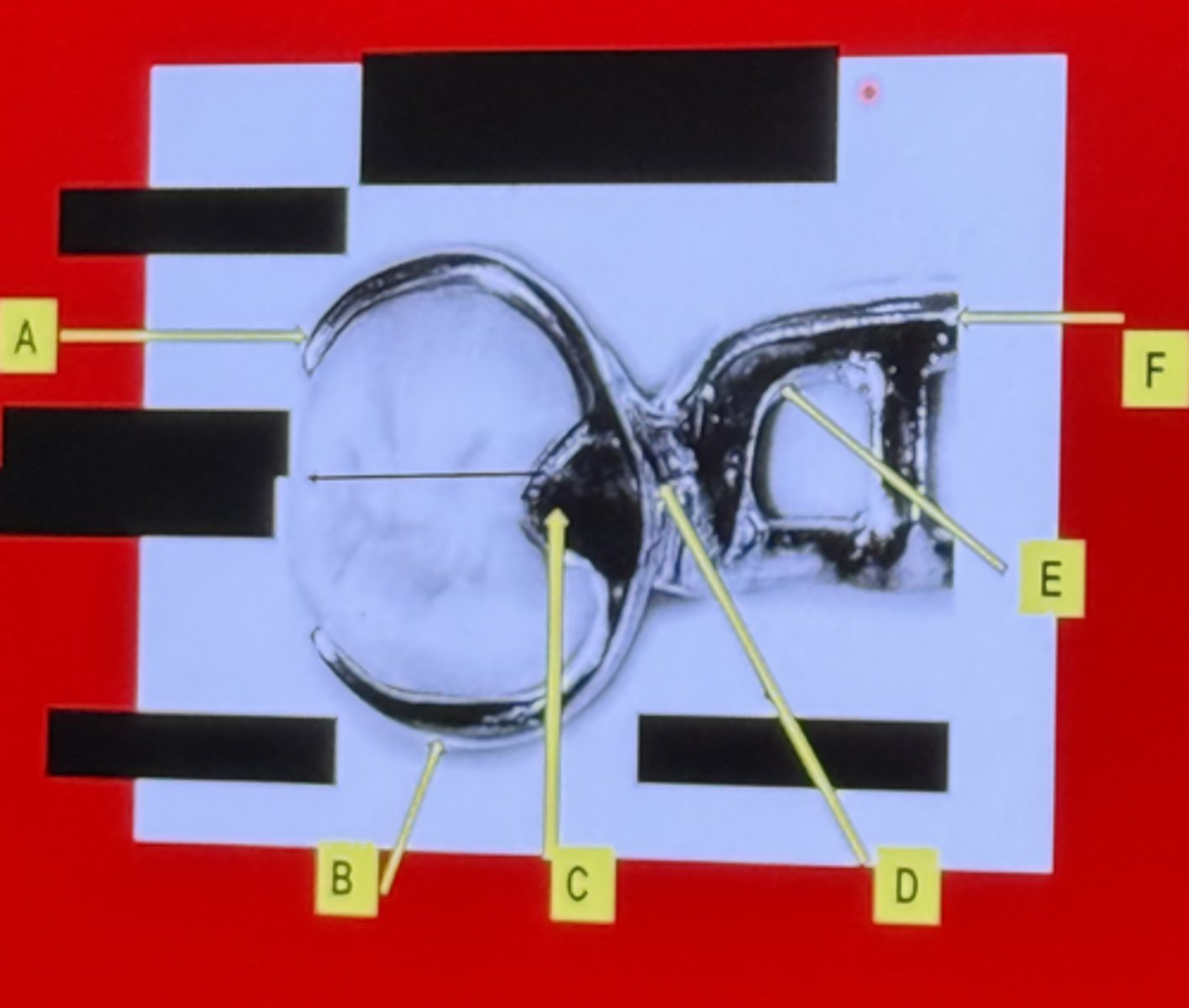
what is b
bracing arm
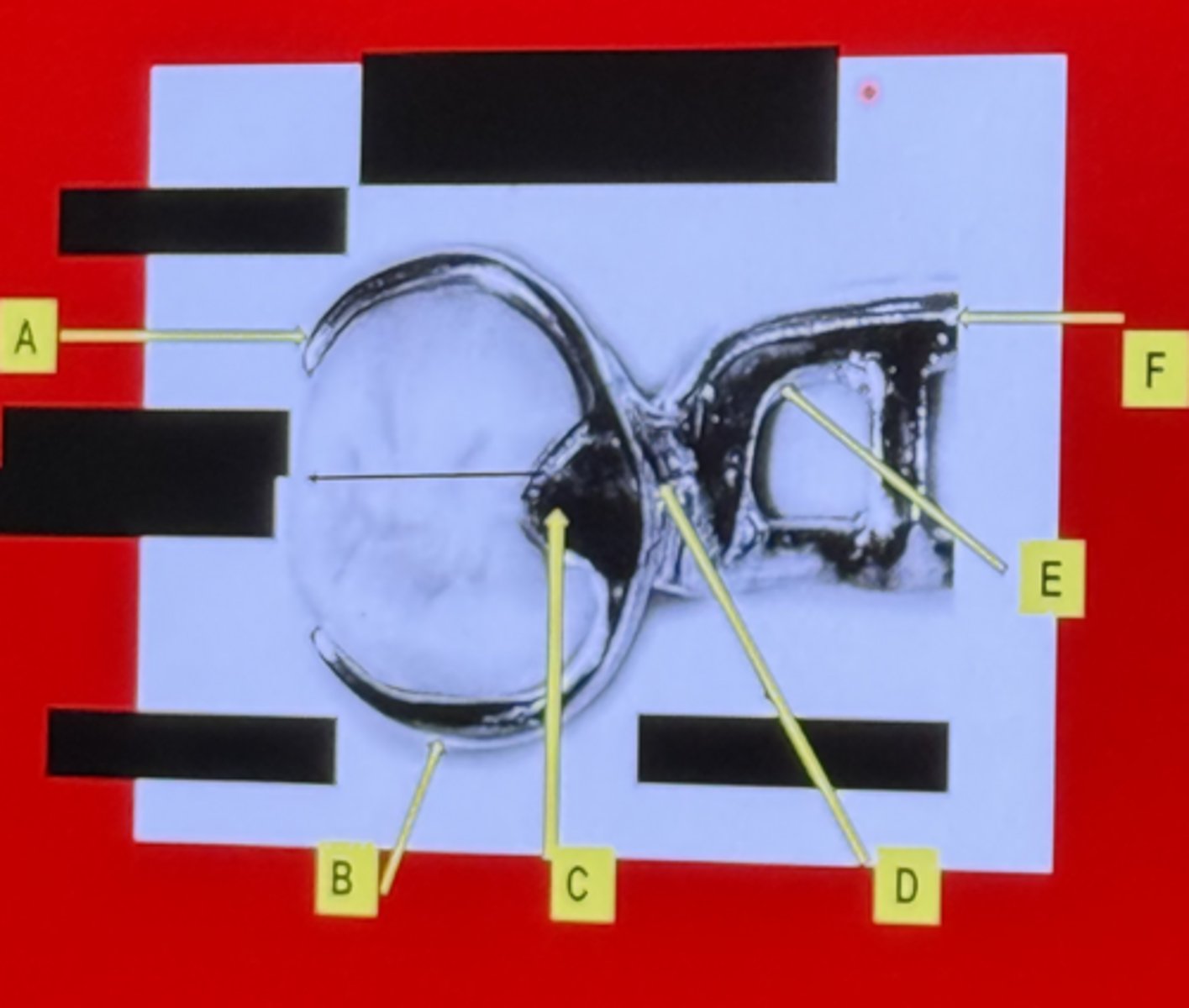
what is d
minor connector
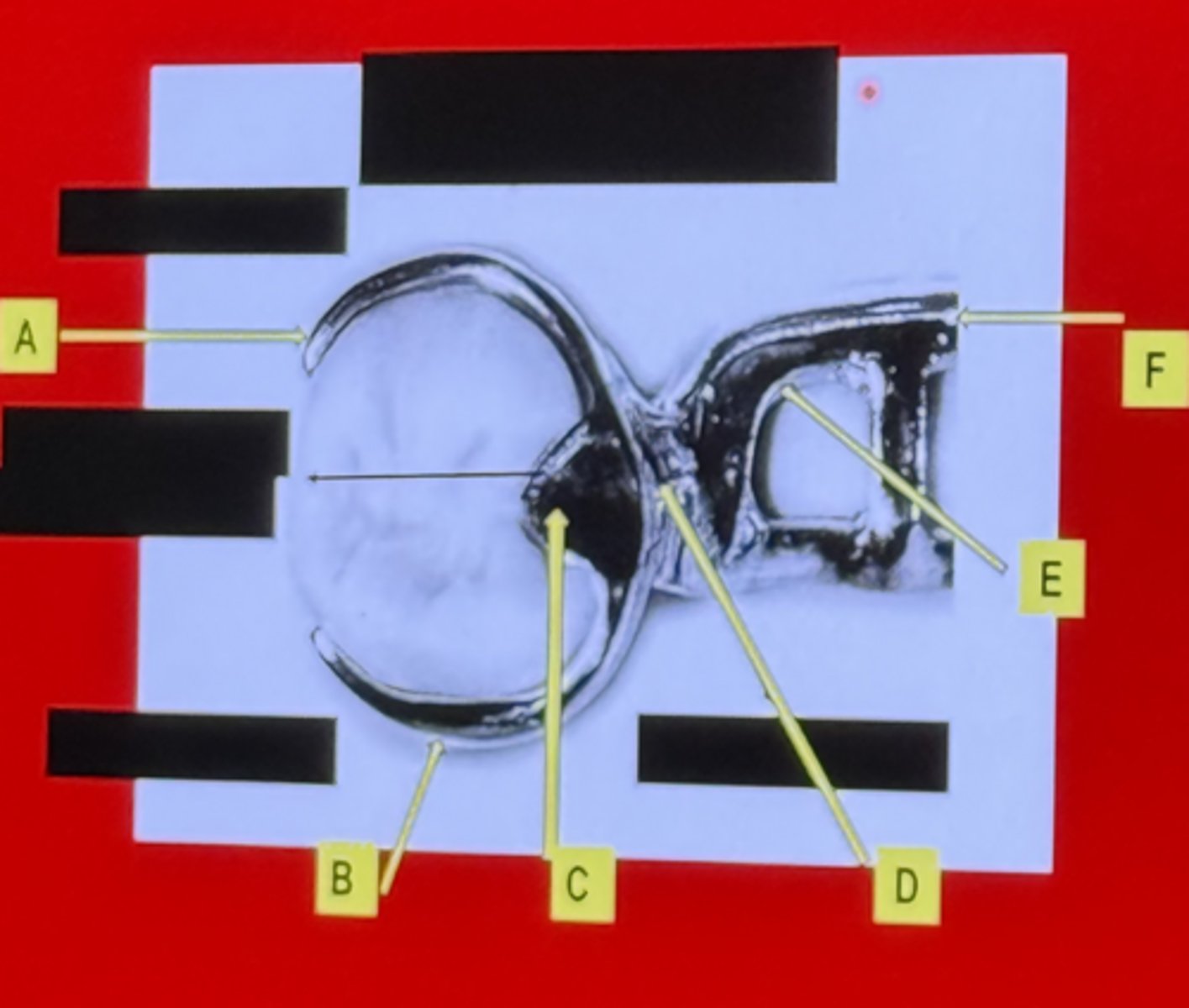
A B C D are what
clasp assembly
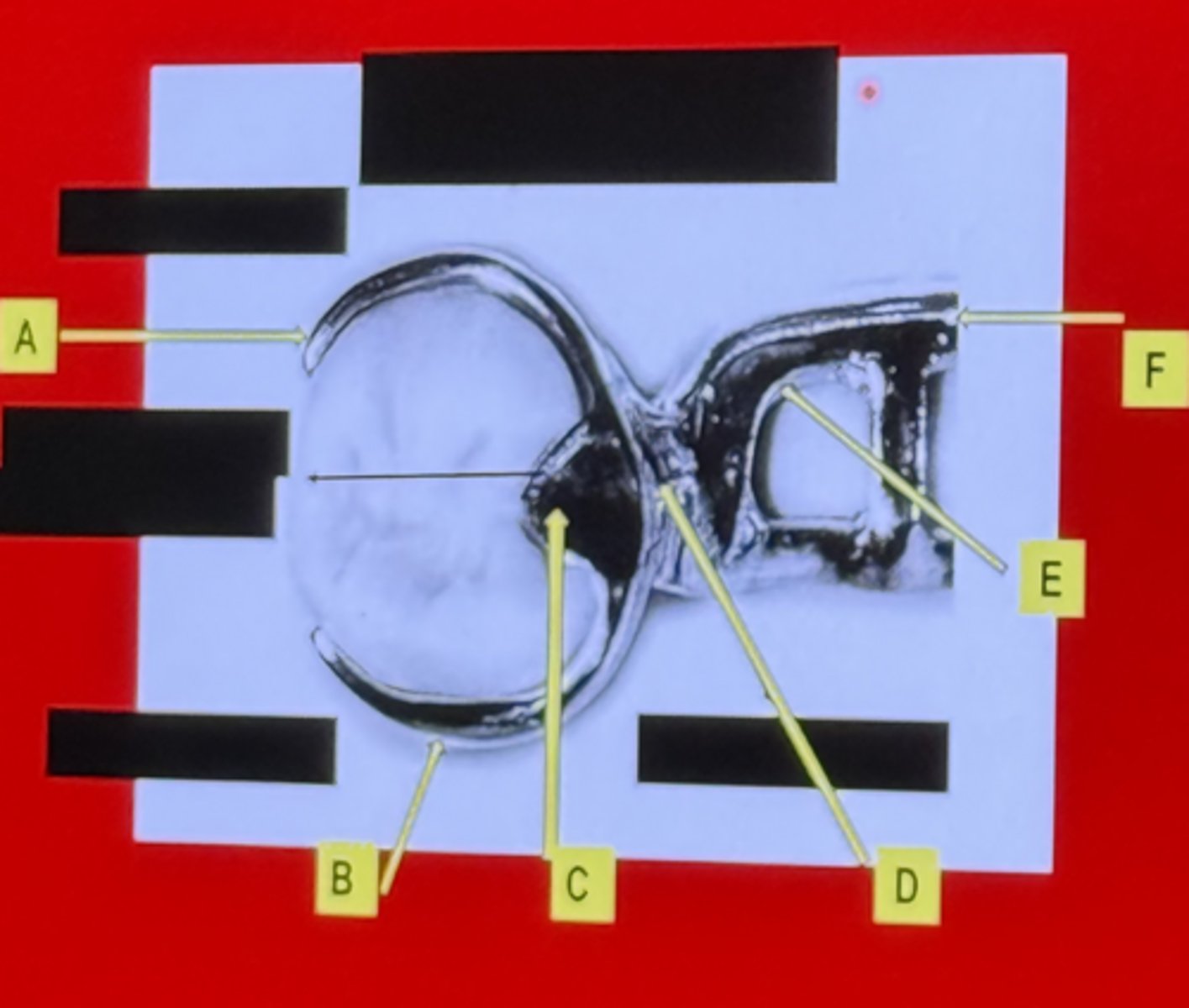
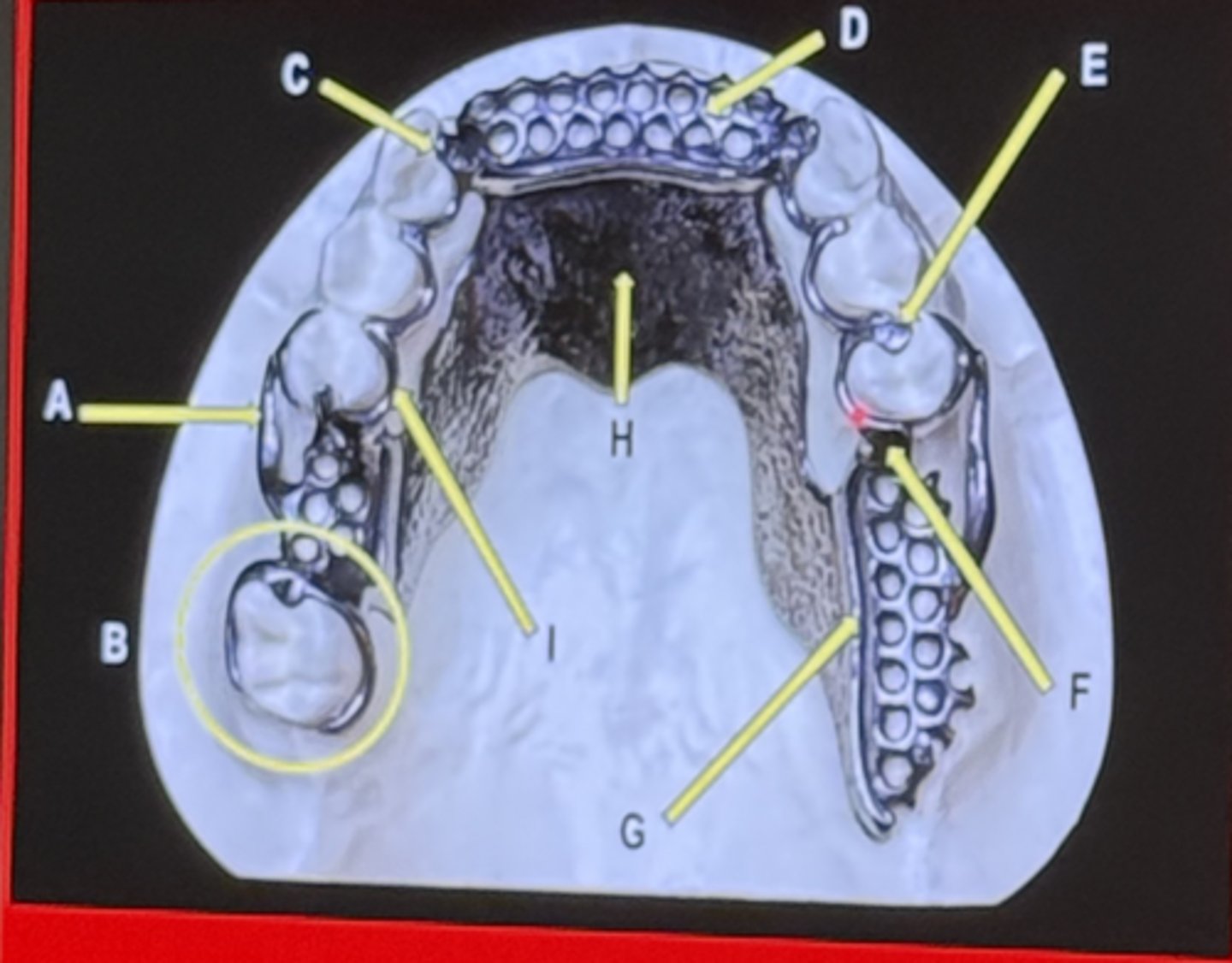
what is A
retentive arm, I bar
what is B
clasp assembly
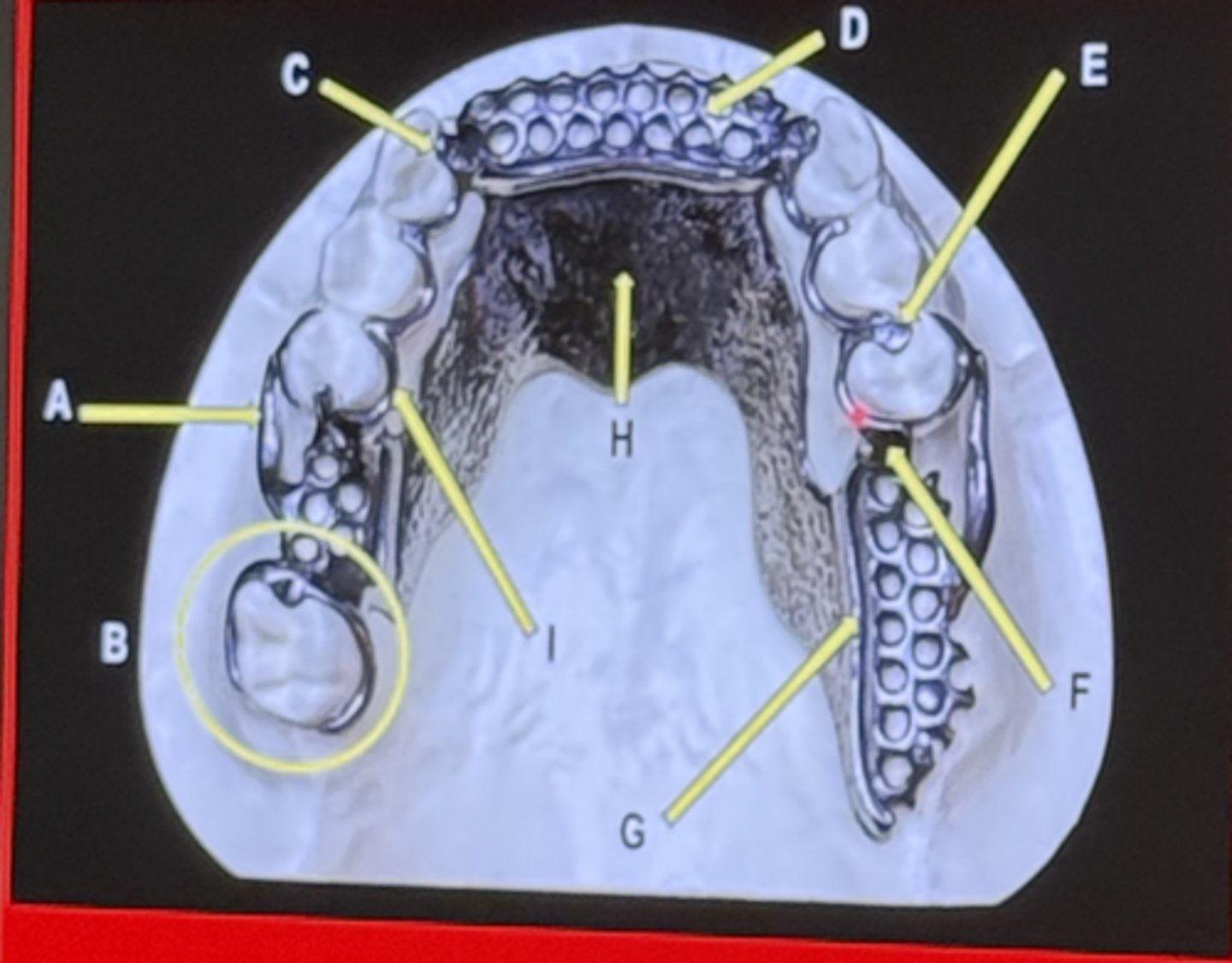
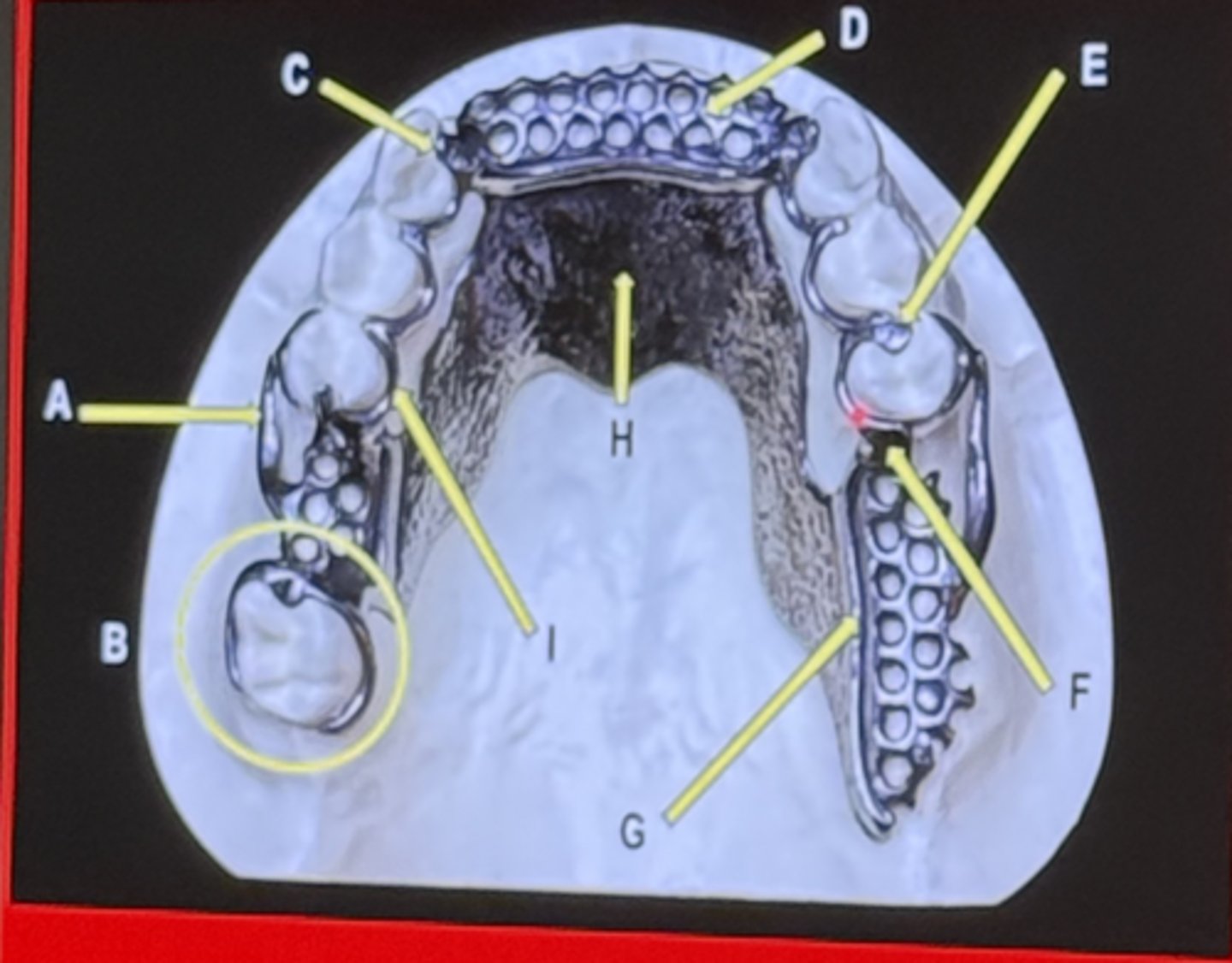
what is c
guie plate, indirect retainer, m/c rest
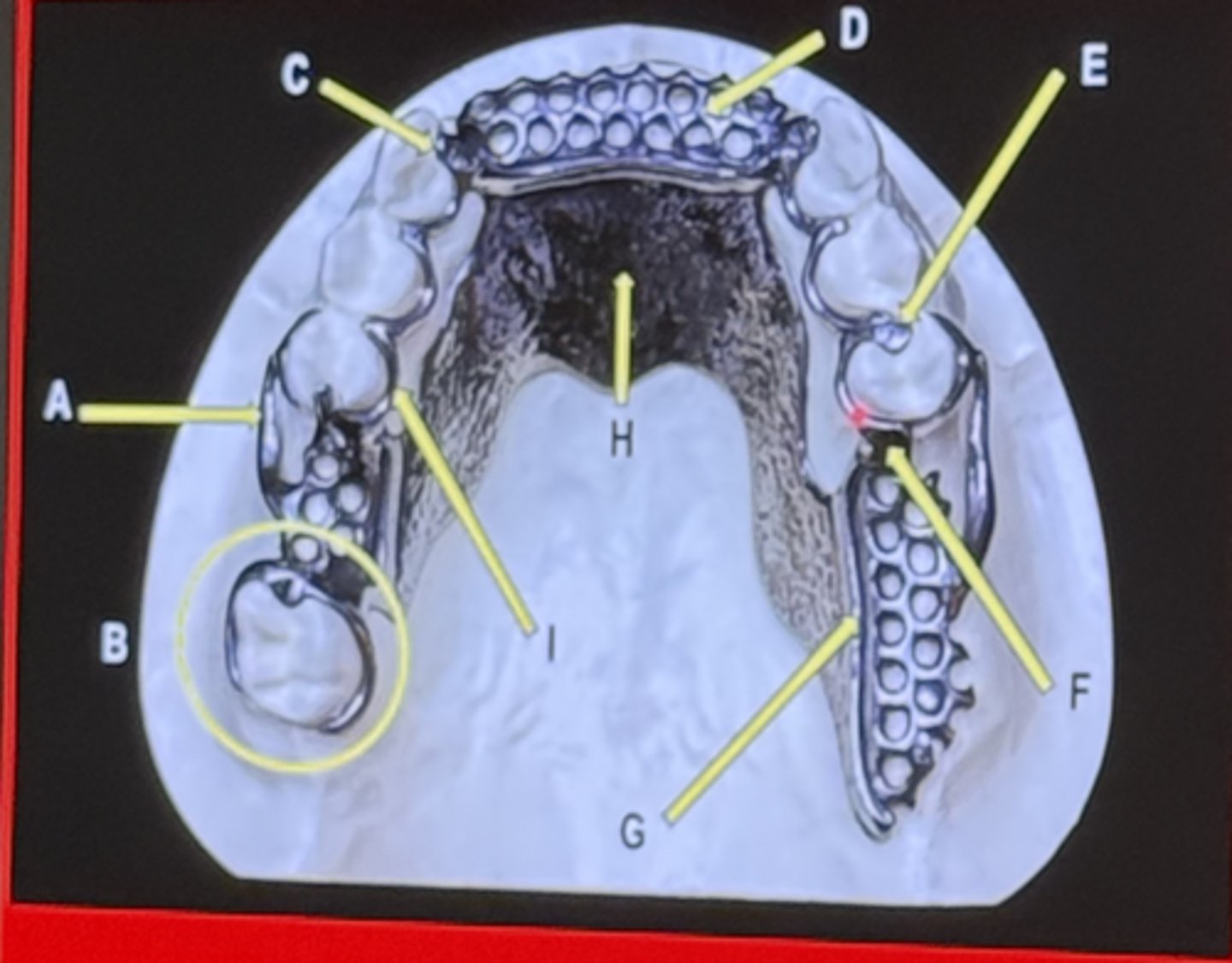
what is d
base attachment( does it touch tissue)
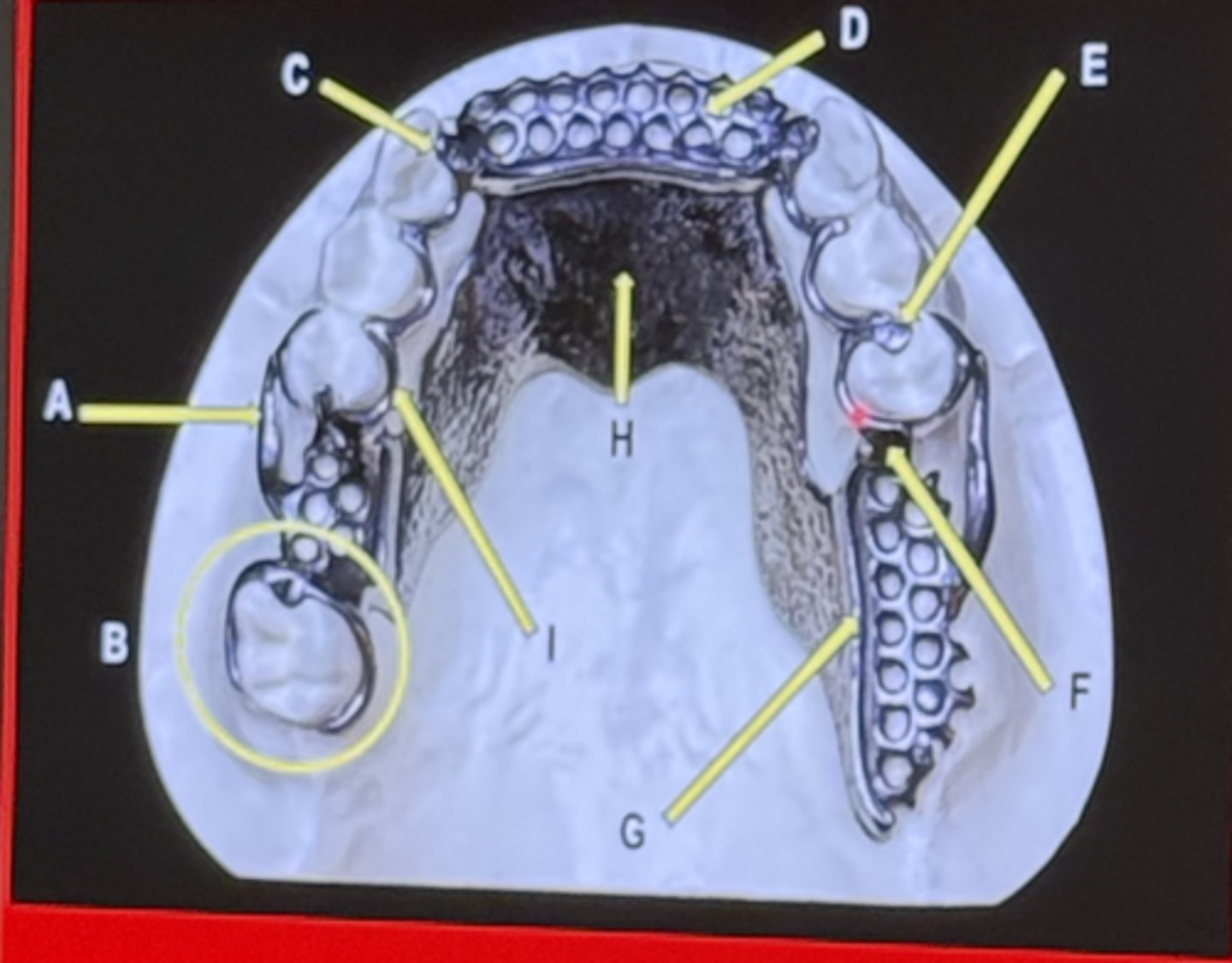
whats E
mesial rest, occlusal RPI
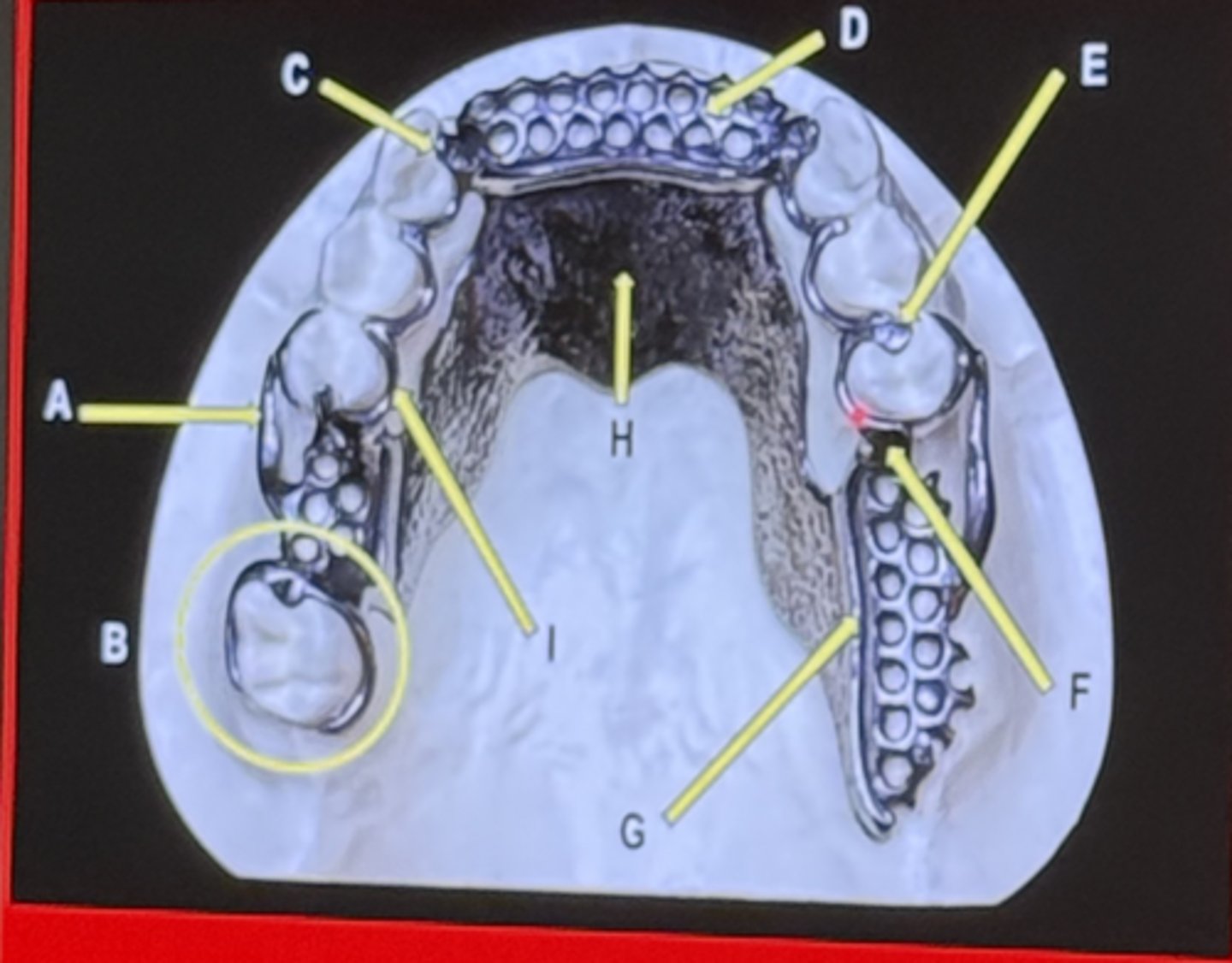
what is F
guide plate
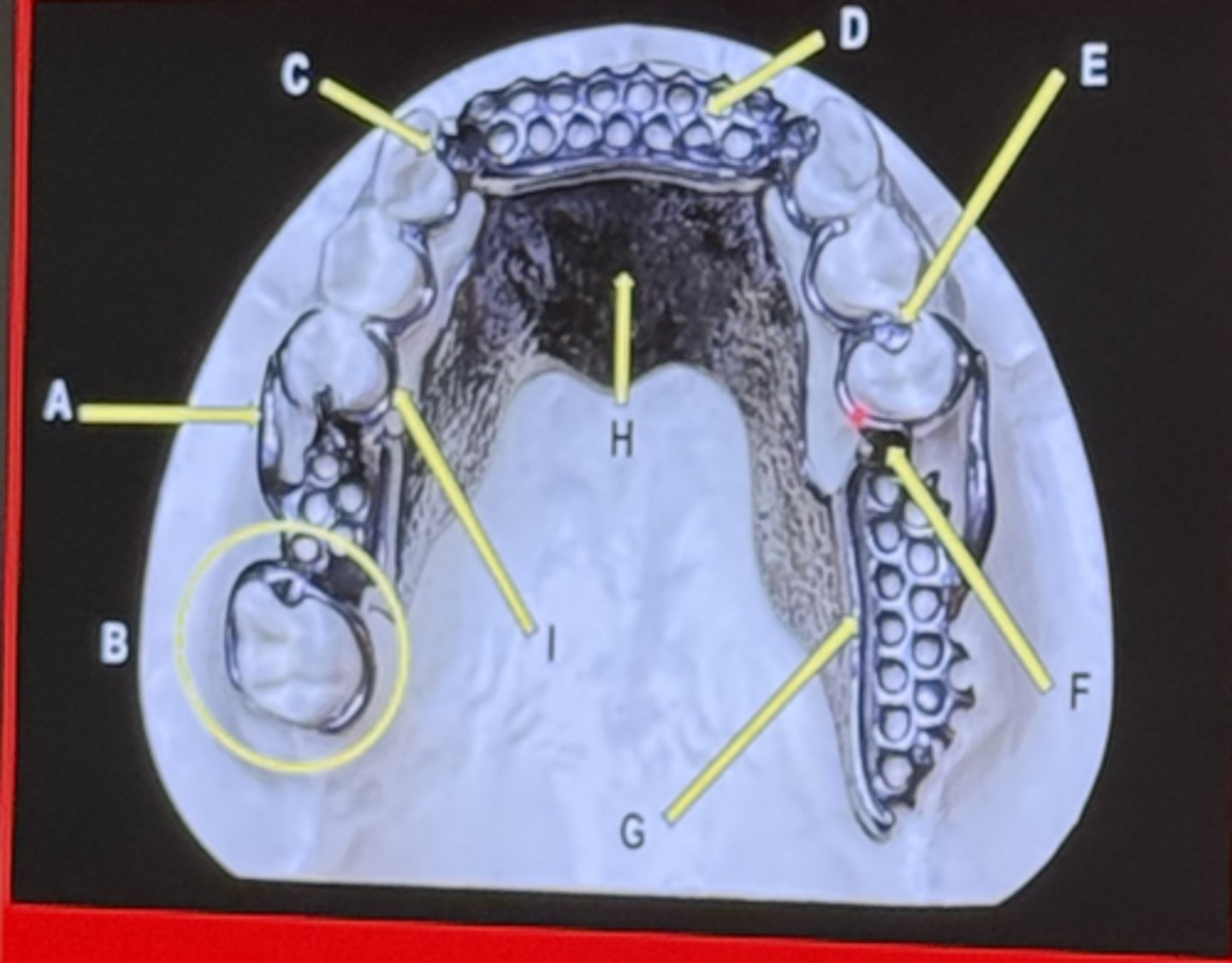
what is G
external finish line
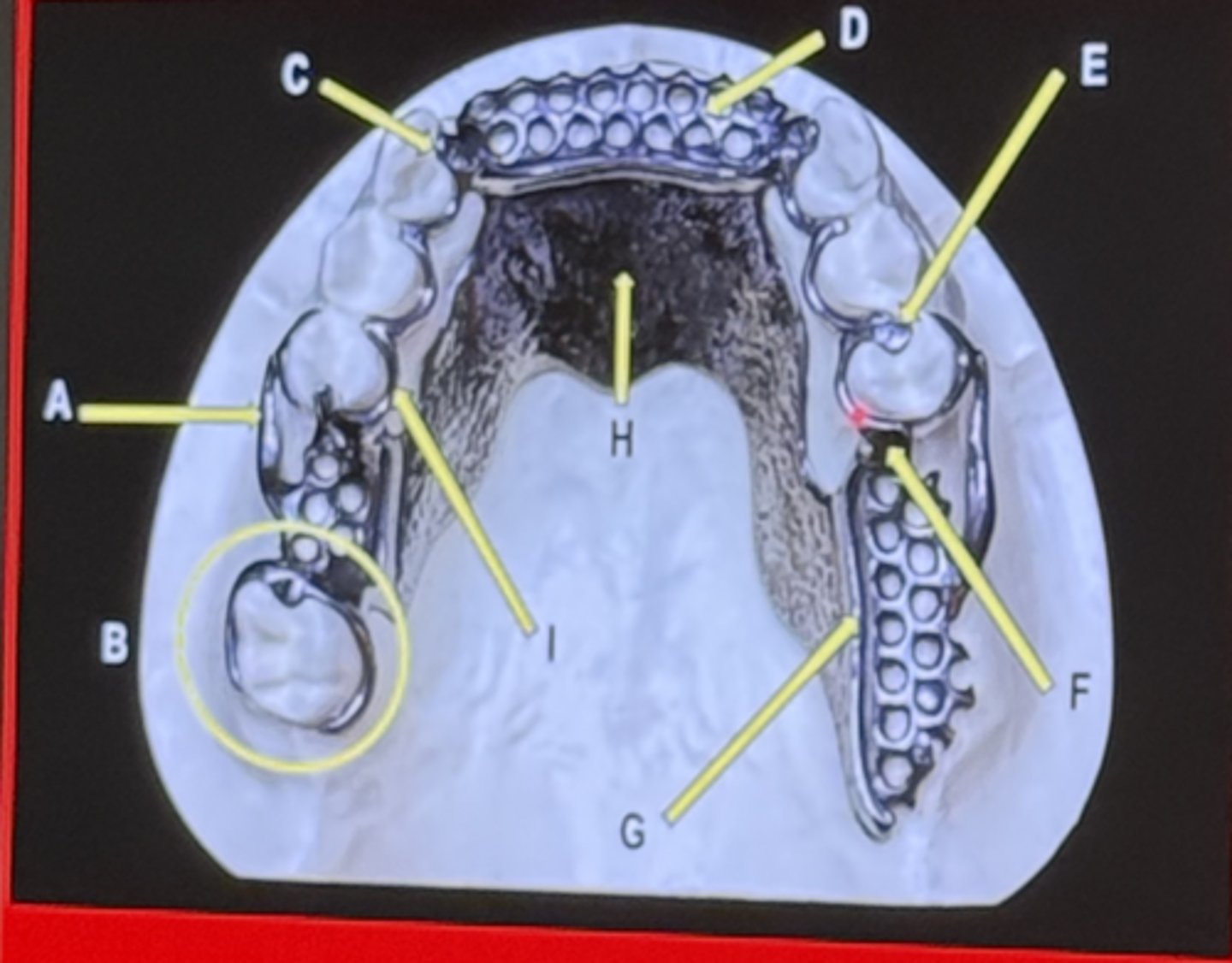
what is H
major connector anterior palatal strap
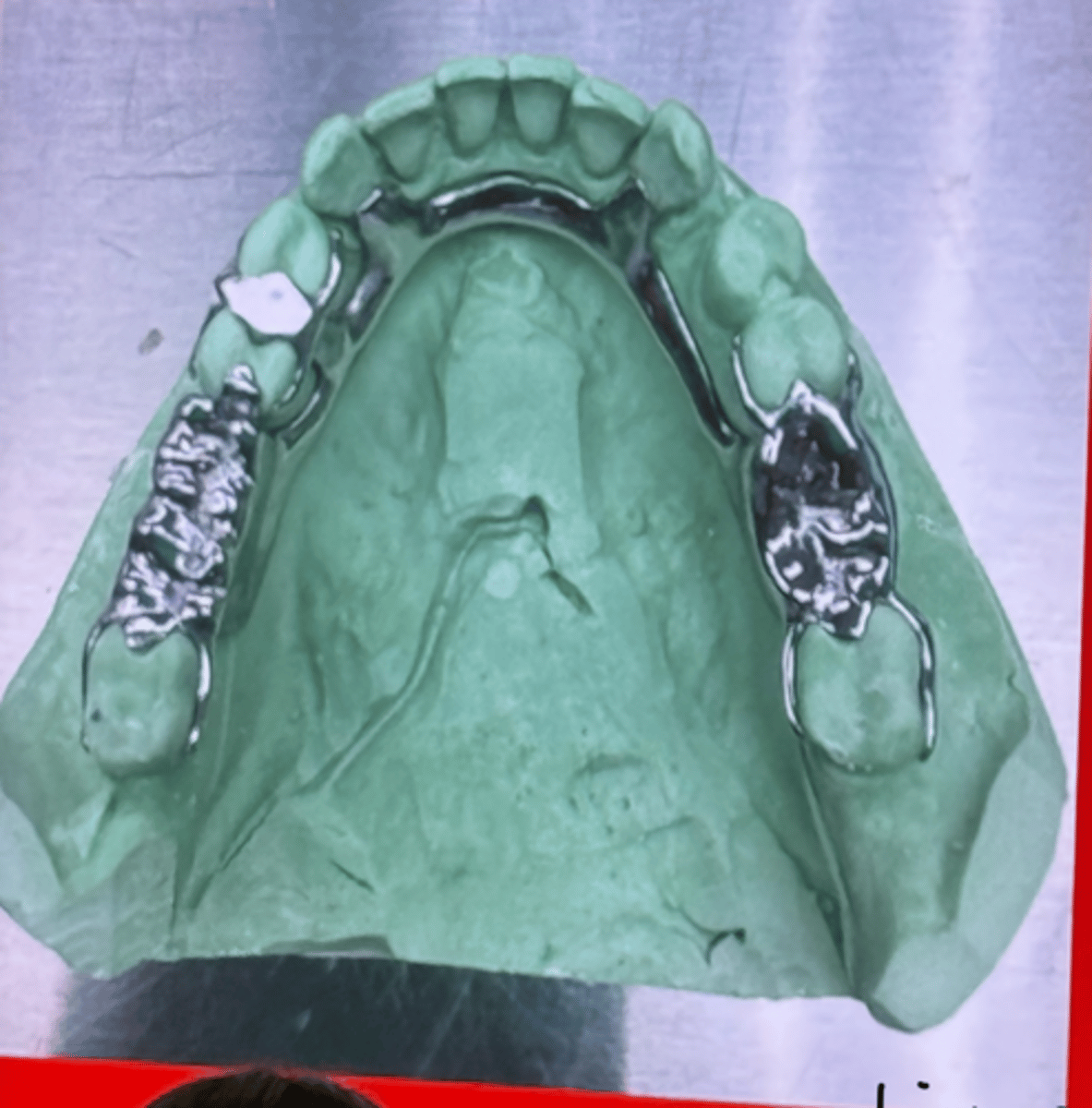
Class?
III mod I
internal finish lines?
NONE
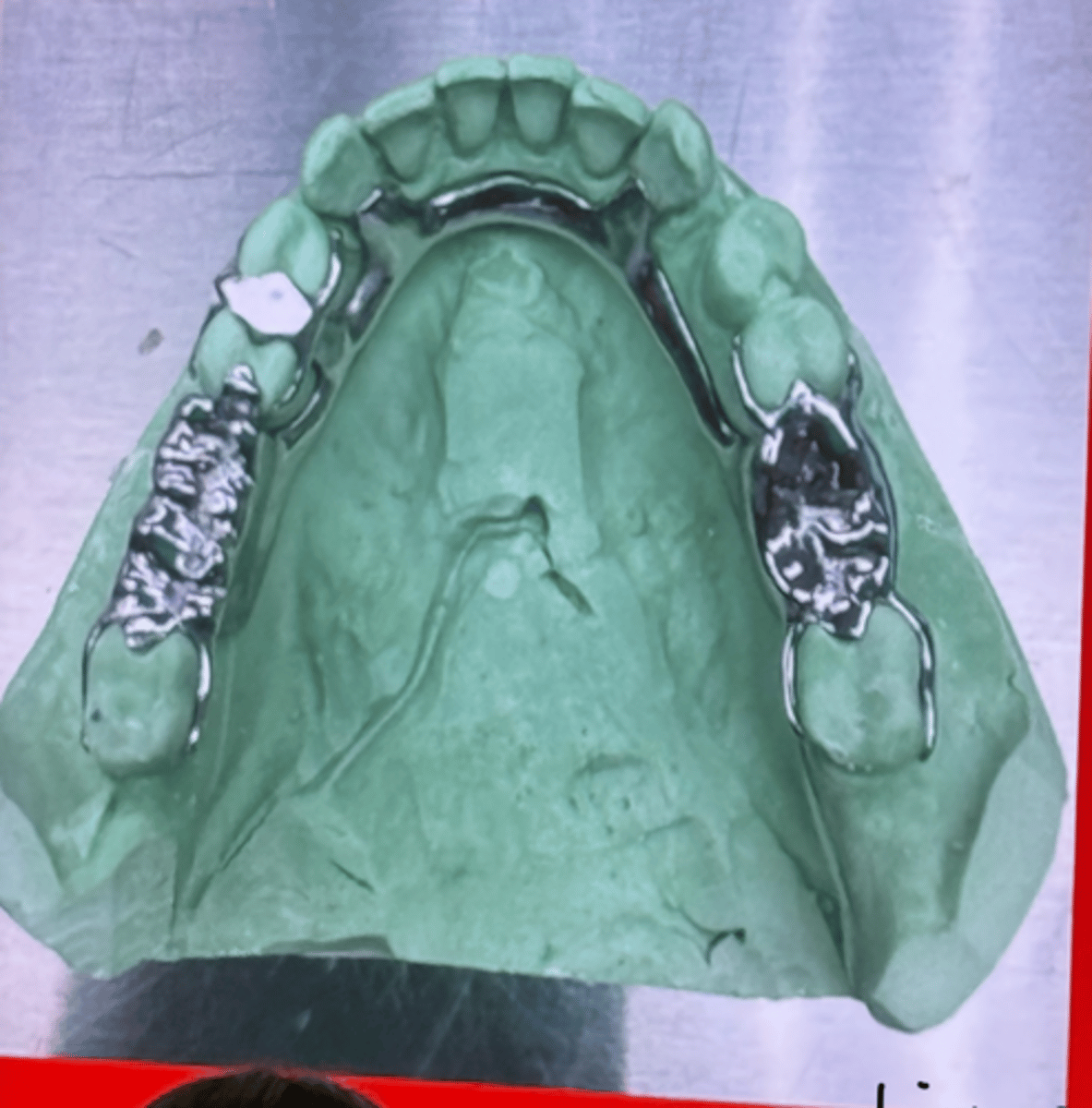
external finish lines
none
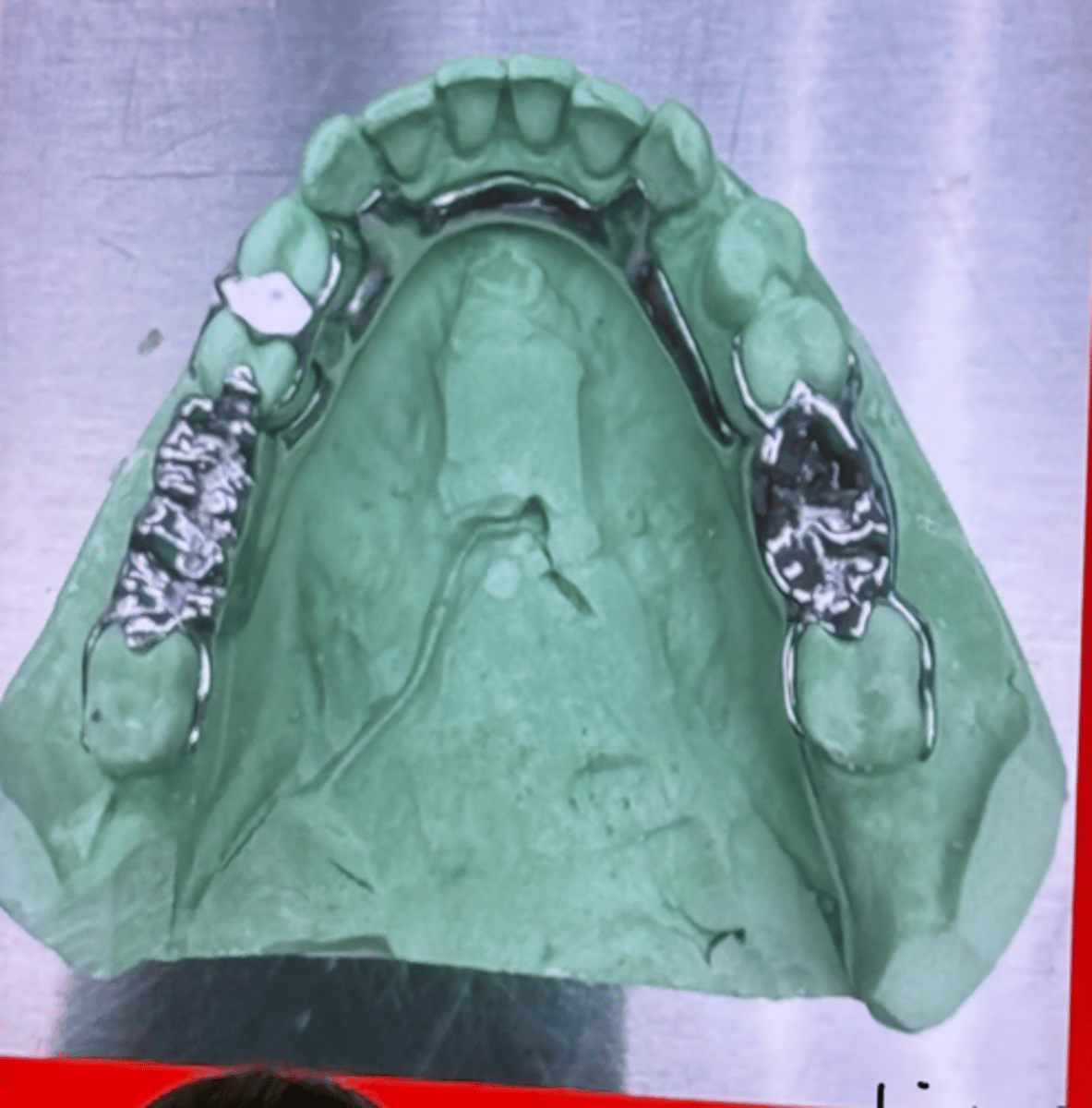
How many base attachments
none
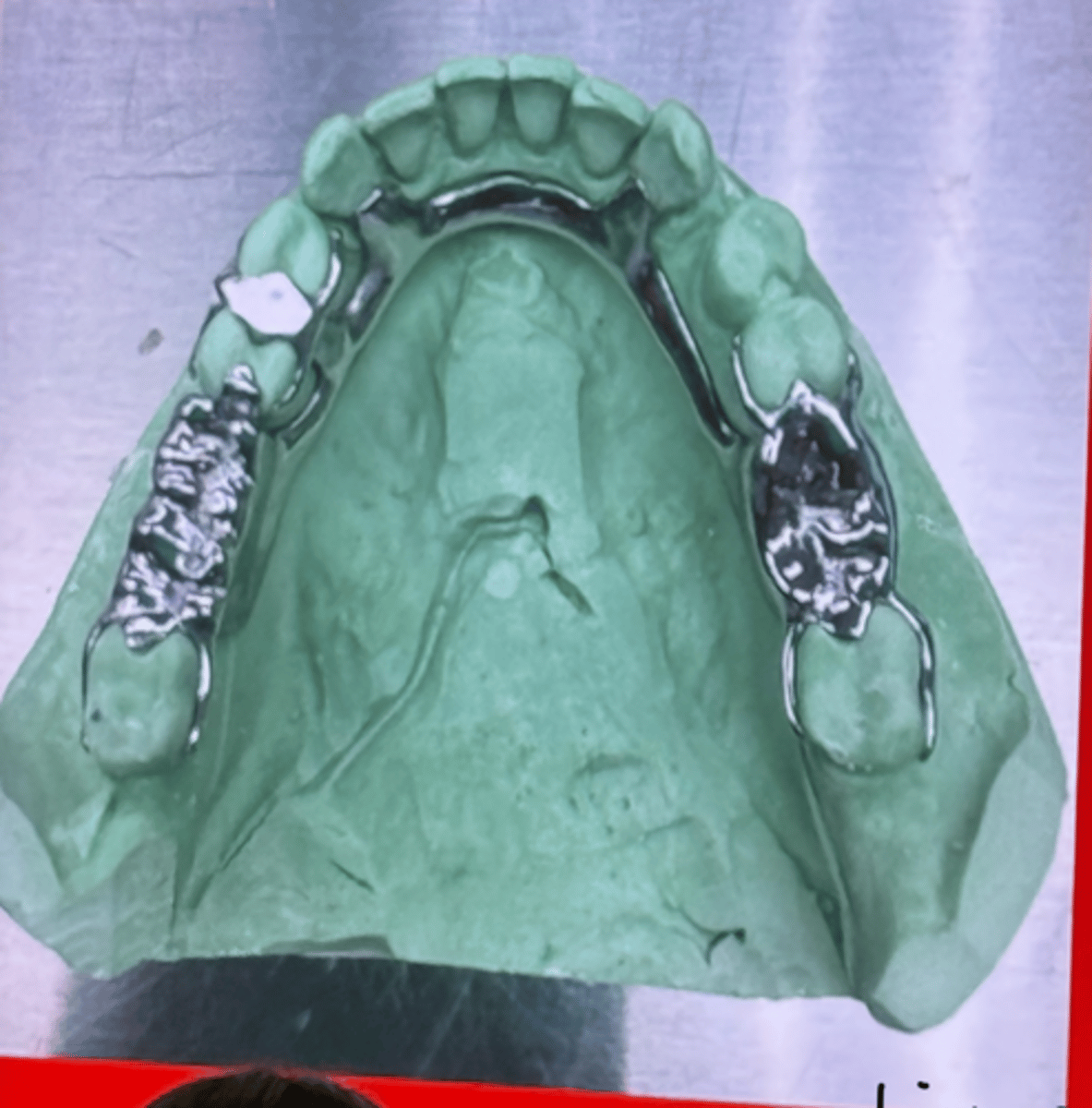
what class
class II mod II
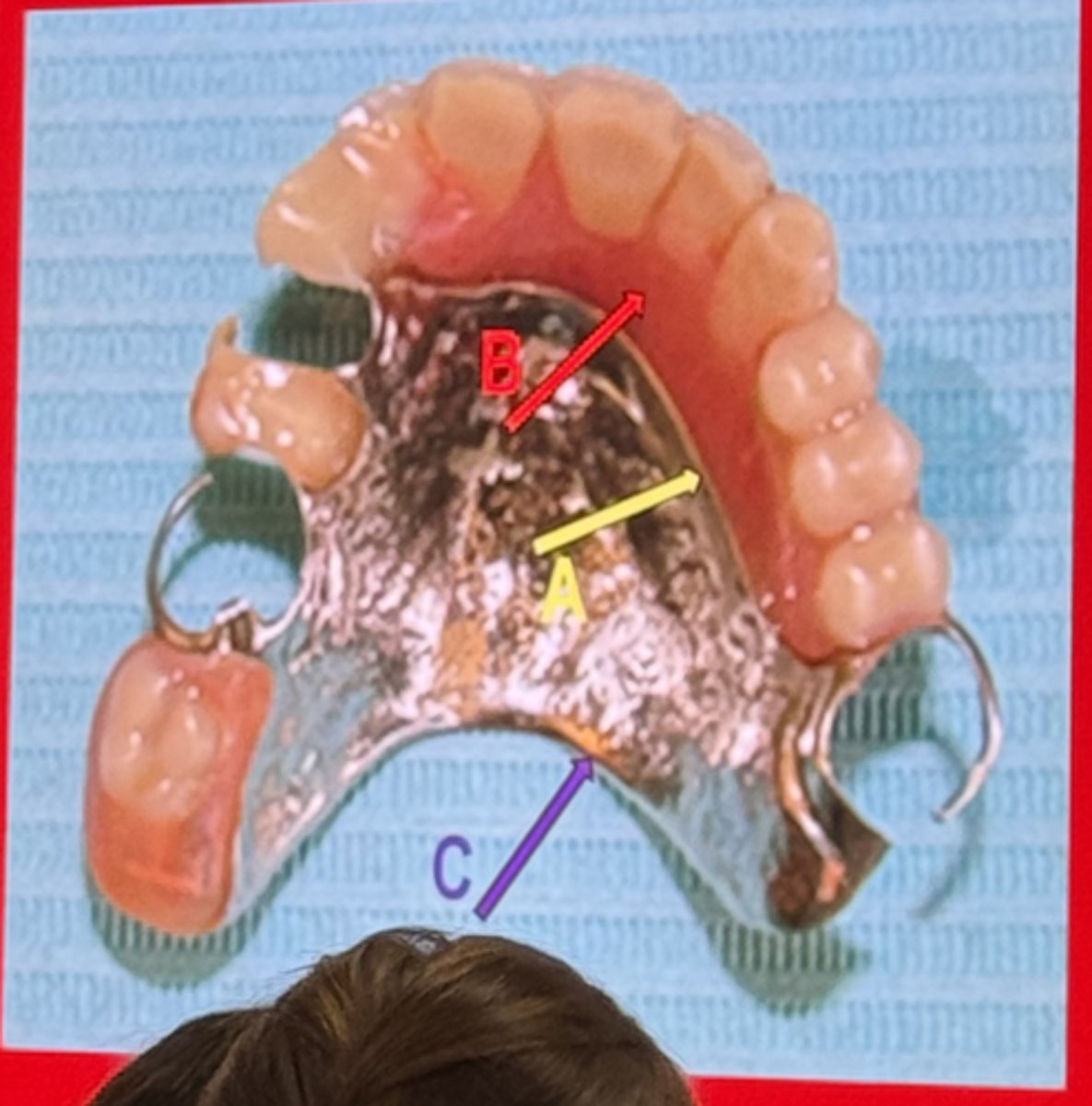
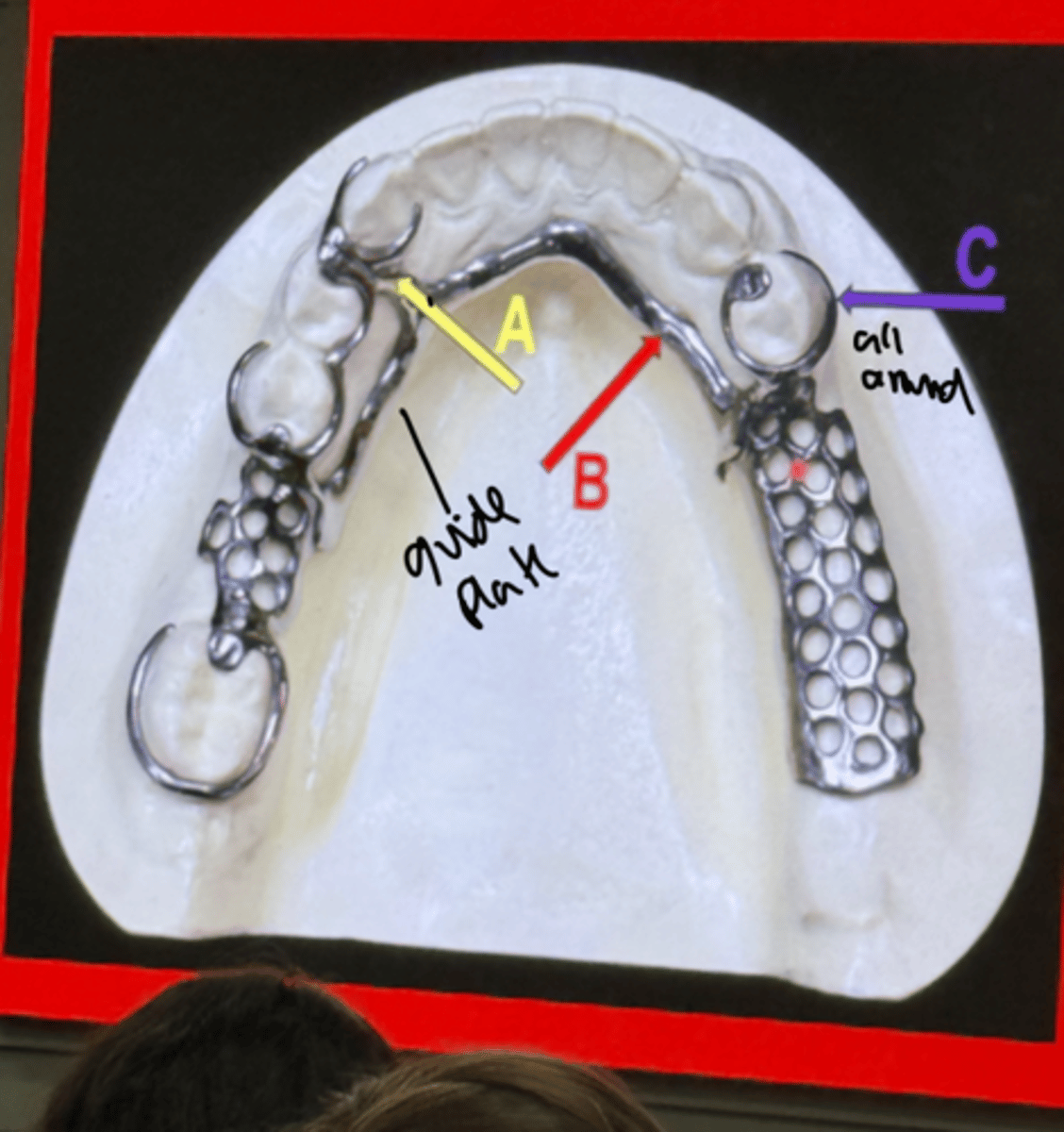
Yellow line is pointing too
external finish line
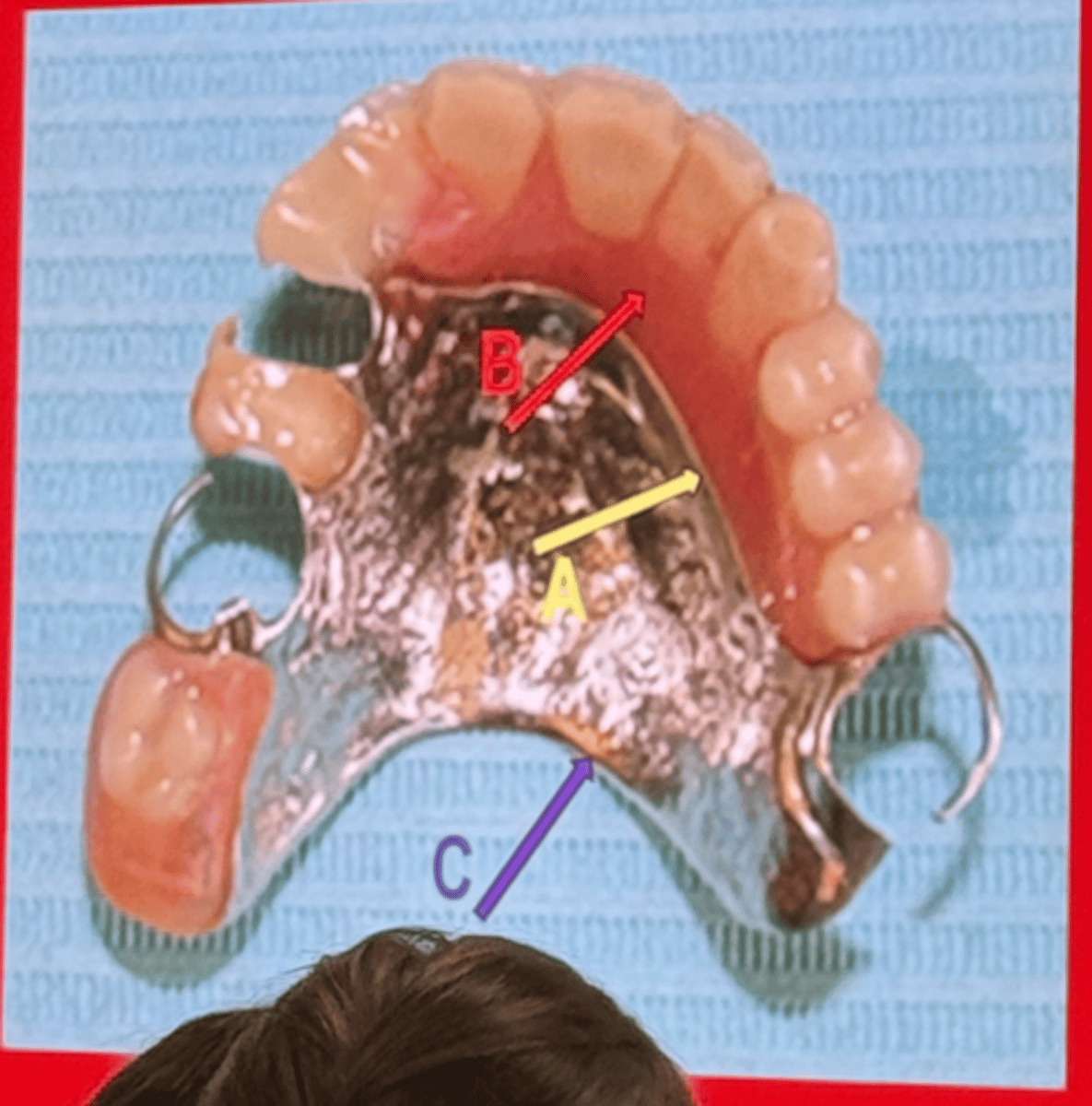
what is the red arrow pointing too
acrylic base
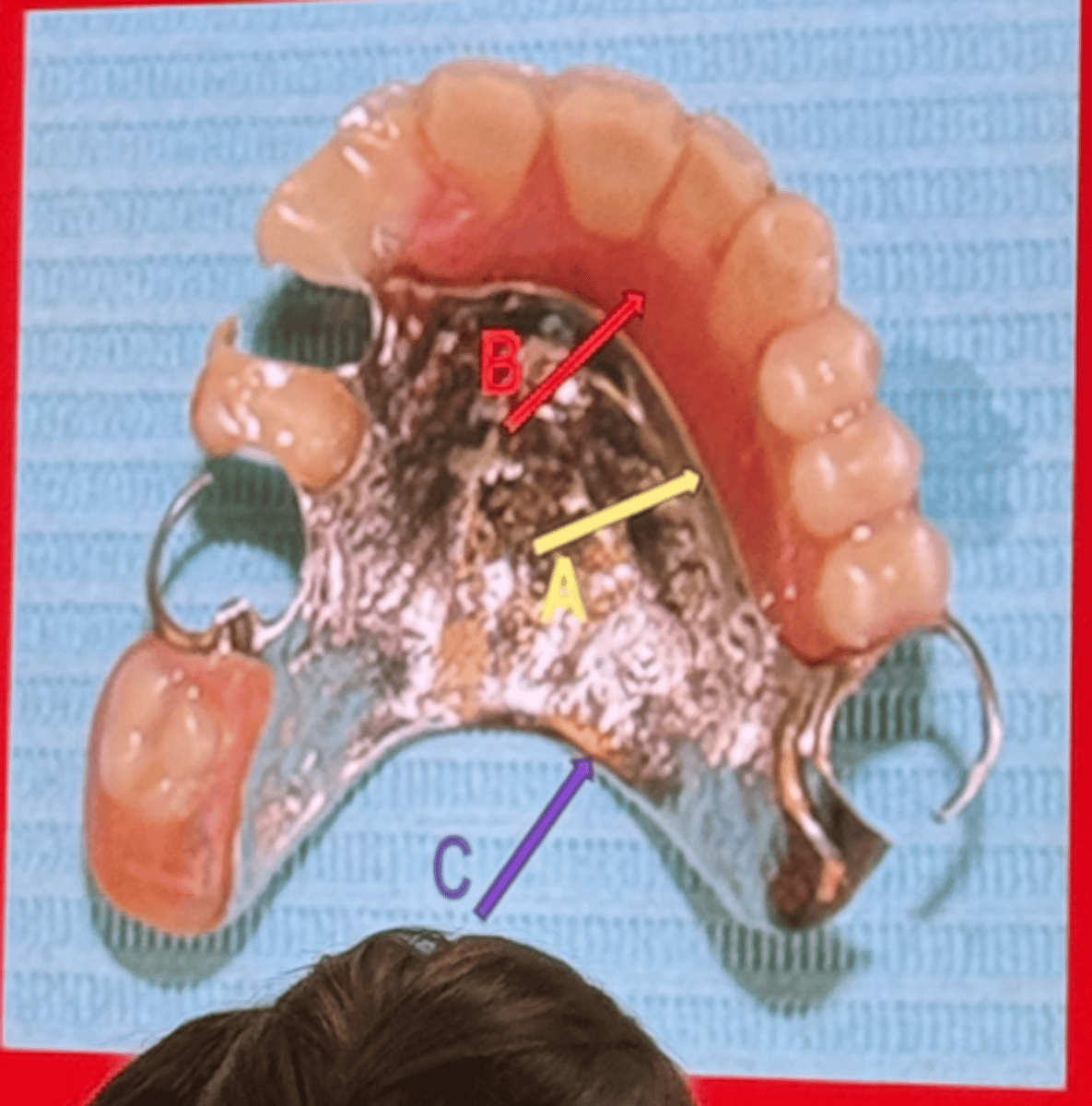
whats labeled C
- major connector
-MC full palatal coverage
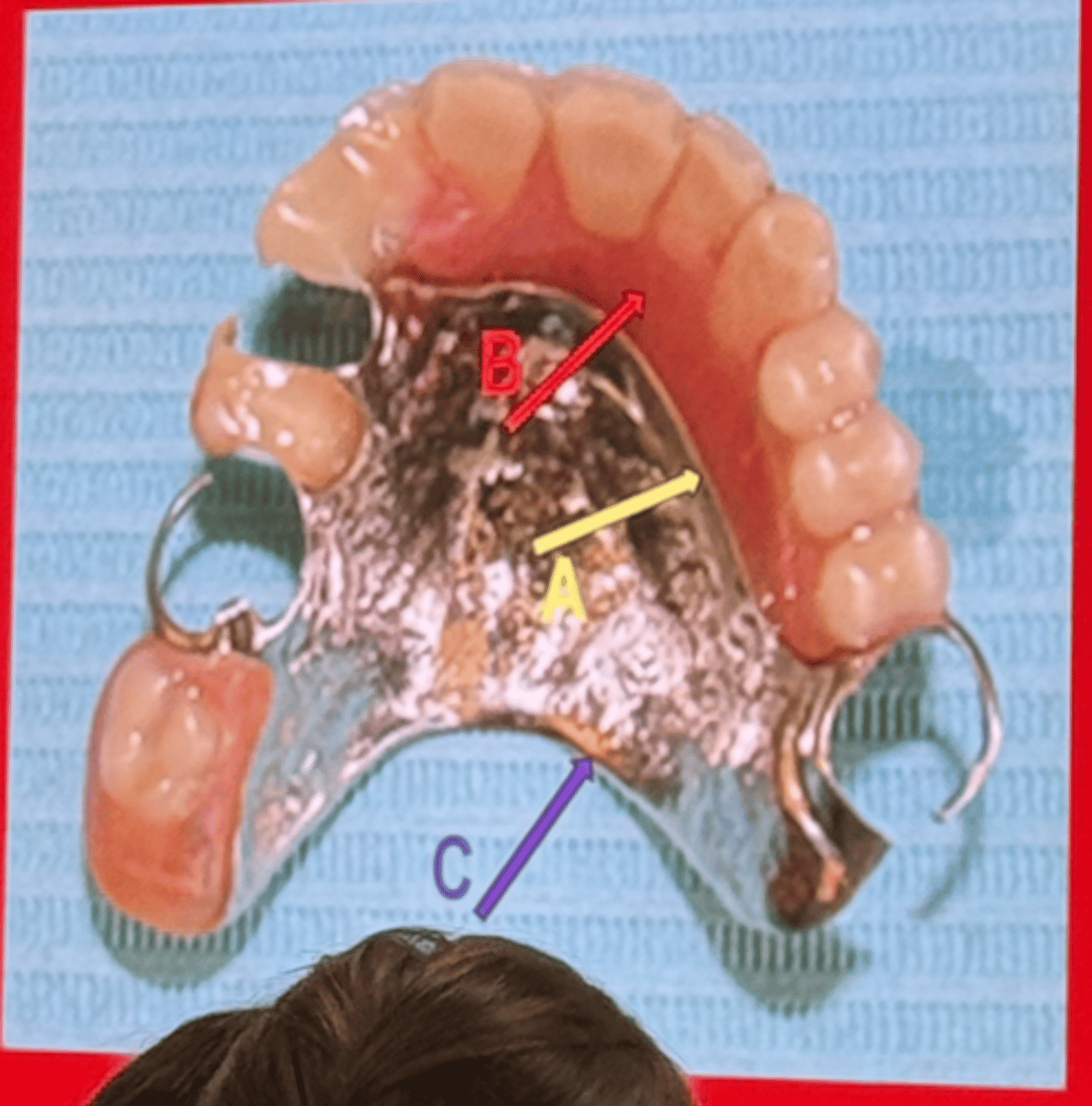
whats A?
Class?
Red arrow
C?
minor conector
class II mod I
lingual bar major connector
retentive arm