Lecture: Reproductive system
 Call Kai
 Learn
Learn Practice Test
 Spaced Repetition
 Match
Match Flashcards
 Knowt Play
1/36

There's no tags or description
Looks like no tags are added yet.
Name | Mastery | Learn | Test | Matching | Spaced | Call with Kai |
|---|
No analytics yet
Send a link to your students to track their progress
37 Terms
What is the route are the structures the oocyte passes through as it makes it’s way the through the female reproductive system??
The oocyte passes through the ovaries, fallopian tubes, uterus, cervix, vagina, opening
The uterus bottlenecks into which structure?
the cervix. The cervix is the narrow passage that connects the uterus to the vagina.
When does ovulation occur?
Ovulation occurs approximately 14 days before the start of menstruation in a typical 28-day menstrual cycle, marking the release of a mature oocyte from the ovary.
What is the name of the finger-like projections that capture the egg when it is released from the ovary?
The finger-like projections are called fimbriae. They help guide the released egg into the fallopian tube.
What part of the female reporductive structure should an egg be fertilized to ensure successful pregnancy? At what depth or length of the structure?
The egg should be fertilized in the fallopian tube, where sperm meets the egg, allowing for implantation in the uterus. 2/3 of the fallopian tube
What is the name of the scar tissue that is left behind after an egg is released from the ovary?
Corpus Luteum
What hormones does the Corpus Luteum produce?
The corpus luteum produces progesterone and estrogen, which are essential for maintaining the uterine lining during the early stages of pregnancy.
Fill in the blank
If a female isn’t pregnant the ______ will contract and slough off the ____
myometrium, endometriummyometrium, endometrium.
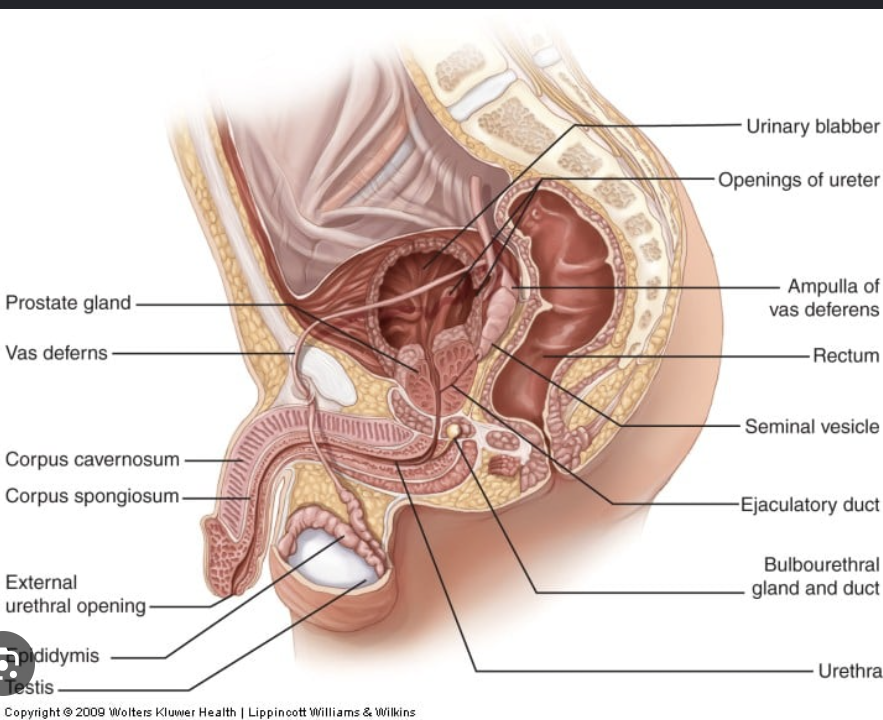
What is the route are the structures the sperm passes through as it makes it’s way the through the male reproductive system??
TEVSEUM
testes —> epididymis —> Vas deferens —> seminal vesicles —> ejaculatory duct —> urethra —> Meatus
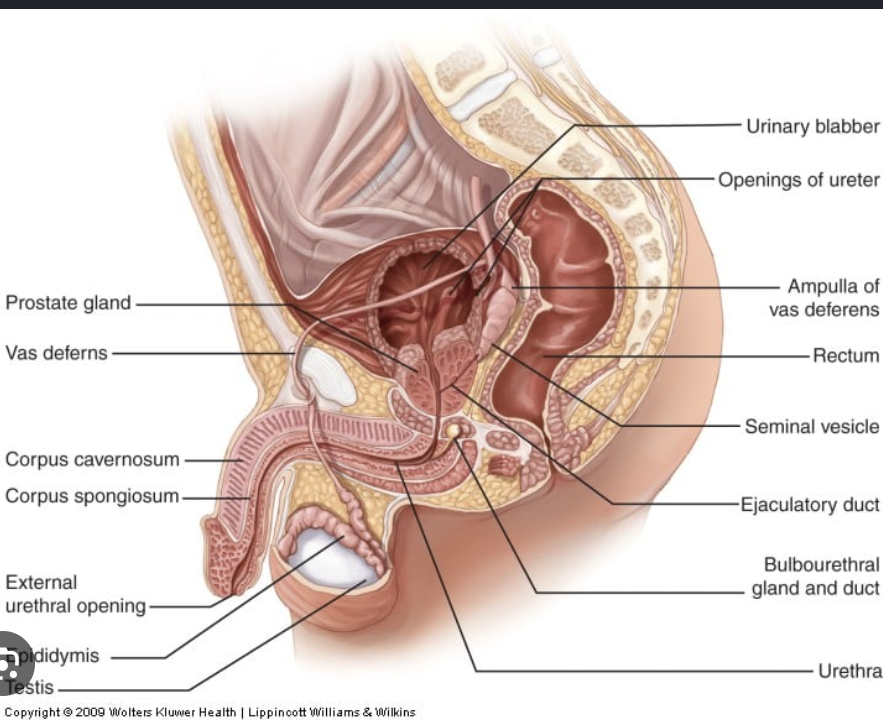
What is the meatus in the male reproductive structure?
The meatus is the external opening of the urethra, through which urine and semen exit the body in males.
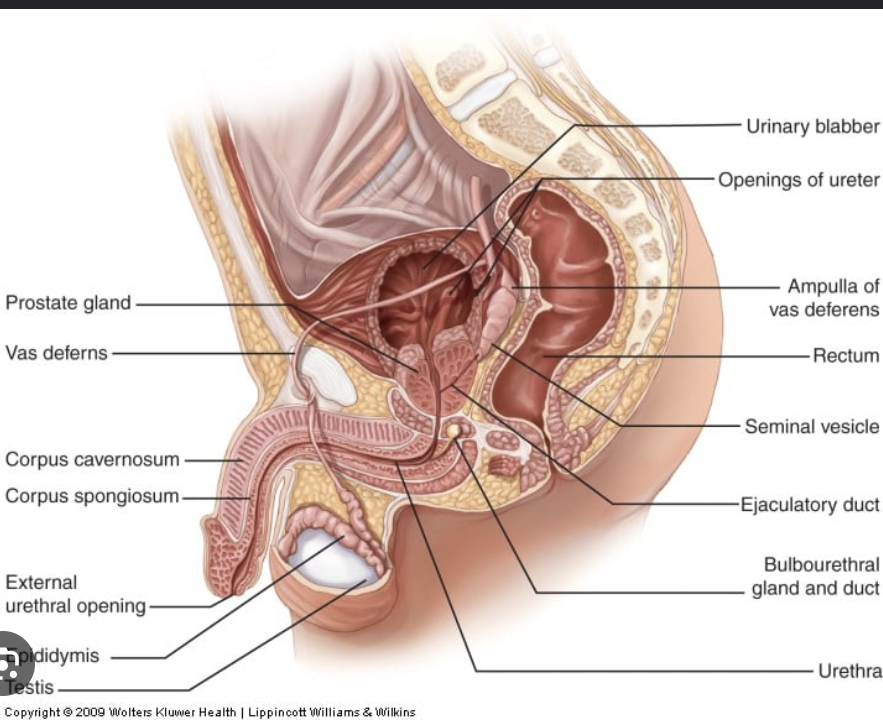
What process occurs in the testes?
site of sperm cell production, and hormone production
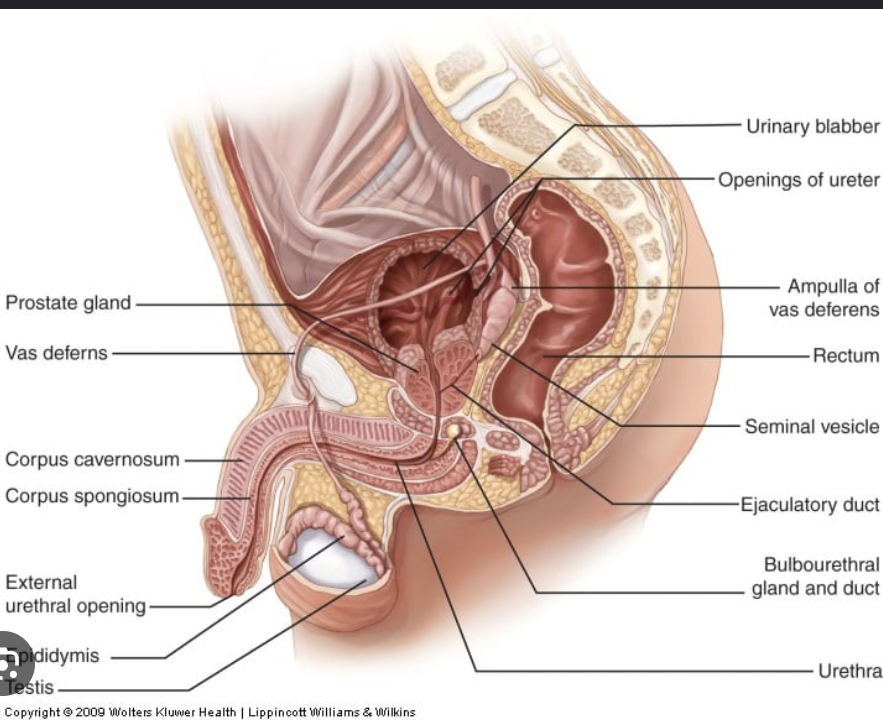
What process occurs in the epididymis?
The epididymis is the site of sperm maturation and storage, where sperm gain motility and ability to fertilize an egg.
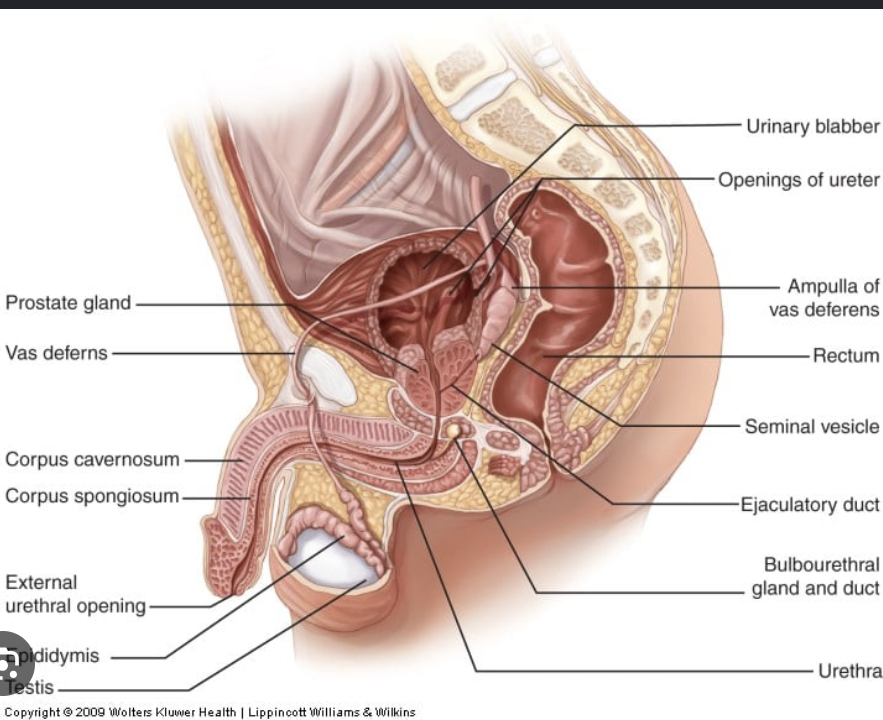
What process occurs in the vas deferens?
The vas deferens transports sperm from the epididymis to the ejaculatory duct, propelling sperm during ejaculation.
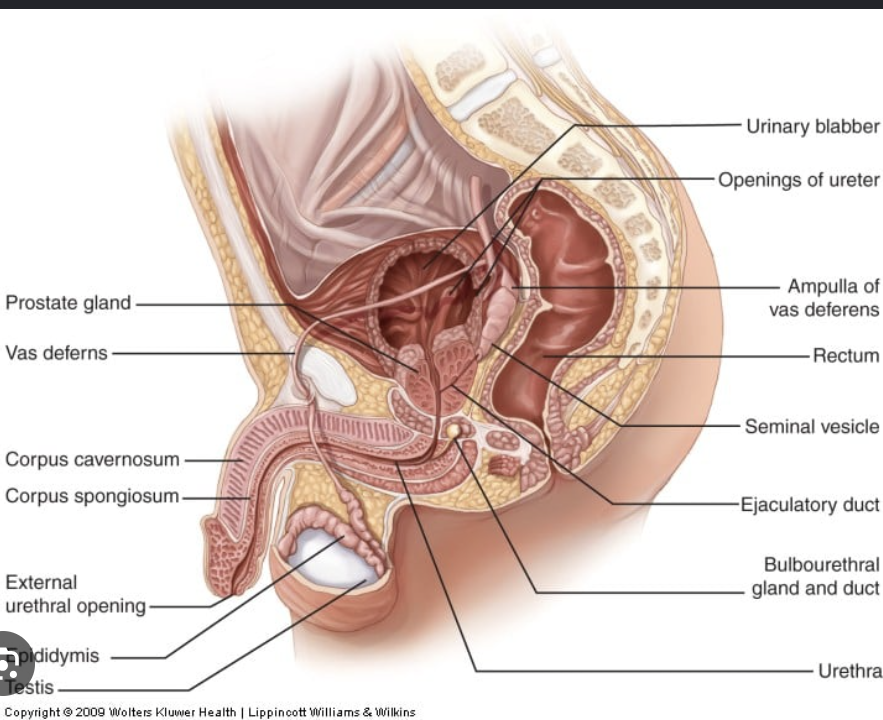
What process occurs in the seminal vesicles?
The seminal vesicles produce and secrete a fluid that nourishes sperm and forms a significant portion of semen. Sugar and acid- neutralizing components are added to the sperm
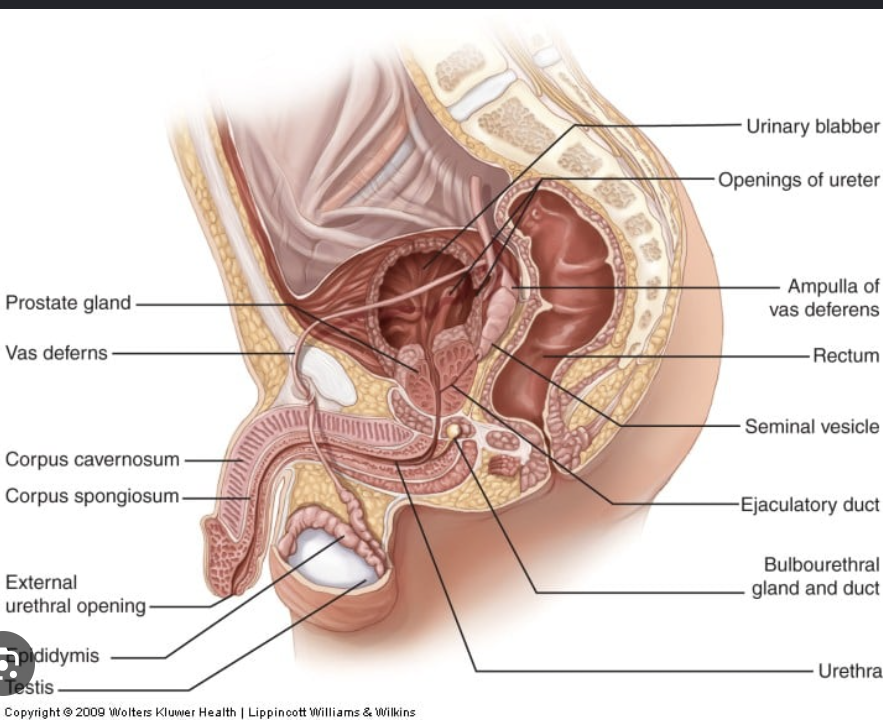
What process occurs in the males ejaculatory duct?
The ejaculatory duct carries sperm from the vas deferens and mixes it with fluid from the seminal vesicles and prostate, producing semen that is expelled during ejaculation.
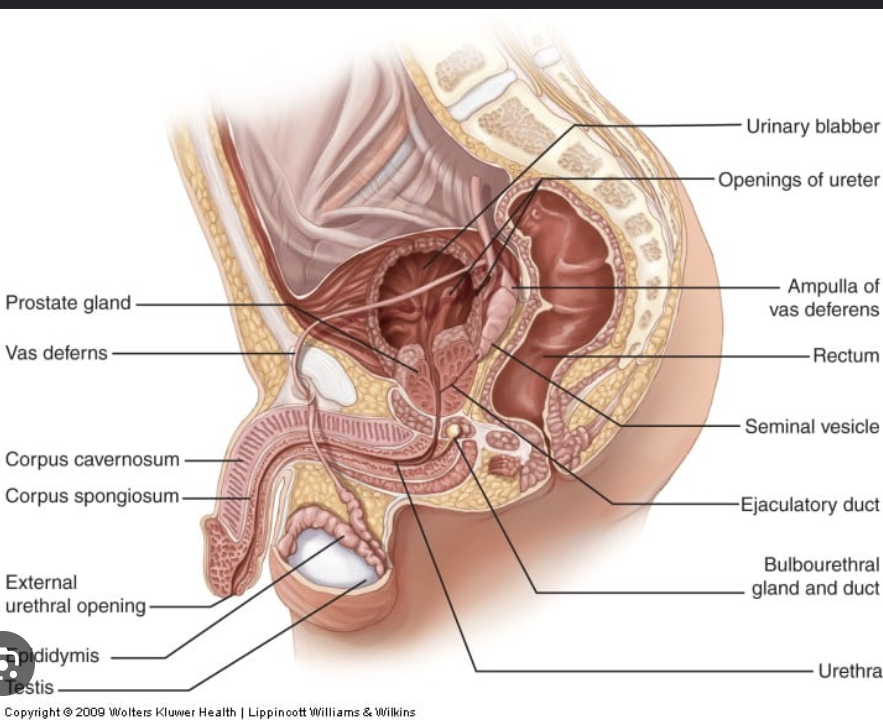
what is the difference between the semiferous tubules and the epididymis?
The seminiferous tubules are located within the testes and are the site of sperm production, while the epididymis is a coiled duct where sperm mature and are stored after production.
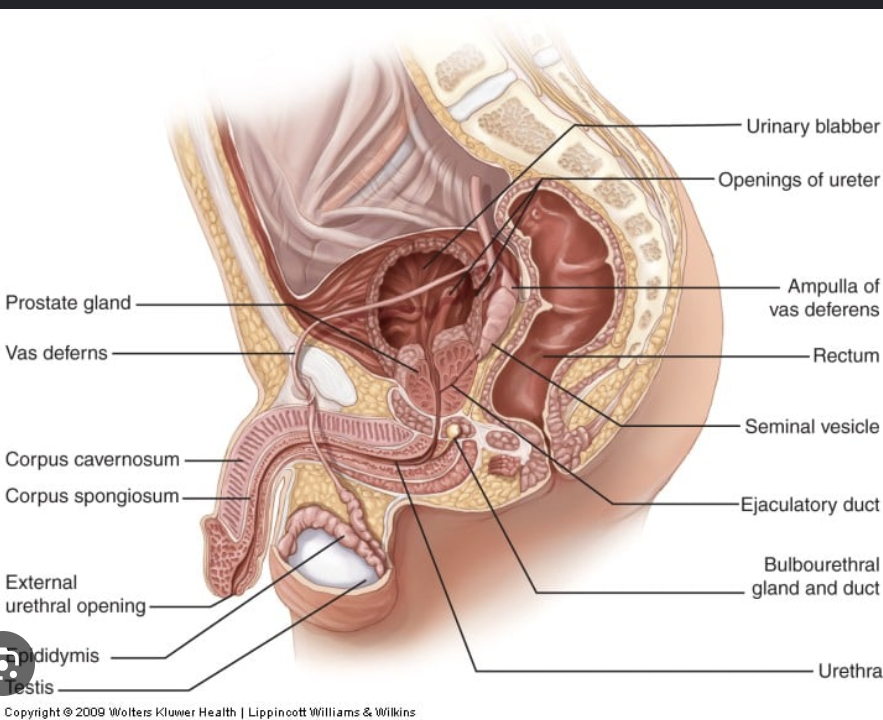
true or false
the male reproudctuve system combines the urinary and reproductive system?
True. The male reproductive system shares structures with the urinary system, including the urethra, which serves both functions.
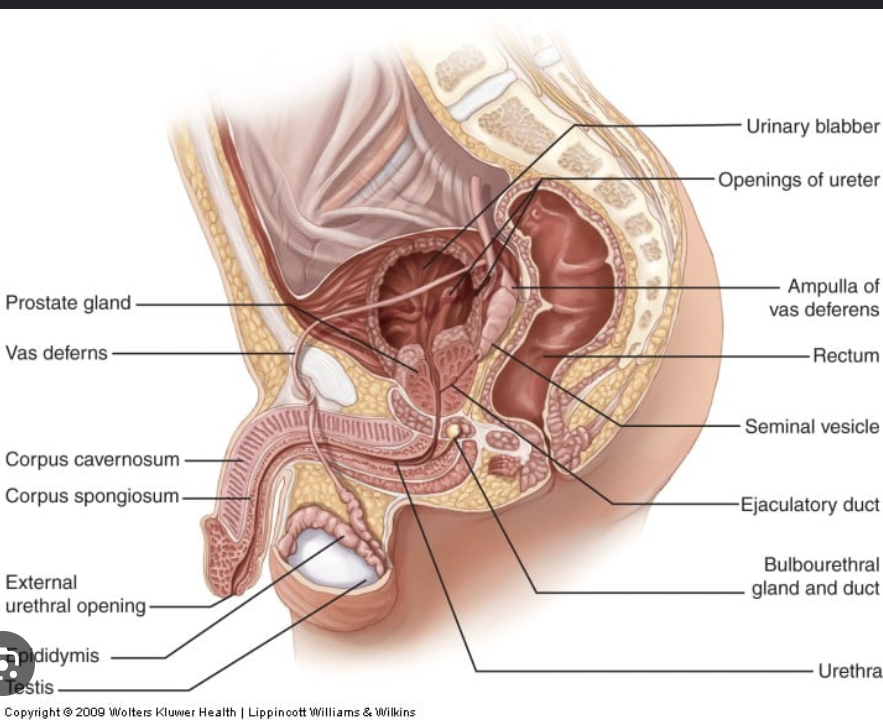
Where is the prostate located?
The prostate is located below the bladder and surrounds the urethra in males. It plays a role in producing seminal fluid that nourishes and transports sperm.
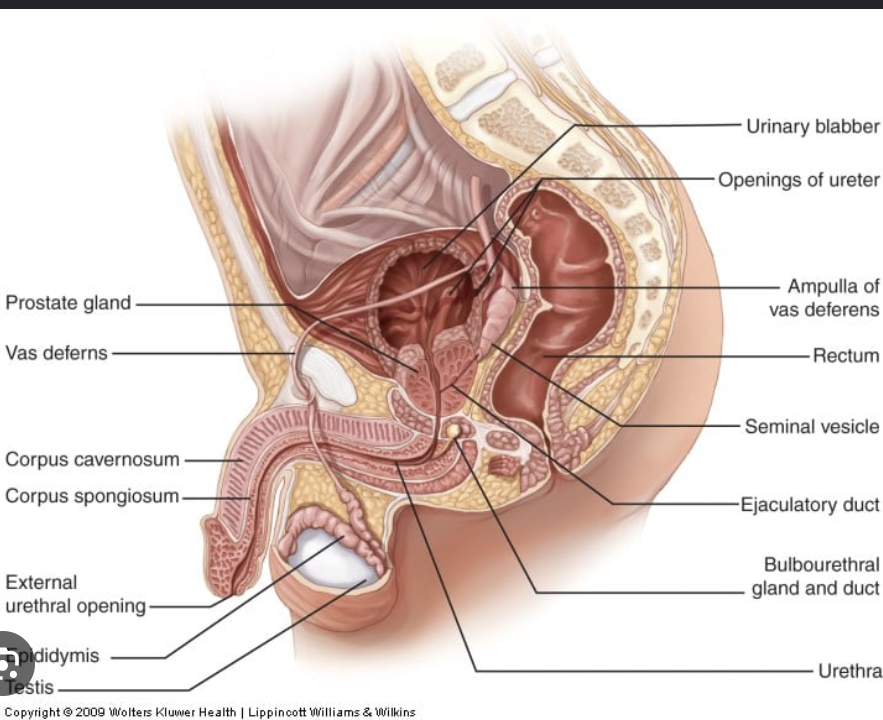
What is the function of the Bulbourethal gland?
The Bulbourethral gland, also known as Cowper's gland, produces a pre-ejaculatory fluid that lubricates the urethra and neutralizes acidity, providing a suitable environment for sperm during ejaculation.
Fill in the blank
The ____ cells make testosterone. Meanwhile, the ____ cells make sperm
Leydig, Sertoli
Why do the testes distend during sperm production?
The testes distend during sperm production to aid in the cooling of sperm, maintaining an optimal temperature for sperm development and producing hormones.
what are the 3 structures involved in ejaculation?
vas deferens
ejaculatory duct
urethra
What structure contributes to majority of the fluid in semen and neutralizes acid?
The seminal vesicles
Read
the prostate gland: secretes fluid that neutralizes acidity of the vaginal canal directly into the urethra.
What does the bulbourethral gland do?
It produces a pre-ejaculate fluid that lubricates the urethra and neutralizes acidity.
Fill in the blank
_____ ____ is a gas that relaxes a male sphincter and makes an errction possible
Nitric oxide Nitric oxide
How many tissues is the penis comprised of? what are they?
The penis is comprised of three erectile tissues. Spongy erectile tissue and the prepuce
What events lead to an erection?
An erection occurs when blood fills the erectile tissues of the penis, primarily due to the release of nitric oxide, which causes vasodilation and increased blood flow.
What is the name of the tissue removed during circumcision?
The tissue removed during circumcision is called the foreskin, prepuce
what is gametogenesis?
Gametogenesis is the process by which germ cells develop into mature gametes, including sperm and eggs, through meiosis.
what is spermatogenesis?
Spermatogenesis is the process by which male germ cells develop into mature spermatozoa through meiosis and subsequent differentiation.
What is oogenesis?
Oogenesis is the process by which female germ cells develop into mature ova (eggs) through meiosis and changes in the ovarian follicles.
what is the difference between spermatogenesis and oogenesis?
Spermatogenesis and oogenesis are both types of gametogenesis; however, spermatogenesis occurs in males, producing multiple sperm cells, while oogenesis occurs in females, resulting in one mature egg and polar bodies from each cycle. the release of the egg starts in puberty and stops in menopause
What is the function of the hormone FSH?
FSH, or Follicle-Stimulating Hormone, is crucial for regulating reproductive processes. In females, it stimulates the growth of ovarian follicles, while in males, it promotes spermatogenesis by acting on Sertoli cells in the testes.
What is the function of the LH hormone?
LH, or Luteinizing Hormone, plays a vital role in regulating the reproductive system; in females, it triggers ovulation and the development of the corpus luteum, while in males, it stimulates testosterone production from Leydig cells in the testes.
what are secondary effects of sex hormones?
Secondary effects of sex hormones refer to the physiological changes that occur in individuals due to the actions of sex hormones such as estrogen and testosterone. These effects include the development of secondary sexual characteristics, such as breast development in females and muscle growth in males, along with influences on fat distribution, libido, and behavior. Voice, Height