CHAIRSIDE (DA 5002) - Lectures 4-7
 Call Kai
 Learn
Learn Practice Test
 Spaced Repetition
 Match
Match Flashcards
 Knowt Play
1/166

There's no tags or description
Looks like no tags are added yet.
Name | Mastery | Learn | Test | Matching | Spaced | Call with Kai |
|---|
No analytics yet
Send a link to your students to track their progress
167 Terms
What is the saliva ejector and when is it used?
WHAT
- straw-like
- controls saliva under dental dam
- helps keep area dry when doing cementation of a crown or bridge
USE
- less invasive procedures
- prophylaxis (teeth cleaning)
- fluoride treatments
- sealants
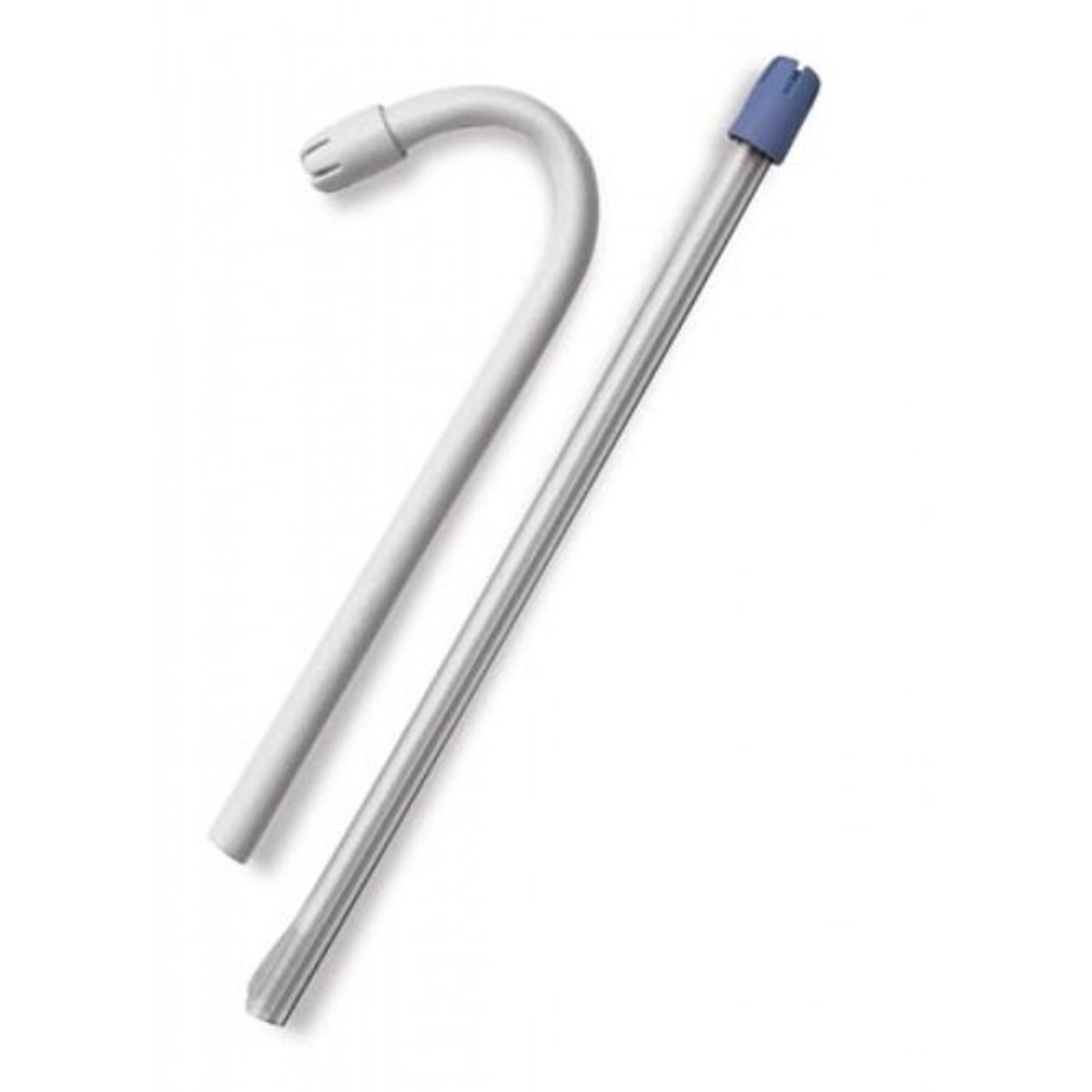
How should a saliva ejector be placed?
- bend and shape for stationary placement
- position under tongue
- position opposite side from where dentist is working
HVE
High volume evacuator
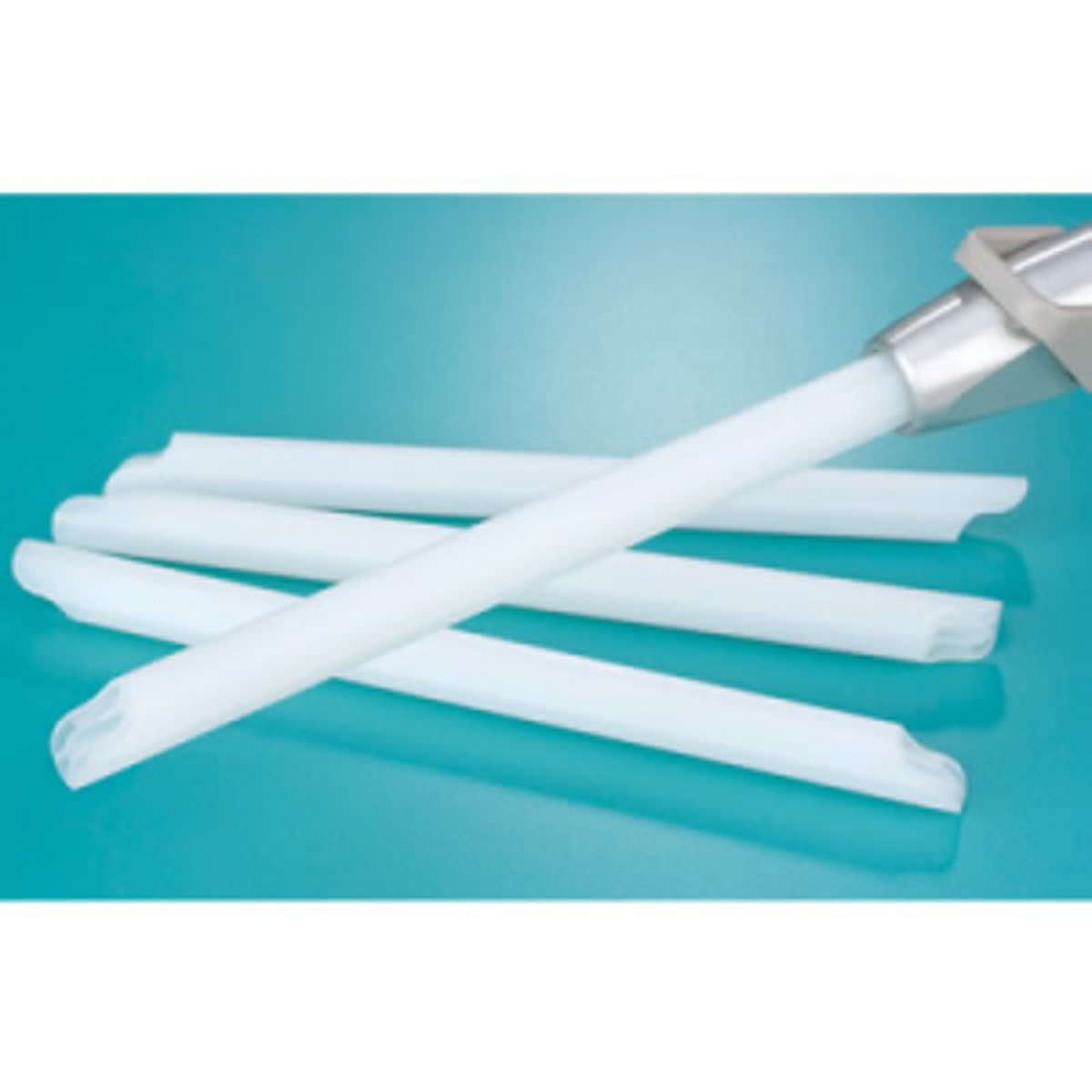
What suctions saliva and debris from the patient's mouth during restorative and surgical procedures?
high-volume evacuator
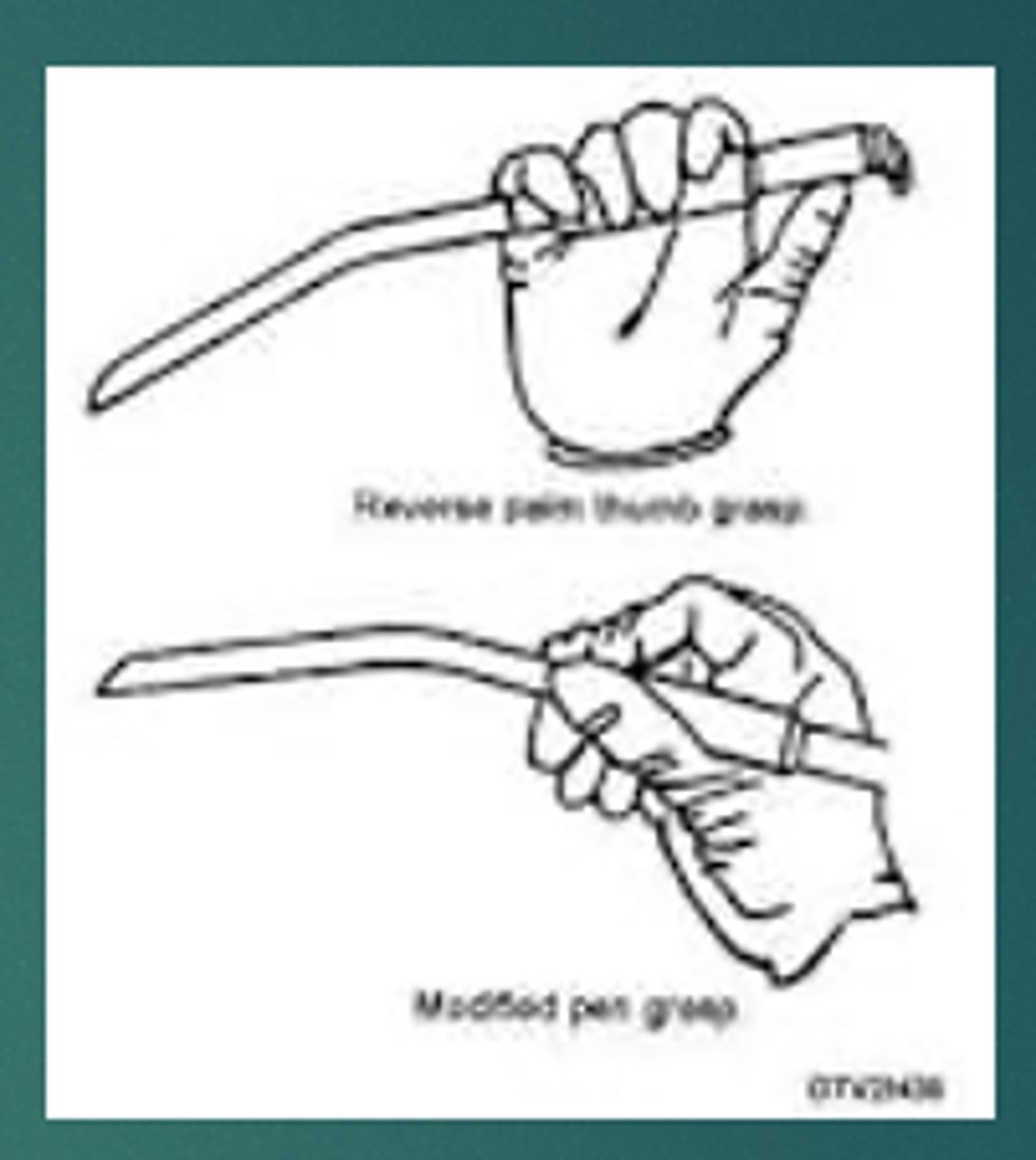
What are the HVE grasps?
1. thumb to nose grasp/ palm thumb
2. pen grasp
When should a HVE be used?
during high speed hand-piece procedures
What are the 3 indications for use of a HVE?
- keeps mouth free of saliva, blood, water, and debris
- retracts tongue and cheek
- reduces the bacterial aerosol
What are the two types of HVE?
1. operative
2. surgical
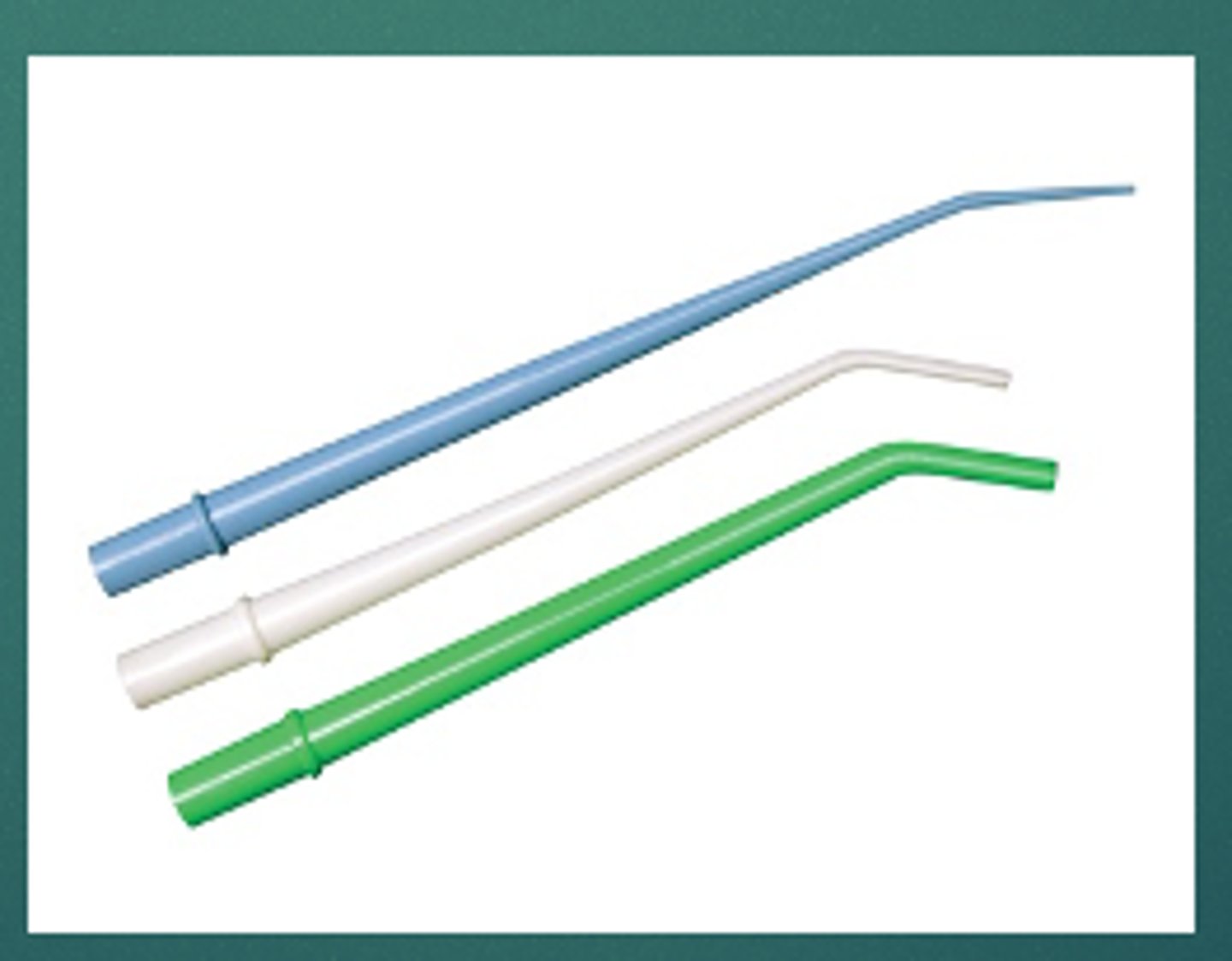
This type of HVE has a straight or slight angle, beveled working end
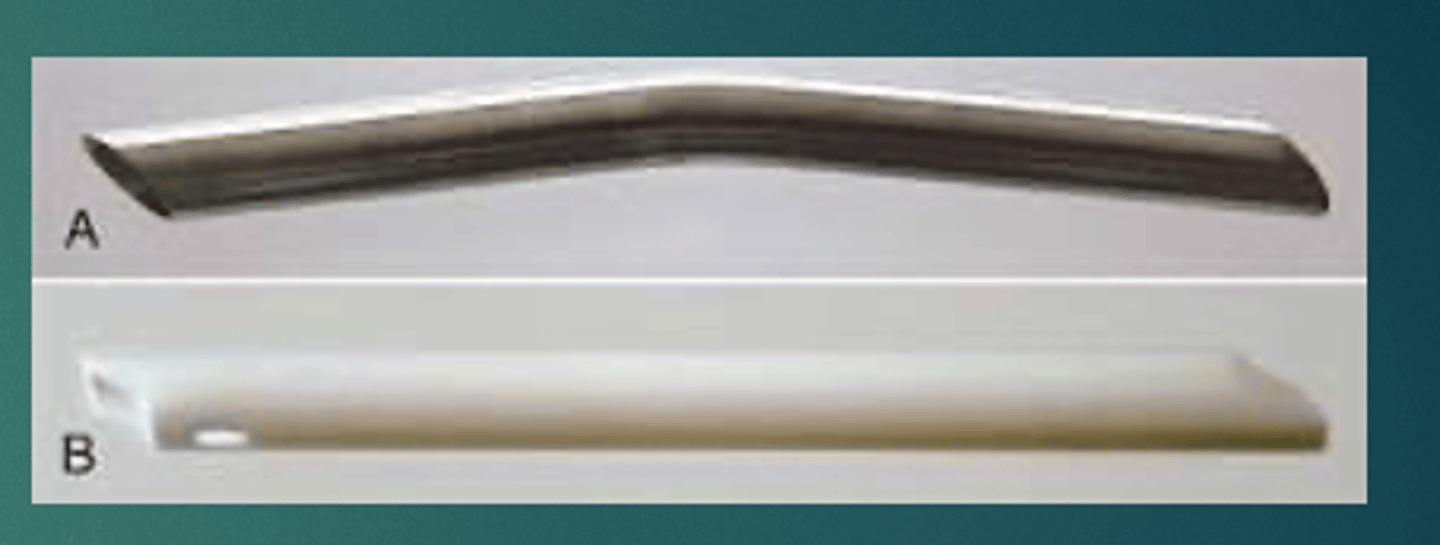
This type of HVE is smaller in circumference and can be made out of stainless steel
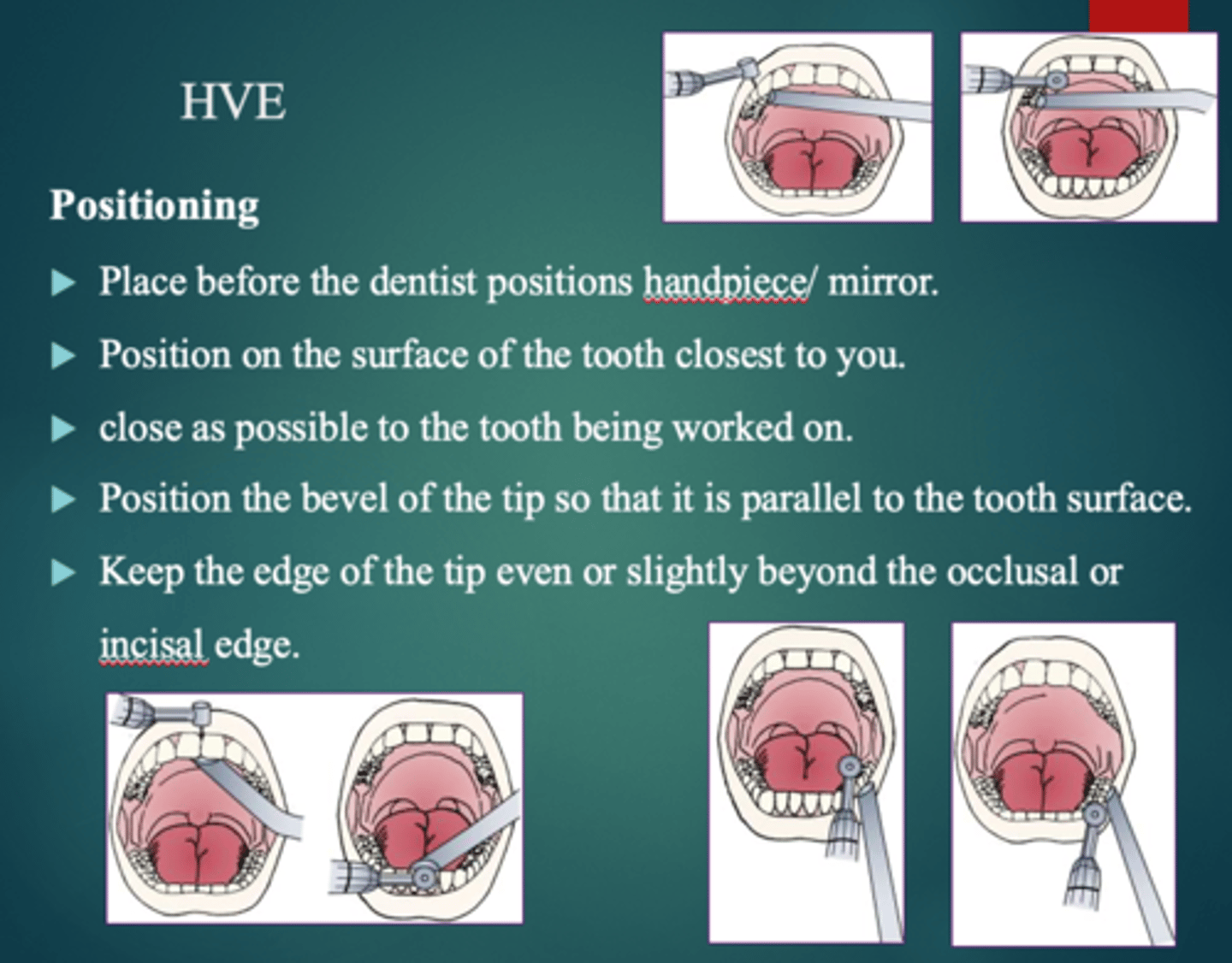
How should an HVE be positioned?
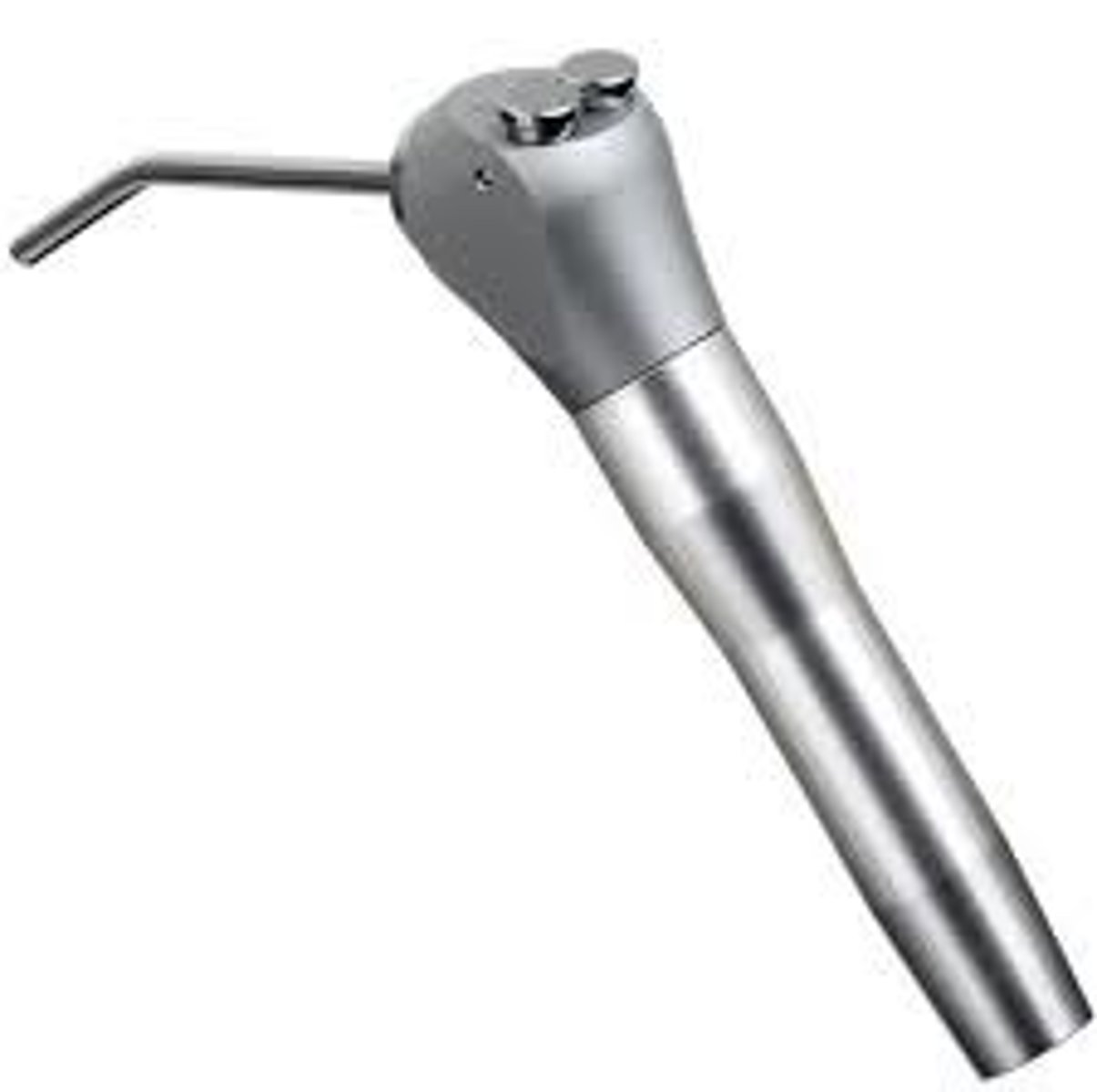
What is the air-water syringe? How is it used?
- direct tip toward tooth being worked on
- keep tip close to operative site
- indirect vision use air on mouth mirror continuously
- when handpiece stops, rinse and dry the site
- when completing a limited area or full mouth rinse, move the tip while spraying the area
What are the two types of rinsing procedures?
1. Limited area
- frequently throughout
- quick and efficient
2. Full mouth
- freshens mouth
- at end of procedure
When isolating teeth, the type used must...
- be easy to apply
- not injure soft and hard tissues
- be comfortable for patient
- provide retraction for better visualization
- prevent moisture contamination
- isolate the area of concern
What is a dry angle? What is it used for?
- triangular absorbent pad placed over the Stensen's duct
- blocks the flow of saliva/protects the tissues in the area
What are the 3 advantages of cotton roll isolation?
- easy application
- no additional equipment is required
- flexible/adapts easily in mouth
What are the 5 disadvantages of cotton roll isolation?
1. lacks complete isolation
2. does not protect from aspiration
3. may stick to oral mucosa
4. replaced frequently because of saturation
5. limited retraction
What is the 5 purposes of isolating a tooth via the dental dam?
1. better visibility
2. clean and dry
3. prevent moisture contamination of teeth
4. provide optimum visibility of operative site
5. protect patient from aspiration of dental materials
The use of ___ is universally accepted because of the color contrast in the operative field.
dark rubber dam
What is the weight range of rubber dams?
light to heavy
What is the disadvantage of using a light weight rubber dam?
easily torn
_____ can afford more stability when being held in the retainer
heavyweight rubber dam
What are the 5 advantages of rubber dam isolation?
1. prevent moisture contamination
2. retracts and controls soft tissue
3. protects from aspiration
4. provides optimal visibility and access
5. controls aerosols
What are the 5 disadvantages of rubber dam isolation?
1. discomfort if not numb
2. claustrophobic
3. patient is congested
4. patient may be allergic to latex
5. time
How can we predict latex allergies?
Those who are allergic to
- avocados
- bananas
- water chestnuts
- kiwifruit
What is the set up for a dental dam?
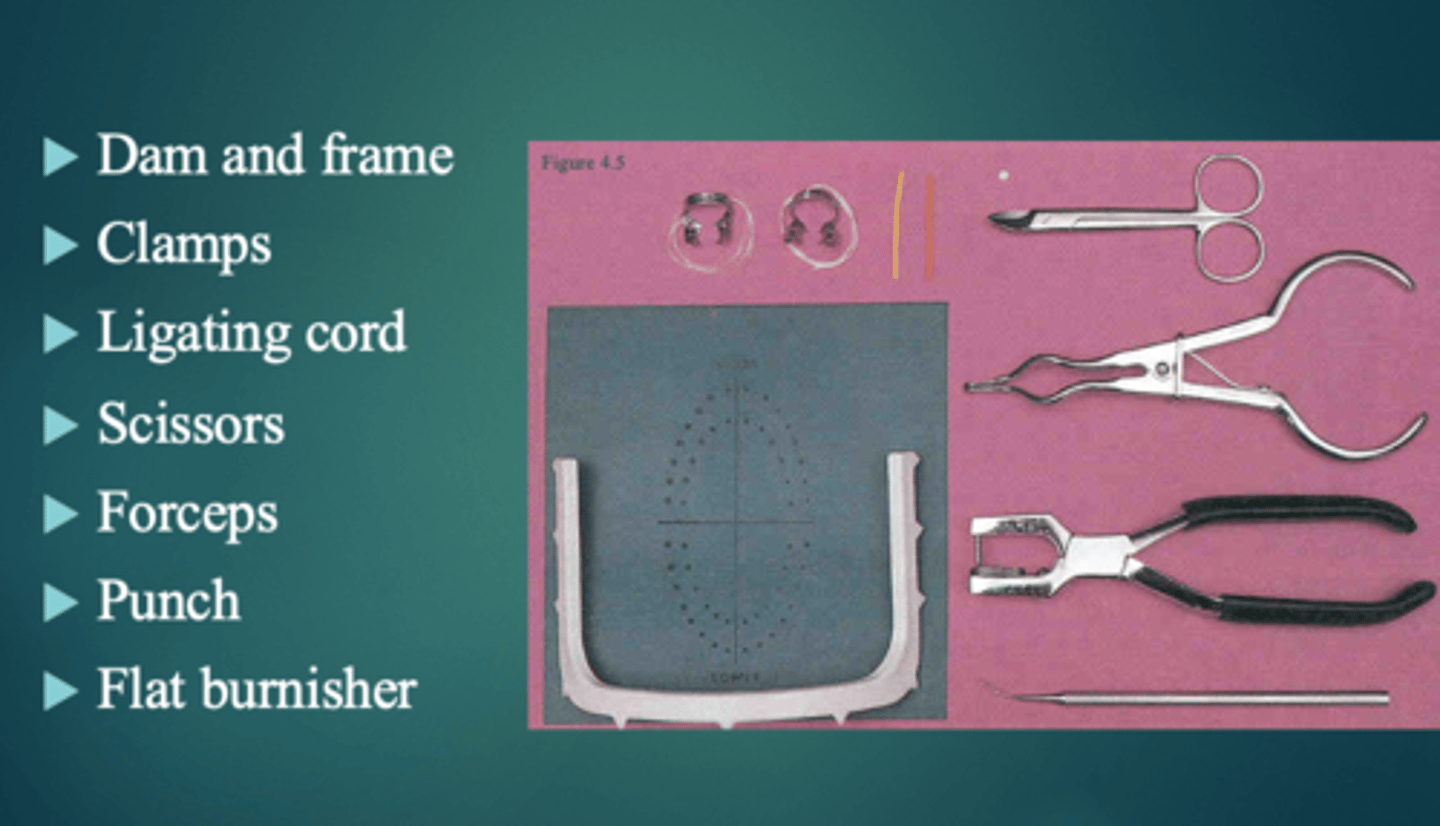
True or false: In order to surround the tooth with the rubber dam, a precise and even circle must be punched in the rubber to prevent tearing.
True
How many holes are punched in the rubber dam?
one per tooth
The ____ of the teeth being isolated dictates the size of holes selected.
cervical diameter
What is a retainer (rubber dam)?
- tension created between retainer and clamp used to stabilize rubber dam
What is a rubber dam napkin?
- enhances rubber dam application by protecting the tissue underneath dam
- catches saliva that spills
- keeps rubber off face
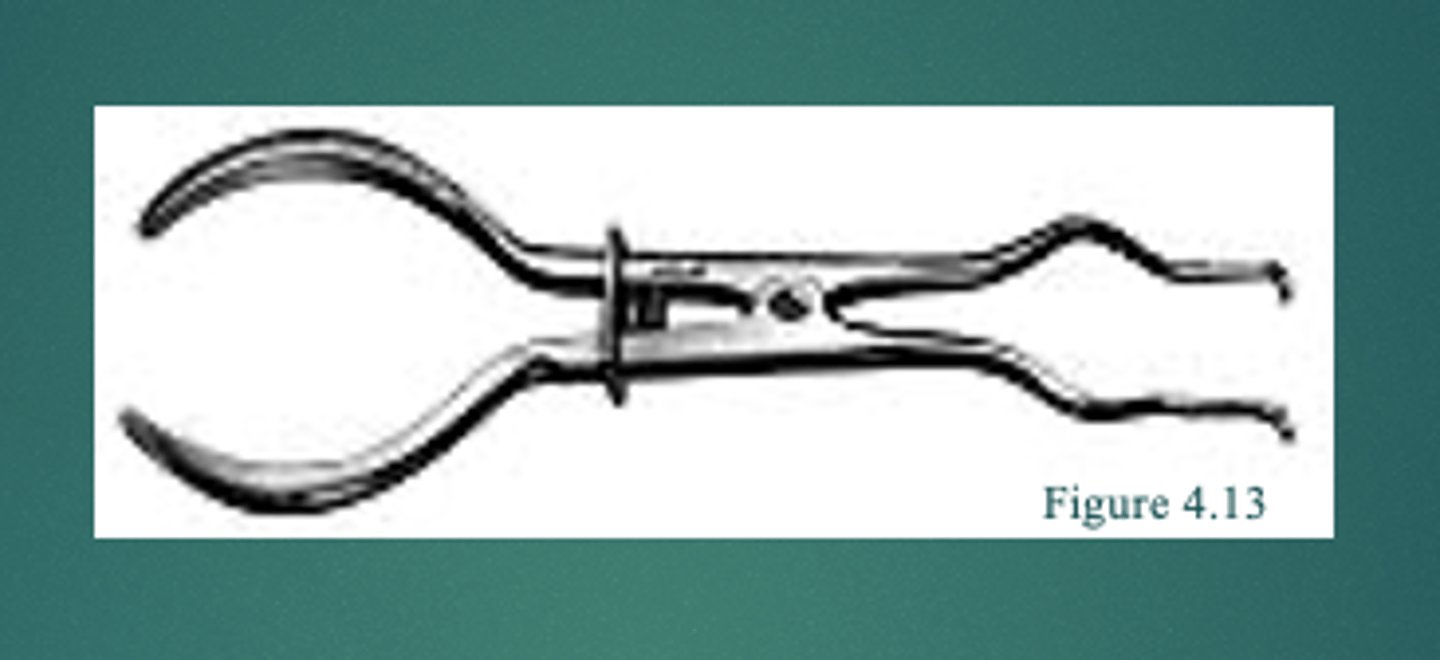
The method used to seat the clamp on the tooth
forceps
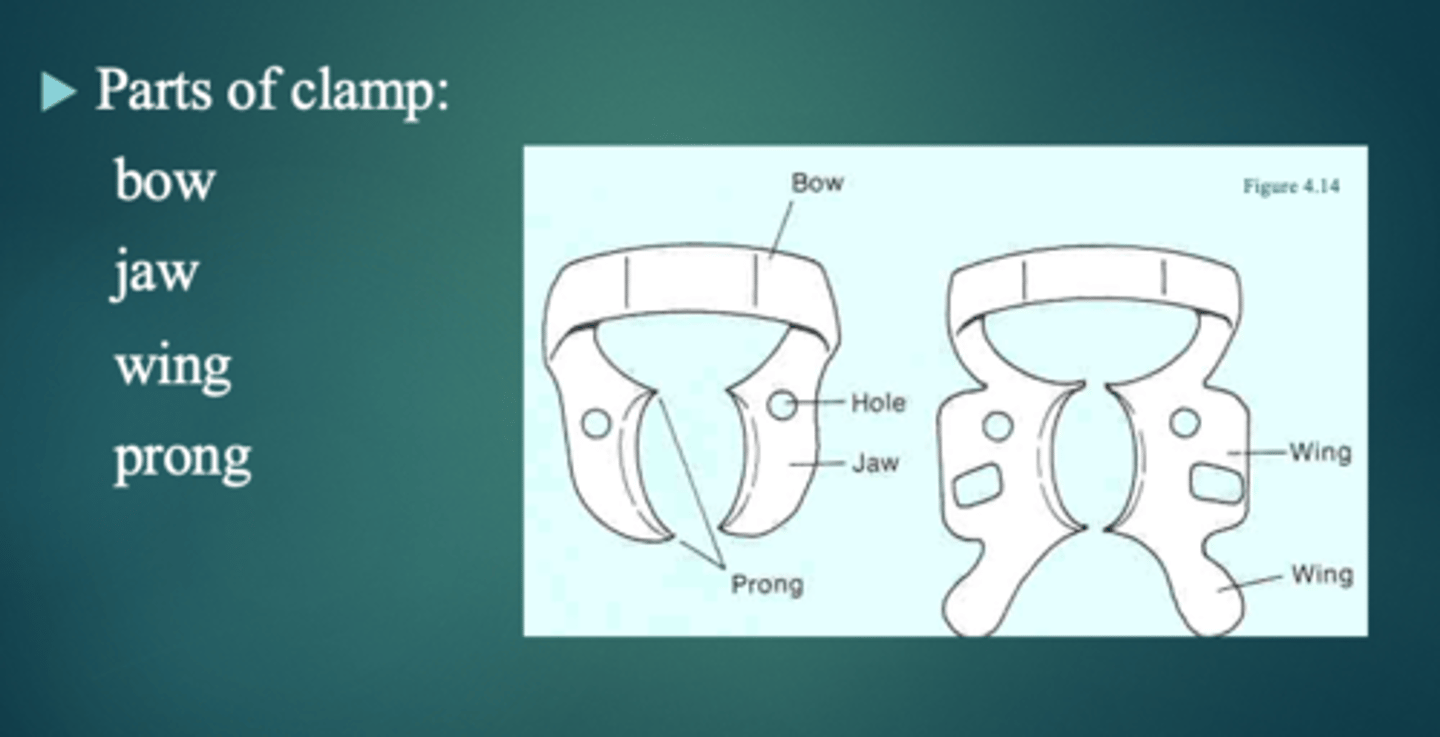
What are the parts of the clamp?
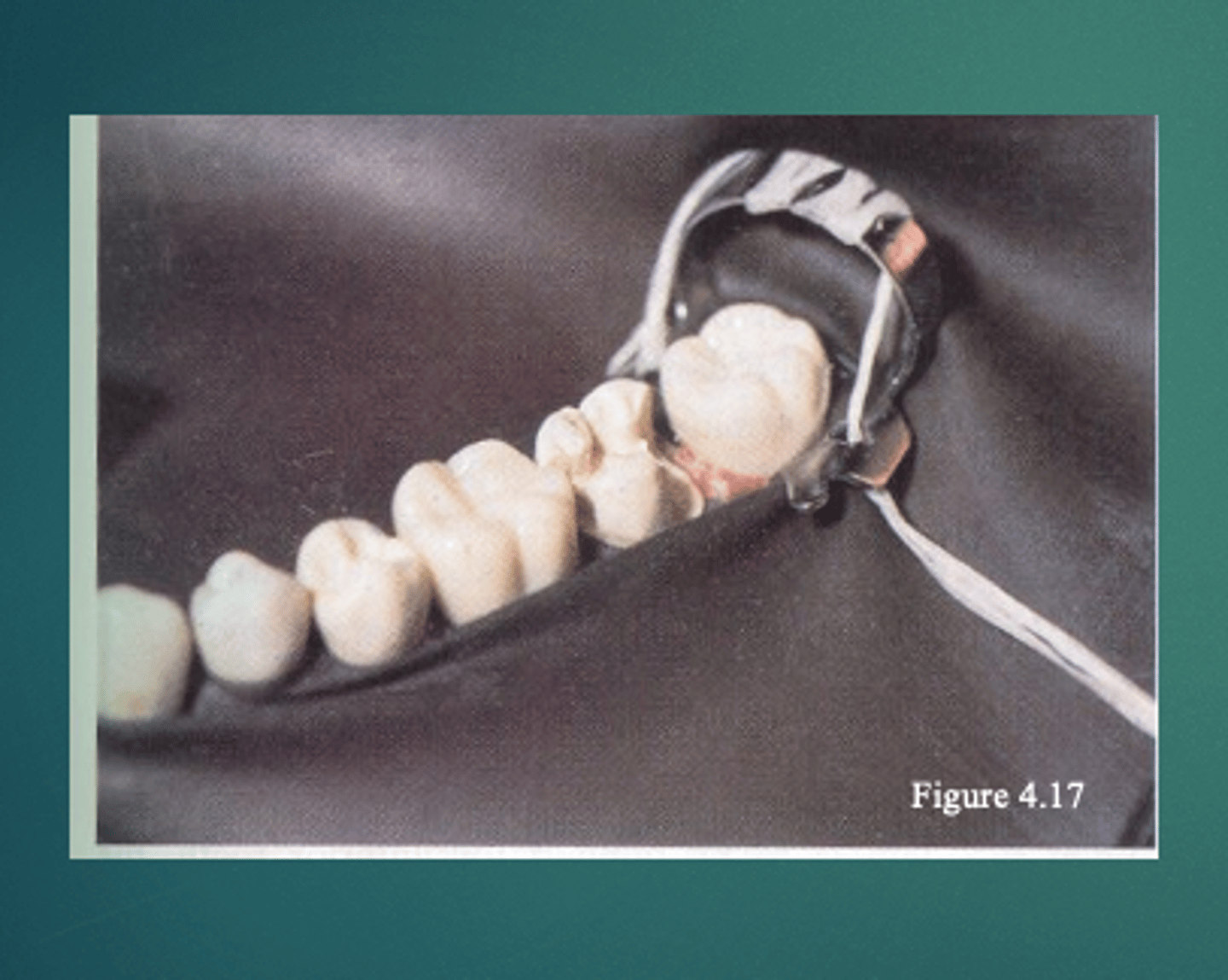
The ___ is the key to the stabilization of the rubber dam and is used to retract the gingival tissue
clamp
What allows the rubber dam to be attached to the clamp prior to placing it?
winged clamp
What clamp is used for 95% of molars?
Ivory 56T
What clamp is used for small molars?
Ivory 12A
Ivory 13A
What clamp is used for bicuspids?
Ivory 2A
Why should you ligate the clamp?
**attach a piece of floss
- prevents the patient accidentally swallowing the clamp
- prevents injury to dental team from flying debris caused by an improper seat of the clamp
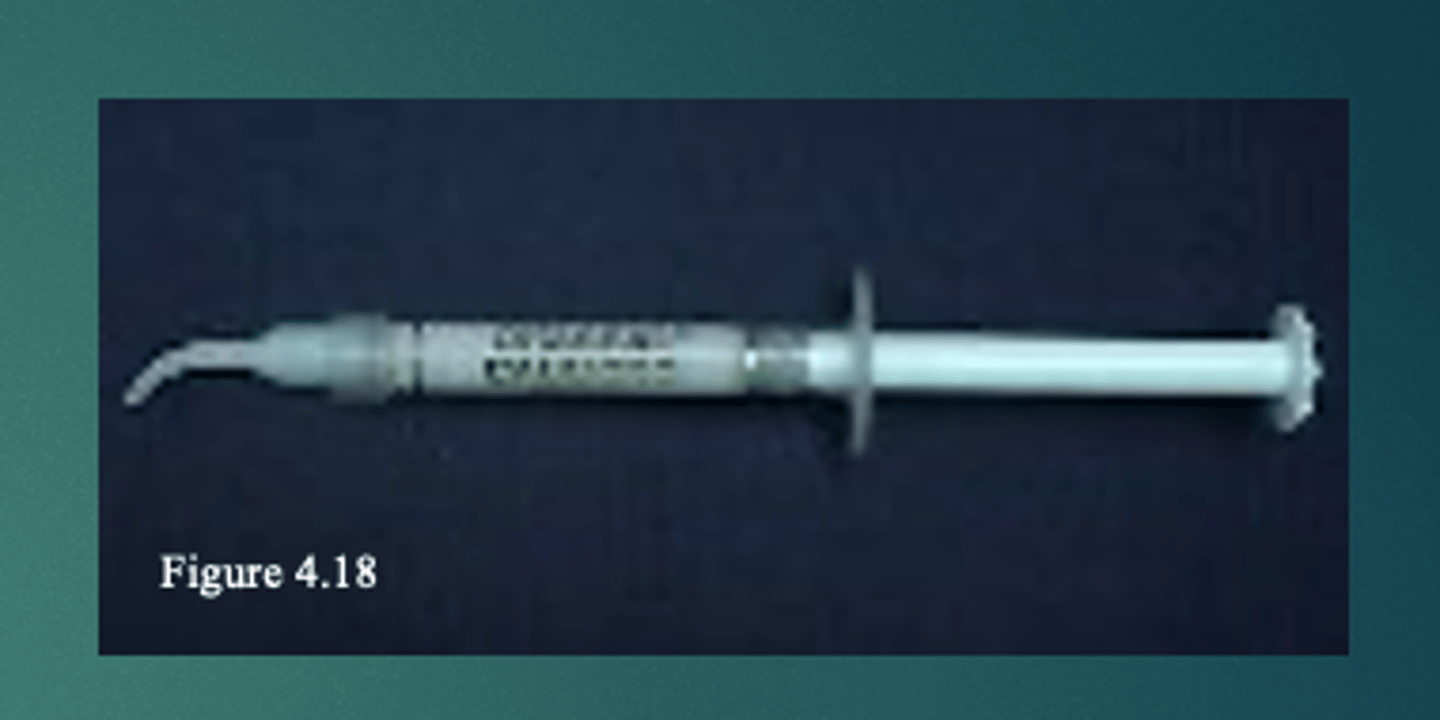
What should be placed in the area of the rubber dam when saliva is coming through?
oraseal caulking
When using a rubber dam on anterior teeth, what teeth should be isolated?
canine to canine
When using a rubber dam on posterior teeth, what teeth should be isolated?
- tooth posterior to tooth being worked on
- usually for a total of 4 teeth
What are the steps of placing the dam?
1. stamp template
2. punch dam
3. stretch dam over frame
4. select clamp
5. place clamp
6. floss contacts
7. ligate clamp
8. invert dam with woodson
What are the steps of removing the dam?
1. cut rubber septum between teeth
2. use forceps to remove clamp and move dam with frame at same time
3. remove napkin
4. use explorer or floss to remove excess pieces
5. offer the patient a paper towel and rinse mouth
How are dental hand instruments referred to?
Name and number assigned by manufacturer
True or false: ortho pliers and surgical forceps are referred to often by number rather than name (ex. Howe (110) pliers)
True
What are the 3 parts of a dental instrument?
1. handle - where operator grasps
2. shank - attaches working end to handle
3. working end - can have point, blade, or nib and can be single or double ended
What are the four categories of restorative instruments?
1. examination
2. hand-cutting
3. restorative
4. accessory
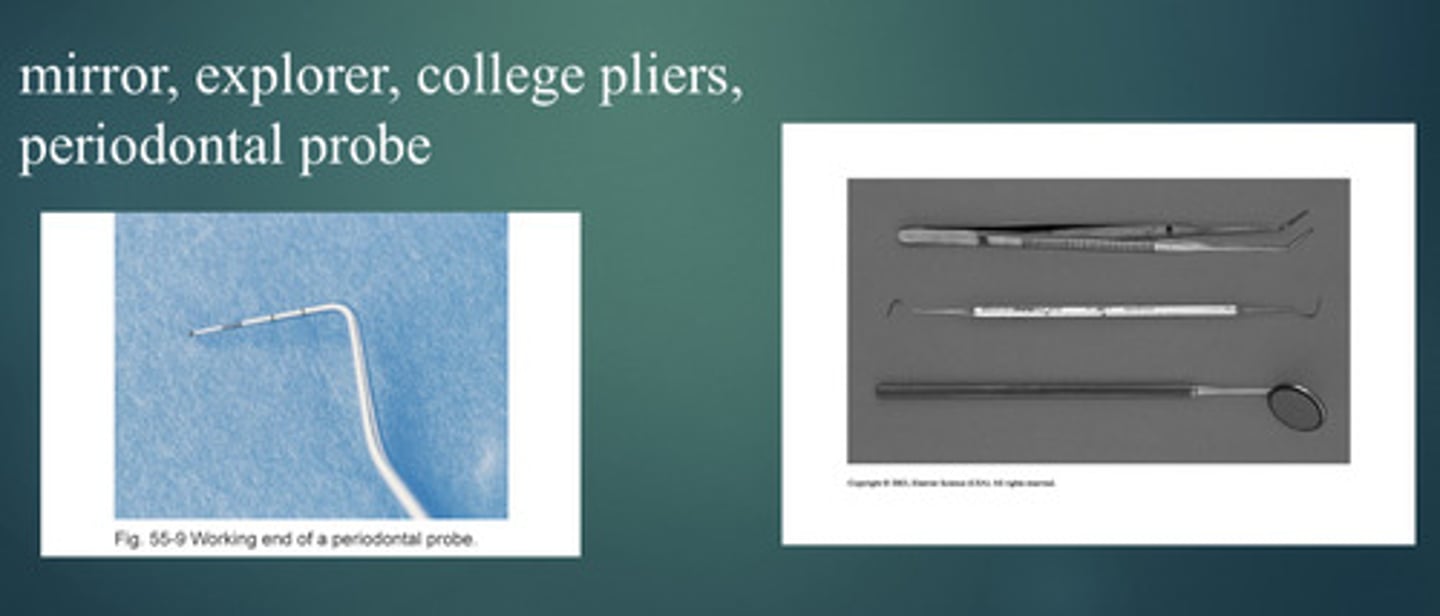
Describe examination instruments.
Exam oral cavity
- mirror, explorer, college pliers, periodontal probe
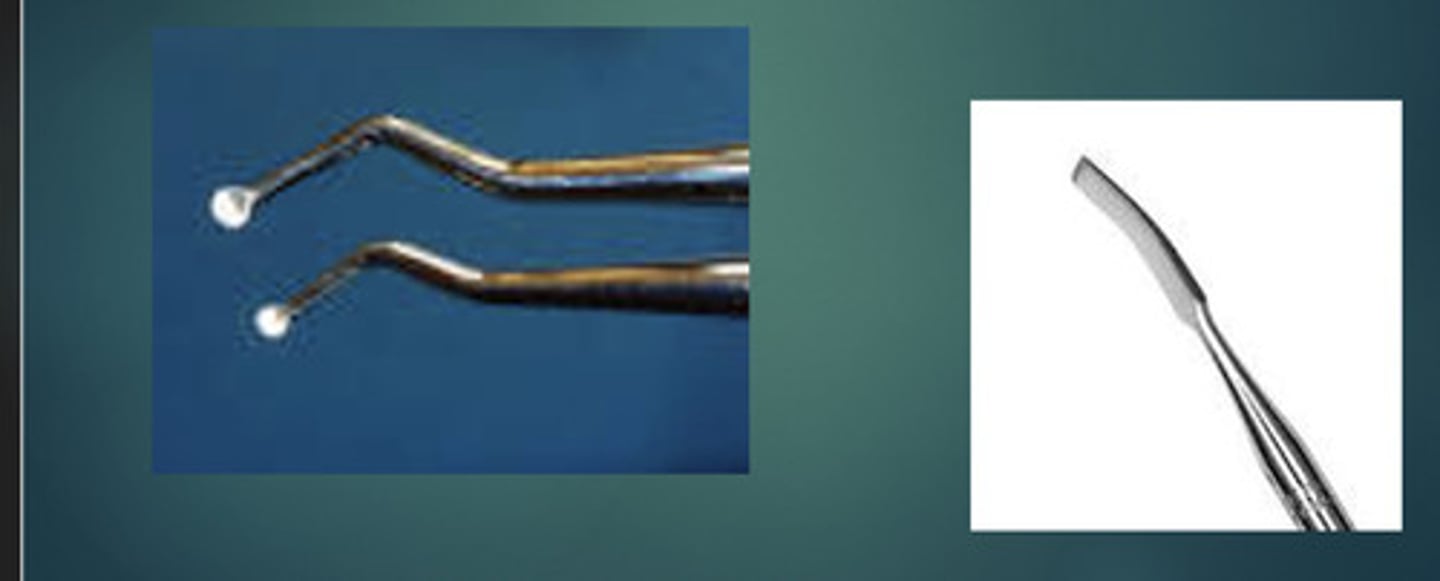
Describe hand-cutting instruments
- remove decay, smooth, finish and prepare tooth manually for restoration
NOT COMMONLY USED
- excavator, chisel, hoe
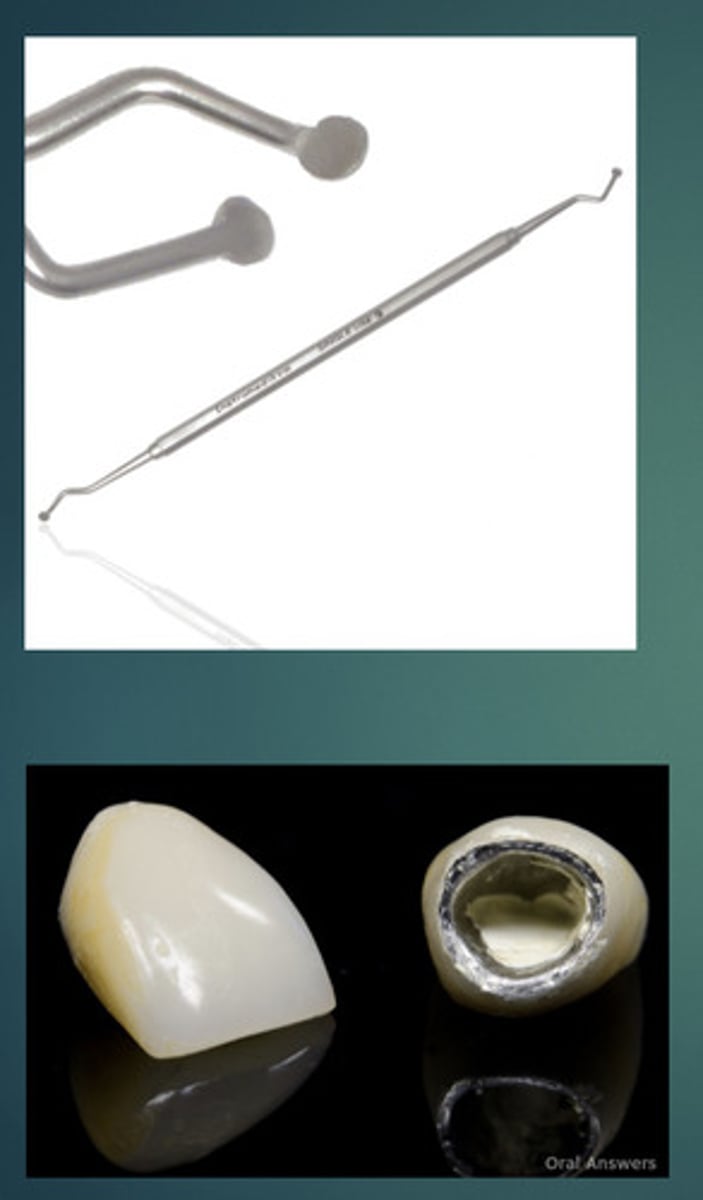
What is a spoon excavator?
- most versatile on tray setup
- removes soft dentin, debris and decay
- removes cement inside of crown
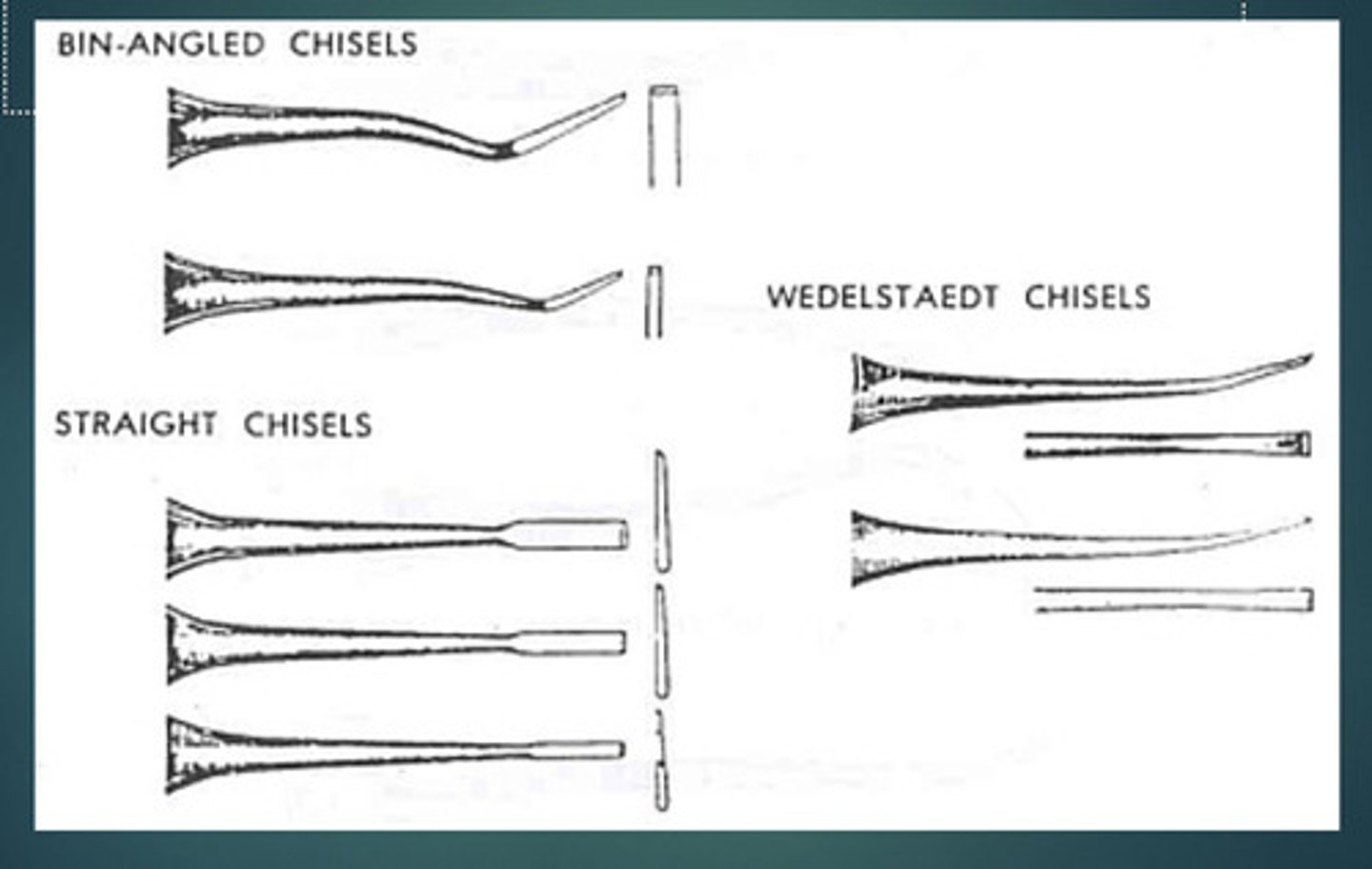
What are bin-angled chisels, straight chisels, and wedelstaedt chisels?
What are restorative instruments for amalgam (carrier/condensor)?
- place, condense, carve restorations
- condenser
- carrier/placement
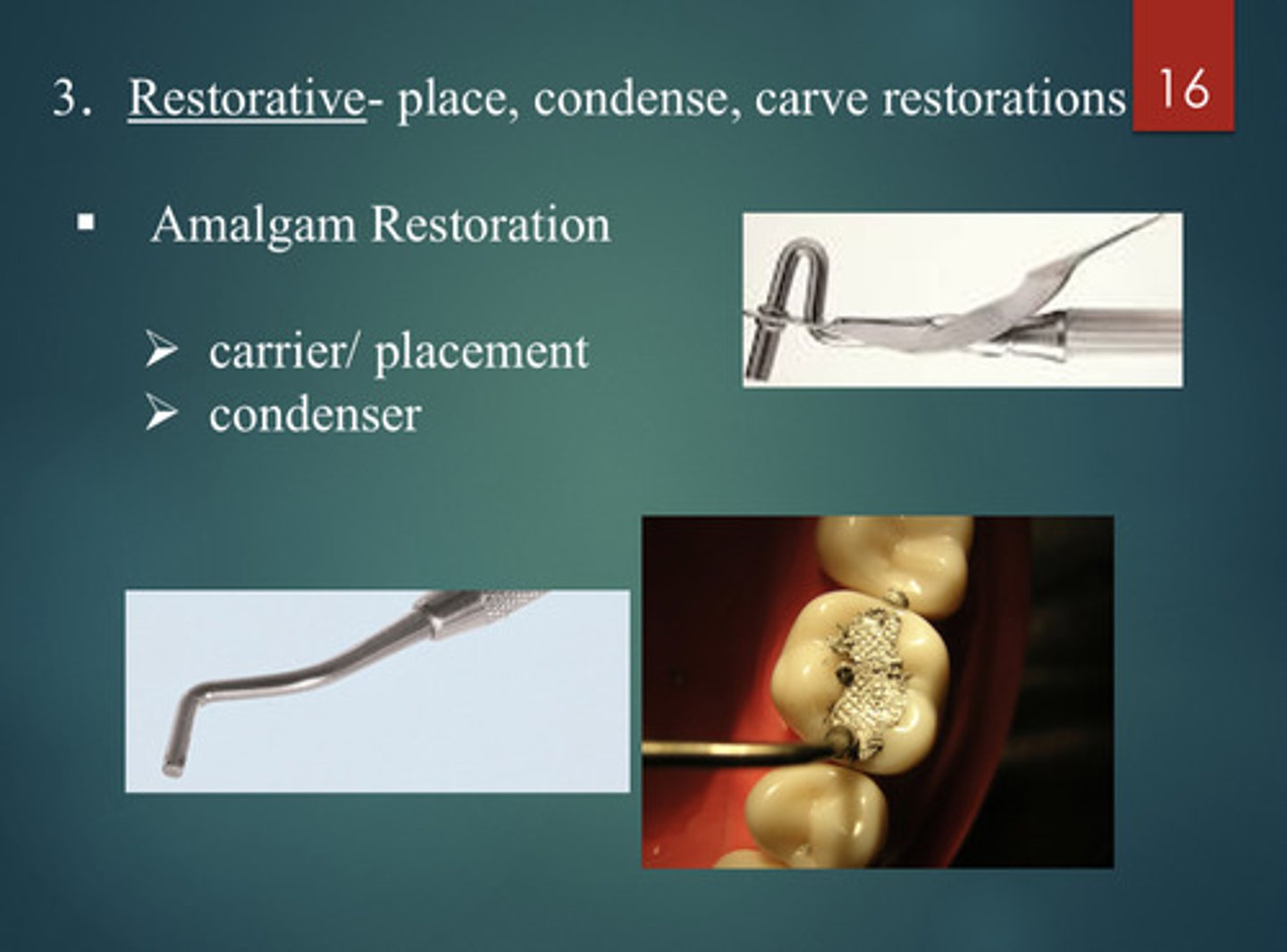
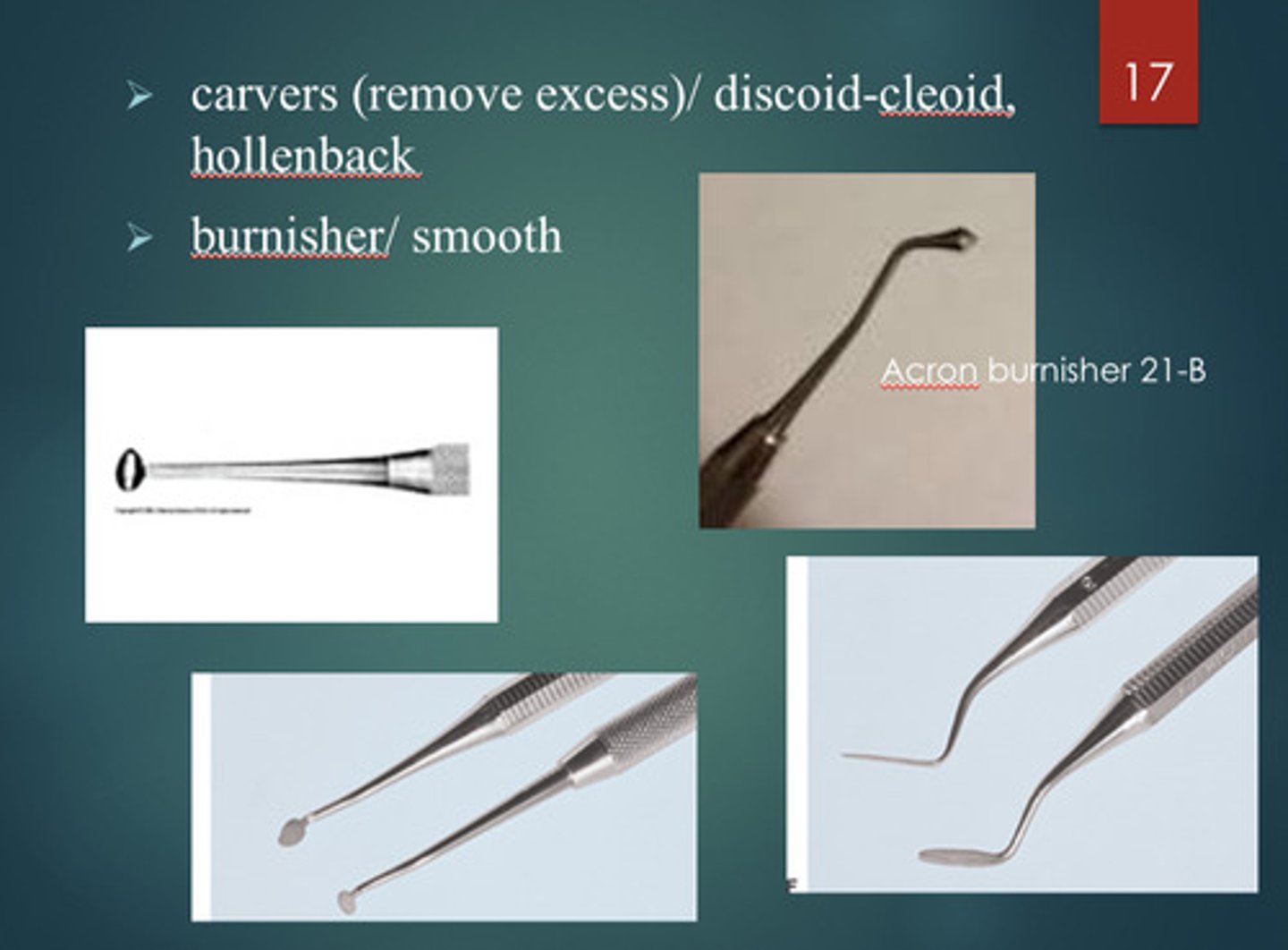
What are restoraive instruments for amalgam (carvers, discoid-cleoid, hollenback, burnisher)?
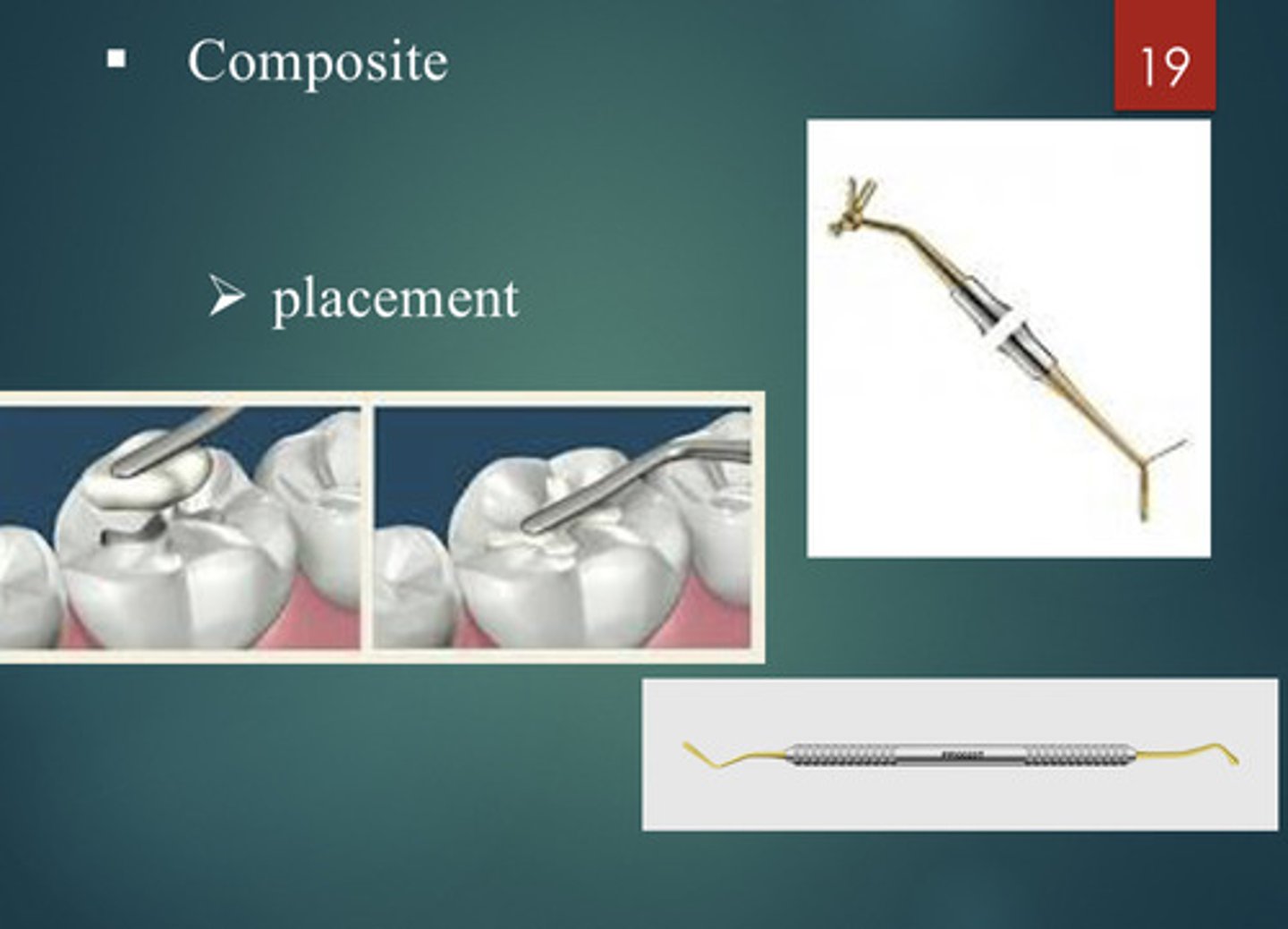
What are the composite instruments?
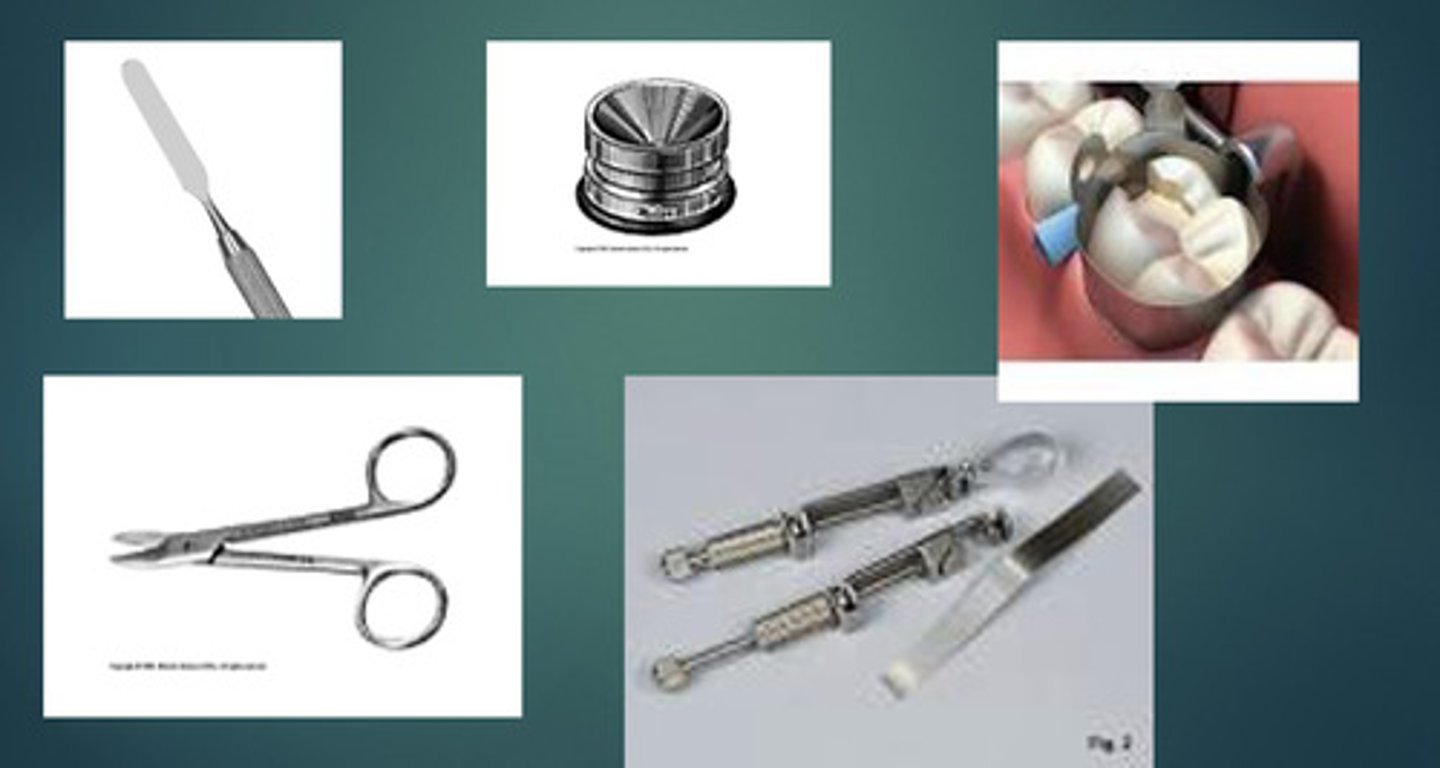
What are accessory instruments?
- used to complete a procedure
- spatula, scissors, retainer, matrix band, amalgam well
What are the 4 uses of the mouth mirror?
1. Indirect vision
- see area not visible by direct vision
2. Light reflection (indirect illumination)
- directs light into areas not directly accessible by op light
3. Retraction
- maintains clear field by keeping tongue/cheek out of the way
4. Tissue protection
- guards tongue/cheek
This item stores supplies and materials for certain procedures, for example amalgam, crown and bridge.
Storage tubs
What are the 6 different cassette/tray set ups?
1. Exam
2. Amalgam
3. Composite
4. Crown and bridge
5. Endodontic
6. Surgical
What is the basic setup for EVERY procedure?
Mirror, explorer, college pliers (L—>R in that order)
What do procedure burs look like?
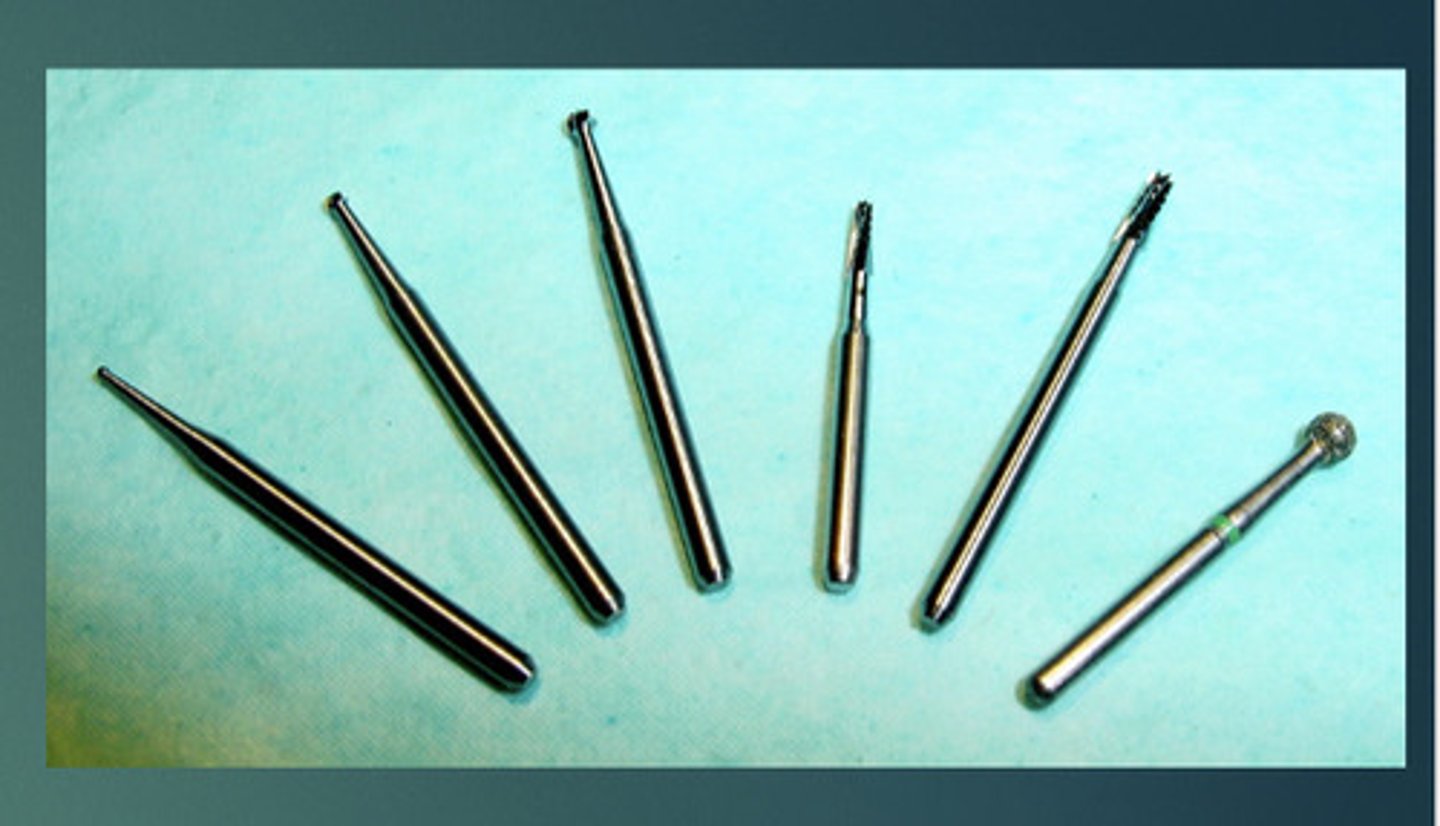
What do lab burs look like?
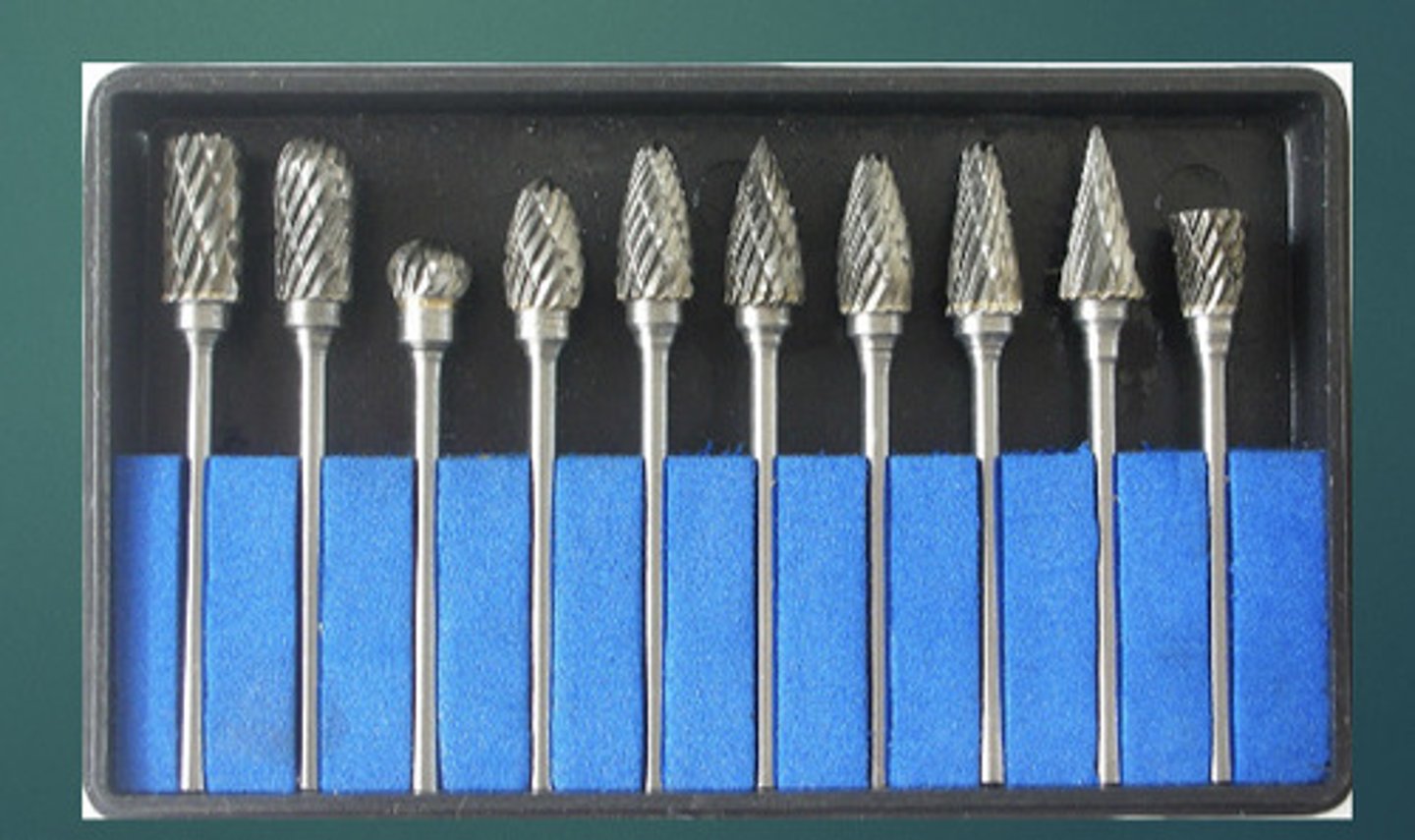
What are the three parts of rotary instruments?
1. Shank - portion that fits into handpiece
— straight shank
— latch type shank
— friction grip shank
2. Neck - portion of the rotary instrument that connects the shank and the head
3. Head - the cutting, polishing, or finishing portion
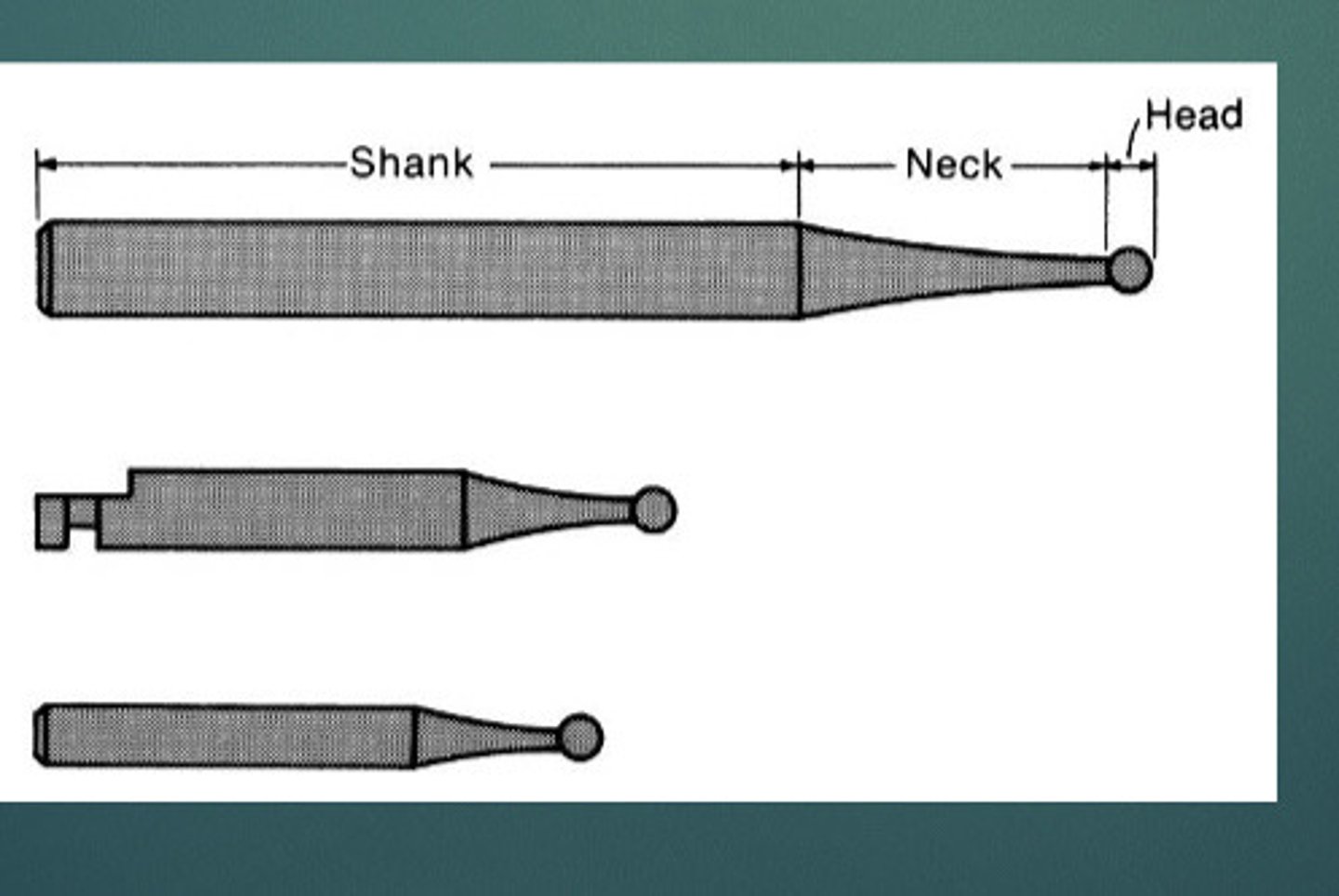
What are the three types of shanks?
1. Straight
2. Latch
3. Friction grip
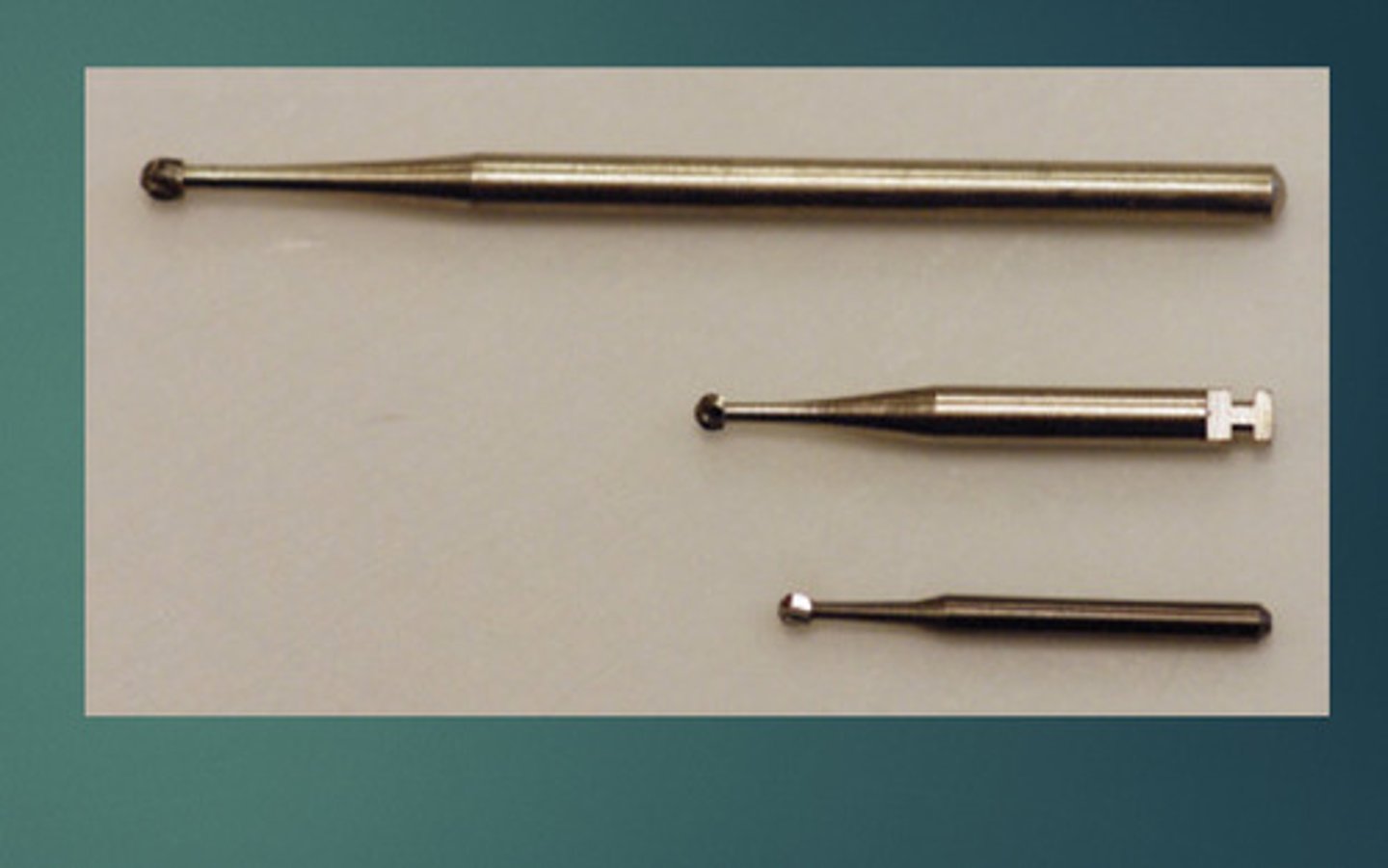
These instruments are used for cutting, polishing and finishing of the tooth structure and the restoration process.
Rotary instruments
What are the 8 uses of dental burs?
1. Tooth preparation
2. Excavation of decay
3. Finishing of cavity walls
4. Finishing restoration surfaces
5. Taking out old fillings
6. Finishing crown preparations
7. Separating crowns and bridges
8. Adjusting and correcting acrylic temporaries
Discs, stones, points, and strips are the most ____ of rotary instruments
Varied
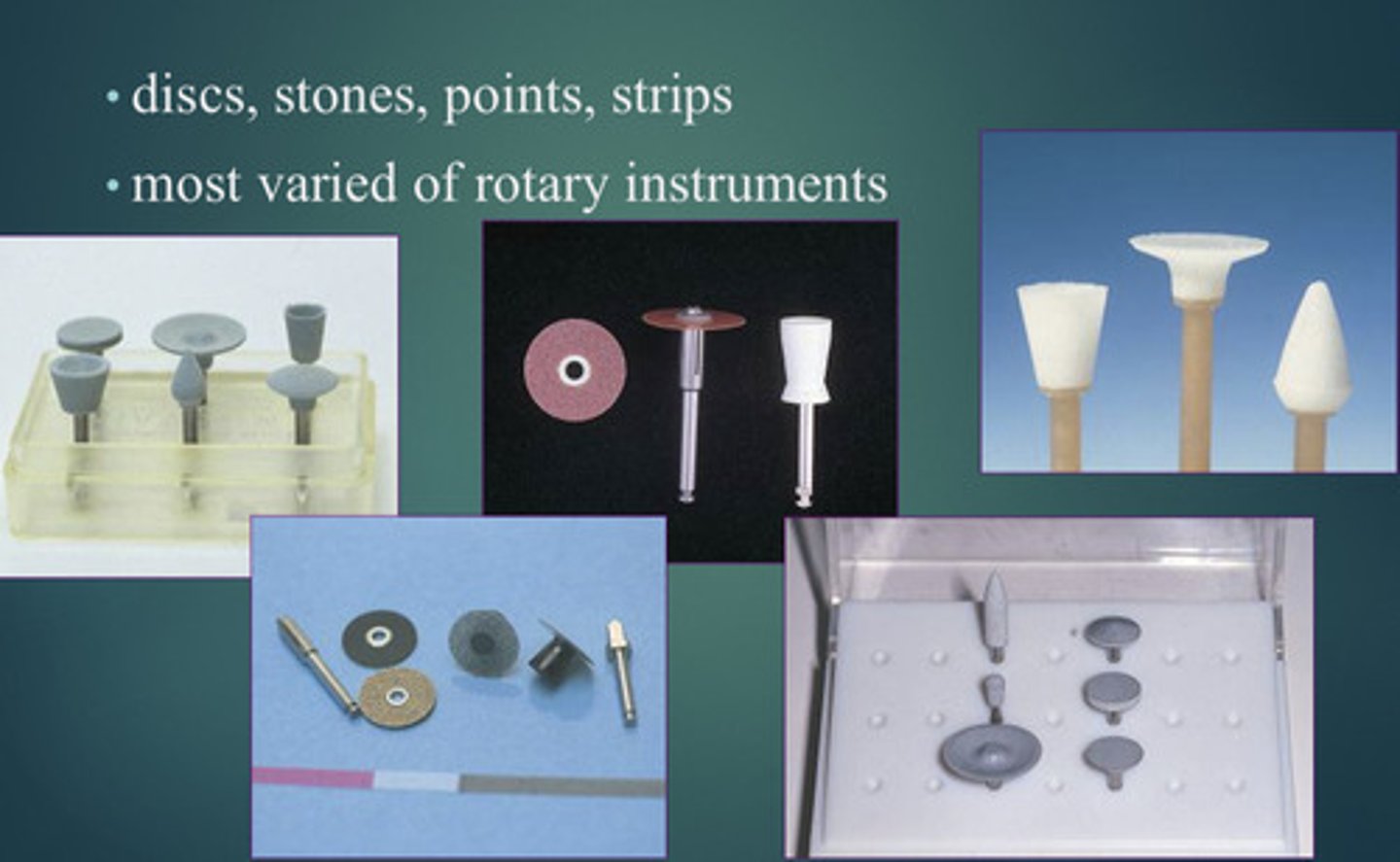
What are the 5 steps of finishing a composite restoration?
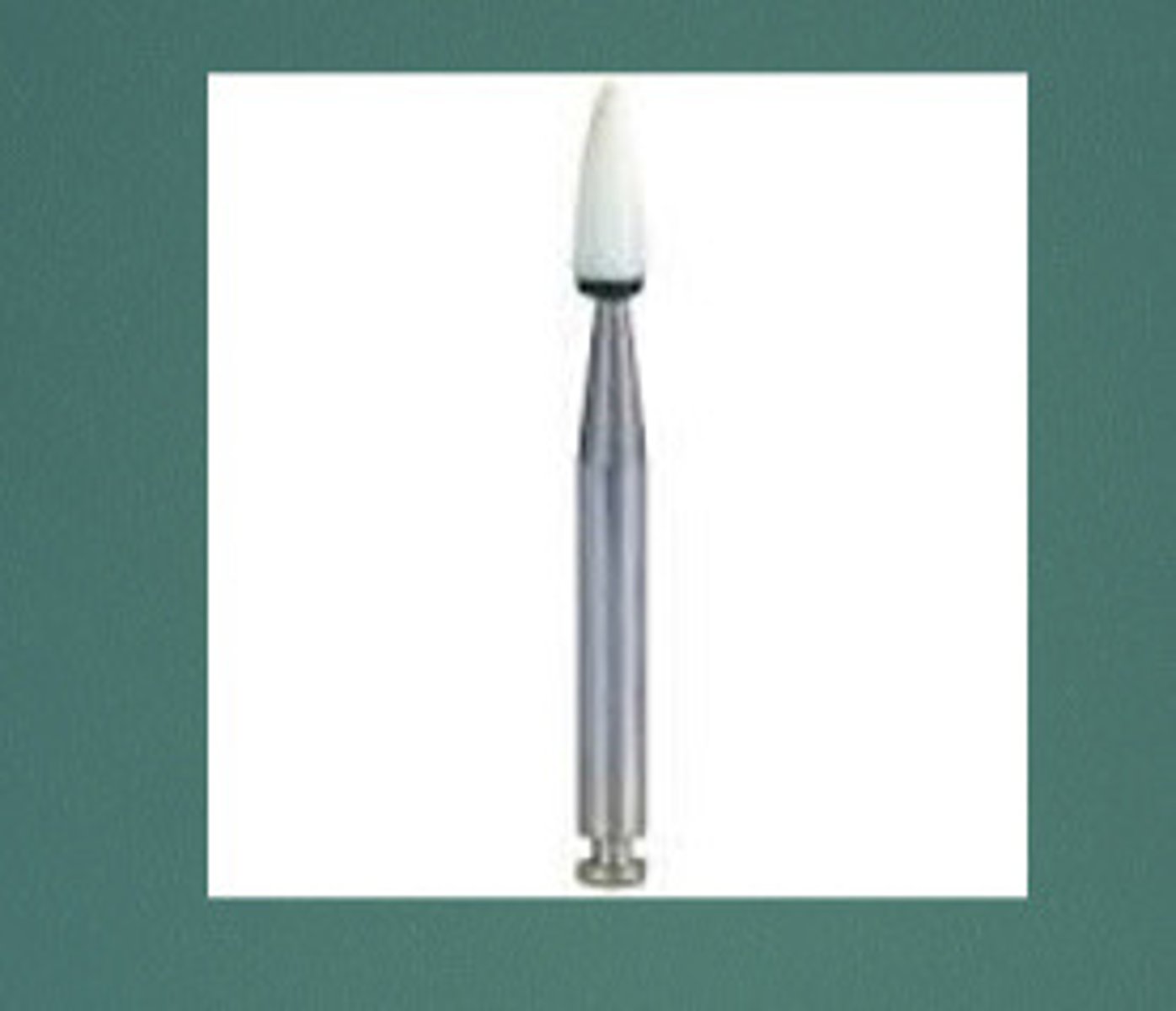
1. Reduction of material —> white stone or finishing diamond
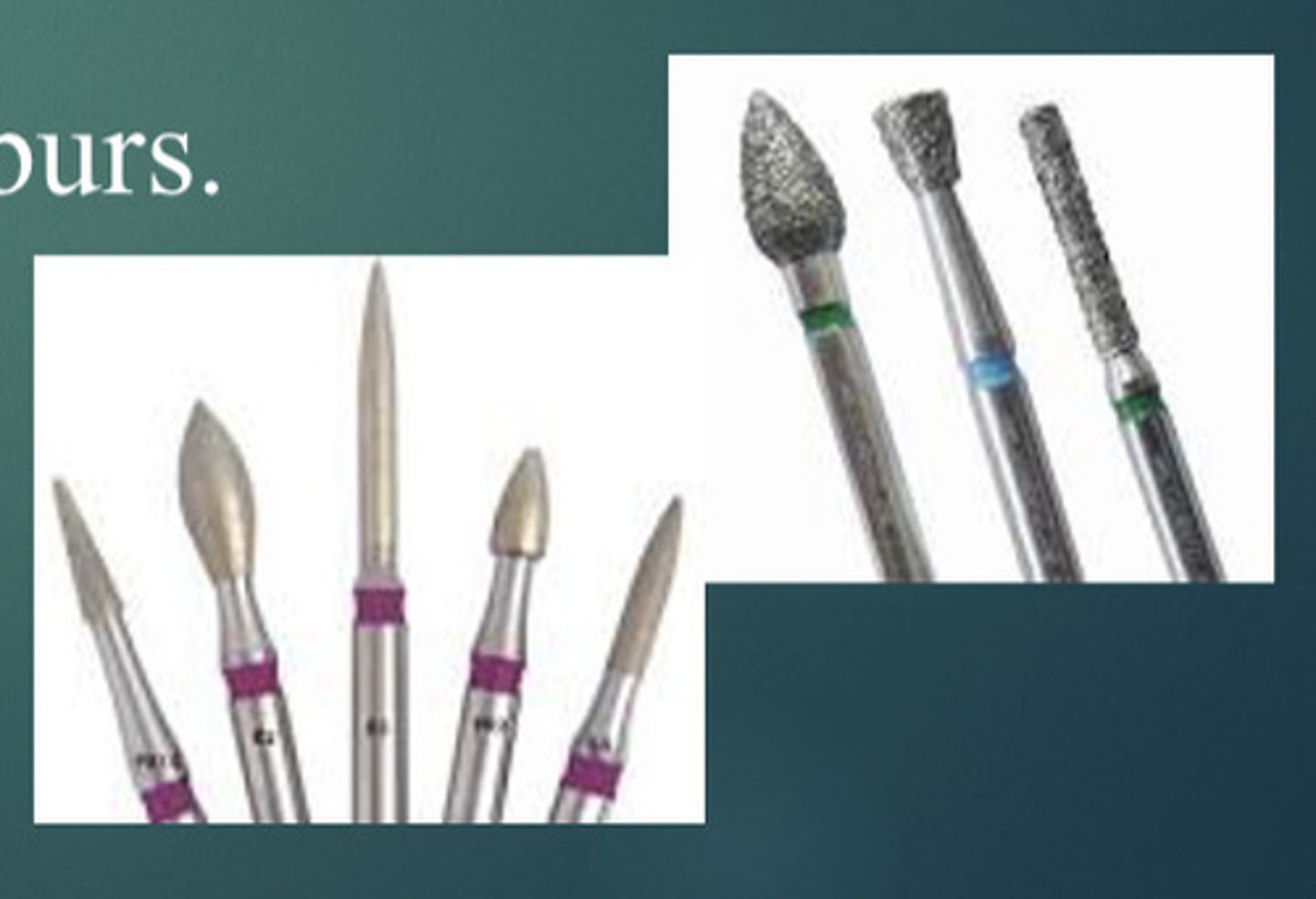
2. Fine finishing —> carbide finishing burs and diamond burs
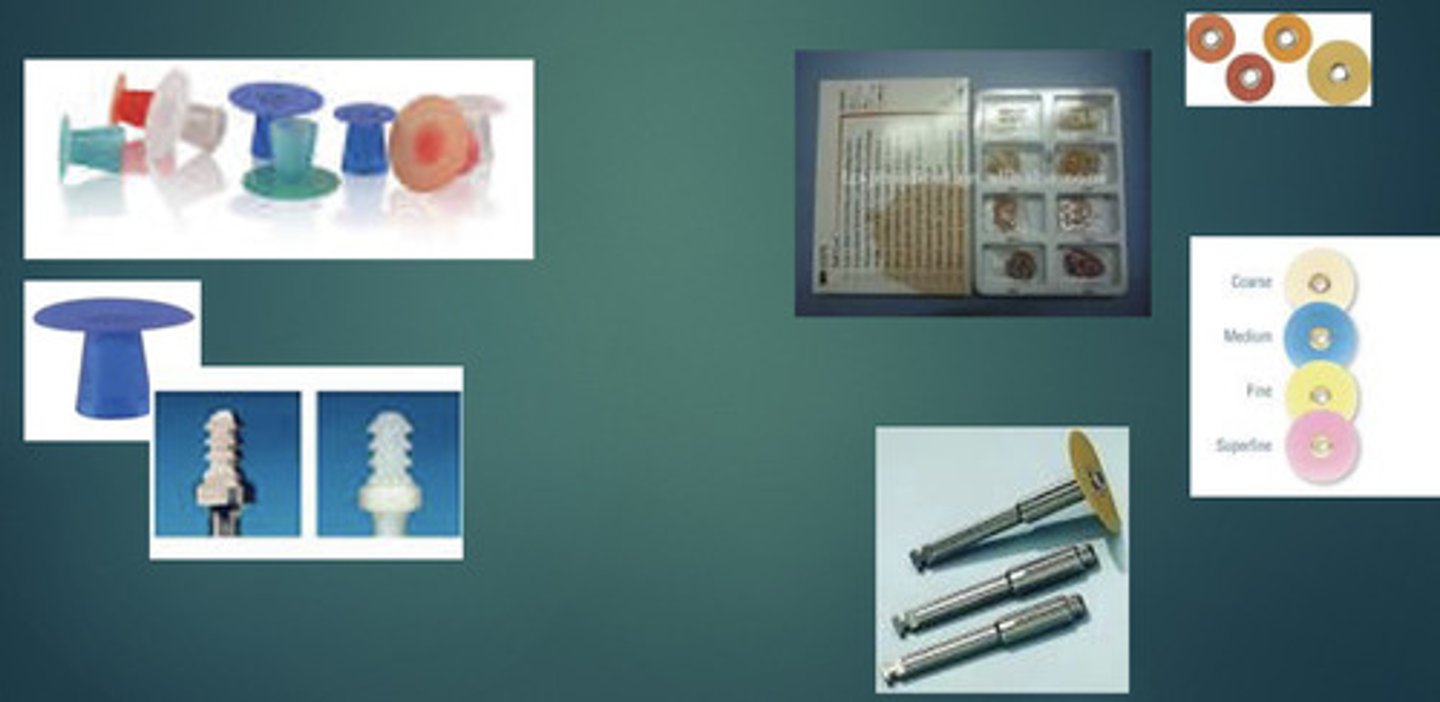
3. Polish —> medium discs then superfine disks
4. Finishing strips —> assist in polising interproximal surfaces
5. Use polishers and/or paste with a rubber cup
White stone
- step 1 of composite
- reduces material
Carbide finishing burs and diamond burs
- step 2 of composite
- fine finishing
Medium discs and superfine disks
- step 3 of composite
- polishing
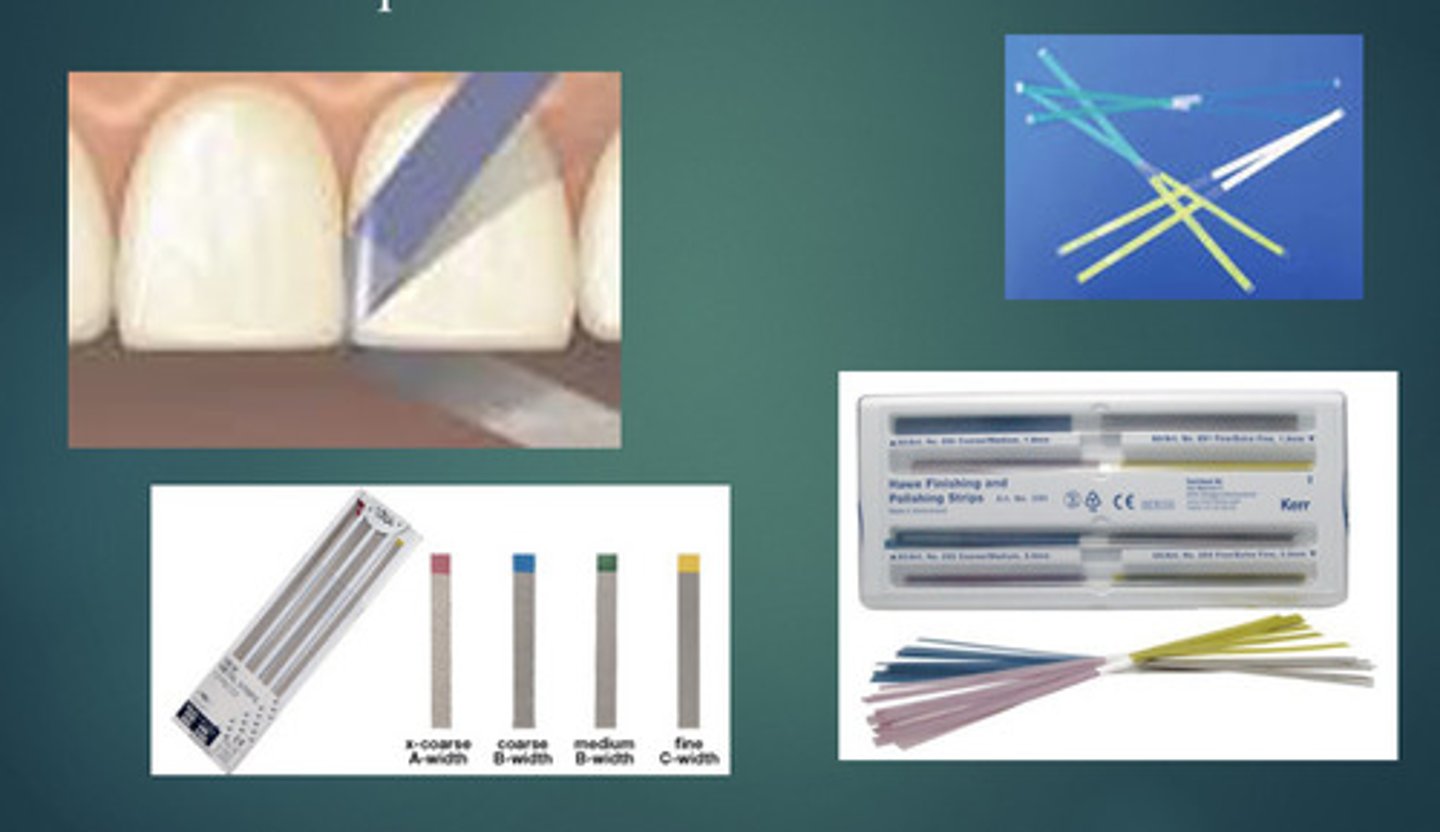
Finishing strips
- step 4 of composite
- polishes interproximal surfaces
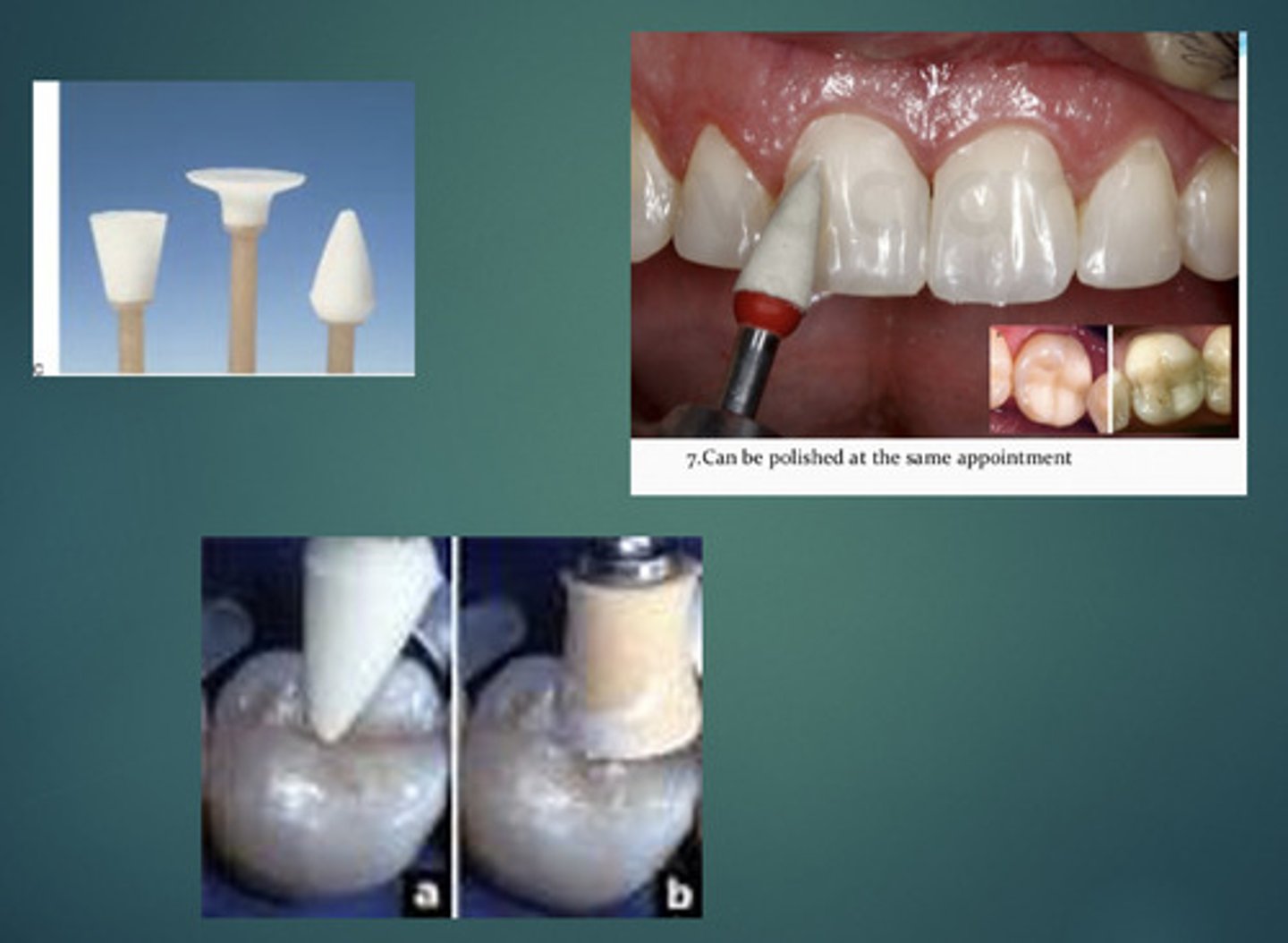
Rubber cup polishers
- step 5 of composite
- polishing
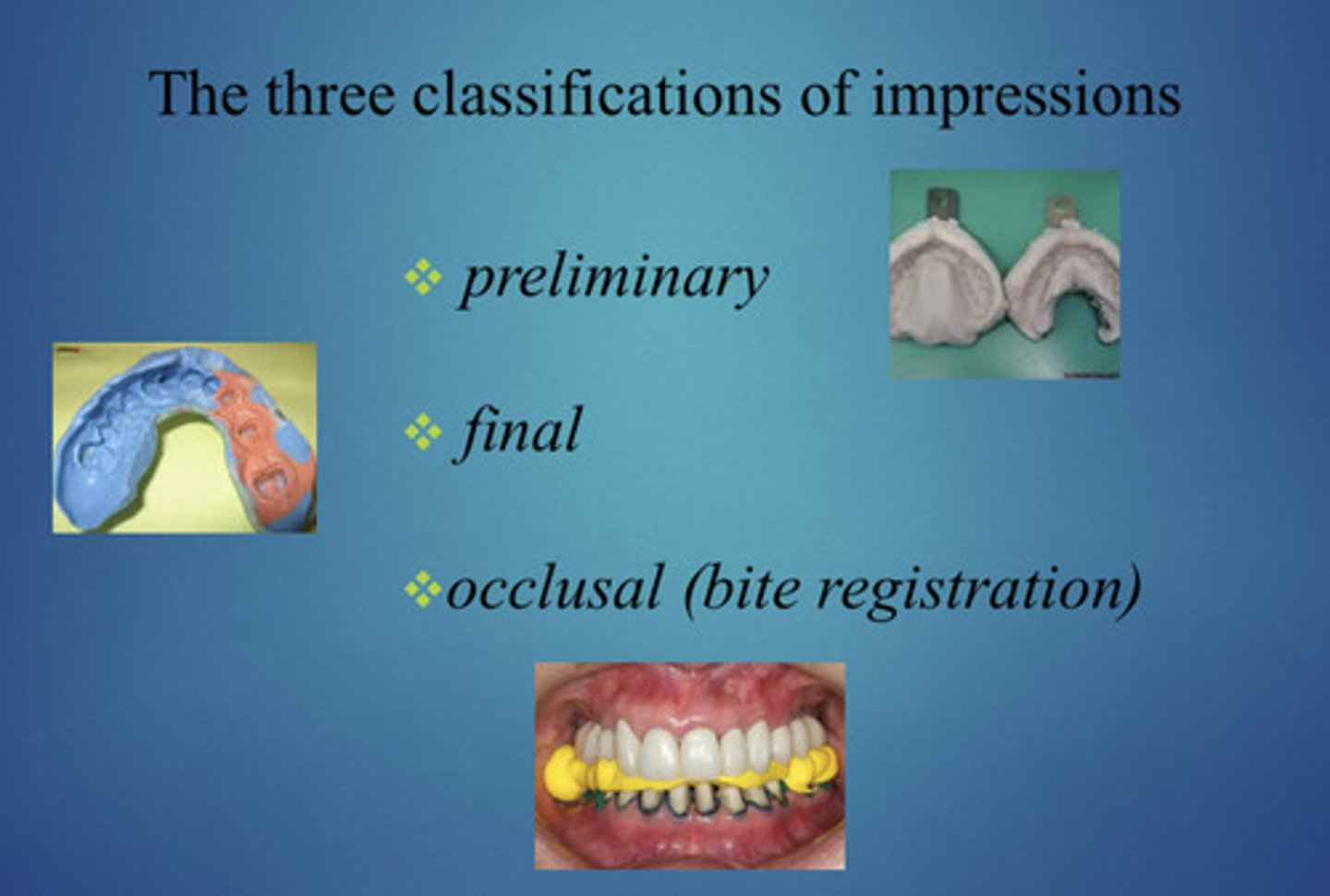
What are the three classifications of impressions?
1. Preliminary
2. Final
3. Occlusal (bite registration)
Who takes preliminary impressions? What are they used for?
1. dentist or EFDA (expanded functions dental assistant)
2. - diagnostic models
- custom trays (i.e., whitening)
- provisional coverage (temporarys)
- orthodontic applicances
Who takes final impressions? What are they used for?
1. Dentisty ONLY
- most accurate reproduction of teeth and tissue
2. - provides lab tech with information on crowns, inlays, onlays
- partial or full dentures
- implants
What are impression trays and what are the two types?
- used to hold impression material when impressions taken
- stock trays
-custom trays
Provide an accurate registration of the patient's centric relationship between the maxillary and mandibular arches
Bite registration
Used with silicone impression materials
Silicone adhesive (orange-pink)
Used with rubber base impression materials
Rubber base adhesive (brown)
For polyvinyl siloxane and polyether impression materials
VPS adhesives (blue)
Hydro
Water
Colloid
Gelatin substance
What are hydrocolloid impressions? What are the two types?
1. Irreversible —> changed by chemical factors
- alginate
- most widely used
- does not give fine detail
2. Reversible —> changed by thermal factors
What 5 things are alginate composed of?
1. Potassium alginate — from seaweed
2. Calcium sulfate — reacts with above to form gel
3. Trisodium phosphate - added to slow down the reaction time for mixing
4. Zinc oxide — adds bulk to the material
5. Potassium titanium fluoride
What are the two physical phases of alginate?
1. Solution phase - semiliquid
2. Gel phase - semisolid, similar to a pudding dessert
What is the strength of alginate?
- strong
- resists tearing when removed
- strengh increases after it sets
- leaving it in mouth for full time achieves maximum strength
What is the shelf life of alginate
approximately 1 year
True or false: alginate can be purchased in containers the size of a coffee can or in premeasured, individual packets.
True
Tue or false: alginate can have flavouring as well as change colour when set
True
When should alginate be "poured up"?
Within 1 hour of taking impression
If alginate is stored in water or soaked in a paper towel, it will expand
Imbibition
If algenate is left in open air, moisture will evaporate and cause it to shrink and distort
Syneresis
What are the two types of alginate setting times?
1. Normal-set
- 2 min working time
- 4 1/2 min set time
2. Fast-set
- 1 1/4 min working time
- 1-2 min set time
The time allowed for mixing the alginante, loading the tray, and positioning the tray in the patients mouth
Working time
The time required for the chemical action to be completed, after which the impression is ready to be removed from the patient's mouth
Setting time
True or false: Cool water is best to use when mixing alginate
False - cooler water will increase setting time; warm water will decrease setting time
Best to use is room temperature
What is the water-to-powder ratio of adult mandibular impressions?
2 scoops powder
2 measures water
What is the water-to-powder ratio of adult maxillary impressions?
3 scoops powder
3 measures water
THe most common mixing technique for alginate
Rubber bowl and beavertail wide spatula