Arts and Crafts Movement
 Call Kai
 Learn
Learn Practice Test
 Spaced Repetition
 Match
Match Flashcards
 Knowt Play
1/13

There's no tags or description
Looks like no tags are added yet.
Name | Mastery | Learn | Test | Matching | Spaced | Call with Kai |
|---|
No analytics yet
Send a link to your students to track their progress
14 Terms
Other International Expositions:
United States
Exhibition of the Industry of all Nations (took place in _____ ______ ____ in the year ______ in the building ____ _____ ______ _____)
Cotton States and International Exposition (took place in ______ in the year _____ at ______ _______)
Paris
_____ _______ in the years 1855, 1867, 1878, and ________
New York City; 1853; New York Crystal Palace; Atlanta; 1895; Piedmont Park; Universal Expositions; 1889
The Universal Exposition in 1889 was a world’s fair to celebrate the centennial of the _____ ______ (1789 of the Bastille). It took place from _____ ______ to ______ ______. There were __________ visitors. The entrance was the _______ ______. Another exhibit was the Hall of ______ (_____ superstructure and _____) that was ______ than the Crystal Palace
French Revolution; May 1889; October 1889; 32,250,297; Eiffel Tower; Machines; iron; glass; larger
The Eiffel Engineering Company was ran by ______ _______. There were two senior engineers: _______ _______ and Emile Nouguier. The Eiffel Tower was originally called “______ ____ _____”. It was initially sketched to have _____ girders, but architect _____ ______ added ____ to the base to strengthen the foundation because of the ______. It was composed of _____ in a towering ______ pattern (criss-cross pattern with openings). It was very _______ to go with the theme of ______ stuff in ______. It was made out of iron because of its _______ (it’s _____ more resistant than wood and _____ more resistant than stone) and the ______ ______ of iron constructions allows for smaller supports and smaller foundations. There were ______ general drawings. There were ________ detailed drawings. There were ________ different iron parts. There were more than ___ million rivets. There were a lot of workers to ______ the economy. Work began on ______ ______, _______. It was completed on ______ _____, _______. It’s ______ feet or 300 meters to the top platform (the same height as an _____- story building). The base is a _____ (______ feet or 125 meters on each side). There are _____ names of French scientists, engineers, and mathematicians _______ in the first platform. ______ elevators (powered by _____ _______ to enable traction lift) were installed in the year ______. These were the _____ one of its type in the world at this time
Gustave Eiffel; Maurice Koechiln; Pylon of Honor; 4; Stephen Sauvestre; arches; river; iron; lattice; transparent; man-made; nature; resistance; 10x; 20x; relative lightness; 700; 3,629; 18,038; 2.5; stimulate; January 28, 1887; March 15, 1889; 984; 81; square; 410; 72; inscribed; Hydraulic; water pressure; 1889; only
Arts and Crafts Movement (______s - ______) had a lot of _______ concepts. Two important figures are _______ ______ from England and _______ _______ from the US
1880; WWI; theoretical; William Morris; Gustav Stickley
William Morris attended the Universal Exposition in Paris in 1889. He ______ the Eiffel Tower. He was involved in ______ movements (wanted to give ______ to people, but invent new ________). He came up with the idea “________ _____ ________” (to support the _______ class) which was where art is by the ______ and for the _____. He wanted to train people to make ________ for their own ______. The ______ _____ _____ employed textile dyers and weavers to produce _________ textiles for upholstery fabric and wall paper. They employed craftspeople to _______ wooden chairs, benches, and tables (this is called “_____ _____”). His Stick Furniture Chair (made in the year ______) was ______ hand-crafted and cost ______. It had _____ lines (verticals and horizontals). There was ____ ornament. He focused on ________ (_____ weight, armrests, _____ surface, ______ to assemble). He intentionally ______ curves and ornate _______. He made wallpapers in the year _______. He had a book with _____ for textile workers to use. He called for patterns taken from ________ to be “_____ _______” or “nature idealized” (idealizing nature and bringing it inside) vs. ________ (copy irregularity of nature). How to idealize nature: ________ configured, all facing ______ to the surface plane, _______ placed in positive/negative rhythms, _______ colors not ________ colors). He called it ____ ____ ______ style
hated; reform; work; aesthetics; democratizing of design; middle; people; people; furniture; needs; Morris and Company; hand-blocked; hand-carve; stick furniture; 1880; individually; efficient; simple; no; function; light; smooth; easy; avoided; decoration; 1880; patterns; nature; nature domesticated; imitation; geometrically; parallel; repetitively; decorative; descriptive; arts and crafts
Gustav Stickley had some of his furniture on display at the Universal Exposition. He was a furniture maker and ______. He was a leading ________ for the _______ _______ movement. He founded the ________ magazine to make people knowledgeable and ________ in his approach. He introduced ________ (could buy his designs and make it ________). He made a chair in _______ (very ____ and made out of _____):
All ______ rather than machine made
_____ nails were used and only _____ pegs, tongue, and groove connections (fit together _______)
Primarily used American ______ _____ (the wood was fumed with _______ to give it a _____ finish - the wood was ________ but _____ painted)
His approach to materials was called “______ ______ _____”
Let the _______ qualities of the material be evident that the wood is _____ disguised
Let the ________ decorative aspects of the material become the ______ (the ______ of the wood becomes the ornament)
He added _____ to make cushions to keep the color ______ to the wood. He traveled to _______ and toured the _______ missions and their _______ with their surroundings. The “______ ______” has been applied to his ______ designs. He made tables in the year _____ and sofas in the year _____ with the same approach as his chairs
architect; spokesperson; American Craftsman; Craftsman; interested; DIY; yourself; 1902; simple; wood; handmade; No; wooden; uniquely; tiger oak; ammonia; dark; varnished; never; truth to materials; truthful; not; truthful; ornament; grain; leather; similar; California; Spanish; harmony; Mission Style; house; 1902; 1908
Influence on the American Arts and Crafts Movement: _________ (American philosophical movement)
Return to ______
a group of writers and philosophers in _____ ____ early to middle ______th century
idea of an ideal ______ state where one is in ______ with nature
important people: _____ ______ _____ and Henry David Thoreau
Transcendentalism; nature; New England; 19; spiritual; harmony; Ralph Waldo Emerson
Henry David Thoreau (______ - _____) was an American _____, poet, naturalist, historian, philosopher, and leading transcendentalist. He is best known for his book _________, which is a _______ upon _______ living in natural surroundings. He anticipated methods, findings of ecology, and ________ history. He was deeply interested in the idea of ________ in the face of hostile elements, historical change, and natural decay. At the same time imploring one to ______ waste and illusion to ______ life’s true essential needs.
Natural materials taken from the _______ environment
materials _____ tampered with or disguised
furniture that fits with ________ and environmental concerns of _______ and no waste
furniture that’s so ______ that it’s simplicity focuses the user on _____ needs and spiritual requirements of living life in _____ with nature
1817; 1862; author; Walden; reflection; simple; environmental; survival; abandon; discover; natural; not; ecological; simplicity; functional; essential; harmony
Stickley writes in the ________ about the _____ ____ idea:
_____ beauty of the logs with their long lines and firm curves
_____ charm felt of the structural features that are clearly revealed
______ rhythmic monotone of the wall of logs fills one with the rustic _____ of a secluded nook in the woods
He also wrote that a house should be constructed in _______ with its landscape, with special attention paid to selecting ______ materials. An _____ floor plan would encourage family ______ and eliminated ________ barriers. _______ bookcases and benches were practical and ensured that the house would _____ be completely reliant on furniture from outside. He designed at least ______ homes and published over _______ plans. His mark is a woodworker’s _____ and the Flemish phrase “Als ik kan” (which means to the best of my ability)
Craftsman; log cabin; bare; open; quiet; peace; harmony; local; open; interaction; unnecessary; Built-in; not; 241; 221; compass
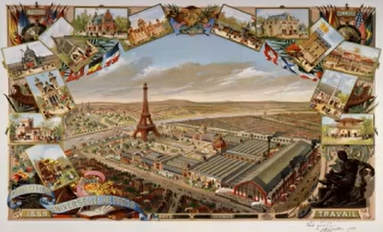
_______ ________, ______, ________
Universal Exposition; Paris; 1889

______ _______, ______ ______, ______
Gustav Eiffel; Eiffel Tower; 1889
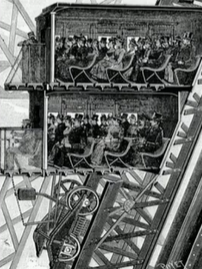
______ ______, _______
Hydraulic elevator; 1889
_____ ____ ______, ______
Hall of Machines; 1889
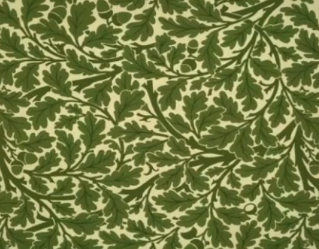
_____ ______, _______ designs, _______s
William Morris; wallpaper; 1880