SLHS 1402 FINAL
 Call Kai
 Learn
Learn Practice Test
 Spaced Repetition
 Match
Match Flashcards
 Knowt Play
1/77

There's no tags or description
Looks like no tags are added yet.
Name | Mastery | Learn | Test | Matching | Spaced | Call with Kai |
|---|
No analytics yet
Send a link to your students to track their progress
78 Terms
what does speech mean
verbal production of sounds
language
shared system of words and rules used to communicate
communication
process of exchanging info (gestures, speech)
phonology
smallest unit of sound that distinguishes meaning
p vs b in bat or pat
morphology
smallest unit of meaning (base words, prefixes, suffixes)
syntax
The set of rules that governs word order and how words combine to form phrases and sentences
subject verb subject
semantics
the meaning of words
understanding the word “bank” could mean a financial institution or a rivers edge
pragmatics
how context influences the interpretation of meaning and the social rules for using language
“can you pass the salt” is understood as a request rather than a literal question about ones physical ability to lift the salt
what type of information can you find in the introduction
sets the stage by defining the research problem and its significance
background info
existing literature
research question
hypothesis
what information can you find in the methods section
explanation on how the study was conducted to allow for reproducibility
what info can you find in the results sections
key data
statistical significance and main effects (p values)
what info can you find in the discussion
interpretation of the findings
future research ideas
limitations
what function does dendrites serve
receive signals
branch like extensions that receive chemical messages from other neurons and convert them into electrical impulses (neurotransmitters) from other neurons and convert them into electrical impulses
what function does the soma (cell body) serve
contains the nucleus and metabolic machinery to maintain the neuron
integrates incoming signals from dendrites
what function does the axon hillock serve
The junction between the soma and axon that acts as a trigger zone, deciding whether to send an electrical impulse (action potential)
what function does the axon serve
A long, tail-like structure that conducts the action potential away from the soma toward other neurons, muscles, or glands.
myelin sheath
A fatty layer insulating the axon, increasing the speed of signal conduction.
what function does the synapse serve
The junction (gap) between the axon terminal of one neuron and the dendrite of another.
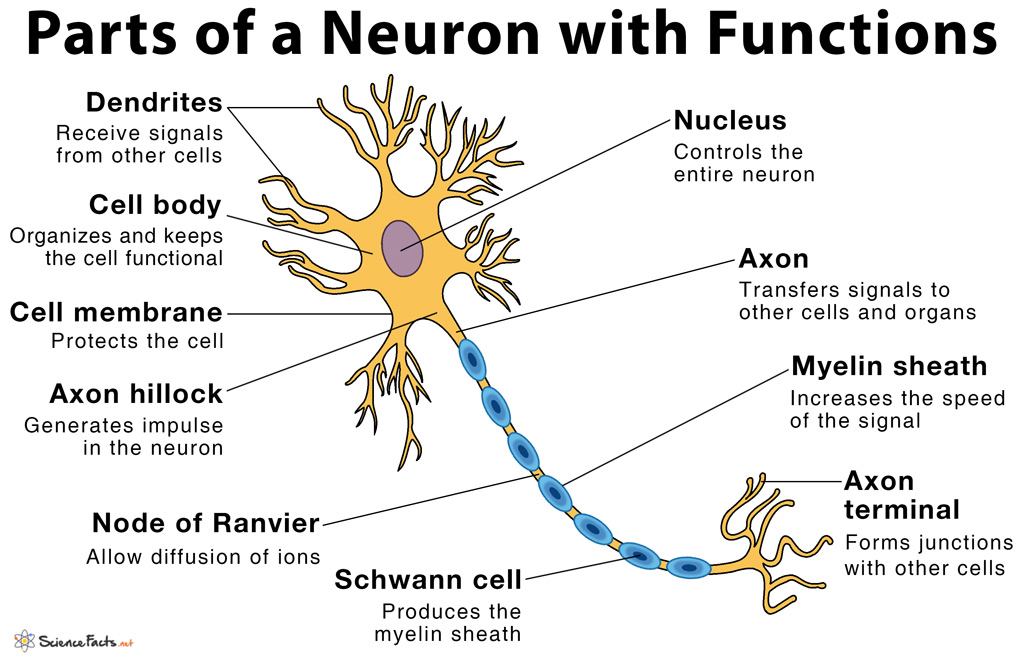
What is the difference between the central and peripheral nervous system?
CNS consists of the brain and spinal cord the PNS comprises all nerves outside the. brain and spinal cord, acting as a messenger network connecting the CNS to limbs and organs
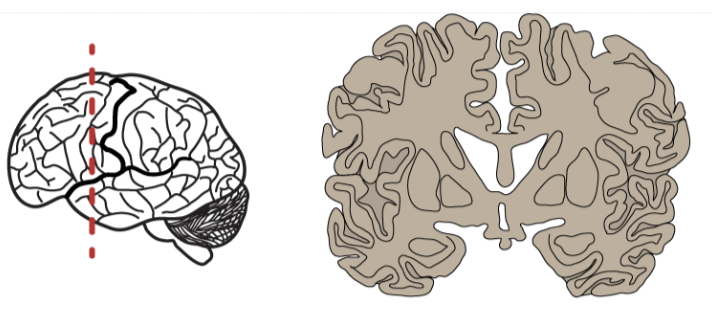
what plane is this
frontal or coronal plane
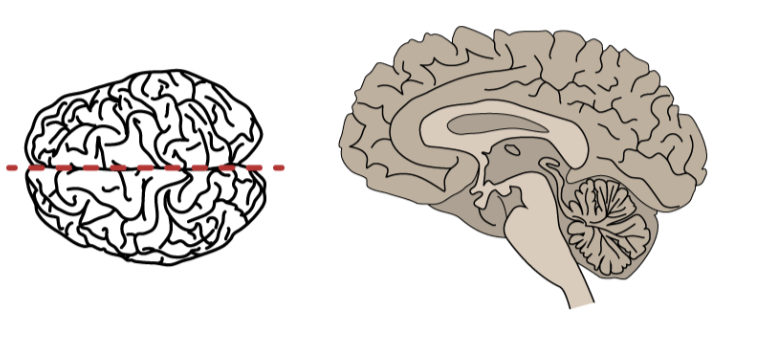
what plane is this
saggital
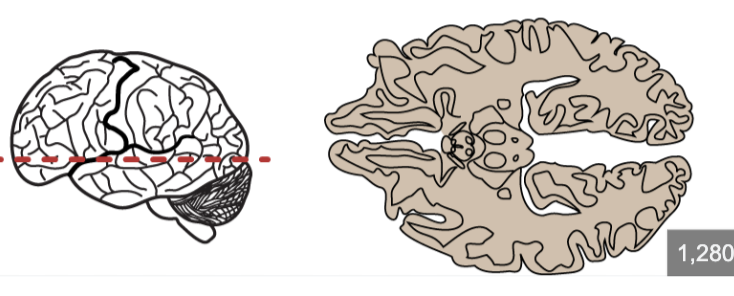
what plane is this
horizontal / transverse plane
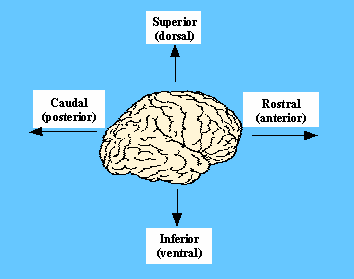
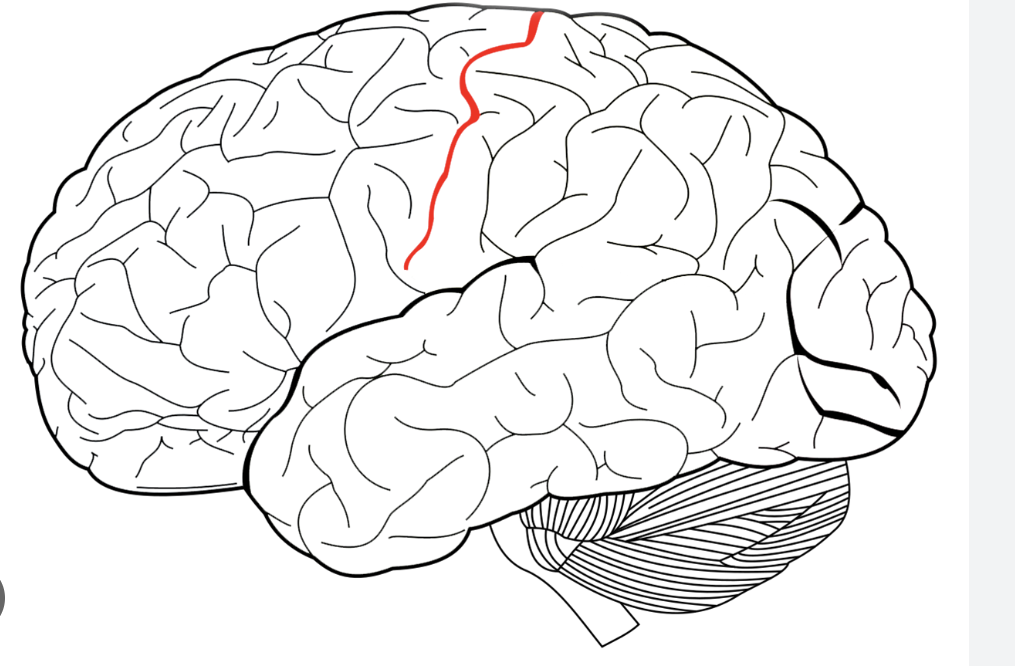
central sulcus
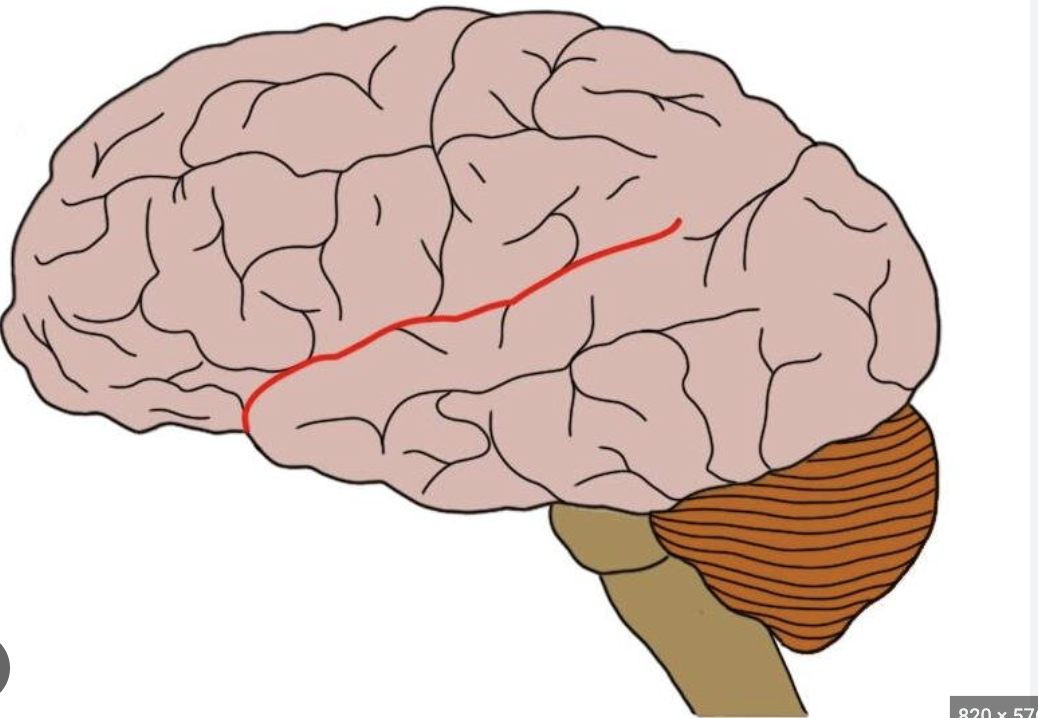
lateral sulcus
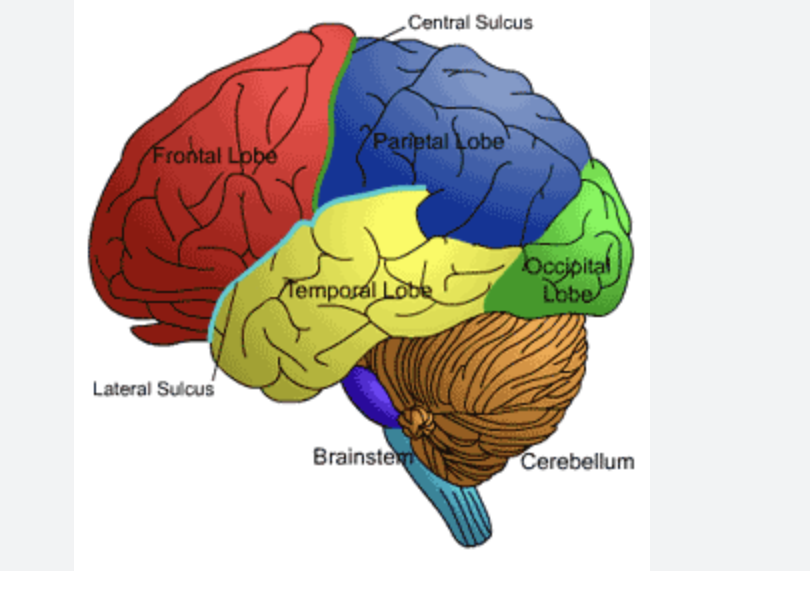
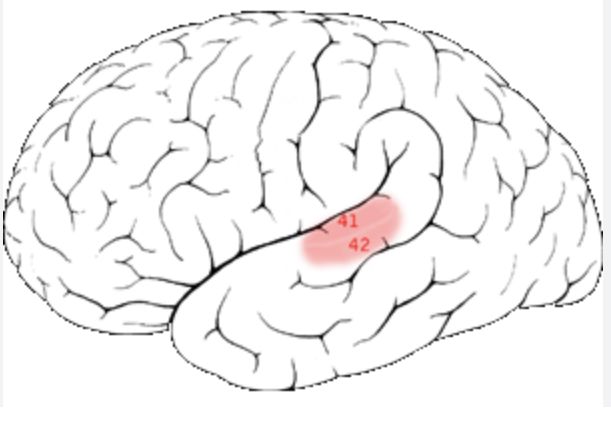
primary auditory cortex
what is the role of the primary auditory cortex
auditory information is integrated here
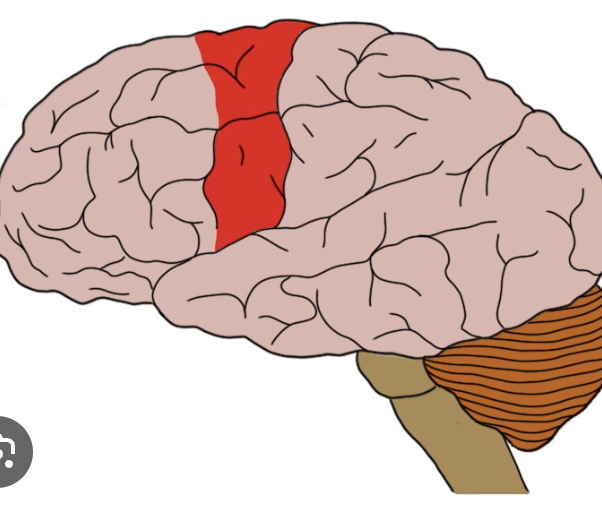
motor cortex
what is the function of the motor cortex
to plan, control, and execute voluntary skeletal muscle movements
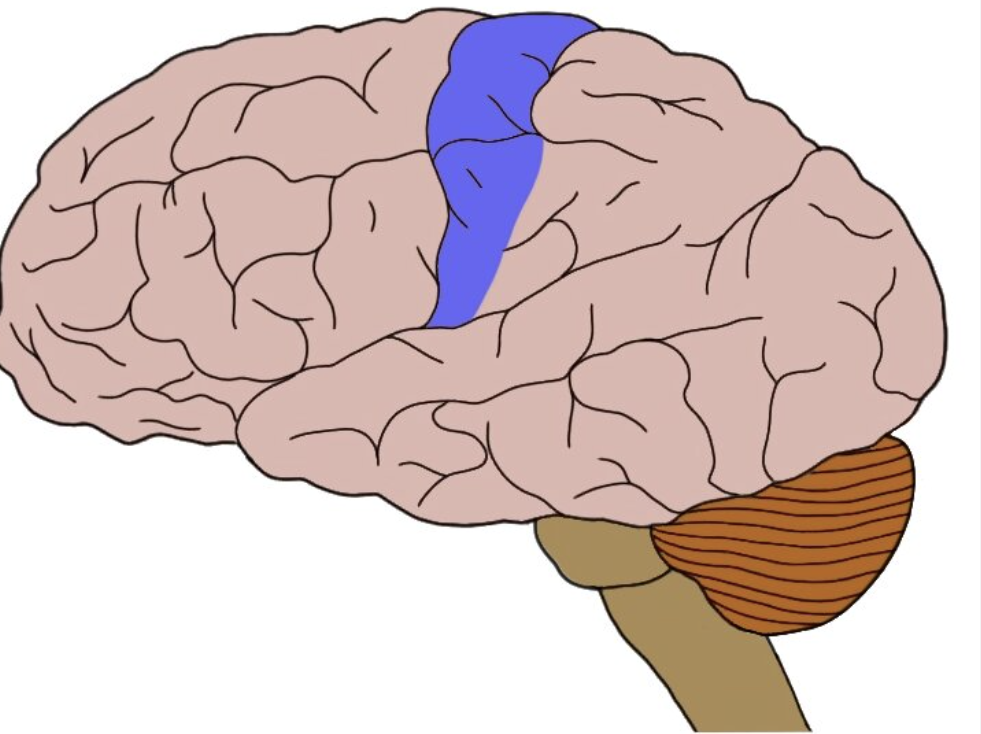
primary sensory cortex
(m before s so motor is before sensory)
what is the function of the primary sensory cortex
processing hub for somatic sensations—including touch, pain, temperature, and proprioception (limb position)
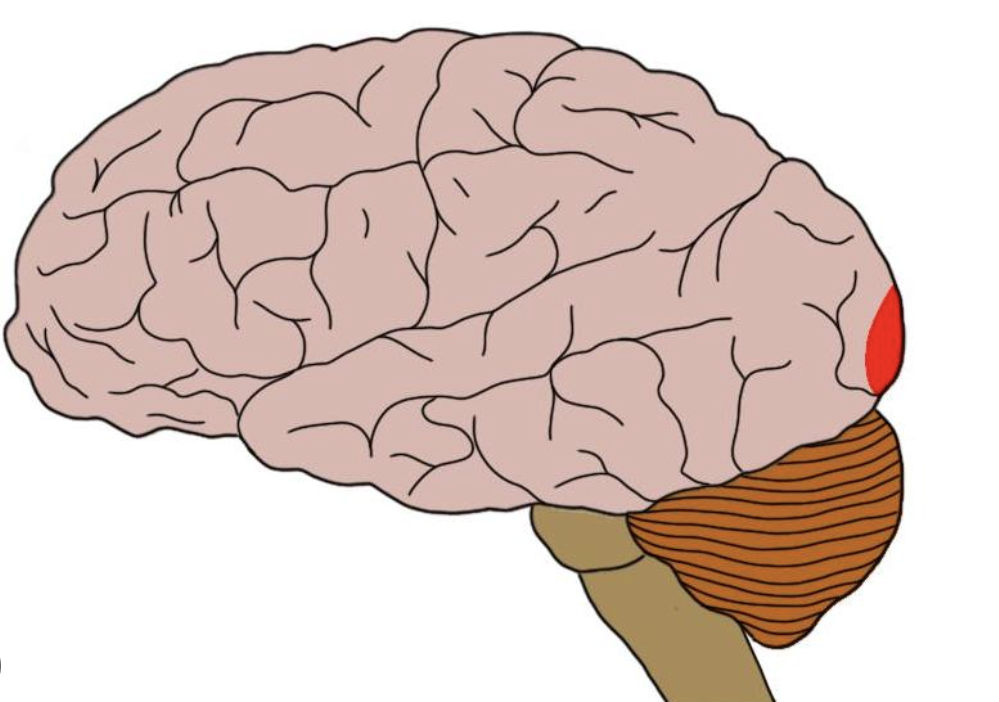
primary visual cortex
what is the function of the primary visual cortex
processes basic visual features such as orientation, edge detection, spatial frequency, and motion
what are the strengths and weaknesses associated with the lesion method
Weaknesses
lacks generalizability
have to wait for the person to die, so it takes a long time
difficult to target precise deep subcortical structures
Strengths
strong causal inference
what are the strengths and weaknesses associated with fMRI
Weaknesses
poor temporal resolution
high cost
low reproducibility
Strengths:
high spatial resolution
wide availability
safe and non invasive
what are the strengths and weaknesses associated with ERP
Weakness:
high cost
rigidity
Strengths:
real-time reporting
What is Wernicke’s aphasia
a language disorder caused by damage to the brain's temporal lobe characterized by the ability to speak fluently and with normal rhythm, but the content is nonsensical, full of made-up words
what is global aphasia
It damages all language areas of the left hemisphere—both producing speech and understanding it are heavily impaired. Patients often cannot read, write, or comprehend spoken language, usually following a stroke or severe brain injury
what is brocas aphasia
a non-fluent, expressive language disorder caused by damage to the brain's frontal lobeIndividuals understand speech well but struggle to produce it, speaking in short, halting phrases with great effort
if someone is not fluent, unable to repeat things, but has intact comprehension what kind of aphasia could it be?
Brocas
if someone is fluent, unable to repeat things, and does not have intact comprehension what kind of aphasia could it be?
Wernickes
if someone is not fluent, unable to comprehend, and is not able to repeat things what kind of aphasia could it be?
global
what are the similarities between stroke aphasia and PPA (primary progressive aphasia)
Both conditions primarily disrupt the brain's left perisylvian language network, causing symptoms like difficulty finding words (anomia), forming sentences, or understanding spoken language.
what are the differences between stroke aphasia and PPA (primary progressive aphasia)
PPA is a gradual slow onset unlike stroke aphasia where it is almost sudden
PPA is caused by a neurodegenerative disease (brain atrophy)
PPA individuals are aware of their deficits
what is prosody
the patterns of rhythm, stress, and intonation in spoken language
what are the common deficits with right hemisphere damage
difficulty with pragmatics (apragmatism)
lack of awareness of deficits (anosognia - deny they have a problem)
tangentiality - going off topic
difficult with abstract or figurative language
changes in prosody and emotional inflection
How do the deficits in right hemisphere differ from the impairments we see following left hemisphere damage?
Right hemisphere damage typically causes spatial-perceptual deficits, left-sided neglect, and impulsive behaviors, whereas left hemisphere damage primarily impairs language (aphasia), speech, and logical reasoning
are contusions primary or secondary consequences to a TBI
primary consequence
resulting from coup / contre coup linear acceleration damage (back and forth)
are diffuse axonal injuries primary or secondary
primary, resulting from rotational acceleration damage (twisting and shearing axons)
what are the primary consequences of TBI
contusions, diffuse axonal injury , hemorrhage
what are the secondary consequences of TBI
cerebral edema - brain swelling
ischemic brain damage - pinching off / loss of blood flow to brain
elevated intracranial pressure
what is elevated intracranial pressure
swelling of brain
what are contusions
brain bruises
what is diffuse axonal injury
brain shifting, stretching, and tearing its long nerve fibers (axons)
What is the main difference between the communication deficits we tend to see following TBI compared to the deficits we tend to see following left-hemisphere stroke?
TBI deficits include: pragmatics, tangentiality, organization of sentences, anomia
“individuals with aphasia communicate better than they talk; individuals with TBI talk better than they communicate”
left hemishere strokes cause aphasia
Why do TBI deficits and left hemispheric stroke brain injury differ in their effects on communication?
because the left hemisphere holds the language centers so deficits are more localized as opposed to TBI where it is diffuse
what is dementia
clinical syndrome defined by deterioration of memory and at least one other cognitive function that interferes with activities of daily lives
what is alzeheimer’s disease
most common type of dementia
amyloid plaques and neurofibrillary tangles
starts in the hippocampus
brain atrophy (shrinking)
what is frontotemporal dementia
umbrella term, capturing multiple kinds of rare dementias, that tend to impact frontal and temporal lobes first
primary progressive aphasia
first symptoms are changes to personality and behavior
what is vascular dementia
most commonly caused by thrombotic or embolic strokes (mini strokes)
a decline in thinking skills caused by conditions that block or reduce blood flow to the brain, depriving it of oxygen and nutrients. It is the second most common form of dementia, often characterized by sudden or step-wise decline
how does communication change as dementia progresses?
lack of coherence in discourse
tangential
perseverative - getting “stuck” on a particular idea
impaired concept formulation and expression
syntax and phonology relatively spared until the very late stages of the disease (exact opposite of PPA)
what is amnesia
a significant loss of memories, such as facts, information, or experiences, typically caused by brain injury, disease, or psychological trauma. It involves difficulty forming new memories (anterograde) or recalling past ones (retrograde), but usually does not affect intelligence or identity
What are common causes of selective damage to vmPFC
often due to an anterior communicating artery aneurysm
brain tumor within vmPFC
Phineas Gage
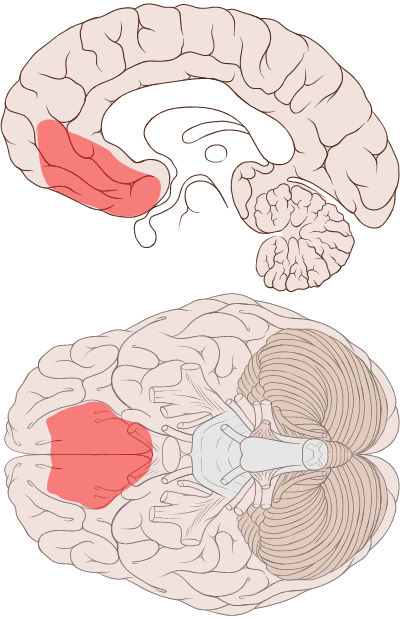
What are the common causes of selective damage to medial temporal lobe/hippocampus?
brief period of anoxia
herpes simplex encephalitis
What are the benefits of studying focal lesions for understanding more common disorders like TBI and dementia?
allows researchers to establish direct causal links between specific brain structures and cognitive functions
Be able to identify principles of Supported Conversation for Aphasia for “getting the message in”, “getting the message out”, and “verifying” the message
getting the message in through clear, simple language and visual aids, getting the message out by encouraging varied modalities and providing time, and verifying the message by summarizing and confirming understanding
What characteristics make written material “aphasia friendly”?
simplified language and clear, accessible design. Key characteristics include using a large font size (14-18 point) in a sans-serif style (like Arial or Verdana), incorporating significant white space
Be able to identify which research designs hold more or less weight for evidence-based practice
most
meta analysis
randomized controlled trials
prospective group studies
multiple baseline single case design
expert opinion
uncontrolled case reports
least
what is the supported conversation approach to people with aphasia
trains conversation partners to act as a "communication ramp" using multi-modal approaches, including gestures, writing keywords, drawing, and using pictures to both receive and express messages.
what is the cueing hierarchy approach to people with aphasia
client verbalizes the objects name
SLP verbalizes the object function and the client attempts to name the object
client attempts to name the object following a spoken sentence completion cue (at night I go to sleep in my ____)
client attempts to name the object following a spoken sentence completion cue plus the spoken first phoneme
client repeats the name followong a spoken model of the name
what is script training approach to people with aphasia
improves conversational fluency by repeatedly practicing personalized monologues or dialogues. Through intense, repetitive drilling, these functional phrases become automatic "islands of speech" that the individual can use in real-life interactions.
common things like ordering food
introducing oneself
what is the Semantic Feature Analysis approach to people with aphasia
a word-finding therapy that helps people with aphasia improve naming by creating "semantic maps" of objects. By answering specific questions about an item's category, function, description, and location, patients strengthen neural connections and improve word retrieval
strengthens existing semantic networks
what is the Response Elaboration Training approach to people with aphasia
expanding on their initiated utterances. Rather than correcting errors, clinicians use pictures and WH-questions (who, what, where) to encourage longer, more detailed sentences, effectively increasing content words and improving word retrieval
man shaving example
what is the Melodic Intonation Therapy approach to people with aphasia
uses humming, singing, and rhythmic hand-tapping to stimulate the brain’s right hemisphere. By exaggerating pitch and rhythm, it helps patients transition from singing functional phrases to speaking them, typically for patients with good comprehension but poor verbal output.
what kind of therapy approach targets word finding difficulties in people with aphasia
cueing and script training
what kind of therapy approach targets limited verbal output and agrammatism difficulties in people with aphasia
response elaboration training and melodic intonation therapy