Concept 34.2: Vertebrates are chordates that have a backbone
 Call Kai
 Learn
Learn Practice Test
 Spaced Repetition
 Match
Match Flashcards
 Knowt Play
1/7

Name | Mastery | Learn | Test | Matching | Spaced | Call with Kai |
|---|
No analytics yet
Send a link to your students to track their progress
8 Terms
Vertebrates
Chordates that have a backbone, skeletal system, and complex nervous system that enables efficiency in capturing food and evading predators
These have two or more sets of Hox genes while other chordates only have one
Enables nervous system evolution and skeleton innovations
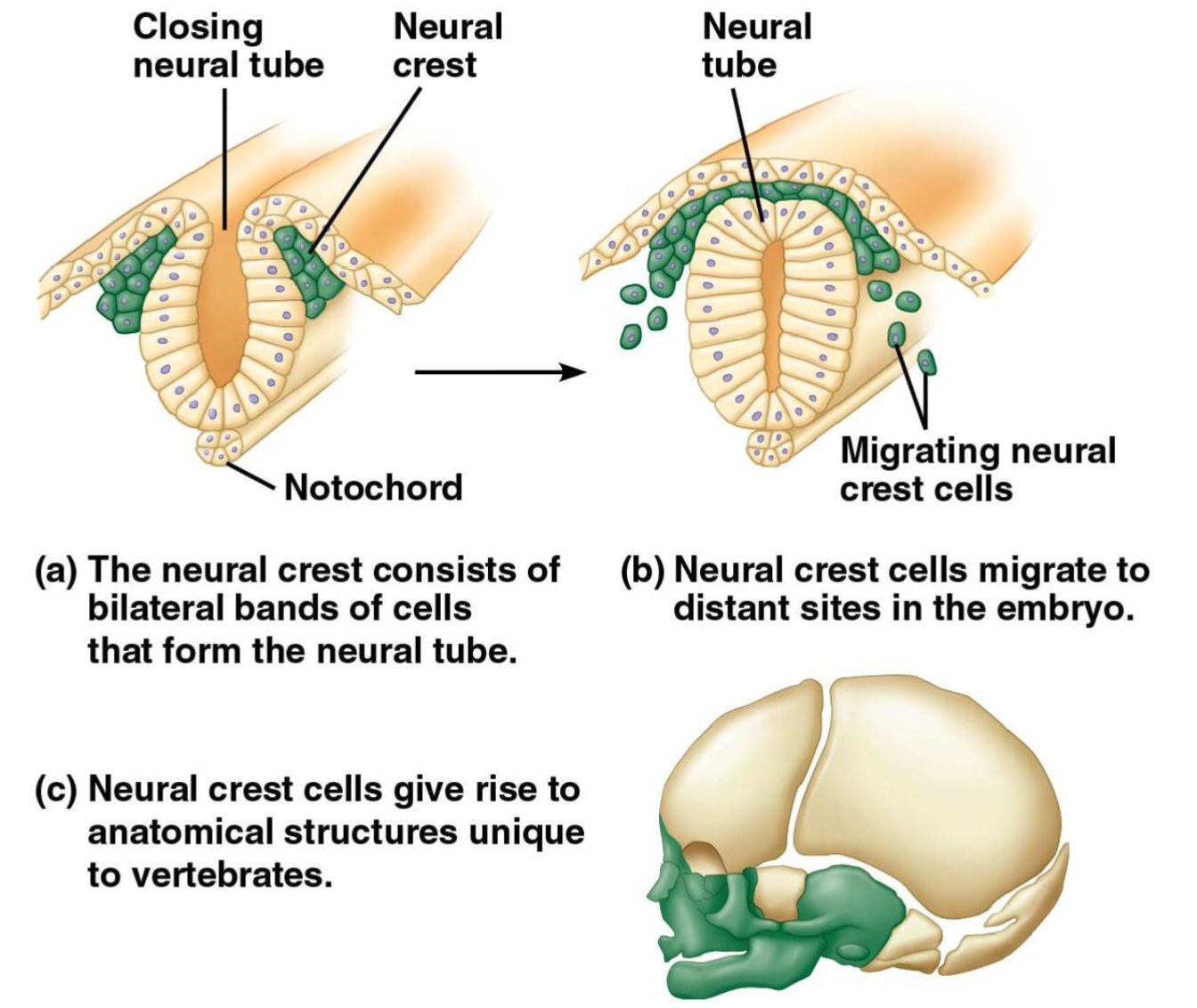
Neural crest
Vertebrate characteristics appearing along the edges of the closing neural tube, dispersing through the embryo and giving rise to:
Teeth
Some bones and cartilage of the skull
Several types of neurons
Sensory capsules
Cyclostomes
A clade including hagfishes and vertebrates with the only living vertebrates lacking jaws and a backbone; however, these do have rudimentary vertebrae
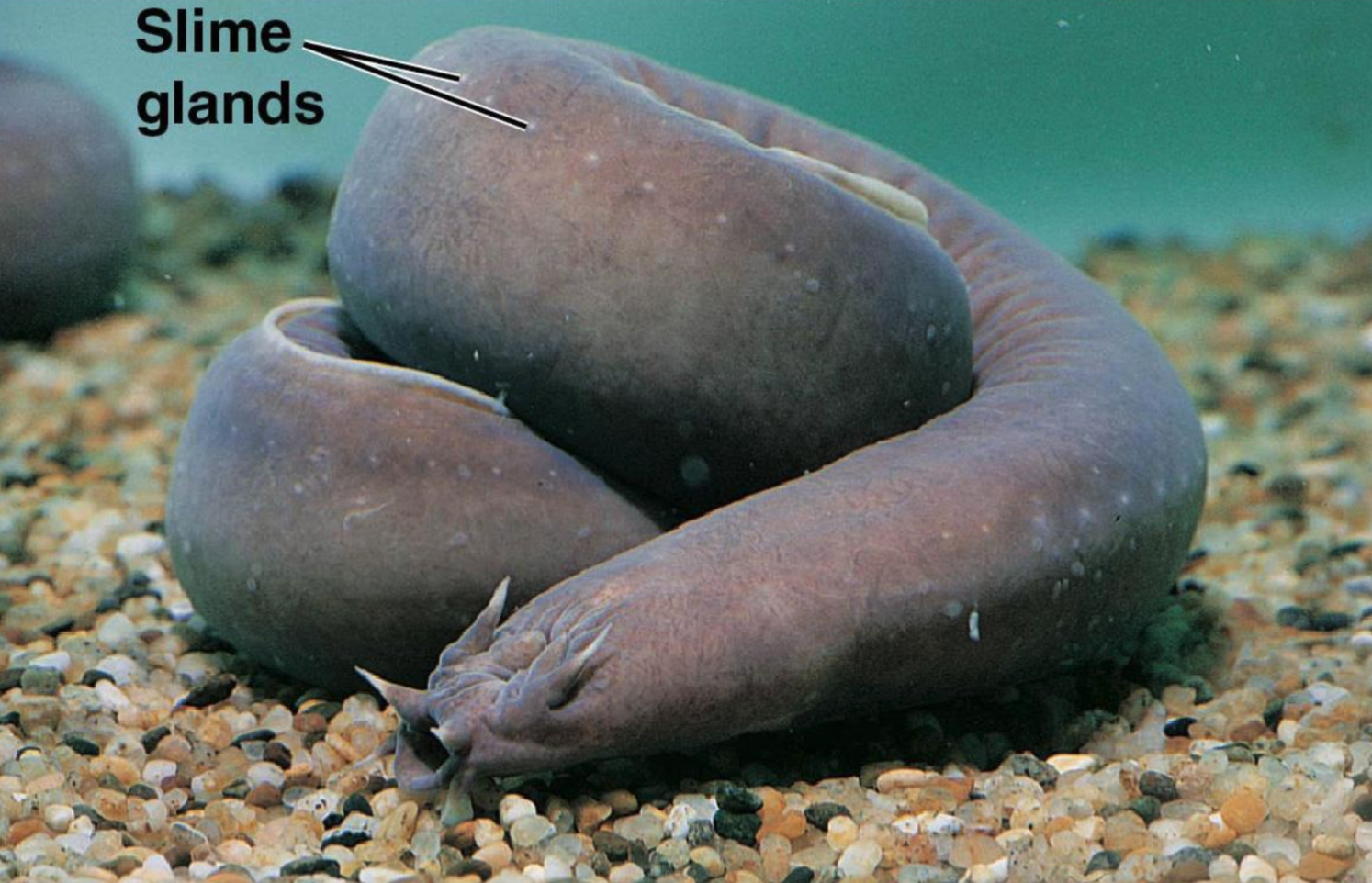
Hagfishes
Jawless vertebrates with reduced vertebrae and a cartilaginous skull
These retain the notochord and have eyes, ears, a small brain, and nasal opening connected to the pharynx
Mouth contains tooth-like keratin formations
All species of these are marine and most are bottom-dwelling scavengers
Rows of slime glands produce a slime to repel competitors and predators
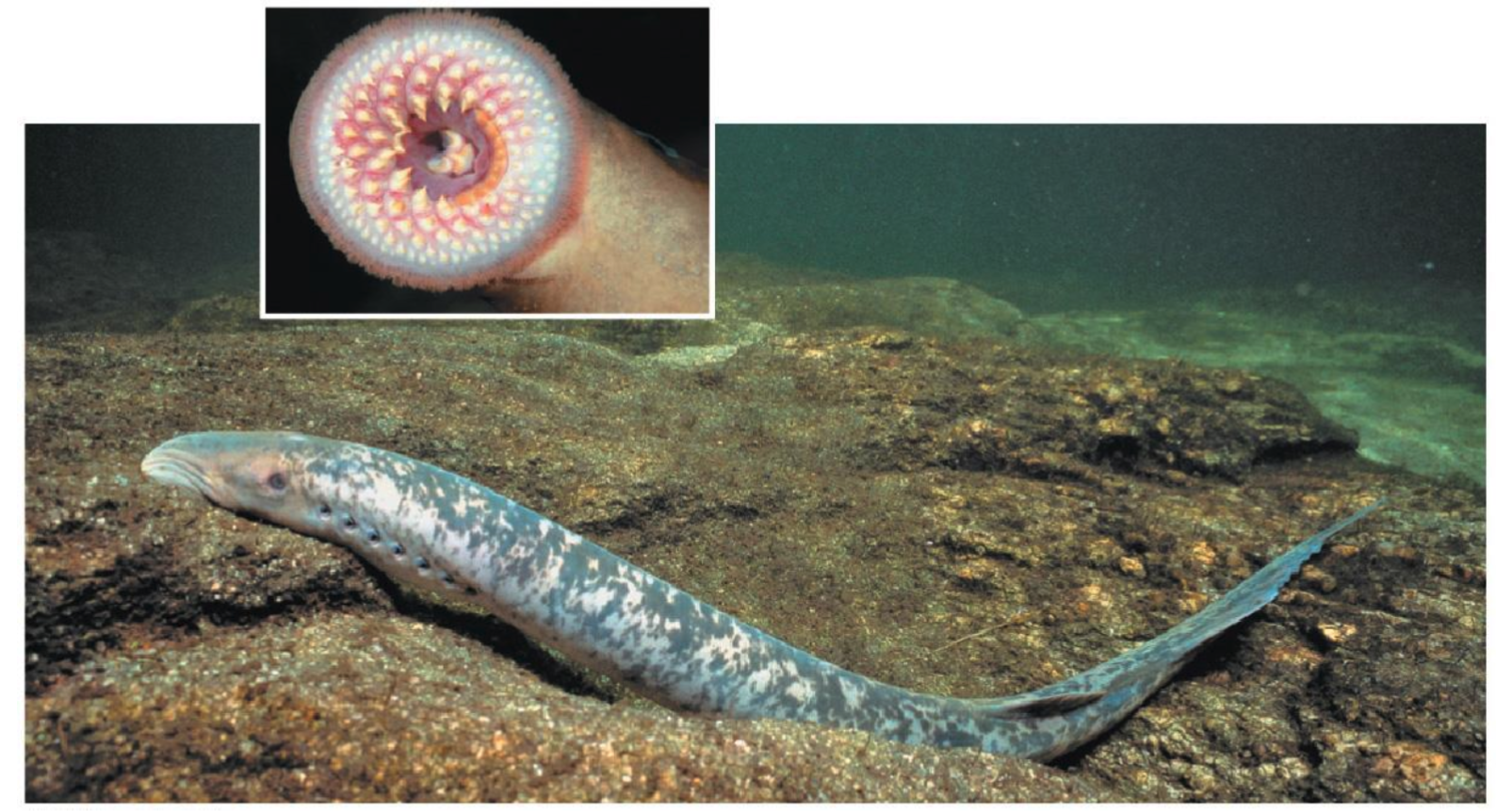
Lampreys
Jawless vertebrates with reduced vertebrae, a notochord, and cartilaginous skeleton
Includes about 38 species in marine and freshwater environments
Larvae live and feed in streams for several years
Parasitic species migrate to oceans or lakes, clamping with mouths onto host fish to feed
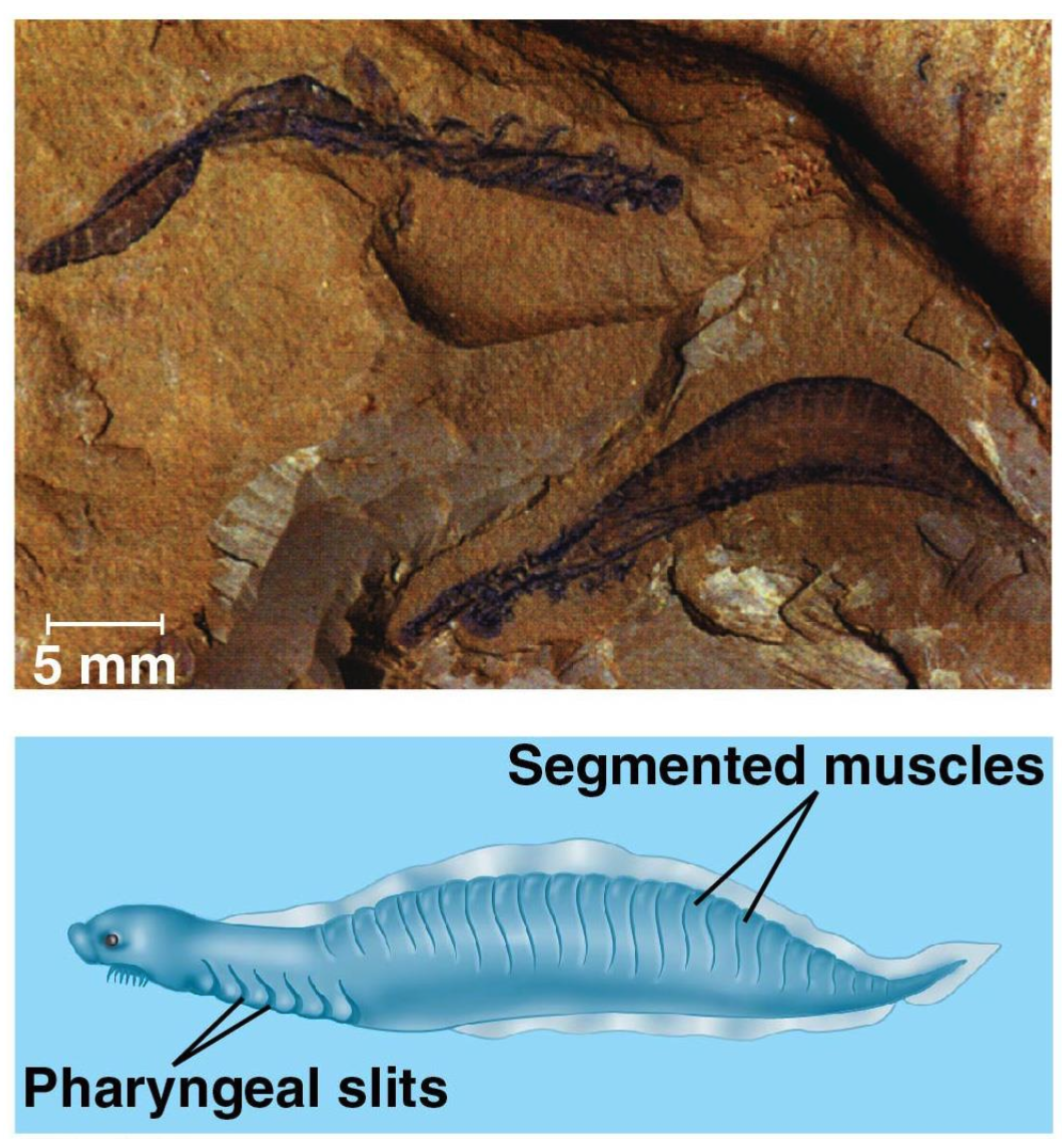
Haikouella
The most primitive fossil found documenting the transition to vertebrates
Were 3-cm-long suspension feeders resembling lancelets
Had a well-formed brain, eyes, and muscular segments, but lacked a skull and ear organs
Head
A part of vertebrates consisting of a brain, eyes, other sensory organs, and a skull, enabling more complex movement and feeding behaviors
First seen in Myllokunmingia with eye and ear capsules but lacking vertebrae
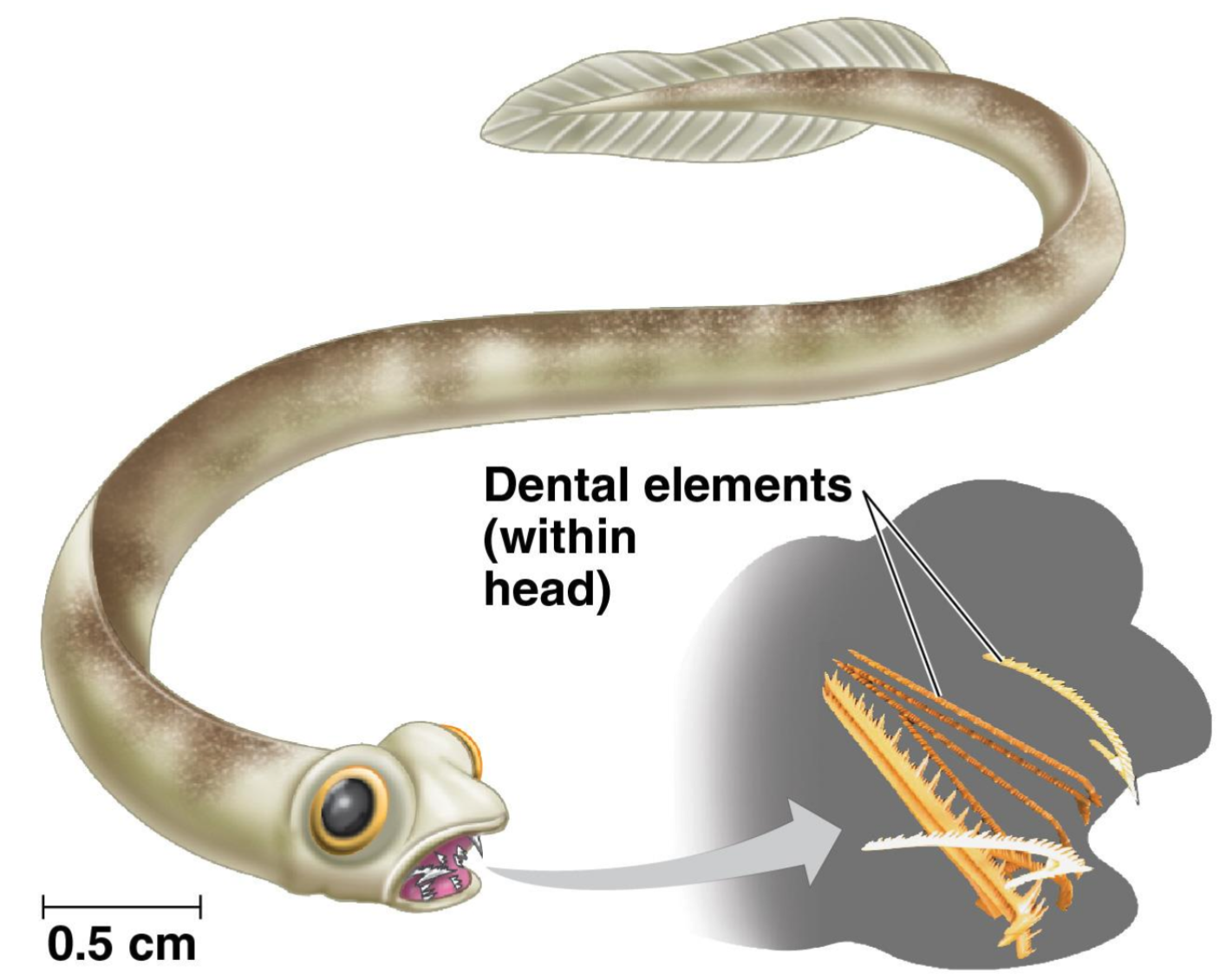
Conodonts
The earliest vertebrates in the fossil record, dating to 500 mya, capturing prey with large eyes and mineralized barbed hooks in the pharynx