DM- Ch 2 Materials Science and Dentistry
 Call Kai
 Learn
Learn Practice Test
 Spaced Repetition
 Match
Match Flashcards
 Knowt Play
1/23

There's no tags or description
Looks like no tags are added yet.
Name | Mastery | Learn | Test | Matching | Spaced | Call with Kai |
|---|
No analytics yet
Send a link to your students to track their progress
24 Terms
Materials science
Area of the physical sciences that seeks to explain the properties and performance of materials by examining their internal structure
Bond
To connect or fasten; to bind
Adhesion
The tendency of dissimilar particles or surfaces to cling to one another
-Materials, substances, and objects they may up stay together because the molecules they are made of attract each other
Mechanical adhesion (physical interlocking)
• Attachment by mechanical forces, requires at least one rough surface
Chemical adhesion (Chemical bonding)
• Occurs when the surface atoms of two separate surfaces form ionic, covalent, or metallic bonds
• A force of attraction between atoms that allows chemical compounds to form
Atomic bonding phases
gases, liquids, and solids
Gases
• Atomic bonds between gas molecules are very weak, easily broken
• The weakest bonds, no organization
• If thermal energy is removed by cooling, gases condense into liquids
• Condensation of water vapor on the outside of a cold beverage on a hot day
Liquids
• Stronger atomic bond between molecules than gases but attraction is not strong enough to carry a load or to maintain a shape without support
• Attraction between molecules results in "short-range order"
Solids
• Strongest attraction between atoms and molecules
• Atomic bonds of solids maintain the shape of objects and resist external forces placed on them, can carry a load
Solids classification
crystalline or amorphous
Crystalline Solids
Distances and angles among atoms or molecules are uniform, like rooms in a hotel
- Table salt, diamonds, and hydroxyapatite of teeth are crystalline structures
Amorphous Solids
Distances and angles among atoms or molecules are
not uniform, they are irregular or disorganized
• Glass in a window is an example
Electromagnetic force
Atomic bonds are a result of electromagnetic force
• The electronic force causes positive charges to attract negative charges and vice-versa
• Opposites attract
Solids can be thought of as a collection of millions of springs
• When you put force on an object, the atomic bonds are compressed and oppose the force
• The solid changes size at a microscopic level when forces are applied and
released
Ex. Teeth compress when biting
Primary bonds
the strong bonds between atoms
• Involve the transfer or sharing of electrons between atoms
Valence electrons
The electrons in the outer shell of atoms are involved in chemical reactions & atomic bonding
3 types of primary bonds
ionic, covalent, metallic
- all bonds are an effort to reduce energy
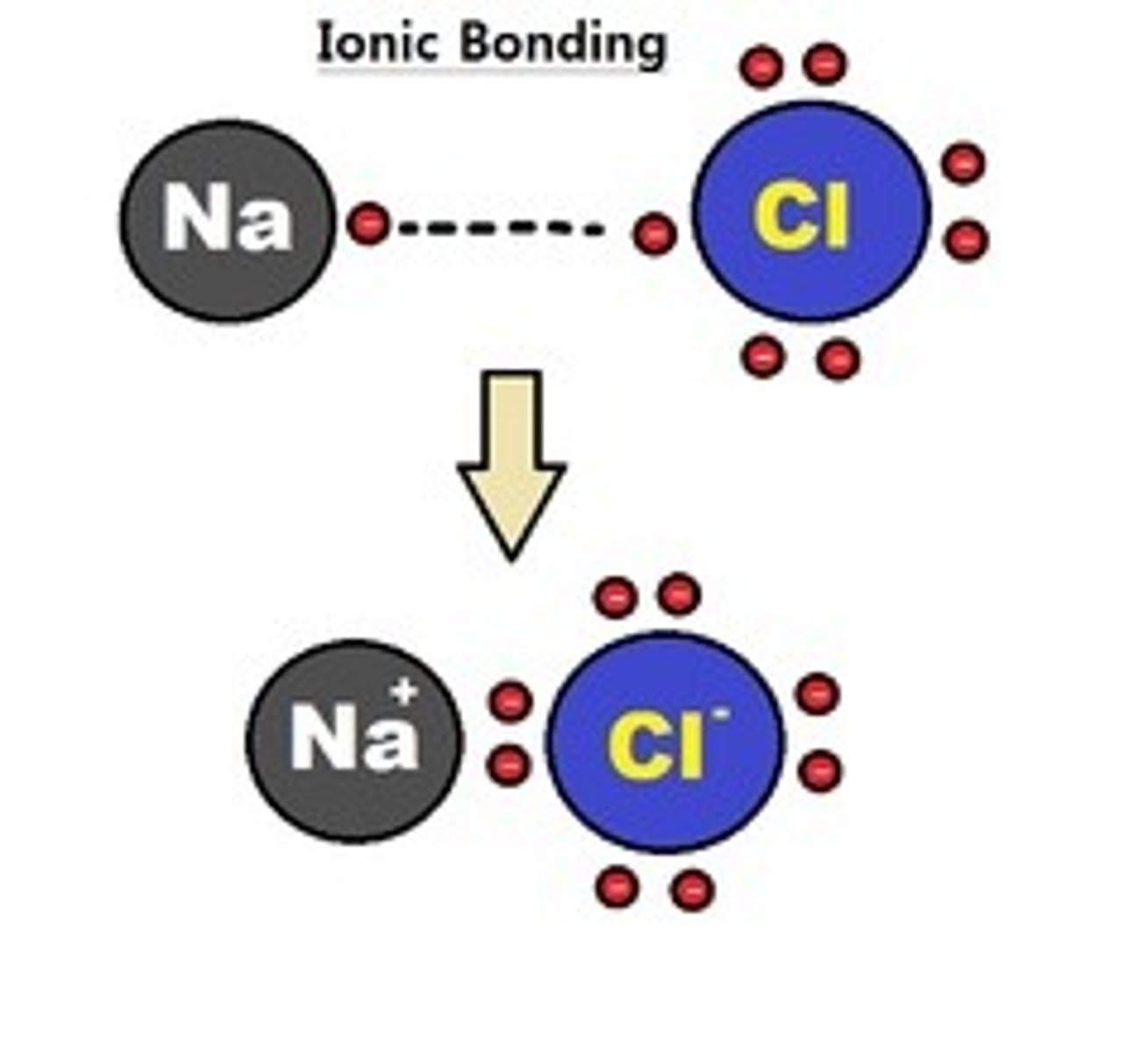
Ionic Bonds
• Both metals and non-metals
• When one atom gives up an electron and it is accepted by another atom
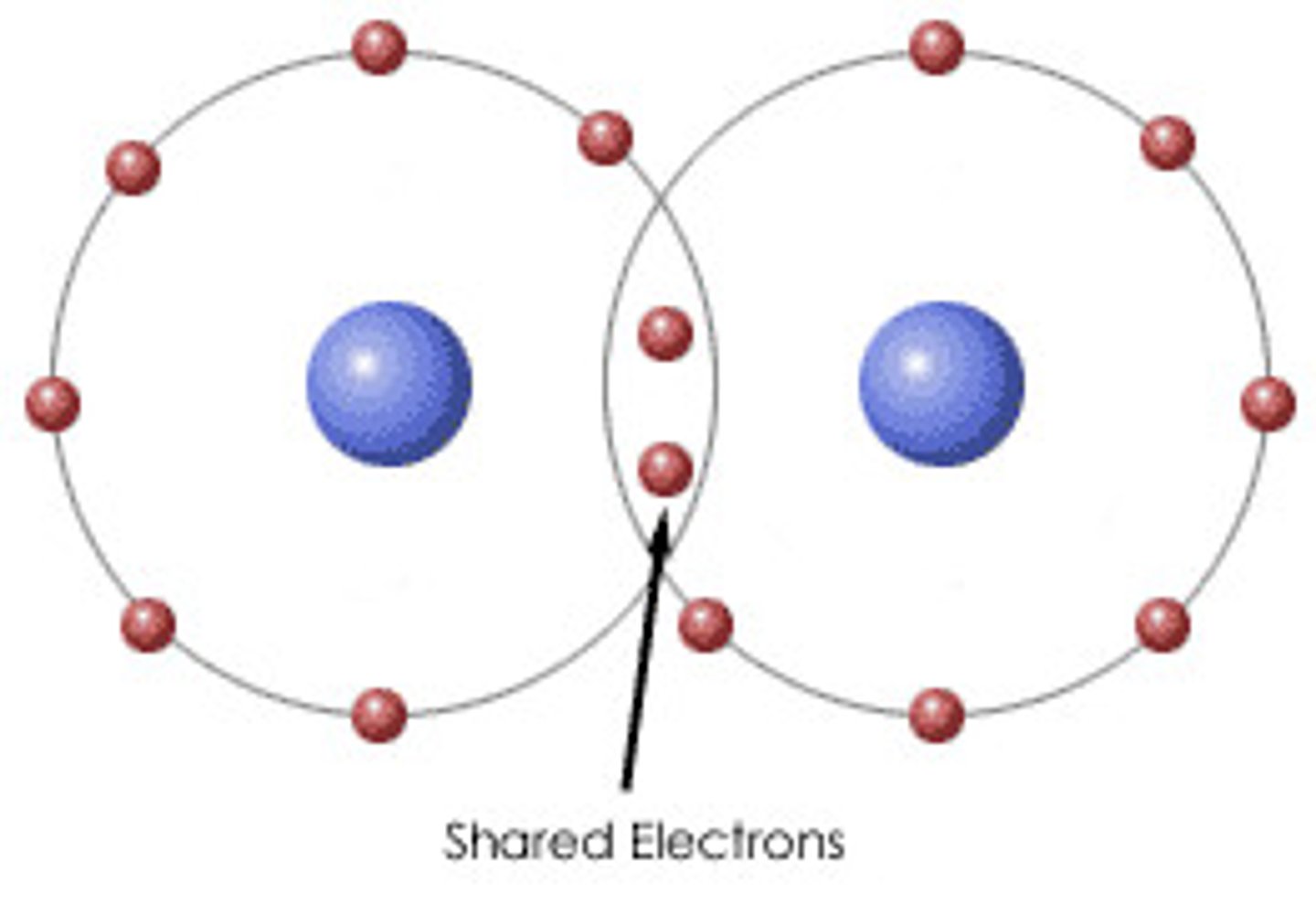
Covalent Bonds
• Non-metals only
When 2 atoms share a pair of electrons, many materials are the result of long chains of covalently bonded atoms
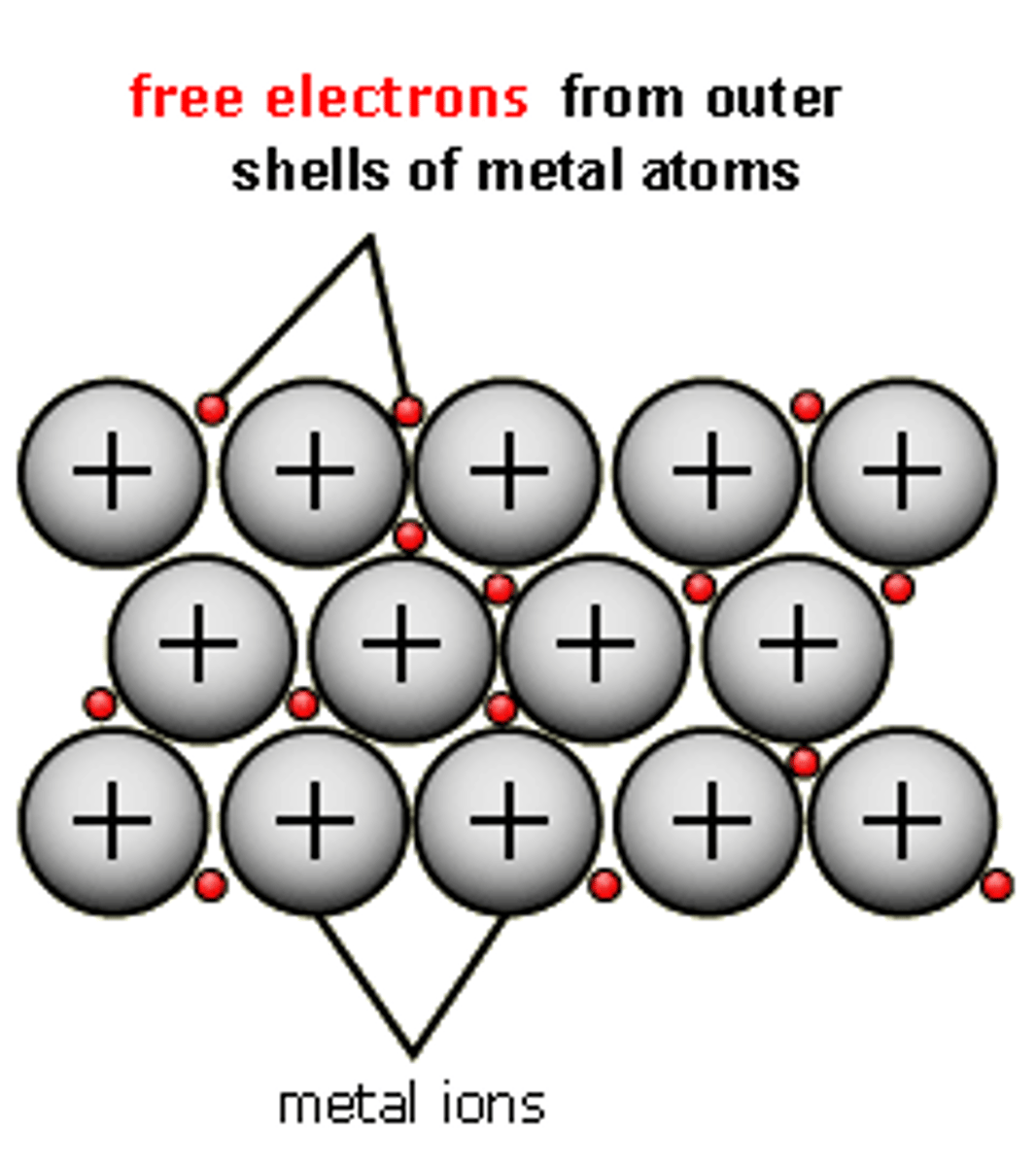
Metallic Bonds
• Metals
Electrons are shared, but between many atoms
Materials are classified
based on their primary bond
Ceramics
have atoms bonded with ionic bonds
Polymers
are composed of long chains of covalent bonds
Composites
materials made of two or more different materials
• Mixture of a polymer and a ceramic