Myth in Art Week 10: Myth on Other Media/Late Antiquity
 Call Kai
 Learn
Learn Practice Test
 Spaced Repetition
 Match
Match Flashcards
 Knowt Play
1/73

There's no tags or description
Looks like no tags are added yet.
Name | Mastery | Learn | Test | Matching | Spaced | Call with Kai |
|---|
No analytics yet
Send a link to your students to track their progress
74 Terms
What was the functionality of oil lamps?
Functionality:
Providing light – domestic (instrumentum domesticum) or commercial contexts.
Votive offerings in religious contexts
Funerary (offerings or as belongings of the deceased). Could be given as offerings or placed at tombs as belongings of the deceased
Theatrical references
Portability and potential ‘souvenirs’?
Why are oil lamps good to look at?
Smaller more everyday type objects were used by people across the social strata and they functioned across different contexts as well
What imagery appears on oil lamps?
Wide range of imagery that appears on lamps, not singularly mythical
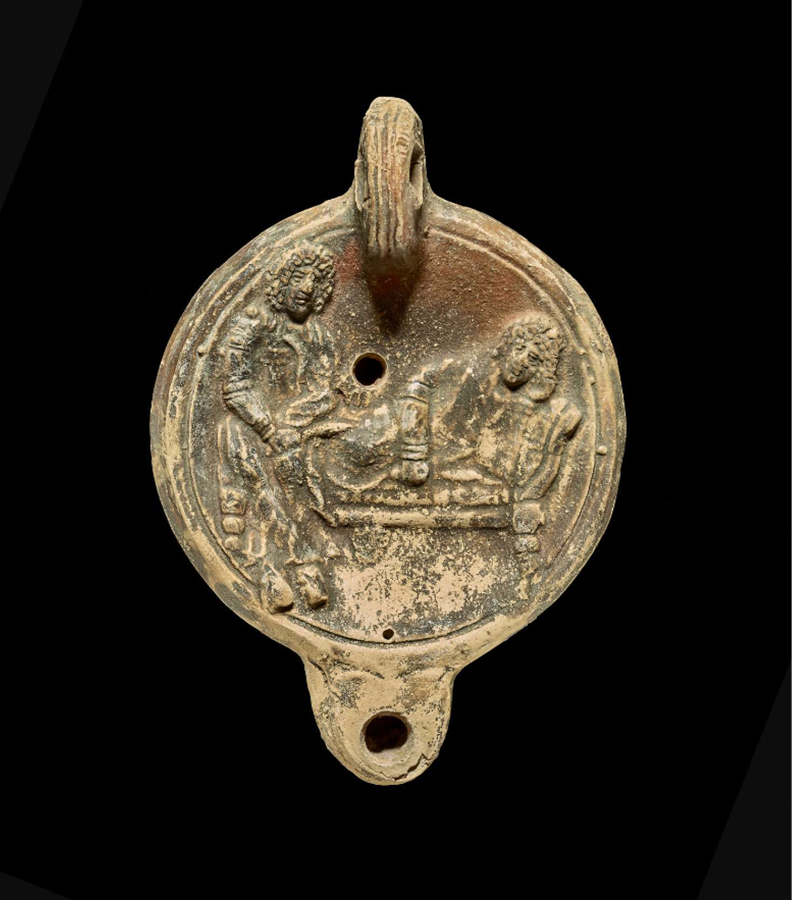
Who is on this lamp? Date?
Oil lamp depicting Orestes and Pylades- wearing theatrical masks, ca. 175-225 CE.
British Museum
Identify and describe who is on this oil lamp and date it:
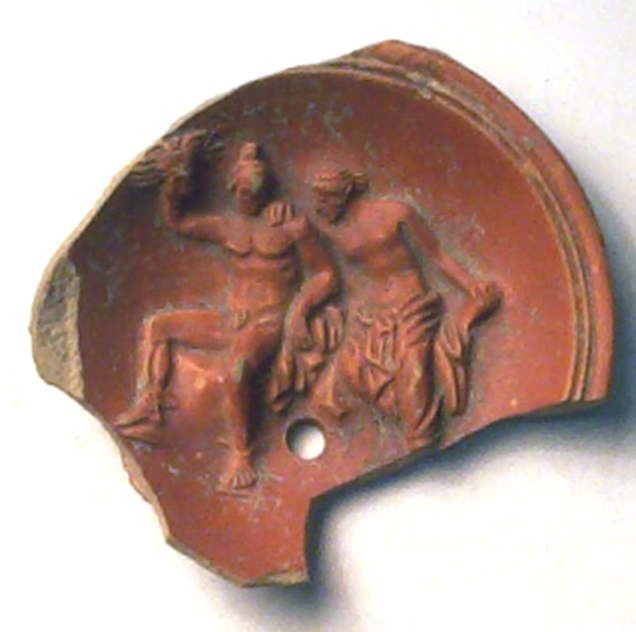
The fragment on the left is dated to the first century CE, this image doesn’t feature until we get to wall paintings in Pompeii- no known earlier president for this composition. It shows Perseus and Andromeda seated on a rock with a pool of water at their feet, Perseus is shown holding the head of Medusa up, Andromeda is peering into the pool of water below. Its the most popular composition in the campanian wall paintings- but it also appears on mosaics and gemstones
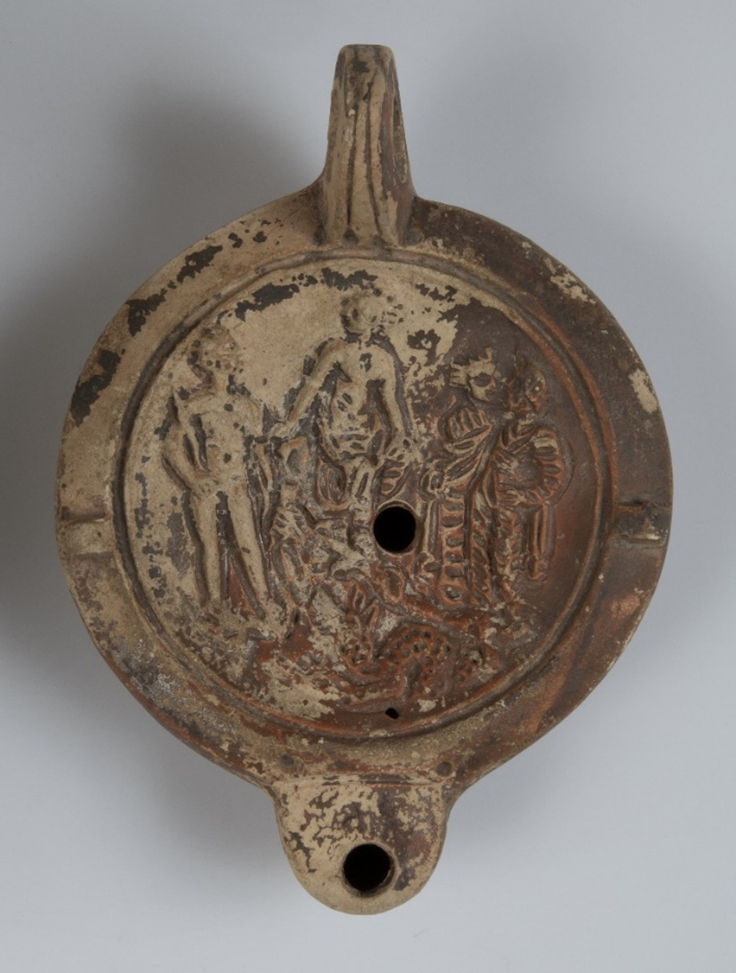
Identify and describe who is on this oil lamp and date it:
The lamp on the right, common shape of oil lamp that died out in the third century CE, this is a variation on the liberation composition of a mosaic viewed in week eight. The characters look as if theyre in conversation, reference to theatrical performance- what is also interesting is theyre included on the smaller medium of an oil lamp (not often found in larger compositions)
What were terracotta figurines used for?
Long history of use in the ancient world, often debated what they were actually used for
Multi-functional in different contexts (variety of imagery):
Decorative objects
Votive offerings
Found as grave goods
Cheaper alternative to marble, bronze or silver
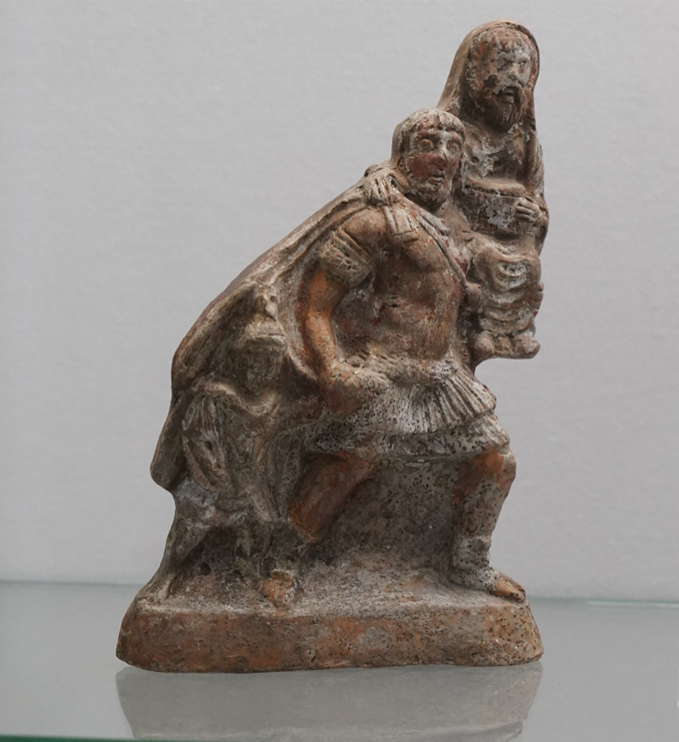
Identify this terracotta figurine:
Figure labeled 1 is Aeneas, Anchises and Ascanius
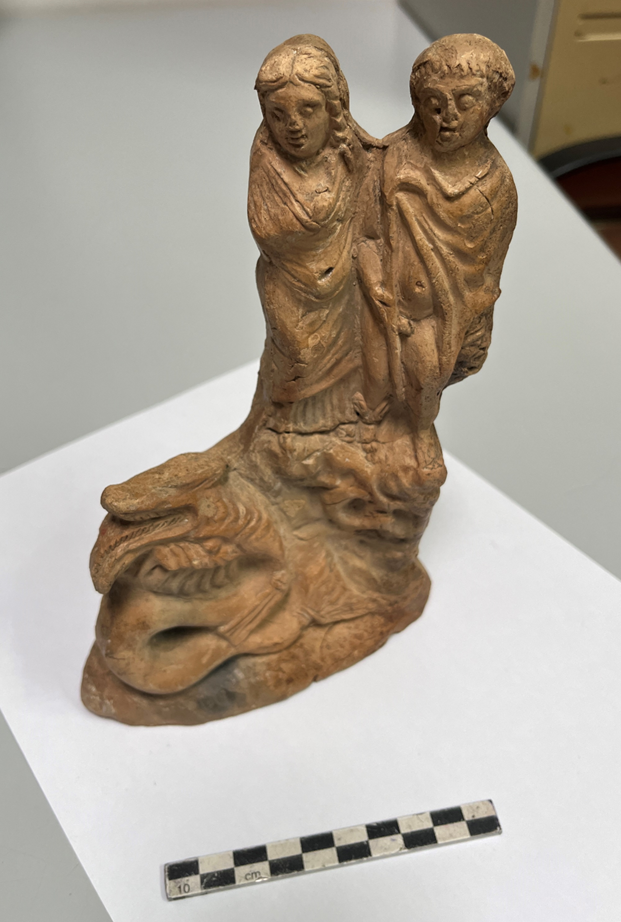
Identify this terracotta figurine:
Figure labeled 2 is Perseus and Andromeda, can see the ketos at their feet, possibly wings on Perseus’ feet and possibly holding the head of Medusa
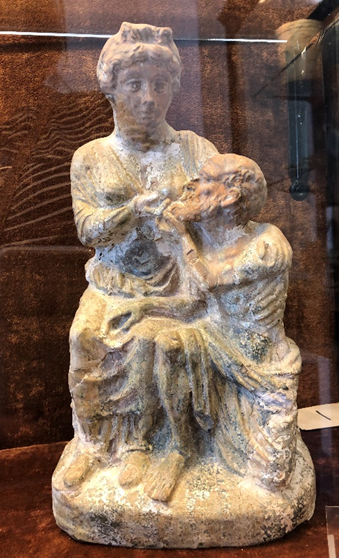
Identify this terracotta figurine:
Figure labeled 3 Pero and Mycon, similar to the painting in the House of M. Lucretius Fronto discussed in seminar in Wk 8.
What are intaglios?
Intaglios are a ‘concave image in reverse’. It means the image is carved into the gemstones and it creates hollow image that when pressed into the wax/clay it create an impression in low relief
What could intaglios be used for?
Intaglios could be set into jewellery/used as seals; could communicate political or personal messages. Tend to be much more personal items- change in context to what we have looked at before. They could act as seals- pressed into hot wax to create an identifying mark- used on official documentation
Identify this gem:
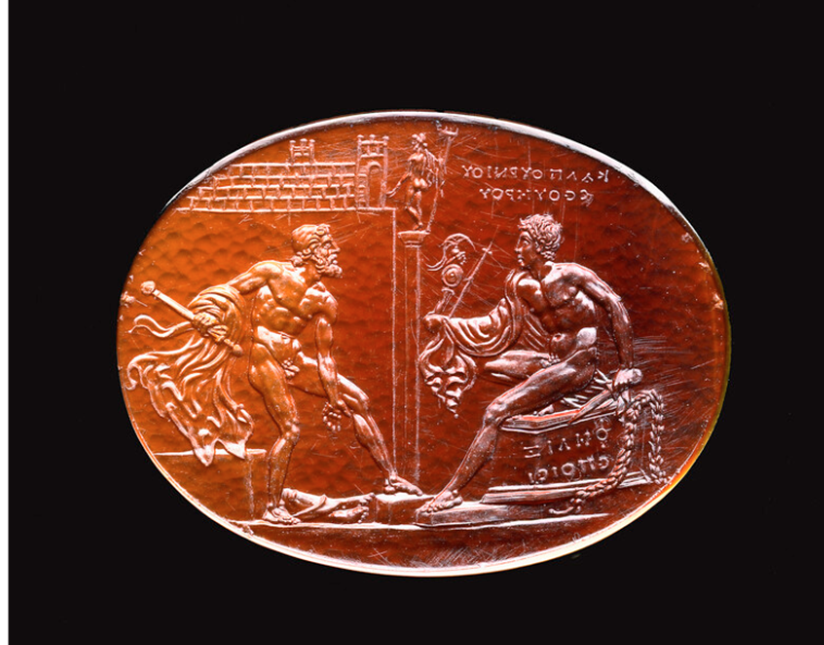
The Felix Gem
What scene/inscriptions does the gem display?
Theft of the Palladium by Odysseus and Diomedes. Odysseus is pointing in horror at the feet of the dead body of the temple guard. Statuette of Poseidon in the middle but turned away as if he can't look at the sacrilege, and the walls of troy
Inscription names carver, Felix.- Gem cutters sign their work
Another inscription names the owner, Calpurnius Severus.
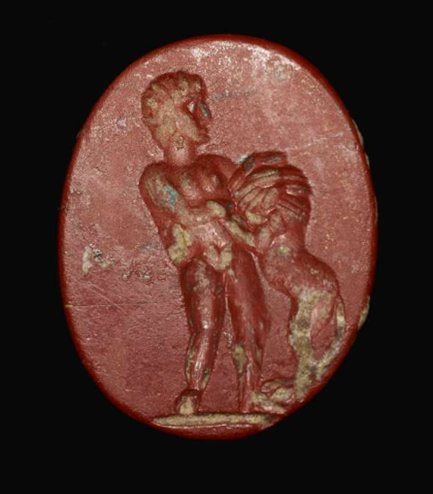
Identify the scene/character on this gemstone
Herakles strangling the Nemean lion.
Inscriptions from Roman period: often the use of three kappas (Greek letter K’s).
What does the inscription say/what was it used to ward off?
Used to ward off colic: ‘Withdraw colic! The divine one pursues you!’ (inscription on intaglio from Bibliothèque Nationale de France).
Red gems that show Heracles killing the nemean lion- this gem was thought to ward of colic (idk why)
Describe this gemstone and its inscription:
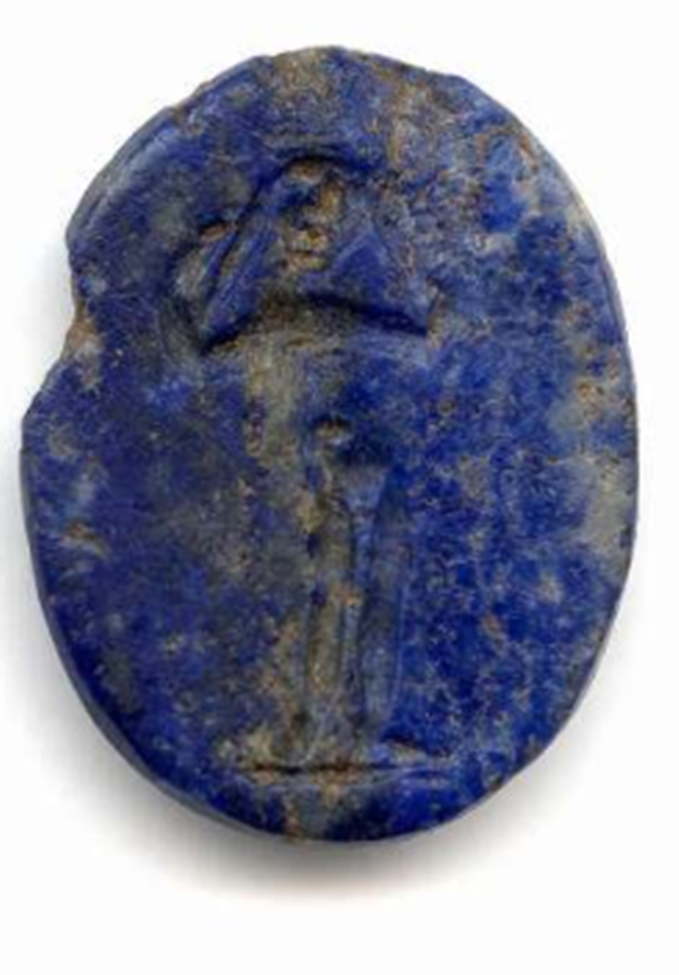
They depict Aphrodite Anadyomene (rising from the sea).
Blue gems - lapis lazuli or opal.
Feature the word arôriphrasis – possibly an epithet related to an Egyptian divinity with whom Aphrodite was assimilated.
Others include the Greek word charis (charm).
What was this gemstone believed to have brought to the wearer?
Brought charm/love to the wearer.
No magical symbols on these ones but the wearer would have been aware of the significance of the imagery and words
Where do textiles survive from?
Large number of textiles survive from burial sites in Roman Egypt.
These are sometimes from shrouds; but also fragments of clothing/domestic textiles. Common in adult burials for them to be wrapped in clothing that they had actually warn
What sort of imagery was found on textiles?
Some mythological imagery may reflect theatrical performances
Lots of hunt type of imagery, alongside this we see mythological as well- may be related to gender idealism
What may the motifs on textiles reflect?
Motifs may have been specifically chosen by the patron (possibly from pattern books) – may reflect identity projection or social values.
Identify this textile:
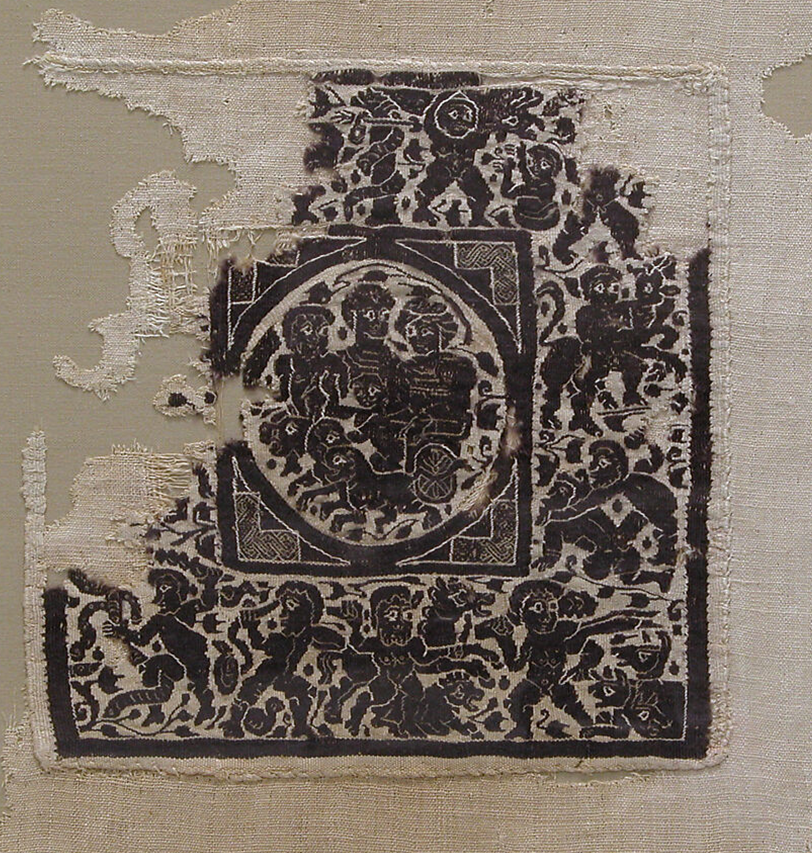
Egyptian cloth fragment showing Dionysus and Ariadne and the Labours of Herakles, 4th-6th centuries CE.
Metropolitan Museum of Art, New York,
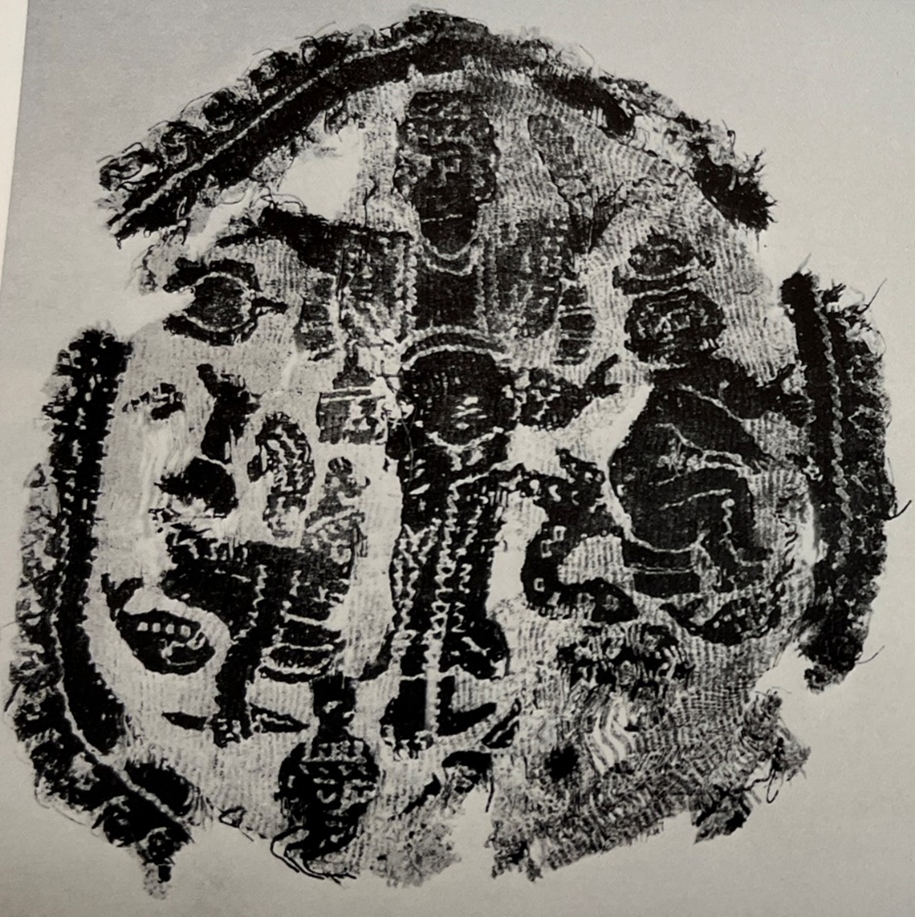
Identify this
Fabric medallion depicting Andromeda, ca. 4th century CE.
Give information on this medallion
Unsure what the entire garment is that these small piece of textiles come from
What is the scene/part of narrative?
Andromeda chained up on rock for sea monster ? (her pose, fish)
What characters can you see on the medallion?
Andromeda
Fish-looking creatures
Perseus with head of Medusa - wearing Phrygian cap, carrying harpe
Ketos is to the right of Andromeda’s legs
Ambiguous seated female figure fishing to the right - identity uncertain
Identify this:
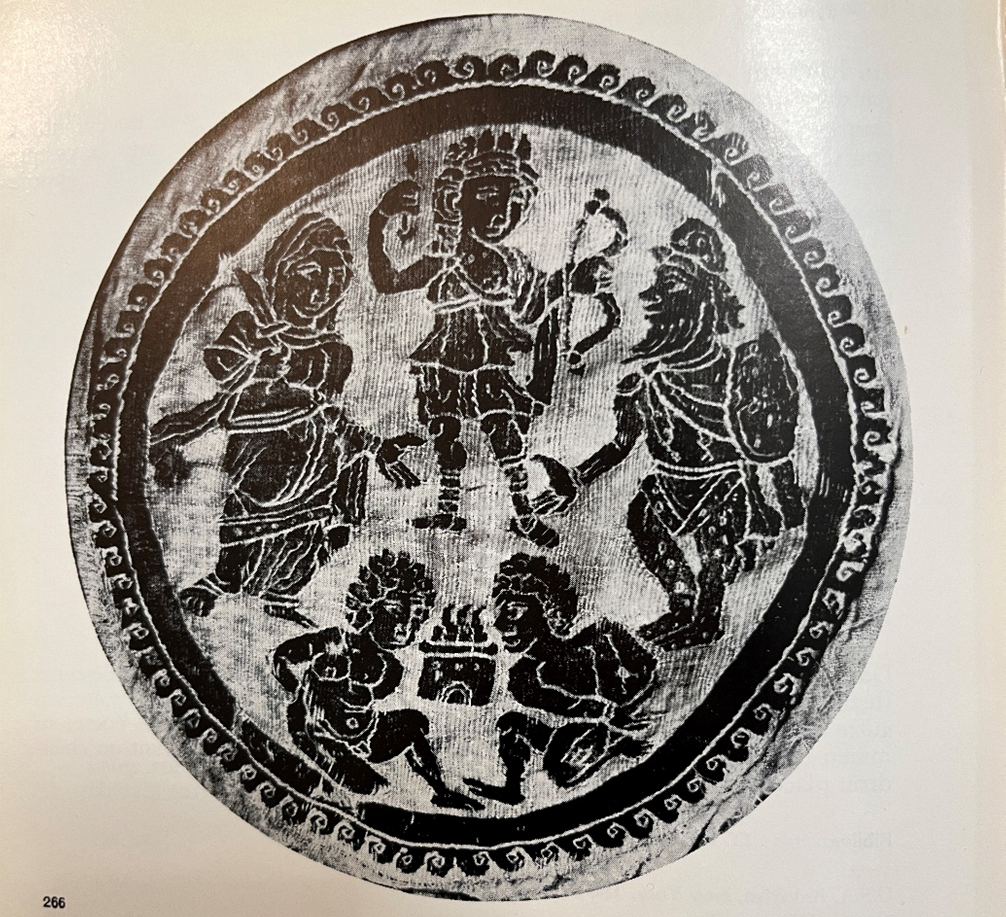
Fabric medallion depicting Iphigenia, ca. 6th century CE.
What is the scene/part of narrative?
The sacrifice of Iphigenia by her father? There is another person that looks bound? Correct identification of Iphigenia, but this refers to the Tauris narrative rather where she is a priestess of Artemis.
There is (maybe) an altar at the bottom (or fire?)
What characters can you see?
Artemis at the top with her bow
This is Thoas, king of the Taurians.
Orestes and Pylades with hands tied at bottom of the image
Iphigenia holding a sword
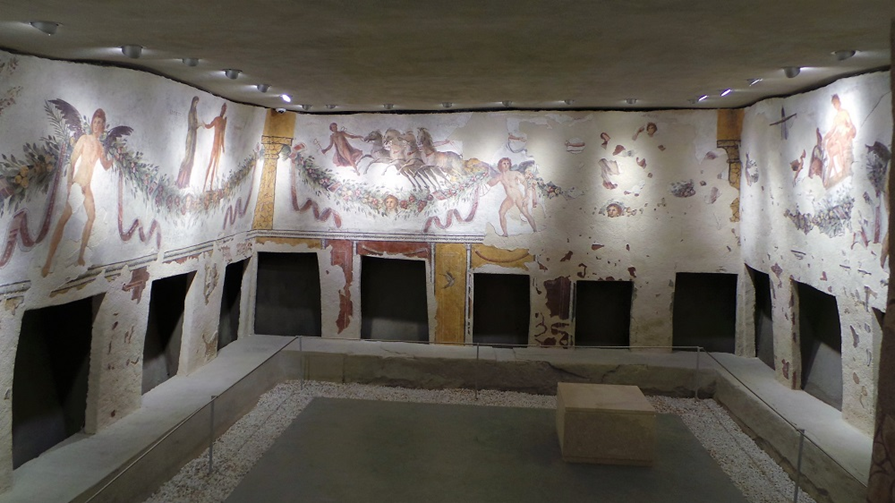
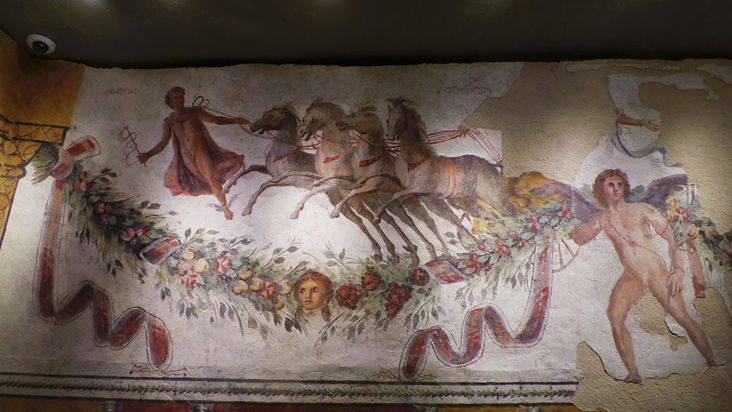
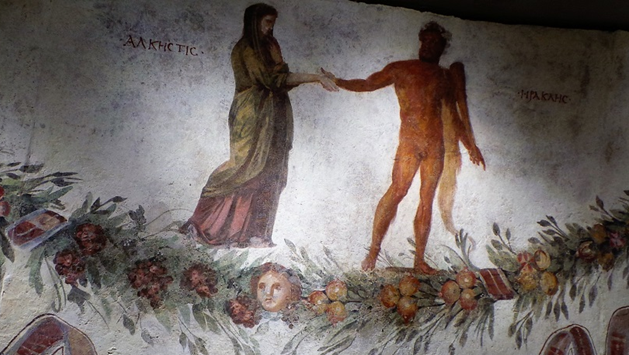
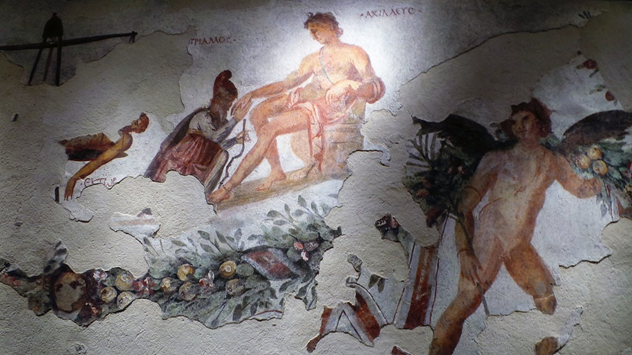
Identify these images:
Frescoes from tomb in necropolis at Tyre.
2nd century CE, now in National Museum of Beirut.
Give info on those images
Imagery all relating to the unerworld/afterlife: Rape of persephone, ransom of hektor (bottom right), Heracles leading alcestis back from the underworld
Niches where the sarcophagi would have been placed (shown in the image on the left)
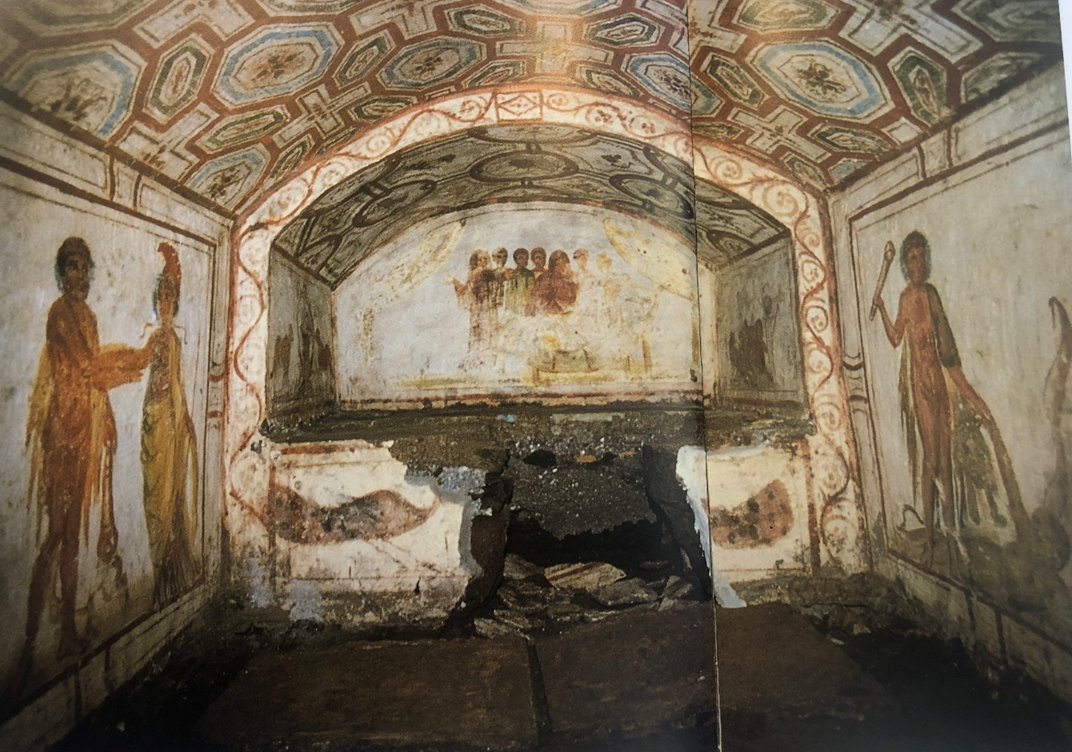
identify this image
Alcestis & Herakles – Catacomb, Via Latina, Rome:
date and describe the images
These paintings are in situ in a catacomb, they are dated to around the 4th century (later antiquity), this two had two special niches- art shaped recesses where the sarcophagus would have been placed
Image shows someone on their death bed, debate to whateher is alcestis or admetus dying in the image (left). On the left heracles is greeting Athena and on the right Heracles defeats death
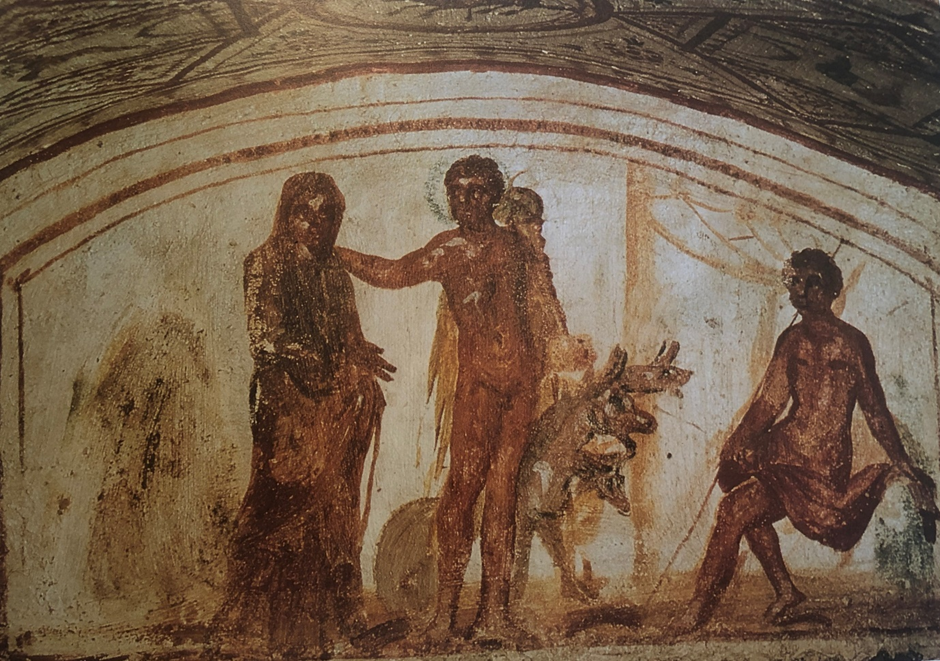
Identify and describe this image
Room N, Catacomb, Via Latina, ca. 4th century CE.
Heracles returning alcestis to admetus who is seated with a sceptre, an inclusion of cerberus here- another reference to overcoming death
Where is silverware often found?
Large amount of silverware survives from antiquity; often from hoards.
What was silverware used for?
Different domestic uses: tableware and bathing.
Tableware: platters/plates, mixing bowls, jugs.
Bathing: pitchers, mirrors, caskets, vials.
These can all be different shapes and sizes and display various decoration
How was the value of silverware often shown?
Silver was valuable so it was a means of owners displaying their wealth- the weight of the silver was often stamped on it
identify this silverware:
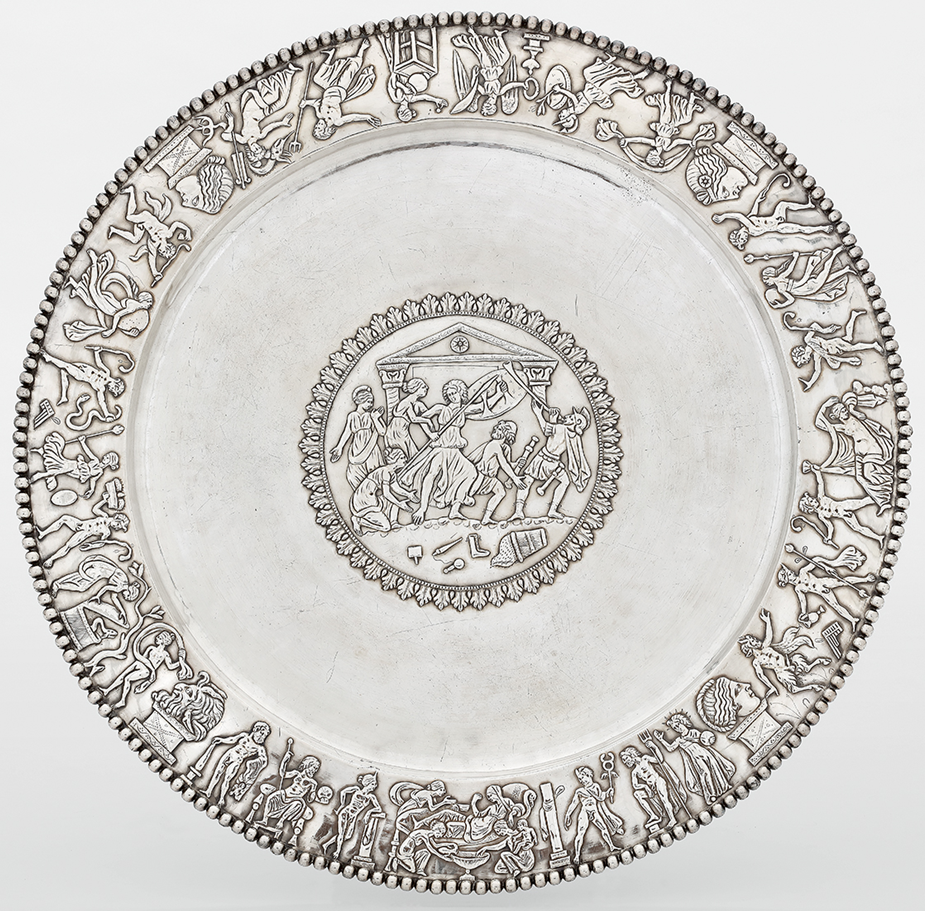
Achilles Plate from the Sevso Treasure, 4th-5th centuries CE.
Describe the myth shown on the plate
The Achilles plate, central medallions hat shows a scene of Achilles on Skyros, around the rim are different scenes from Achilles’ life, his birth, him being taught by chiron the centaur, this is also dispersed with unrelated scenes (at the top there is a scene of Athena and Poseidon competition)
Must consider whether it reflects the continuation of traditional educations and culture, which was valued late into antiquity
Identify and date this silverware:
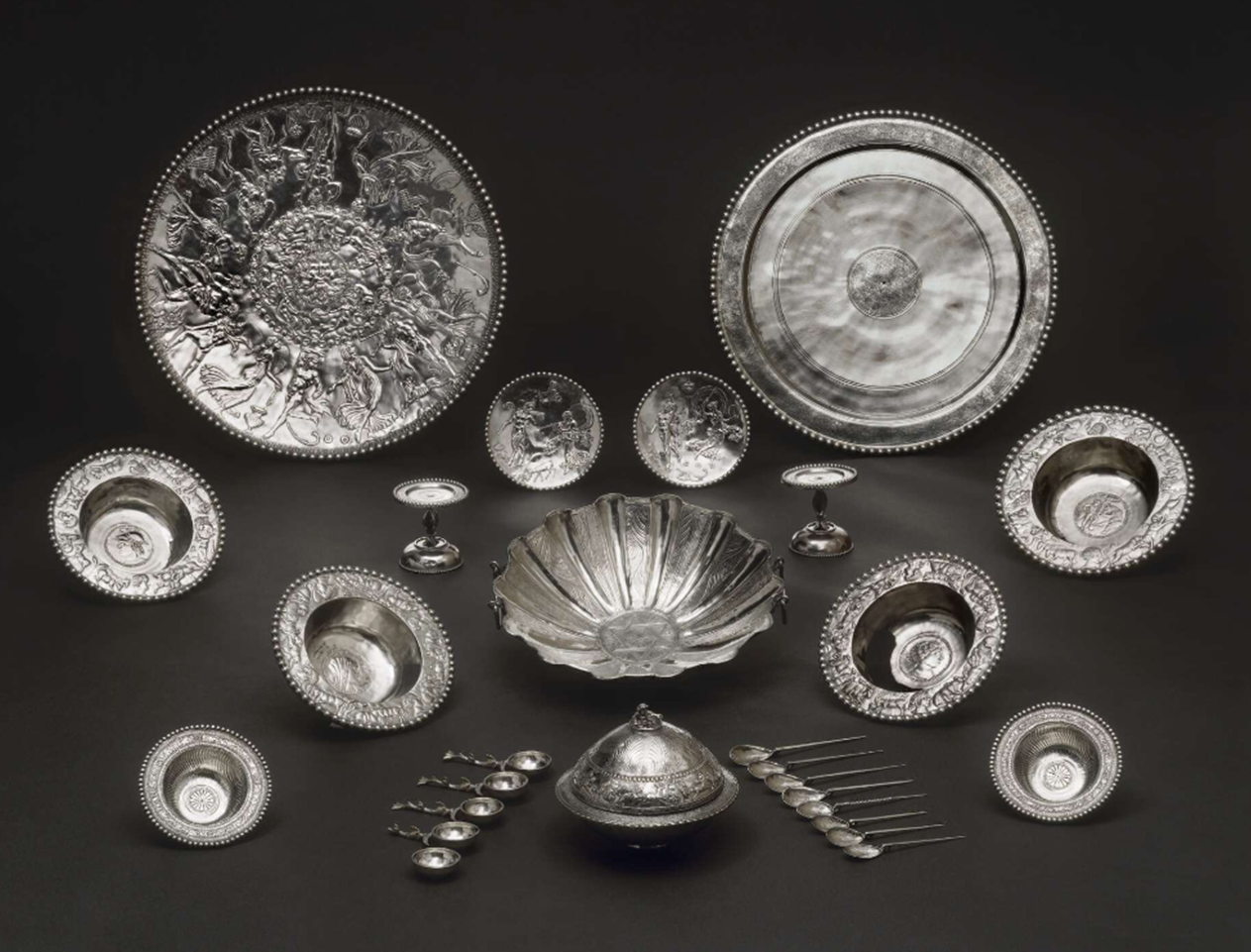
Mildenhall Treasure 4th Century CE:
What did it include?
Found by a farmer in Suffolk
Over 30 items, it includes platters, bowls, spoons
Identify this item:
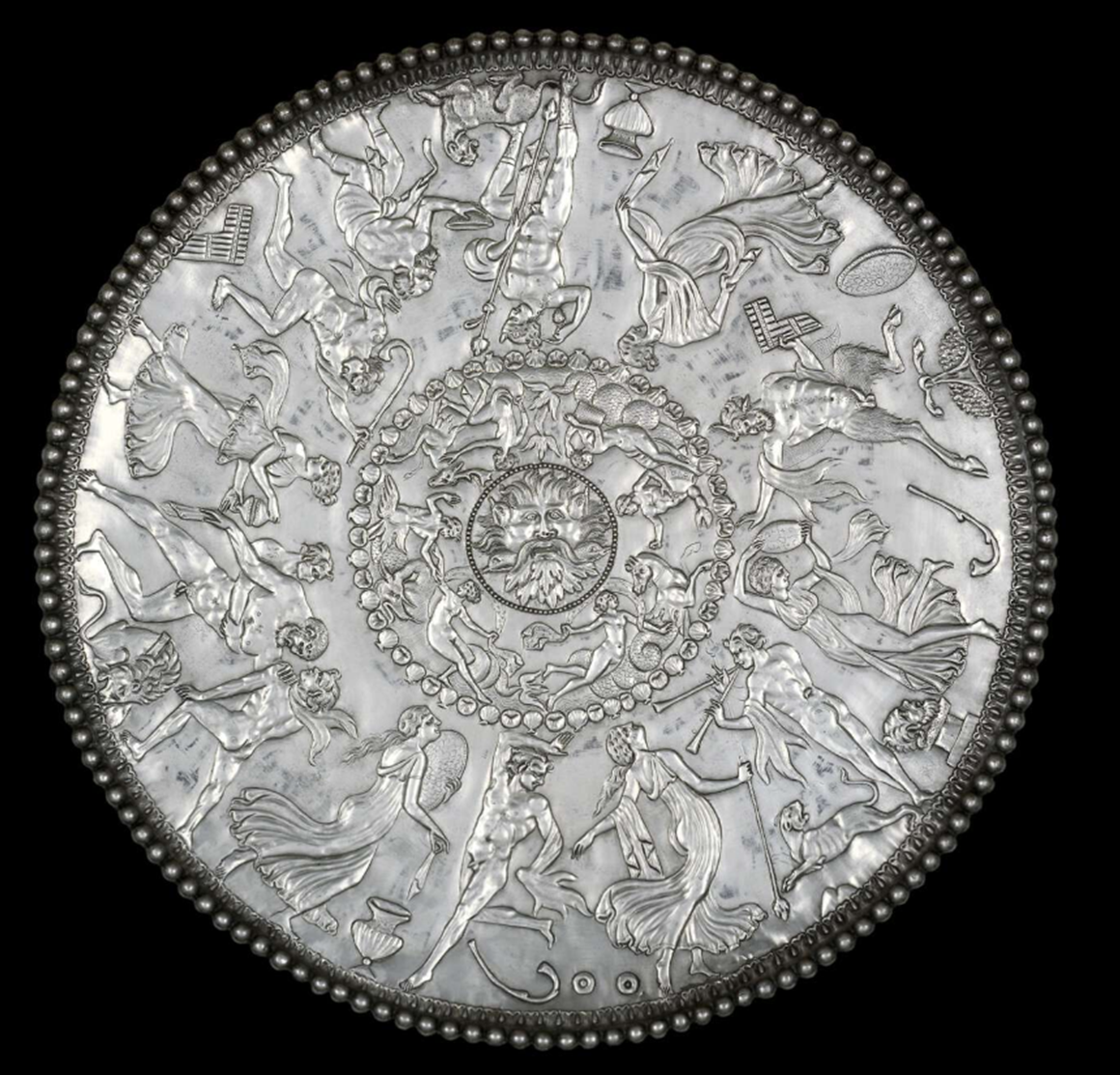
Mildenhall Great Dish/ Bacchic Platter:
Describe the scene happening on the plate
In the centre is the personification of the sea Oceanus, dolphins in his hair. Around this is the naeried riding on different mythical sea creatures. Around the outside is a Bacchis procession, on the left hand side there is Heracles beign held up by a satyr (drunk Heracles- common trope in Roman art)
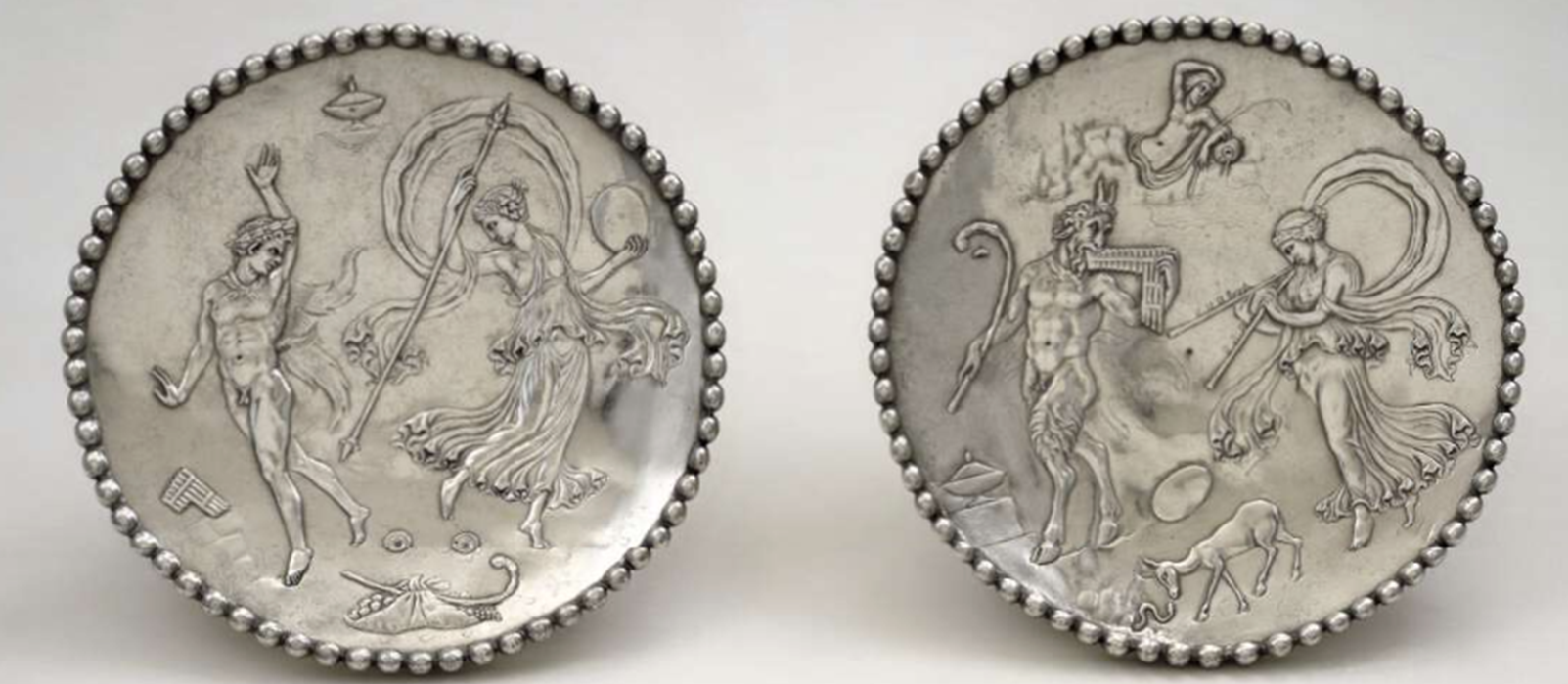
Describe these plates found in the hoard
Two smaller plates with male and female dancing figures, satyr and a maenead with Bacchic objects on the left. On the right pan and a maenad are playing musical instruments. Think about the representation of these deities in the time period- some scholars view this as evidence for these deities continuing to be worshipped in the time period
Appropriate for dining context, imagery related to revelry and drinking etc
Identify this:
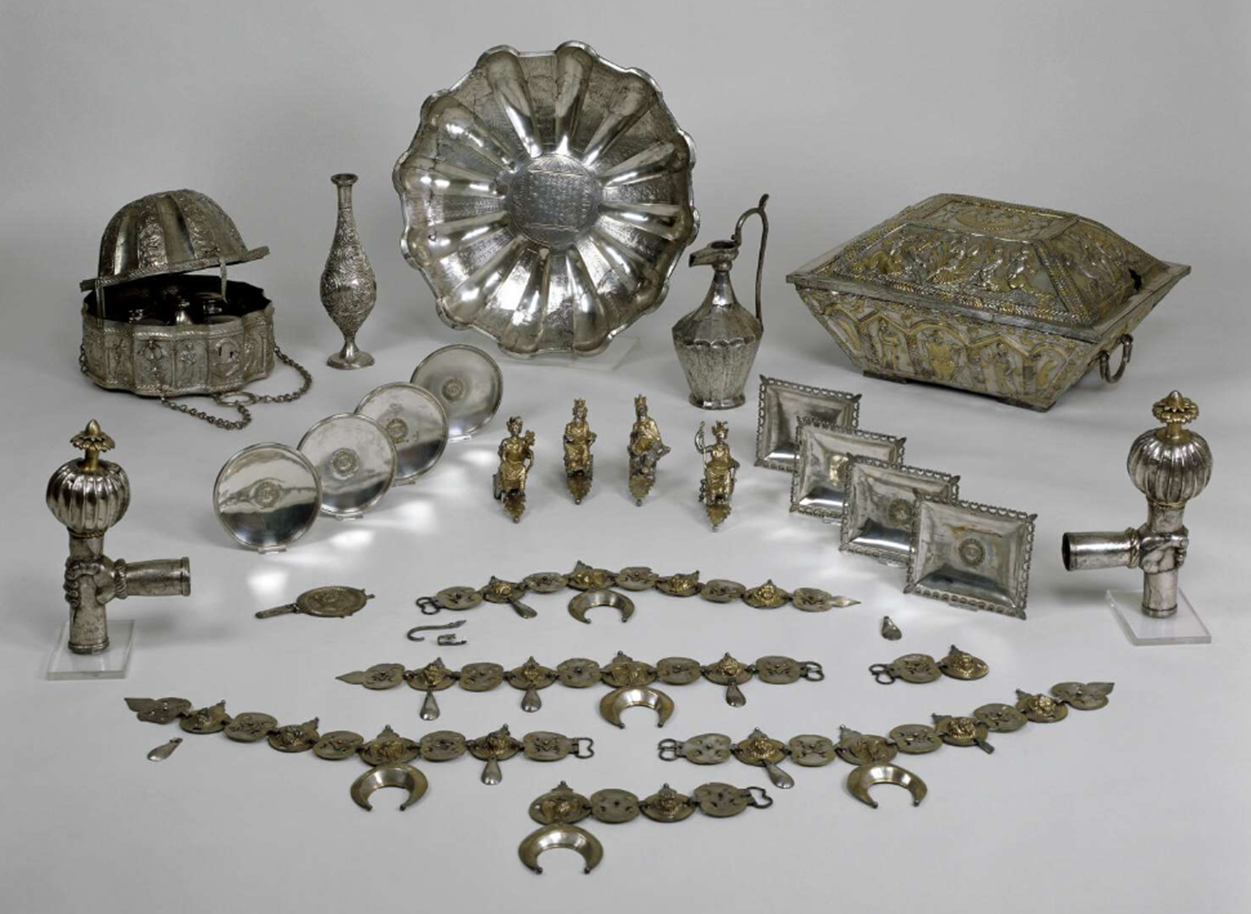
The Esquiline Treasure
Give info on this treasure
Discovered 1793 in Rome.
Exact contents unclear; 27 items held by British Museum.
Fourth century CE (ca. 379-83 CE).
Classical imagery and Christian inscriptions.
Possibly belonged to Secundus Turcius and his wife Projecta?
Theyre very high quality levels of silverware, believed to have belonged to a family of high standing
Identify and date this:
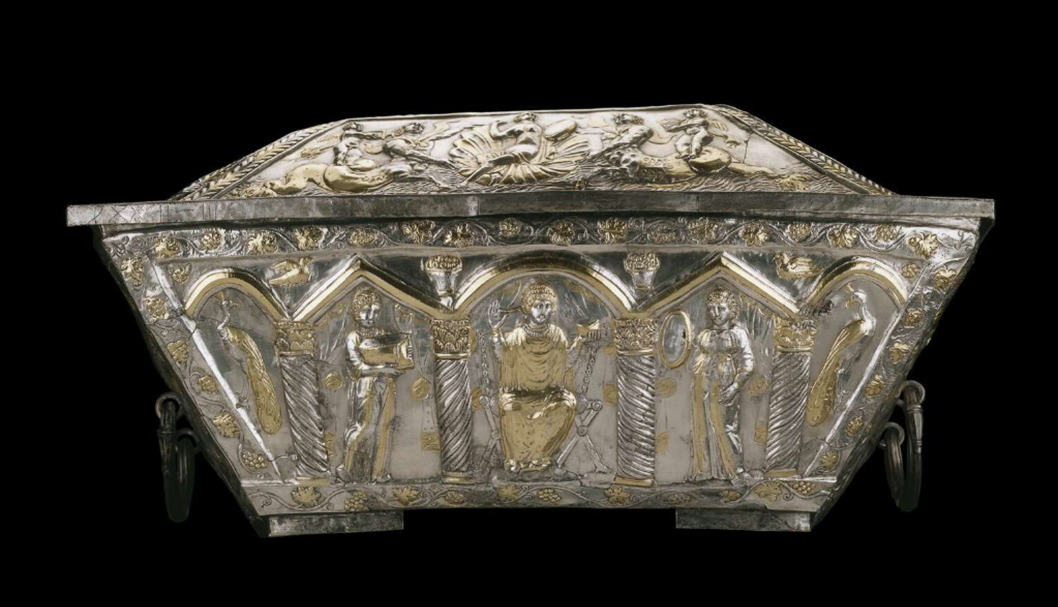
The Projecta Casket, ca. 380 CE:
What scenes were shown on the casket?
Very expensive, gilding on top of the silver
5 panels on the lid, thre mythological scenes on these and then four panels that make up the body which have different characters framed by arches and columns, all show preparation scenes for bathing or dressing
On the lid is a scene of Venus bathing, cupids. In the centre there is an image of a couple, again comapnnied by two cupids
Inscription as well
Easily tie the image of the couple to the inscription, what is interesting with the casket iis it gives us an opportunity to view it singularly from a female perspective- we can see from the iconography that theyre all related to beauty and bathing
Where were Roman mosaics typically found in the UK?
Mosaics from Isle of Wight to Yorkshire; some in south Wales, none in Scotland.
What style and date typically are mosaics?
Mosaics are generally polychrome with a distinctive white background
Appear from 1st century CE, but majority of figured mosaics date to 3rd to 4th centuries CE.
What scenes are typically found in mosaics?
Range of imagery – mythological, deities/other religious content, personifications, limited hunt/arena scenes.
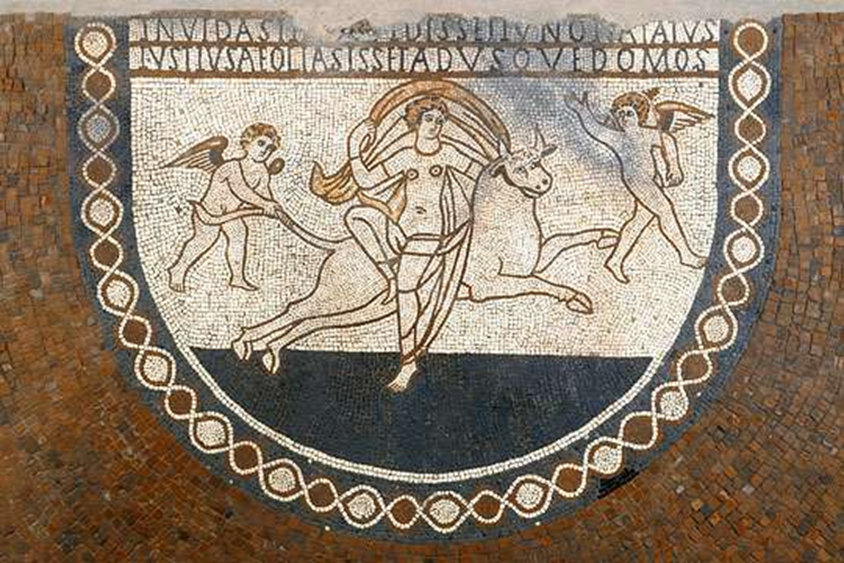
Identify and date this mosaic
Europa mosaic from Lullingstone Roman Villa, mid 4th century CE
Identify this mosaic:
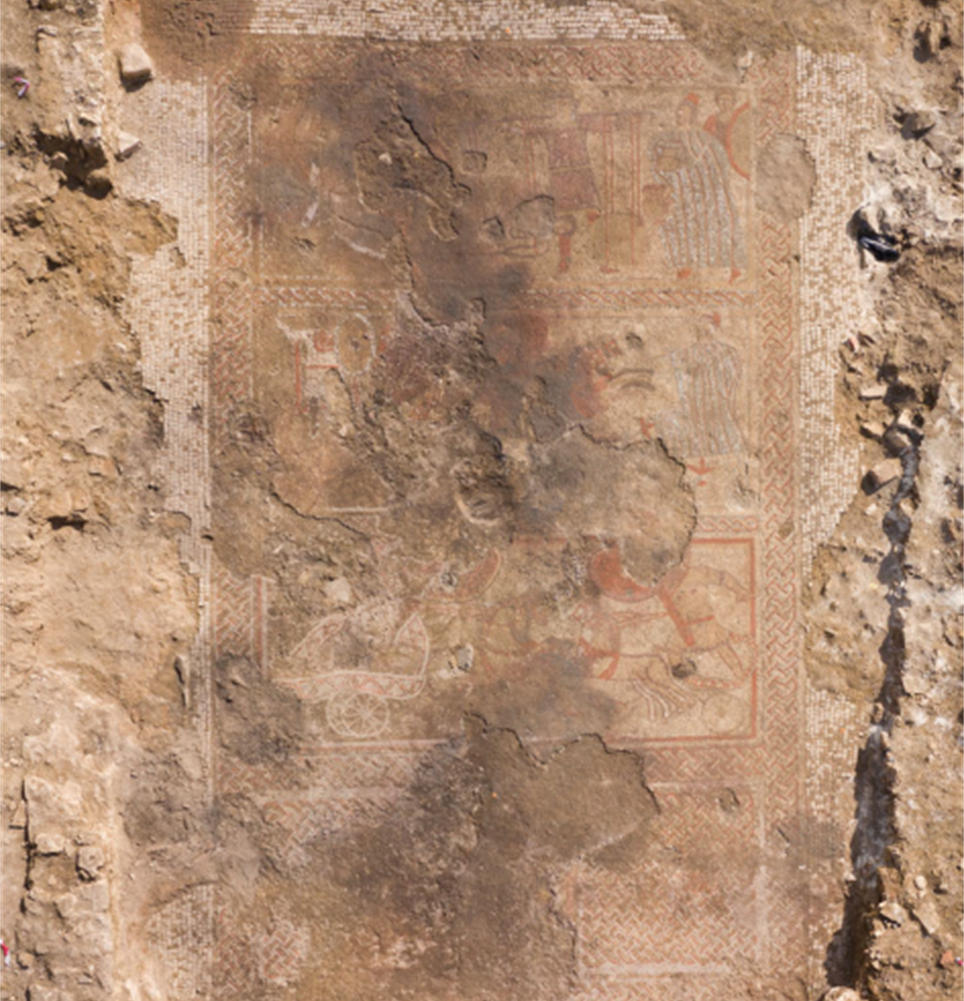
The Ketton mosaic
Where was it found and where does it date to?
Late Roman villa complex – 3rd-4th century CE.
What do the panels show?
Duel between Hektor and Achilles (Panel 1, bottom)
Dragging of Hektor (Panel 2, centre)
Ransom of Hektor (Panel 3, top)
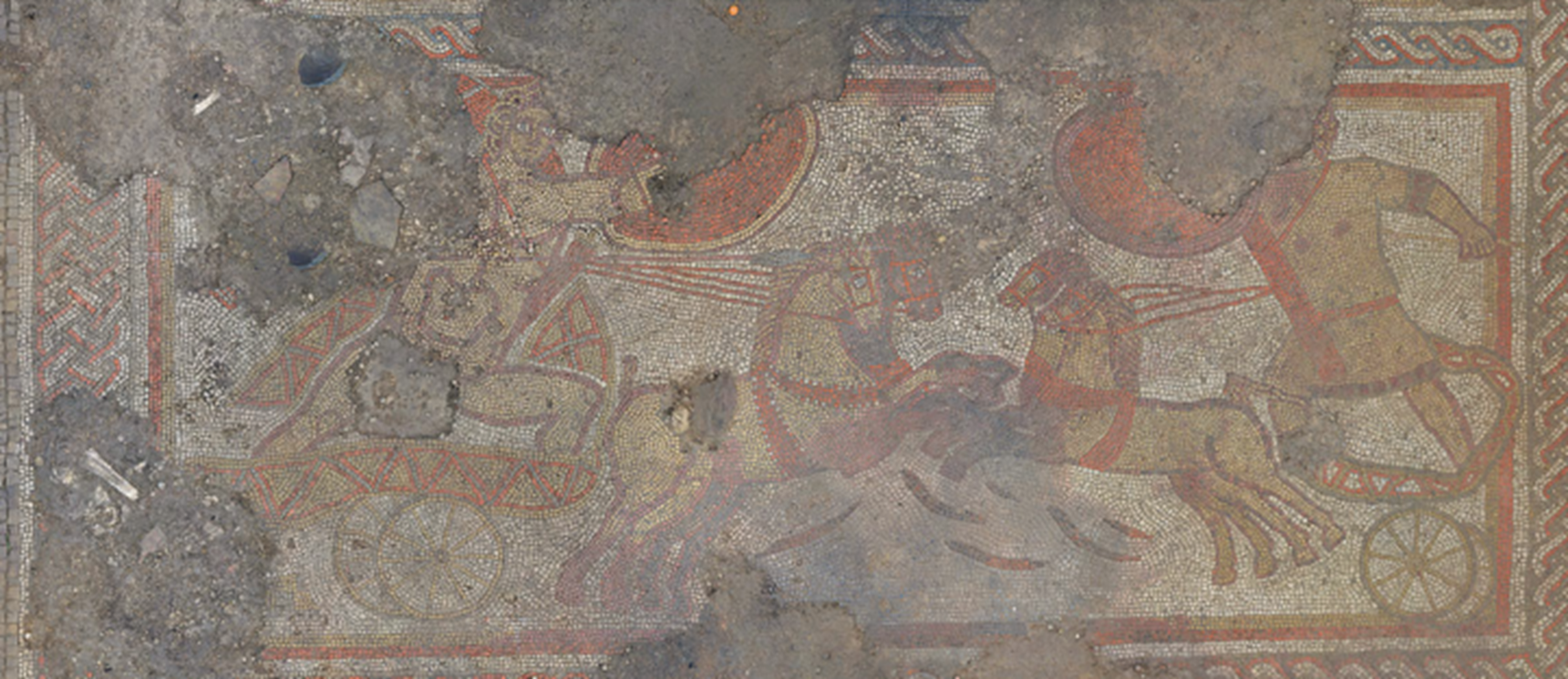
Describe the scene in Panel 1 (bottom panel) – what stands out – how would you identify the characters:
Achilles side of the panel the figures are much larger than hector, charging towards each other full of emotion (question of if Achilles was purposefully made larger or if it was an accident). Achilles shield is edged with gold while hektors was edged with pink. Achilles has very striking blue eyes and blonde hair- reminiscent of Alexander the great portraiture. Red marks under the horses could be shadows, or motions marks (this is something that is debated)
Differences in size and decoration of chariot and horses- Achilles more detailed. Artistic bias towards the winner
Achilles’ nude and Hektor dressed
Achilles takes up a lot more space - possibly deliberate or could be a mistake in laying by the mosaicist?
We can recognise it as a duel since they approach from opposing sides
Depiction of Achilles - frontality - looking out at viewer, blonde hair, blue eyes - suggested as poss being reminiscent of Alexander the Great;
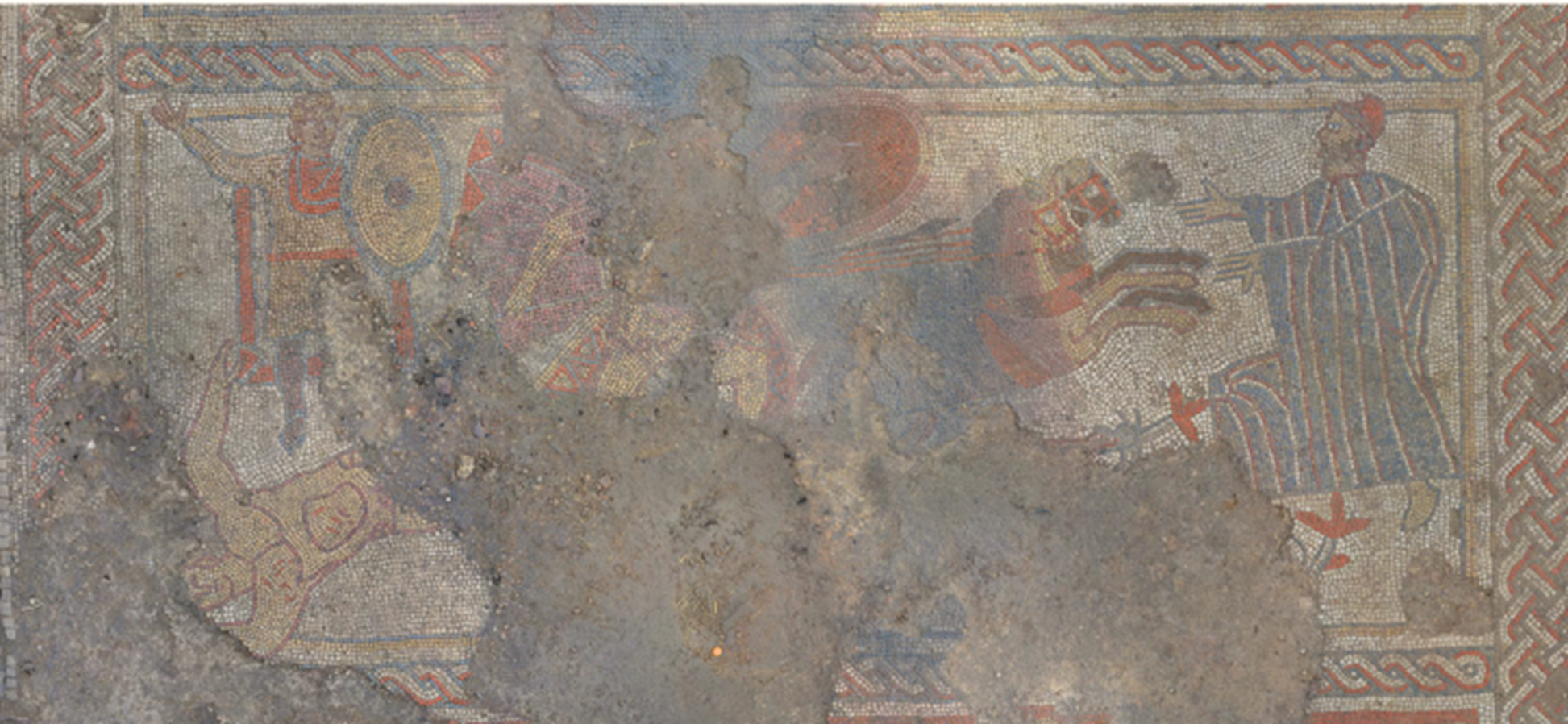
Describe this panel (panel 2-centre panel)
there are marks on his body - challenges the sanitized version of the Iliad in which his body is protected by the gods
Hector dragged nude.
Priam in stripy jacket?
Mosaic location more abstract? No architecture or tomb?
Odd that Hector's shield is being held by Achilles.
Describe this panel (panel 3- top panel):
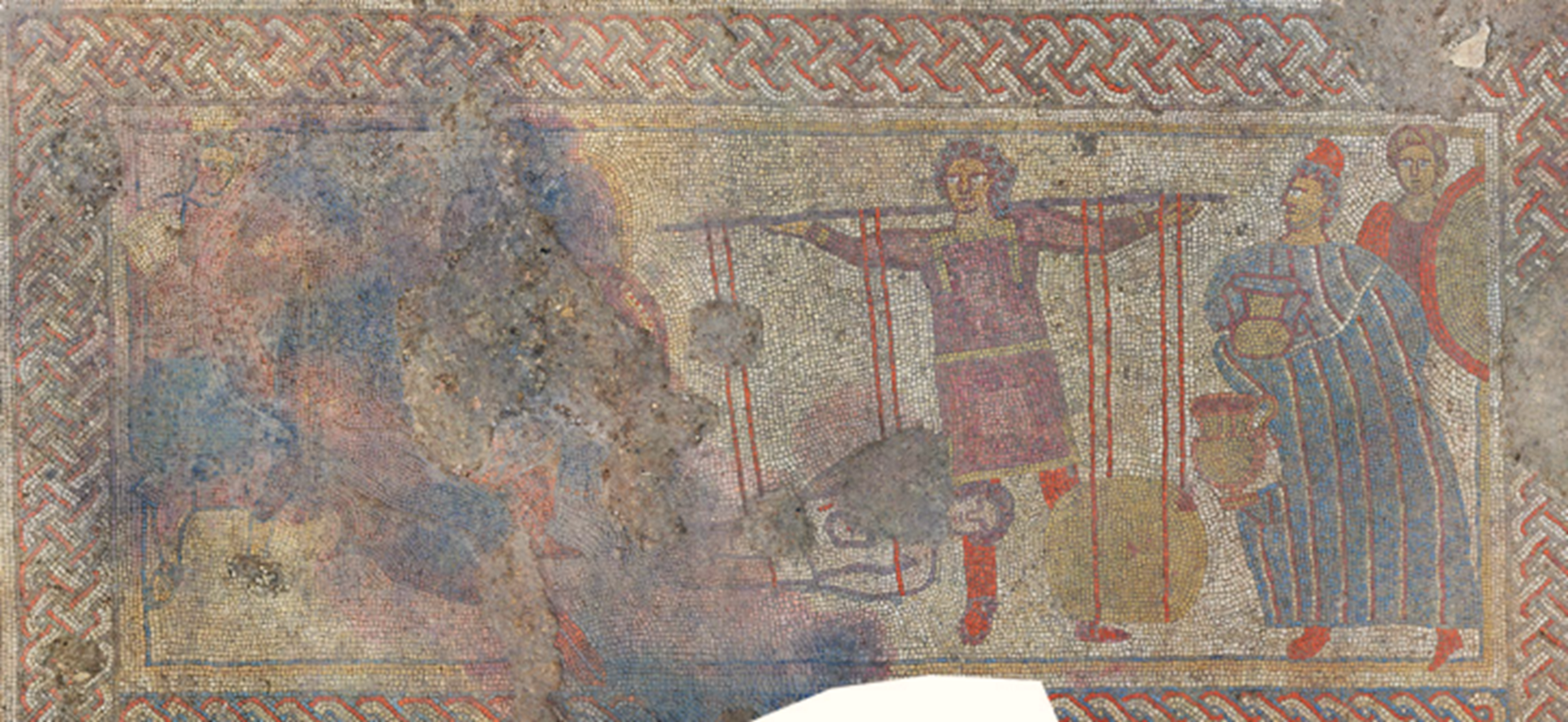
Hector’s body is the same colour as the background
Hector’s weight in gold
Priam in the stripy jacket again
Priam carrying the treasure while on the cup the treasure is brough in by attendants
Identify this mosaic:
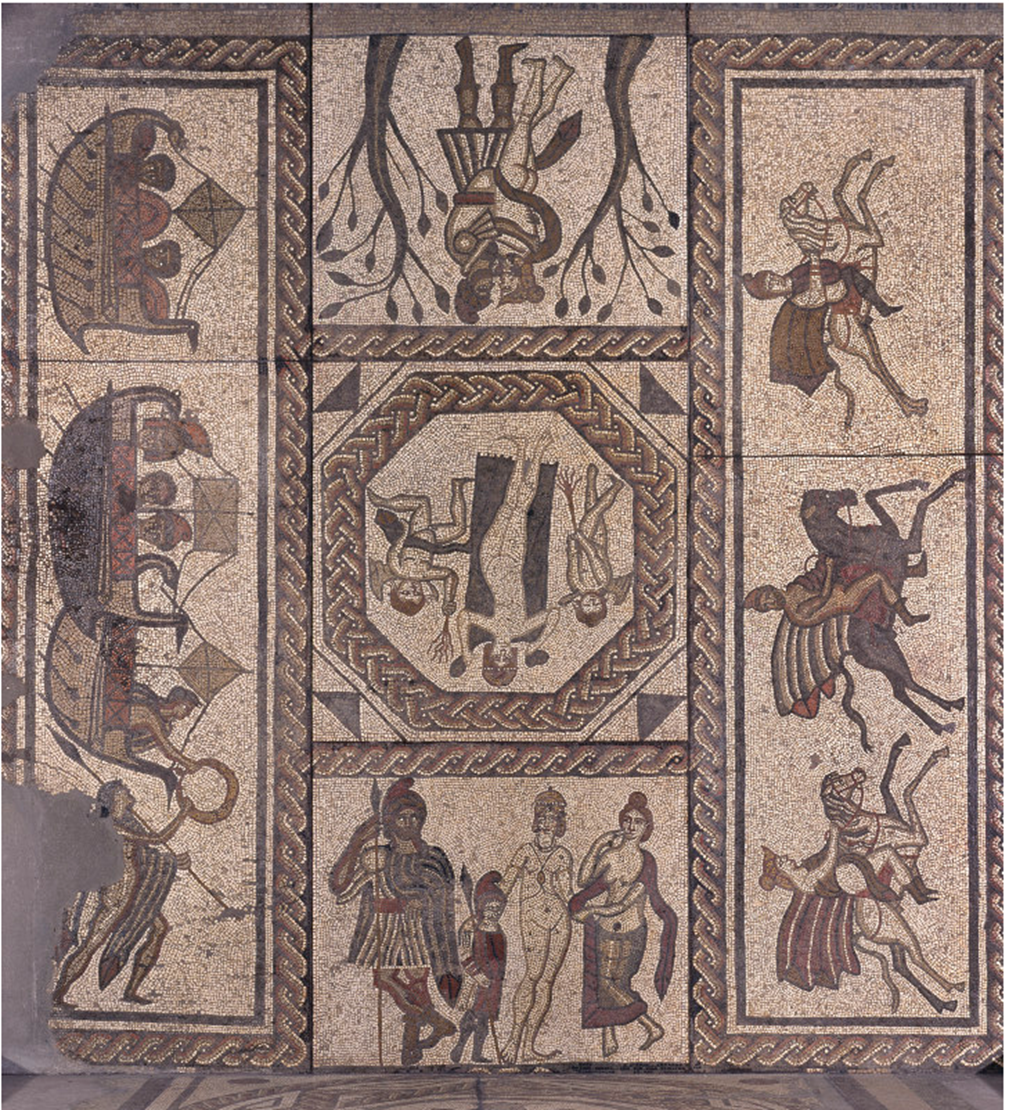
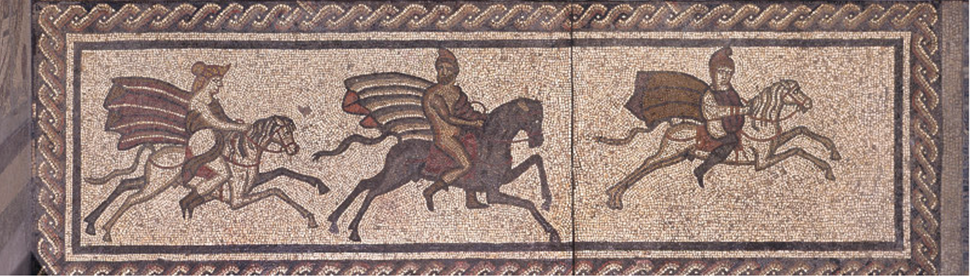
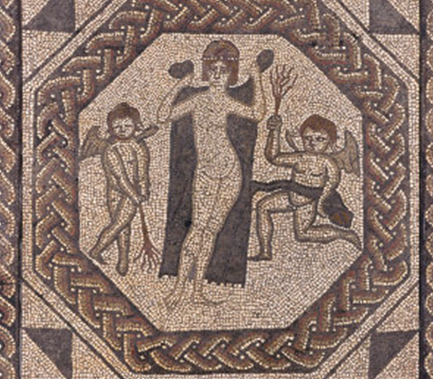
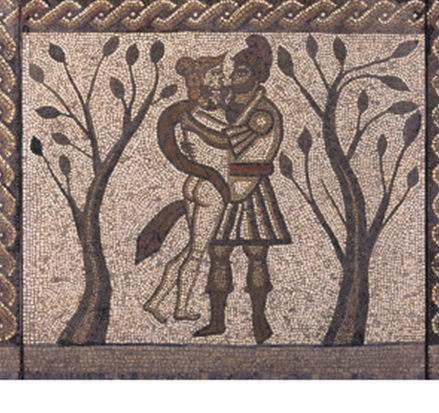
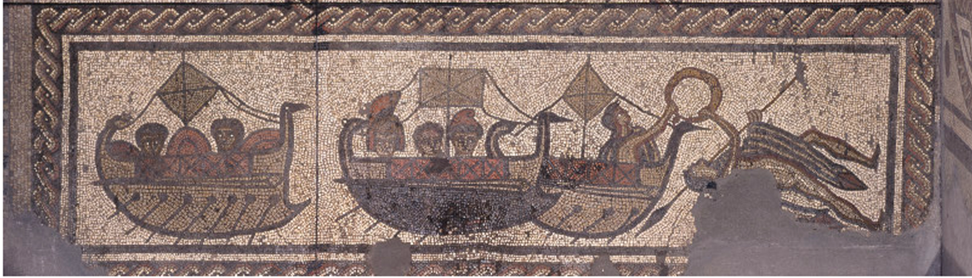
The Low Ham Mosaic
When does this mosaic date to and where was it located?
Dated to fourth century CE from a villa which seemed to have a bathing complex, attached to the main living area this mosaic was in the frigidarium
What scenes does the mosaic display?
Aeneas and Dido- reference to books 1-4 of the Aeneid, the ongoing plot of the story- no inscriptions so the expectation is that the viewer would be familiar with the storyline
Trojans arriving on the ships, then the meeting of Dido and Aeneas with Ascanius and Venus in the centre, panel with Venus with two (things), the hunt scene, and then the couple embracing
What is the overall narrative?
Aeneas and Dido? Refers to Books 1-4 of the Aeneid - ongoing plot of story; no inscriptions, means viewer must have been expected to know it.
What do the individual scenes depict?
Trojans arriving on boats
Hunting scene with Aeneas and Dido
Dido and Aeneas “consummating” their “marriage”
Sailing away
Aeneas’ arrival in Carthage.
Venus?
How is the narrative being told/how might the viewer have interacted with it?
The mosaic is arranged in a non-linear way. There are many scenes surrounding a central one, so there is no rule as to where a viewer may lay their eyes first.
Arranged to encourage movement through the room perhaps?
Movement within the imagery: via the boats and horses in different directions could suggest a counterclockwise route from the plunge bath; capes also reinforce idea of movement.
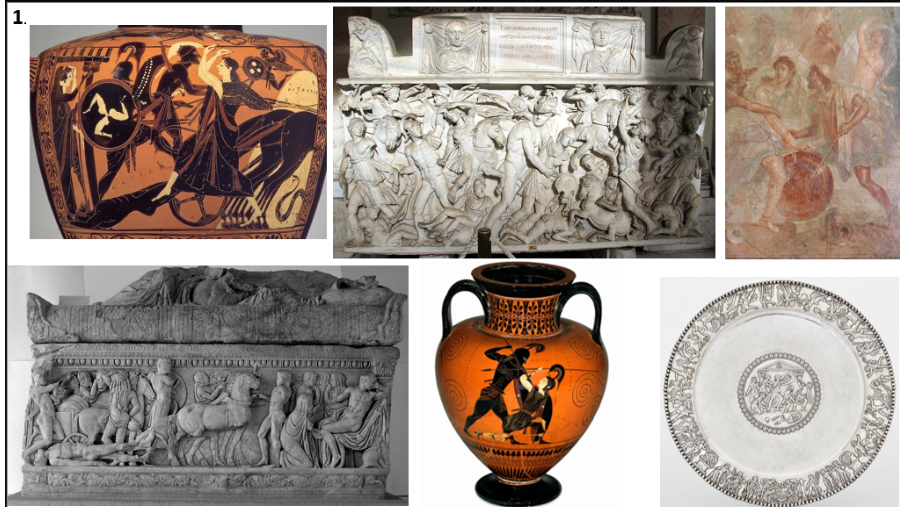
Describe what is going on in these pictures?
Dragging of hectors body in the two images on the left
Heracles falling in love with the amazon as he kills her (Hipployta?)
Bottom left and top middle are in a funerary context
Black figure amphora depicting Achilles killing Penthesilea the Amazonian queen [canonically he falls in love with her at the point in which he kills her], we don’t have any surviving literary evidence
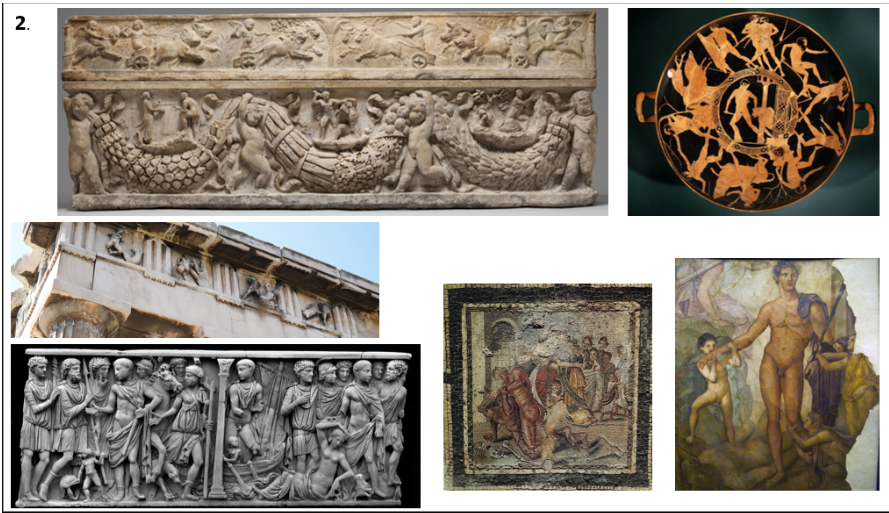
What myths/characters do these images all have in common?
Kylix of Theseus labours + the minotaur
What are the time periods of the images?
Classical = Vase + Metopes
Roman 1st century = Painting + Mosaic
3rd century = Sarcophagus
Is there change across these images?
Change on the focus from the myth but generally depicting similar scenes
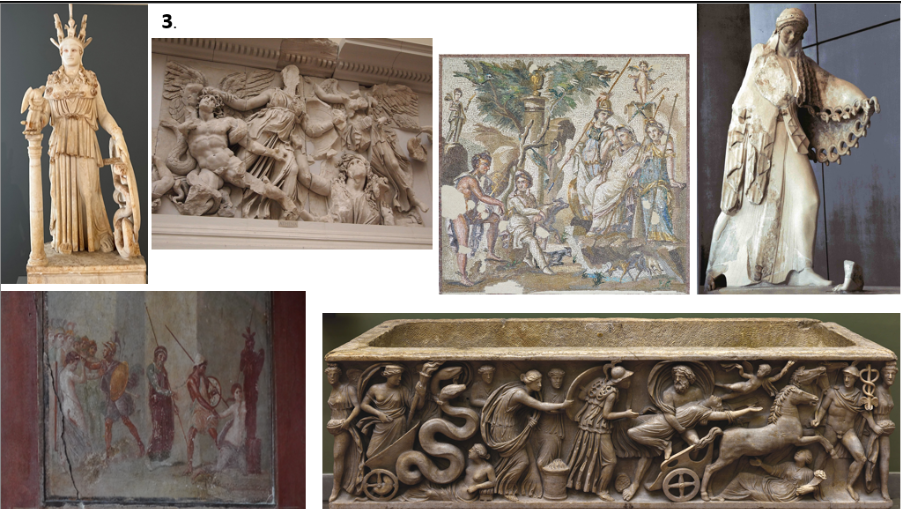
Identify the image on the top left and give info on it
Recreation of statue of Athena
Object/media?
Original was made of wood inside and then gold and ivory outside, this recreation is marble
Time period?
2nd century CE
Contexts?
Recreation of statue from the Parthenon on the Acropolis
Identify and detail the mosaic:
Judgement of Paris Mosaic from Antioch
Object/media?
Mosaic
Time period?
2nd century CE
Contexts?
In a large atrium house, within floral frame
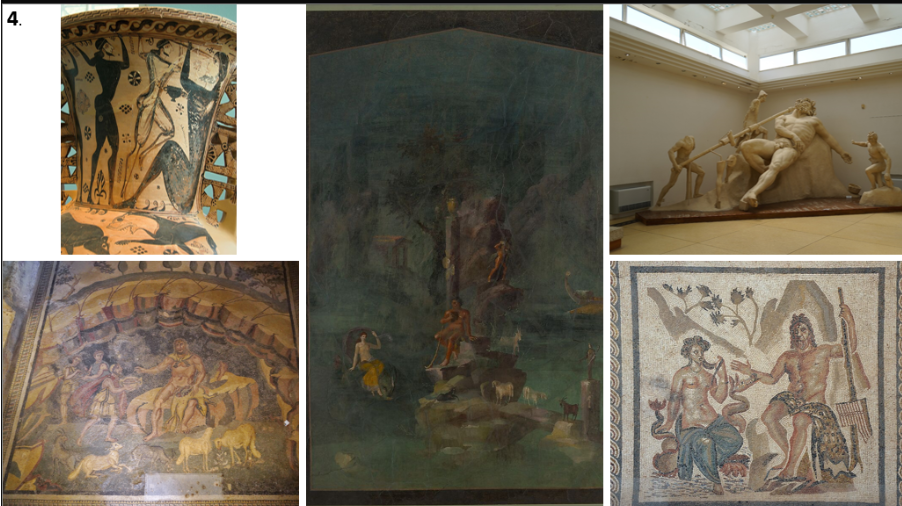
Identify the continuity and change between these images
Scenery in background remains idyllic/countryside
Fluctuation in his size, sometimes appearing more human, sometimes more giant.
Always naked - showing his barbaric traits, not civilised enough for clothes
Change in eye number, goes between one, two, and three
Less focus on violence/moment of blinding in later representations.
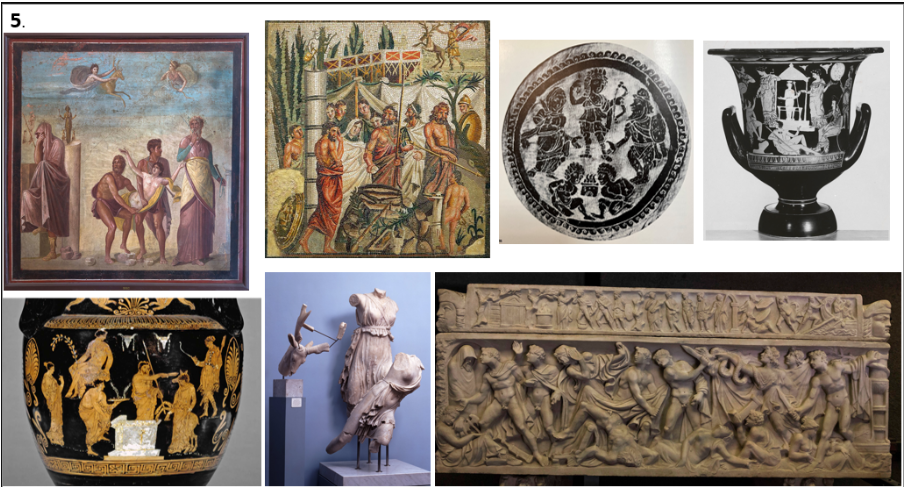
What character do all of these images portray?
Iphigenia
What media are they in?
Mosaic, textile, pottery, statue, relief
What is the continuity or change between these images?
Transition into baroque style - more dramatic
Continuity - almost always a deer present to show Artemis; almost always the sacrifice scene (the context Iphigenia is known in)
Very often quite visually dense- lots of characters and attributes
Often element of location- especially the altar
Generally it shows the build up to the sacrifice to create of anticipation, rather than the action itself.
Two main stories- sacrifice at Aulis or with brother at Tauris
Body language/gesture remains significant- conveying the emotion/drama, lots of dynamism