3.1 Communicable Diseases
 Call Kai
 Learn
Learn Practice Test
 Spaced Repetition
 Match
Match Flashcards
 Knowt Play
1/121

Earn XP
Description and Tags
Biology
GCSE Biology
AQA
Infection & Response
Paper 1
Triple Higher
3.1.1 Communicable (Infectious) Diseases
3.1.2 Viral Diseases
Measles
HIV/AIDS
Tobacco Mosaic Virus (TMV)
3.1.3 Ваcterial Diseases
Salmonella Food Poisoning
Gonorrhoea
3.1.4 Fungal Diseases
Rose Black Spot
3.1.5 Protist Diseases
Malaria
3.1.6 Human Defence Systems
Non-Specific Defence Systems
Immune System
3.1.7 Vaccination
3.1.8 Antibiotics & Painkillers
3.1.9 Discovery & Development of Drugs
122 Terms
What are pathogens?
Microorganisms — cause infectious disease
What can pathogens be?
Viruses
Bacteria
Protists
Fungi
What can pathogens infect?
Plants
Animals
How can pathogens be spread?
Direct contact
Water
Air
__________ and _______ may reproduce rapidly inside the body.
Bacteria
viruses
How do bacteria cause disease?
Produce toxins → damages tissues and ill feelings
How do viruses cause disease?
Live and reproduce inside host cells → cell damage
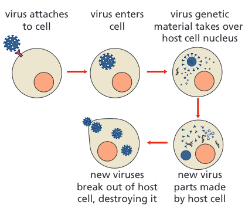
What is bacteria?
Small single-celled living organisms
Bacteria multiply very quickly through dividing by a process called ________ _______.
binary fission
Are viruses smaller or larger than bacteria?
Smaller
What is the difference between bacteria and viruses? (4)
Viruses are smaller than bacteria.
Bacteria can multiply on their own (by binary fission); viruses must invade a host cell to make copies of themselves.
Bacteria cause disease by releasing toxins that damage tissues; viruses cause damage by reproducing inside cells and causing them to burst.
Bacterial infections can be treated with antibiotics but viral infections can’t.
What are communicable diseases?
Illnesses caused by pathogens that can be transmitted from one person to another.
What are non-communicable diseases?
Illnesses that cannot be transmitted from one person to another.
What is health?
A state of physical and mental wellbeing.
What are the factors that can affect health — excluding illnesses? (3)
Diet
Stress
Life situations
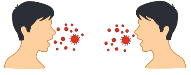
How are diseases spread by air?
Tiny droplets full of pathogens are expelled when infected people cough, sneeze, or talk.
Other people breathe in the pathogen-containing droplets, picking up the infection.
How are diseases spread by water?
Fungal spores carried in splashes of water spread plant diseases.
Eating raw, undercooked, or contaminated food, or drinking water containing sewage spreads disease.
What are four ways to prevent the spread of disease?
Hygiene
Isolating infected individuals
Destroying or controlling vectors
Vaccination
What are five hygiene measures that can be used to reduce the spread of disease?
Hand washing
Using disinfectants
Reduces the number of pathogens
Keeping raw meat away from food that is eaten uncooked
Prevents the spread of pathogens
Coughing or sneezing into a handkerchief or tissue
Maintaining the hygiene of people and agricultural machinery
Helps prevent the spread of plant diseases
How does isolating infected individuals reduce the spread of disease?
The fewer healthy people who come into contact with the infected person, the less likely it is that the pathogens will be passed on.
What is a vector?
Organism — carries pathogen from one organism → another
What is measles and what are the symptoms?
A viral disease showing symptoms of fever and a red skin rash.
How is the measles virus spread?
Inhalation of droplets from sneezes and coughs.
What can measles cause if complications arise? (3)
Lung infection
Brain infection
Blindness
Is there any treatment for measles?
No
How do you prevent the spread of measles?
Vaccination
Isolate infected individuals
What does HIV initially cause? — this is also a symptom of HIV.
Mild flu-like illness
What happens if HIV isn’t successfully controlled with antiretroviral drugs?
The virus attacks the body’s immune cells.
What is late stage HIV infection called?
AIDS
When does AIDS occur?
When the body’s immune system becomes so badly damaged (by HIV) it can no longer deal with other infections or cancers.
How can HIV be spread? (3)
Direct sexual contact
Exchange of bodily fluids
Drug users sharing needles
Blood transfusions
From mother to child during pregnancy or breastfeeding
Is HIV a viral infection or a bacterial infection?
Viral
What is the treatment for HIV?
Antiretroviral drugs
How can you prevent the spread of HIV? (4)
Use condoms
Do not share needles
Screen blood used in transfusions
HIV-infected mothers should bottle feed babies
What are factors that can affect the time between getting infected with HIV and developing AIDS? (3)
Level of nutrition
Overall health of the person
Access to antiretroviral drugs
What is tobacco mosaic virus (TMV)?
A plant pathogen that affects many species of plants.
How can tobacco mosaic virus (TMV) be spread?
Contact between diseased plant material and healthy plants.
Insects can act as vectors
What are the symptoms of tobacco mosaic virus (TMV)?
A distinctive ‘mosaic’ pattern of discolouration on the leaves.
Why does a pattern of discolouration on the leaves of a plant affected by tobacco mosaic virus (TMV) affect the plant’s growth?
The affected part of the leaf cannot photosynthesise.
How can you prevent the spread of tobacco mosaic virus (TMV)? (3)
Good field hygiene
Good pest control
Using TMV-resistant strains of crop plants
How is salmonella food poisoning spread? (2)
Bacteria ingested in undercooked food
Food prepared in unhygenic conditions
What are the symptoms of salmonella food poisoning? (4)
Fever
Abdominal cramps
Vomiting
Diarrhoea
Why can salmonella food poisoning be fatal in young children and the elderly?
Dehydration
What is the treatment for salmonella food poisoning?
Rest
Dehydration drinks
How can you prevent the spread of salmonella food poisoning? (5)
Vaccinate poultry against salmonella
Keep raw chicken away from food that is eaten uncooked
Avoid washing raw chicken
Wash hands and surfaces after handling raw chicken
Cook chicken thoroughly
What is gonorrhoea?
A STD
What is gonorrhoea caused by and how did it used to be treated?
A bacterium
Penicillin
Why can gonorrhoea no longer be treated with penicillin?
There are many resistant strains of gonorrhoea.
How is gonorrhoea spread?
Unprotected sexual contact with an infected person.
What are the early symptoms of gonorrhoea? (2)
Thick yellow or green discharge from the vagina or penis
Pain on urination
What are the late symptoms of gonorrhoea?
Long-term pelvic pain
Infertility
Ectopic pregnancies
Babies born with eye infections
What is the treatment for gonorrhoea?
Antibiotics
How can you prevent the spread of gonorrhoea? (2)
Barrier method of contraception
Treating all sexual partners of an infected individual
What is rose black spot?
A fungal disease where purple or black spots develop on leaves, which often turn yellow and drop early.
How does rose black spot affect the growth of plants?
Photosynthesis is reduced.
How is rose black spot spread?
Carried by wind and then spread over the plant after it rains in drips of water
Carried on garden tools from plant to plant
What is the treatment for rose black spot?
Fungicides
How can you prevent the spread of rose black spot?
Remove and burn affected leaves and stems
Fungicide sprays to kill fungus
What are the pathogens that cause malaria called?
Protists
What is malaria?
A disease caused by protist pathogens that are parasites.
Mosquitoes act as ________ for the malaria parasites.
vectors
What does the malarial protist life cycle include?
The time in the body of a mosquito and the human body.
How is malaria spread?
Mosquitoes (vectors)
What are the main symptoms of malaria?
Recurrent episodes of fever and shaking
When protists burst out of the blood cells
How can you prevent the spread of malaria?
Targeting the mosquito vector
What are three ways of targeting the mosquito vector? — when reducing the spread of malaria.
Using insecticide-impregnated insect nets
Prevents mosquitoes biting and passing on the protists
Using insecticides to kill mosquitoes
Remove standing water and spray water with insecticides
Prevents mosquitoes breeding
What are the four non-specific defence systems of the human body against pathogens?
Skin
Nose
Trachea and bronchi
Stomach
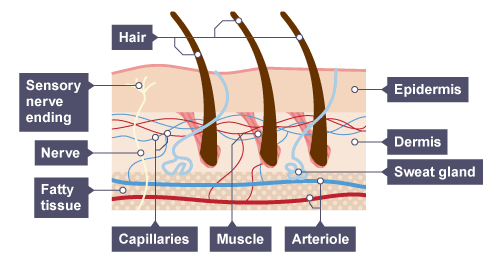
Skin Defences:
The skin covers the body and acts as a _______, preventing __________ and _________ reaching the tissues beneath.
barrier
bacteria
viruses
What happens if your skin is damaged?
You bleed
Platelets form a clot that dries into a scab
This seals the cut preventing pathogens from entering
What does the skin produce to kill pathogens?
Antimicrobial secretions
How does the hairs and mucus in the nose prevent pathogens from entering the body?
They trap particles in the air that may contain pathogens or irritate the lungs.
How does the trachea and bronchi prevent pathogens from entering the body?
Secrete mucus to trap pathogens
Cilia beat to waft mucus upwards so it can be swallowed
What are cilia?
Tiny hair-like projections from the cells
How does the stomach prevent pathogens from entering the body?
Produces HCl that kills any pathogens in your mucus, food, or drink.
If a pathogen enters the body the ________ _________ tries to destroy the pathogen.
immune system
How do white blood cells defend the body against pathogens? (3)
Phagocytosis
Antibody production
Antitoxin production
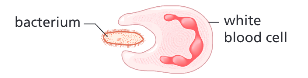
How does phagocytosis defend the body against pathogens?
Engulfing and consuming pathogens
This kills them
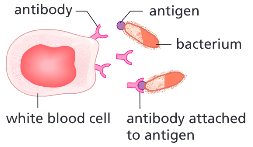
How does antibody production defend the body against pathogens?
Each pathogen has an antigen on its surface, which is a structure which a specific complementary antibody can bind to.
Once antibodies bind to the pathogen, the pathogens clump together.
Makes it easier for white blood cells to find them
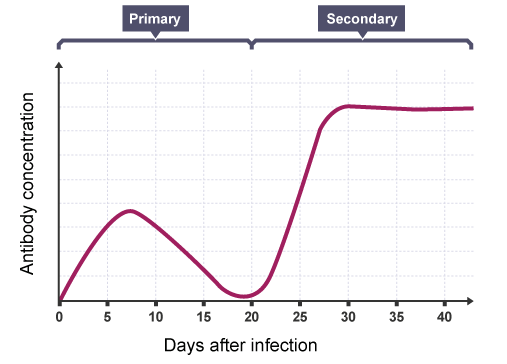
If the same pathogen re-enters, the specific complementary antibodies are produced at a faster rate.
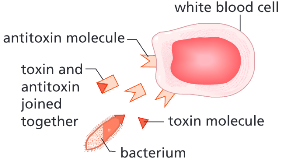
How does antitoxin production defend the body against pathogens?
They neutralise the toxins released by the pathogen by binding to them.
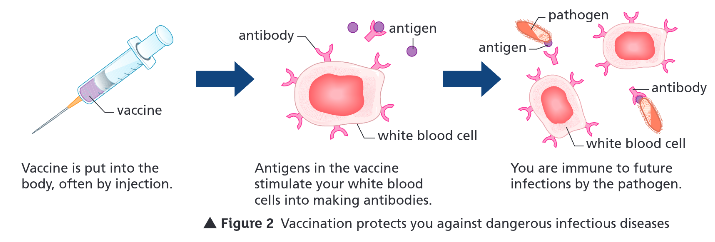
What does vaccination involve?
Introducing small quantities of dead or inactive forms of a pathogen into the body to stimulate the white blood cells to produce antibodies.
What happens if the same pathogen re-enters the body after vaccination?
The white blood cells respond quickly to produce the correct antibodies (that are specific and complementary to that pathogen) preventing infection.
What are antigens?
Proteins located on the outer surface of pathogens.
Why doesn’t vaccination work in plants?
They don’t have an immune system.
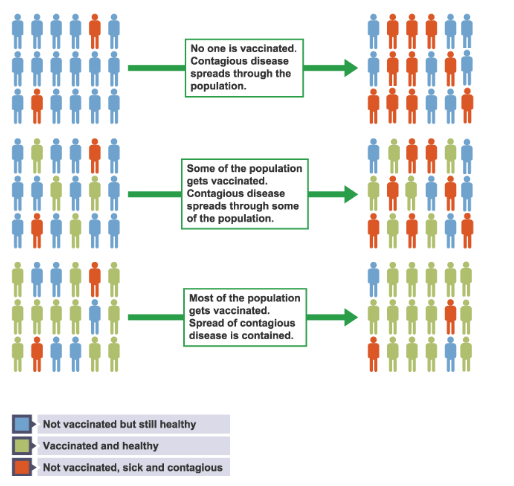
What is herd immunity?
The protection provided to an entire population against an infectious disease when a very high percentage of that population has become immune to it.
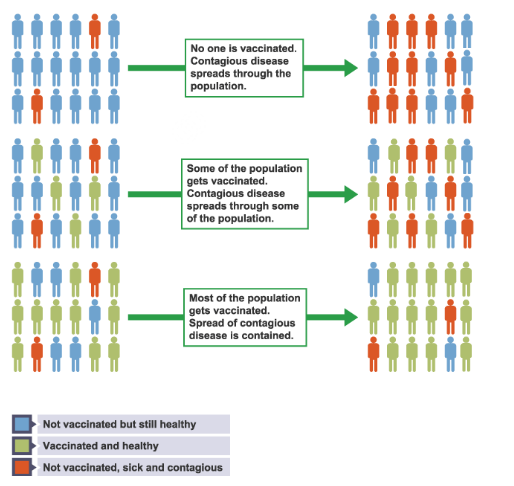
How does herd immunity work?
If a pathogen enters a population with high immunity, it is unlikely to find someone it can infect.
Because immune individuals do not catch or pass on the disease, the pathogen eventually disappears or remains at very low levels.
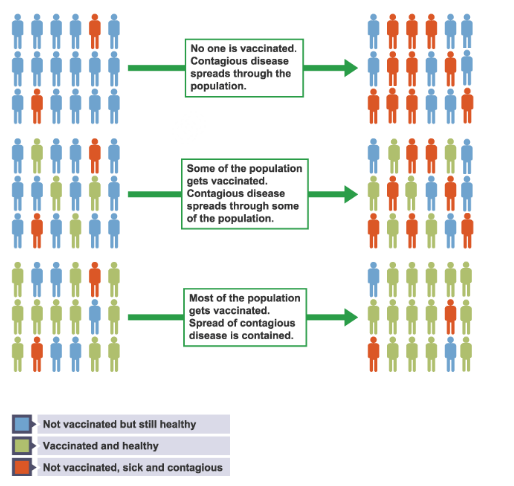
How does herd immunity protect individuals who aren’t vaccinated?
They are unlikely to catch the disease because everyone they come into contact with is already immune and cannot pass the pathogen to them.
What does it mean when someone is ‘immune’ to a disease?
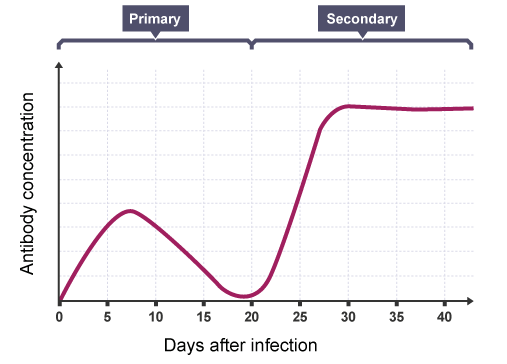
If the same pathogen re-enters someone’s body, they will have a secondary response.
This involves the specific complementary antibodies being produced at a faster rate.
The individual will not feel the symptoms of the illness.
What are the advantages of vaccination? (2)
Has eradicated many diseases (e.g. smallpox) and reduced the occurrence of many
Epidemics can be prevented through herd immunity
What are the disadvantages of vaccination? (2)
Not always effective in providing immunity
Some vaccines can cause people to have bad reactions (e.g. fevers)
What is the most common example of an antibiotic?
Penicillin
What is an antibiotic and how do they work?
Medicines that kill bacterial pathogens inside the body, without damaging body cells.
Why is it important that specific bacteria are treated by specific antibiotics?
Some antibiotics only work against certain bacterial pathogens.
Helps prevent the development of antibiotic resistance.
Why can’t antibiotics kill viral pathogens — this is also why it is very difficult to develop drugs that kill viruses?
Viruses use body cells to reproduce, meaning any drugs that target them would affect body tissue too.
What are painkillers?
Medicines used to relieve the symptoms of a disease, without actually killing the pathogens themselves.
What are antiseptics?
Substances used to kill or stop the growth of microorganisms that cause disease outside the body.
Antibiotic Resistance:
Strains of bacteria are ___________ that are ___________ to antibiotics.
This means that antibiotics that used to kill a particular type of bacteria no longer have an _______, so they cannot _____ the disease.
Some types of bacteria are ________ to all known antibiotics.
evolving
resistant
effect
cure
resistant
Where were drugs traditionally extracted from? (2)
Plants
Microorganisams
What does the heart drug digitalis originate from?
Foxgloves
What does the painkiller aspirin originate from?
Willow
Who discovered penicillin and where does it come from?
Alexander Fleming
Penicillium mould